Chef Juliette
Ordinary or White Consommé
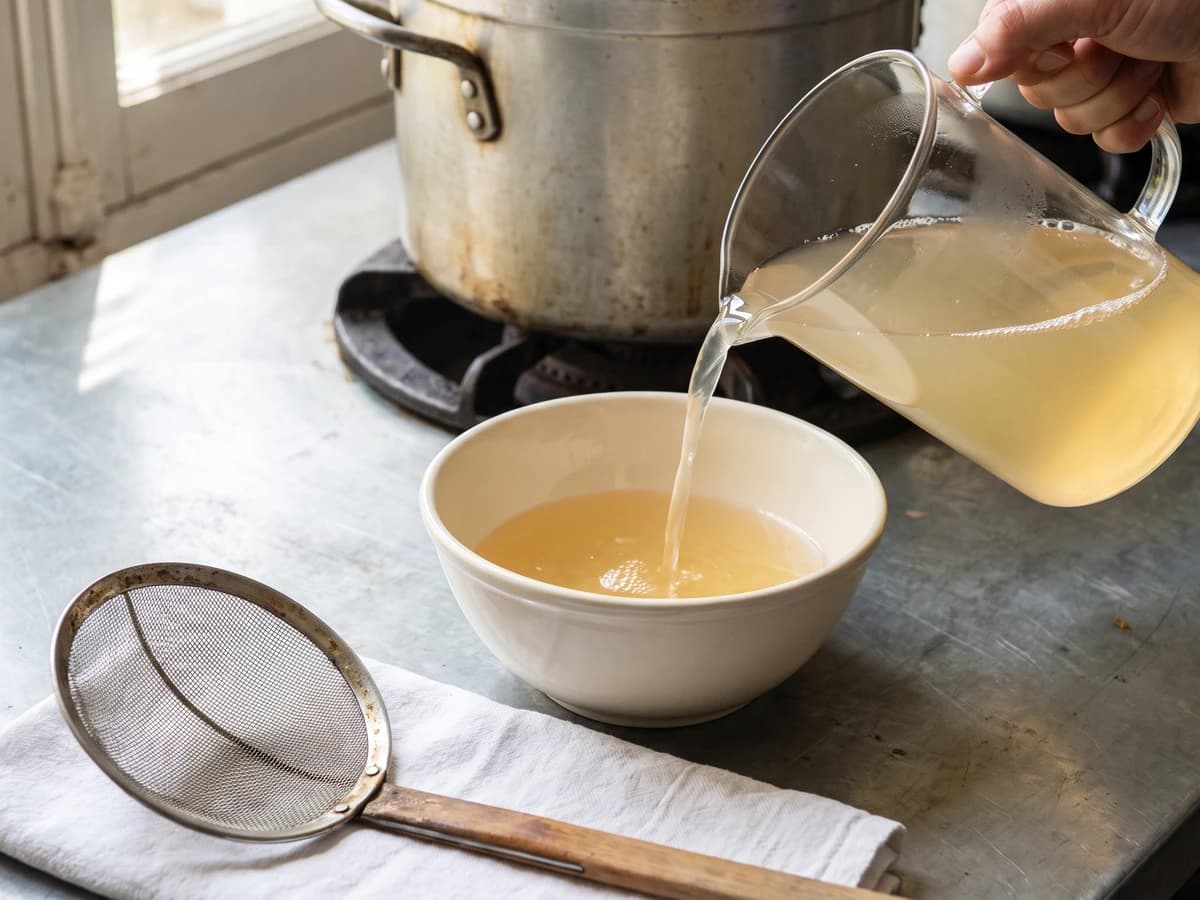
Beef shin, lean beef, and fowl begin in cold water and rise slowly toward a tremble. Skim before the boil, and you learn the quiet discipline that gives every clear French broth its backbone.
A cooking platform built around craft, culture, and the stories behind what we eat.
Created by Chef Juliette
Based on No. 88, Joinville Sauce, from Le Guide Culinaire (1907) by Auguste Escoffier
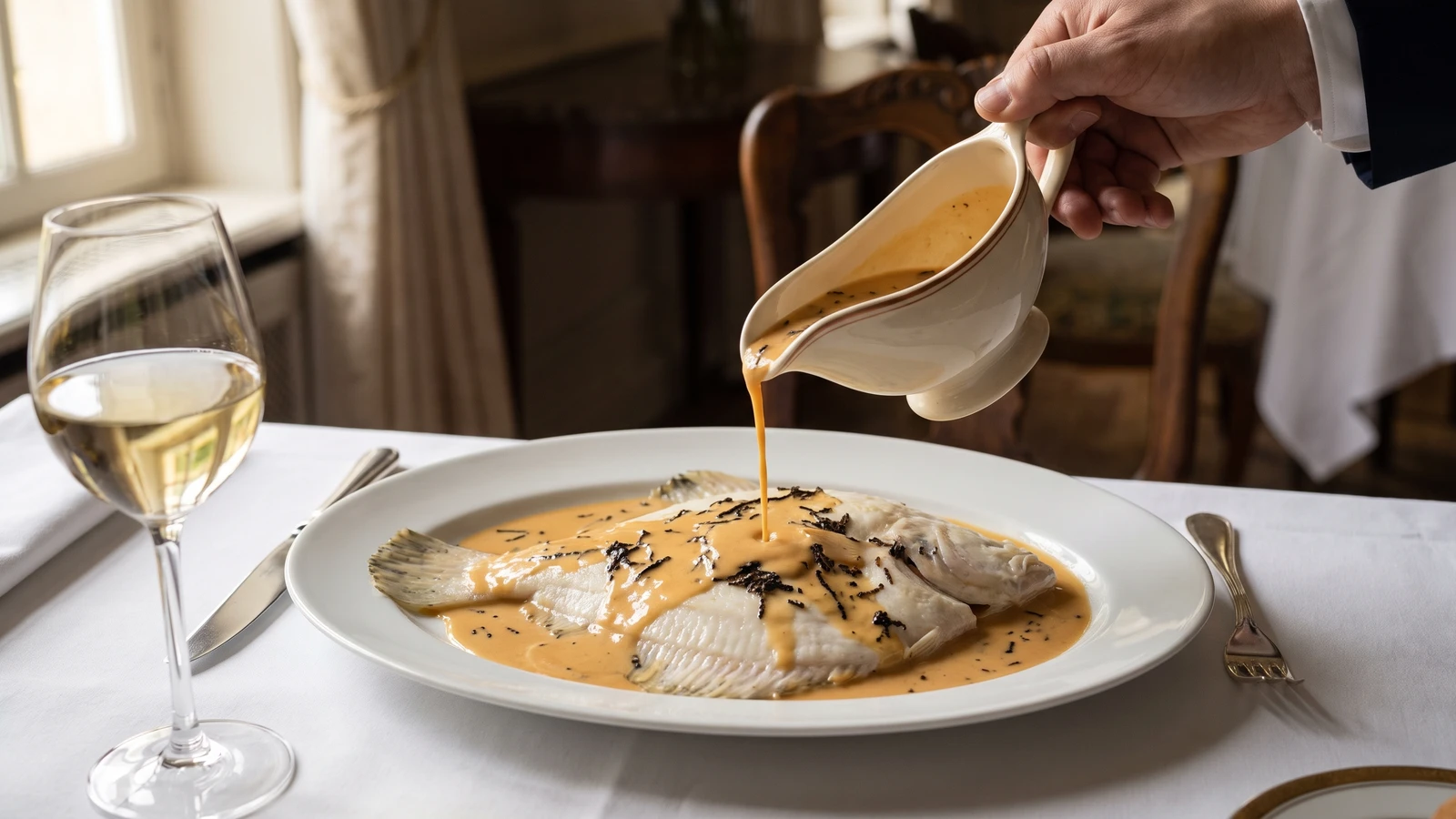
An ivory fish sauce turned pale coral with equal shrimp and crayfish butters, mounted gently to a gloss, then marked with black truffle only when the poached fish arrives without its own garnish.
Sauce Joinville (Normande sauce finished with shrimp and crayfish butters) teaches the discipline of the final emulsion. Its identity rests on an equal pairing, not shellfish flavor in general: shrimp butter brings sweetness, crayfish butter brings a deeper crustacean savor, and neither replaces the other. The finished sauce should cling to fish in a pale coral gloss, rich but never oily.
The classical formula assumed a saucier on staff, a fish stock never off the fire, and a tammy ready for preparing the parent sauce. A salamander had no work here, so the home broiler can stay cold. Prepare the Normande Sauce (No. 99) through the first part of its formula, using a fine-mesh sieve in place of the tammy, then stop before its usual butter-and-cream finish. The source's one-pint measure already fits a dinner-party fish, so it stays: one cook, one stove, one evening. Separate service pans are brigade scaffolding and can go. The equal shellfish butters are the dish and must stay.
The one true thing to know before touching the pan is this: once the shellfish butters enter, the sauce must not simmer. Warm the base, take it completely off the heat, and whisk in each cold butter gradually. If orange beads of fat appear, stop and rebuild the emulsion with the reserved cool base. Ça se rattrape. Mounting those two butters gently is the step that decides the sauce.
Sauce Joinville belongs to the Parisian classical fish repertoire, where the cream-rich foundation of Normande Sauce (No. 99) became the parent of several precisely named derivatives. It accompanied fish à la Joinville with its prescribed garnish, while cooks added black truffle cut julienne-fashion when a large boiled fish arrived plain. Its distinction is narrow and deliberate: shrimp butter and crayfish butter meet in the final mounting and are never treated as interchangeable.
Quantity
2 cups (475 ml / about 490 g) Normande Sauce (No. 99)
prepared through the first part of its formula and strained, before its standard butter-and-cream finish
Quantity
¼ cup (60 ml / 57 g)
cut into small cubes
Quantity
¼ cup (60 ml / 57 g)
cut into small cubes
Quantity
about ¼ cup loosely packed (60 ml / 28 g)
cut julienne-fashion
| Ingredient | Quantity |
|---|---|
| Normande Sauceprepared through the first part of its formula and strained, before its standard butter-and-cream finish | 2 cups (475 ml / about 490 g) Normande Sauce (No. 99) |
| cold shrimp buttercut into small cubes | ¼ cup (60 ml / 57 g) |
| cold crayfish buttercut into small cubes | ¼ cup (60 ml / 57 g) |
| ripe black truffle (optional)cut julienne-fashion | about ¼ cup loosely packed (60 ml / 28 g) |
Measure the Normande Sauce (No. 99), prepared only through its first-stage reduction and straining. Put 2 tablespoons of it into a small heatproof bowl and leave this portion cool; it is your rescue base if the final emulsion separates. Keep both shellfish butters cold and cubed. If the sauce will accompany a large plain fish, cut the truffle julienne-fashion, into fine match-shaped rods, and hold it aside.
Pour the remaining Normande Sauce (No. 99) into a small heavy saucepan and warm it over low heat, whisking often, until it flows freely and reaches about 140 to 150°F (60 to 65°C). Do not reduce it and do not let it simmer. The base needs enough warmth to accept the cold butters, but a boil would tighten its egg yolks and weaken the emulsion before the finish begins.
Take the saucepan completely off the heat. Monter au beurre means mounting with butter: whisk in the shrimp butter one small cube at a time, letting each disappear before adding the next, then mount the crayfish butter in the same manner. If a cube refuses to melt, return the pan to the lowest heat for five seconds, remove it again, and continue. The sauce is ready when it looks smooth, pale coral, and glossy enough to coat the back of a spoon. If orange fat beads appear, stop. Whisk the reserved cool Normande base in its bowl, then add the split sauce to it one spoonful at a time until smooth. Ça se rattrape.
If the sauce accompanies fish à la Joinville with its special garnish, leave it exactly as it stands. If it accompanies a large boiled or gently poached fish without garnish, fold in the black truffle julienne off the heat. Do not add truffle merely for decoration; in the source formula it has a precise job, supplying aroma and contrast when the fish itself arrives plain.
Pour the Sauce Joinville into a warmed sauceboat or spoon it generously over the waiting fish. If a brief hold is unavoidable, set the saucepan over warm water for no more than 10 minutes and whisk it frequently; the water must never simmer. Serve while the sauce still has its clean gloss and the two shellfish butters remain distinct in flavor. À table!
1 serving (about 79g)
Culinary guides, cultural storytelling, and the editorial depth that makes cooking meaningful.
Discover Culinary ExplorerChef Juliette
Beef shin, lean beef, and fowl begin in cold water and rise slowly toward a tremble. Skim before the boil, and you learn the quiet discipline that gives every clear French broth its backbone.
Chef Juliette
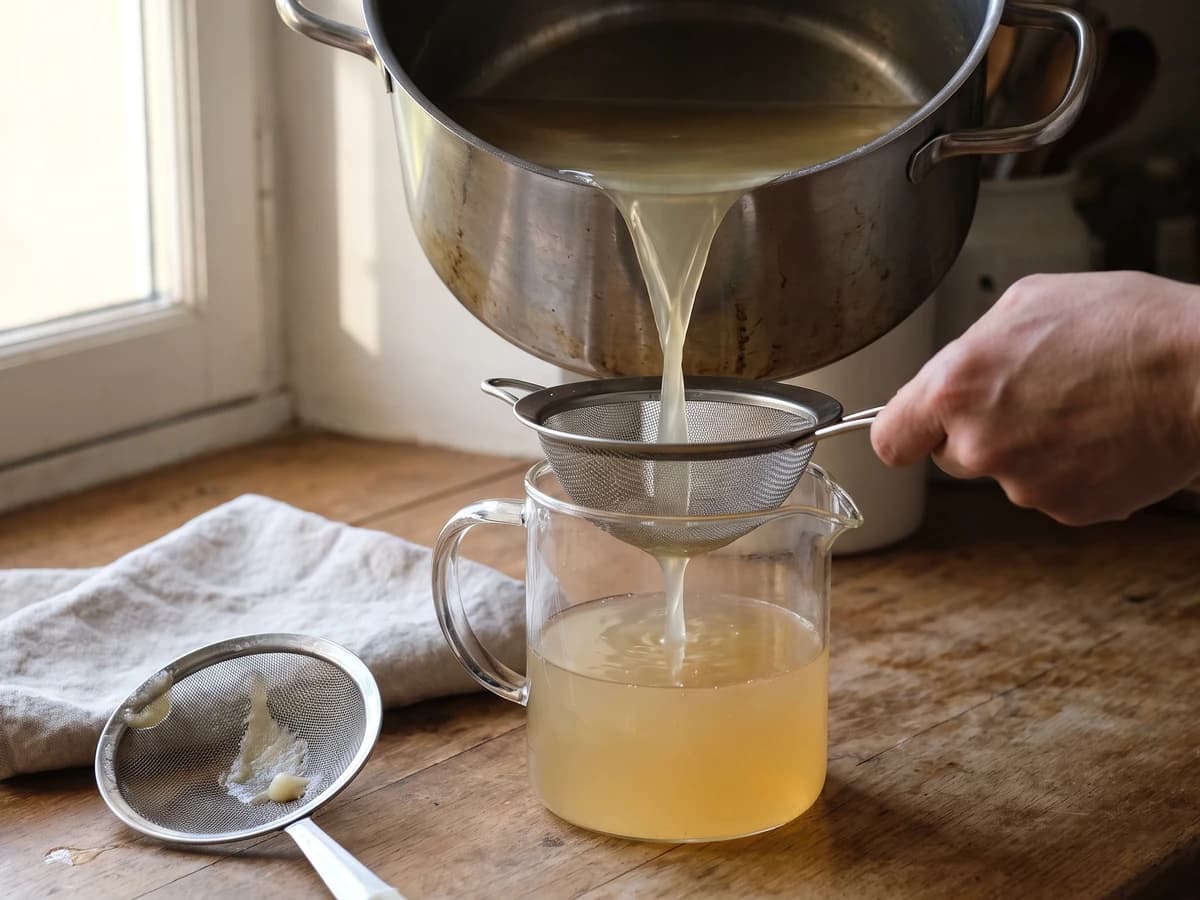
Break the veal bones small, then give them eight hours at a bare tremble. This pale, gelatinous fond becomes the quiet foundation beneath velouté, blanquette, and every sauce that must stay light.
Chef Juliette
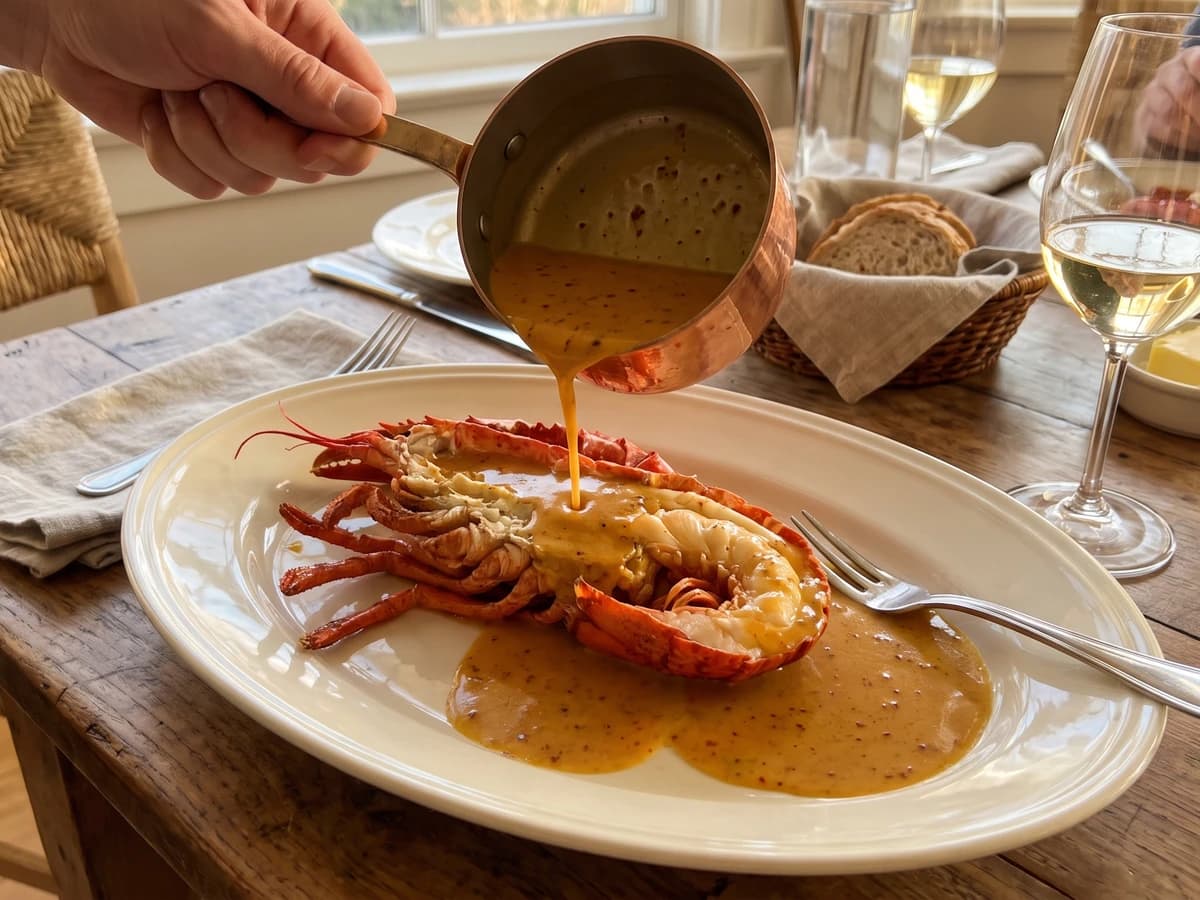
Sauce Orientale concentrates lobster-rich American Sauce with curry, then folds in cream away from the fire: a glossy, gently spiced derivative made for lobster, crayfish, and firm fish.
Chef Juliette
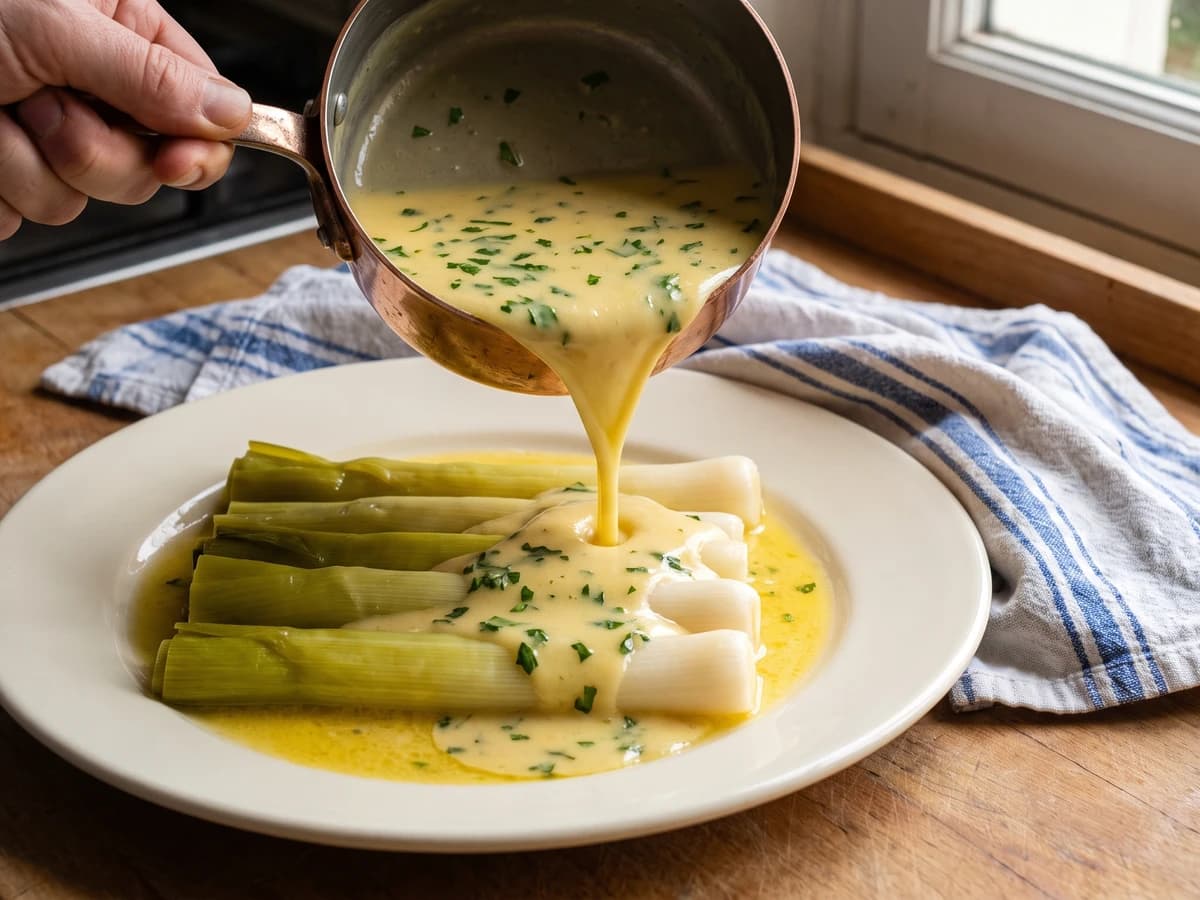
An old lesson in sauce families: Sauce Allemande takes mushroom liquor, then butter, lemon, and parsley, becoming a glossy Poulette for sheep's trotters, leeks, cauliflower, and anything needing gentle richness with a bright edge.