Chef Juliette
Ordinary or White Consommé
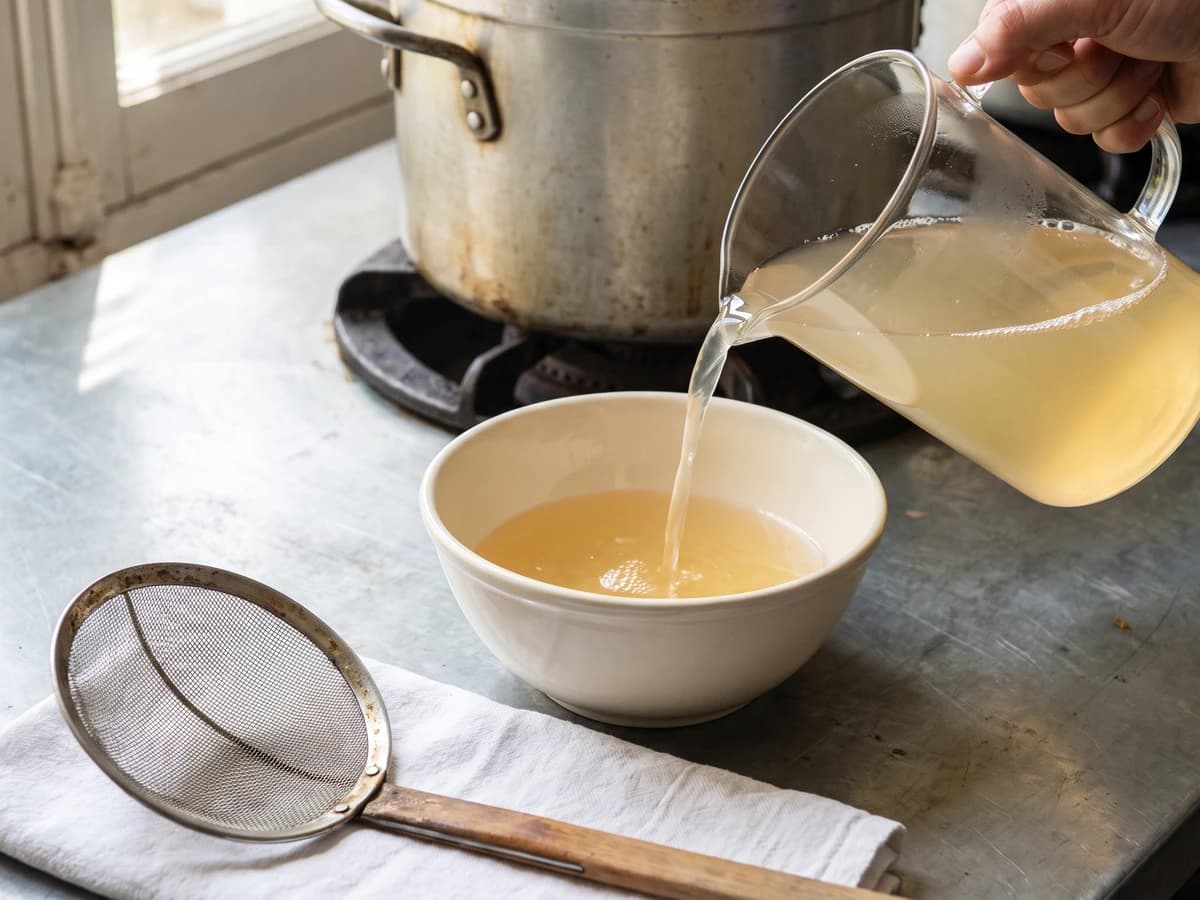
Beef shin, lean beef, and fowl begin in cold water and rise slowly toward a tremble. Skim before the boil, and you learn the quiet discipline that gives every clear French broth its backbone.
A cooking platform built around craft, culture, and the stories behind what we eat.
Created by Chef Juliette
Based on No. 99, Normande Sauce, from Le Guide Culinaire (1907) by Auguste Escoffier
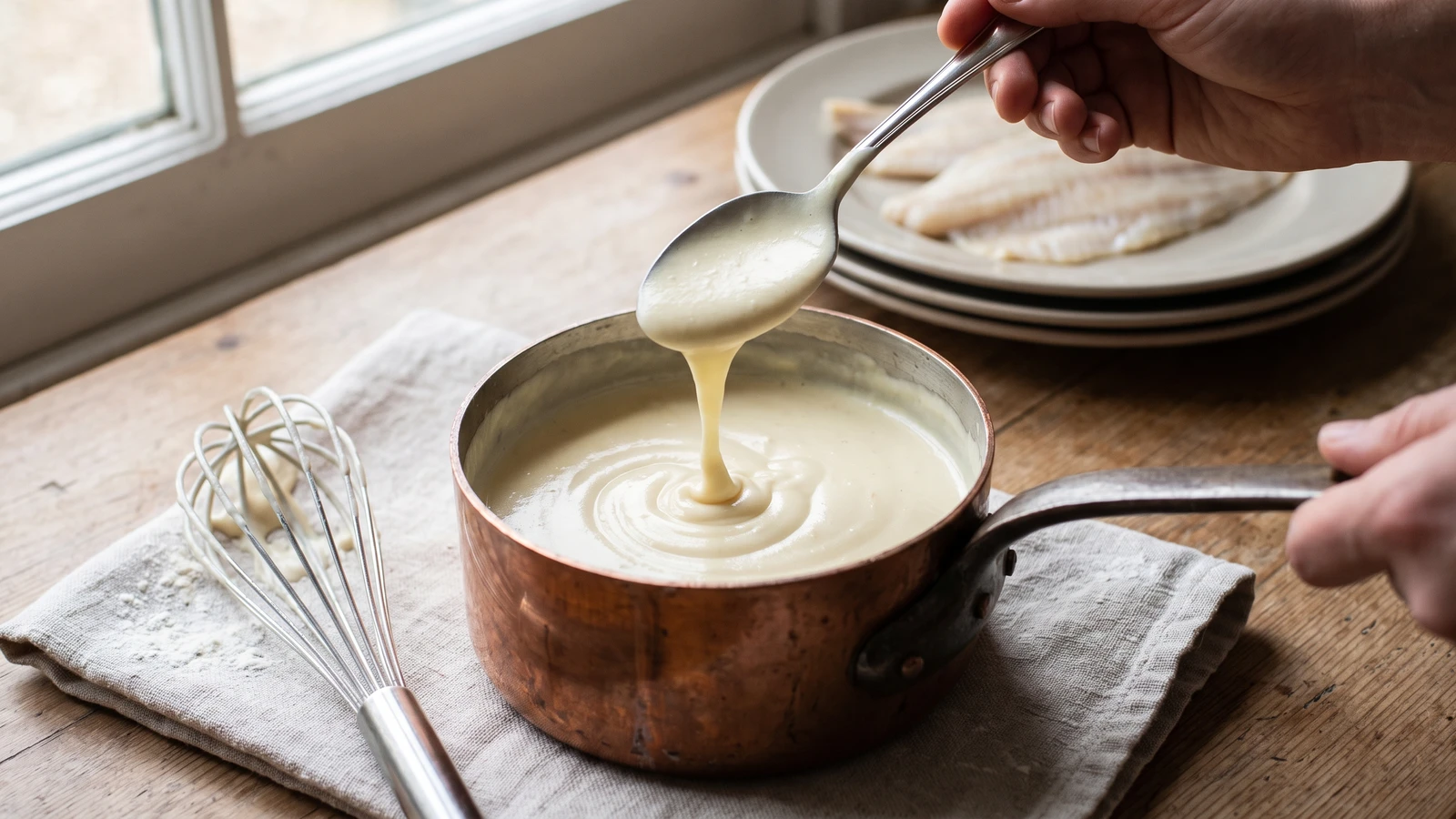
Sauce Normande turns fish velouté, sole fumet, oyster and mushroom liquors, yolks, cream, and butter into an ivory sauce with maritime depth, made to crown sole and teach controlled reduction.
Sauce Normande (Normandy fish sauce) teaches one of the canon's most useful lessons: a liaison, a yolk-and-cream thickening, can reduce and concentrate without turning heavy when heat and movement stay in balance. The one true thing to know before touching the pan is this: once the yolks grow warm, the whisk doesn't rest. Controlled evaporation gives you ivory depth; a hard, unattended boil gives you curds.
The source assumed fish velouté and sole fumet, a concentrated fish essence, always ready, a saucier standing over an open fire, and a tammy for the final straining. At home, one wide saucepan supplies the evaporation, a whisk supplies the saucier's attention, and a fine-mesh sieve replaces the tammy. This batch holds every source ratio at about two quarts, enough for a dinner party and the derivative sauces the entry promises. The staff and the tammy were scaffolding. The reduction, marine liquors, liaison, and butter finish are the dish. One cook, one stove, one evening.
Finished properly, Sauce Normande is cream-ivory and deeply savory, brightened by only a few drops of lemon and supple enough to fall from a spoon in a broad ribbon. Guard the reduction by a good third while scraping every corner of the pan. That is the step that decides the sauce.
Sauce Normande carries the larder of Normandy's Channel coast into the classical grand-kitchen system: sole fumet, oyster liquor, mushrooms, and cream built on fish velouté. It became inseparable from sole à la Normande and also served as the foundation for other petites sauces, the smaller derivatives through which the sauce canon branches. Calling any cream sauce for fish Normande misses the point; its marine liquors and fumet give it a precise identity.
Quantity
6 cups (1.42 L / about 1.5 kg)
Quantity
1/2 cup plus 1 tablespoon (135 ml / 135 g)
Quantity
1/2 cup plus 1 tablespoon (135 ml / 135 g)
Quantity
1 cup plus 2 tablespoons (270 ml / 270 g)
Quantity
9 (about 2/3 cup / 160 g)
Quantity
Scant 1/8 teaspoon (0.5 ml / 0.5 g)
Quantity
1 1/2 cups (360 ml / 355 g)
Quantity
1/16 teaspoon (0.3 ml / 0.1 g)
Quantity
3/4 cup (180 ml / 170 g)
diced
Quantity
3/4 cup (180 ml / 175 g)
| Ingredient | Quantity |
|---|---|
| finished fish velouté | 6 cups (1.42 L / about 1.5 kg) |
| strained mushroom liquor | 1/2 cup plus 1 tablespoon (135 ml / 135 g) |
| strained oyster liquor | 1/2 cup plus 1 tablespoon (135 ml / 135 g) |
| finished sole fumet | 1 cup plus 2 tablespoons (270 ml / 270 g) |
| large egg yolks | 9 (about 2/3 cup / 160 g) |
| fresh lemon juice | Scant 1/8 teaspoon (0.5 ml / 0.5 g) |
| heavy cream for the reduction | 1 1/2 cups (360 ml / 355 g) |
| cayenne pepper | 1/16 teaspoon (0.3 ml / 0.1 g) |
| cold unsalted butterdiced | 3/4 cup (180 ml / 170 g) |
| heavy cream for finishing | 3/4 cup (180 ml / 175 g) |
Set the cold butter and finishing cream aside. In a cold, wide, heavy saucepan, combine the fish velouté, mushroom liquor, oyster liquor, sole fumet, egg yolks, lemon juice, and the cream for the reduction. Whisk until completely smooth before applying heat, reaching well into the corners. Starting cold disperses the yolks through the starch-protected velouté before they can seize. The mixture will measure roughly 10 1/2 cups; after reduction, you are aiming for about 7 cups.
Set the pan over medium heat and whisk steadily as the sauce warms, sweeping the corners and floor with a flexible spatula every minute. Once bubbles begin breaking across the surface, adjust the heat to maintain a steady, active simmer and continue moving the sauce until its volume falls by a good third, about 25 to 35 minutes. It should be nappant, thick enough to coat the back of a spoon in an even ivory film, but still pour freely. If faint graininess appears, lift the pan off the heat at once, whisk in 2 tablespoons of the measured finishing cream, blend briefly, and strain. Count that cream toward the final amount. Ça se rattrape. Firm curds and a pronounced egg smell mean the heat went too far and the sauce must be remade.
Remove the sauce from the heat and stir in the cayenne. Taste before reaching for salt; properly seasoned velouté, oyster liquor, and fumet usually supply enough. Rub the sauce through a fine-mesh sieve into a clean saucepan, pressing with the back of a ladle or flexible spatula. This is the honest home equivalent of the tammy, and it leaves the sauce perfectly smooth without changing its character.
Warm the strained sauce over very low heat, then remove the pan before finishing. Monter au beurre means finishing by emulsifying in butter: whisk in the cold diced butter a few pieces at a time, allowing each addition to disappear before adding more. Whisk in the finishing cream in a thin stream, holding back 1 tablespoon until the texture is secure. If the sauce turns oily, stop, keep it off the heat, and whisk in that cold reserved cream until the gloss returns; then finish gently. If it stays smooth, add the reserved spoon at the end. Never let the mounted sauce boil.
Serve Sauce Normande at once over fillets of sole à la Normande, or transfer it to a warmed sauceboat for the table. If it must wait, hold it over a barely warm bain-marie at 140 to 150°F (60 to 65°C) for no more than 30 minutes, whisking occasionally. If it tightens, loosen it with a teaspoon of warm water rather than returning it to a simmer. Use the remaining sauce as the base for other petites sauces. À table!
1 serving (about 60g)
Culinary guides, cultural storytelling, and the editorial depth that makes cooking meaningful.
Discover Culinary ExplorerChef Juliette
Beef shin, lean beef, and fowl begin in cold water and rise slowly toward a tremble. Skim before the boil, and you learn the quiet discipline that gives every clear French broth its backbone.
Chef Juliette
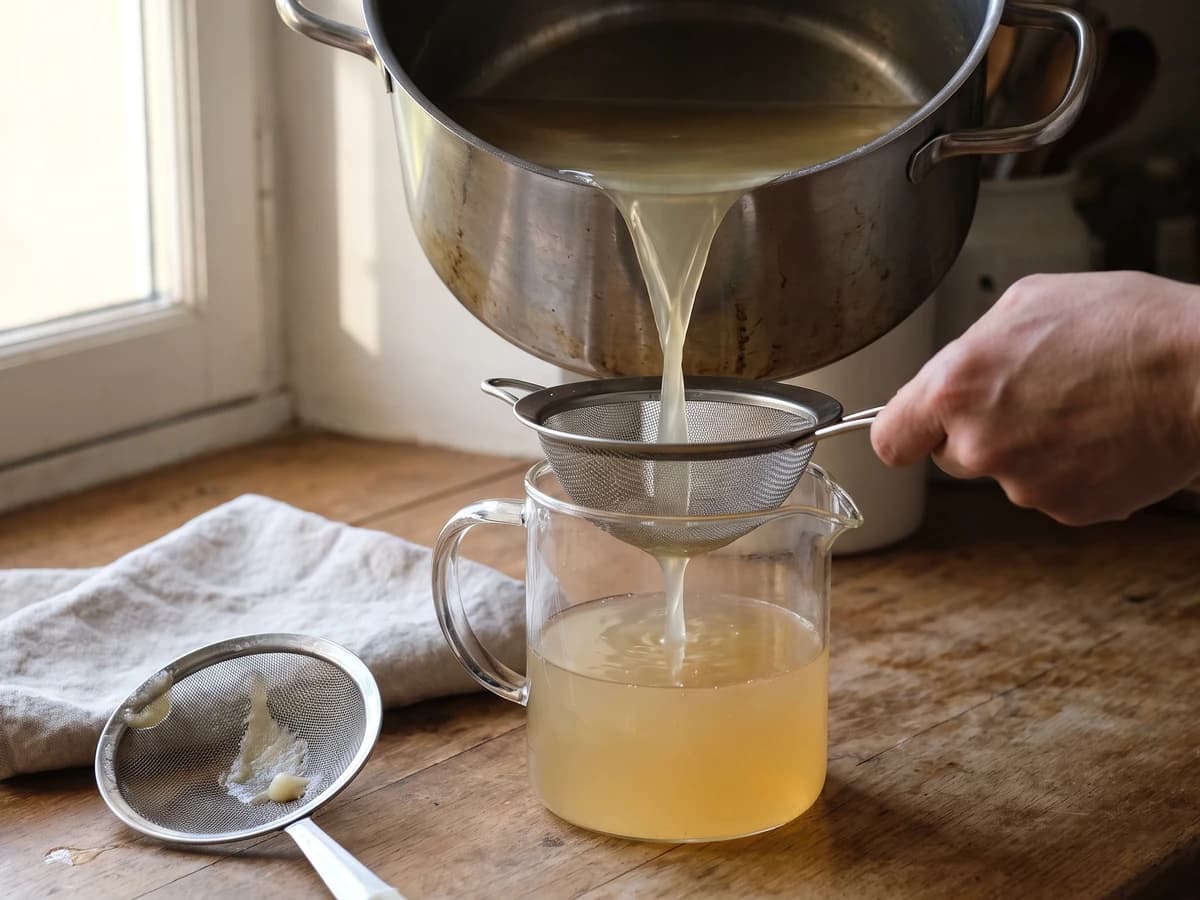
Break the veal bones small, then give them eight hours at a bare tremble. This pale, gelatinous fond becomes the quiet foundation beneath velouté, blanquette, and every sauce that must stay light.
Chef Juliette
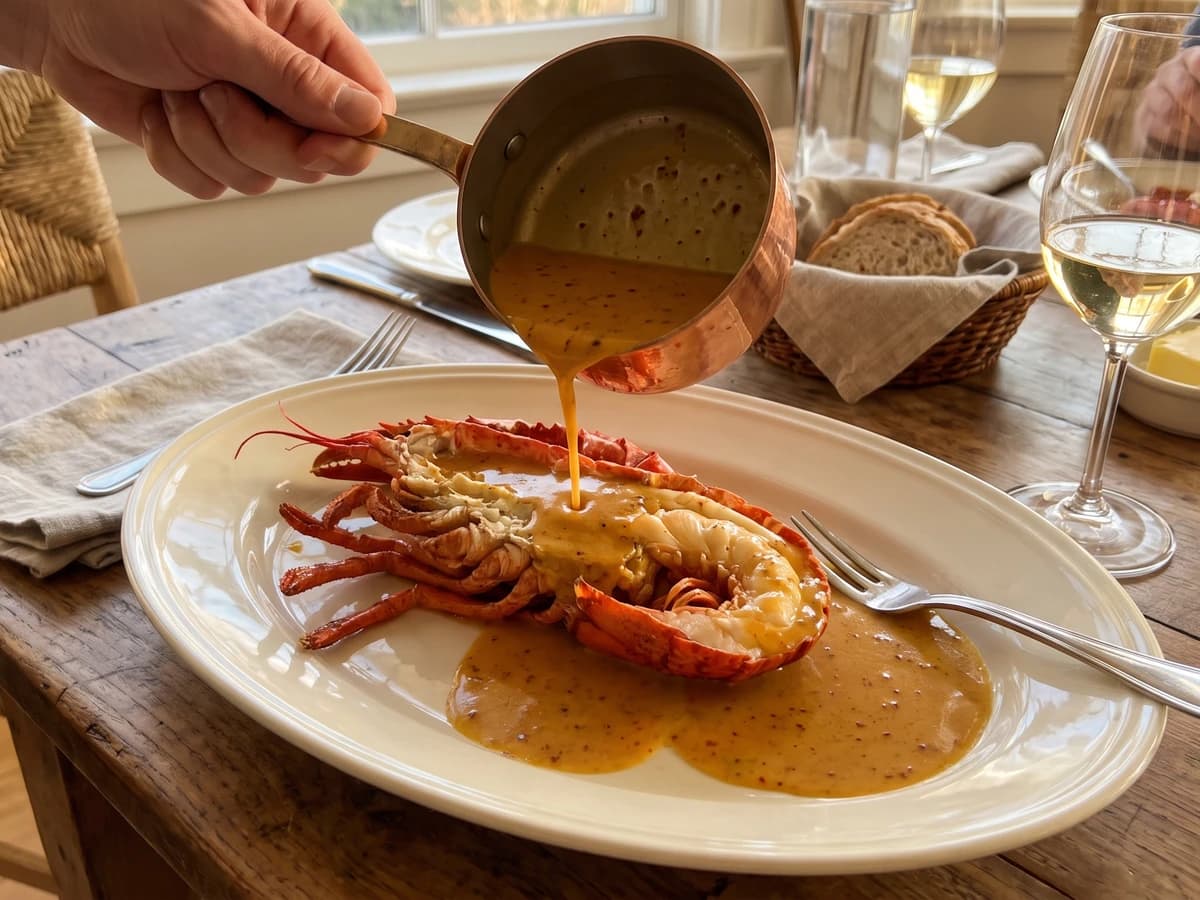
Sauce Orientale concentrates lobster-rich American Sauce with curry, then folds in cream away from the fire: a glossy, gently spiced derivative made for lobster, crayfish, and firm fish.
Chef Juliette
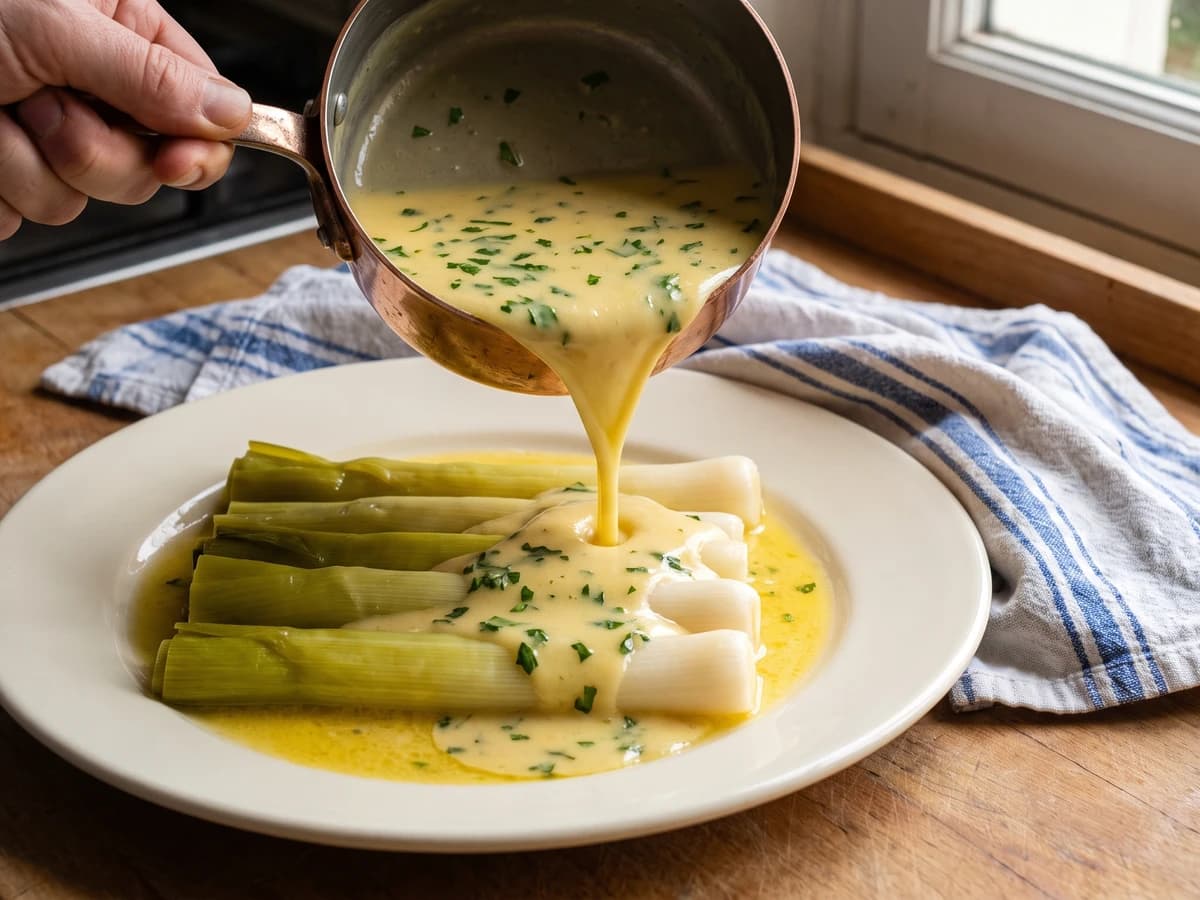
An old lesson in sauce families: Sauce Allemande takes mushroom liquor, then butter, lemon, and parsley, becoming a glossy Poulette for sheep's trotters, leeks, cauliflower, and anything needing gentle richness with a bright edge.