Chef Juliette
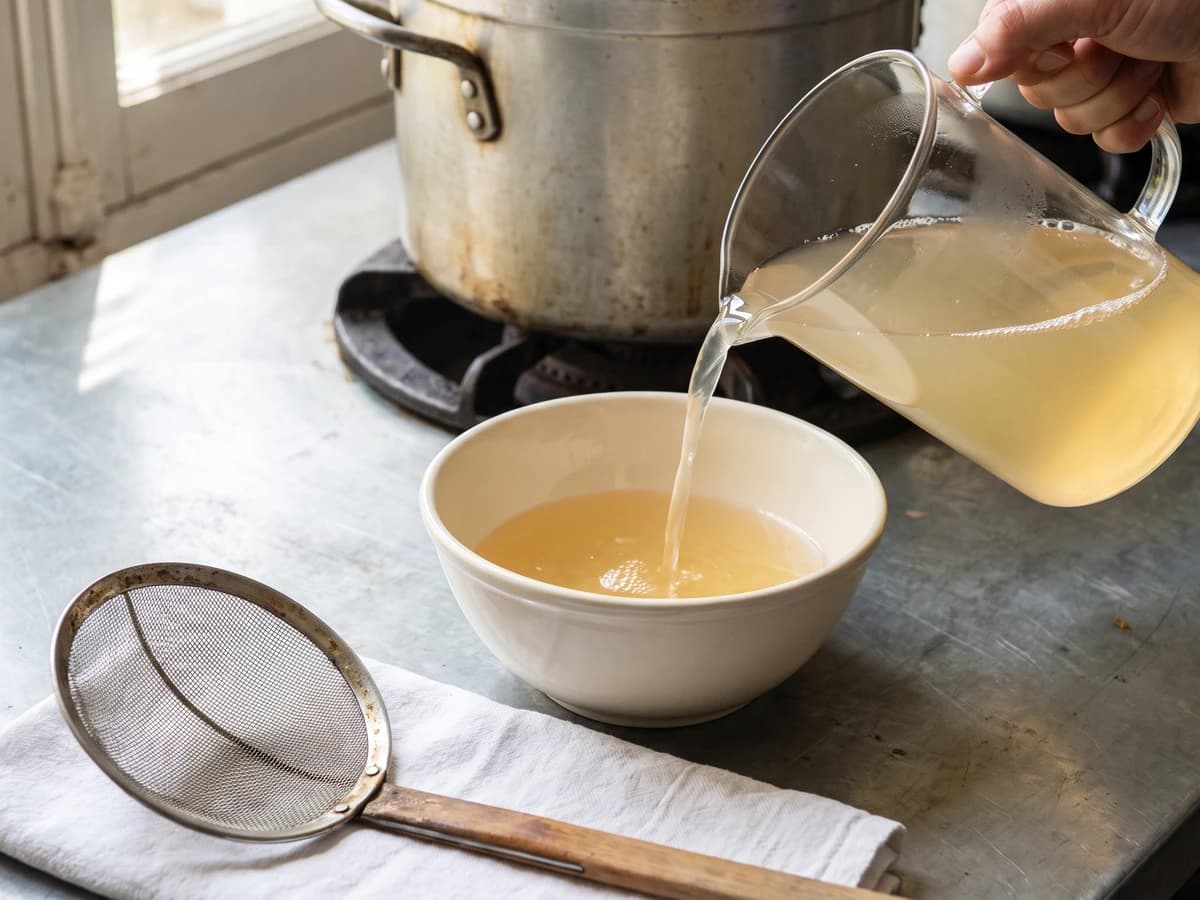
Ordinary or White Consommé
Beef shin, lean beef, and fowl begin in cold water and rise slowly toward a tremble. Skim before the boil, and you learn the quiet discipline that gives every clear French broth its backbone.
A cooking platform built around craft, culture, and the stories behind what we eat.
Created by Chef Juliette
Based on No. 87, Ivory Sauce, or Albufera Sauce, from Le Guide Culinaire (1907) by Auguste Escoffier
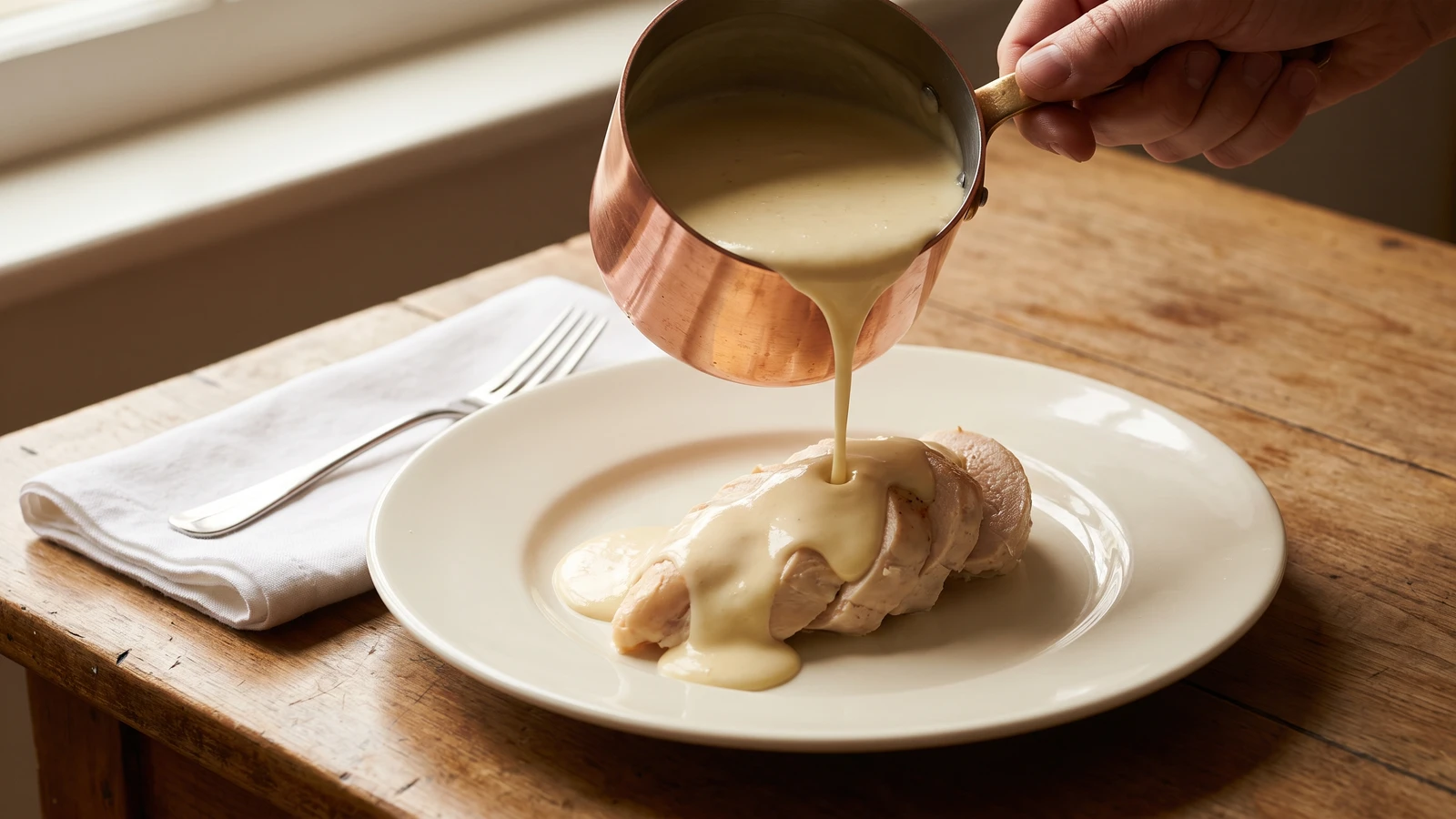
Four spoonfuls of pale meat glaze turn a delicate Suprême sauce ivory, deepening its savour without turning it brown, and make a glossy classical companion for poached poultry and sweetbreads.
Sauce Albufera (ivory sauce) teaches restraint: the meat glaze must deepen a perfect Suprême without announcing itself as brown. Four tablespoons per quart, no more, is the one true thing to know before you touch the pan. The finished sauce should be lustrous, gently savoury, and unmistakably ivory, made for pale poultry and poached sweetbreads.
The old formula assumed a saucier on staff, a stockpot never off the fire, and finished Suprême and pale glaze waiting within reach; a salamander has no work here. Your honest equivalent is a heavy saucepan, a whisk, and prepared Suprême Sauce (No. 106a). The formula below keeps the book's exact four-tablespoon-per-quart proportion and makes about two quarts for a generous dinner table. Holding pans and repeated passing were brigade scaffolding, so they go. Gentle heat and genuinely pale glaze are the dish, so they stay. One cook, one stove, one evening.
The decisive step is the incorporation: warm sauce, fluid glaze, gentle whisking. Never let it boil. If the butterfat begins to bead, don't pour it out. Ça se rattrape, and you'll rebuild the emulsion from a spoonful of cool Suprême.
Sauce Albufera belongs to the Parisian grand-kitchen family of derivative sauces, in which Suprême Sauce (No. 106a) was given a distinct character without surrendering its delicacy. Its name entered the French canon through the title Duc d'Albufera, drawn from the Spanish lagoon near Valencia, but the sauce itself is neither Spanish in method nor seasoned from a Spanish larder. Its identifying ivory tint comes from pale meat glaze alone; dark glaze, caramel, or pepper would make another sauce.
Quantity
2 quarts (1.9 L / about 2 kg) prepared Suprême Sauce (No. 106a)
Quantity
1/2 cup (120 ml / about 140 g)
| Ingredient | Quantity |
|---|---|
| prepared Suprême Sauce | 2 quarts (1.9 L / about 2 kg) prepared Suprême Sauce (No. 106a) |
| dissolved pale meat glaze | 1/2 cup (120 ml / about 140 g) |
Measure the prepared Suprême Sauce (No. 106a) and the dissolved pale meat glaze. Reserve 1/4 cup of the Suprême, covered and cool, then put the remainder in a heavy 3-quart saucepan. The reserved spoonful is your insurance if the emulsion becomes greasy. Check the glaze before proceeding: it should be fluid and pale amber, not brown or nearly black.
Set the Suprême Sauce (No. 106a) over low heat and stir slowly with a flexible spatula, reaching across the bottom and into the corners. Warm it until it flows smoothly and is nappant, coating the back of a spoon in an even film. Keep it below a simmer. Boiling reduces the sauce unnecessarily and can separate the cream and butter already worked into its foundation.
Make certain the pale meat glaze is fully liquid, then pour it into the warm sauce in four additions, whisking each one through before adding the next. Use the full measured quantity. The colour should move from white to warm ivory while the surface gains a deeper gloss. If oily beads appear, remove the pan from the heat at once. Ça se rattrape: whisk 2 tablespoons of the reserved cool Suprême Sauce (No. 106a) in a clean bowl, then add the broken sauce a spoonful at a time until smooth before returning it to a clean pan over very low heat.
If the reserved Suprême was not needed for rescue, whisk it into the finished sauce now and warm it gently. Draw a finger across the sauce coating the back of a spoon; the track should remain clean while the sauce on either side stays smooth and glossy. Pass it through a fine sieve only if you see a skin or small lumps. A properly finished Suprême was already strained, so routine second straining is brigade scaffolding, not the dish.
Serve at once, or cover the saucepan and hold it for no more than 20 minutes in a bain-marie, a warm water bath, stirring occasionally. Do not let the sauce simmer, and do not salt it by reflex because the glaze has concentrated seasoning of its own. Spoon the Albufera generously over poached or gently roasted poultry, or poached ris de veau, veal sweetbreads. À table!
1 serving (about 65g)
Culinary guides, cultural storytelling, and the editorial depth that makes cooking meaningful.
Discover Culinary ExplorerChef Juliette
Beef shin, lean beef, and fowl begin in cold water and rise slowly toward a tremble. Skim before the boil, and you learn the quiet discipline that gives every clear French broth its backbone.
Chef Juliette
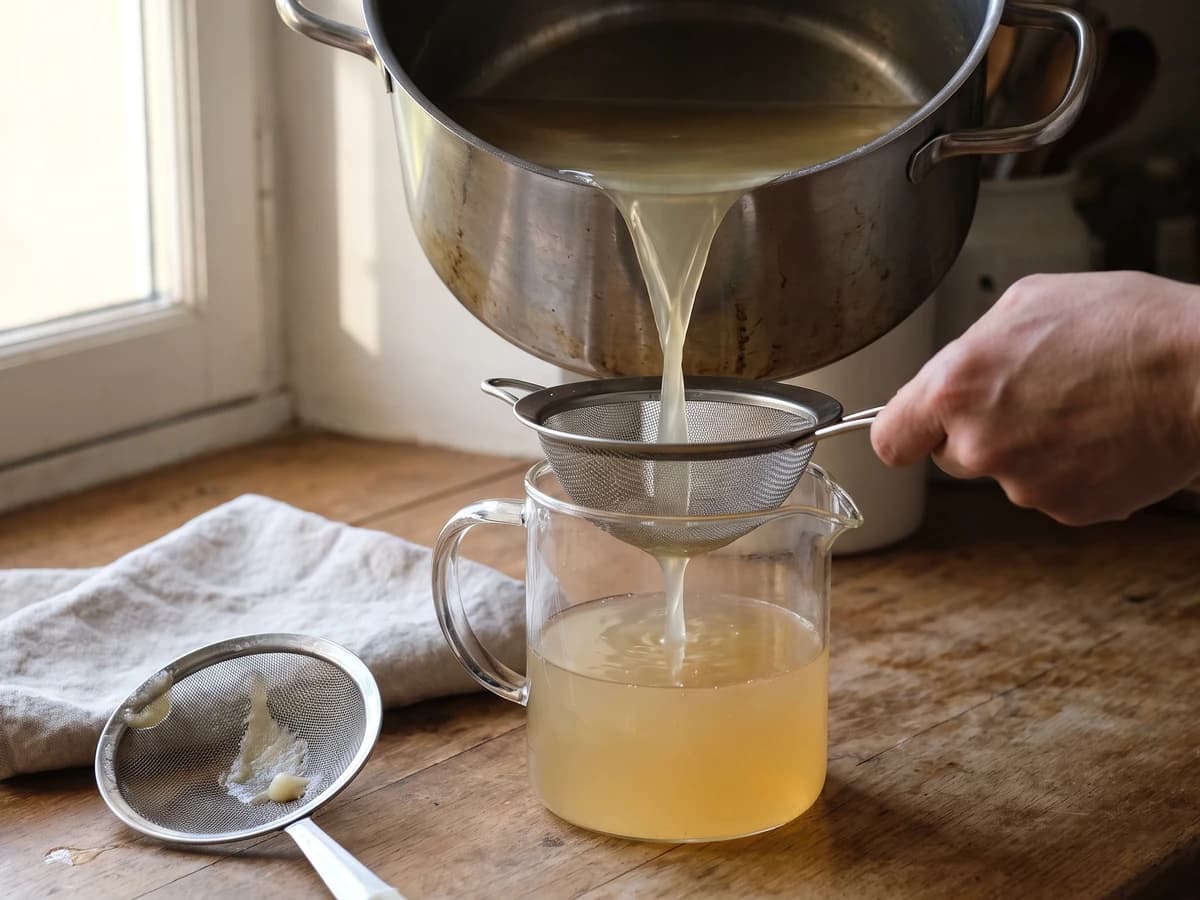
Break the veal bones small, then give them eight hours at a bare tremble. This pale, gelatinous fond becomes the quiet foundation beneath velouté, blanquette, and every sauce that must stay light.
Chef Juliette
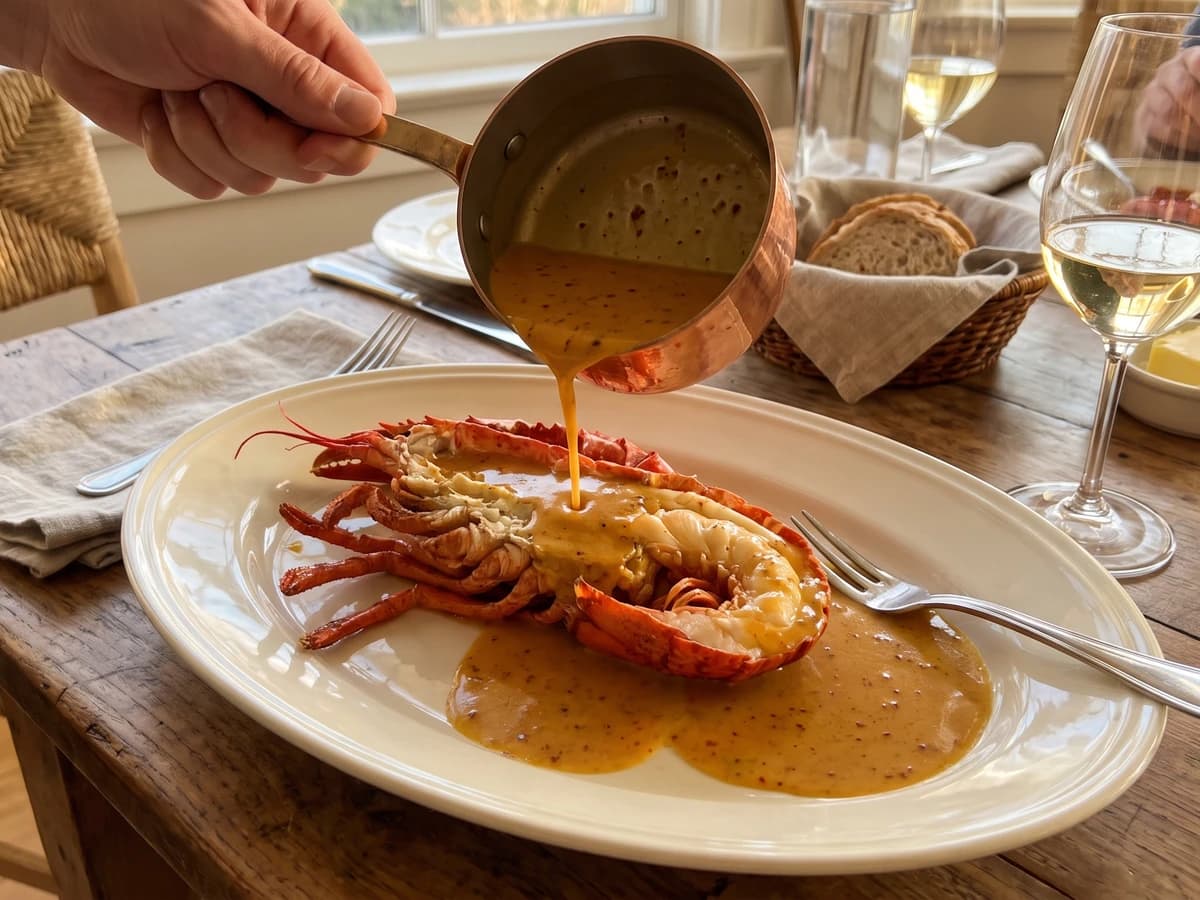
Sauce Orientale concentrates lobster-rich American Sauce with curry, then folds in cream away from the fire: a glossy, gently spiced derivative made for lobster, crayfish, and firm fish.
Chef Juliette
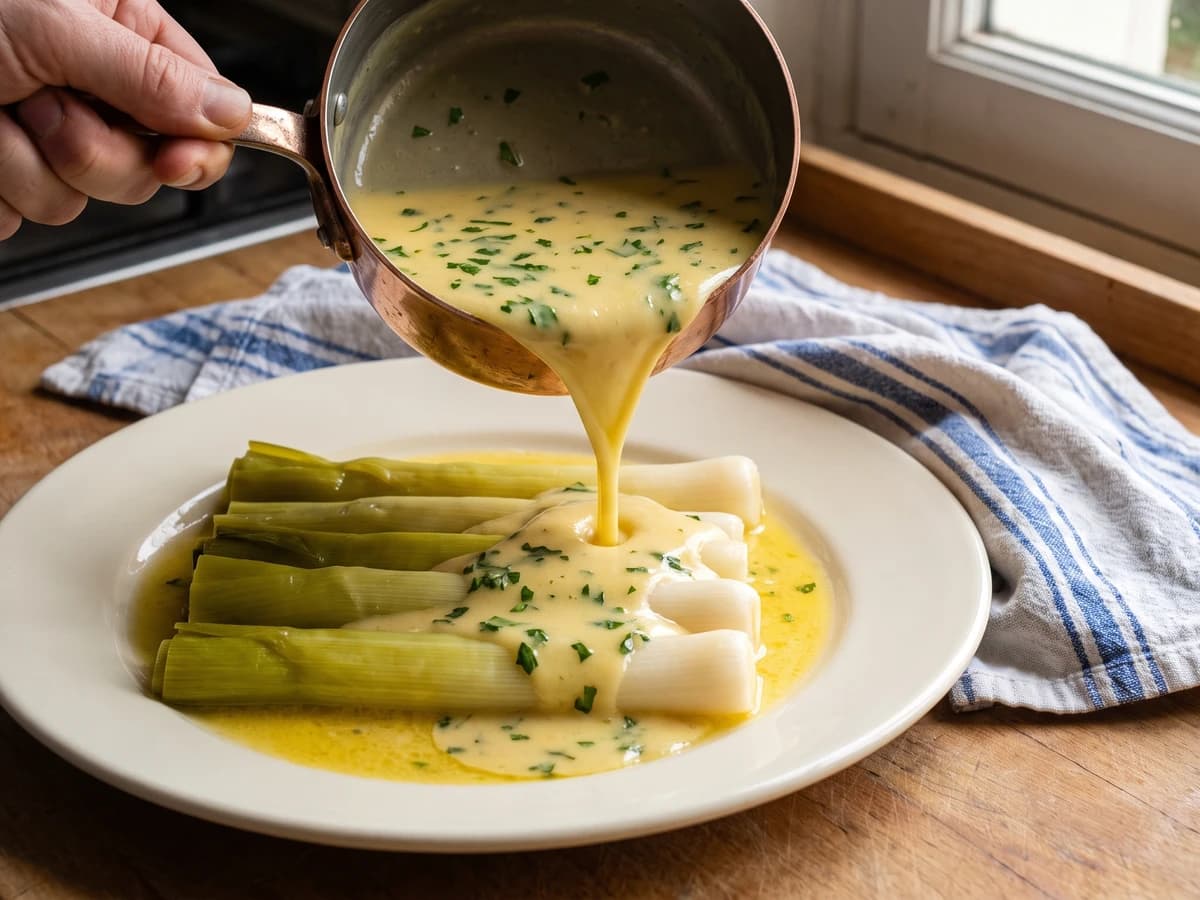
An old lesson in sauce families: Sauce Allemande takes mushroom liquor, then butter, lemon, and parsley, becoming a glossy Poulette for sheep's trotters, leeks, cauliflower, and anything needing gentle richness with a bright edge.