Chef Juliette
Ordinary or White Consommé
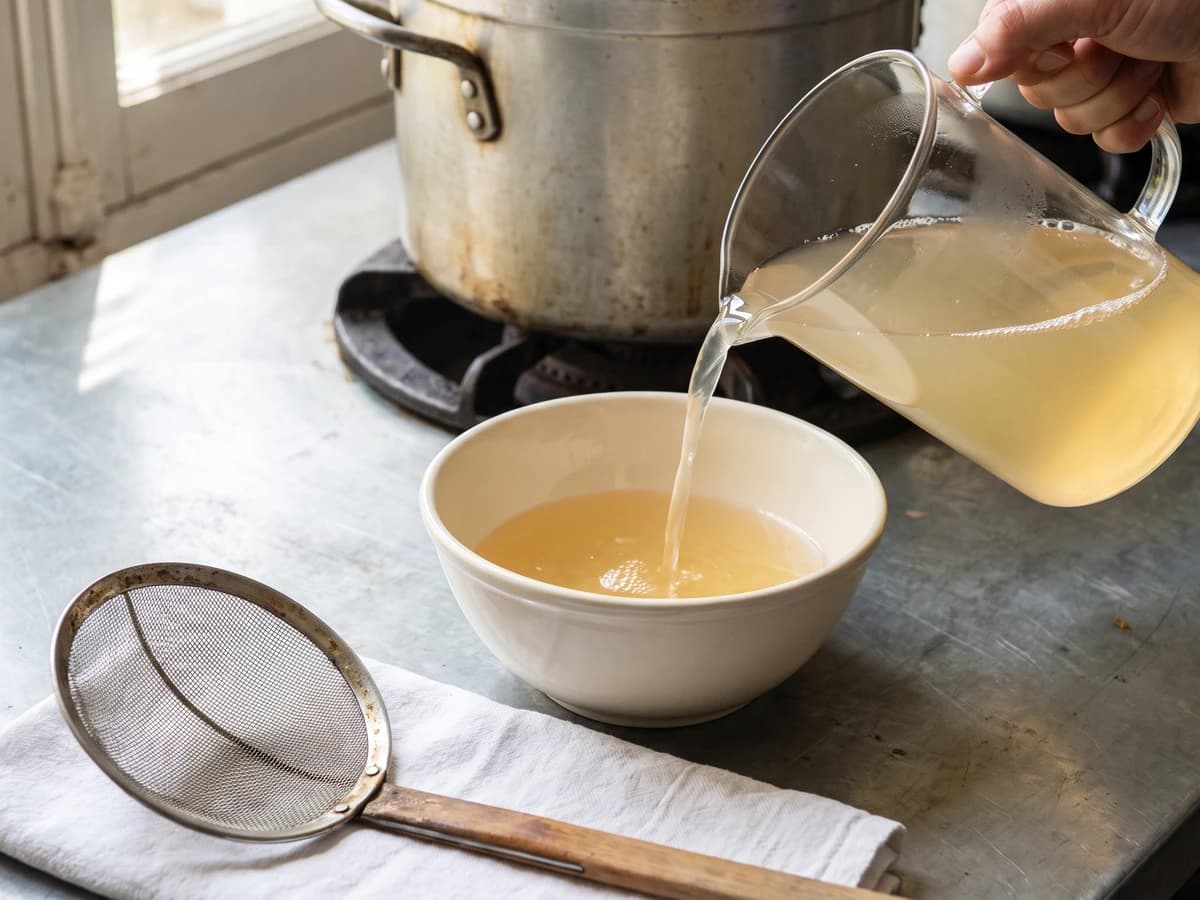
Beef shin, lean beef, and fowl begin in cold water and rise slowly toward a tremble. Skim before the boil, and you learn the quiet discipline that gives every clear French broth its backbone.
A cooking platform built around craft, culture, and the stories behind what we eat.
Created by Chef Juliette
Based on No. 106a, Suprême Sauce, from Le Guide Culinaire (1907) by Auguste Escoffier
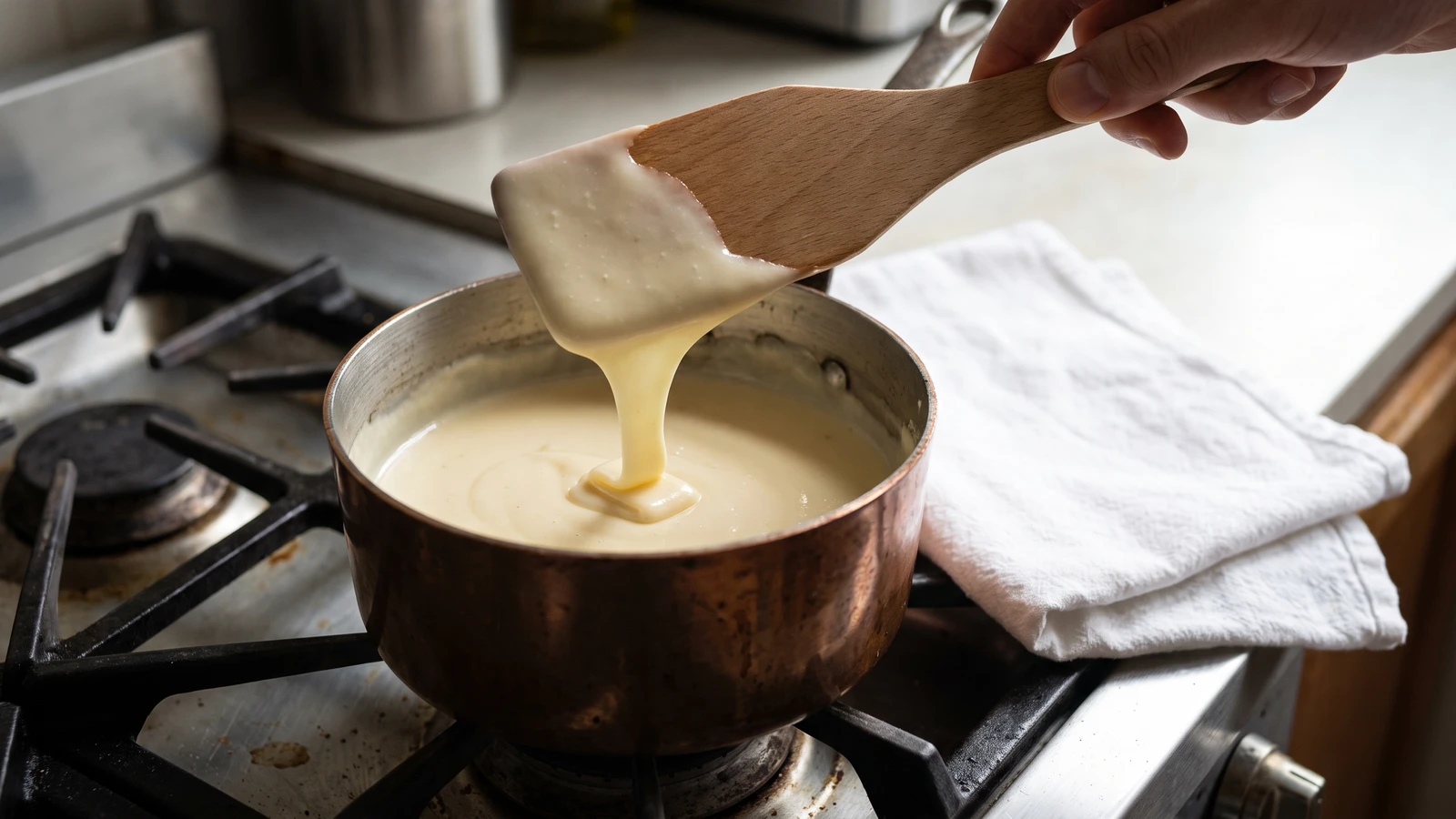
The white, delicate crown of the velouté family: clear poultry stock and mushroom liquor reduced, poultry velouté stirred in, cream added little by little, and butter mounted at the last moment for a quiet gloss.
Sauce suprême (the delicate cream sauce built on poultry velouté) teaches the discipline of white sauces: reduction must build body without taking colour. That is the one true thing to know before the pan comes out. A hard boil can make the cream coarse, and a neglected pan can stain the sauce, so the heat stays lively enough to reduce, never fierce enough to brown.
The old formula assumed a saucier at the pan, clear poultry stock never off the fire, and an open fire beneath a broad sauté pan. At home, a heavy saucepan supplies steady heat, a flat spatula keeps its bottom clean, and measured reduction replaces the saucier's constant eye. A salamander belongs to gratins, not this sauce, so there is nothing to imitate. Dedicated hands are brigade scaffolding; the clear stock, mushroom liquor, finished Poultry Velouté, gradual cream, fine straining, and final butter are the dish and must stay.
The source already prepares Suprême in small quantity. For the requested two-quart home batch, every amount is doubled evenly, leaving its ratios and sequence untouched. One cook, one stove, one evening. The cream must go in little by little while the sauce reduces. That measured addition decides whether the finished sauce is silken or merely thick.
Sauce Suprême belongs to the Paris-centered classical sauce system, where it stands as the most delicate cream-finished derivative of poultry velouté. It traveled from grand kitchens to bourgeois dining rooms as the natural partner for poached or gently cooked chicken, especially the breast cut also called a suprême. Its commanding name does not make it a mother sauce: its identity depends entirely on the velouté beneath it, mushroom liquor, cream, and butter.
Quantity
6 cups (1.42 L / 1.42 kg)
Quantity
1 cup (240 ml / 240 g)
finely strained
Quantity
4 cups (960 ml / about 1 kg)
Quantity
3 cups (720 ml / 715 g)
divided into 2 cups for reducing and 1 cup for finishing
Quantity
1/2 cup (120 ml / 113 g)
cool and cut into 8 pieces
| Ingredient | Quantity |
|---|---|
| very clear poultry stock | 6 cups (1.42 L / 1.42 kg) |
| clear mushroom cooking liquorfinely strained | 1 cup (240 ml / 240 g) |
| Poultry Velouté | 4 cups (960 ml / about 1 kg) |
| heavy creamdivided into 2 cups for reducing and 1 cup for finishing | 3 cups (720 ml / 715 g) |
| best unsalted buttercool and cut into 8 pieces | 1/2 cup (120 ml / 113 g) |
Measure everything before the heat begins. Keep the final 1 cup of cream and the butter cool, and set a fine-mesh sieve over a clean heatproof bowl. The Poultry Velouté is a finished component in this formula, so reach for it whole rather than rebuilding it inside this sauce. Use a broad, pale-lined saucepan in which you can see the colour clearly.
Combine the clear poultry stock and mushroom cooking liquor in the uncovered saucepan. Bring them to a steady simmer over medium heat and reduce the combined 7 cups to 4 2/3 cups (about 1.1 L), skimming away any foam or cloudy residue. Keep the liquid pale. If the bottom begins to catch or colour, pour the clear upper liquid into a clean pan without scraping the stained film, lower the heat, and continue. Ça se rattrape.
Stir in the Poultry Velouté and bring the sauce back to a controlled simmer. Work a flat-edged spatula across the bottom and into every corner as it reduces, because the flour-bound velouté settles where the heat is strongest. Keep the pan uncovered. This is the home equivalent of the source's open fire: direct evaporation under your eye, not violent heat.
Add the first 2 cups of cream little by little, about 1/4 cup at a time, letting the sauce return to its simmer and regain body between additions. Stir steadily and reduce until the sauce is heavily nappé, coating the back of a spoon, and measures about 6 1/2 cups (1.54 L). This gradual addition is the dish. If the sauce is thin, keep reducing before the finish; if it tightens too far, loosen it with a spoonful of clear poultry stock. If the cream looks grainy or oily, remove the pan from the heat and stir in 2 tablespoons taken from the cool finishing cream, then continue over gentler heat.
Pass the sauce through the fine-mesh sieve into a clean saucepan, pressing gently with the back of a ladle but never forcing any browned residue through. The sieve removes the small traces left by reduction and gives Suprême its consummate smoothness. Return the strained sauce to the lowest heat only long enough to bring it back to serving warmth.
Take the pan off the heat. Stir in all but 2 tablespoons of the remaining cream, then add the butter one piece at a time, stirring until each piece disappears before adding the next. This is monter au beurre, enriching the sauce with butter at the finish, and it gives Suprême its quiet gloss. Stir in the reserved cream last. Never boil the sauce again. If butter beads on the surface, stop adding it, set the pan on a cool damp towel, and stir in the reserved cold cream before continuing. Ça se rattrape.
Serve Suprême at once, or hold it for no more than 30 minutes over a barely warm bain-marie. Stir it from time to time, or keep the pan closely covered as the source directs. If a skin forms, lift it away rather than beating it back into the sauce, then strain once more if necessary. Spoon it generously over gently cooked chicken while its colour is ivory and its gloss is fresh. À table!
1 serving (about 60g)
Culinary guides, cultural storytelling, and the editorial depth that makes cooking meaningful.
Discover Culinary ExplorerChef Juliette
Beef shin, lean beef, and fowl begin in cold water and rise slowly toward a tremble. Skim before the boil, and you learn the quiet discipline that gives every clear French broth its backbone.
Chef Juliette
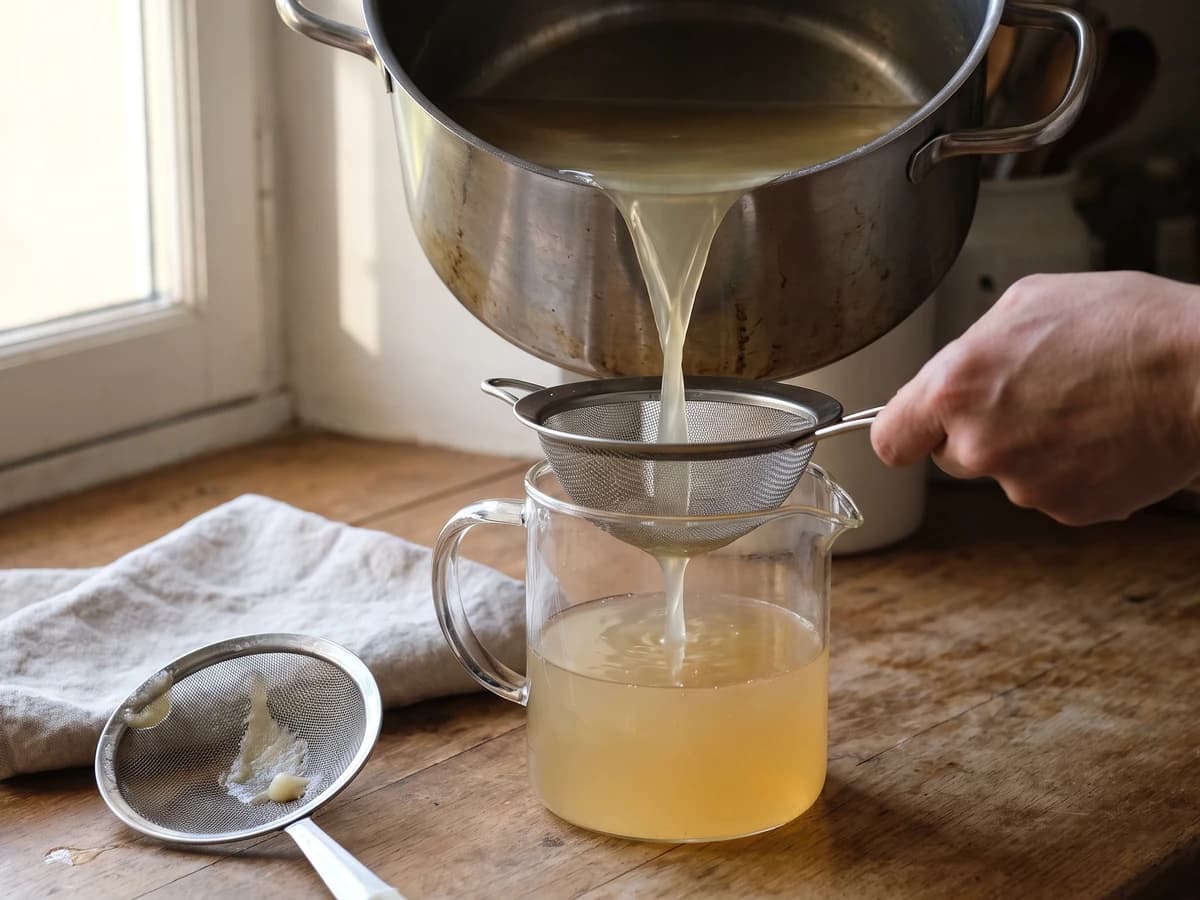
Break the veal bones small, then give them eight hours at a bare tremble. This pale, gelatinous fond becomes the quiet foundation beneath velouté, blanquette, and every sauce that must stay light.
Chef Juliette
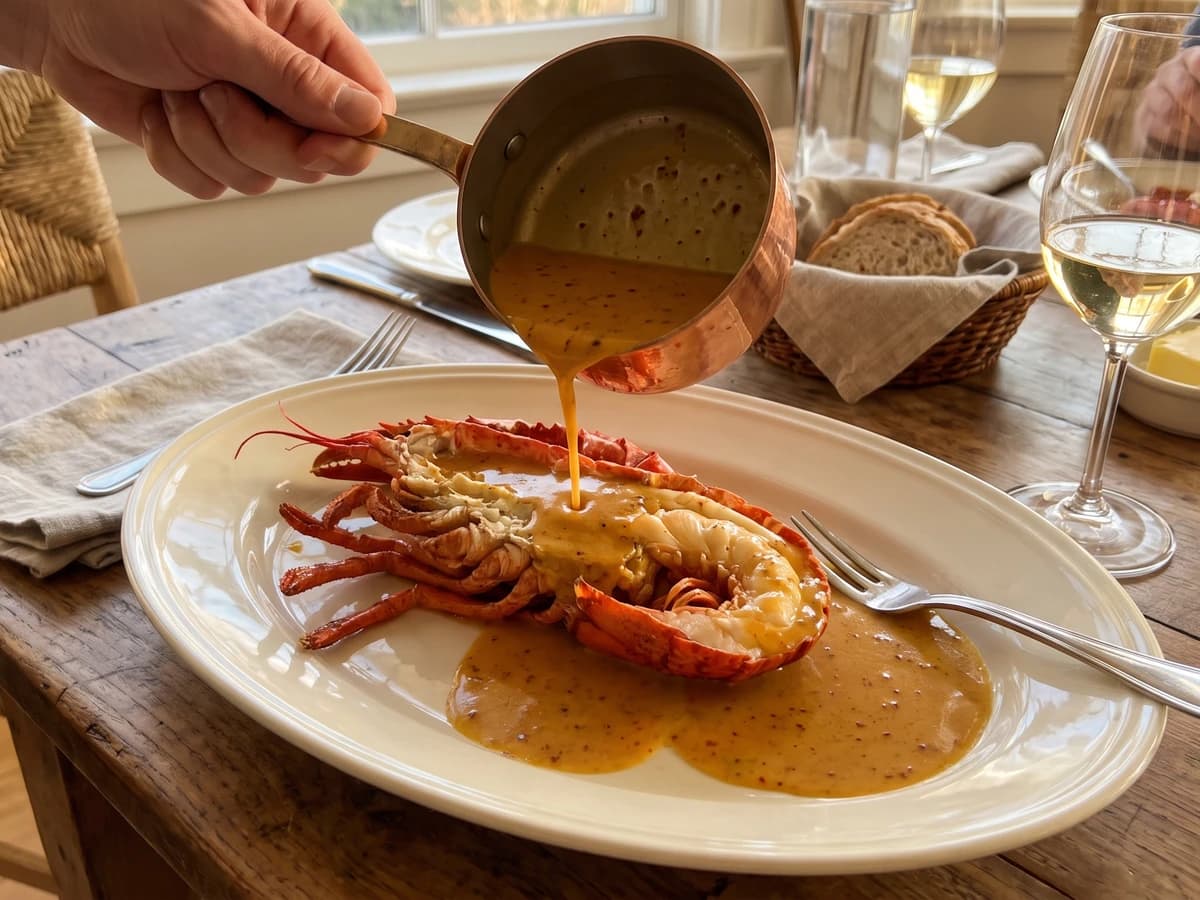
Sauce Orientale concentrates lobster-rich American Sauce with curry, then folds in cream away from the fire: a glossy, gently spiced derivative made for lobster, crayfish, and firm fish.
Chef Juliette
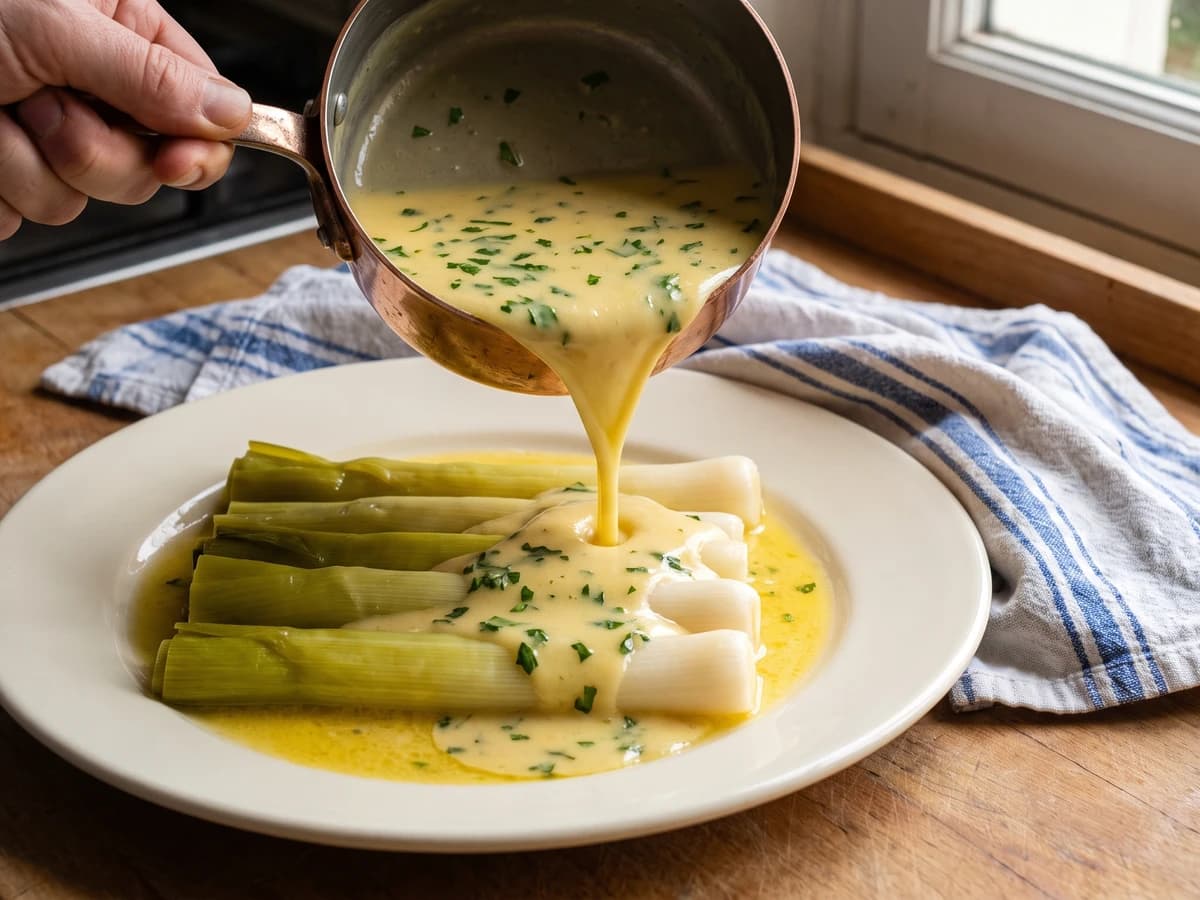
An old lesson in sauce families: Sauce Allemande takes mushroom liquor, then butter, lemon, and parsley, becoming a glossy Poulette for sheep's trotters, leeks, cauliflower, and anything needing gentle richness with a bright edge.