Chef Juliette
Ordinary or White Consommé
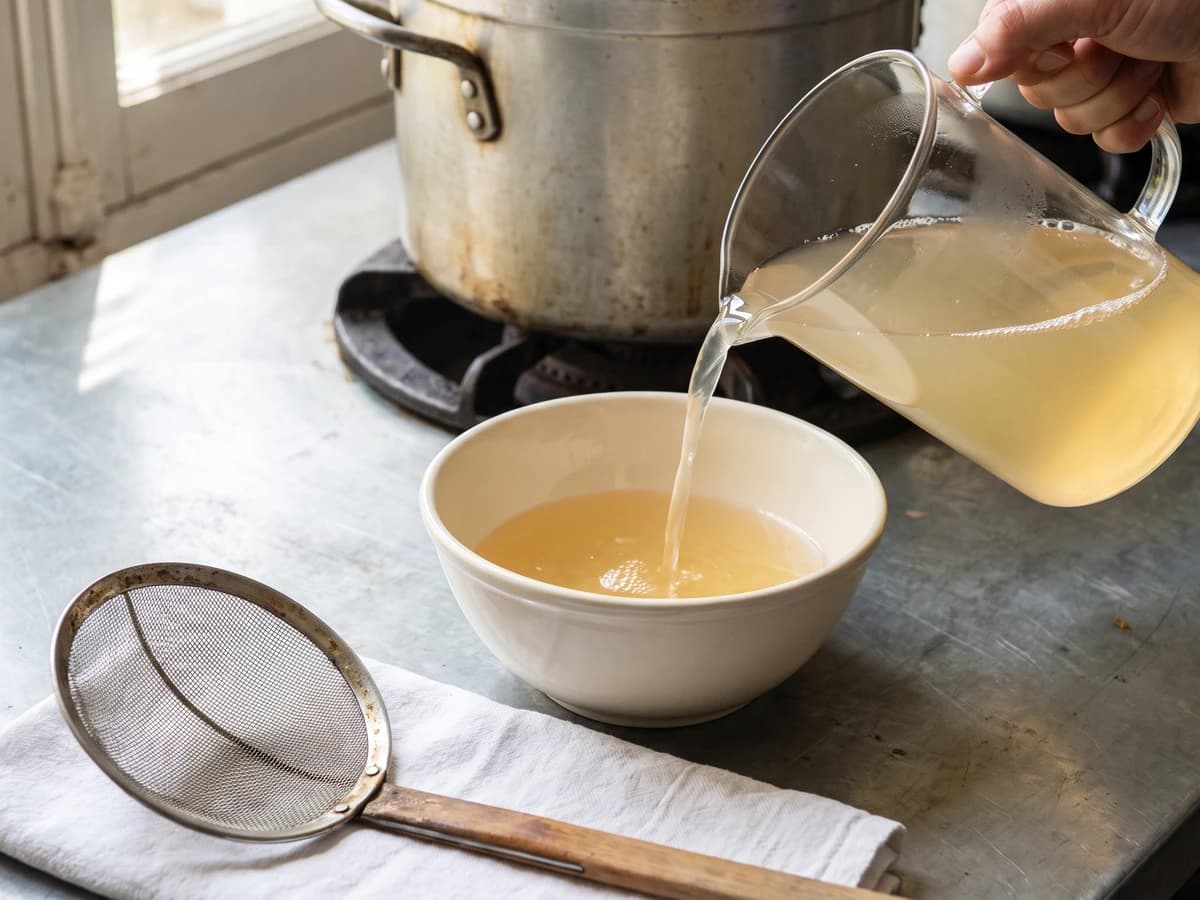
Beef shin, lean beef, and fowl begin in cold water and rise slowly toward a tremble. Skim before the boil, and you learn the quiet discipline that gives every clear French broth its backbone.
A cooking platform built around craft, culture, and the stories behind what we eat.
Created by Chef Juliette
Based on No. 84, Gooseberry Sauce, from Le Guide Culinaire (1907) by Auguste Escoffier
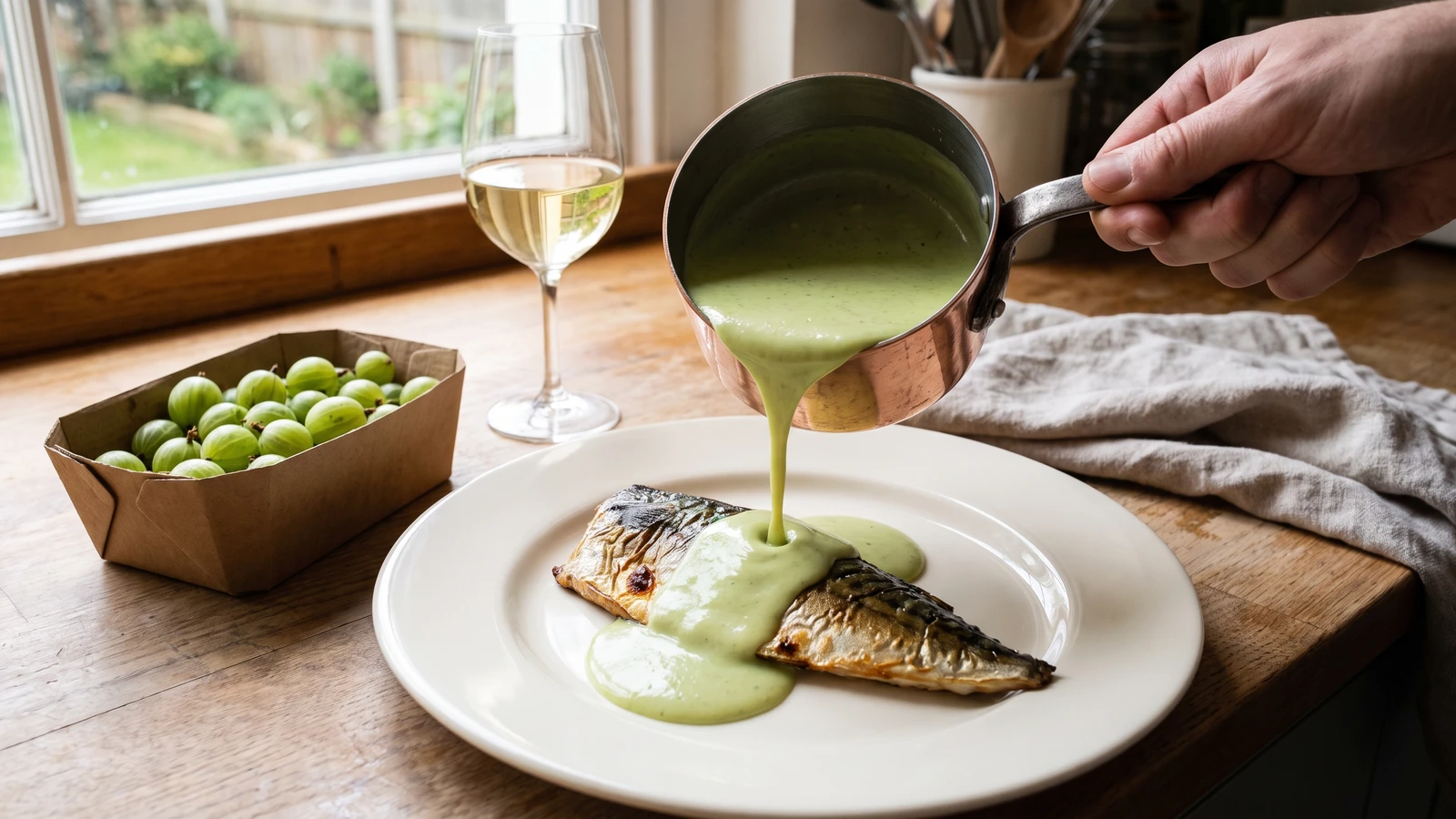
Tart green gooseberries, white wine, and sugar folded into a satin butter sauce, made for the rich flesh of grilled mackerel and proof that acidity gives butter its balance.
Sauce aux Groseilles à Maquereau (Gooseberry Sauce) teaches the discipline behind every fruit-enriched butter sauce. Acidity gives butter balance, but heat decides whether the liaison, its egg-and-cream thickening, stays satin or turns grainy. Before you touch a pan, know this one truth: the gooseberry pulp and Butter Sauce (No. 66) must meet warm, never boiling.
The original assumed a saucier holding the finished Butter Sauce (No. 66), a small lined copper pan, and a tammy for rubbing the fruit perfectly smooth. At home, a stainless steel saucepan and fine-mesh sieve do the same work safely. The separate cook tending each pan was brigade scaffolding and can go; the five-minute blanch, gentle wine cook, and thorough sieving are the dish itself and must stay.
This batch preserves the book's proportions at a practical two-quart quantity. Fold the warm purée into the warm sauce off the fire, then guard it from the boil. That is the step that decides the dish.
Sauce aux groseilles à maquereau belongs to French classical fish service, particularly the Atlantic and Channel table, where rich mackerel invited a tart accompaniment. The berry's French name, groseille à maquereau, literally “mackerel currant,” preserves the famous pairing, although linguists and cooks still debate whether the fish truly gave the fruit its name. Grand kitchens refined the combination by sieving the cooked berries and folding the pulp into a butter sauce, carrying seasonal fish cookery into the formal sauce canon without losing its practical purpose.
Quantity
6 cups (1.4 L / 900 g)
stems and blossom ends removed
Quantity
8 cups (1.9 L / 1.9 kg)
divided
Quantity
2 cups (480 ml / approximately 475 g)
Quantity
3/4 cup plus 1 tablespoon (195 ml / 170 g)
| Ingredient | Quantity |
|---|---|
| Butter Saucefinished and warm | 4 cups (960 ml / approximately 1 kg) Butter Sauce (No. 66) |
| firm green gooseberriesstems and blossom ends removed | 6 cups (1.4 L / 900 g) |
| waterdivided | 8 cups (1.9 L / 1.9 kg) |
| dry white wine | 2 cups (480 ml / approximately 475 g) |
| powdered sugar, meaning superfine or caster sugar | 3/4 cup plus 1 tablespoon (195 ml / 170 g) |
Place the finished Butter Sauce (No. 66) in a heatproof bowl over barely warm water and bring it gently to about 140°F (60°C). It should be fluid and pleasantly warm, with no bubbling around the edge. Hold back 2 tablespoons of the measured water for adjusting or rescuing the sauce, then bring the remainder to a full boil in a stainless steel or enameled saucepan.
Lower the green gooseberries into the boiling water. Let the water return to the boil, then cook for five full minutes, exactly as the source formula directs. The skins will dull and begin to soften, but the berries needn't collapse yet. Drain them thoroughly and empty the saucepan.
Return the drained gooseberries to the saucepan with the white wine and powdered sugar. Bring them only to a gentle simmer, stirring until the sugar dissolves, then cook uncovered for 12 to 18 minutes. The berries are ready when they collapse under the spoon and the liquid turns pale green and lightly syrupy. If the pan threatens to catch before the fruit softens, lower the heat and add 1 tablespoon of the reserved water.
Set a fine-mesh sieve over a clean bowl and rub the warm fruit and all its cooking liquid through with a flexible scraper or the back of a ladle. Scrape the thick pulp clinging beneath the sieve into the bowl, but stop when only seeds and fibrous skins remain above. The tammy was not ceremony: removing those seeds and skins is what lets the finished sauce feel like satin.
Lift the warm Butter Sauce (No. 66) away from its water bath. Whisk in the warm gooseberry pulp in three additions, combining each completely before adding the next. Do not return the sauce to direct heat and do not let it boil after the liaison. If it turns greasy or curdled, stop. Ça se rattrape: whisk 1 teaspoon of the reserved cool water in a clean bowl, add one spoonful of the broken sauce, and then rebuild it gradually, spoonful by spoonful.
The finished sauce should fall from a spoon in a smooth, glossy ribbon, with butter rounding the first taste and tart gooseberry cutting cleanly through the finish. If it is too thick, loosen it off the heat with the remaining reserved water, a teaspoon at a time. Serve warm with grilled mackerel or its poached fillets, using enough sauce to meet every rich bite. À table!
1 serving (about 60g)
Culinary guides, cultural storytelling, and the editorial depth that makes cooking meaningful.
Discover Culinary ExplorerChef Juliette
Beef shin, lean beef, and fowl begin in cold water and rise slowly toward a tremble. Skim before the boil, and you learn the quiet discipline that gives every clear French broth its backbone.
Chef Juliette
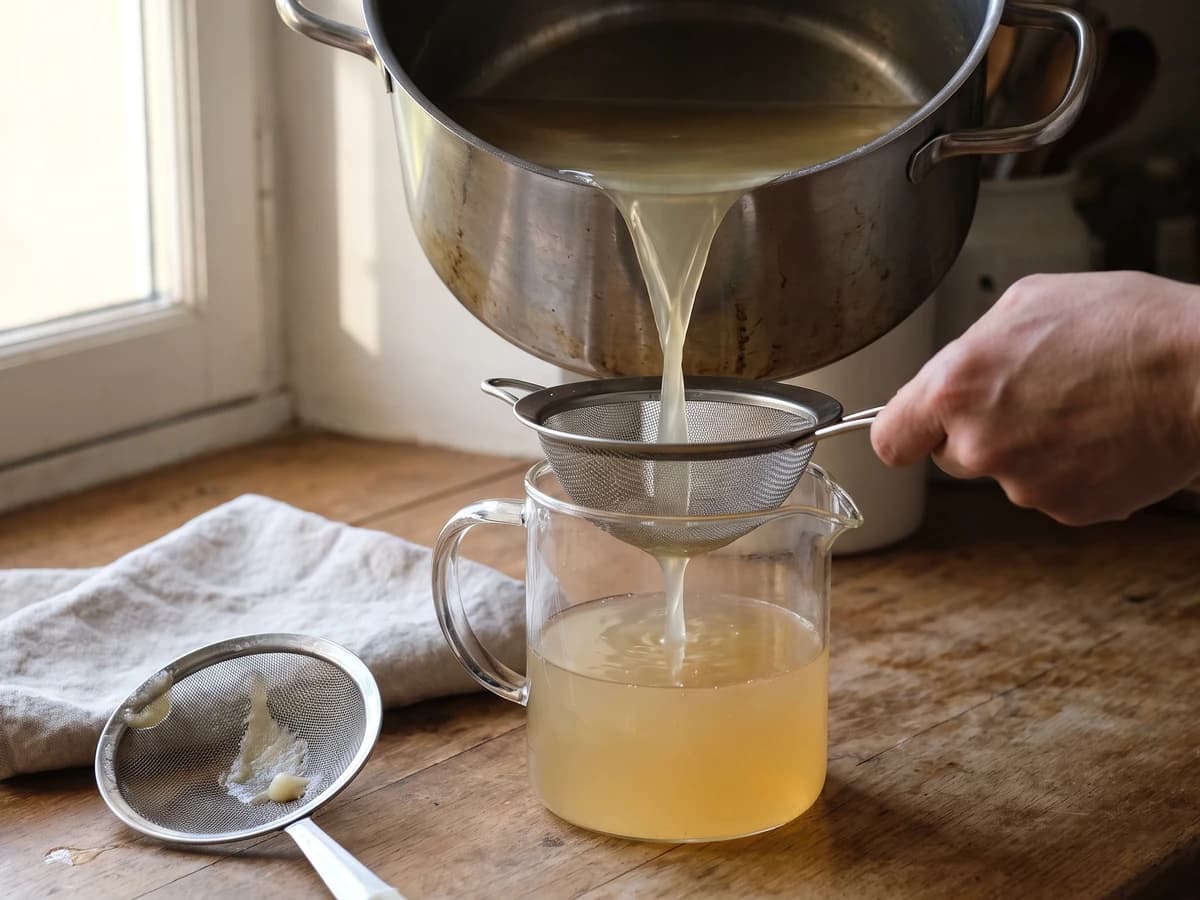
Break the veal bones small, then give them eight hours at a bare tremble. This pale, gelatinous fond becomes the quiet foundation beneath velouté, blanquette, and every sauce that must stay light.
Chef Juliette
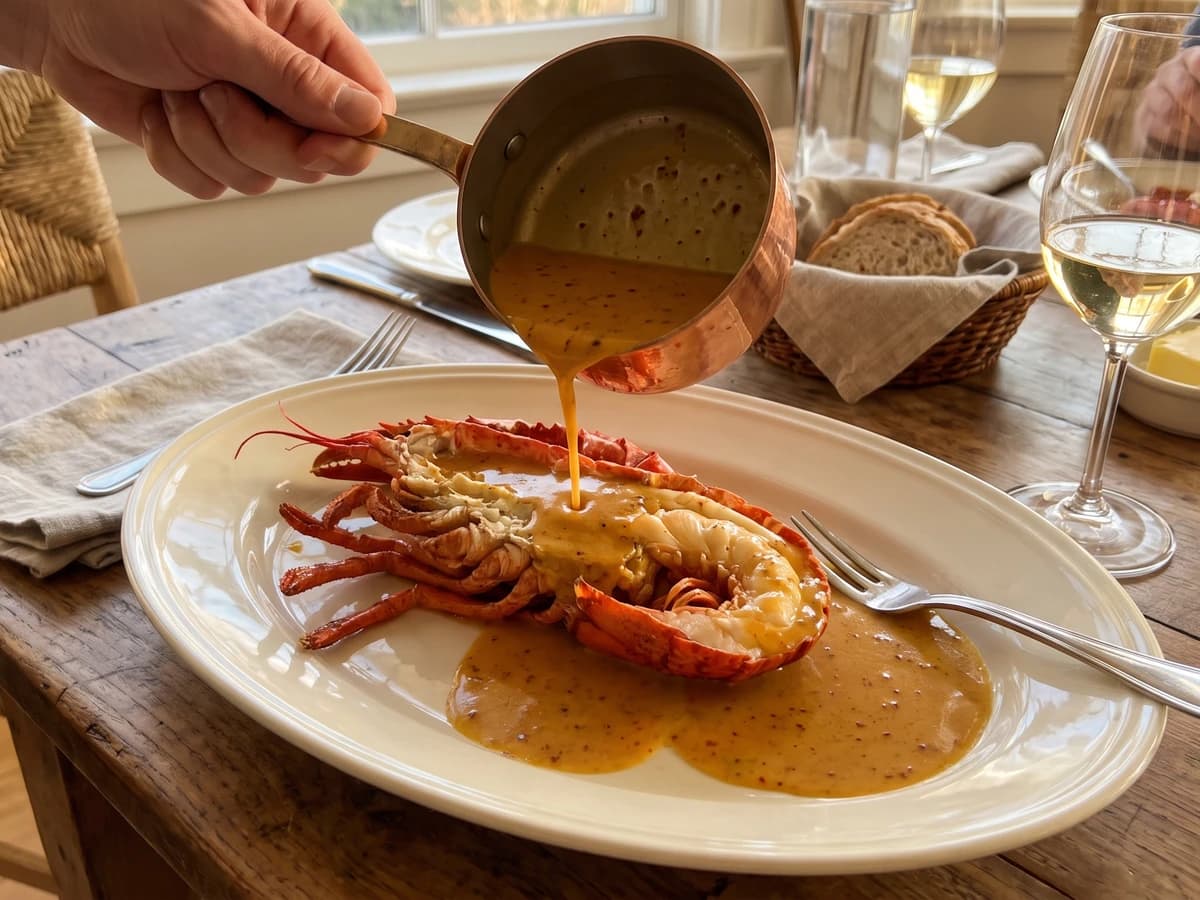
Sauce Orientale concentrates lobster-rich American Sauce with curry, then folds in cream away from the fire: a glossy, gently spiced derivative made for lobster, crayfish, and firm fish.
Chef Juliette
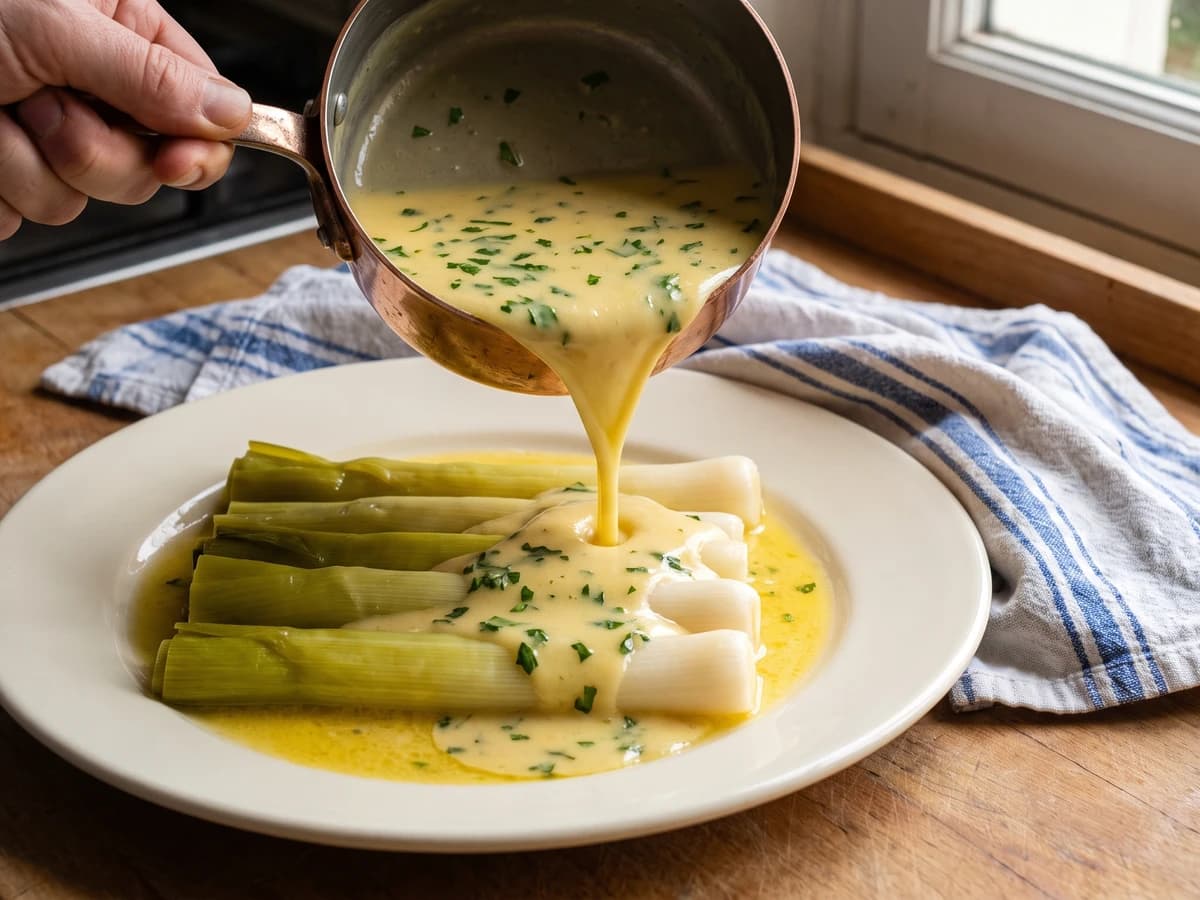
An old lesson in sauce families: Sauce Allemande takes mushroom liquor, then butter, lemon, and parsley, becoming a glossy Poulette for sheep's trotters, leeks, cauliflower, and anything needing gentle richness with a bright edge.