Chef Juliette
Ordinary or White Consommé
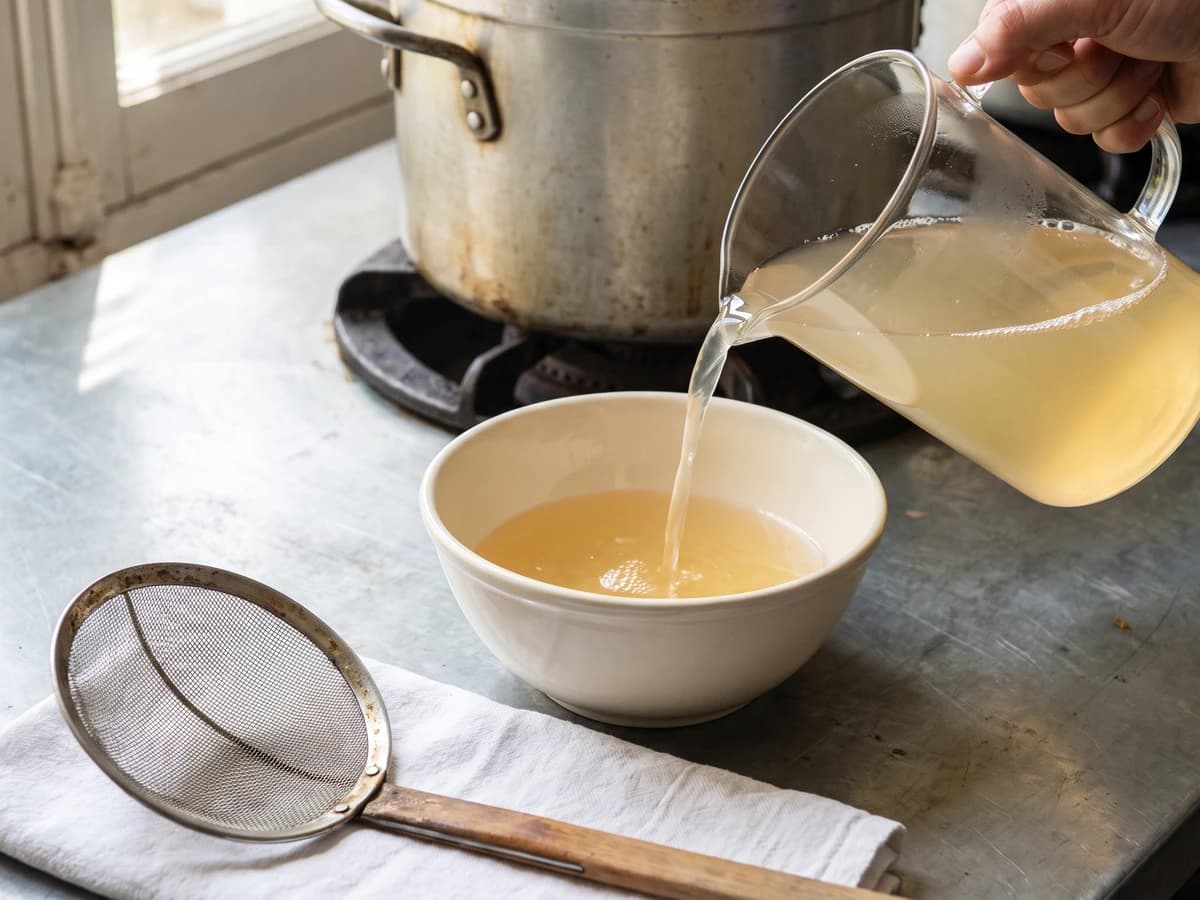
Beef shin, lean beef, and fowl begin in cold water and rise slowly toward a tremble. Skim before the boil, and you learn the quiet discipline that gives every clear French broth its backbone.
A cooking platform built around craft, culture, and the stories behind what we eat.
Created by Chef Juliette
Based on No. 66, Butter Sauce, from Le Guide Culinaire (1907) by Auguste Escoffier
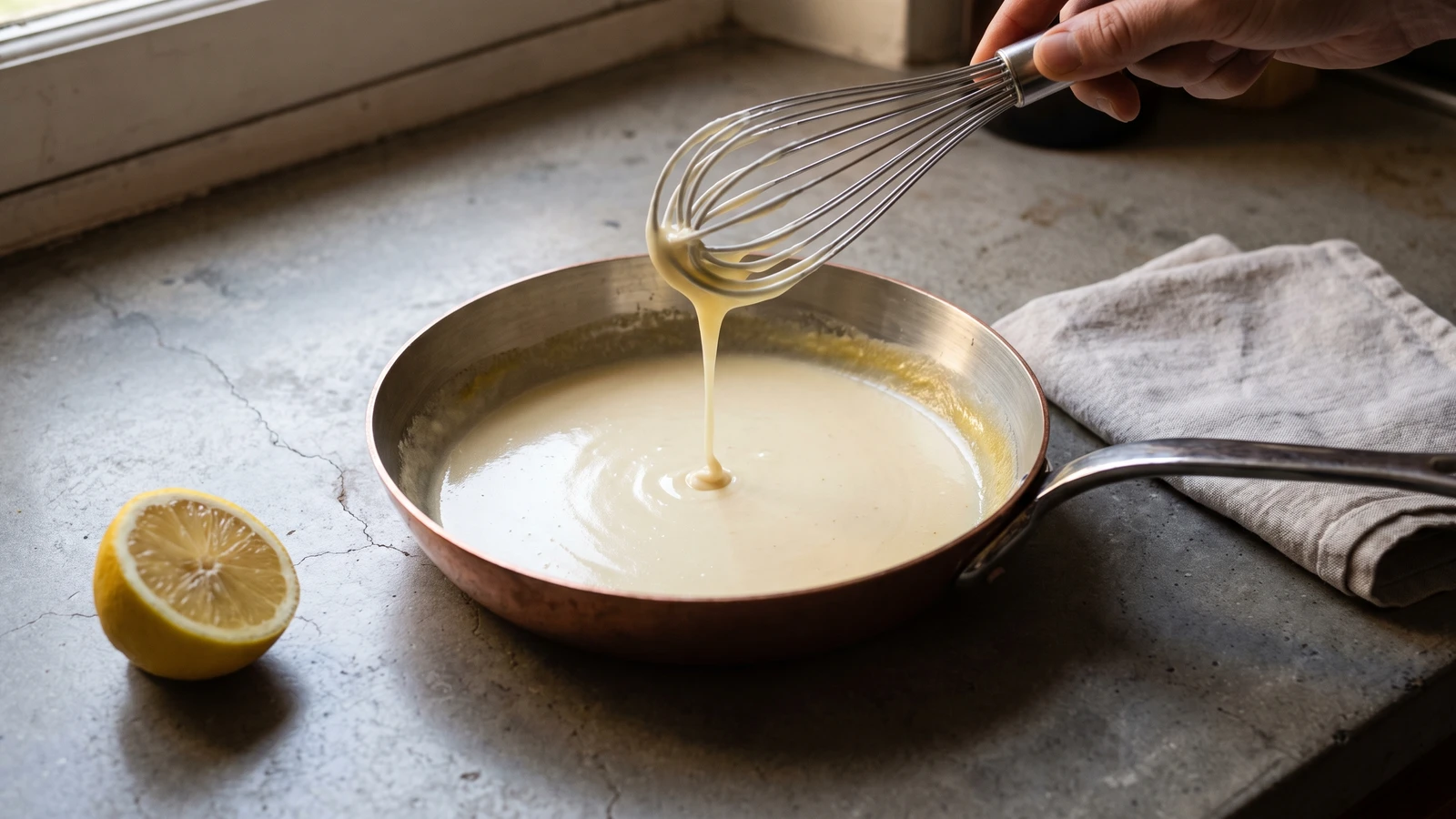
Sauce au Beurre teaches the quiet control behind a classical liaison: pale roux, salted water, yolks, cream, lemon, and fresh butter held below the boil until glossy.
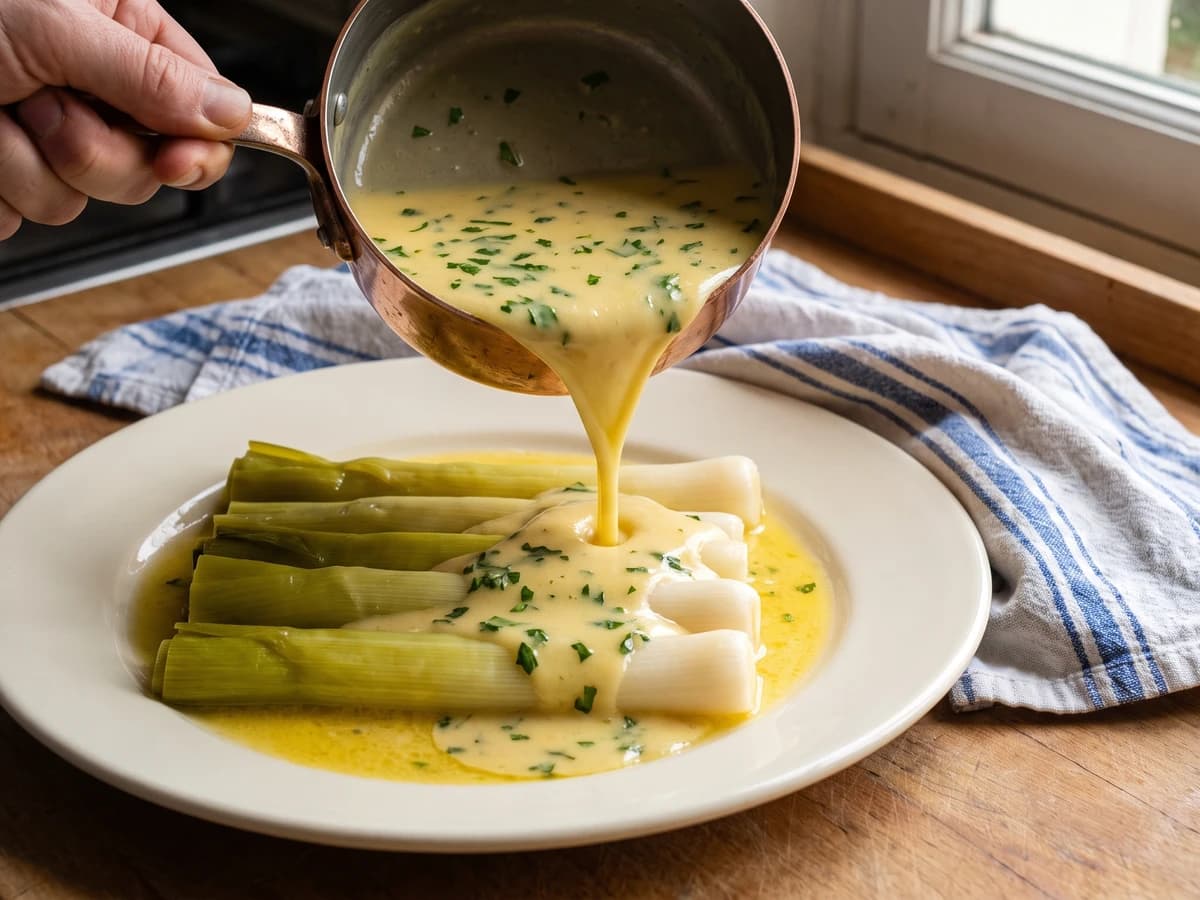
Sauce au Beurre (butter sauce) teaches one true thing: once yolks and cream enter the pan, boiling is finished. Respect that boundary and a few plain ingredients become an ivory sauce with the soft gloss of melted butter, enough lemon to lift it, and the body to cloak fish or vegetables without burying them.
The brigade version gave a saucier one job and a tammy for the finish. This particular formula requires neither a stockpot kept on the fire nor a salamander; its real assumptions are constant whisking and immediate control of the heat. At home, a heavy saucepan, a bowl, a whisk, and a fine-mesh sieve do the work. The tammy and spare pair of hands were scaffolding, so they can go. The white roux, the liaison, and the final fresh butter are the dish, so they stay. Every ratio is preserved and set for about two quarts, with tempering added to give one cook more control without changing the sauce's character.
The step that matters is the liaison, the yolk-and-cream binding. Temper it, keep the saucepan below a simmer, and watch the surface rather than the clock. If the sauce begins to grain, lift it from the heat at once. Ça se rattrape, and the method below shows you where. One cook, one stove, one evening.
Sauce au Beurre belongs to the classical Parisian sauce repertoire, where its mild richness made it a companion to poached fish and delicate vegetables. It should not be confused with beurre blanc from Nantes and the Loire country, which is an acidic butter emulsion without flour, yolks, or cream. Sauce au Beurre instead follows the white-roux family, enriched at the finish by a liaison and a generous mounting of fresh butter.
Quantity
¾ cup (180 ml / 85 g)
sifted
Quantity
6 tablespoons (90 ml / 85 g)
melted
Quantity
6 cups (1.42 L / 1.42 kg)
Quantity
1¾ teaspoons (9 ml / 11 g)
Quantity
9
Quantity
¾ cup (180 ml / 180 g)
Quantity
2¼ tablespoons (34 ml / 34 g)
from about ¾ medium lemon
Quantity
15 tablespoons (225 ml / 213 g)
cool and cut into small cubes
| Ingredient | Quantity |
|---|---|
| all-purpose floursifted | ¾ cup (180 ml / 85 g) |
| unsalted buttermelted | 6 tablespoons (90 ml / 85 g) |
| water | 6 cups (1.42 L / 1.42 kg) |
| fine salt | 1¾ teaspoons (9 ml / 11 g) |
| large egg yolks | 9 |
| heavy cream | ¾ cup (180 ml / 180 g) |
| fresh lemon juicefrom about ¾ medium lemon | 2¼ tablespoons (34 ml / 34 g) |
| best-quality unsalted buttercool and cut into small cubes | 15 tablespoons (225 ml / 213 g) |
Whisk the egg yolks, cream, and lemon juice in a heatproof bowl until completely smooth. Set this liaison within reach of the stove. Once the roux is loosened, the work moves quickly, and having the bowl ready is the home cook's honest equivalent of another pair of hands.
Bring the water and salt just to the boil in a separate saucepan. Meanwhile, place the melted butter in a heavy 4-quart saucepan over medium-low heat and whisk in the sifted flour. Cook the roux for 2 to 3 minutes, whisking steadily, until it bubbles softly and loses its raw flour smell without taking any colour. This must remain a roux blanc, a white roux; browning it would change both the flavour and the ivory colour of the finished sauce.
Take the roux from the heat and add one ladle of the boiling salted water, whisking briskly until perfectly smooth. Add the remaining water in four or five additions, fully smoothing each one before the next. Return the pan to low heat and stir briskly for 3 to 5 minutes, keeping the sauce hot but never boiling, until it lightly coats a spoon. If lumps appear, stop adding water and whisk the thick base smooth before continuing. Any stubborn specks will be caught by the sieve later.
Whisk about 2 cups of the hot roux base into the liaison in a thin, steady stream. Take the saucepan off the heat, then slowly whisk the warmed liaison back into the remaining sauce. Return it to the lowest heat and stir constantly until it coats the back of a spoon and reaches about 160 to 165°F (71 to 74°C), with no bubbles breaking the surface. If it begins to look grainy, lift it from the heat immediately, set the pan over a bowl of cold water, and whisk until smooth. Ça se rattrape when caught early; boiling it into scrambled yolks cannot be undone.
Press the sauce through a fine-mesh sieve into a clean warm saucepan or heatproof bowl, using a flexible spatula to work it through. This replaces the brigade's tammy without changing its purpose: removing any flour specks or traces of cooked yolk so the finish is perfectly smooth.
With the sauce off the heat, whisk in the cool butter a few cubes at a time, waiting until each addition disappears before adding more. This is monter au beurre, whisking fresh butter into the sauce at the finish, and it supplies the sheen and rounded flavour the name promises. If the surface turns greasy, stop adding butter, cool the bowl briefly over cold water, and whisk firmly until the emulsion comes back together. Continue only when it is smooth again.
Serve the Sauce au Beurre immediately, or hold it for no more than 30 minutes over a warm bain-marie at about 140 to 145°F (60 to 63°C). Stir occasionally and cover the surface directly with parchment so a skin cannot form. If it tightens, whisk in hot water a teaspoon at a time. Never return it to a boil. Spoon it generously over poached fish, boiled potatoes, asparagus, or cauliflower. À table!
1 serving (about 62g)
Culinary guides, cultural storytelling, and the editorial depth that makes cooking meaningful.
Discover Culinary ExplorerChef Juliette
Beef shin, lean beef, and fowl begin in cold water and rise slowly toward a tremble. Skim before the boil, and you learn the quiet discipline that gives every clear French broth its backbone.
Chef Juliette
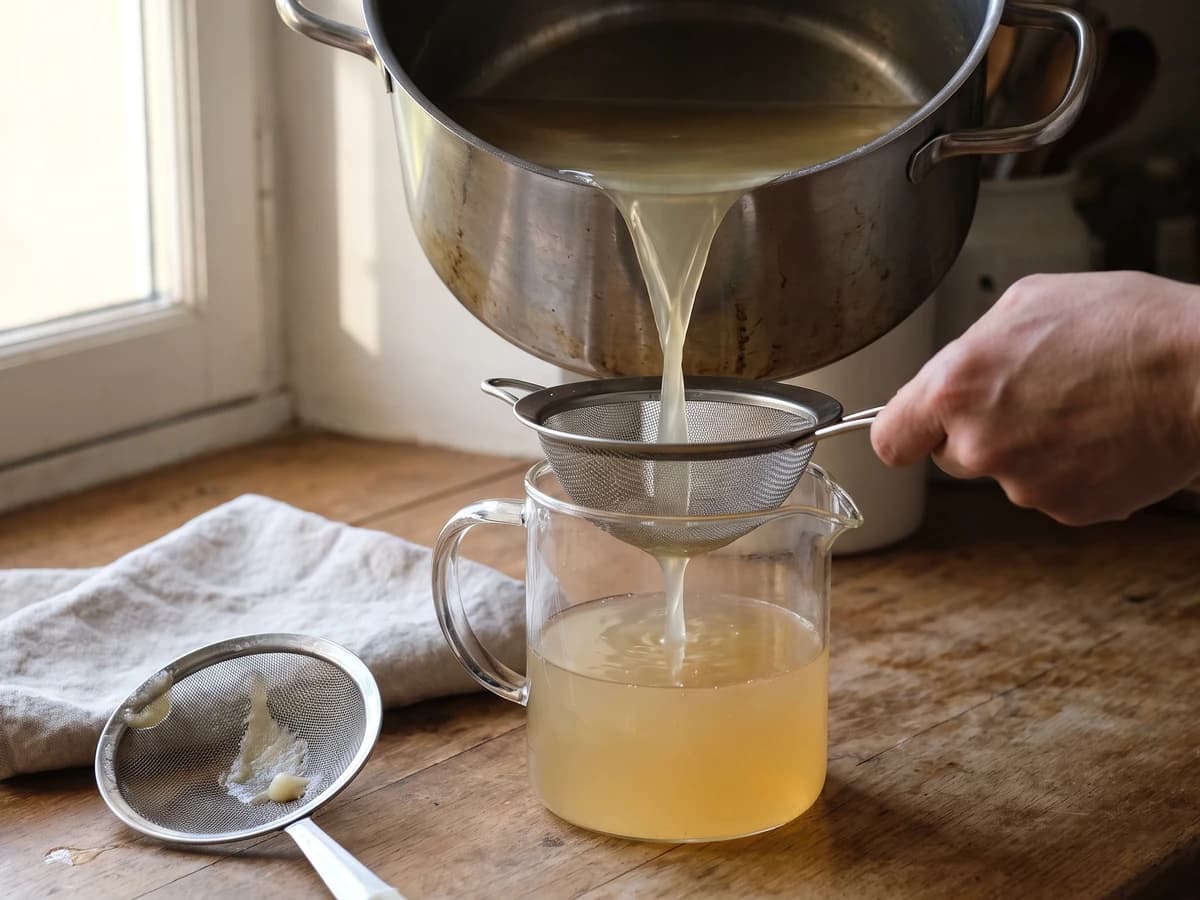
Break the veal bones small, then give them eight hours at a bare tremble. This pale, gelatinous fond becomes the quiet foundation beneath velouté, blanquette, and every sauce that must stay light.
Chef Juliette
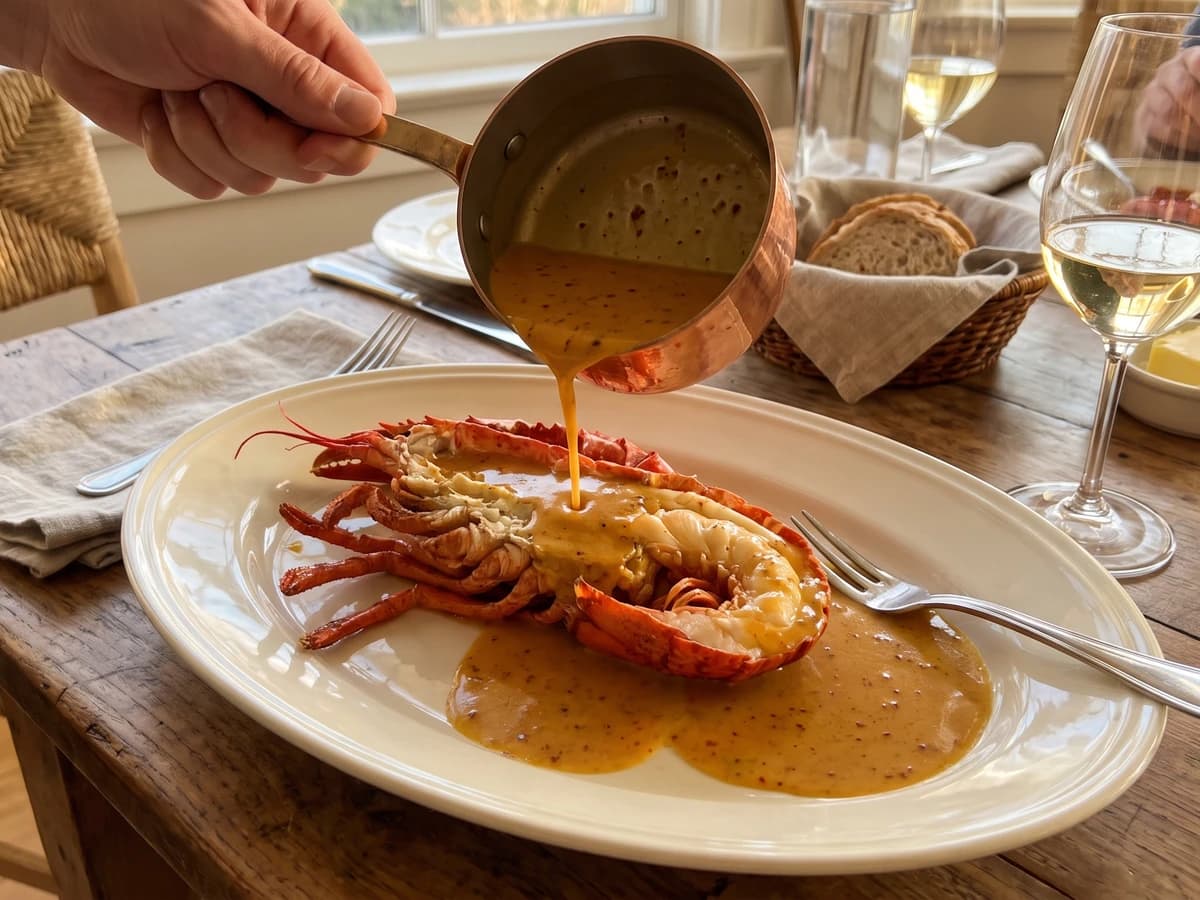
Sauce Orientale concentrates lobster-rich American Sauce with curry, then folds in cream away from the fire: a glossy, gently spiced derivative made for lobster, crayfish, and firm fish.
Chef Juliette
An old lesson in sauce families: Sauce Allemande takes mushroom liquor, then butter, lemon, and parsley, becoming a glossy Poulette for sheep's trotters, leeks, cauliflower, and anything needing gentle richness with a bright edge.