Chef Juliette
Ordinary or White Consommé
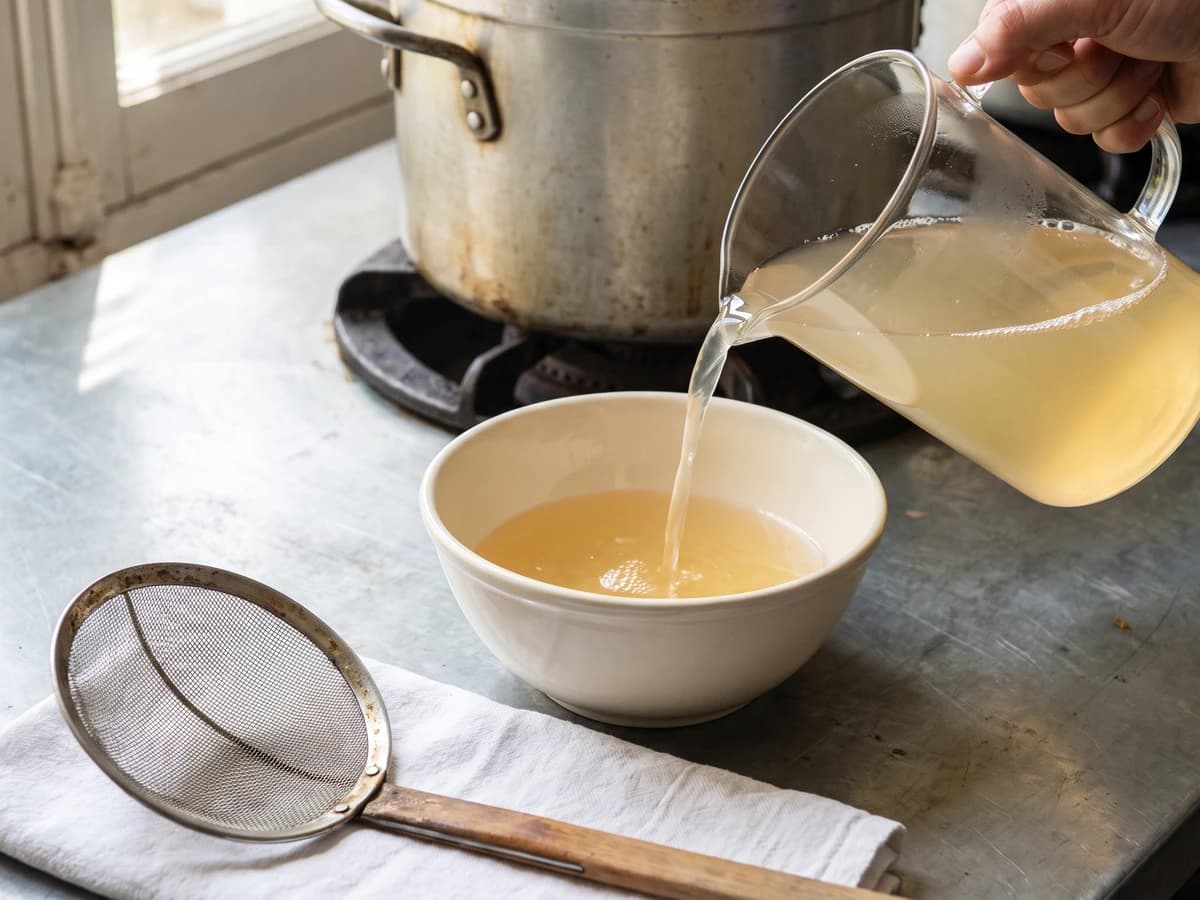
Beef shin, lean beef, and fowl begin in cold water and rise slowly toward a tremble. Skim before the boil, and you learn the quiet discipline that gives every clear French broth its backbone.
A cooking platform built around craft, culture, and the stories behind what we eat.
Created by Chef Juliette
Based on No. 83, Herb Sauce, from Le Guide Culinaire (1907) by Auguste Escoffier
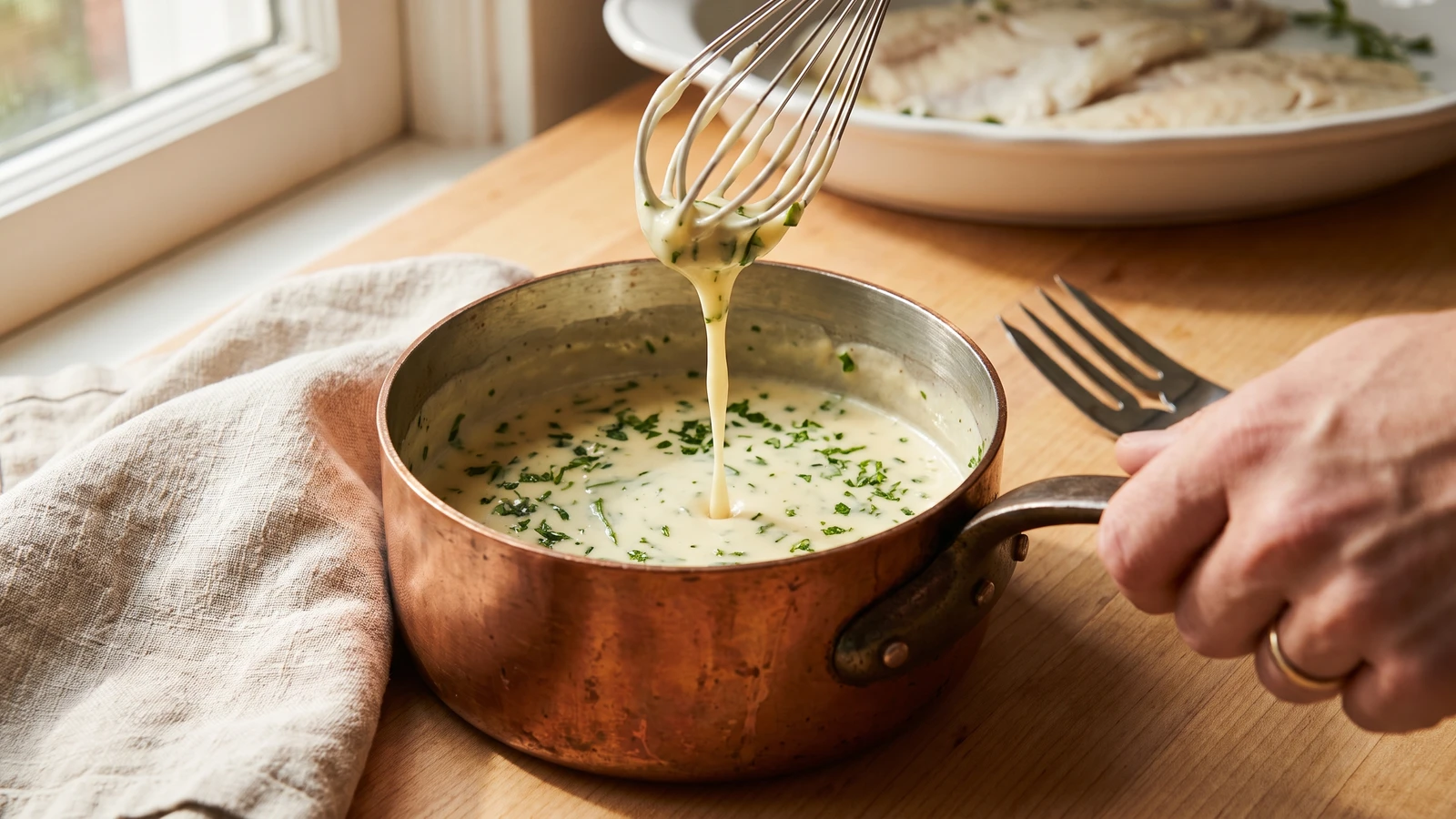
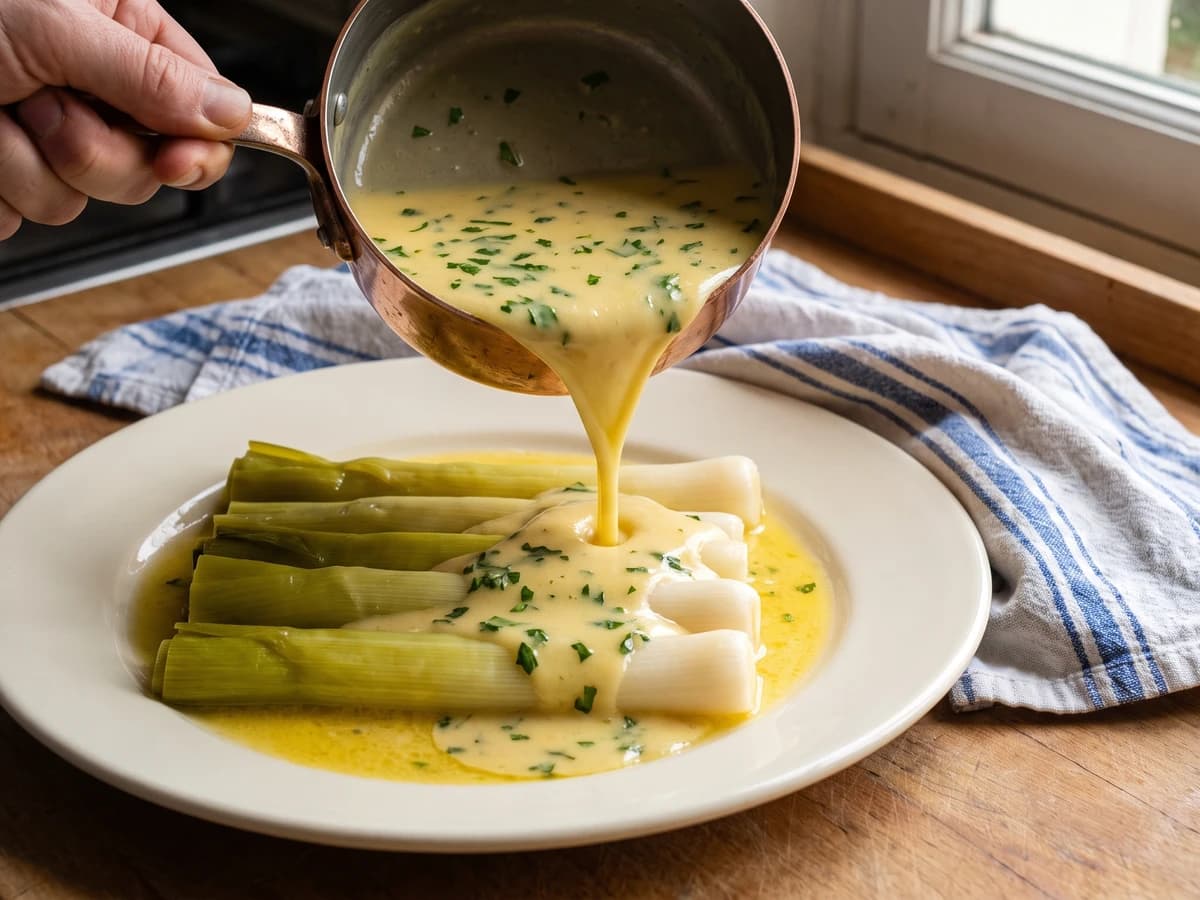
Sauce aux Fines Herbes cloaks poached fish in a glossy white-wine emulsion, sharpened by shallot butter and kept alive with parsley, chervil, tarragon, and chives.
Sauce aux Fines Herbes (Herb Sauce) teaches one clean rule: once the white-wine base is hot, the fire has finished its work. The shallot butter must be whisked in away from the heat, where it thickens the sauce into a glossy emulsion instead of melting into an oily puddle. The herbs follow last, still green and distinct.
The original assumed a saucier with White Wine Sauce (No. 111) ready for service and enough poached fish to justify a full pint. Your honest equivalent is one cup of the prepared sauce, a small saucepan, and a whisk. I have halved the book's quantity for four to six portions while keeping its proportions and sequence intact. The dedicated saucier and service volume were brigade scaffolding; the finished white-wine foundation, shallot butter, off-fire mounting, and precise quartet of fresh herbs are the dish and must stay.
This is a quiet sauce, ivory, glossy, and green-flecked, made to flatter boiled or poached fish without burying its delicacy. Take the pan completely off the fire before the first piece of butter goes in. That is the step that decides everything.
Sauce aux fines herbes belongs to the Parisian classical fish-sauce repertoire, where a prepared white-wine sauce could be turned quickly into a distinct derivative for boiled or poached fish. It traveled readily from grand kitchens to bourgeois dining rooms because its finish required no special equipment, only a saucepan, fresh butter, and an attentive hand. Fines herbes is not a vague invitation to empty the herb garden: here it means the deliberate mixture of parsley, chervil, tarragon, and chives named by the canon.
Quantity
3 tablespoons (45 ml / 43 g)
cool and cut into 6 pieces
Quantity
1½ teaspoons (7.5 ml / about 2 g) combined
finely chopped and mixed
| Ingredient | Quantity |
|---|---|
| White Wine Sauceprepared | 1 cup (240 ml / about 240 g) White Wine Sauce (No. 111) |
| Shallot Buttercool and cut into 6 pieces | 3 tablespoons (45 ml / 43 g) |
| flat-leaf parsley, chervil, tarragon, and chivesfinely chopped and mixed | 1½ teaspoons (7.5 ml / about 2 g) combined |
Wash the herbs only if needed, then dry them thoroughly before chopping. Measure the parsley, chervil, tarragon, and chives after they are finely chopped and mixed; the book calls for one blended spoonful, not that amount of each herb. Keep the Shallot Butter cool but pliable, cutting it into six pieces so it incorporates evenly.
Put the prepared White Wine Sauce (No. 111) in a small heavy-bottomed saucepan and warm it gently, whisking occasionally, until it barely trembles and coats the back of a spoon. Do not reduce it aggressively. This component already carries the fish fumet, body, and seasoning on which the finished sauce depends.
Take the saucepan completely off the heat and wait about fifteen seconds. Monter au beurre, mounting with butter, means whisking in the Shallot Butter one piece at a time, allowing each piece to disappear before adding the next. The sauce should become fuller, smoother, and visibly glossy. If it turns oily, stop immediately. Ça se rattrape: put 1 teaspoon of cold water in a clean bowl, whisk in a spoonful of the broken sauce until smooth, then add the remainder gradually. Do not return it to the fire.
Fold in the chopped parsley, chervil, tarragon, and chives as soon as the last butter has emulsified. Whisk only long enough to distribute the green flecks. The herbs should taste fresh and separate, with tarragon giving perfume, chervil softness, chives a mild onion note, and parsley the clean green backbone.
Drain boiled or poached fish thoroughly and blot away any water collecting on the serving platter, because that water thins the sauce on contact. Spoon the Sauce aux Fines Herbes over the fish immediately, or send it to the table in a warmed sauceboat. Never hold it over heat once finished. À table!
1 serving (about 60g)
Culinary guides, cultural storytelling, and the editorial depth that makes cooking meaningful.
Discover Culinary ExplorerChef Juliette
Beef shin, lean beef, and fowl begin in cold water and rise slowly toward a tremble. Skim before the boil, and you learn the quiet discipline that gives every clear French broth its backbone.
Chef Juliette
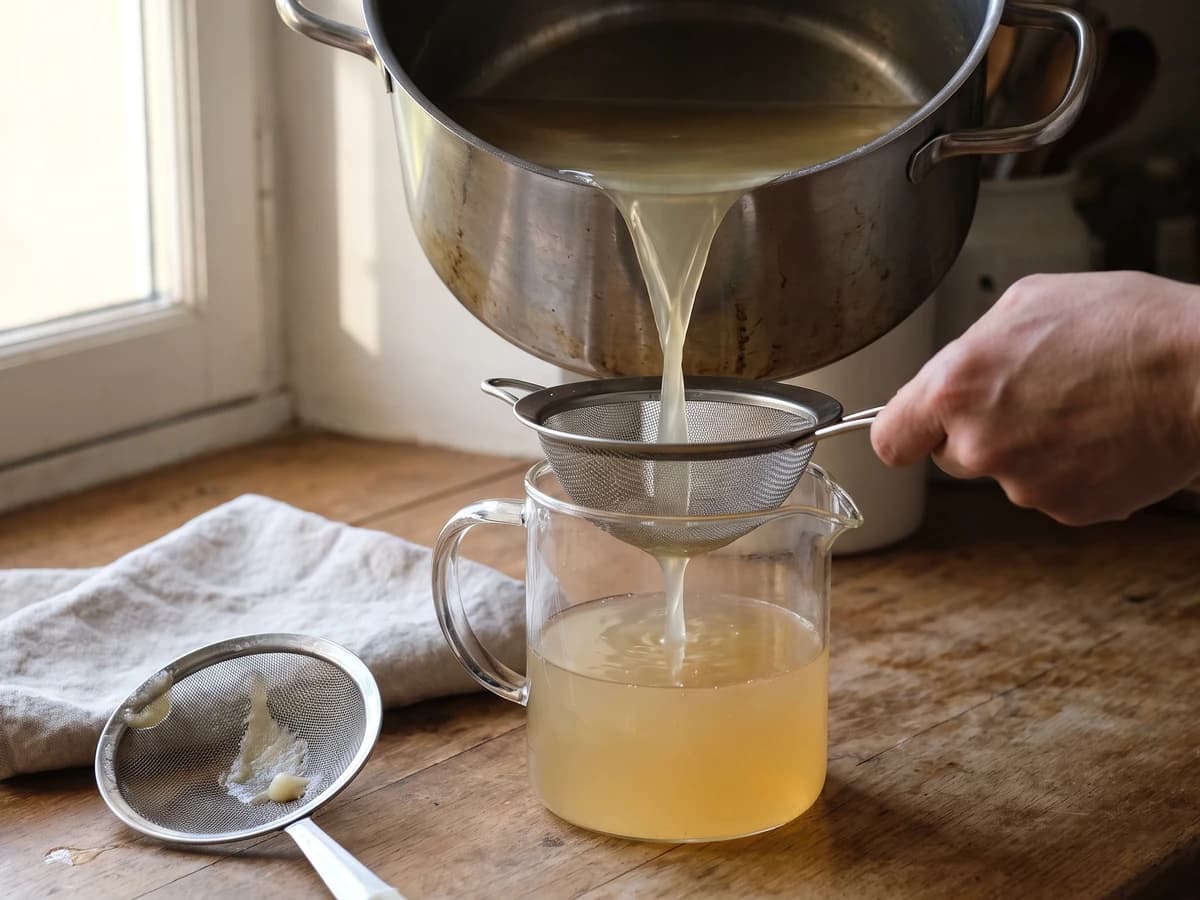
Break the veal bones small, then give them eight hours at a bare tremble. This pale, gelatinous fond becomes the quiet foundation beneath velouté, blanquette, and every sauce that must stay light.
Chef Juliette
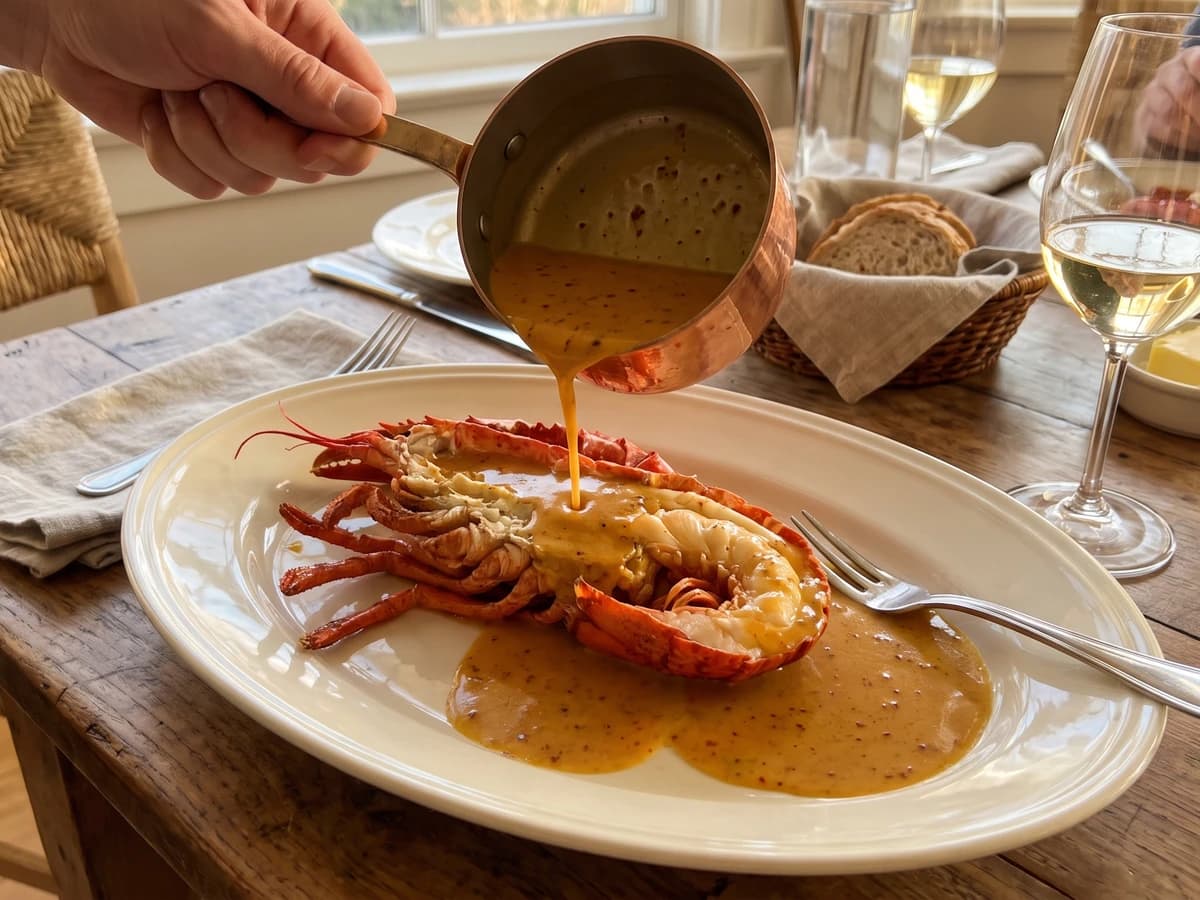
Sauce Orientale concentrates lobster-rich American Sauce with curry, then folds in cream away from the fire: a glossy, gently spiced derivative made for lobster, crayfish, and firm fish.
Chef Juliette
An old lesson in sauce families: Sauce Allemande takes mushroom liquor, then butter, lemon, and parsley, becoming a glossy Poulette for sheep's trotters, leeks, cauliflower, and anything needing gentle richness with a bright edge.