Chef Juliette
Ordinary or White Consommé
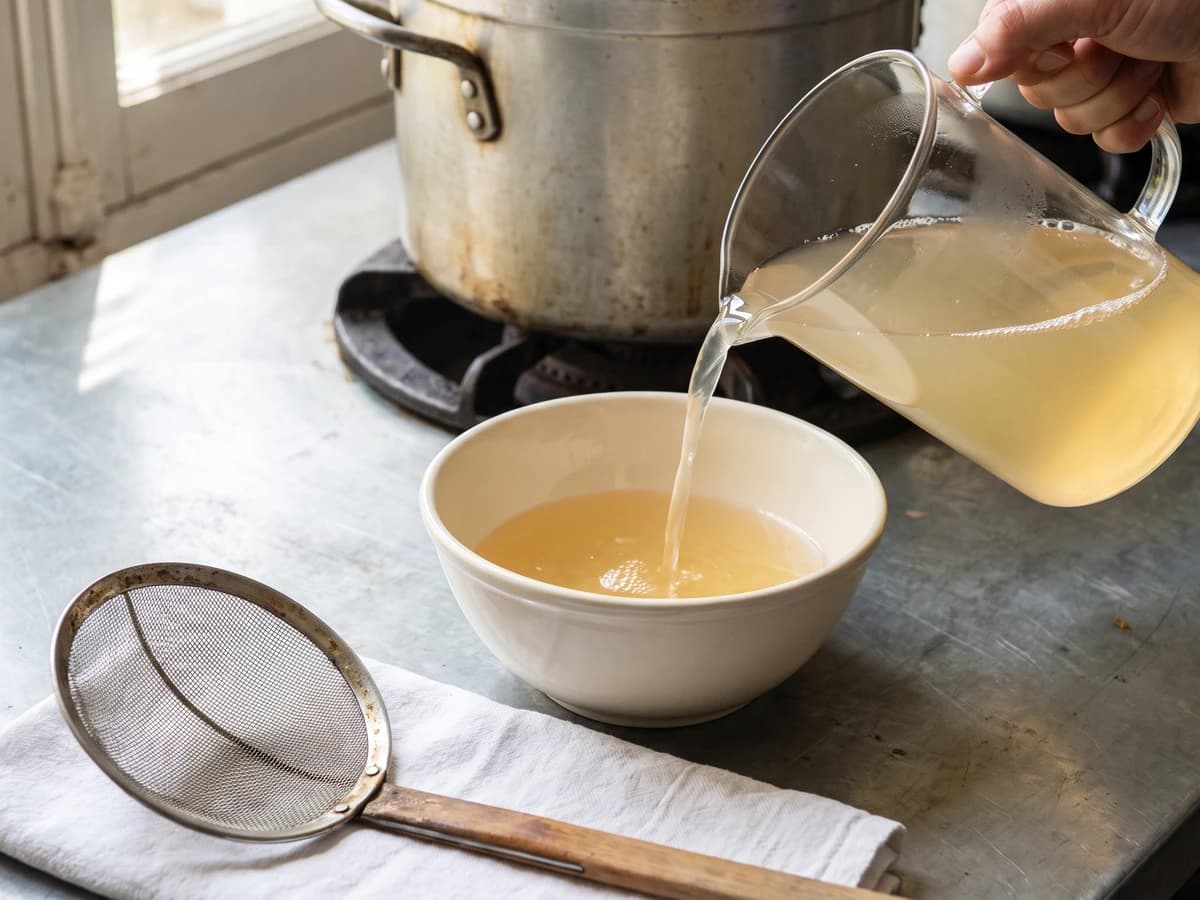
Beef shin, lean beef, and fowl begin in cold water and rise slowly toward a tremble. Skim before the boil, and you learn the quiet discipline that gives every clear French broth its backbone.
A cooking platform built around craft, culture, and the stories behind what we eat.
Created by Chef Juliette
Based on No. 82, Diplomate Sauce, from Le Guide Culinaire (1907) by Auguste Escoffier
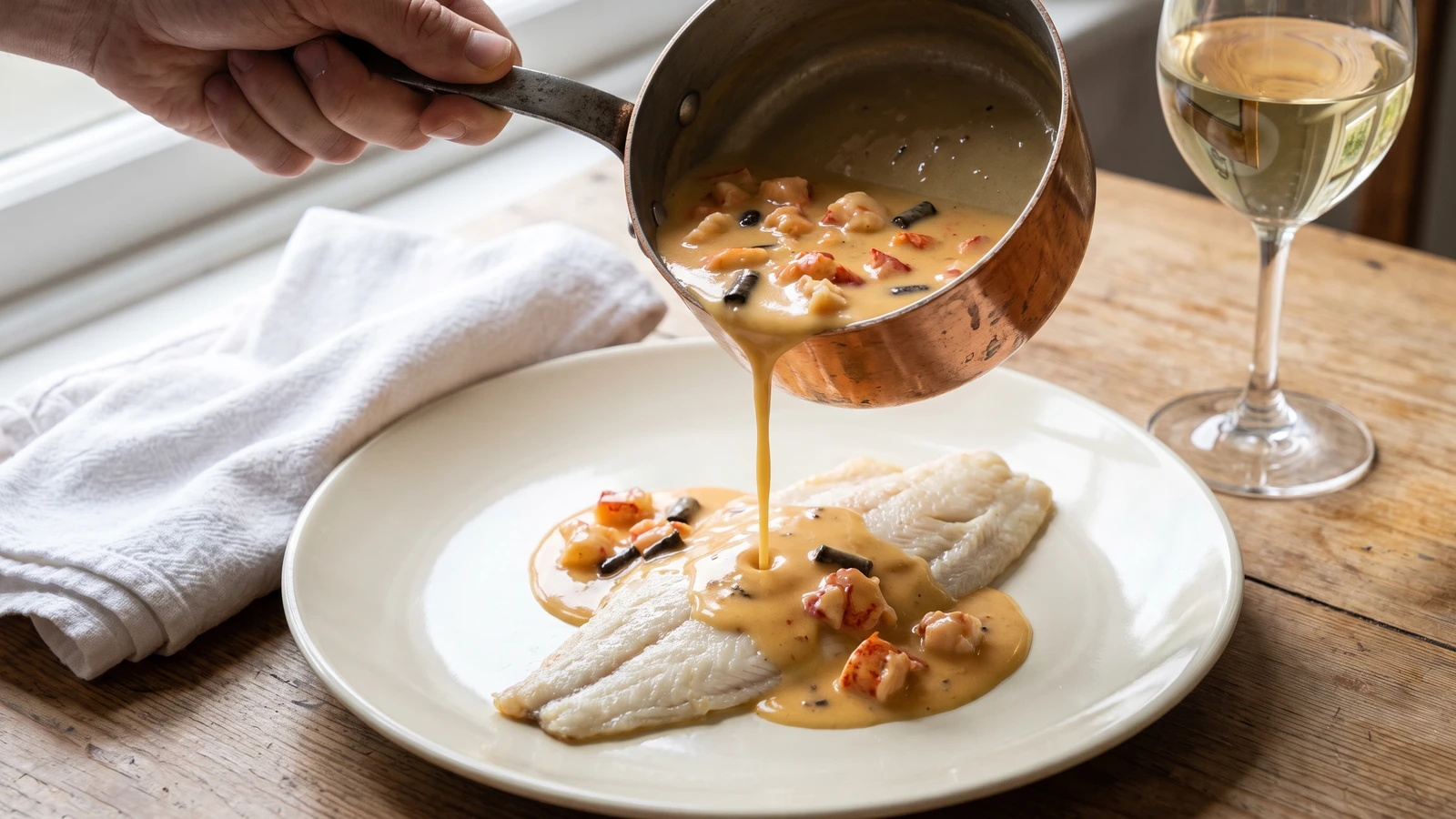
A canonical derivative built on Normande and finished with coral lobster butter, sweet lobster meat, and black truffle, teaching the gentle heat and restraint that preserve a rich emulsion.
Sauce Diplomate (lobster-and-truffle Normande sauce) teaches one true thing: once the lobster butter enters, heat is no longer cooking, it is control. Keep the sauce below a simmer and it remains glossy, supple, and coral-gold, carrying tender lobster and black truffle without losing the character of its Normande foundation.
The old formula assumed a saucier at the stove, fish stock never off the fire, prepared Normande and lobster butter waiting in the larder, and a salamander nearby for the fish course, though this sauce itself never belongs beneath it. At home, the brigade scaffolding can go. Use one heavy saucepan, one whisk, and the finished component the book names. For this generous batch, the source's one-pint proportion is repeated three times: six ounces of lobster butter and nine tablespoons of lobster meat for three pints of Normande. The source leaves the truffle quantity to the cook, so three tablespoons gives every ladle a few dark tubes without burying the lobster. One cook, one stove, one evening.
What must stay is the monter au beurre (whisking cold butter into a warm sauce to form the final emulsion), followed by the gentlest possible folding of the garnish. Have the butter cubed, the lobster diced, and the truffle cut before the pan meets the heat. The monter is the step that decides the dish.
Sauce Diplomate belongs to the Parisian grand-kitchen catalog of petites sauces, but it rests on a Normande foundation whose cream-rich maritime character points clearly toward Normandy. Cooks carried that coastal register into formal fish service by adding lobster butter, lobster meat, and costly truffle at the final moment. The name signals grandeur rather than a diplomatic household, and the savory sauce should not be confused with crème diplomate, the pastry cream lightened with whipped cream.
Quantity
1½ quarts (1.4 L / about 1.5 kg) Normande Sauce (No. 99)
reserve ¼ cup cool
Quantity
¾ cup (180 ml / 170 g)
chilled and cut into small cubes
Quantity
9 tablespoons (135 ml / about 85 g)
cut into ¼-inch (6 mm) dice
Quantity
3 tablespoons (45 ml / about 35 g prepared weight)
cut into small, regular tubes
| Ingredient | Quantity |
|---|---|
| prepared Normande Saucereserve ¼ cup cool | 1½ quarts (1.4 L / about 1.5 kg) Normande Sauce (No. 99) |
| lobster butterchilled and cut into small cubes | ¾ cup (180 ml / 170 g) |
| cooked lobster meatcut into ¼-inch (6 mm) dice | 9 tablespoons (135 ml / about 85 g) |
| fresh black truffle or well-drained whole preserved black trufflecut into small, regular tubes | 3 tablespoons (45 ml / about 35 g prepared weight) |
Cut the lobster meat into even ¼-inch (6 mm) dice. Slice the truffle into thick slabs, then punch out short, regular tubes with a narrow plain piping tip or clean metal straw. This is the honest home equivalent of the little tubular cutter once kept in a grand kitchen. Measure the finished tubes after cutting, save the trimmings for eggs or butter, and keep both garnishes cool.
Reserve ¼ cup (60 ml) of the Normande Sauce (No. 99) while it is still cool, then put the remainder in a heavy saucepan over low heat. Stir steadily across the bottom and corners until the sauce is fluid, glossy, and about 70 to 75°C. Stop before it boils. The Normande has already been reduced and strained in its own preparation; repeating that work here would make it heavy rather than grand.
Take the saucepan off the heat. Whisk in the chilled lobster butter a few cubes at a time, letting each addition disappear before adding the next. Return the pan to the lowest heat for only a few seconds if the butter stops melting. A greasy ring or bright slick means the sauce became too hot. Move it to a cool surface and whisk in a tablespoon of the reserved Normande until it closes again. If it separates fully, put 2 tablespoons of the reserve in a clean bowl and whisk the broken sauce into it gradually, spoonful by spoonful. Ça se rattrape. Whisk in any unused reserve once the emulsion is stable.
Add the diced lobster and truffle tubes, then fold with a flexible spatula so their shapes remain distinct. Return the saucepan to the lowest heat for 2 to 3 minutes, turning the garniture through the sauce until it is warmed throughout. Do not let the sauce bubble. The lobster is already cooked, and boiling would toughen it, flatten the truffle, and threaten the emulsion.
Transfer the Diplomate to a warmed sauceboat, or hold it over a warm water bath at 60 to 65°C for no longer than 20 minutes, stirring occasionally. Spoon it generously over poached sole, turbot, or lobster, making certain each portion receives both lobster and truffle. The gloss, the coral butter, and the dark little tubes are its finish. À table!
1 serving (about 64g)
Culinary guides, cultural storytelling, and the editorial depth that makes cooking meaningful.
Discover Culinary ExplorerChef Juliette
Beef shin, lean beef, and fowl begin in cold water and rise slowly toward a tremble. Skim before the boil, and you learn the quiet discipline that gives every clear French broth its backbone.
Chef Juliette
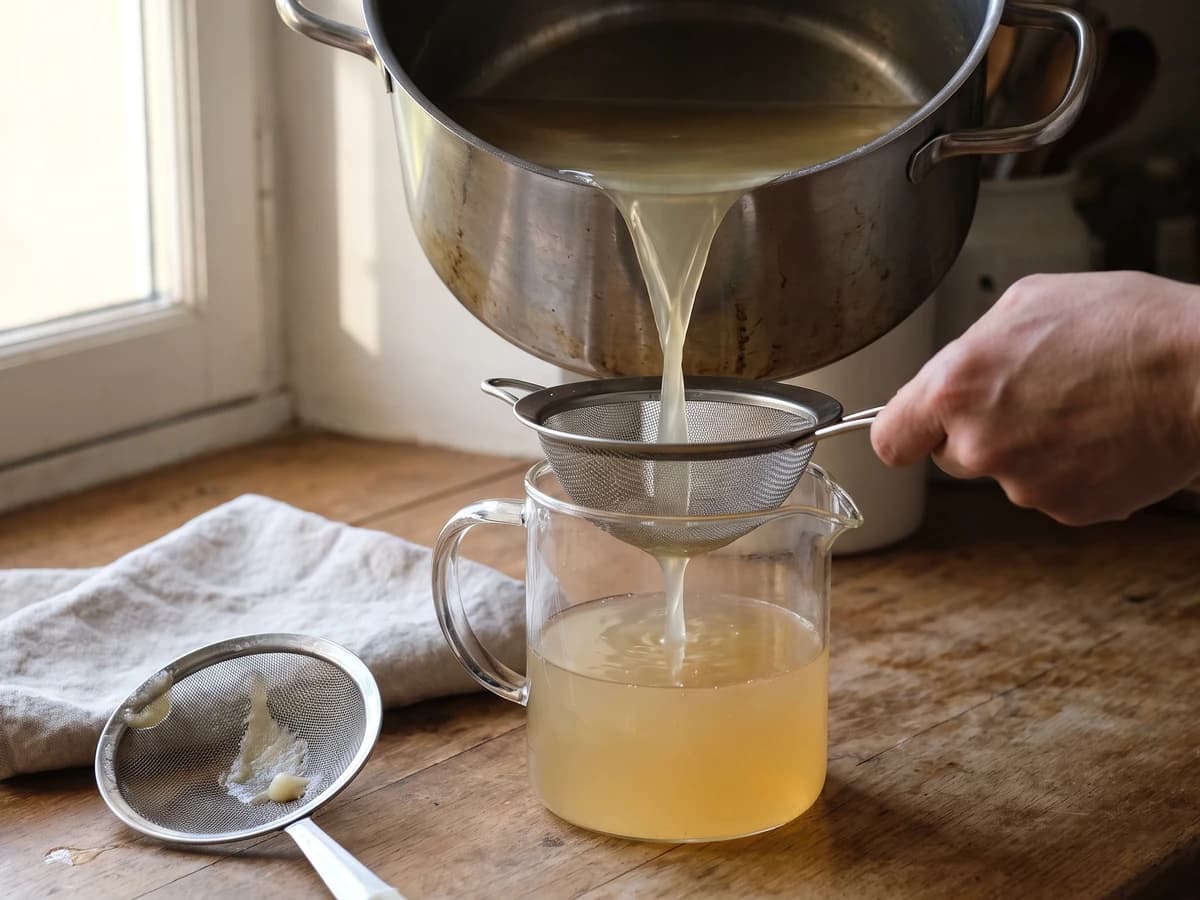
Break the veal bones small, then give them eight hours at a bare tremble. This pale, gelatinous fond becomes the quiet foundation beneath velouté, blanquette, and every sauce that must stay light.
Chef Juliette
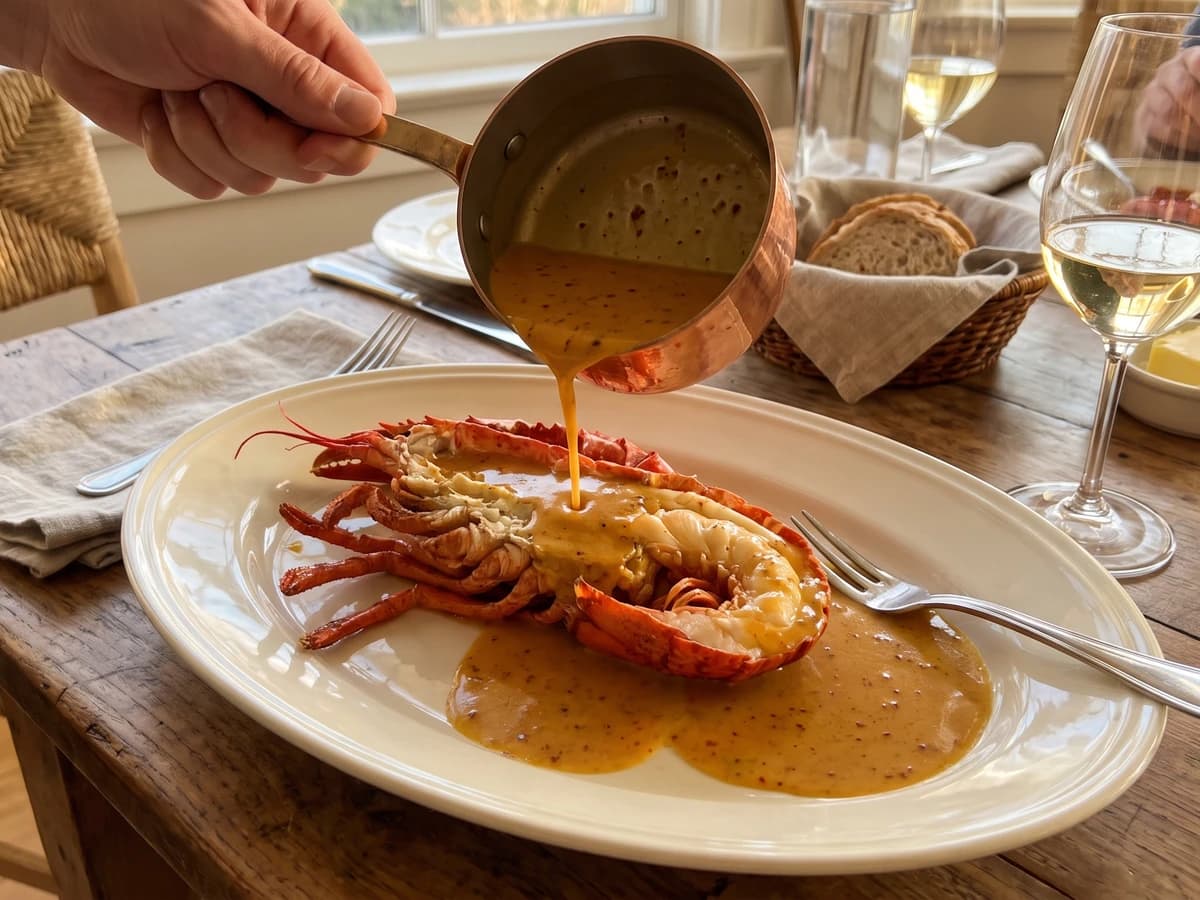
Sauce Orientale concentrates lobster-rich American Sauce with curry, then folds in cream away from the fire: a glossy, gently spiced derivative made for lobster, crayfish, and firm fish.
Chef Juliette
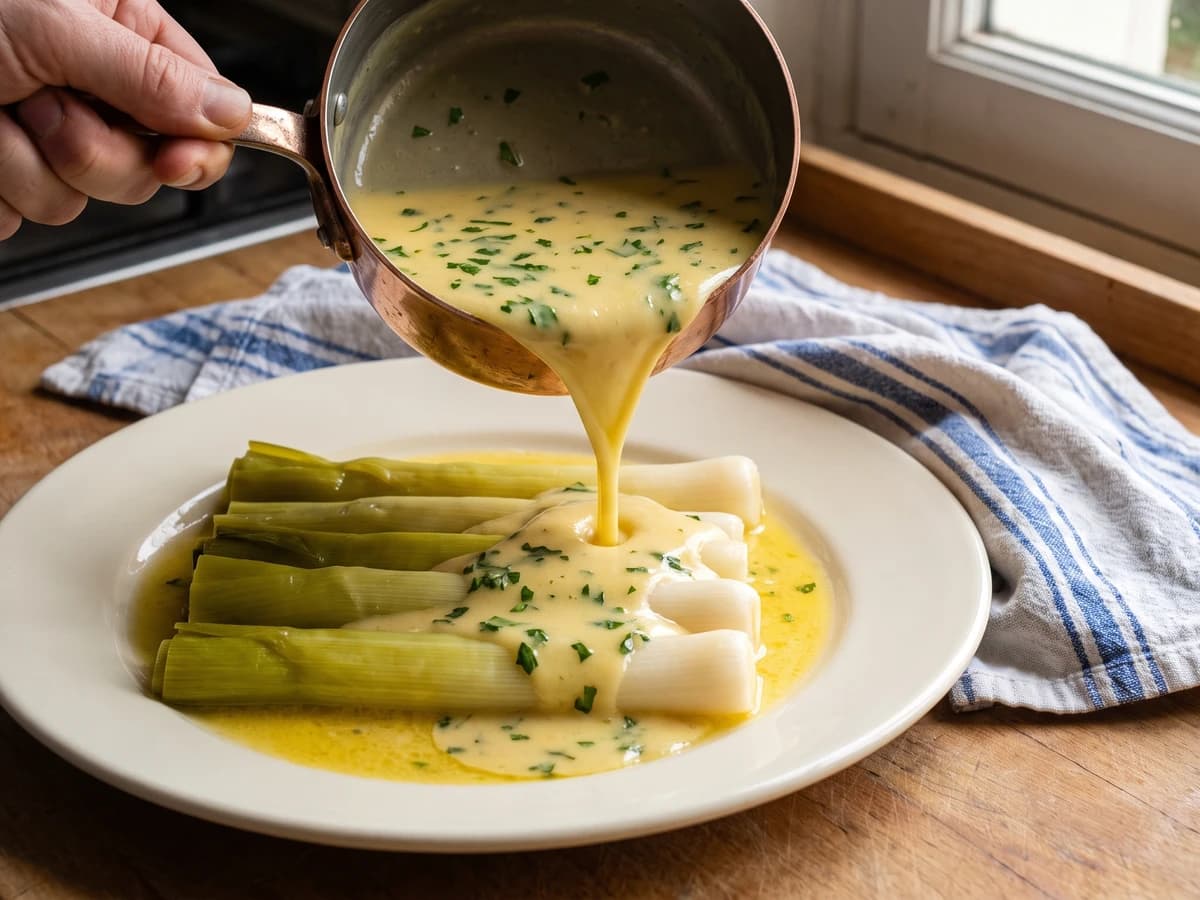
An old lesson in sauce families: Sauce Allemande takes mushroom liquor, then butter, lemon, and parsley, becoming a glossy Poulette for sheep's trotters, leeks, cauliflower, and anything needing gentle richness with a bright edge.