Chef Juliette
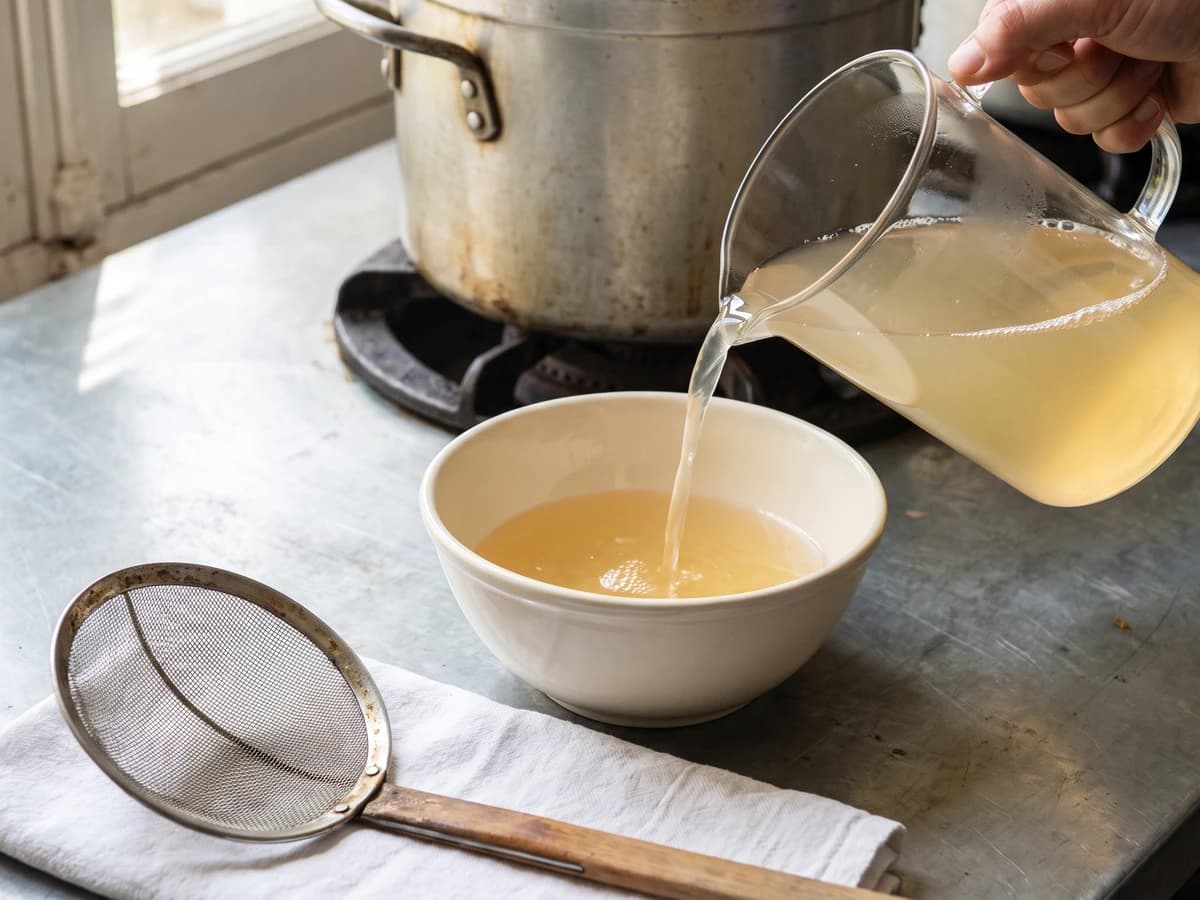
Ordinary or White Consommé
Beef shin, lean beef, and fowl begin in cold water and rise slowly toward a tremble. Skim before the boil, and you learn the quiet discipline that gives every clear French broth its backbone.
A cooking platform built around craft, culture, and the stories behind what we eat.
Created by Chef Juliette
Based on No. 80, Shrimp Sauce, from Le Guide Culinaire (1907) by Auguste Escoffier
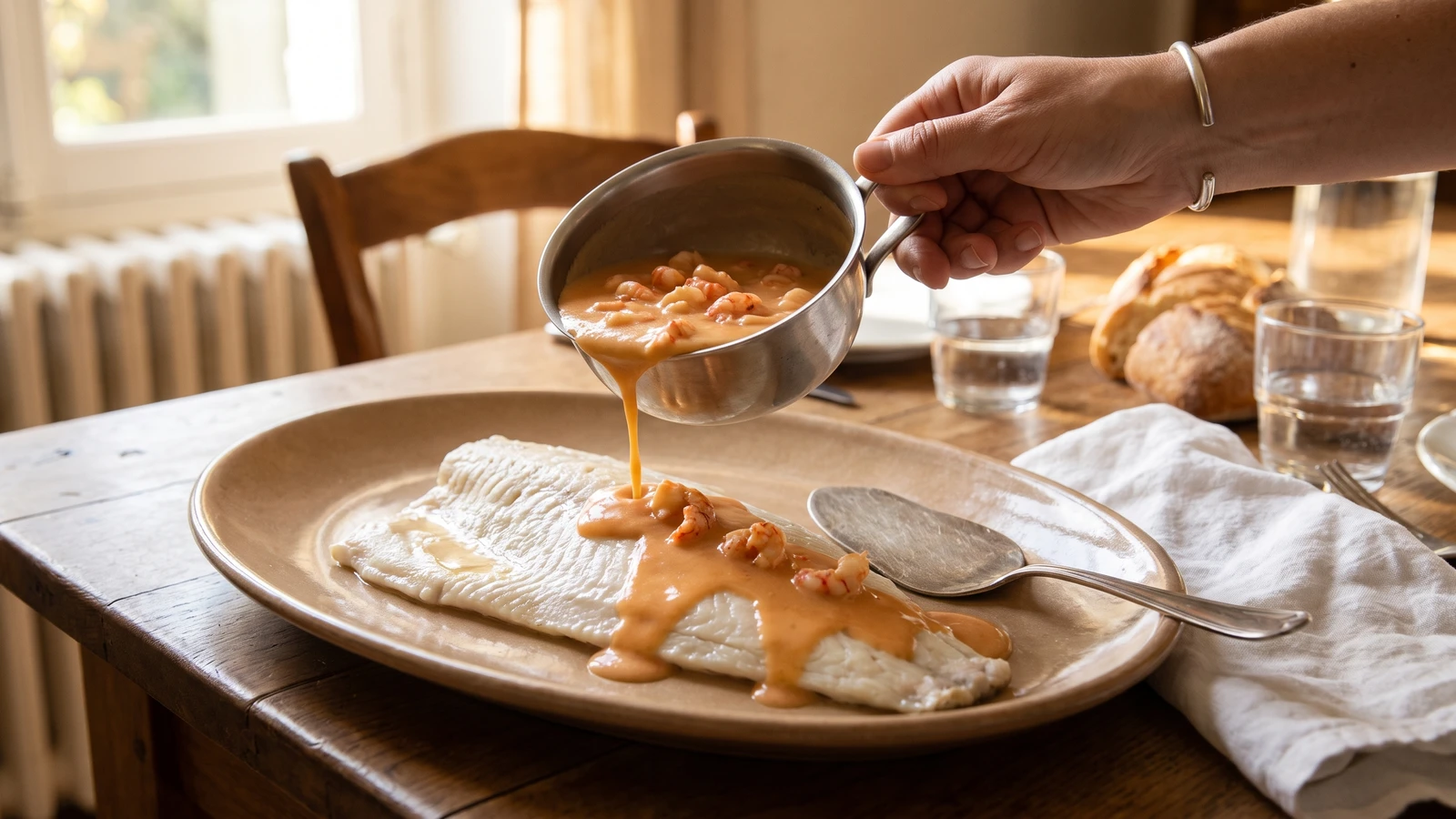
Sauce aux Crevettes teaches the discipline of the finish: fish velouté and fumet reduced to satin, then Shrimp Butter (No. 145) whisked in off the fire so its coral colour and sweetness stay vivid.
Sauce aux Crevettes (shrimp sauce) teaches one true thing about derivative sauces: the last minute can matter more than the first half hour. Fish velouté, cream, and fumet, a clear, concentrated fish essence, provide body and depth, but Shrimp Butter (No. 145) carries the colour and taste. Boil that butter and its clean shellfish sweetness becomes a greasy whisper.
The original entry assumed a saucier on staff, fish velouté within reach, and a stockpot never off the fire for very clear fumet. It had no use for a salamander, and neither do you. A wide heavy saucepan replaces the sauce station, while the tammy work remains where the book placed it, inside the separate butter preparation rather than being repeated here.
The printed formula makes one pint. For this generous dinner-party batch, every measure is multiplied evenly to produce about two quarts, with its ratios and sequence untouched. Ready components are brigade scaffolding and can be prepared ahead; reducing to the starting velouté volume and mounting the butter off the fire are the dish itself. One cook, one stove, one evening. Remove the pan from the heat before the first piece of butter goes in, because that is the step that decides the sauce.
Sauce aux Crevettes belongs to the fish-sauce repertory of Parisian grande cuisine, where one well-made velouté became many distinct sauces through reduction and a carefully chosen finish. Its compact method also suited the bourgeois dinner table: prepared fish foundations were enriched with cream, then given a final identity just before service. Despite the name, the shrimp tails provide texture and generosity, while the pounded shell butter supplies the sauce's defining colour and taste.
Quantity
8 cups (1.9 L / about 2 kg)
Quantity
2 cups (475 ml / 475 g)
Quantity
2 cups (475 ml / 475 g), plus up to ¼ cup (60 ml / 60 g) for rescue only
Quantity
1 cup (240 ml / 227 g) Shrimp Butter (No. 145)
chilled and cut into small pieces
Quantity
about 1½ cups (360 ml / 227 g)
drained dry and allowed to lose their refrigerator chill
| Ingredient | Quantity |
|---|---|
| prepared fish velouté, or prepared Béchamel sauce if fish velouté is unavailable | 8 cups (1.9 L / about 2 kg) |
| heavy cream, preferably 35% fat | 2 cups (475 ml / 475 g) |
| very clear fish fumet | 2 cups (475 ml / 475 g), plus up to ¼ cup (60 ml / 60 g) for rescue only |
| Shrimp Butterchilled and cut into small pieces | 1 cup (240 ml / 227 g) Shrimp Butter (No. 145) |
| cooked shelled small shrimp tailsdrained dry and allowed to lose their refrigerator chill | about 1½ cups (360 ml / 227 g) |
Pour the fish velouté, or the Béchamel fallback, into a wide heavy saucepan. Stand a clean wooden skewer vertically against the bottom and mark the sauce level; after the cream and fumet are added, this original depth is the reduction target. It is a simple home measure and more reliable than judging thickness alone.
Set the saucepan over medium heat and bring the velouté to a decisive boil, whisking across the bottom and into the corners. Add the cream and the 2 cups of fumet in a steady stream, whisking until completely smooth, then bring the mixture back to a lively simmer. If the base begins catching, stop scraping immediately and pour the unburnt sauce into a clean pan; dragging the scorched film upward spreads bitterness through the whole batch.
Reduce at a steady, uncovered simmer, stirring frequently with a heatproof spatula, until the sauce returns to the skewer mark, about 20 to 30 minutes. It should fall from a spoon in a broad glossy ribbon without sitting like paste. The reduction to the original velouté volume is part of the dish, not brigade scaffolding. If it slips below the mark or tightens too far, whisk in the reserved fumet a tablespoon at a time until the ribbon returns.
Remove the pan completely from the heat and wait until vigorous bubbling stops. Monter au beurre, mounting the sauce with butter, means whisking in the cold Shrimp Butter (No. 145) piece by piece until each addition disappears before the next goes in. The sauce should become coral-ivory, glossy, and distinctly sweet with shellfish. Never boil it now. If it separates into oily streaks, ça se rattrape: put 2 tablespoons of cold reserved fumet in a clean bowl and whisk in the broken sauce gradually, one spoonful at a time, until the emulsion gathers again.
Fold in the shelled shrimp tails away from the heat and let them warm in the sauce for 2 minutes. They are already cooked, so further simmering only toughens them and risks splitting the butter finish. Pour the Sauce aux Crevettes into a warmed sauceboat and serve at once with poached, baked, or gently braised fish. À table!
1 serving (about 110g)
Culinary guides, cultural storytelling, and the editorial depth that makes cooking meaningful.
Discover Culinary ExplorerChef Juliette
Beef shin, lean beef, and fowl begin in cold water and rise slowly toward a tremble. Skim before the boil, and you learn the quiet discipline that gives every clear French broth its backbone.
Chef Juliette
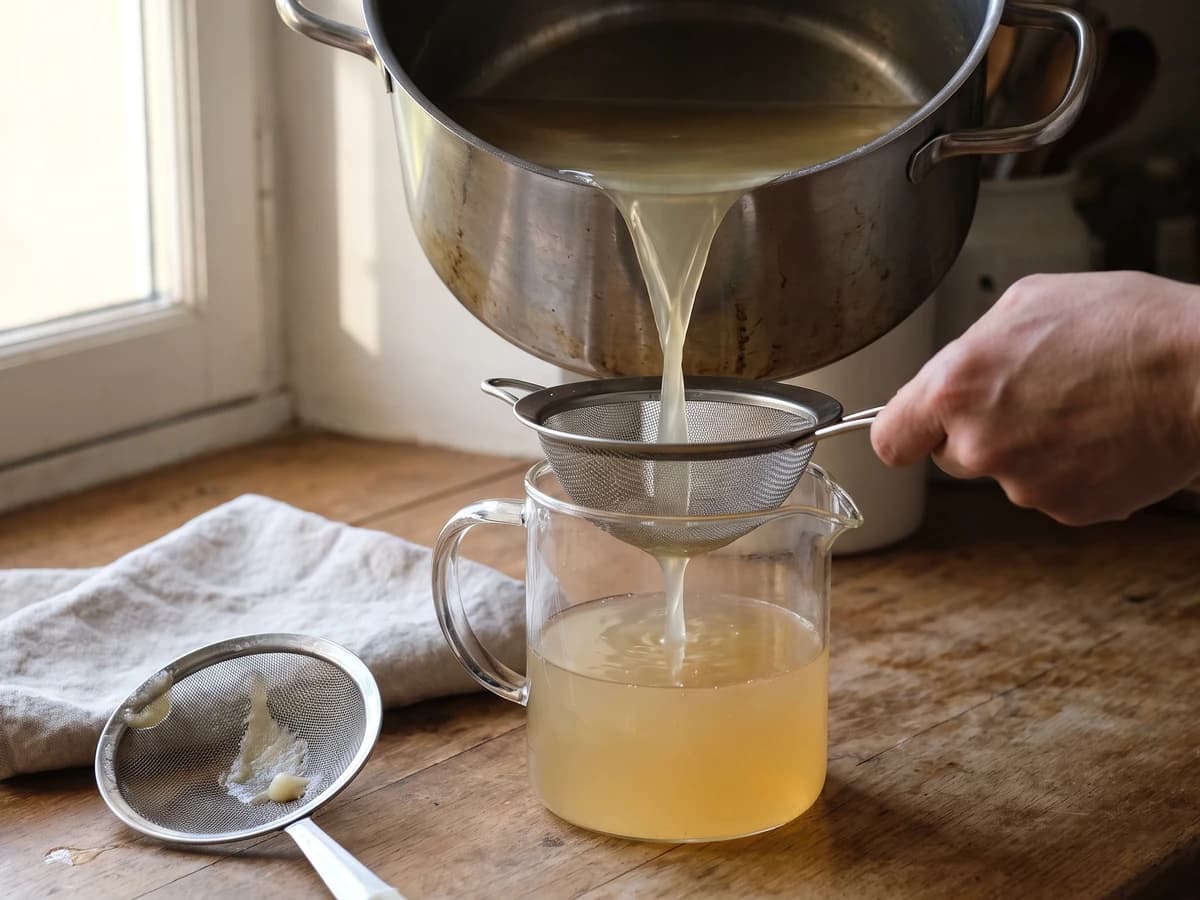
Break the veal bones small, then give them eight hours at a bare tremble. This pale, gelatinous fond becomes the quiet foundation beneath velouté, blanquette, and every sauce that must stay light.
Chef Juliette
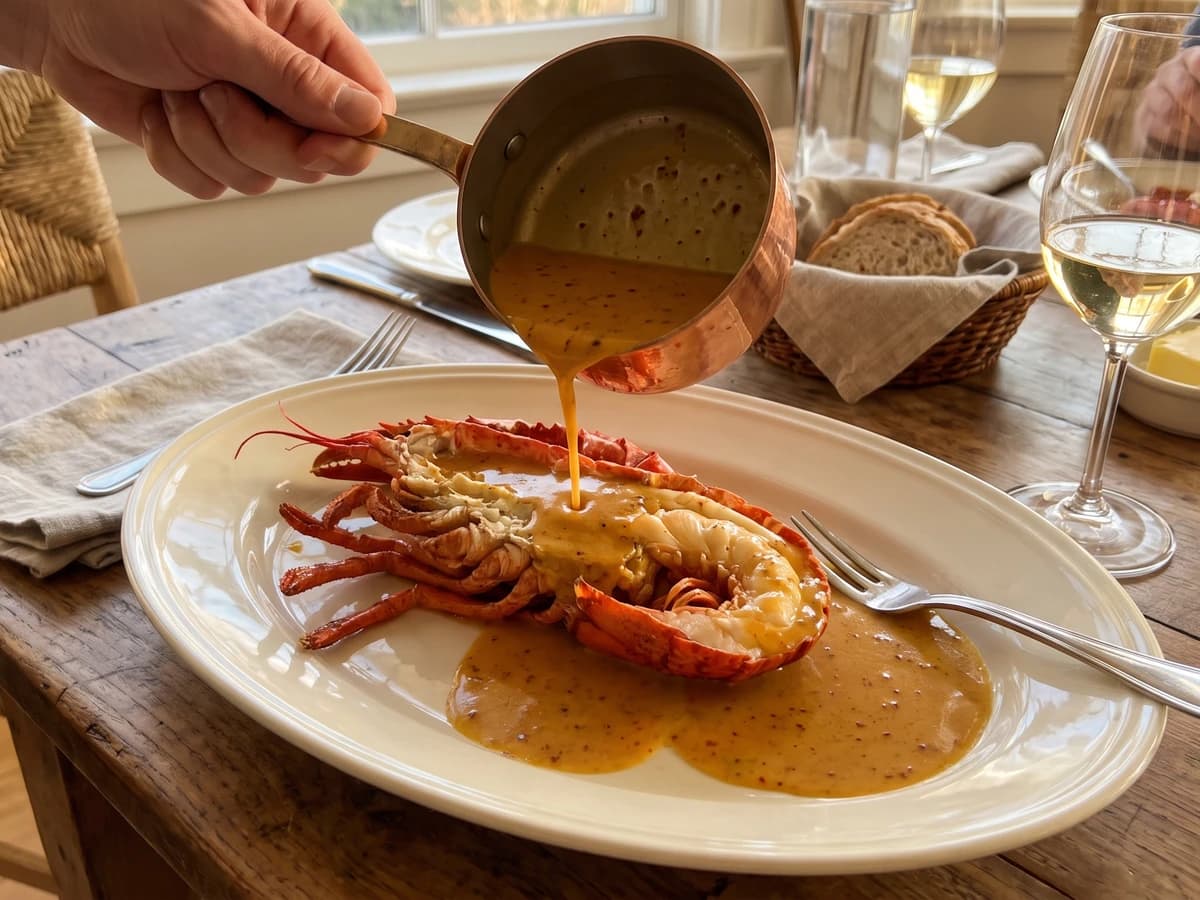
Sauce Orientale concentrates lobster-rich American Sauce with curry, then folds in cream away from the fire: a glossy, gently spiced derivative made for lobster, crayfish, and firm fish.
Chef Juliette
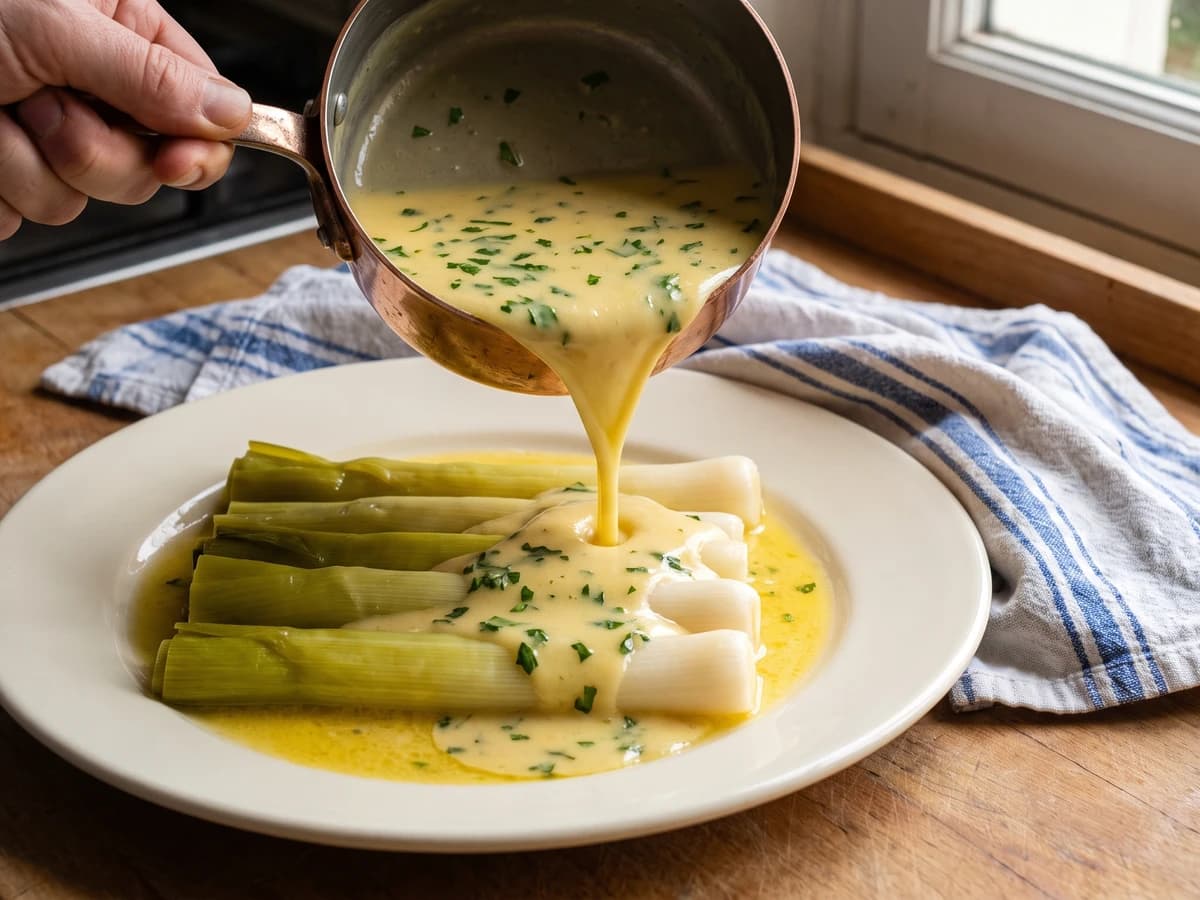
An old lesson in sauce families: Sauce Allemande takes mushroom liquor, then butter, lemon, and parsley, becoming a glossy Poulette for sheep's trotters, leeks, cauliflower, and anything needing gentle richness with a bright edge.