Culinary Explorer

A cooking platform built around craft, culture, and the stories behind what we eat.
Discover Culinary Explorer
Saumon à la Meunière

Saumon à la Meunière

Created by Chef Juliette

Based on No. 786, Saumon à la Meunière, from Le Guide Culinaire (1907) by Auguste Escoffier

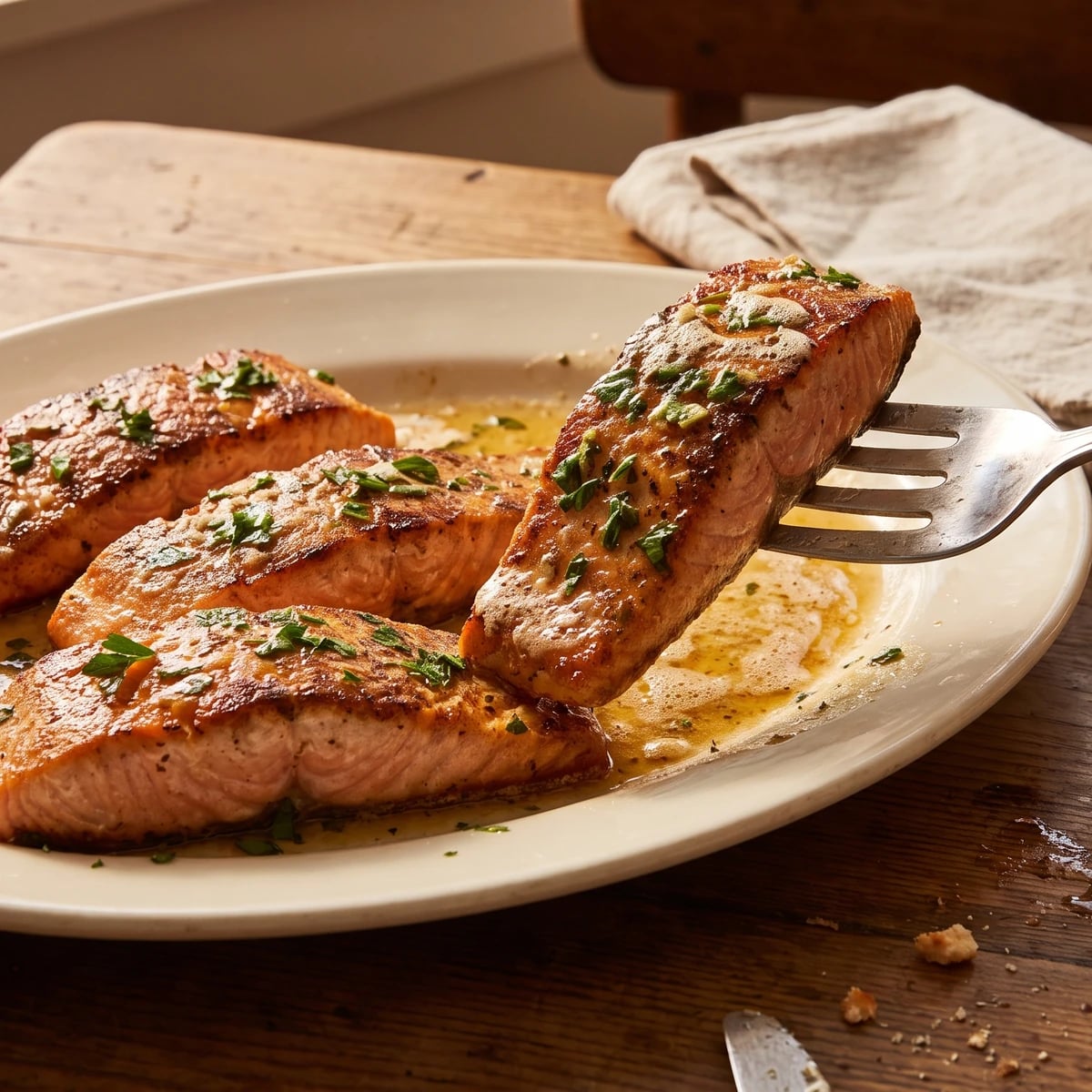
The miller's-wife method in its clearest form: flour-dusted salmon set fast in very hot clarified butter, then carried to the table beneath lemon, parsley, and a foaming veil of beurre noisette.

Main Dishes
French
Weeknight
Dinner Party
20 min
Active Time
15 min cook35 min total
Yield4 servings

Saumon à la Meunière (salmon in the miller's-wife manner) teaches control of heat. The one true thing to know before touching the pan is this: the salmon must meet very hot clarified butter and set immediately. Lukewarm fat soaks the flour into paste; properly heated fat turns that same thin dredge into a delicate golden crust.

Unlike a braise or gratin, this entry never depended on a saucier, a stock never off the fire, or a salamander. It assumed something quieter but just as real: clarified butter waiting at the fish station, a broad pan held properly hot, and a platter kept warm by another pair of hands. At home, measured clarified butter, one heavy skillet, and a platter warmed with hot water do the same work. The standing butter pot and plate warmer are brigade scaffolding and can go. The thin flour coating, rapid cooking, lemon, parsley, and last-minute beurre noisette (butter cooked to hazelnut brown) are the dish and must stay.

Clarified butter bears the fierce heat without burning; whole butter supplies the foaming finish and its hazelnut scent. Those are separate jobs, and confusing them is how meunière turns greasy or scorched. Have every finishing element ready before the fish enters the pan, then set the salmon fast and serve the moment the beurre noisette touches the parsley.

Meunière belongs to French cuisine bourgeoise and the Parisian bistro repertoire rather than to one particular province; its name invokes the miller's wife because the fish passes through flour before reaching the pan. The method traveled easily from household frying pans into the codified classical kitchen because it required no stock or composed sauce, only disciplined heat and good butter. The distinction is technical: flour-dusted fish served plainly was called doré, while lemon, parsley, and the last-minute foaming beurre noisette completed it as meunière.

The technique, the tradition, and the story behind every dish.

Discover Culinary Explorer

Ingredients

center-cut salmon steaks

Quantity

4 steaks, 6 oz (170 g) each, about 1 inch (2.5 cm) thick, for The Cooking of Fish à la Meunière (No. 778)

all-purpose flour

Quantity

1/2 cup (120 ml / 60 g)

for a light dredge

clarified butter

Quantity

1/2 cup (120 ml / 110 g)

divided

unsalted butter

Quantity

6 tablespoons (90 ml / 85 g)

cut into pieces

lemons

Quantity

2 medium, about 8 oz (225 g) total

one juiced and one trimmed into halves

flat-leaf parsley leaves

Quantity

1/2 cup loosely packed (120 ml / 20 g)

scalded, dried, and coarsely chopped

fine sea salt

Quantity

1 1/2 teaspoons (7.5 ml / 9 g)

divided

freshly ground black pepper

Quantity

1/2 teaspoon (2.5 ml / 1 g)

divided

Equipment Needed

  • 12-inch (30 cm) heavy frying pan
  • Thin fish spatula
  • Large oval heatproof serving platter
  • Instant-read thermometer, optional

Instructions

  1. 1

    Prepare the finish

    Prepare the persil concassé, the coarsely chopped parsley. Drop the leaves into boiling water for 10 seconds, drain them, rinse briefly with cold water, and squeeze them thoroughly dry before chopping. Juice one lemon and trim the second into neat halves. Warm the serving platter with very hot water, then dry it well. The fish cooks too quickly to permit chopping or squeezing once it enters the pan.

    Dry the scalded parsley with real attention. Water left in the leaves spits when the hot beurre noisette arrives and dilutes its flavor.
  2. 2

    Dry and dredge

    Blot every surface of the salmon dry, especially around the bone and skin. Season lightly with about two-thirds of the salt and pepper. Spread the flour on a plate, pass each steak through it, and shake off every visible excess; the coating should look like dust, not batter. Dredge only when the pan is nearly ready, because flour left sitting on damp fish turns gummy.

  3. 3

    Set the first batch

    Heat half the clarified butter in a heavy skillet over medium-high heat until it shimmers strongly and moves in quick ripples without smoking. Lay in two salmon steaks, leaving space between them. This is The Cooking of Fish à la Meunière (No. 778): the fish must set at once in very hot fat, so do not slide or prod it. Cook for 3 to 4 minutes, until the underside is evenly golden and releases when lifted with a thin spatula, then turn and cook for 2 to 3 minutes more.

    If the salmon clings, wait another 20 seconds rather than tearing it loose; a properly formed crust releases itself. If the flour blackens before that crust forms, lift the pan from the heat, remove the fish, wipe away the burnt crumbs, and begin again with fresh clarified butter at slightly lower heat. Ça se rattrape.
  4. 4

    Cook the second batch

    Transfer the first steaks to the warm platter. Wipe dark flour crumbs from the skillet, add the remaining clarified butter, and cook the other two steaks in the same way. The salmon is ready when it separates into broad moist flakes near the bone and the center remains pearly, about 125 to 130°F (52 to 54°C). For anyone who needs fully cooked fish, continue gently to 145°F (63°C), lowering the heat once the exterior is golden so the flour does not burn.

  5. 5

    Dress the salmon

    Arrange all four steaks on the warm platter and correct the seasoning with the remaining salt and pepper. Sprinkle the lemon juice over the fish in a light, even shower, then scatter the dry persil concassé across the surfaces. Do not flood the platter; lemon should sharpen the butter, not replace it.

  6. 6

    Pour the beurre noisette

    Pour away the frying fat and wipe the skillet clean enough to remove scorched flour while leaving the pan hot. Add the whole butter and swirl it over medium-high heat. It will melt, foam, grow quiet, and then show hazelnut-brown specks with a warm nutty scent. Immediately pour the foaming beurre noisette over the lemon and parsley. If the specks turn black or the butter smells bitter, do not pour it over the salmon; wipe the pan and begin with fresh butter. Ça se rattrape. Bring the platter straight to the table while the foam still trembles. À table!

Chef Tips

  • Ask for center-cut salmon steaks of equal thickness. Thin tail pieces finish before the flour can color, while uneven steaks leave one diner with dry fish and another with a cold center.
  • Clarified butter is whole butter with its water and milk solids removed, which lets it withstand the heat needed to set the flour quickly. To make it, melt unsalted butter gently, skim the foam, and pour the clear golden fat away from the milky sediment.
  • Use ordinary all-purpose flour and use very little of it. A heavy white coat drinks the frying fat and hides the salmon; after shaking, the fish should look nearly bare.
  • A dry, mineral white wine suits the butter and lemon. Chablis, Muscadet, or a restrained white Burgundy will do splendidly. Serve with boiled potatoes or green beans, something quiet enough to catch the butter without competing.
  • Meunière does not improve by waiting. If there are leftovers, chill them within two hours and eat them the next day, but expect the flour crust to soften.

Advance Preparation

  • Clarified butter can be prepared up to a week ahead and kept covered in the refrigerator. Bring it close to room temperature before measuring.
  • The parsley may be scalded, dried, and chopped several hours ahead. Keep it chilled between dry towels so no water reaches the finishing butter.
  • Dry the salmon and leave it uncovered in the refrigerator for up to two hours. Season and dredge only when the skillet is heating.
  • The finished dish cannot be held without losing what makes it meunière. Seat everyone first, then cook the salmon and carry it directly from pan to table.

Frequently Asked Questions

Nutrition Information

1 serving (about 200g)

Calories
610 calories
Total Fat
48 g
Saturated Fat
21 g
Trans Fat
1 g
Unsaturated Fat
21 g
Cholesterol
160 mg
Sodium
990 mg
Total Carbohydrates
7 g
Dietary Fiber
0 g
Sugars
0 g
Protein
36 g

Note: Chef personas and recipes are created with AI assistance. Cook with care: follow safe food-handling practices, check doneness with a thermometer when needed, and adapt for allergies and your kitchen.

Where cooking meets culture.

Culinary guides, cultural storytelling, and the editorial depth that makes cooking meaningful.

Discover Culinary Explorer

More from Fish - Salmon (Saumon)

Browse the full collection