Chef Juliette
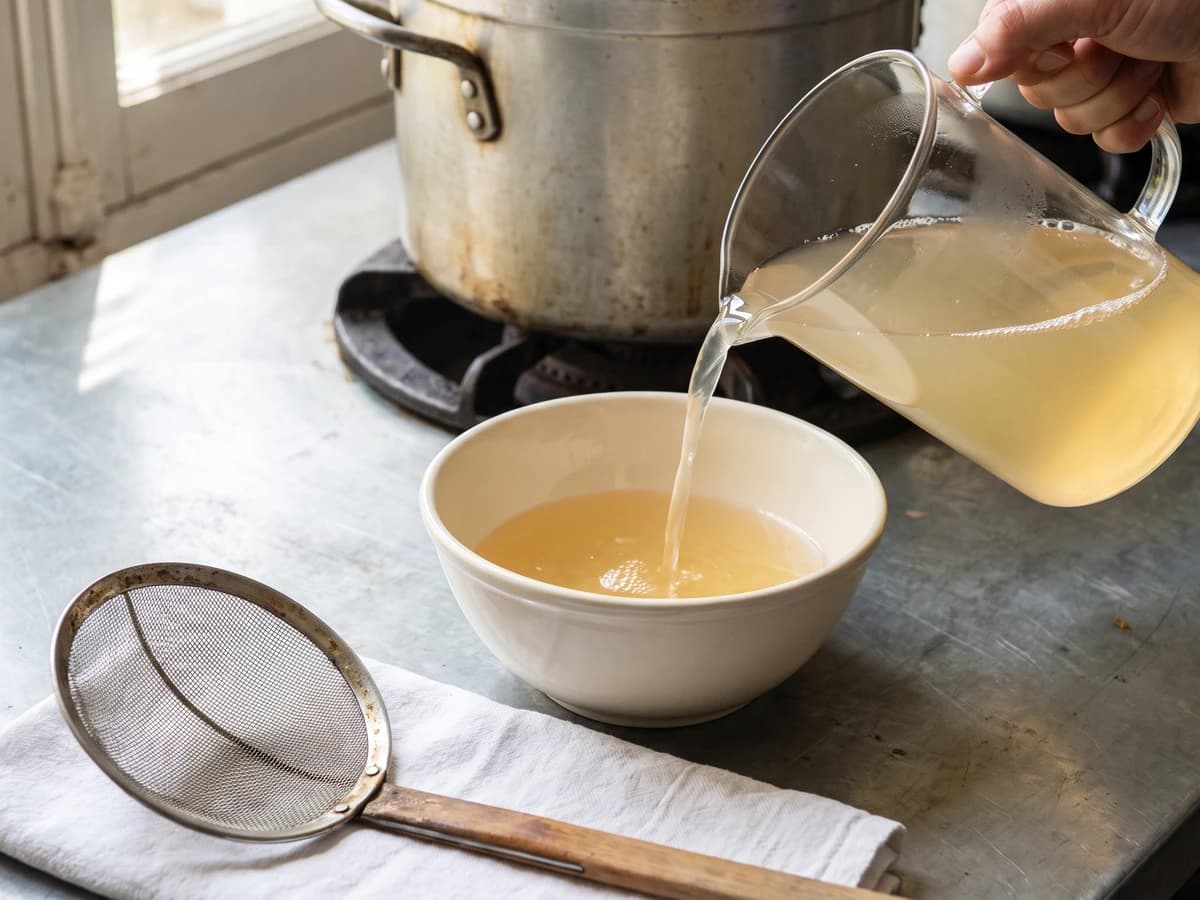
Ordinary or White Consommé
Beef shin, lean beef, and fowl begin in cold water and rise slowly toward a tremble. Skim before the boil, and you learn the quiet discipline that gives every clear French broth its backbone.
A cooking platform built around craft, culture, and the stories behind what we eat.
Created by Chef Juliette
Based on No. 78, Chivry Sauce, from Le Guide Culinaire (1907) by Auguste Escoffier
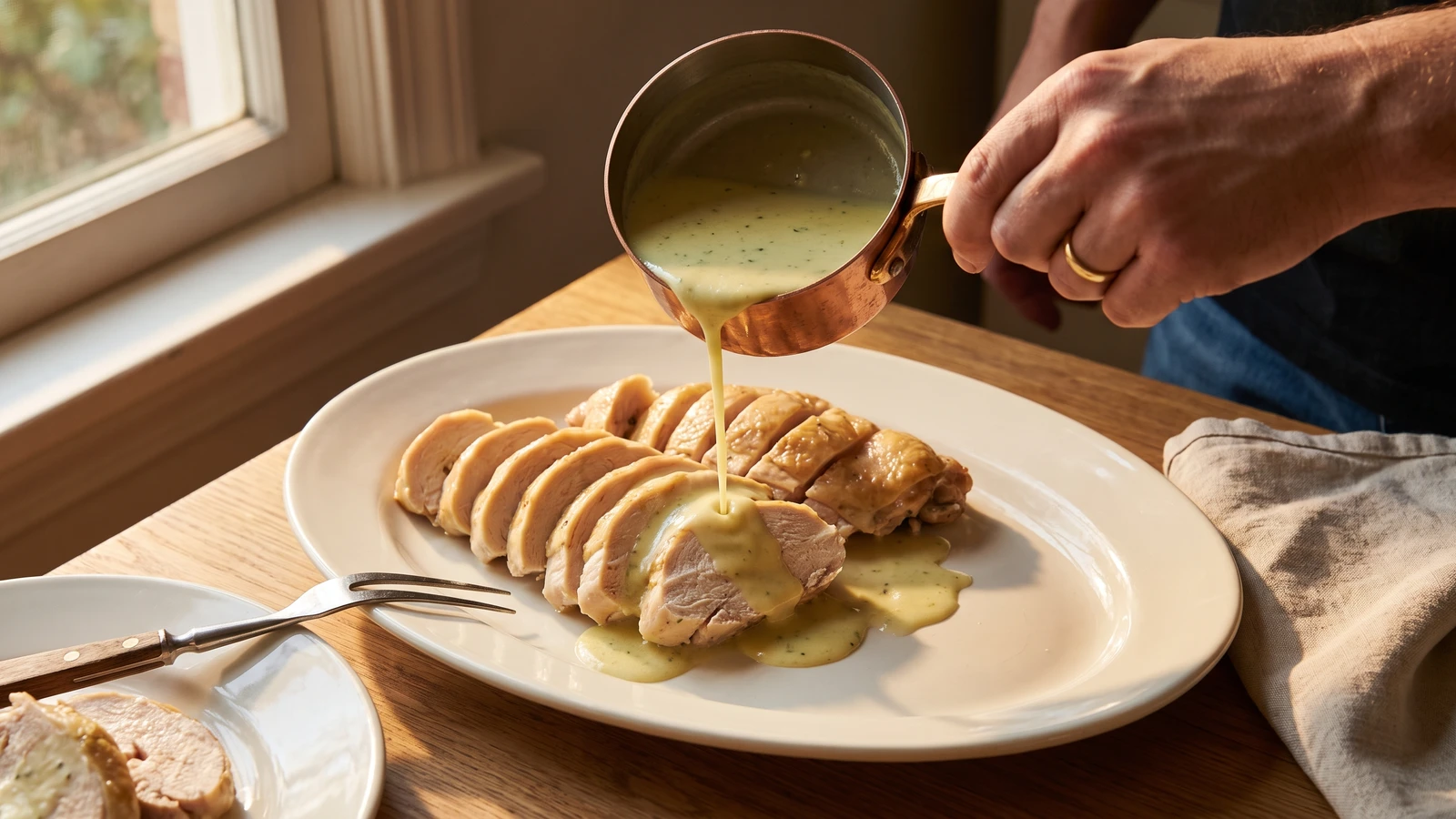
Chivry Sauce turns poultry velouté glossy and herb-green through a brief infusion of chervil, tarragon, parsley, chives, and young pimpernel, followed by measured reduction and cold green butter.
Sauce Chivry (a silky poultry sauce infused with tender herbs) teaches the discipline of extraction. The one true thing to know is this: young pimpernel gives a cool, delicate fragrance, while mature pimpernel and a long infusion give bitterness. Take it young, cover it briefly, then strain without squeezing.
The original expected a saucier at the stove, poultry stock never off the fire, and velouté and Green Colouring Butter (No. 143) waiting as house preparations. A salamander has no work here. At home, a covered saucepan, a fine sieve lined with damp clean linen, and a whisk give the same result. The large service rhythm is brigade scaffolding and can go; the covered infusion, reduction by one quarter, and cold butter finish are the dish and must stay. One cook, one stove, one evening.
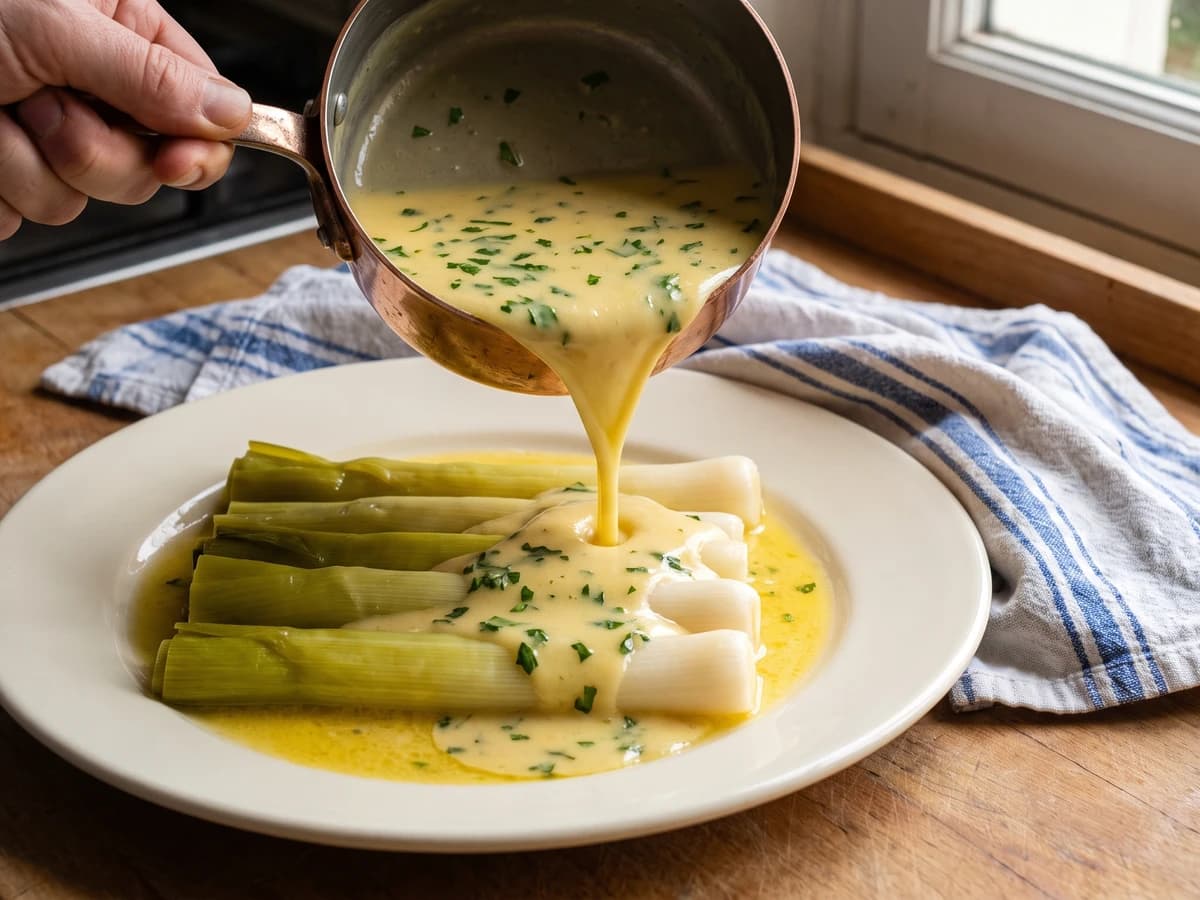
When it is right, Chivry is pale ivory-green, glossy enough to coat a spoon, and fragrant without tasting leafy. It belongs over boiled or gently poached poultry, whose quiet flavor gives the herbs room to speak. The step that decides everything is ending the covered infusion after ten to twelve minutes, sooner if the pimpernel begins to show even a faint bitter edge.
Sauce Chivry belongs to the codified Parisian grande cuisine family of velouté derivatives, built at the saucier's station and served with gently cooked poultry. From that station it passed into bourgeois dining rooms, where a mild boiled or poached bird welcomed the freshness of garden herbs. Its easily misunderstood ingredient is pimprenelle, or young salad burnet, prized before flowering for its cucumber-like fragrance and rejected once maturity makes it bitter.
Quantity
3 1/8 cups (750 ml / 750 g)
Quantity
1/2 cup loosely packed (120 ml / 12 g)
tender picked shreds
Quantity
1/4 cup loosely packed (60 ml / 8 g)
picked from the stems
Quantity
1/3 cup loosely packed (80 ml / 15 g)
picked from the stems
Quantity
3 small heads (about 15 g)
tender and unflowered
Quantity
1/4 cup loosely packed (60 ml / 12 g)
finely snipped
Quantity
6 1/3 cups (1.5 L / 1.5 kg)
unsalted or lightly seasoned
Quantity
2/3 cup (160 ml / 150 g) Green Colouring Butter (No. 143)
chilled and cut into small cubes
| Ingredient | Quantity |
|---|---|
| unsalted poultry stock | 3 1/8 cups (750 ml / 750 g) |
| chervil pluchestender picked shreds | 1/2 cup loosely packed (120 ml / 12 g) |
| tarragon leavespicked from the stems | 1/4 cup loosely packed (60 ml / 8 g) |
| flat-leaf parsley leavespicked from the stems | 1/3 cup loosely packed (80 ml / 15 g) |
| young pimpernel or salad burnettender and unflowered | 3 small heads (about 15 g) |
| chivesfinely snipped | 1/4 cup loosely packed (60 ml / 12 g) |
| finished poultry veloutéunsalted or lightly seasoned | 6 1/3 cups (1.5 L / 1.5 kg) |
| Green Colouring Butterchilled and cut into small cubes | 2/3 cup (160 ml / 150 g) Green Colouring Butter (No. 143) |
Pick through every herb before heating the stock. Keep only tender chervil pluches, tarragon and parsley leaves, fresh chives, and young unflowered pimpernel. Rinse them only if necessary, then dry them thoroughly; water clinging to the leaves weakens the infusion. Bruise the pimpernel lightly between your fingers but do not chop the herbs into paste.
Bring the poultry stock to a full boil in the smaller saucepan. Remove it from the heat, immediately add all the herbs, and cover tightly. Infuse for ten to twelve minutes, tasting at eight minutes if the pimpernel is unfamiliar. The fragrance should be fresh and distinct but never medicinal. If a faint bitter edge appears early, strain at once; catching it now rescues the batch, while further steeping only fixes the bitterness in place.
Set a fine-mesh sieve lined with damp clean linen or two damp layers of cheesecloth over a heatproof jug. Pour in the infusion and let it drain naturally. Do not twist or press the herbs, because pressure extracts bitterness and pushes fine leaf matter into the sauce. If flecks pass through, strain the liquid a second time through fresh damp cloth.
Warm the poultry velouté in the large heavy saucepan, whisking until completely smooth, then add the strained herb infusion. Bring the sauce to a controlled boil and reduce it by one quarter, from about 2 1/4 liters to roughly 1.7 liters, whisking often and reaching into the corners of the pan. It is ready when it naps the back of a spoon in an even veil. If the bottom catches, do not scrape it up; pour the clear upper sauce immediately into a clean pan and continue reducing there.
Remove the sauce from the heat and wait until the active bubbling stops. Whisk in the cold Green Colouring Butter (No. 143), a few cubes at a time, adding each portion only when the last has disappeared. Keep the sauce below a simmer from this point onward, because boiling releases the butter and dulls the herb-green color. If an oily rim appears, stop adding butter and whisk a teaspoon of cold water in a clean bowl, then gradually whisk the sauce into it. Ça se rattrape.
Taste the finished Chivry before adding any seasoning, since both the velouté and the reduction may already carry enough salt. Hold it over the gentlest heat for no longer than thirty minutes, whisking occasionally, and spoon it generously over boiled or poached chicken, capon, or poularde. The sauce should cling softly and pool around the bird rather than sit on it like paste. À table!
1 serving (about 60g)
Culinary guides, cultural storytelling, and the editorial depth that makes cooking meaningful.
Discover Culinary ExplorerChef Juliette
Beef shin, lean beef, and fowl begin in cold water and rise slowly toward a tremble. Skim before the boil, and you learn the quiet discipline that gives every clear French broth its backbone.
Chef Juliette
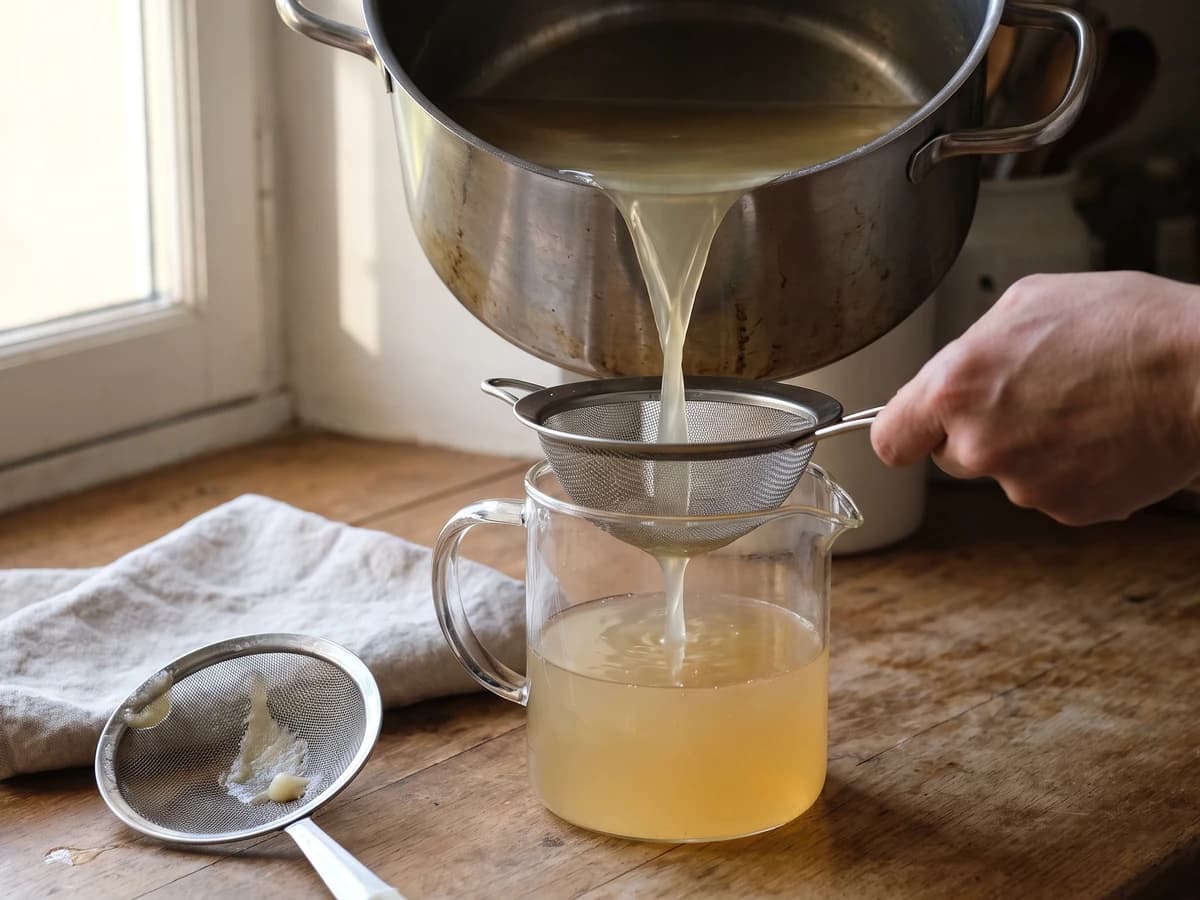
Break the veal bones small, then give them eight hours at a bare tremble. This pale, gelatinous fond becomes the quiet foundation beneath velouté, blanquette, and every sauce that must stay light.
Chef Juliette
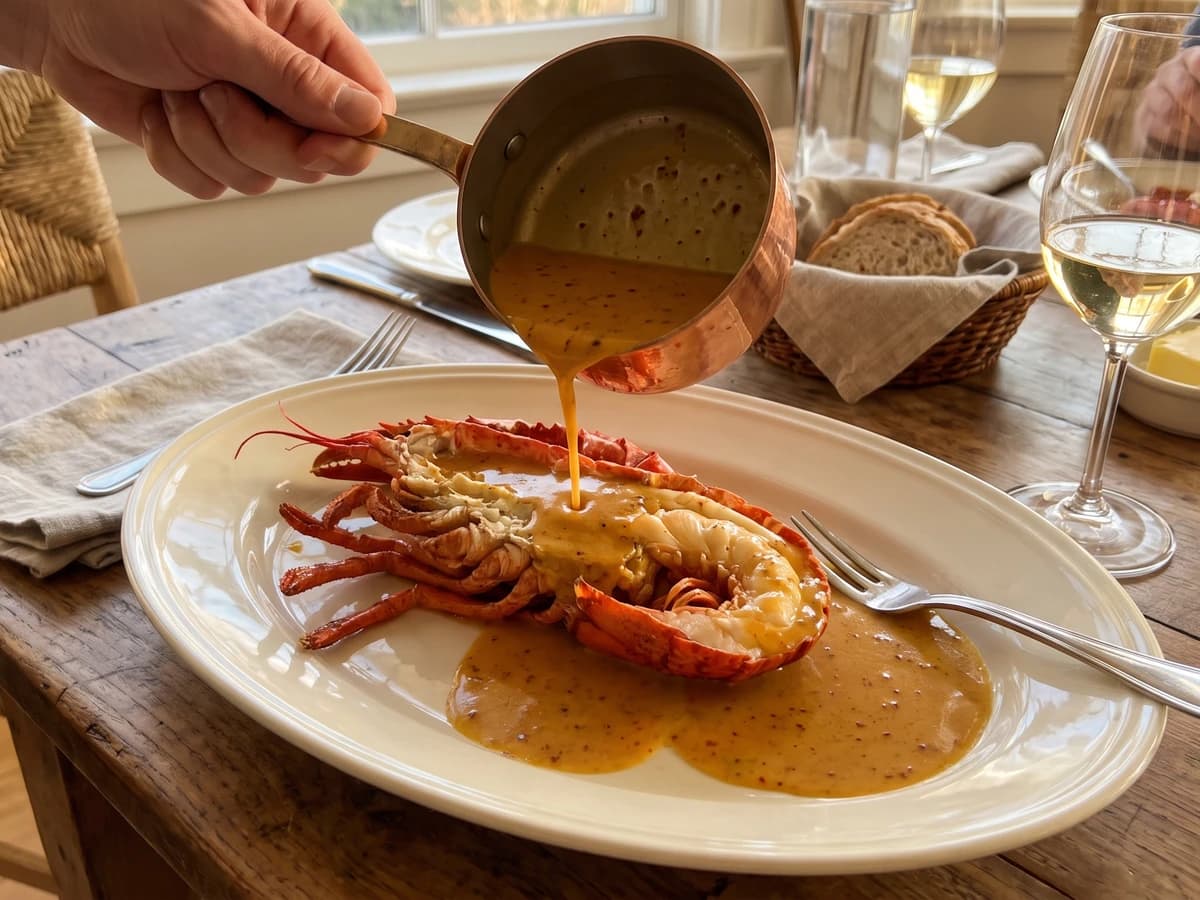
Sauce Orientale concentrates lobster-rich American Sauce with curry, then folds in cream away from the fire: a glossy, gently spiced derivative made for lobster, crayfish, and firm fish.
Chef Juliette
An old lesson in sauce families: Sauce Allemande takes mushroom liquor, then butter, lemon, and parsley, becoming a glossy Poulette for sheep's trotters, leeks, cauliflower, and anything needing gentle richness with a bright edge.