Chef Juliette
Ordinary or White Consommé
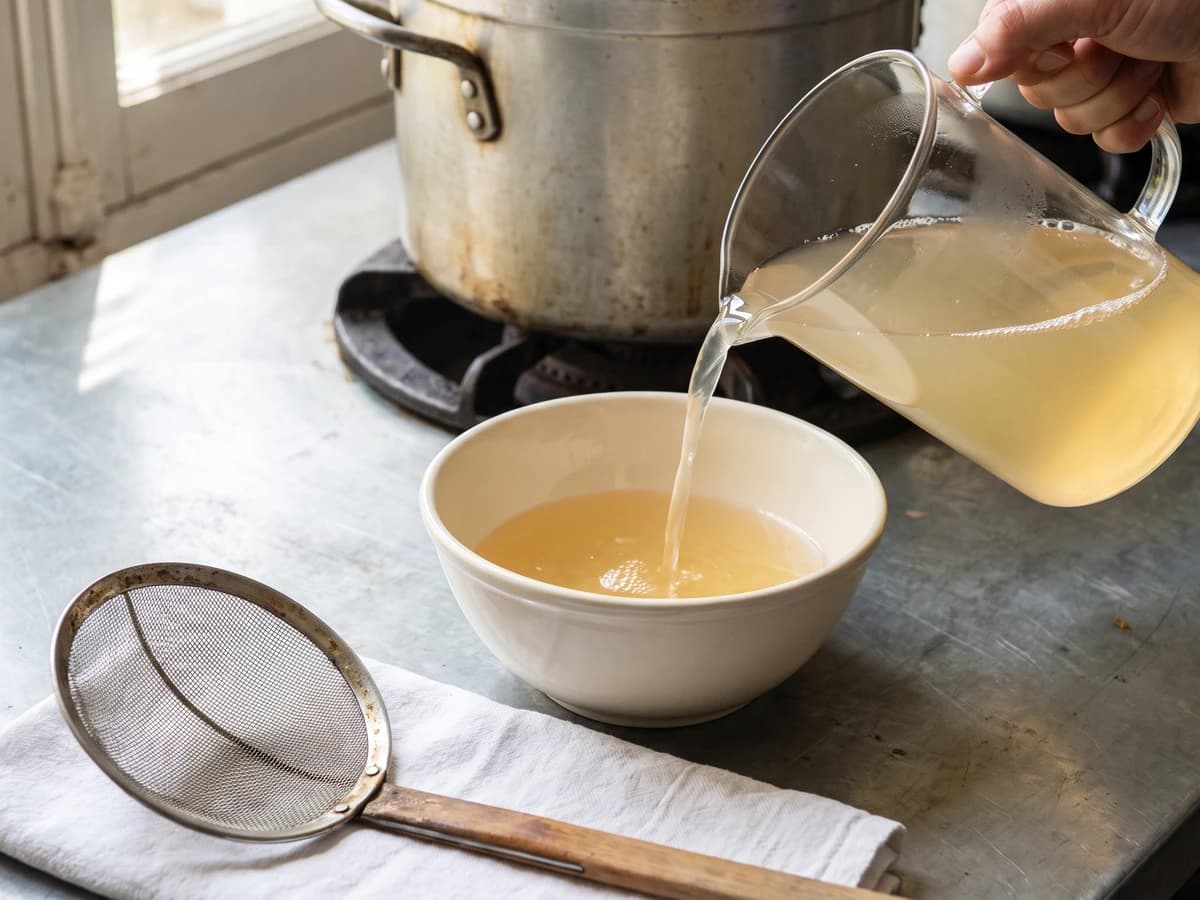
Beef shin, lean beef, and fowl begin in cold water and rise slowly toward a tremble. Skim before the boil, and you learn the quiet discipline that gives every clear French broth its backbone.
A cooking platform built around craft, culture, and the stories behind what we eat.
Created by Chef Juliette
Based on No. 75, Chaud-Froid Sauce, au Vert-pré, from Le Guide Culinaire (1907) by Auguste Escoffier
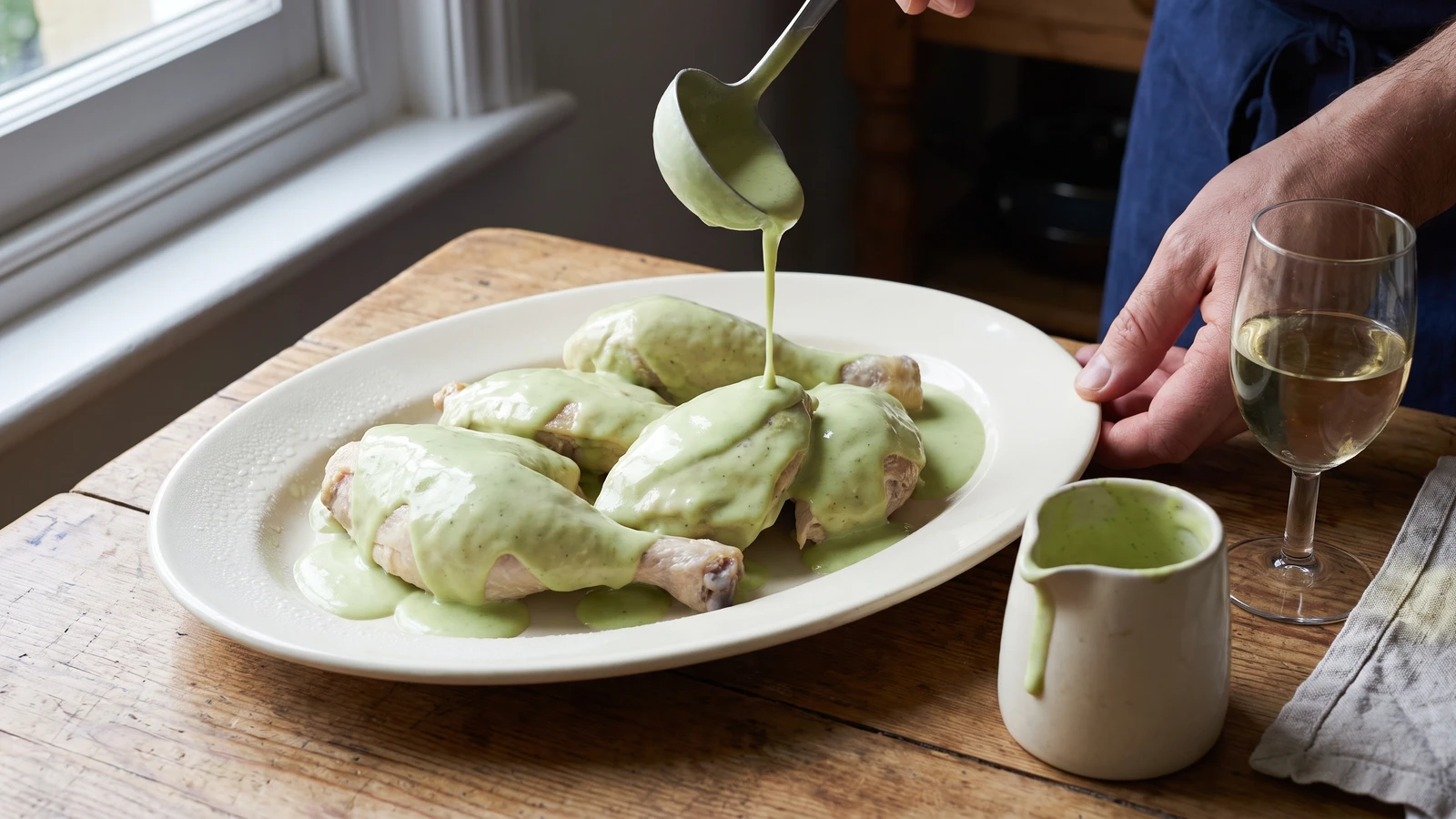
Pale as a spring leaf, this velouté, poultry jelly, cream, and herb infusion becomes a satin coating for cold fowl, teaching reduction, temperature, and restraint in one saucepan.
Chaud-Froid Sauce, au Vert-pré (pale-green herb coating sauce) teaches restraint. The one true thing to know before touching the pan is that its green must whisper, not announce itself. The sauce should remain pale and softly herbal, with the satin body to cover cold fowl in one smooth coat.
The original assumed a saucier at the range, a stockpot never cold, white velouté and poultry jelly ready to hand, and Green Colouring Butter (No. 143) waiting in the larder. At home, begin with those finished components, replace the tammy with a fine sieve lined in damp muslin, and use an ice bath to find the coating point without a brigade watching three pans. The stockpot work is scaffolding and may be completed ahead; the covered infusion, measured reduction, and cautious colouring are the dish and must stay. This batch makes about two quarts in one wide saucepan, enough to coat two cold fowl. One cook, one stove, one evening.
Add the herb infusion at the same moment as the jelly, exactly as the source directs, then reduce before the cream goes in. The final step decides everything: tint with the green in drops, checking against a white saucer, and stop while the shade still looks tender.
Chaud-froid belongs to the Parisian grand-kitchen and formal buffet repertoire, where cooked poultry and game were glazed for cold service with sauces strengthened by jelly. Its name does not describe a hot-and-cold contrast on the plate; the sauce is made warm, applied as it cools, and served set. The au Vert-pré variation brings chervil, tarragon, chives, parsley, and restrained spinach green to cold fowl, particularly a Printanier presentation with early-season vegetables.
Quantity
8 cups (1.9 L / 1.95 kg)
finished and hot
Quantity
3 cups (710 ml / 725 g)
melted but not hot
Quantity
1 cup plus 3 tablespoons (285 ml / 285 g)
Quantity
2 generous pinches (about 2 tablespoons / 30 ml / 3 g)
Quantity
2 generous pinches (about 2 tablespoons / 30 ml / 4 g)
Quantity
2 generous pinches (about 2 tablespoons / 30 ml / 6 g)
Quantity
2 generous pinches (about 2 tablespoons / 30 ml / 5 g)
Quantity
2 cups (475 ml / 480 g)
at least 35% fat
Quantity
⅛ to ½ teaspoon (0.6 to 2.5 ml / 0.5 to 2 g) Green Colouring Butter (No. 143)
at cool room temperature
| Ingredient | Quantity |
|---|---|
| white poultry velouté prepared for White Chaud-Froid Saucefinished and hot | 8 cups (1.9 L / 1.95 kg) |
| clear white poultry jellymelted but not hot | 3 cups (710 ml / 725 g) |
| dry white wine | 1 cup plus 3 tablespoons (285 ml / 285 g) |
| fresh chervil stalks | 2 generous pinches (about 2 tablespoons / 30 ml / 3 g) |
| fresh tarragon leaves | 2 generous pinches (about 2 tablespoons / 30 ml / 4 g) |
| fresh chives | 2 generous pinches (about 2 tablespoons / 30 ml / 6 g) |
| fresh flat-leaf parsley leaves | 2 generous pinches (about 2 tablespoons / 30 ml / 5 g) |
| heavy creamat least 35% fat | 2 cups (475 ml / 480 g) |
| Green Colouring Butterat cool room temperature | ⅛ to ½ teaspoon (0.6 to 2.5 ml / 0.5 to 2 g) Green Colouring Butter (No. 143) |
Pour the hot velouté into a wide, heavy 5- to 6-quart saucepan. Dip a clean wooden skewer straight down to the pan floor and mark the sauce level; this is the eight-cup line to which both reductions must return. Keep the velouté at the barest simmer while the infusion is prepared.
Bring the white wine just to a full boil in a small saucepan. Remove it immediately from the heat, add the chervil stalks, tarragon leaves, chives, and parsley leaves, then cover tightly and leave undisturbed for 10 minutes. Strain through damp muslin or a dampened fine sieve without pressing the herbs; pressing clouds the infusion and brings a bruised, grassy taste.
Add the melted poultry jelly and the strained herb infusion to the velouté at the same time. Bring the mixture to a steady bare simmer, skimming away any foam, and reduce until it returns to the marked eight-cup level, about 30 to 40 minutes. This first reduction concentrates the velouté and distributes the jelly evenly; a hard boil dulls the herb perfume and darkens a sauce that should remain delicate.
Add the cream little by little, whisking each addition smooth before the next. Continue at a bare simmer, stirring across the pan floor often, until the sauce again reaches the eight-cup mark and nappes the back of a spoon in an opaque, even layer. If the cream turns grainy, stop boiling and blend the sauce briefly until smooth, then pass it through damp muslin into a clean bowl. The fine straining is the home equivalent of the brigade's tammy.
Reserve 1 cup of the strained sauce before colouring. Warm the Green Colouring Butter (No. 143) only until barely fluid, then add it to the larger portion in drops, whisking completely and testing the colour on a white saucer after every addition. Stop when the sauce is a breath greener than the intended pale shade, then whisk in the reserved untinted sauce. If the colour jumps too dark, don't panic. Ça se rattrape: the reserved sauce softens it before it reaches the table. Do not assume the full quantity of colouring butter is needed.
Set the bowl over an ice bath and stir steadily, scraping the sides back into the centre, until the sauce is cool, glossy, and thick enough to cover a chilled spoon without running clear at the edges. If it begins setting before use, place the bowl over barely warm water and stir until it flows again; never boil it after colouring. If a chilled-spoon test remains thin, return the sauce to the saucepan, reduce it for 5 minutes, strain, and test again.
Set thoroughly chilled, dry cooked fowl on a rack over a tray. Ladle the chaud-froid au Vert-pré over it in one uninterrupted coat, allowing the excess to fall away, then refrigerate until set. Apply a second thin coat only where the first is translucent. For a Printanier presentation, arrange the early-season vegetable garnish after the sauce has set so its clean pale surface remains intact. Keep the finished dish cold until serving. À table!
1 serving (about 60g)
Culinary guides, cultural storytelling, and the editorial depth that makes cooking meaningful.
Discover Culinary ExplorerChef Juliette
Beef shin, lean beef, and fowl begin in cold water and rise slowly toward a tremble. Skim before the boil, and you learn the quiet discipline that gives every clear French broth its backbone.
Chef Juliette
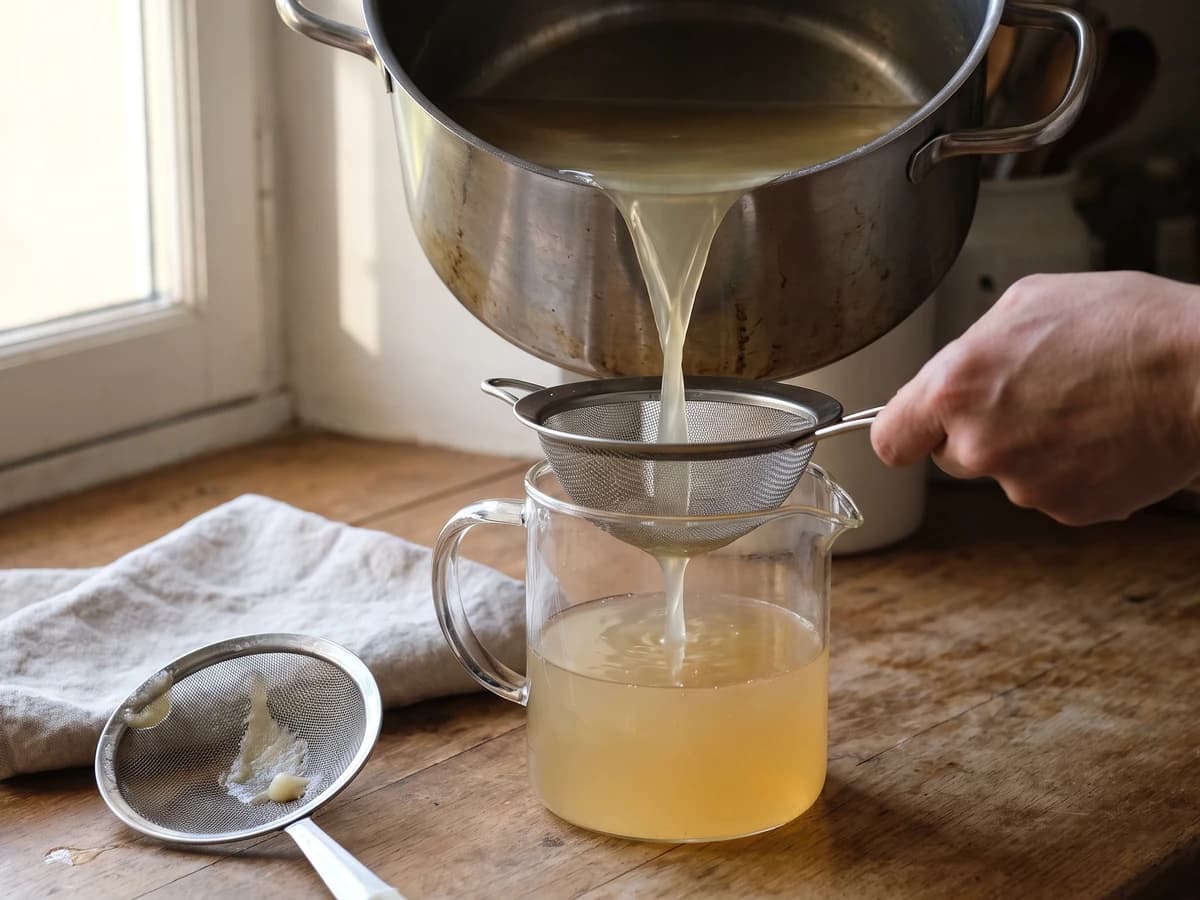
Break the veal bones small, then give them eight hours at a bare tremble. This pale, gelatinous fond becomes the quiet foundation beneath velouté, blanquette, and every sauce that must stay light.
Chef Juliette
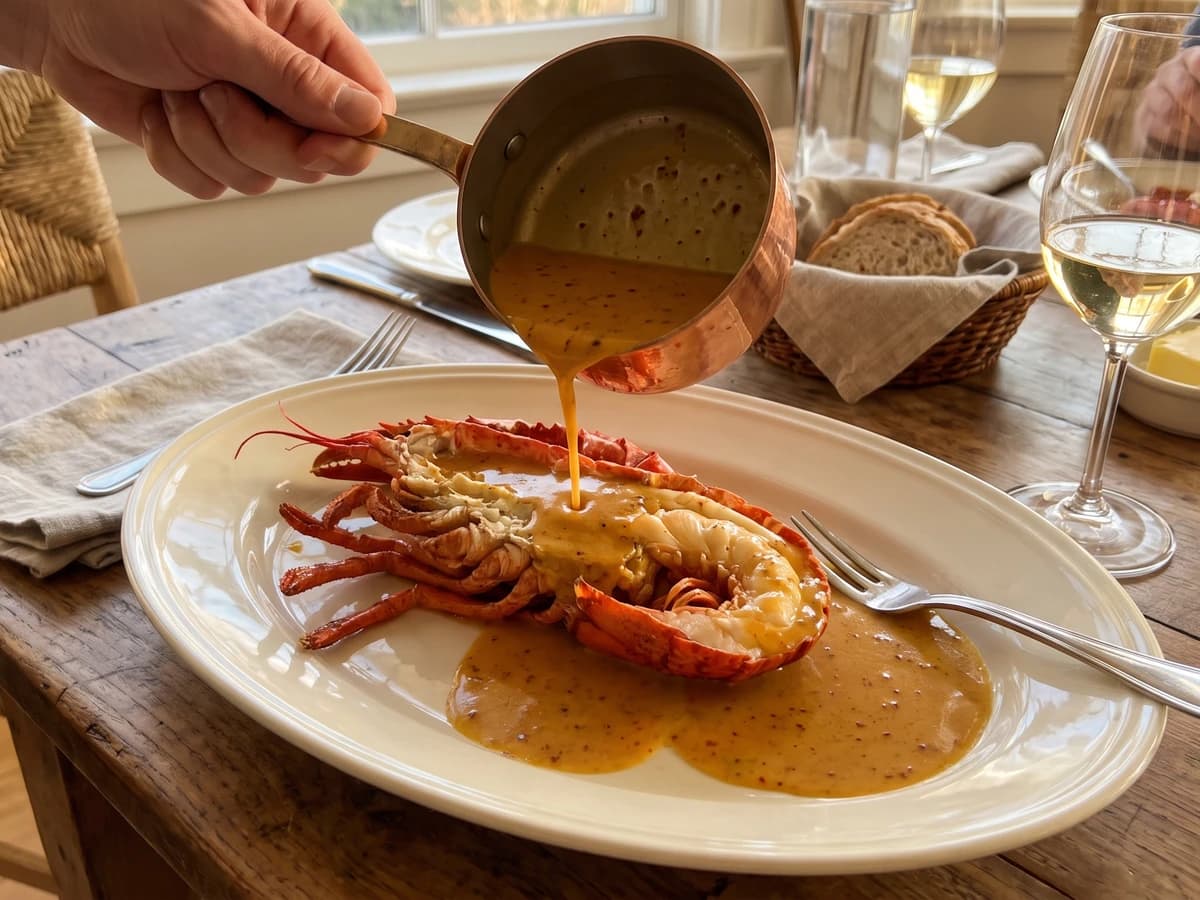
Sauce Orientale concentrates lobster-rich American Sauce with curry, then folds in cream away from the fire: a glossy, gently spiced derivative made for lobster, crayfish, and firm fish.
Chef Juliette
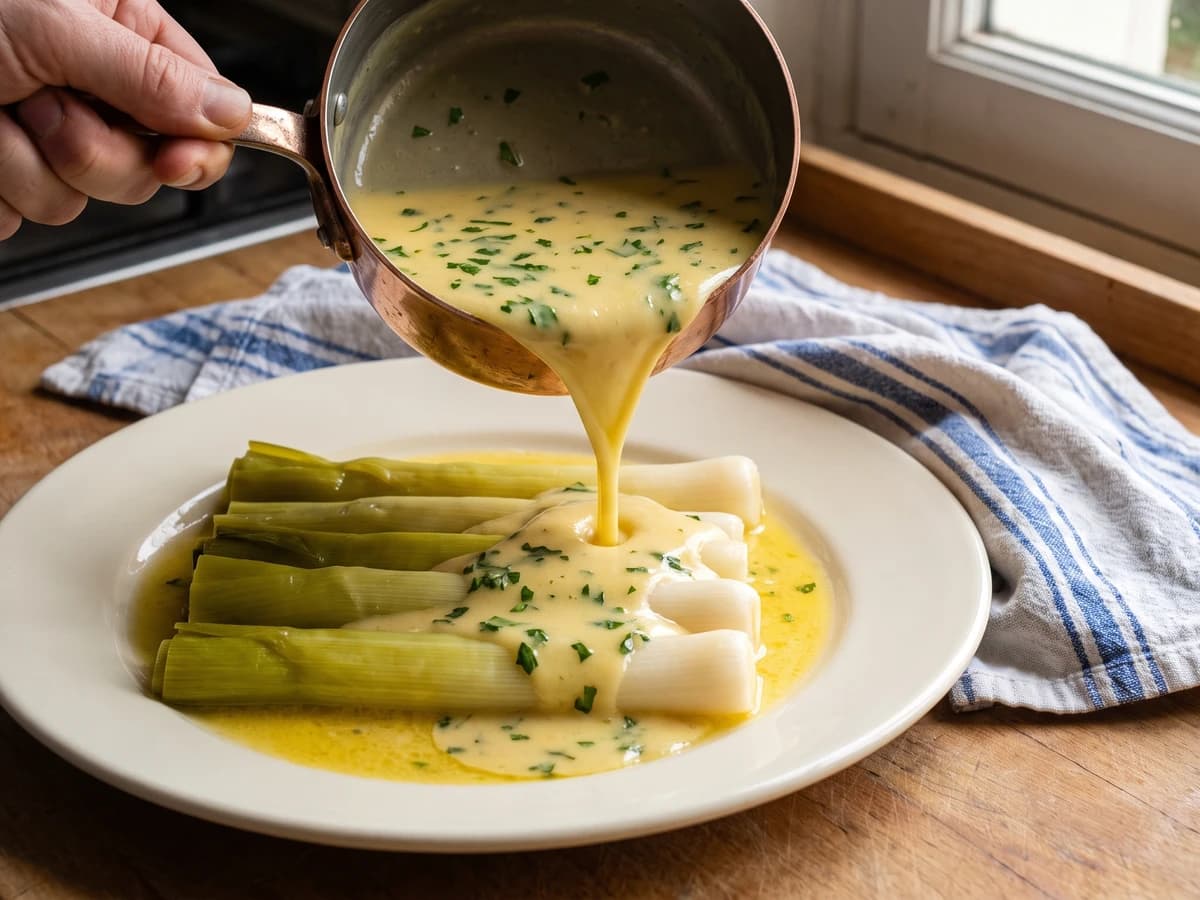
An old lesson in sauce families: Sauce Allemande takes mushroom liquor, then butter, lemon, and parsley, becoming a glossy Poulette for sheep's trotters, leeks, cauliflower, and anything needing gentle richness with a bright edge.