Chef Juliette
Ordinary or White Consommé
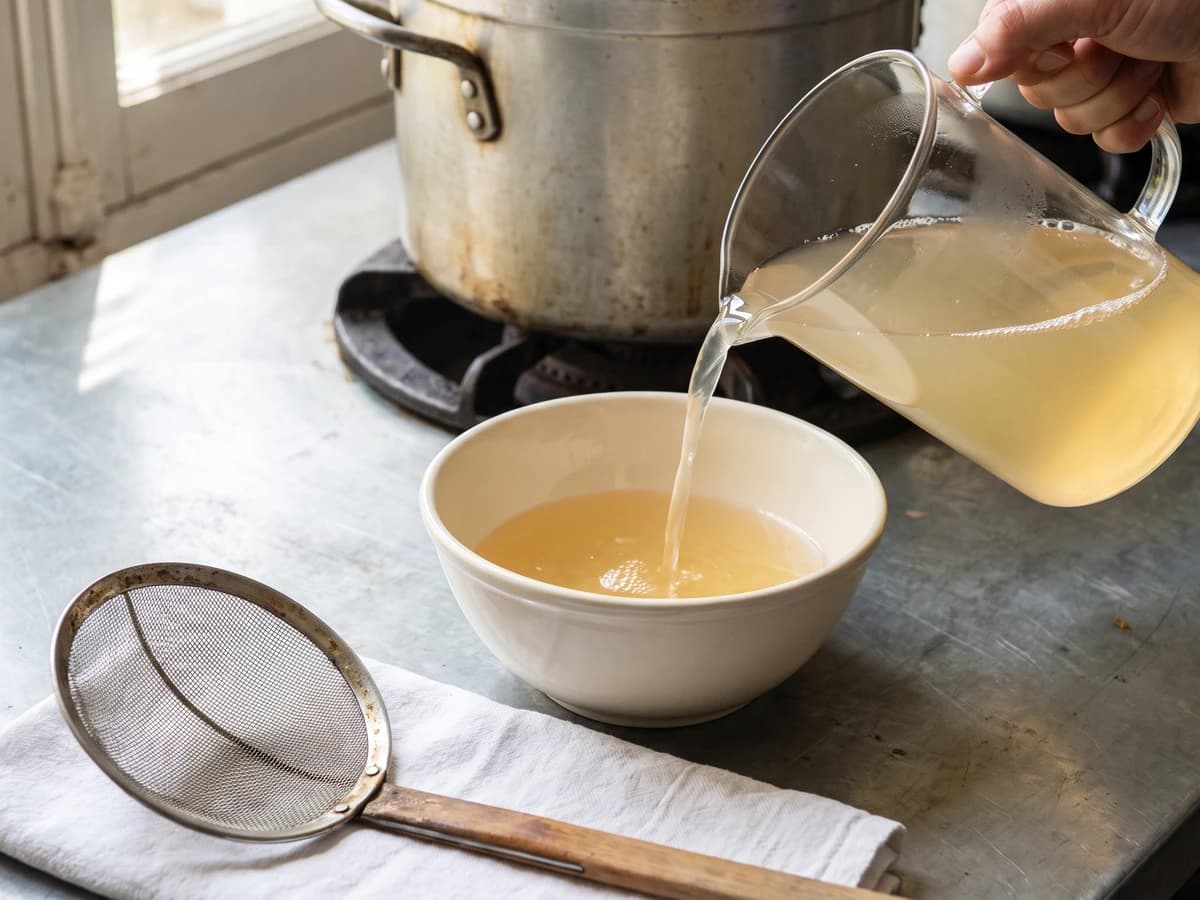
Beef shin, lean beef, and fowl begin in cold water and rise slowly toward a tremble. Skim before the boil, and you learn the quiet discipline that gives every clear French broth its backbone.
A cooking platform built around craft, culture, and the stories behind what we eat.
Created by Chef Juliette
Based on No. 74, Chaud-Froid Sauce, à l’Aurore, from Le Guide Culinaire (1907) by Auguste Escoffier
A pale rose chaud-froid for the cold table, made by tinting White Chaud-Froid Sauce (No. 72) with paprika or tomato until it coats chilled food in one smooth, satin layer.
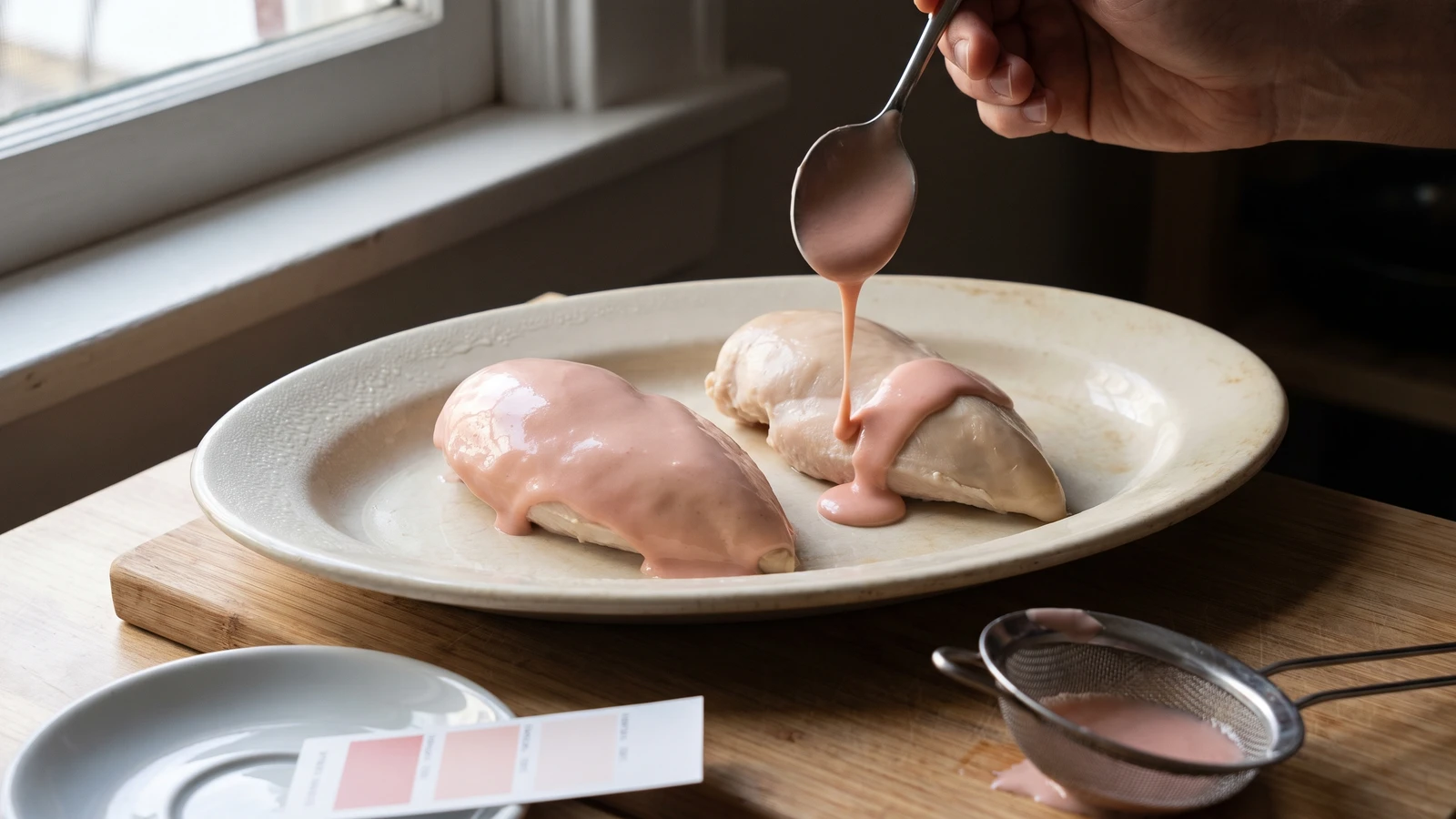
Chaud-Froid Sauce, à l’Aurore (a pale rose cold-coating sauce) teaches the hot-cold grammar hidden in its name: you loosen and colour it while fluid, cool it until it begins to take body, then lay it over food that is already cold. The one true thing to know before touching a pan is that chaud-froid isn't poured at the table. Its success lies in the instant between flowing and setting, when it falls from the spoon in a smooth veil and stays where it lands.
The book's kitchen assumed a saucier at the open fire, stock never off the fire and already turned into velouté and white poultry jelly, brigade quantities, and a tammy for the final pass. For one cook, one stove, one evening, those foundations are gathered into finished White Chaud-Froid Sauce (No. 72); a four-quart saucepan, low heat, a fine-mesh sieve, and an ice bath replace the open fire and tammy. The reduction and cold-setting foundation are the dish, so they remain in the referenced sauce. The large kettle and constant hand at the stove were brigade scaffolding, so they go.
For the à l’Aurore tint, paprika gives the cleanest pale dawn colour; fine red tomato purée makes a deeper rose and brings a little tomato character. Add either gradually and judge a teaspoon on a cold saucer, because the warm pan lies about both colour and body. Stir as it cools so no skin forms. If it begins to set in the bowl, don't panic: ça se rattrape, and gentle heat makes it fluid again. The cold-saucer test is the step that matters most.
Chaud-froid belongs to the cold buffet work of Parisian grand kitchens, where cooked poultry, game, fish, and eggs were given an opaque coating of sauce enriched with jelly. Its name records the method, made while warm and served cold, rather than a regional flavour or a dish meant to arrive hot. À l’Aurore names the blush of dawn: tomato purée can produce it, but paprika infusion was preferred when the cook wanted colour without turning the white base distinctly tomato-red.
Quantity
2 quarts (8 cups / 1.9 L / about 2 kg) White Chaud-Froid Sauce (No. 72)
Quantity
1 to 2 tablespoons paprika (15 to 30 ml / 7 to 14 g), or 2 to 4 tablespoons purée (30 to 60 ml / 30 to 60 g)
choose paprika for a pale rose or tomato for a deeper shade
| Ingredient | Quantity |
|---|---|
| White Chaud-Froid Sauce (No. 72) | 2 quarts (8 cups / 1.9 L / about 2 kg) White Chaud-Froid Sauce (No. 72) |
| sweet red paprika for infusion, or fine red tomato puréechoose paprika for a pale rose or tomato for a deeper shade | 1 to 2 tablespoons paprika (15 to 30 ml / 7 to 14 g), or 2 to 4 tablespoons purée (30 to 60 ml / 30 to 60 g) |
Set a small white saucer in the refrigerator and prepare a bowl of ice water large enough to hold the sauce bowl later. If using paprika, tie it loosely in a double layer of cheesecloth or place it in a fine-mesh tea infuser. If using tomato, rub the purée through a fine sieve now. The pale, even shade comes from clean extraction, not red specks, so loose paprika never goes straight into the sauce.
Place the White Chaud-Froid Sauce (No. 72) in a four-quart saucepan, holding back about one-eighth as an untinted reserve. Warm the rest over low heat, stirring across the bottom and into the corners, just until it becomes completely smooth and fluid. Do not let it simmer; boiling would reduce a sauce whose consistency has already been settled and can make the cream catch.
For the softer paprika shade, submerge the sachet in the fluid sauce and hold it over the lowest heat for 8 to 10 minutes, stirring around it occasionally. Remove it and press it gently against the pan without forcing powder through the cloth. For the tomato version, whisk in the sieved purée one spoonful at a time. In either case, place a teaspoon on the chilled saucer for 2 minutes before adding more colour; the proper shade is a quiet dawn rose, not scarlet. If it goes too deep, whisk in the reserved untinted sauce. Ça se rattrape. This is why the colour goes in gradually.
Pass the sauce through a fine-mesh sieve into a clean bowl, then set that bowl in the ice water. Stir steadily at first and frequently afterward, scraping the cooler sauce from the sides into the centre, until it feels cool and coats the back of a spoon in an opaque layer while still falling in a slow ribbon. If a skin forms, don't beat it back into the sauce; lift it off and strain once more. If the sauce begins setting before you can use it, place the bowl over barely warm water and stir until it loosens. Add no water.
Set thoroughly chilled cooked poultry, fish, or eggs on a rack over a tray and blot every surface dry. Spoon or dip the food into the cool, fluid sauce, letting the excess run away in one clean sheet. Chill for about 10 minutes before adding a second coat, if one is needed, then refrigerate until fully set, about 30 minutes. Keep the finished food cold until serving. The coating should be smooth, tender, and satin-glossed, never rubbery or thick as icing. À table!
1 serving (about 60g)
Culinary guides, cultural storytelling, and the editorial depth that makes cooking meaningful.
Discover Culinary ExplorerChef Juliette
Beef shin, lean beef, and fowl begin in cold water and rise slowly toward a tremble. Skim before the boil, and you learn the quiet discipline that gives every clear French broth its backbone.
Chef Juliette
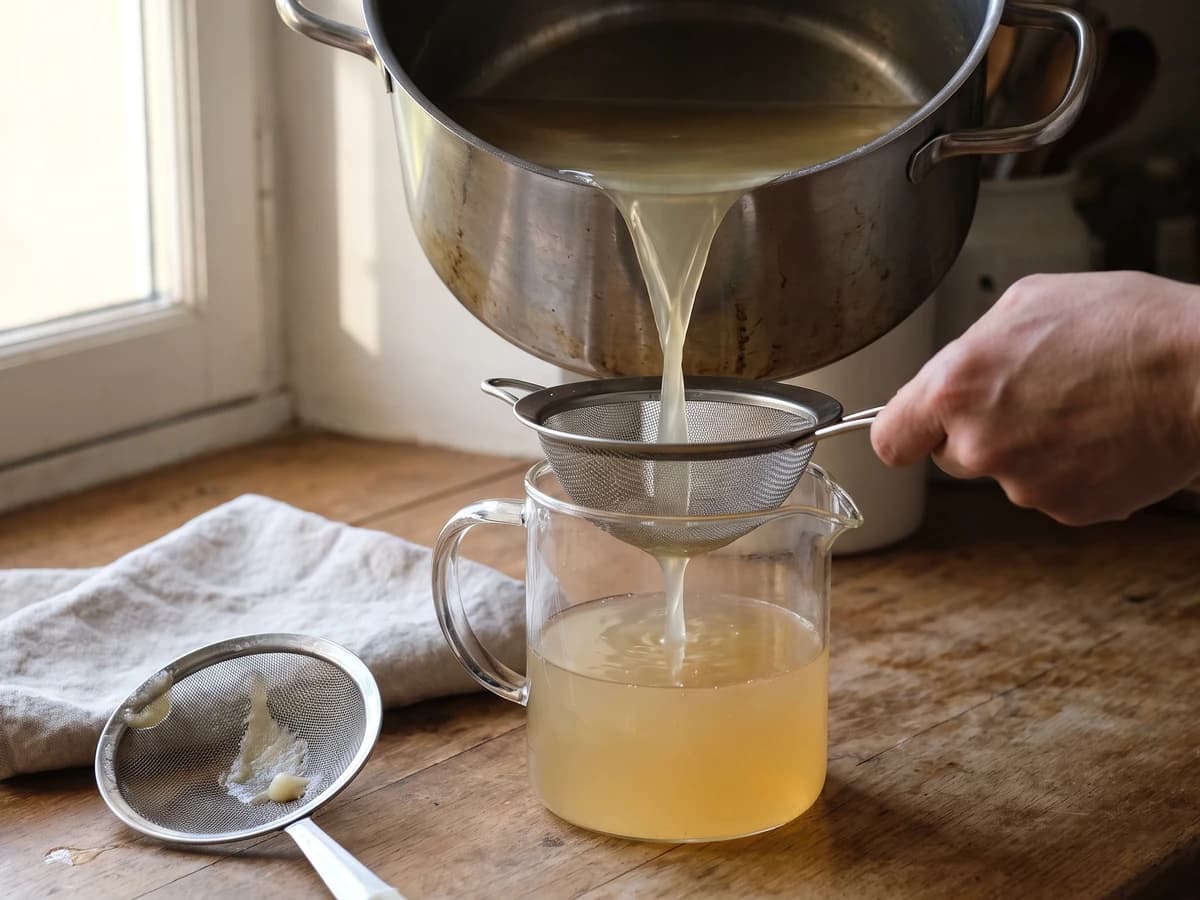
Break the veal bones small, then give them eight hours at a bare tremble. This pale, gelatinous fond becomes the quiet foundation beneath velouté, blanquette, and every sauce that must stay light.
Chef Juliette
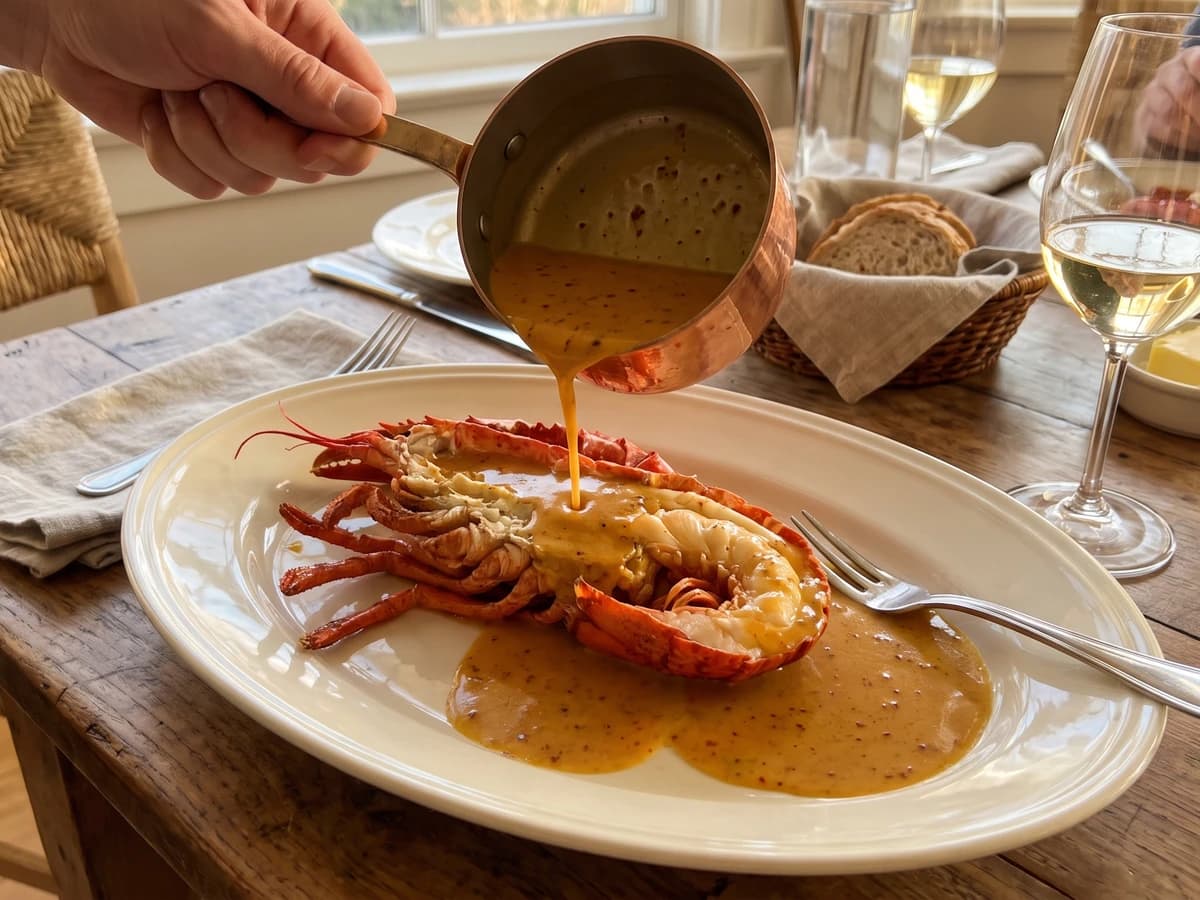
Sauce Orientale concentrates lobster-rich American Sauce with curry, then folds in cream away from the fire: a glossy, gently spiced derivative made for lobster, crayfish, and firm fish.
Chef Juliette
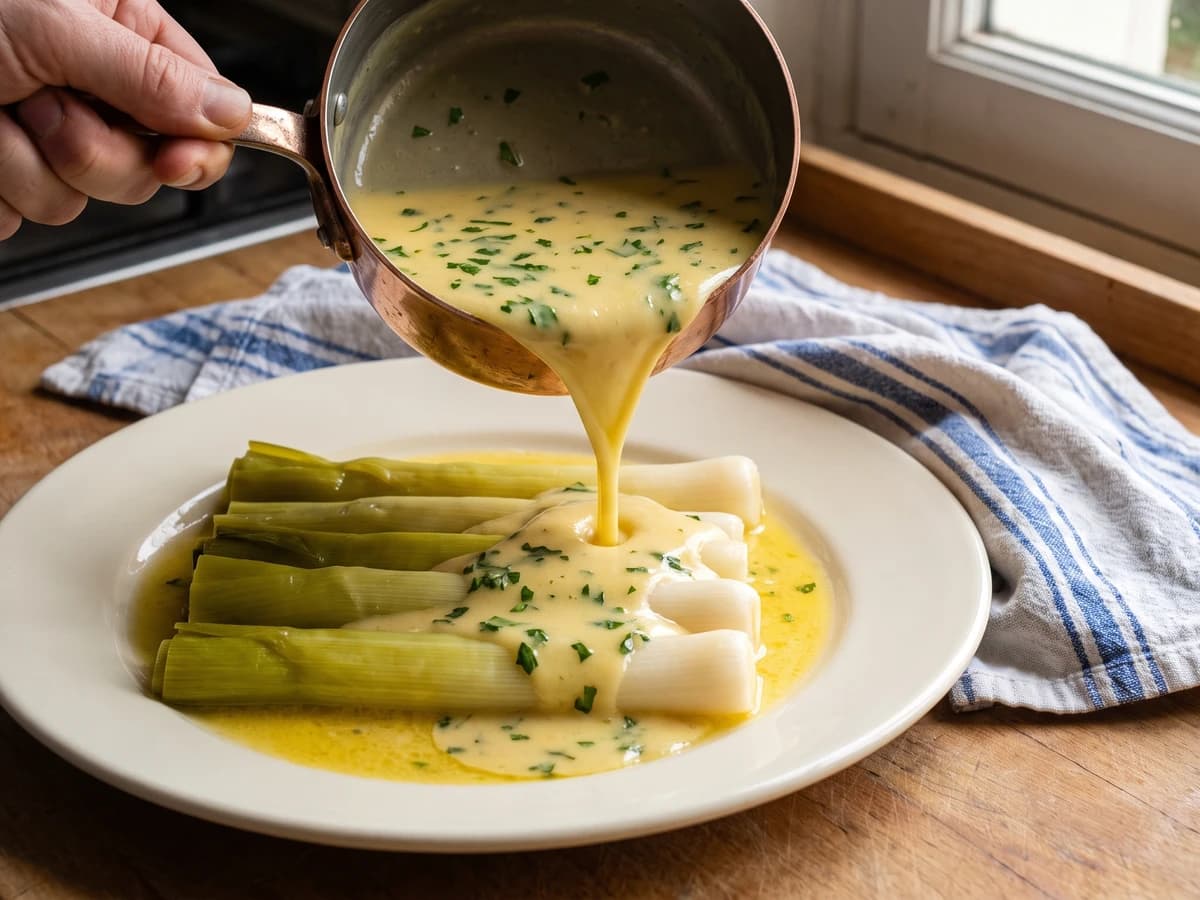
An old lesson in sauce families: Sauce Allemande takes mushroom liquor, then butter, lemon, and parsley, becoming a glossy Poulette for sheep's trotters, leeks, cauliflower, and anything needing gentle richness with a bright edge.