Chef Juliette
Ordinary or White Consommé
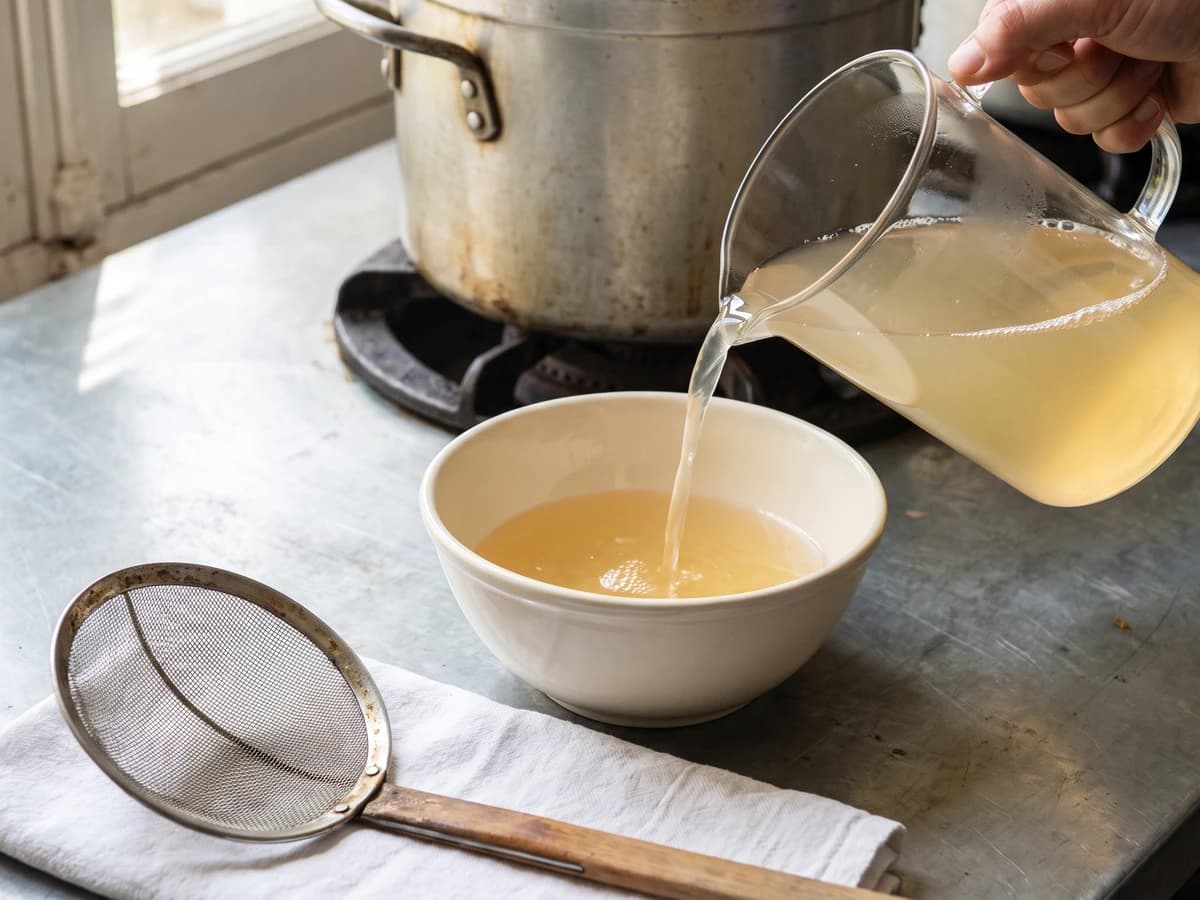
Beef shin, lean beef, and fowl begin in cold water and rise slowly toward a tremble. Skim before the boil, and you learn the quiet discipline that gives every clear French broth its backbone.
A cooking platform built around craft, culture, and the stories behind what we eat.
Created by Chef Juliette
Based on No. 72, White Chaud-Froid Sauce, from Le Guide Culinaire (1907) by Auguste Escoffier
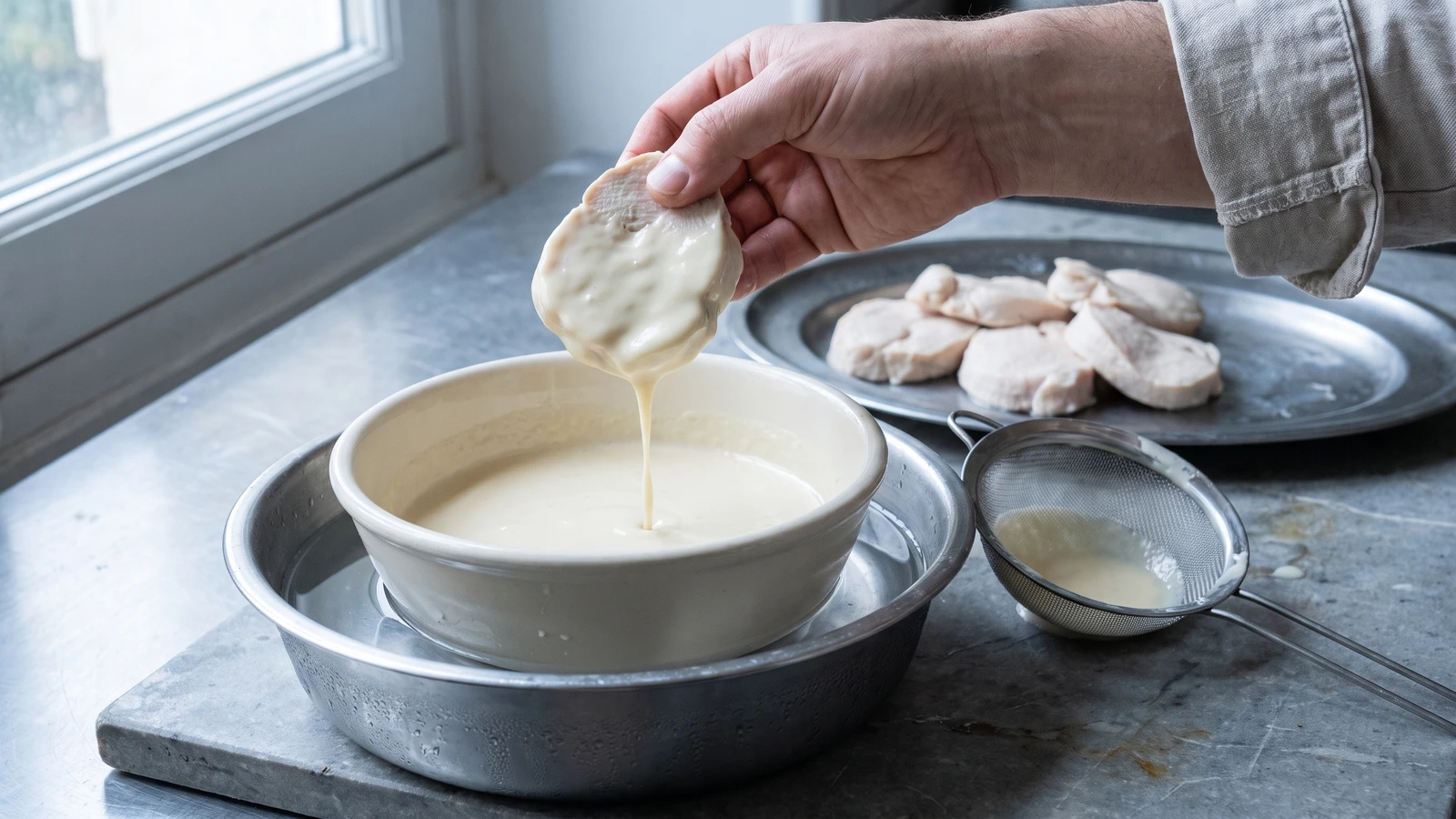
Sauce chaud-froid blanche turns velouté, white poultry jelly, and cream into an ivory cold coating, firm enough to cling and fluid enough to receive each piece cleanly.
Sauce chaud-froid blanche (white cold coating sauce) teaches the discipline of judging a sauce at the temperature in which it will be used. Hot, it must look too loose. Cold, its poultry jelly gives it enough body to veil a chilled piece in smooth ivory while remaining fluid enough for dipping. The one true thing to know before touching the pan is this: the sauce is finished during cooling, not at the boil.
The old formula assumed a saucier who could stir without interruption, velouté and white poultry jelly waiting from a stockpot never off the fire, an open flame, and a tammy cloth close at hand. A salamander has no work here. At home, one heavy saucepan replaces the fire, a fine sieve replaces the tammy, and a cold-water bath lets one cook control the set. The brigade's extra hands and repeated pans were scaffolding and can go. The one-third reduction, gradual addition of cream, fine straining, and stirring through cooling are the dish and must stay.
This batch keeps the original proportion exactly: one part velouté, three-quarters part poultry jelly, and one-half part cream. It makes enough for a generous dinner-party platter, all in one pan. One cook, one stove, one evening. The step that matters most is the cooling: stir until the sauce is cold enough to coat, then test it on a chilled spoon before the first piece goes in.
Sauce chaud-froid belongs to the grand cold-buffet tradition of Parisian kitchens, where poached poultry, game, fish, and eggs were cooked hot, chilled, and masked for service. The name describes that journey from chaud to froid, not a sauce served at two temperatures, and the family includes both pale and dark coatings built on different foundations. In this white poultry form, velouté supplies flavor and body, poultry jelly fixes the coating, and cream gives the characteristic ivory finish.
Quantity
4½ cups (1.08 L / about 1.08 kg)
hot
Quantity
3⅜ cups (810 ml / about 810 g)
fully melted and hot
Quantity
2¼ cups (540 ml / about 535 g)
cold
| Ingredient | Quantity |
|---|---|
| prepared veloutéhot | 4½ cups (1.08 L / about 1.08 kg) |
| prepared white poultry jellyfully melted and hot | 3⅜ cups (810 ml / about 810 g) |
| very fresh heavy creamcold | 2¼ cups (540 ml / about 535 g) |
Set a fine-mesh sieve over a large clean metal bowl. Place that bowl near a second, wider bowl or sink partly filled with cold water, and keep ice nearby for the later cooling stage. Have the cold cream measured and ready. Once the poultry jelly begins to set, searching for equipment is how skins and lumps are born.
Combine the hot velouté and melted white poultry jelly in a heavy saucepan. Bring them to a steady boil over medium heat, stirring constantly with a flexible spatula and scraping the base and corners. Reduce the combined volume by one-third, from about 7⅞ cups to 5¼ cups, which should take 20 to 30 minutes. It will lightly veil a spoon but still run freely. If the base begins to catch, immediately pour the unburned sauce into a clean pan without scraping the scorched floor. Ça se rattrape if you move before the burnt taste spreads.
Lower the heat to a gentle simmer. Add the cold cream in four additions, stirring each one smoothly into the sauce before adding the next. Keep the sauce moving but do not beat air into it. Once all the cream is incorporated, cook only until the sauce is homogeneous, glossy, and slightly thicker than plain cream. It must remain looser than its final coating consistency because the poultry jelly gains body as it cools. If it tightens too quickly, remove the pan from the heat and add the next portion of cream at once.
Pour the sauce through the fine-mesh sieve, pressing it through gently with the back of a ladle or a flexible spatula. A dampened layer of cheesecloth inside the sieve gives the closest home equivalent to a tammy when an especially polished finish is wanted. Scrape the underside of the sieve into the bowl, then wash the sieve immediately in case the sauce must be passed again.
Set the bowl in the cold-water bath and stir slowly, sweeping across the surface and around the sides as well as through the center. When the sauce is merely lukewarm, add ice to the outer bath and continue stirring until the sauce feels cold, thickens to a flowing ribbon, and leaves no set rim on the bowl. If a skin forms, do not peel it off and hope for the best. Whisk it completely into the sauce and pass everything through the clean sieve once more. Ça se rattrape. If the edges set into lumps, place the bowl over lukewarm water and stir only until fluid, then resume cooling.
Dip a refrigerator-cold metal spoon into the sauce and lift it out. The chaud-froid should leave a smooth, opaque ivory veil while the excess drains away in a clean ribbon. If it runs off transparently, continue stirring over the ice bath. If it clings in ridges or will not drain, stir the bowl over lukewarm water until it loosens. Dip only thoroughly chilled, dry food, let the excess fall back into the bowl, and transfer each coated piece to a cold platter to set. Keep the sauce over cool water and stir it between pieces. À table!
1 serving (about 60g)
Culinary guides, cultural storytelling, and the editorial depth that makes cooking meaningful.
Discover Culinary ExplorerChef Juliette
Beef shin, lean beef, and fowl begin in cold water and rise slowly toward a tremble. Skim before the boil, and you learn the quiet discipline that gives every clear French broth its backbone.
Chef Juliette
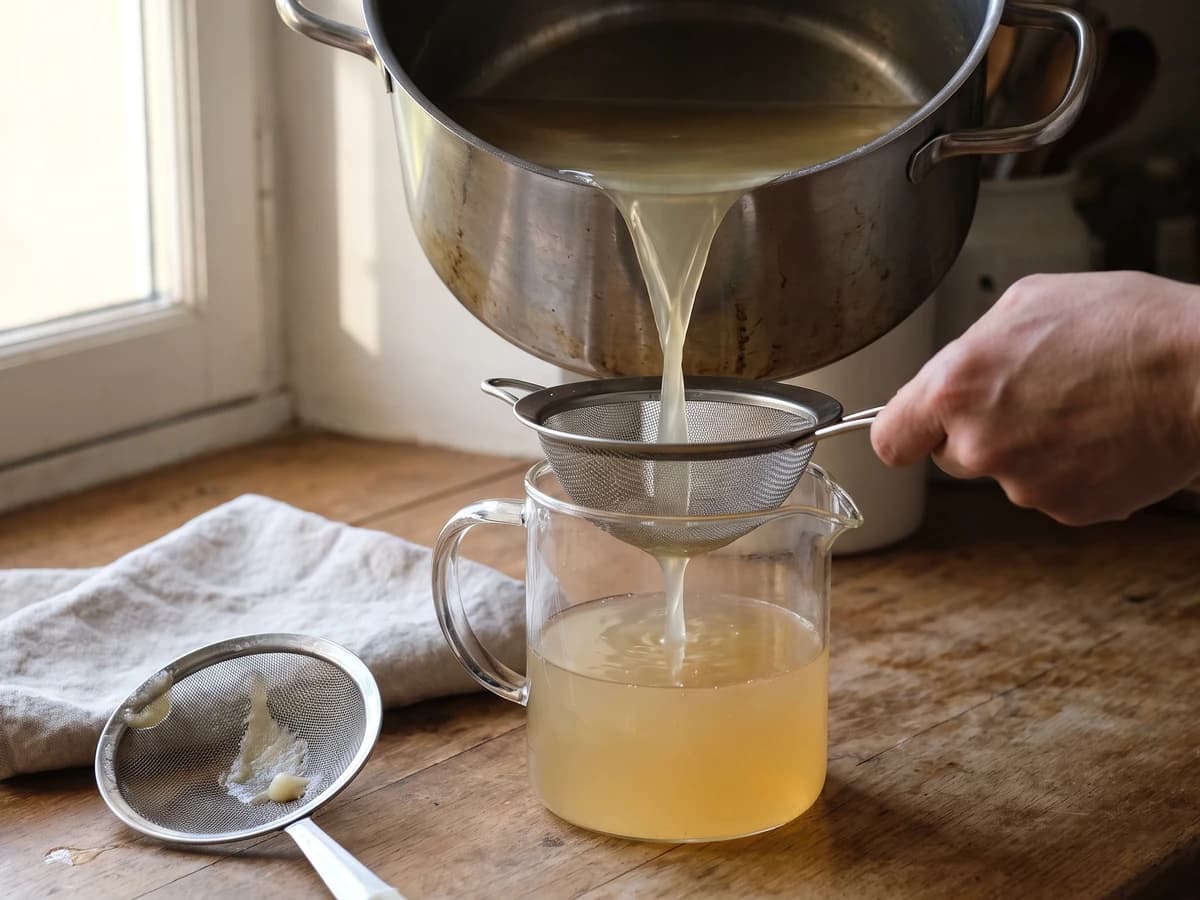
Break the veal bones small, then give them eight hours at a bare tremble. This pale, gelatinous fond becomes the quiet foundation beneath velouté, blanquette, and every sauce that must stay light.
Chef Juliette
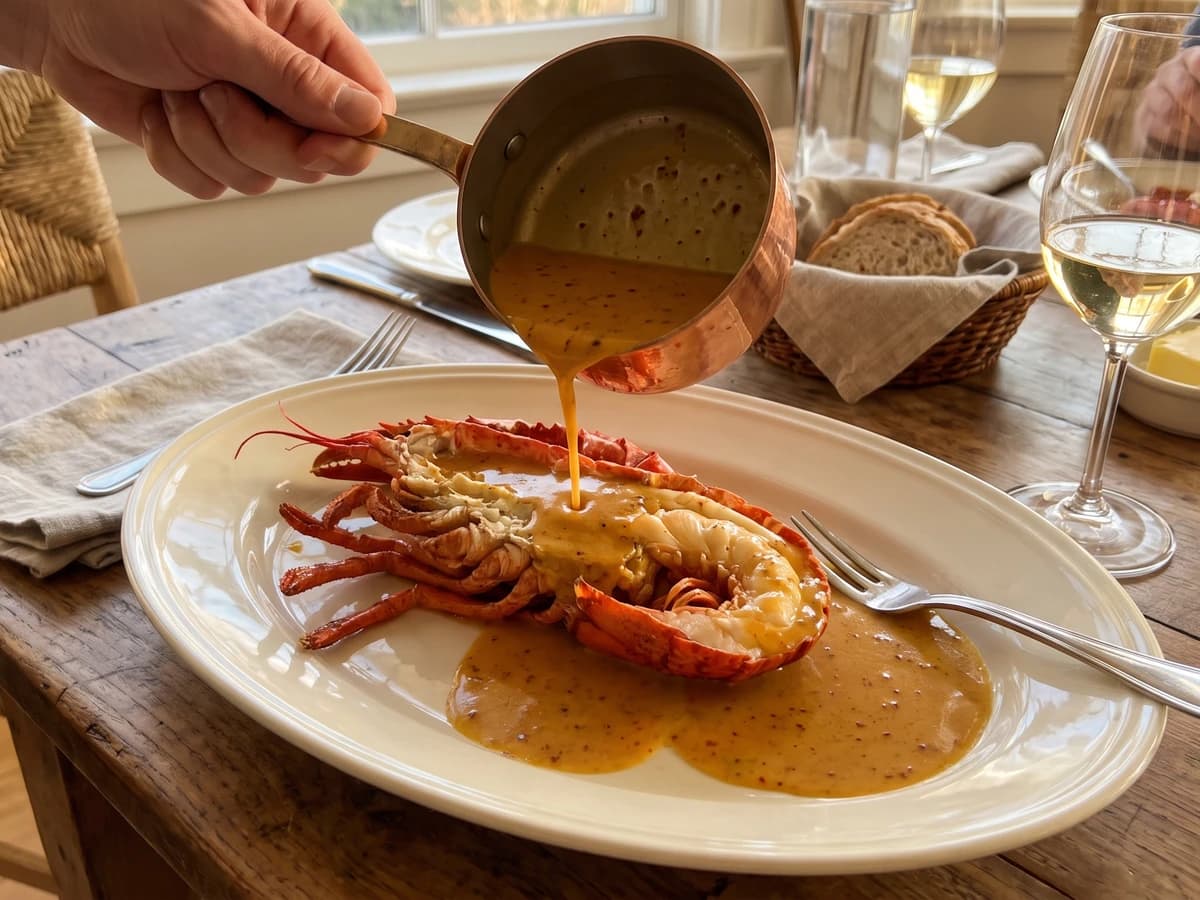
Sauce Orientale concentrates lobster-rich American Sauce with curry, then folds in cream away from the fire: a glossy, gently spiced derivative made for lobster, crayfish, and firm fish.
Chef Juliette
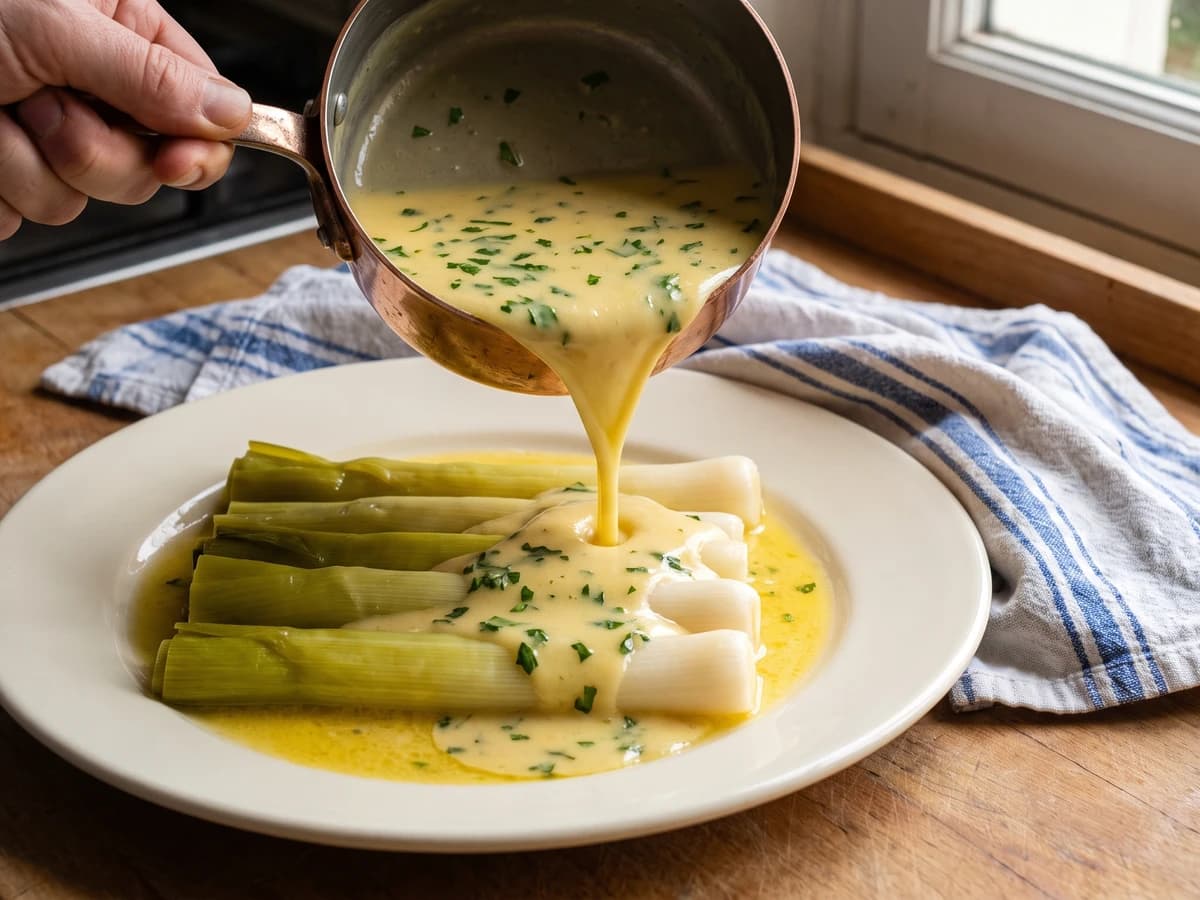
An old lesson in sauce families: Sauce Allemande takes mushroom liquor, then butter, lemon, and parsley, becoming a glossy Poulette for sheep's trotters, leeks, cauliflower, and anything needing gentle richness with a bright edge.