Chef Juliette
Bouillabaisse à la Marseillaise
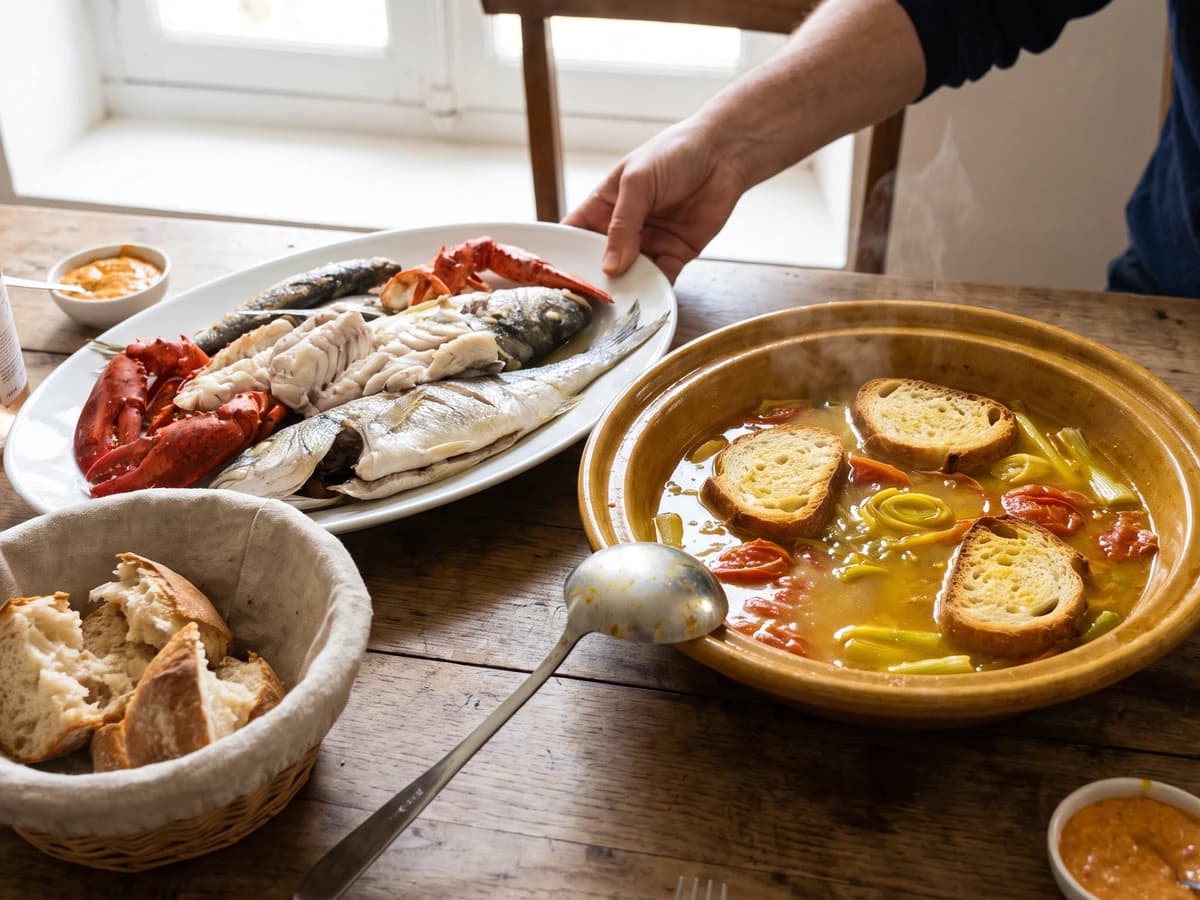
Marseille's great fish stew, saffron-gold and garlic-scented, proves that a hard boil can be the careful choice: it binds olive oil into broth before the whole pot meets bread.
A cooking platform built around craft, culture, and the stories behind what we eat.
Created by Chef Juliette
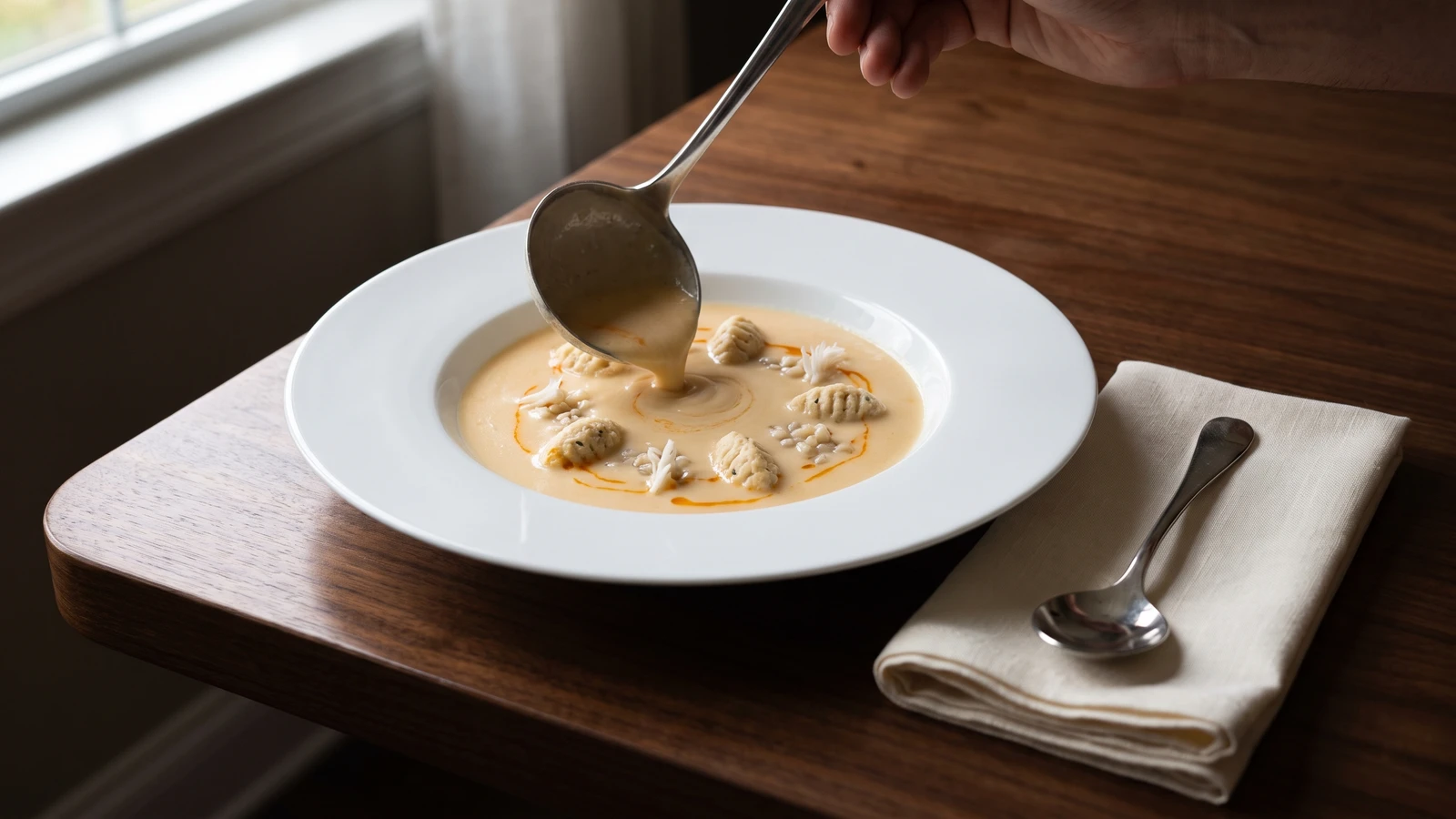
Based on No. 734, Potage Régence, from Le Guide Culinaire (1907) by Auguste Escoffier
Potage Régence turns humble barley into ivory silk, then sets crayfish-bright quenelles and pearled garnish beneath it. The lesson is control: enrich with liaison and butter without ever letting the soup boil.
Potage Régence (barley cream with crayfish butter, chicken quenelles, and cockscombs) teaches control at the finish. The one true thing to know before touching a pan is simple: once the liaison, the egg-yolk-and-cream binding, enters the soup, the pot must never boil.
The source assumes Crème d’Orge (No. 712) already prepared, a saucier finishing each bowl at the last moment, a stockpot never off the fire, and spare hands whitening cockscombs while another cook grooves the quenelles. At home, the barley cream remains its own finished preparation, a food processor handles the forcemeat, and the special grooved spoon becomes two teaspoons and a table fork. This version doubles the source quart to about two quarts, preserving its 1½ ounces of crayfish butter per quart and doubling every garnish count. Those separate brigade hands are scaffolding and can go; the liaison, crayfish butter, pearl barley, quenelles, and pale cockscombs are the dish and stay. One cook, one stove, one evening.
When it is right, the Potage Régence is pale apricot-ivory and perfectly smooth, with the sweet shellfish perfume of crayfish butter rising above the quiet nuttiness of barley. Temper the liaison patiently and keep the finished pot below a simmer. That is the step that decides the dish.
Potage Régence belongs to the French court table and the Parisian grand-kitchen repertoire, where a potage displayed refinement through several garnishes prepared separately and united only at service. Its foundation is unexpectedly modest barley, enriched with liaison and crayfish butter, while grooved chicken quenelles and carefully whitened cockscombs supply the ceremonial finish. From court service it passed into codified grand-kitchen practice and formal private dining, its identity preserved through the contrast between a humble grain and painstaking garnish work.
Quantity
12
chilled and unpeeled
Quantity
20 cups (4.7 L / 4.7 kg)
divided for cleaning and poaching
Quantity
2 tablespoons (30 ml / 16 g)
for the blanc
Quantity
2 tablespoons (30 ml / 30 g)
for the blanc
Quantity
2 teaspoons (10 ml / 12 g)
for the blanc
Quantity
8 ounces (225 g)
trimmed, diced, and very cold
Quantity
1 large (about 2 tablespoons / 30 ml / 30 g)
very cold
Quantity
1/2 cup plus up to 2 tablespoons (120 to 150 ml / 120 to 150 g)
very cold, for the forcemeat
Quantity
2 tablespoons (30 ml / 28 g)
softened, for the forcemeat
Quantity
3/4 teaspoon (3.75 ml / 4.5 g)
for the forcemeat
Quantity
1/8 teaspoon (0.6 ml / 0.3 g)
Quantity
1 teaspoon (5 ml / 6 g)
for poaching the quenelles
Quantity
8 cups (1.9 L / about 1.9 kg) Crème d’Orge (No. 712)
prepared and kept hot but not boiling
Quantity
4 large (about 1/4 cup / 60 ml / 68 g)
Quantity
3/4 cup (180 ml / 180 g)
divided, for the liaison
Quantity
6 tablespoons (90 ml / 85 g)
chilled and cubed, for finishing
Quantity
2 tablespoons (30 ml / 30 g)
well cooked and drained
Quantity
to taste
| Ingredient | Quantity |
|---|---|
| fresh cockscombschilled and unpeeled | 12 |
| cold waterdivided for cleaning and poaching | 20 cups (4.7 L / 4.7 kg) |
| all-purpose flourfor the blanc | 2 tablespoons (30 ml / 16 g) |
| fresh lemon juicefor the blanc | 2 tablespoons (30 ml / 30 g) |
| fine sea saltfor the blanc | 2 teaspoons (10 ml / 12 g) |
| boneless, skinless chicken breasttrimmed, diced, and very cold | 8 ounces (225 g) |
| large egg whitevery cold | 1 large (about 2 tablespoons / 30 ml / 30 g) |
| heavy creamvery cold, for the forcemeat | 1/2 cup plus up to 2 tablespoons (120 to 150 ml / 120 to 150 g) |
| crayfish buttersoftened, for the forcemeat | 2 tablespoons (30 ml / 28 g) |
| fine sea saltfor the forcemeat | 3/4 teaspoon (3.75 ml / 4.5 g) |
| finely ground white pepper | 1/8 teaspoon (0.6 ml / 0.3 g) |
| fine sea saltfor poaching the quenelles | 1 teaspoon (5 ml / 6 g) |
| Crème d’Orgeprepared and kept hot but not boiling | 8 cups (1.9 L / about 1.9 kg) Crème d’Orge (No. 712) |
| large egg yolks | 4 large (about 1/4 cup / 60 ml / 68 g) |
| heavy creamdivided, for the liaison | 3/4 cup (180 ml / 180 g) |
| crayfish butterchilled and cubed, for finishing | 6 tablespoons (90 ml / 85 g) |
| small pearl barleywell cooked and drained | 2 tablespoons (30 ml / 30 g) |
| fine sea salt | to taste |
Bring 6 cups (1.4 L) of the water to a boil. Lower in the cockscombs for 30 to 45 seconds, then transfer them immediately to cold water. Rub away the loosened outer membrane with a clean cloth and use a small knife only on stubborn patches. Trim any dark tissue from the bases, then soak the combs in fresh cold water for 20 minutes, changing the water once. If the membrane clings, blanch the combs for another 15 seconds; prolonged boiling now will tighten them before their proper poach.
Whisk the flour into 6 cups (1.4 L) cold water in a saucepan, then add the lemon juice and 2 teaspoons salt. This blanc, a lightly acidulated flour poaching liquid, protects the cockscombs from discoloration. Add the cleaned combs, cover their surface with a round of parchment, and hold them at the barest tremble for 35 to 45 minutes, until a fine skewer enters without resistance. If exposed edges begin to grey, turn the combs and restore the parchment contact. Keep them warm in the strained blanc until service.
Chill the food-processor bowl and blade for 10 minutes. Process the cold chicken with the forcemeat salt until the meat becomes smooth and tacky, then pulse in the egg white. With the machine running in short bursts, add 1/2 cup (120 ml) cold cream gradually, followed by the softened crayfish butter and white pepper. This farce mousseline, a cream-lightened chicken forcemeat, must stay cold enough to remain smooth. If it turns slick or oily, stop. Ça se rattrape: set the bowl over ice until thoroughly cold, then pulse briefly to restore the emulsion.
Heat the remaining 8 cups (1.9 L) water with 1 teaspoon salt to 175 to 180°F (79 to 82°C). Poach a teaspoon of forcemeat first and taste it. If it feels rubbery, fold in 1 tablespoon of the reserved cold cream; if it frays or spreads, chill the paste for 15 minutes before testing again. Using two wet teaspoons, shape 24 small oval quenelles, then draw the tines of a table fork lightly along each one to make shallow grooves. Poach them in batches without boiling until they rise, feel gently springy, and reach 165°F (74°C) at the center, about 6 minutes. Lift them with a slotted spoon and hold them in warm poaching water.
Transfer the Crème d’Orge (No. 712) to a heavy saucepan and warm it slowly, stirring along the pot floor so the barley cannot catch. Bring it to about 175°F (79°C), hot enough to temper the liaison but below a simmer. If a skin forms while the garnishes wait, whisk it back in gently rather than scraping dried pieces from the rim.
Whisk the yolks with all but 1 tablespoon of the liaison cream in a large heatproof bowl. Add two ladlefuls of hot soup in a thin stream while whisking constantly, then return the tempered mixture to the saucepan. Stir over low heat until the soup lightly coats a spoon and reaches 170 to 175°F (77 to 79°C). Never let it boil. If small egg flecks appear, take the pot off the heat immediately. Ça se rattrape: blend for 10 seconds with the head fully submerged, then pass the soup through a fine sieve.
Take the saucepan completely off the heat. Monter au beurre, whisk in butter off heat, by adding the chilled crayfish butter one cube at a time until each addition disappears and the soup becomes glossy and faintly coral. Taste before adding salt, since both the barley cream and shellfish butter may already carry enough. If orange beads of fat collect on top, the soup was too hot. Whisk the reserved tablespoon of cold cream in a clean bowl, then add the soup back gradually until smooth. Keep the finished Potage Régence warm, never simmering.
Warm a soupière or eight shallow soup plates. Drain the quenelles and cockscombs well, then divide them with the cooked pearl barley among the warm plates, giving each serving three quenelles and one or two cockscombs. Ladle the Potage Régence around the garnishes so their pale shapes remain visible. Serve immediately, while the surface is glossy and the liaison still holds its silk. À table!
1 serving (about 350g)
Culinary guides, cultural storytelling, and the editorial depth that makes cooking meaningful.
Discover Culinary ExplorerChef Juliette
Marseille's great fish stew, saffron-gold and garlic-scented, proves that a hard boil can be the careful choice: it binds olive oil into broth before the whole pot meets bread.
Chef Juliette
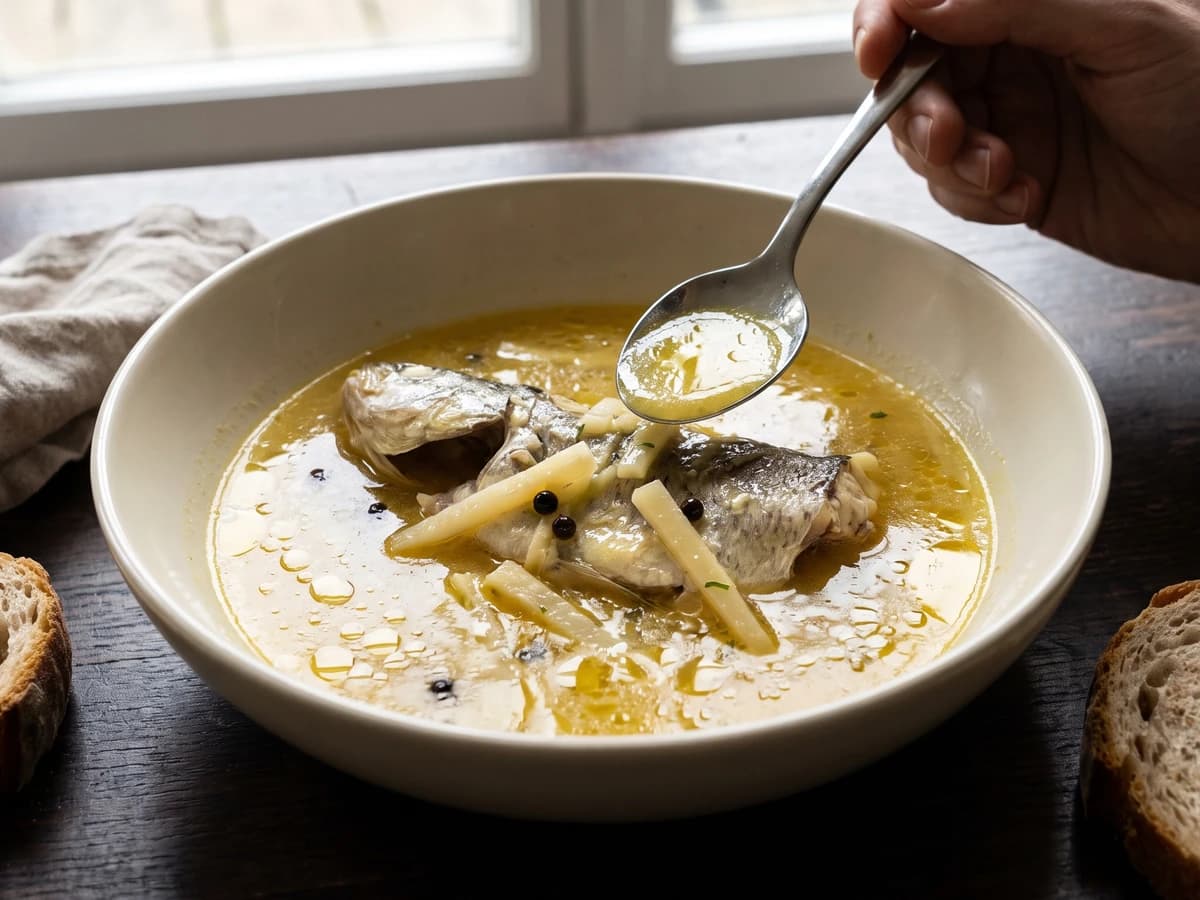
Waterzoi asks fresh, bone-in river fish to thicken its own buttery broth, with parsley root and pepper for company. No flour, no stockpot, just a brisk simmer watched closely.
Chef Juliette
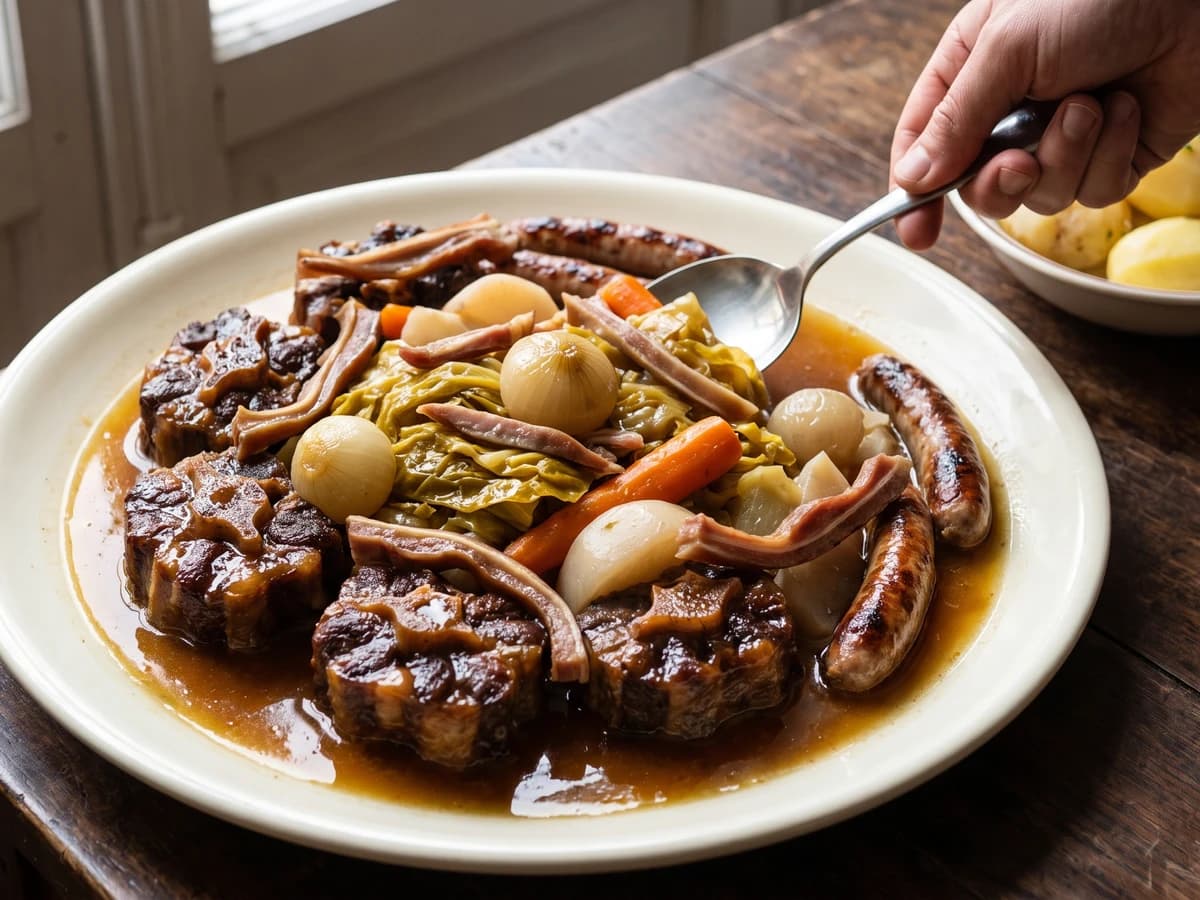
Queue de Bœuf en Hochepot gathers oxtail, pig's trotter and ear, cabbage, roots, and grilled chipolatas around a clear, gelatin-rich broth whose quiet simmer keeps every piece tender and distinct.
Chef Juliette
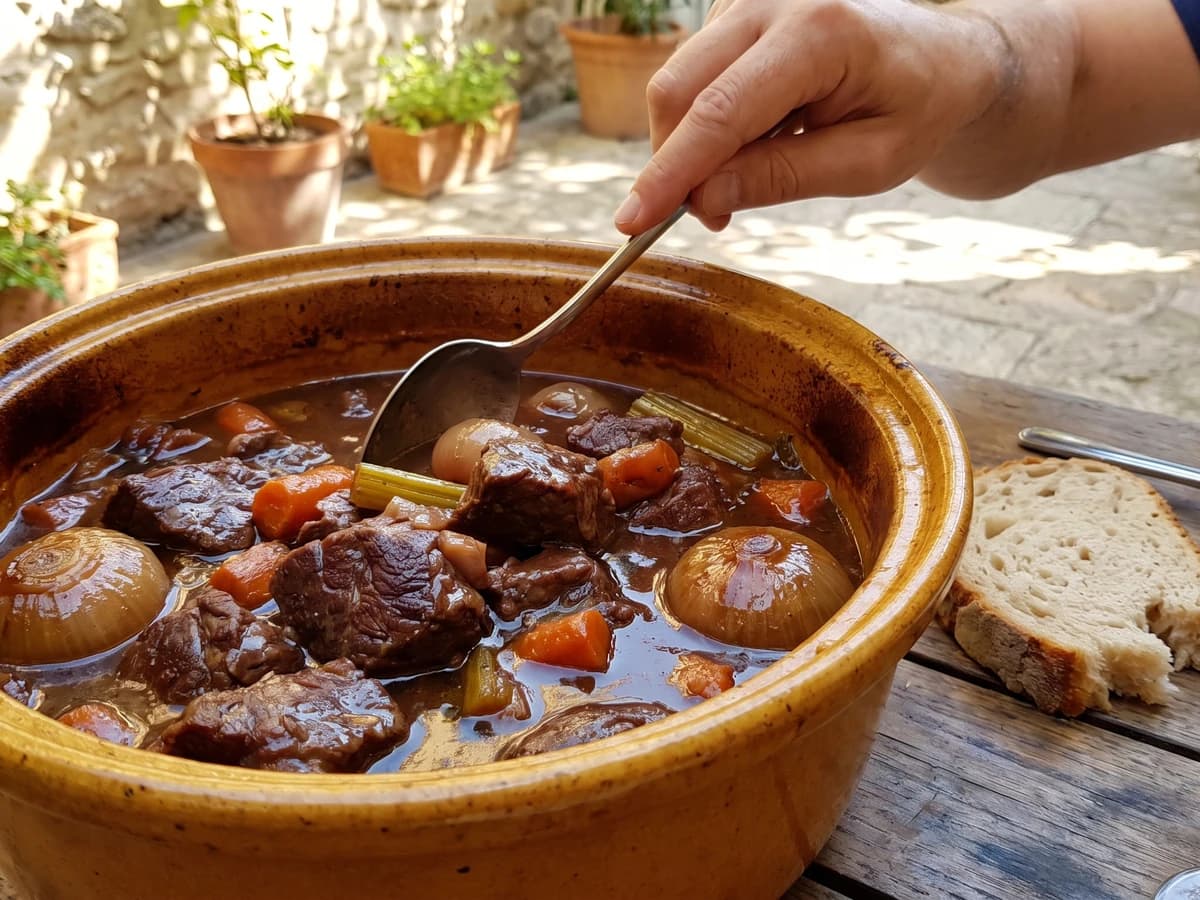
Beef shoulder larded with bacon, sharpened by red wine and vinegar, then sealed with garlic, vegetables, and dry lemon peel until the low oven turns it yielding and the gravy darkly glossy.