Chef Juliette
Bouillabaisse à la Marseillaise
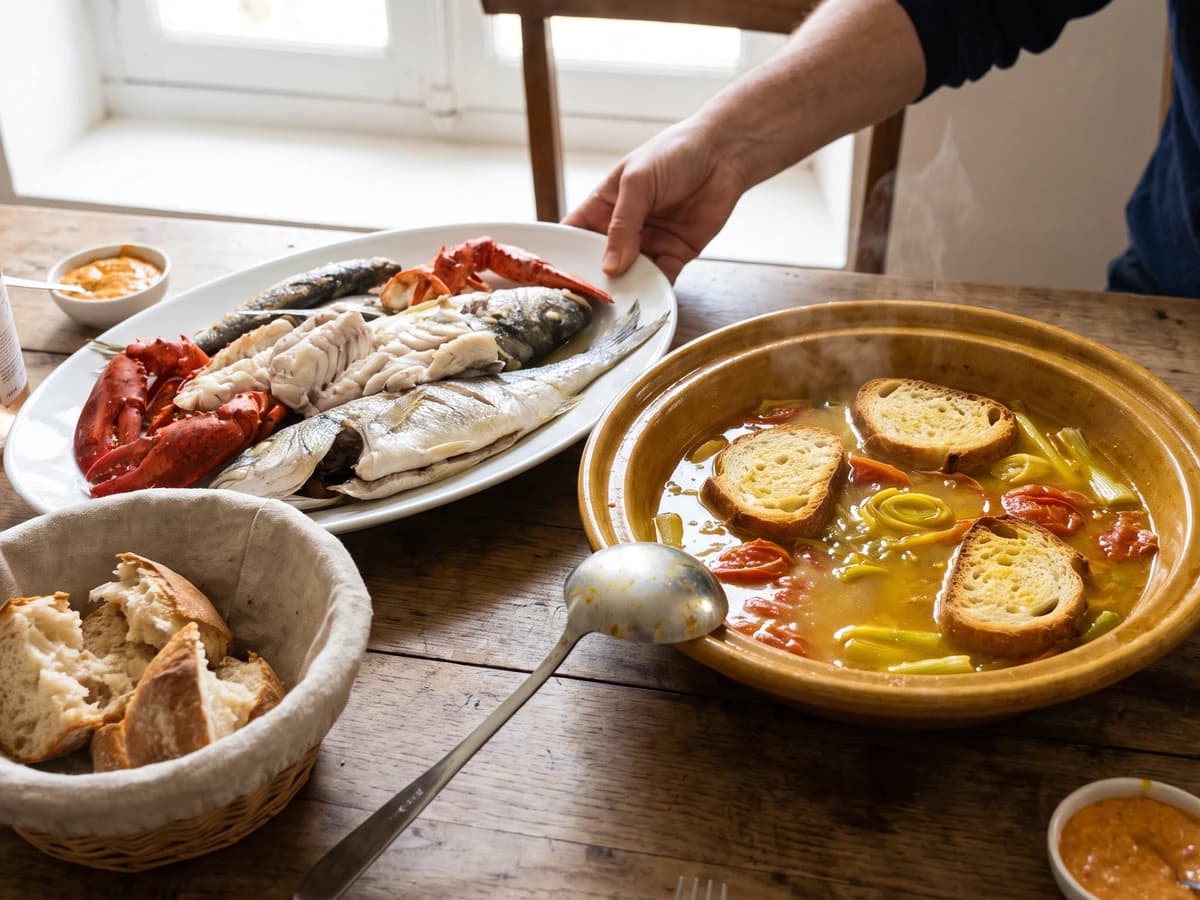
Marseille's great fish stew, saffron-gold and garlic-scented, proves that a hard boil can be the careful choice: it binds olive oil into broth before the whole pot meets bread.
A cooking platform built around craft, culture, and the stories behind what we eat.
Created by Chef Juliette
Based on No. 712, Crème d’Orge, from Le Guide Culinaire (1907) by Auguste Escoffier
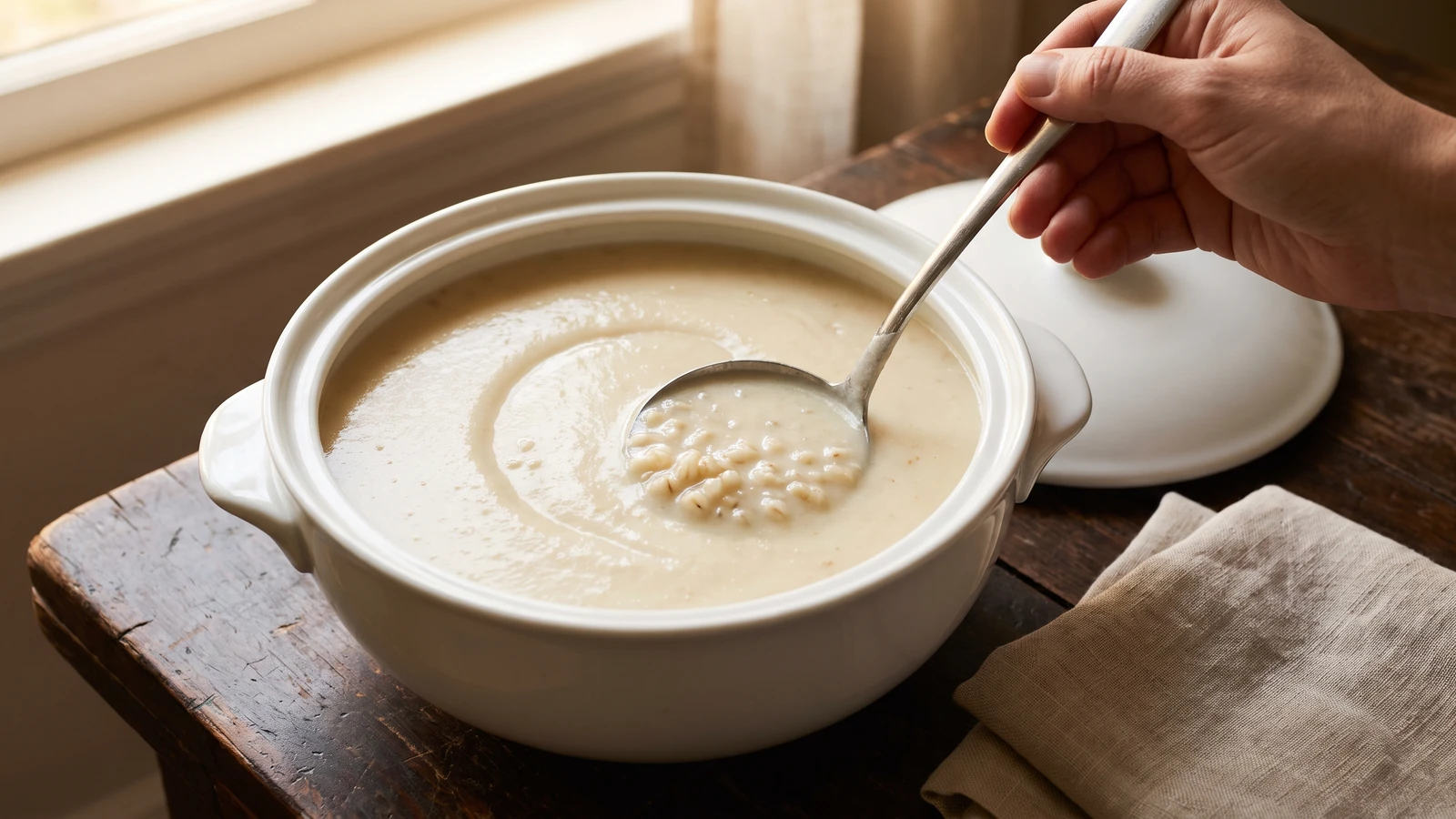
Pearl barley gives up its starch slowly, then passes through a sieve into an ivory cream soup, while a handful of tender grains returns at the finish. Patience is the whole technique.
Crème d’Orge (barley cream soup) teaches one patient truth: the grain must be cooked past chewiness before it can become a cream. Stop while the kernels still resist and no machine or sieve will save the texture. Give them the full gentle cooking, and they surrender their starch into an ivory soup with a quiet, nutty sweetness.
The original entry assumed a saucier with time to guard the pan, a stockpot never off the fire, a mortar, and a tammy. A tightly covered casserole in a low oven takes over the watching, while a food processor and fine-mesh sieve do the crushing and passing. That equipment was scaffolding. The slow cooking and the sieve are the dish. Happily, the source proportions land near a two-quart home batch once the barley swells and the finishing cream joins it, so the two equal additions of consommé remain intact. One cook, one stove, one evening.
When it is right, the soup is pale, glossy, and smooth enough to pour, with tender whole grains returning at the finish like quiet punctuation. Keep your attention for the first cooking: the barley must barely tremble until it crushes without resistance. That is the step that decides everything.
Crème d’Orge belongs to the classical soup course of Parisian grand kitchens and bourgeois dining rooms, where the sustaining household barley pot was refined with white consommé, a tammy, and cream. Its journey from broth to soupière did not erase the grain completely: a garnish of tender whole barley was returned at service so the soup still declared what it was. It is sometimes mistaken for a flour-thickened velouté, but in this crème preparation the barley supplies its own body; the velouté is a separate variation.
Quantity
1¾ cups (340 g / 12 oz)
Quantity
¼ cup (50 g / 1¾ oz)
for the garnish
Quantity
4¾ cups (1.14 L / about 1.14 kg)
divided into two equal portions
Quantity
1 stalk (about 40 g / 1½ oz)
kept whole
Quantity
2 cups (475 ml / 475 g), plus more as needed
for cooking the garnish barley
Quantity
1½ to 2 cups (360 to 480 ml / about 360 to 480 g)
added according to the final consistency
Quantity
Up to 1 teaspoon (5 ml / 6 g)
| Ingredient | Quantity |
|---|---|
| coarse pearl barley | 1¾ cups (340 g / 12 oz) |
| very fine pearl barleyfor the garnish | ¼ cup (50 g / 1¾ oz) |
| prepared white consommédivided into two equal portions | 4¾ cups (1.14 L / about 1.14 kg) |
| pale inner celery stalkkept whole | 1 stalk (about 40 g / 1½ oz) |
| waterfor cooking the garnish barley | 2 cups (475 ml / 475 g), plus more as needed |
| heavy creamadded according to the final consistency | 1½ to 2 cups (360 to 480 ml / about 360 to 480 g) |
| fine salt (optional) | Up to 1 teaspoon (5 ml / 6 g) |
Put the coarse pearl barley in a sieve and wash it thoroughly under lukewarm water, rubbing the grains gently between your fingers until the runoff loses most of its cloudiness. Rinse the fine garnish barley separately. Washing removes loose surface starch that would turn the long-cooked barley gummy before its centre has softened.
Heat the oven to 275°F (135°C). Combine the coarse barley, 2⅜ cups (570 ml) of the prepared white consommé, and the celery in a small heavy casserole. Bring the liquid just to a bare simmer, press a round of baking parchment against the surface, cover tightly, and cook in the oven for about 2½ hours, stirring every 30 minutes. The grains are ready only when they crush into paste beneath a spoon with no firm centre remaining. If the pot grows dry first, add the reserved consommé two tablespoons at a time and subtract that amount from the later addition. If the bottom begins to catch, lift the unscorched barley into a clean pan without scraping the dark layer, lower the heat, and continue. Ça se rattrape.
While the main barley cooks, combine the fine pearl barley with the water in a small saucepan. Hold it at a quiet simmer for 45 to 60 minutes, adding a little more water if necessary, until every grain is completely tender but still distinct. Drain well and reserve. This is the garnish, so tenderness matters more than speed.
Let the cooked barley stand for 10 minutes, then process it with the softened celery and any liquid remaining in the pot until it becomes a dense, even paste. Work in batches if necessary. Rub the paste through a fine-mesh sieve into a clean saucepan, scraping the underside frequently. If it refuses to pass, loosen each batch with spoonfuls from the reserved consommé, counting them against the quantity used in the next step. Stop when only dry husks remain in the sieve; forcing those through would undo the smoothness you have worked for.
Whisk the remaining prepared white consommé into the sieved barley purée, using all that remains of the second 2⅜-cup (570 ml) portion. Heat gently while stirring until the soup is completely unified and coats a spoon heavily. If it is already loose, simmer it gently before adding any cream; the cream should relax the texture, not rescue a watery base.
At serving time, lower the heat and whisk in 1½ cups (360 ml) of the cream. Add more as needed until the Crème d’Orge falls from the ladle in a broad ribbon and settles with a satin gloss, neither porridge-thick nor watery. Do not let it boil hard. If it tightens into paste while waiting, whisk in warm cream a spoonful at a time; barley keeps drinking even after the heat is lowered. Taste, adding salt only if the consommé did not provide enough.
Warm the drained whole barley grains with a ladleful of soup. Divide most of them among warmed soup plates, ladle the Crème d’Orge over them, and scatter the remaining grains across the surface so the identity of the soup remains visible. No herbs, pepper, or ornamental flourish is needed. À table!
1 serving (about 245g)
Culinary guides, cultural storytelling, and the editorial depth that makes cooking meaningful.
Discover Culinary ExplorerChef Juliette
Marseille's great fish stew, saffron-gold and garlic-scented, proves that a hard boil can be the careful choice: it binds olive oil into broth before the whole pot meets bread.
Chef Juliette
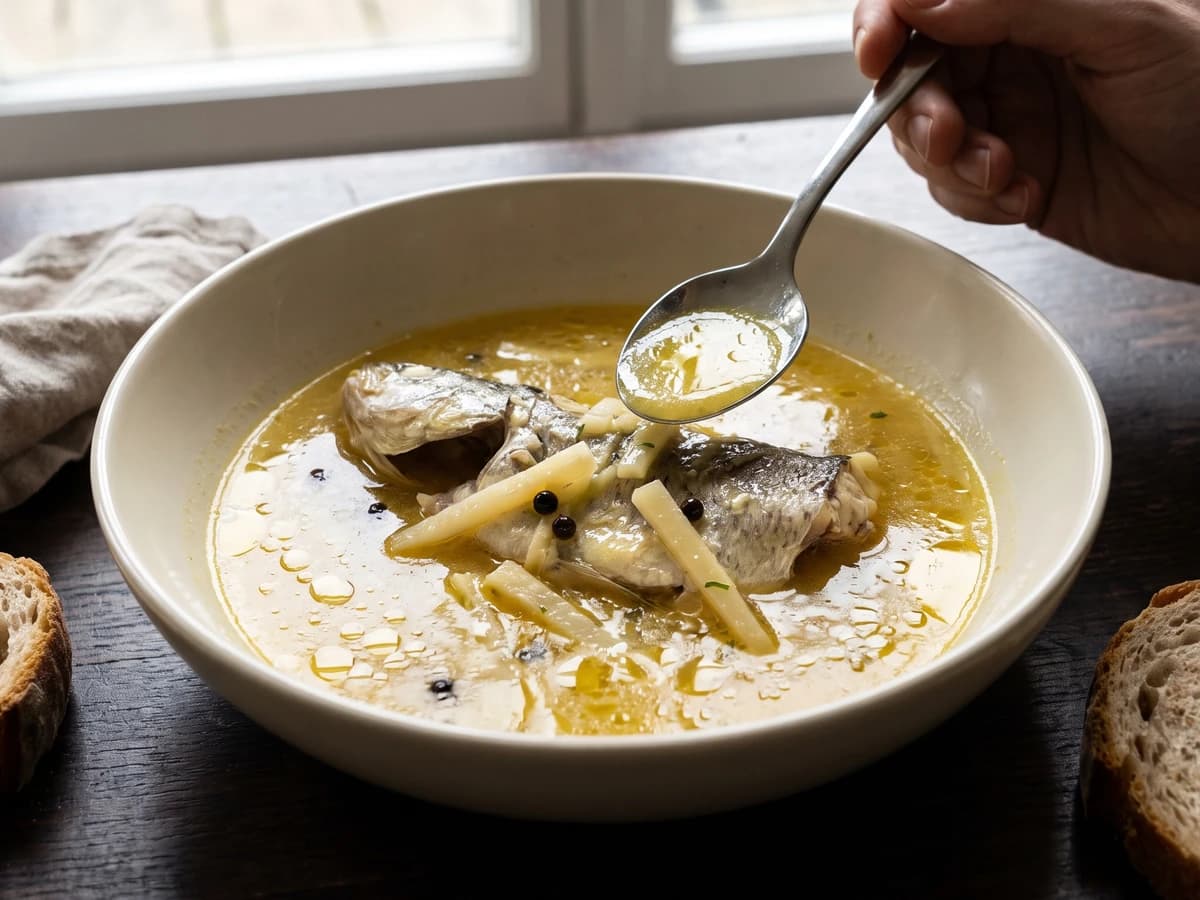
Waterzoi asks fresh, bone-in river fish to thicken its own buttery broth, with parsley root and pepper for company. No flour, no stockpot, just a brisk simmer watched closely.
Chef Juliette
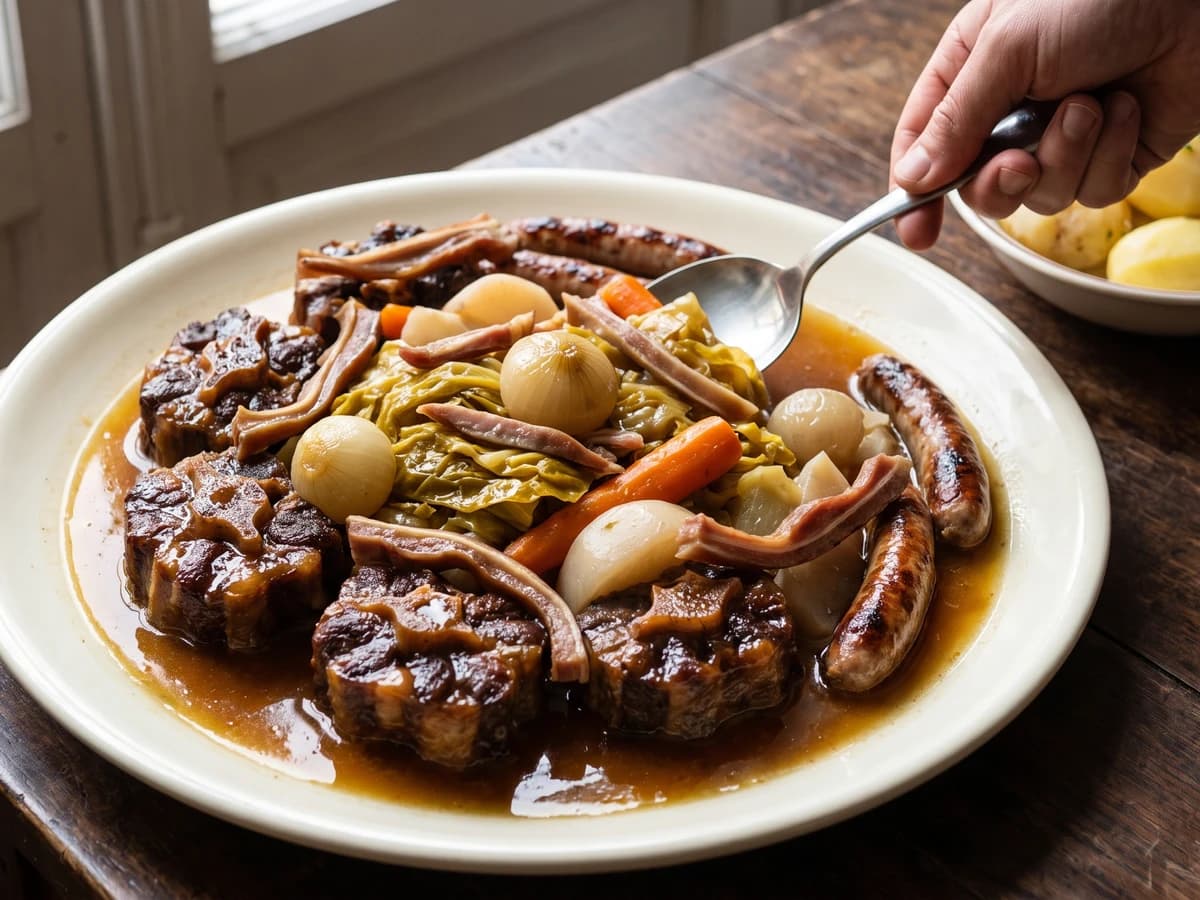
Queue de Bœuf en Hochepot gathers oxtail, pig's trotter and ear, cabbage, roots, and grilled chipolatas around a clear, gelatin-rich broth whose quiet simmer keeps every piece tender and distinct.
Chef Juliette
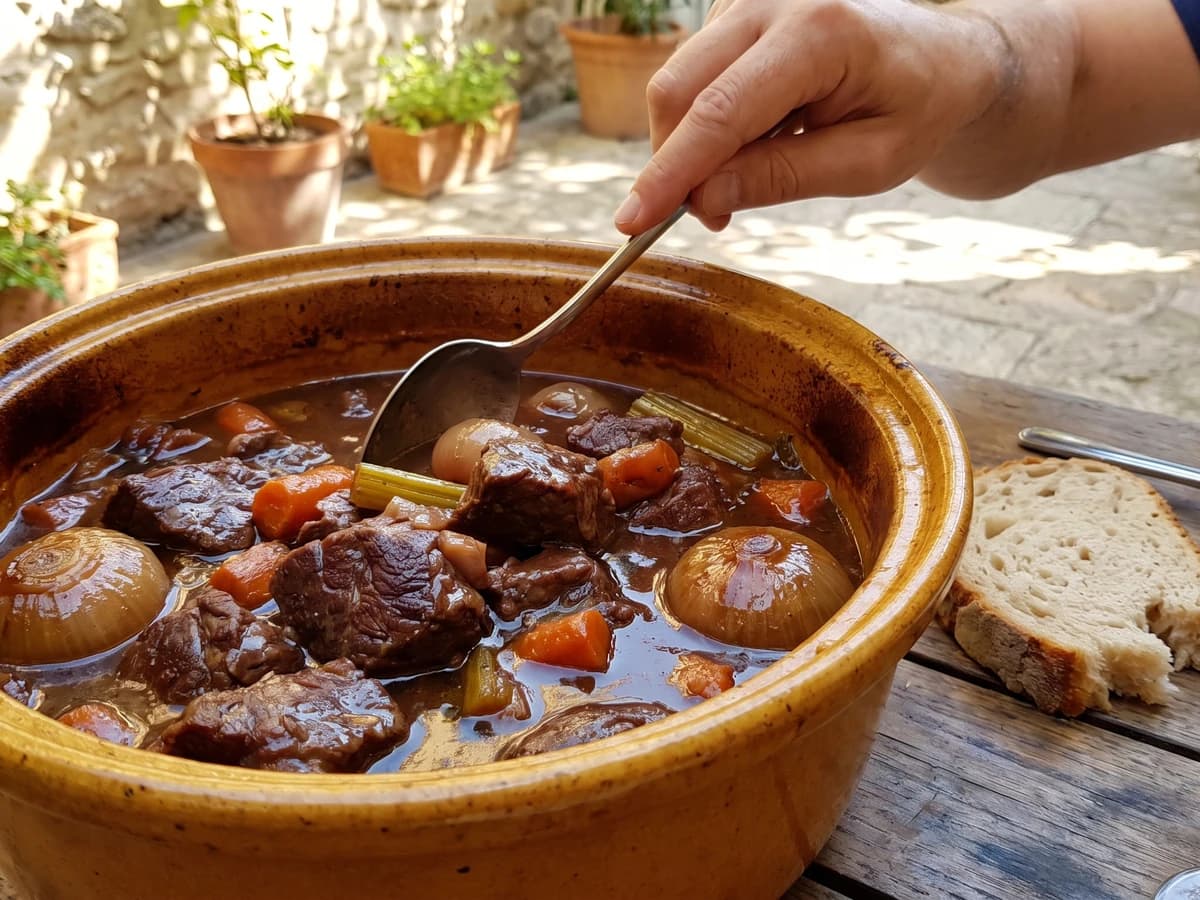
Beef shoulder larded with bacon, sharpened by red wine and vinegar, then sealed with garlic, vegetables, and dry lemon peel until the low oven turns it yielding and the gravy darkly glossy.