Chef Juliette
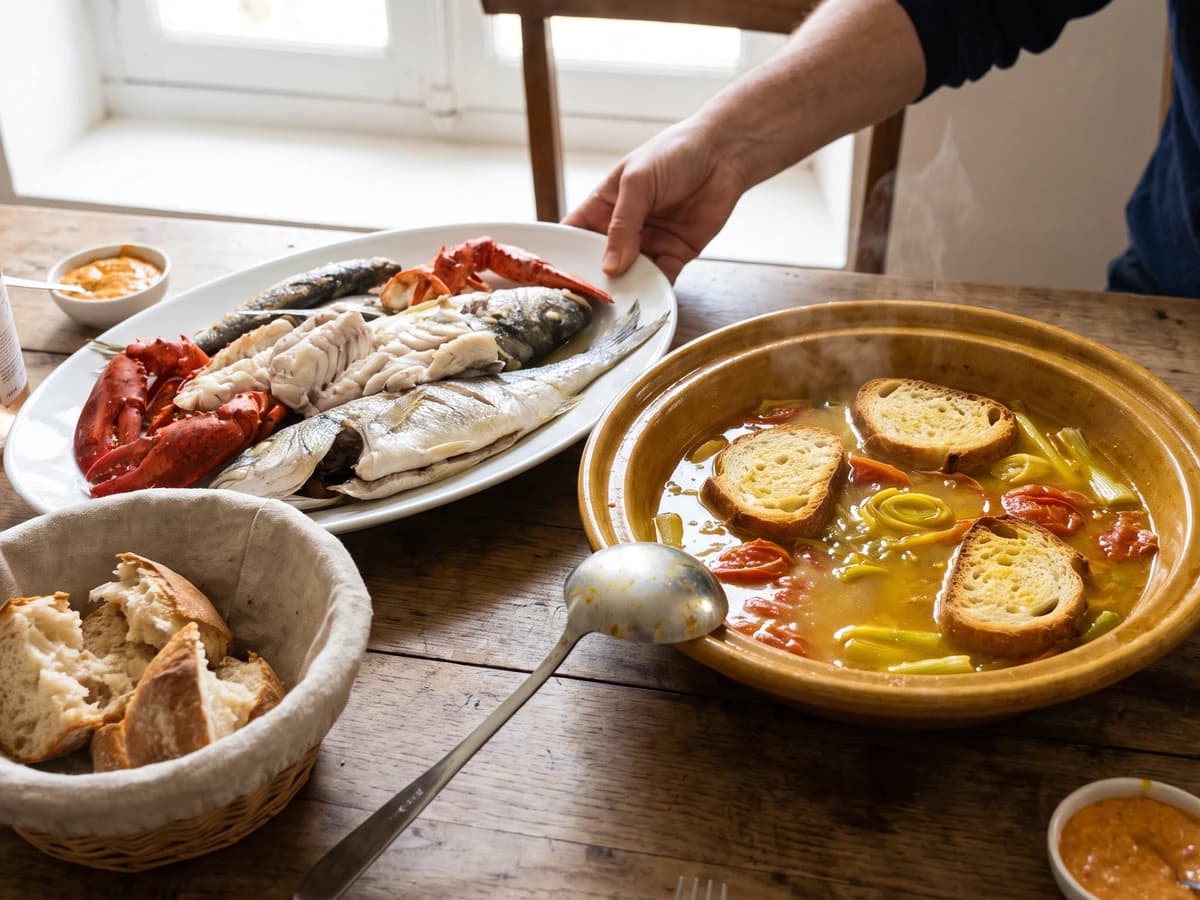
Bouillabaisse à la Marseillaise
Marseille's great fish stew, saffron-gold and garlic-scented, proves that a hard boil can be the careful choice: it binds olive oil into broth before the whole pot meets bread.
A cooking platform built around craft, culture, and the stories behind what we eat.

Created by Chef Juliette
Based on No. 731, Potage Montespan, from Le Guide Culinaire (1907) by Auguste Escoffier
Potage Montespan turns Argenteuil asparagus cream into a satin soup with translucent tapioca and peas à l’anglaise, a quiet lesson in thickening gently while keeping asparagus clear and forward.
Potage Montespan (Argenteuil asparagus cream with tapioca and fine peas) teaches one true thing: tapioca must become completely translucent before it meets the soup. A chalky centre cannot be disguised later. Cook the pearls patiently and they give body without adding another roux, leaving the asparagus clean and distinct beneath the cream.
The book’s kitchen assumed a saucier on staff, Crème d’Asperges, otherwise Argenteuil (No. 697) prepared in one pan, somewhat thick tapioca waiting in another, and white stock never far from the fire. Your honest equivalent is the finished referenced soup, small pearl tapioca cooked in one saucepan, and a single pot for assembly. I’ve kept the prescribed three-to-one ratio exactly and made about two quarts for a home table. The separate holding pans were brigade scaffolding; fully cooking the tapioca and finishing the peas à l’anglaise are the dish and must stay. One cook, one stove, one evening.
When it is right, the Potage pours in a broad ivory-green ribbon, the tapioca felt more as silk than as pearls, with sweet buttered peas giving each spoonful a little freshness. Before you touch the heat, remember the deciding step: no opaque centre may remain in the tapioca.
Potage Montespan belongs to the Parisian classical repertory and rests on Crème d’Asperges, otherwise Argenteuil (No. 697), named for the asparagus-growing town northwest of Paris. Montespan denotes a named variation rather than a regional household soup: the Argenteuil base is given additional body with thick tapioca and garnished with very fine peas cooked à l’anglaise. Its distinction is structural, not decorative, because the tapioca enriches the texture without crowding the asparagus flavour.
Quantity
6 cups (1.42 L / approximately 1.45 kg) Crème d’Asperges, otherwise Argenteuil (No. 697)
prepared as directed
Quantity
⅓ cup (80 ml / 55 g)
use small pearls, not instant tapioca or large boba pearls
Quantity
2 cups (475 ml / 475 g)
divided
Quantity
1 cup (240 ml / 145 g)
Quantity
1 tablespoon (15 ml / 14 g)
Quantity
2¼ teaspoons (11 ml / 14 g), divided, plus more as needed
Quantity
Up to ½ cup (120 ml / 120 g)
| Ingredient | Quantity |
|---|---|
| Crème d’Asperges, otherwise Argenteuilprepared as directed | 6 cups (1.42 L / approximately 1.45 kg) Crème d’Asperges, otherwise Argenteuil (No. 697) |
| small pearl tapiocause small pearls, not instant tapioca or large boba pearls | ⅓ cup (80 ml / 55 g) |
| cold waterdivided | 2 cups (475 ml / 475 g) |
| very fine fresh peas or frozen petite peas | 1 cup (240 ml / 145 g) |
| unsalted butter | 1 tablespoon (15 ml / 14 g) |
| fine salt | 2¼ teaspoons (11 ml / 14 g), divided, plus more as needed |
| hot water for loosening (optional) | Up to ½ cup (120 ml / 120 g) |
Combine the tapioca, 1½ cups (355 ml) of the cold water, and ¼ teaspoon of the salt in a small heavy saucepan. Leave it for 15 minutes so the pearls begin hydrating evenly, then bring it slowly to a quiet simmer, stirring often with a flexible spatula. Lower the heat and cook for 15 to 20 minutes, until every pearl is translucent and the mixture is somewhat thick but still spoonable. If it tightens while opaque centres remain, don’t raise the heat. Ça se rattrape: add the reserved cold water one tablespoon at a time and keep cooking gently. When the pearls are clear, add only enough remaining water to give exactly 2 cups (475 ml) of thick cooked tapioca.
Bring a medium saucepan of water to a full boil and season it with the remaining 2 teaspoons salt. Add the peas and cook until just tender, about 2 to 3 minutes for fresh peas or 60 to 90 seconds for frozen petite peas. Drain them thoroughly, return them to the warm dry pan, and turn them through the butter. This is à l’anglaise, cooked briskly in salted water, drained, and finished with butter. Keep them warm without further cooking; wrinkled, grey peas have stayed in the pan too long.
Put the 6 cups Crème d’Asperges, otherwise Argenteuil (No. 697) in a heavy 5-quart pot and warm it over medium-low heat, stirring across the bottom and into the corners. Bring it only to the point where the surface quivers. Do not boil it. If a skin formed while the soup was chilled, whisk it smooth before applying stronger heat rather than trying to beat it out once the cream is hot.
Add the 2 cups of somewhat thick tapioca to the 6 cups of warm asparagus cream, keeping the book’s exact three-to-one ratio. Fold slowly with a spatula until the texture is even, then hold the Potage below a simmer for 3 to 5 minutes so the two preparations settle into one another. It should fall from the ladle in a broad, smooth ribbon, not sit like porridge. If it is too tight, stir in hot water one tablespoon at a time, up to ½ cup. If it seems a little loose, wait two minutes before changing anything, because tapioca continues thickening as it stands.
Taste the Potage and correct the salt only if needed, remembering that the finished Crème d’Asperges, otherwise Argenteuil (No. 697) is already seasoned. Fold most of the warm peas à l’anglaise through the soup without crushing them. Ladle into warmed bowls and distribute the remaining peas over the surface so each serving receives its proper garnish. Serve immediately, while the soup is supple and the peas are still bright. À table!
1 serving (about 260g)
Culinary guides, cultural storytelling, and the editorial depth that makes cooking meaningful.
Discover Culinary ExplorerChef Juliette
Marseille's great fish stew, saffron-gold and garlic-scented, proves that a hard boil can be the careful choice: it binds olive oil into broth before the whole pot meets bread.
Chef Juliette
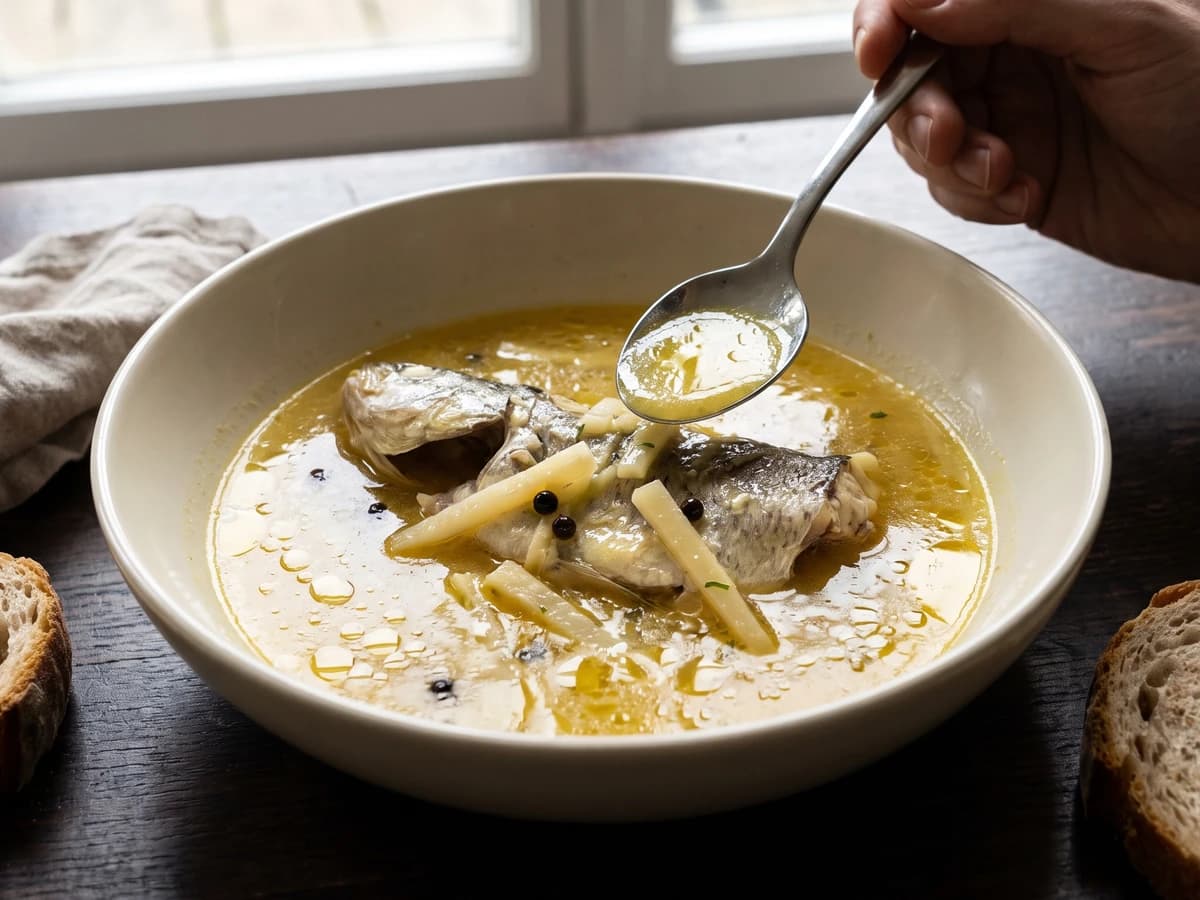
Waterzoi asks fresh, bone-in river fish to thicken its own buttery broth, with parsley root and pepper for company. No flour, no stockpot, just a brisk simmer watched closely.
Chef Juliette
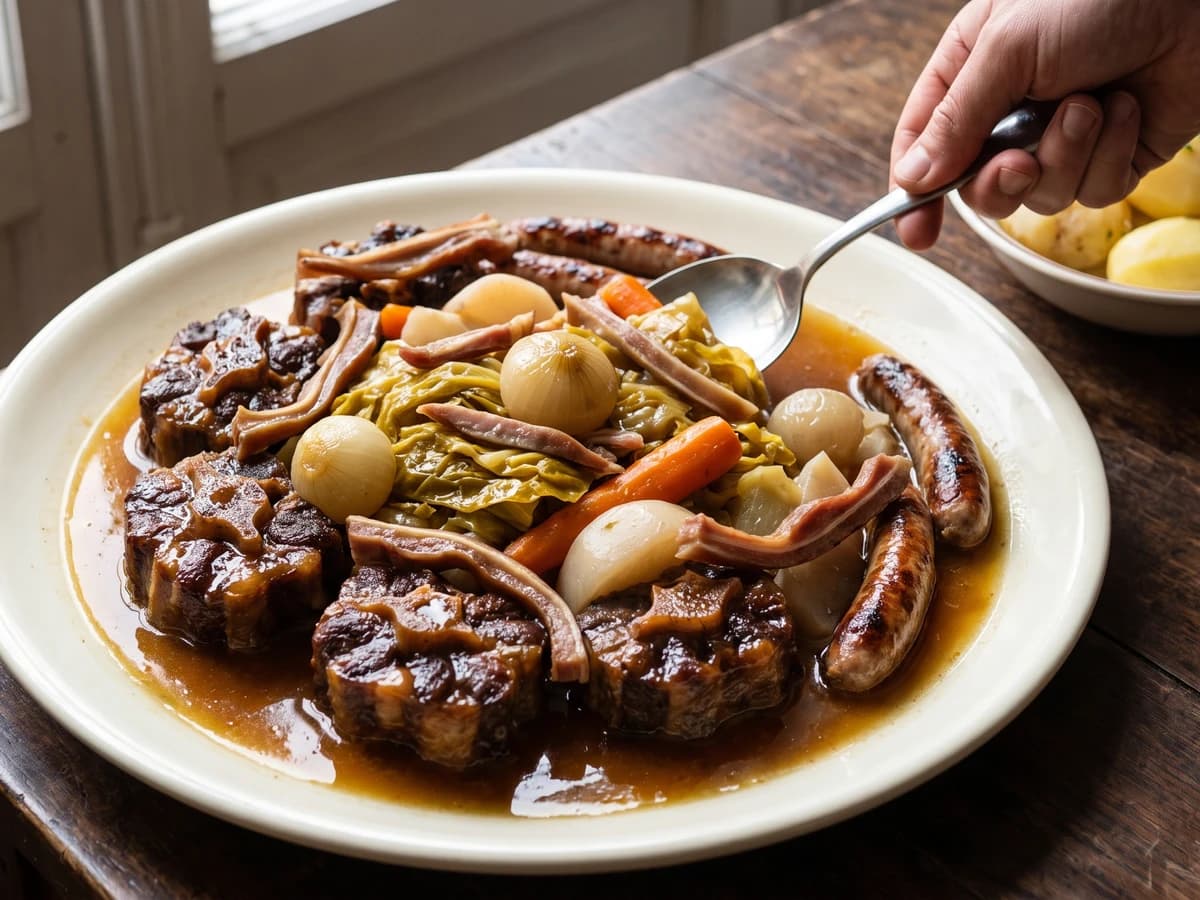
Queue de Bœuf en Hochepot gathers oxtail, pig's trotter and ear, cabbage, roots, and grilled chipolatas around a clear, gelatin-rich broth whose quiet simmer keeps every piece tender and distinct.
Chef Juliette
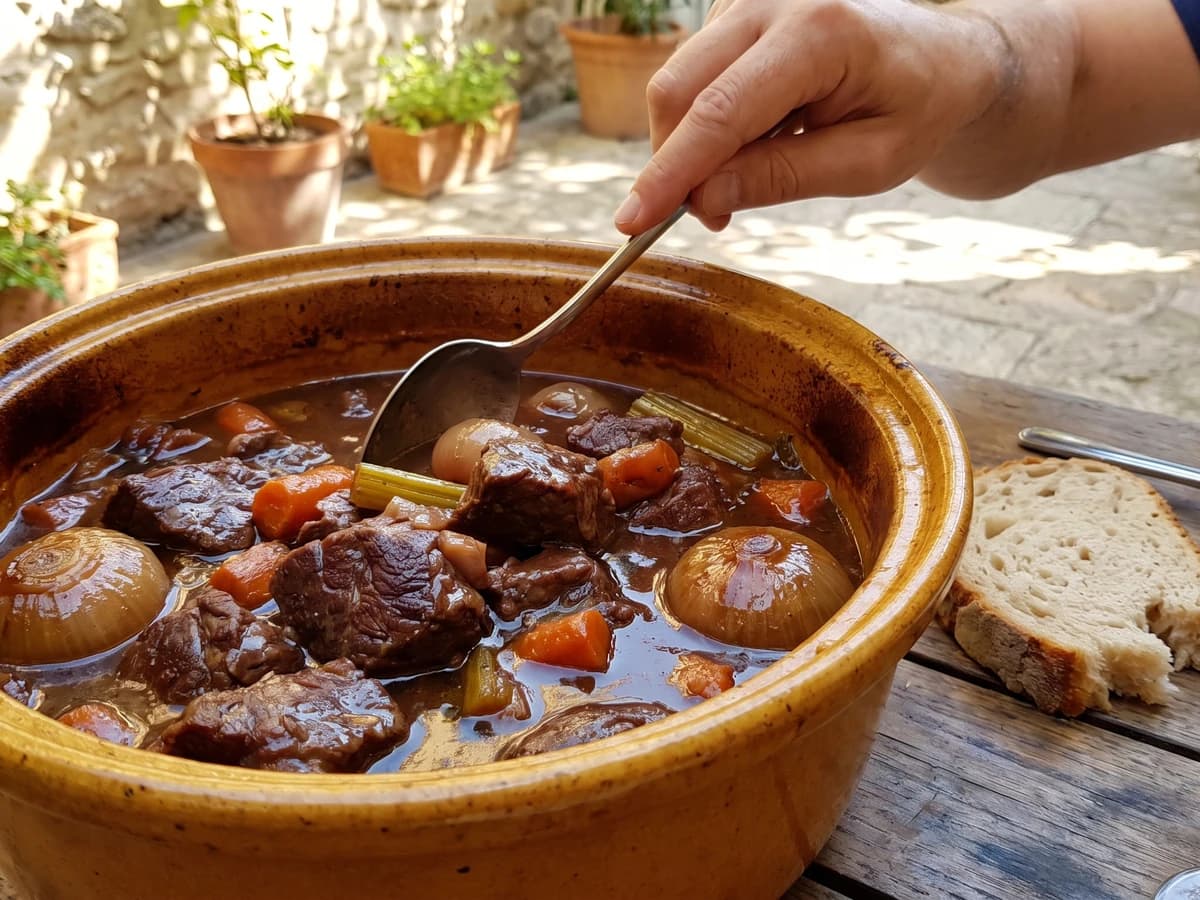
Beef shoulder larded with bacon, sharpened by red wine and vinegar, then sealed with garlic, vegetables, and dry lemon peel until the low oven turns it yielding and the gravy darkly glossy.