Chef Juliette
Bouillabaisse à la Marseillaise
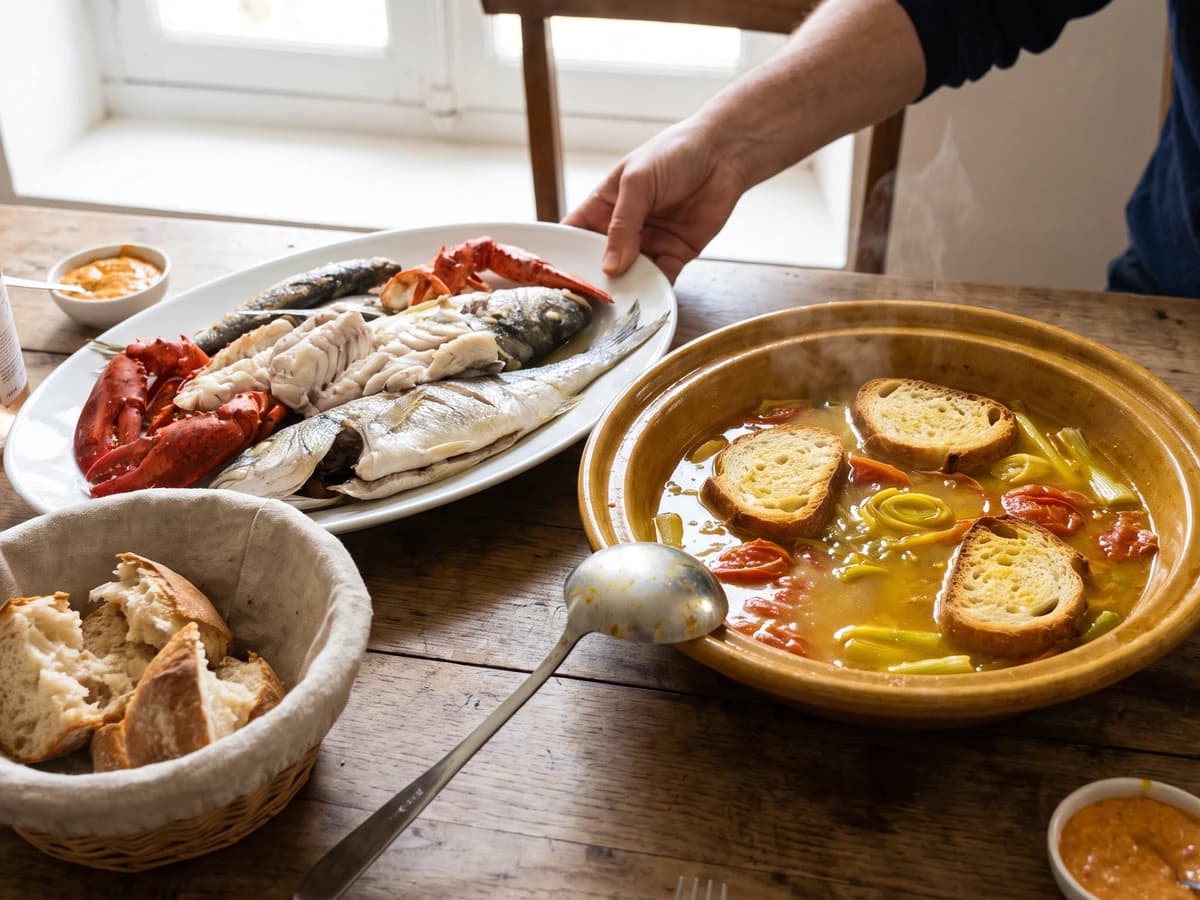
Marseille's great fish stew, saffron-gold and garlic-scented, proves that a hard boil can be the careful choice: it binds olive oil into broth before the whole pot meets bread.
A cooking platform built around craft, culture, and the stories behind what we eat.
Created by Chef Juliette
Based on No. 697, Crème d’Asperges, otherwise Argenteuil, from Le Guide Culinaire (1907) by Auguste Escoffier
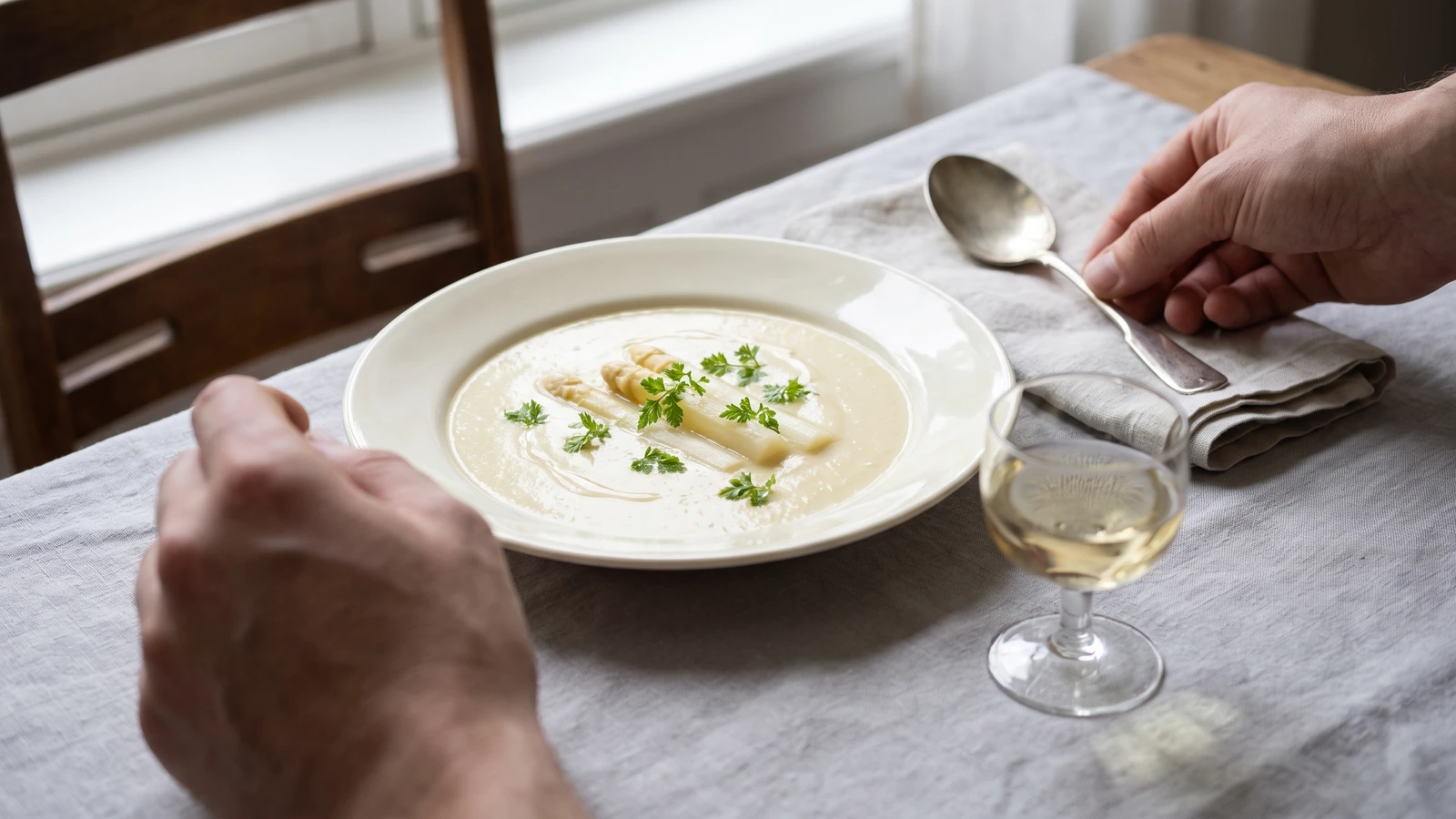
Argenteuil’s white asparagus becomes a pale, silken crème, softened in Béchamel, passed fine, loosened with white consommé, and finished with cream, tender tips, and chervil.
Crème d’Asperges, dite Argenteuil (cream of asparagus soup), teaches the discipline of a crème: cook the vegetable tender in its sauce foundation, sieve it, then loosen it only as far as elegance requires. The one true thing to know before touching a pan is this: asparagus fibers do not blend themselves into silk. They must be passed through a fine sieve.
The original entry assumed a saucier with Béchamel ready, a stockpot holding white consommé, and another pair of hands to rub the asparagus through a tammy. At home, those sauces remain finished components because the recipe treats them that way, but an immersion blender removes the brigade labor and a fine-mesh sieve replaces the tammy. Hand-rubbing every stalk through cloth was scaffolding for many hands. Removing every coarse fiber is the dish and stays. The open-ended quantity of consommé becomes a measured range and a clear yield, about two quarts for eight first courses. One cook, one stove, one evening.
Finished properly, Argenteuil is warm ivory, gently glossy from its Béchamel and final cream, with white asparagus heads and green chervil pluches marking what lies beneath. Pass the soup while it is warm and press patiently. That sieve, not extra cream, gives the crème its satin body.
Argenteuil, in Île-de-France on the Seine northwest of Paris, became celebrated for white asparagus grown beneath banked soil, which kept the thick spears pale and mild. In classical French nomenclature, Argenteuil came to identify dishes centered on asparagus, particularly soups, purées, and garnishes that preserved its delicate character. This crème carries the market-garden name into the grand kitchen while keeping the vegetable visible through its garnish of white heads.
Quantity
1½ pounds (about 4½ cups cut pieces / 680 g)
woody ends snapped off; 2 tablespoons (30 ml / 25 g) of the white heads reserved
Quantity
3 cups (1¼ imperial pints / 710 ml / about 730 g)
Quantity
2½ to 3 cups (600 to 710 ml / 600 to 710 g)
warmed and used as needed
Quantity
½ cup (120 ml / 120 g)
Quantity
1 small pinch (about 1 tablespoon loosely packed / 15 ml / 1 g)
tender leaf shreds
| Ingredient | Quantity |
|---|---|
| thick white asparaguswoody ends snapped off; 2 tablespoons (30 ml / 25 g) of the white heads reserved | 1½ pounds (about 4½ cups cut pieces / 680 g) |
| prepared Béchamel | 3 cups (1¼ imperial pints / 710 ml / about 730 g) |
| prepared white consomméwarmed and used as needed | 2½ to 3 cups (600 to 710 ml / 600 to 710 g) |
| heavy cream | ½ cup (120 ml / 120 g) |
| chervil pluchestender leaf shreds | 1 small pinch (about 1 tablespoon loosely packed / 15 ml / 1 g) |
Snap each spear where its hard lower stalk gives way, then cut off enough white heads to measure 2 tablespoons (30 ml / 25 g). Bring a wide saucepan of water to a lively boil. Add the stalks and reserved heads and parboil them for five to six minutes, until they bend slightly but still resist the point of a knife. Drain thoroughly and set the heads aside for the garnish.
Put the drained asparagus stalks into the prepared Béchamel and set the pan over gentle heat. Cook for twelve to fifteen minutes, stirring often across the bottom, until the asparagus crushes readily against the side of the pan. Keep the movement lazy and the heat low. Béchamel catches when neglected, and browned milk has no place in this pale soup.
Purée the warm asparagus and Béchamel until no visible pieces remain. Work the purée through a fine-mesh sieve with a flexible spatula, pressing firmly and scraping the underside into a clean saucepan. Discard the dry fibers left behind. If the first pass leaves threads in the soup, do not add more cream to hide them. Pass it through a clean sieve once more. Ça se rattrape.
Whisk 2½ cups (600 ml / 600 g) of the warm white consommé into the sieved base a little at a time. Add as much of the remaining consommé as needed to produce about two quarts of soup with a light coating consistency. Heat gently until the surface glistens and the edges begin to quiver, but do not allow it to boil. The source’s order protects the finish: the cream has not yet entered the pan.
Take the saucepan off the heat and whisk in the heavy cream. Warm the reserved asparagus heads in a ladleful of the soup for a few seconds, then divide them among warmed soup plates. Ladle in the Argenteuil and scatter the chervil pluches over the surface. Serve at once, while the cream remains smooth and the chervil tastes fresh. À table!
1 serving (about 240g)
Culinary guides, cultural storytelling, and the editorial depth that makes cooking meaningful.
Discover Culinary ExplorerChef Juliette
Marseille's great fish stew, saffron-gold and garlic-scented, proves that a hard boil can be the careful choice: it binds olive oil into broth before the whole pot meets bread.
Chef Juliette
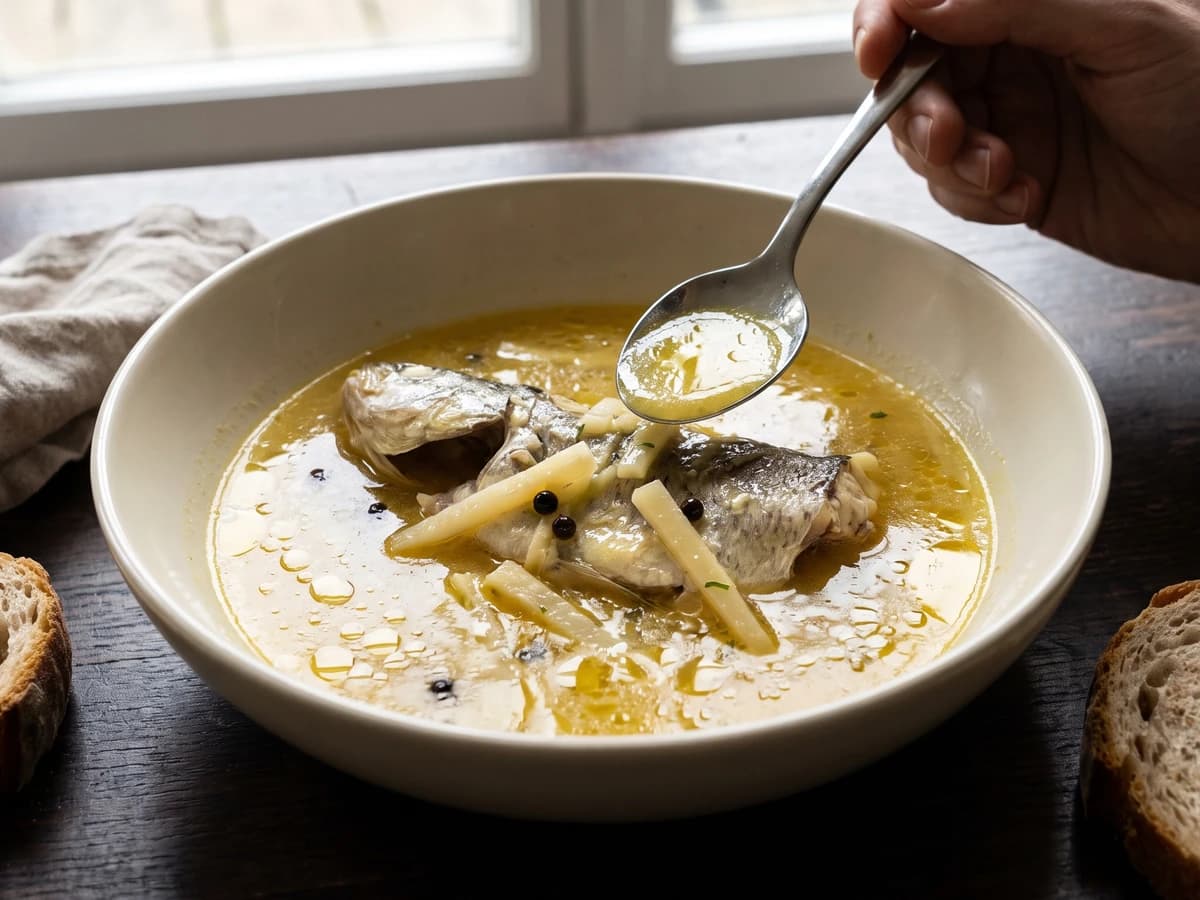
Waterzoi asks fresh, bone-in river fish to thicken its own buttery broth, with parsley root and pepper for company. No flour, no stockpot, just a brisk simmer watched closely.
Chef Juliette
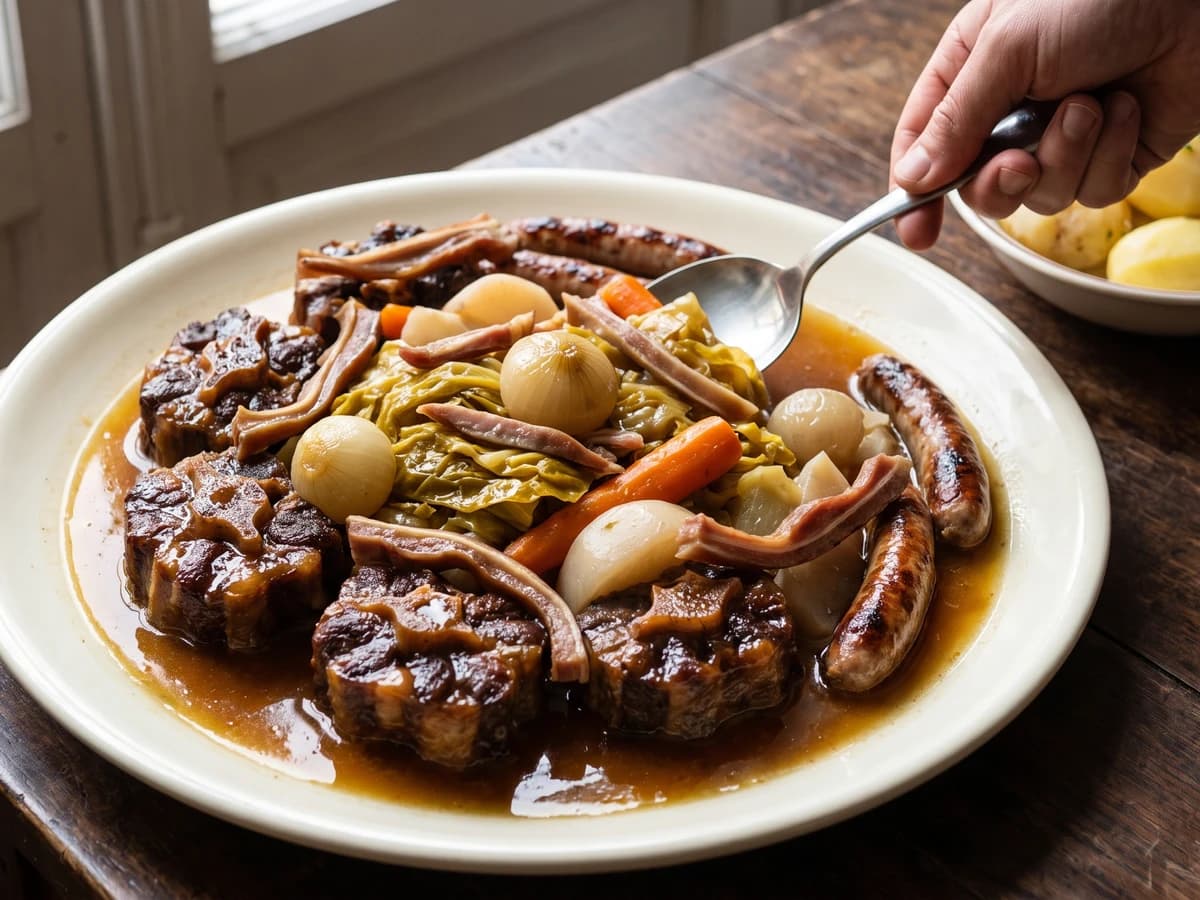
Queue de Bœuf en Hochepot gathers oxtail, pig's trotter and ear, cabbage, roots, and grilled chipolatas around a clear, gelatin-rich broth whose quiet simmer keeps every piece tender and distinct.
Chef Juliette
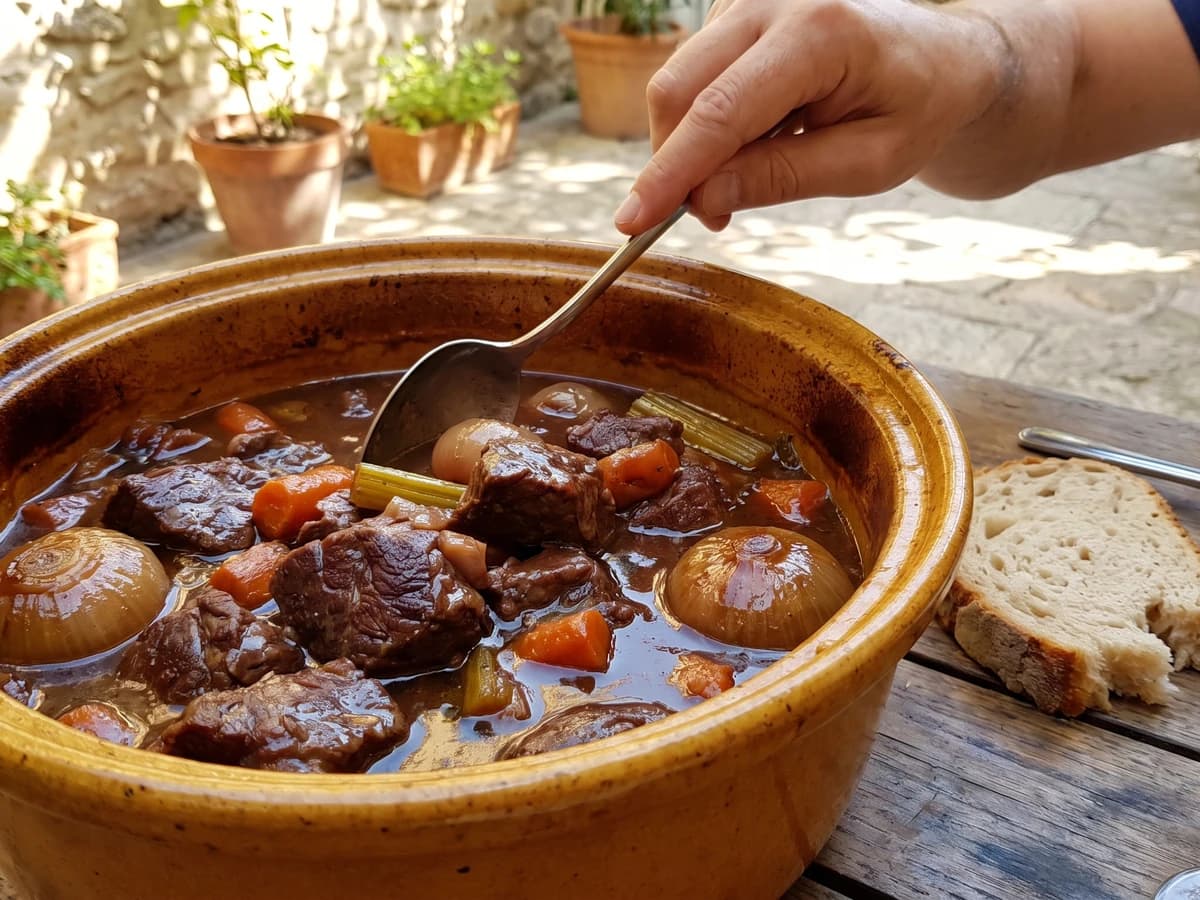
Beef shoulder larded with bacon, sharpened by red wine and vinegar, then sealed with garlic, vegetables, and dry lemon peel until the low oven turns it yielding and the gravy darkly glossy.