Chef Juliette
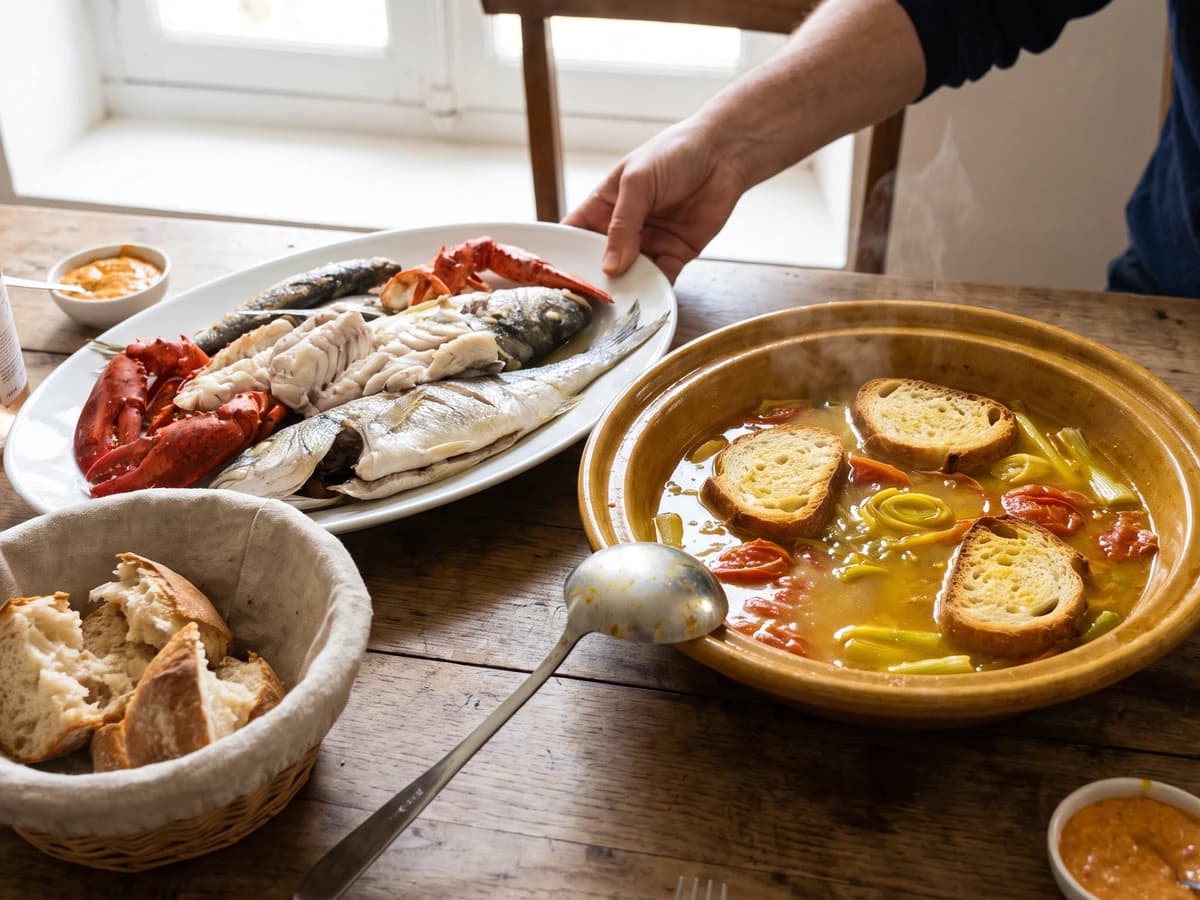
Bouillabaisse à la Marseillaise
Marseille's great fish stew, saffron-gold and garlic-scented, proves that a hard boil can be the careful choice: it binds olive oil into broth before the whole pot meets bread.
A cooking platform built around craft, culture, and the stories behind what we eat.
Created by Chef Juliette
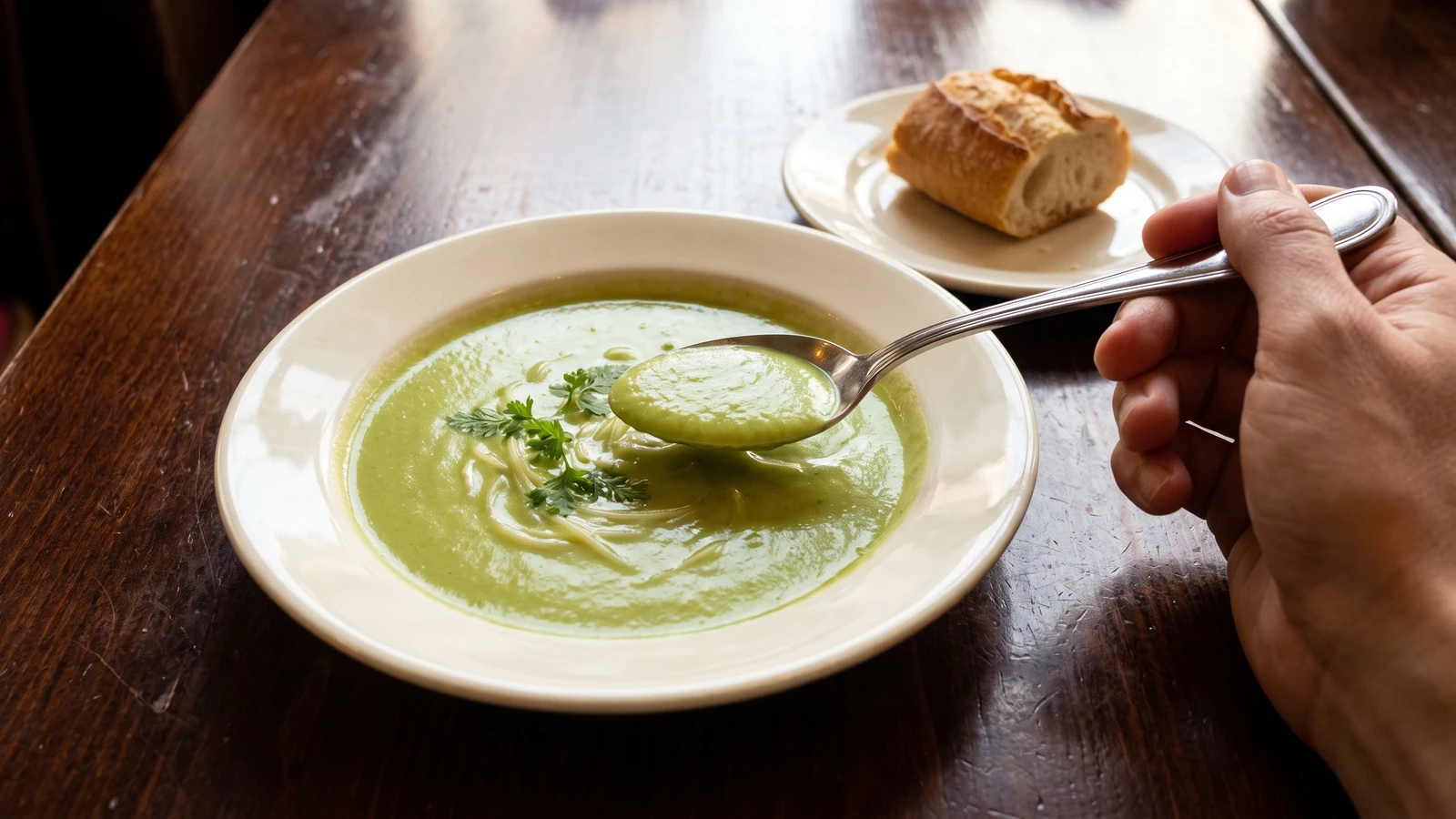
Based on No. 727, Potage Longchamps, from Le Guide Culinaire (1907) by Auguste Escoffier
One light pea purée, fine vermicelli poached separately in consommé, and chervil at the last instant: Potage Longchamps proves how a precise garnish can carry one classical base across the canon.
Potage Longchamps teaches the reach of a well-made purée. The pea base stays light enough for fine vermicelli to move through it, while chervil gives the last fragrant lift. That is the one true thing to know before touching the pan: “clear” here means flowing and delicate, not transparent, and certainly not thin in flavor.
The original entry assumes a saucier has already prepared Potage Longchamps (No. 654), a consommé pot is never far from the fire, and another pair of hands can poach the garnish while the soup is held for service. Your honest equivalent is two saucepans, a finished batch of the referenced potage, and one cup of clean consommé held back for adjusting its body. Only the scale and choreography have changed: two quarts for the home table, with the book’s full three ounces of vermicelli, exactly one and one-half ounces per quart. One cook, one stove, one evening.
The brigade’s ranks of holding pans are scaffolding and can go. Poaching the vermicelli separately in consommé must stay, because cooking it in the pea purée would release starch, dull the color, and turn a graceful potage heavy. Keep the base at a bare tremble, drain the noodles promptly, and add the chervil only after the heat is off. That separation decides the dish.
Potage Longchamps belongs to the Parisian classical naming system, its name pointing toward Longchamp and the capital’s fashionable table rather than a provincial style of pea soup. Within the derivative potage family, it is Fontange kept somewhat clear, then distinguished at service by vermicelli poached in consommé and tender chervil pluches. The preparation demonstrates how grand kitchens worked economically: one carefully made pea purée could become several distinct soups through proportion, consistency, and garnish.
Quantity
2 quarts (8 cups / 1.9 L / about 1.9 kg) Potage Longchamps (No. 654)
Quantity
4 cups (960 ml / about 960 g)
divided
Quantity
3 ounces, about 1 cup (240 ml / 85 g)
broken into short lengths if necessary
Quantity
2 pinches, about 2 loose teaspoons (10 ml / 1 g)
| Ingredient | Quantity |
|---|---|
| Potage Longchamps, finished and kept somewhat clear | 2 quarts (8 cups / 1.9 L / about 1.9 kg) Potage Longchamps (No. 654) |
| clear consommédivided | 4 cups (960 ml / about 960 g) |
| fine vermicellibroken into short lengths if necessary | 3 ounces, about 1 cup (240 ml / 85 g) |
| fresh chervil pluches (tender leaves) | 2 pinches, about 2 loose teaspoons (10 ml / 1 g) |
Put 3 cups of the consommé in a medium saucepan for poaching the vermicelli. Keep the remaining cup clean and separate; it is your control over the finished consistency. Bring the poaching consommé to a bare simmer while you warm the pea base.
Put the finished Potage Longchamps (No. 654) in a heavy saucepan and warm it gently, stirring across the bottom so the pea purée never catches. It should flow from the ladle like light cream rather than sit upon itself. If it has tightened in storage, whisk in the reserved clean consommé two tablespoons at a time. If you loosen it too far, hold it uncovered at the barest simmer until its body returns. Ça se rattrape. Never boil it hard, which dulls both flavor and color.
Scatter the vermicelli into the simmering consommé and stir gently through the first minute so the strands remain separate. Poach until tender but still distinct, following the packet as a guide and tasting a strand a minute early. If the noodles begin to gather, ease them apart with two forks and a splash of the hot consommé. Drain them immediately and do not rinse. Cooking this garnish separately is not brigade fussiness; it keeps loose starch out of the pea purée.
Fold the drained vermicelli into the warm potage and hold it at a bare tremble for 1 to 2 minutes, just long enough for the garnish to take on the soup’s flavor. Do not reduce it further. Vermicelli continues drinking liquid as it waits, so use another spoonful of the reserved consommé if the soup loses its easy flow.
Take the pan off the heat and scatter in the chervil pluches, saving a few for the surface. Stir once, gently. Chervil loses its tender anise fragrance under prolonged heat, so this last-minute finish is part of the formula, not decoration. Ladle the potage into a warm tureen or bowls and serve at once. À table!
1 serving (about 240g)
Culinary guides, cultural storytelling, and the editorial depth that makes cooking meaningful.
Discover Culinary ExplorerChef Juliette
Marseille's great fish stew, saffron-gold and garlic-scented, proves that a hard boil can be the careful choice: it binds olive oil into broth before the whole pot meets bread.
Chef Juliette
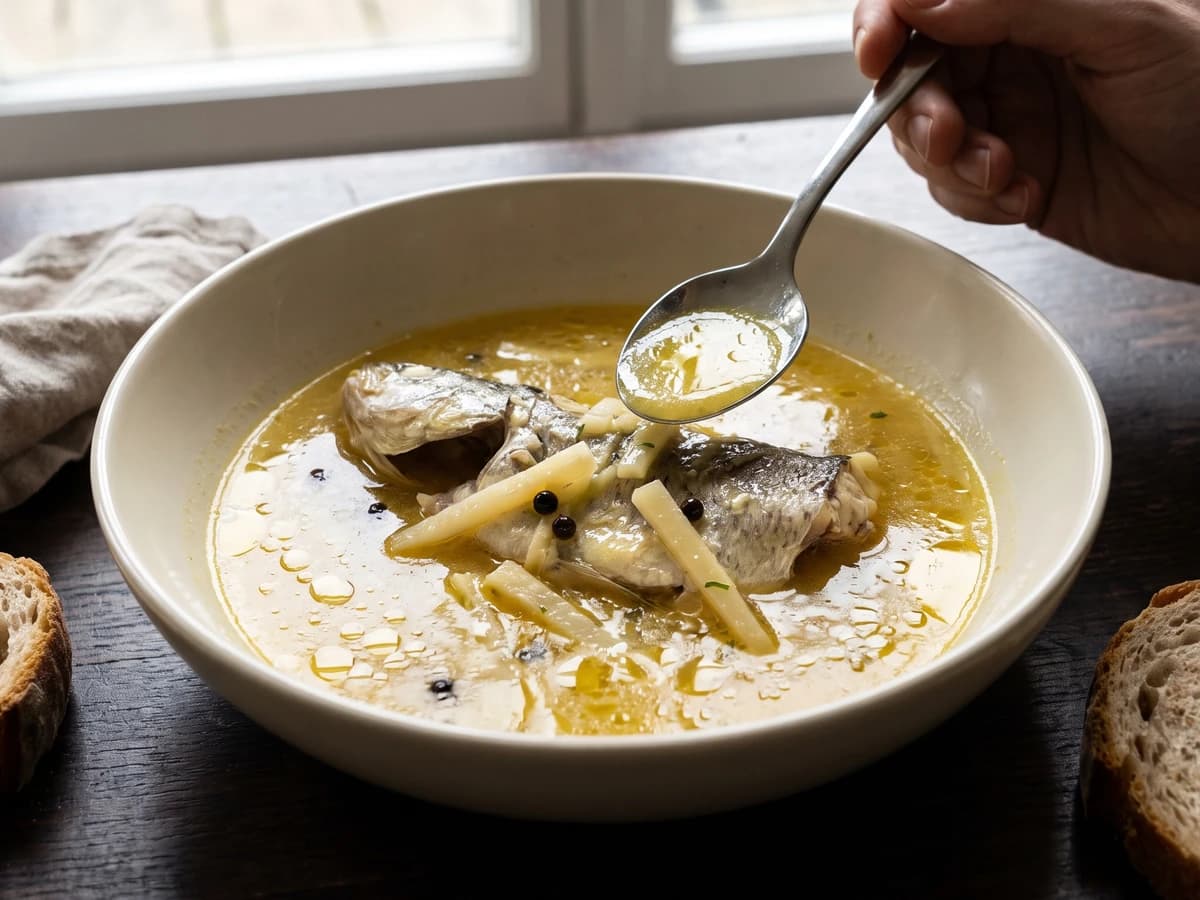
Waterzoi asks fresh, bone-in river fish to thicken its own buttery broth, with parsley root and pepper for company. No flour, no stockpot, just a brisk simmer watched closely.
Chef Juliette
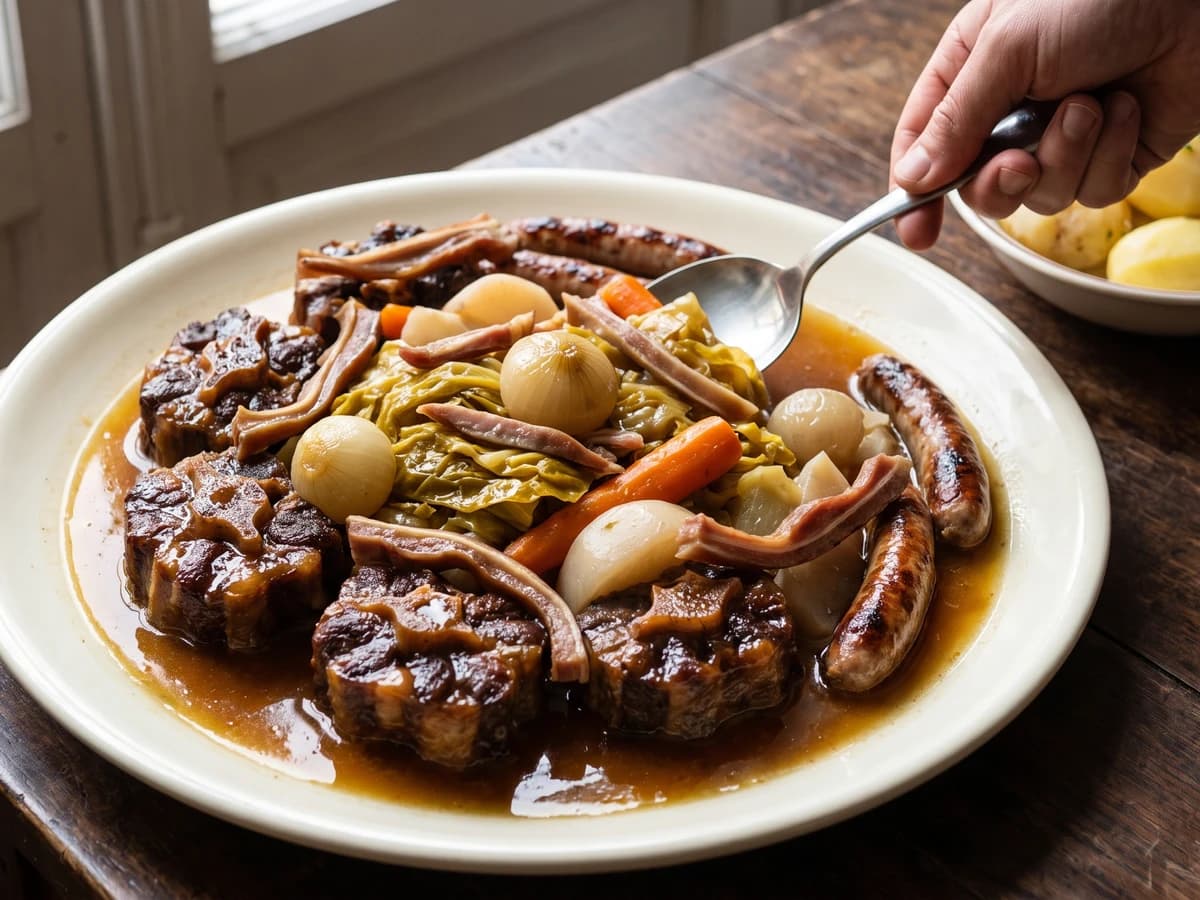
Queue de Bœuf en Hochepot gathers oxtail, pig's trotter and ear, cabbage, roots, and grilled chipolatas around a clear, gelatin-rich broth whose quiet simmer keeps every piece tender and distinct.
Chef Juliette
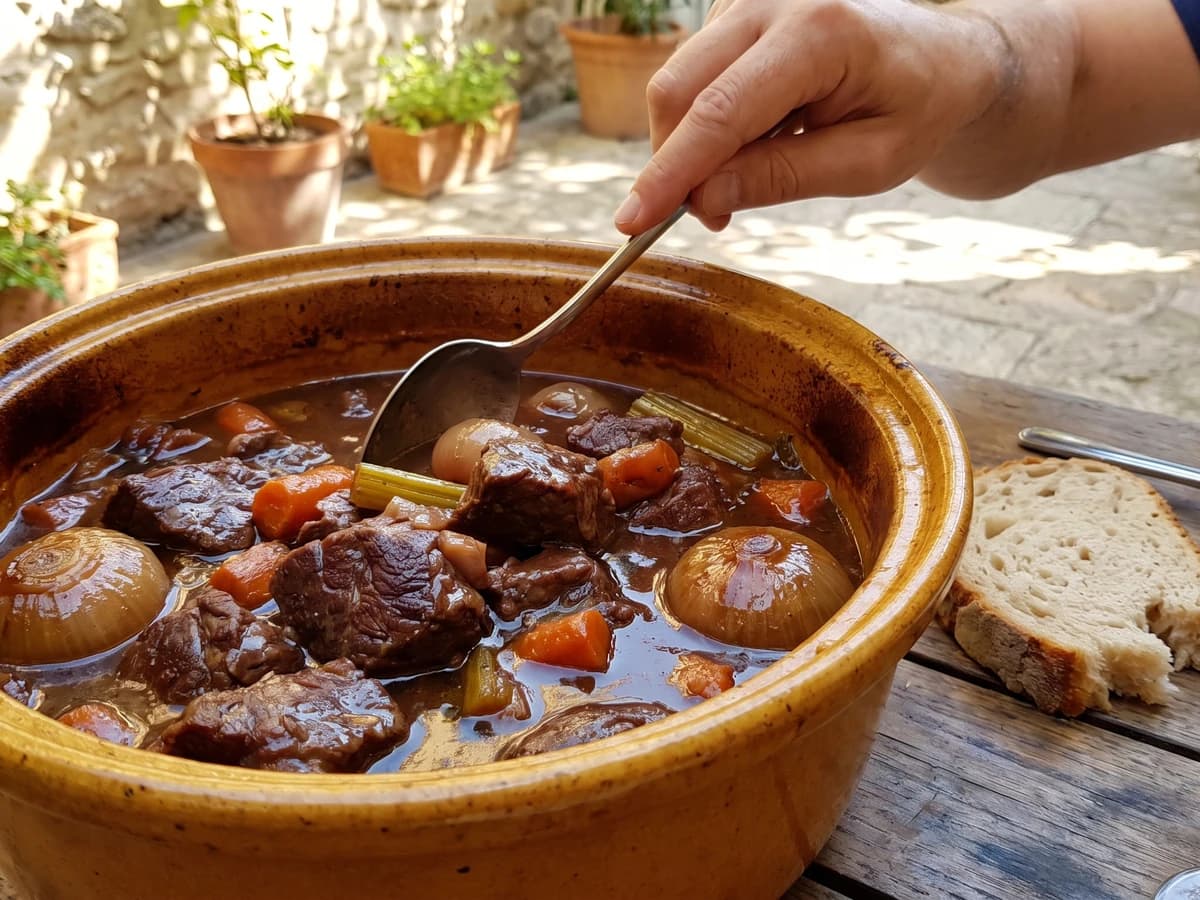
Beef shoulder larded with bacon, sharpened by red wine and vinegar, then sealed with garlic, vegetables, and dry lemon peel until the low oven turns it yielding and the gravy darkly glossy.