Chef Juliette
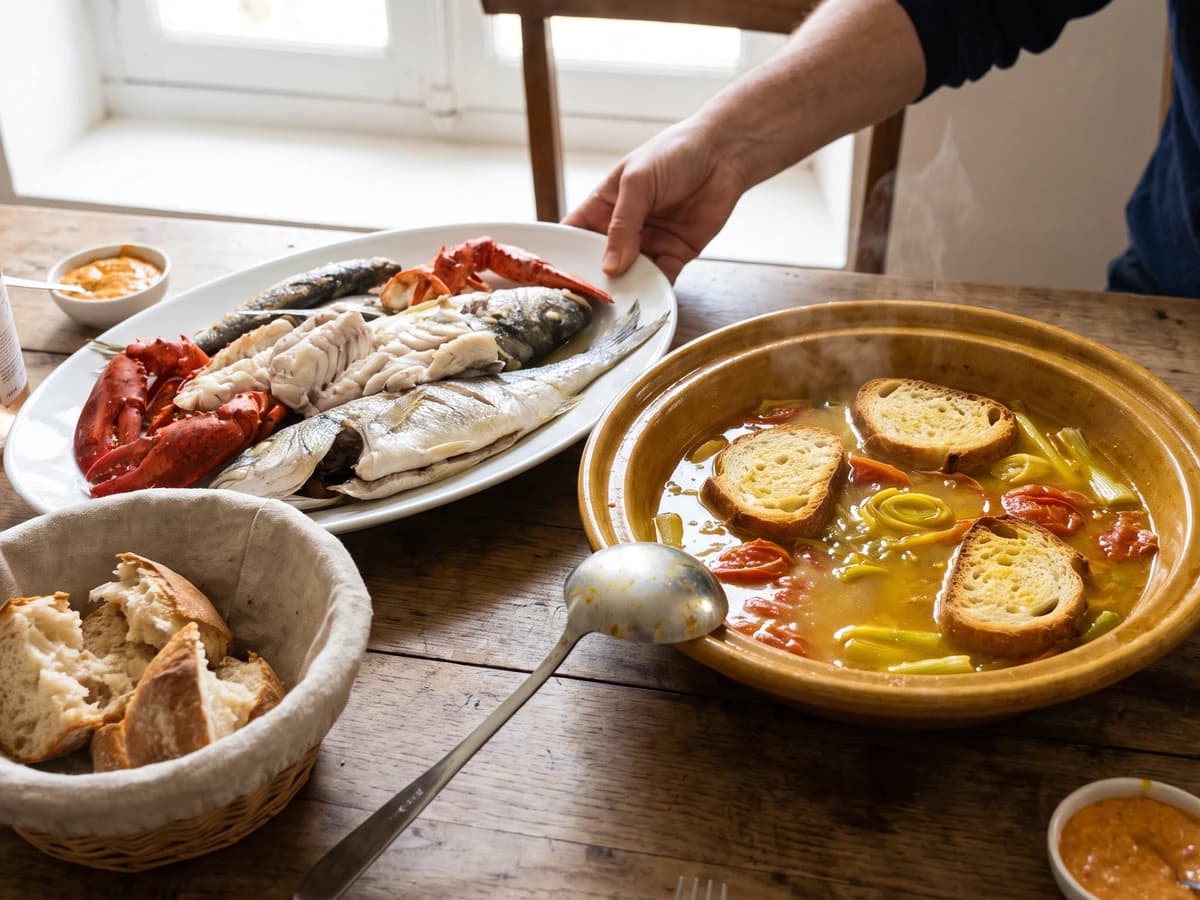
Bouillabaisse à la Marseillaise
Marseille's great fish stew, saffron-gold and garlic-scented, proves that a hard boil can be the careful choice: it binds olive oil into broth before the whole pot meets bread.
A cooking platform built around craft, culture, and the stories behind what we eat.

Created by Chef Juliette
Based on No. 654, Potage Longchamps, from Le Guide Culinaire (1907) by Auguste Escoffier
Potage Longchamps proves that refinement can mean restraint: a loose, butter-glossed green pea potage, fine vermicelli poached in consommé, and chervil pluches added at the last moment.
Potage Longchamps (a loose green pea soup with vermicelli and chervil) teaches one true thing before you touch a pan: looseness can be deliberate. This is potage Fontange allowed to flow rather than sit heavily on the spoon, with fine vermicelli running through it and chervil pluches, the small torn shreds of the herb, waking the surface at the last moment.
The original entry assumed a saucier with finished potage Fontange at hand and a stockpot of consommé never off the fire. At home, you build one measured Fontange base, poach the vermicelli in a separate saucepan of the same consommé, and bring the two together only at service. Holding several preparations across a brigade was scaffolding, so that goes. The source proportion of one and one-half ounces of vermicelli per quart, the loose consistency, and the chervil finish are the dish, so those stay exactly. This makes about two quarts for one cook, one stove, one evening.
When it is right, the soup is vivid green and lightly glossy, with vermicelli visible beneath the surface rather than gathered into a knot. The step that decides it is the final montage au beurre: set the consistency first, whisk in the cold butter off the heat, and never boil the finished potage.
Potage Longchamps belongs to the Parisian classical table, its sporting name pointing to the Longchamp racecourse in the Bois de Boulogne. It is not a separate family of pea soup but a precise garnish variation of potage Fontange: the base is kept looser, then fine vermicelli poached in consommé and chervil pluches are added. The formula shows how grand kitchens multiplied their repertoire through changes of consistency and garnish rather than by disguising the parent dish.
Quantity
4 tablespoons (60 ml / 56 g)
divided and kept cold
Quantity
1 cup (240 ml / 100 g)
thinly sliced
Quantity
4 packed cups (960 ml / 140 g)
finely shredded
Quantity
4 cups (960 ml / 580 g)
Quantity
6 cups (1.42 L / 1.42 kg)
divided
Quantity
about 1 cup broken (240 ml / 85 g)
broken into short lengths
Quantity
1 teaspoon (5 ml / 6 g), plus more as needed
Quantity
¼ teaspoon (1.25 ml / 0.5 g)
Quantity
1 tablespoon loosely packed (15 ml / 2 g)
picked and torn into fine shreds
| Ingredient | Quantity |
|---|---|
| unsalted butterdivided and kept cold | 4 tablespoons (60 ml / 56 g) |
| white and pale-green leekthinly sliced | 1 cup (240 ml / 100 g) |
| butter lettucefinely shredded | 4 packed cups (960 ml / 140 g) |
| shelled fresh or frozen green peas | 4 cups (960 ml / 580 g) |
| light chicken consommédivided | 6 cups (1.42 L / 1.42 kg) |
| fine vermicellibroken into short lengths | about 1 cup broken (240 ml / 85 g) |
| fine sea salt | 1 teaspoon (5 ml / 6 g), plus more as needed |
| finely ground white pepper | ¼ teaspoon (1.25 ml / 0.5 g) |
| fresh chervil pluchespicked and torn into fine shreds | 1 tablespoon loosely packed (15 ml / 2 g) |
Wash the leek carefully, because grit likes to hide between its layers. Shred the lettuce, break the vermicelli into short spoon-friendly lengths, and pick the chervil pluches. Keep the pluches covered with a barely damp towel in the cold; chervil is delicate, and chopping it early bruises away the perfume.
Melt 2 tablespoons (30 ml / 28 g) of the butter in a heavy saucepan over low heat. Add the leek, lettuce, and a small pinch of the salt. Suer, or sweat gently, for 6 to 8 minutes, stirring often, until the leek is tender and the lettuce has collapsed without taking colour. Browning would muddy both the pea flavour and the green you are trying to preserve.
Add the peas and 3½ cups (830 ml / 830 g) of the consommé. Bring just to a simmer and cook until the peas crush easily between two fingers, about 3 to 4 minutes for frozen peas or 6 to 8 minutes for fresh. Stop as soon as they are tender. Long boiling will not make the soup finer; it only trades fresh green flavour for a dull one.
Purée the soup until completely smooth. If using a countertop blender, work in batches, fill it no more than halfway, and vent the lid under a folded towel. Pass the purée once through a fine-mesh sieve into a clean saucepan, pressing with a ladle. Repeated passing belonged to a brigade; one thorough blend and one careful sieving give the home potage the silk it needs.
Bring 2 cups (475 ml / 475 g) of the remaining consommé to a gentle boil in a separate saucepan. Add the vermicelli and poach until tender but still distinctly threadlike, usually 3 to 5 minutes. Lift it out with a fine strainer and keep it covered. Reserve every drop of its cooking consommé; it carries pea soup and pasta together without introducing water.
Warm the pea purée over gentle heat and stir in the final ½ cup (120 ml / 120 g) of fresh consommé. Add enough of the reserved vermicelli cooking consommé to bring the potage to about 2 quarts. It should coat a spoon lightly, then run from it at once. If it is too thick, add more warm consommé a spoonful at a time; if it is too loose, simmer the base briefly before the vermicelli goes in. Ça se rattrape. Add the vermicelli and season with the remaining salt and white pepper.
Take the saucepan off the heat. Montez au beurre, finishing with cold butter off the heat, by whisking in the remaining 2 tablespoons (30 ml / 28 g) until the surface gleams without an oily rim. If the butter separates, whisk in a tablespoon of warm consommé and it will come back together. Never boil it after this point. Ladle into a warmed soupière or soup plates, scatter the chervil pluches over each serving, and carry it straight to the table. À table!
1 serving (about 250g)
Culinary guides, cultural storytelling, and the editorial depth that makes cooking meaningful.
Discover Culinary ExplorerChef Juliette
Marseille's great fish stew, saffron-gold and garlic-scented, proves that a hard boil can be the careful choice: it binds olive oil into broth before the whole pot meets bread.
Chef Juliette
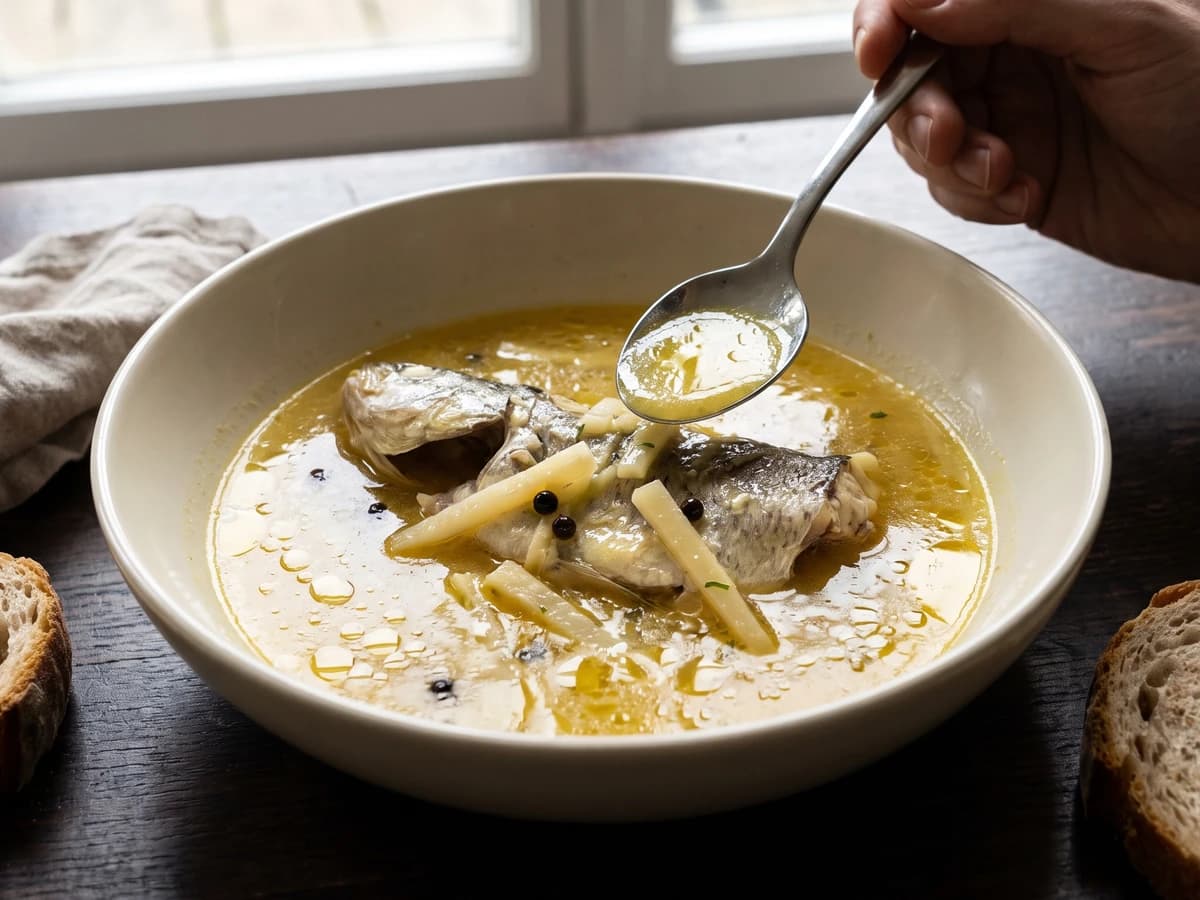
Waterzoi asks fresh, bone-in river fish to thicken its own buttery broth, with parsley root and pepper for company. No flour, no stockpot, just a brisk simmer watched closely.
Chef Juliette
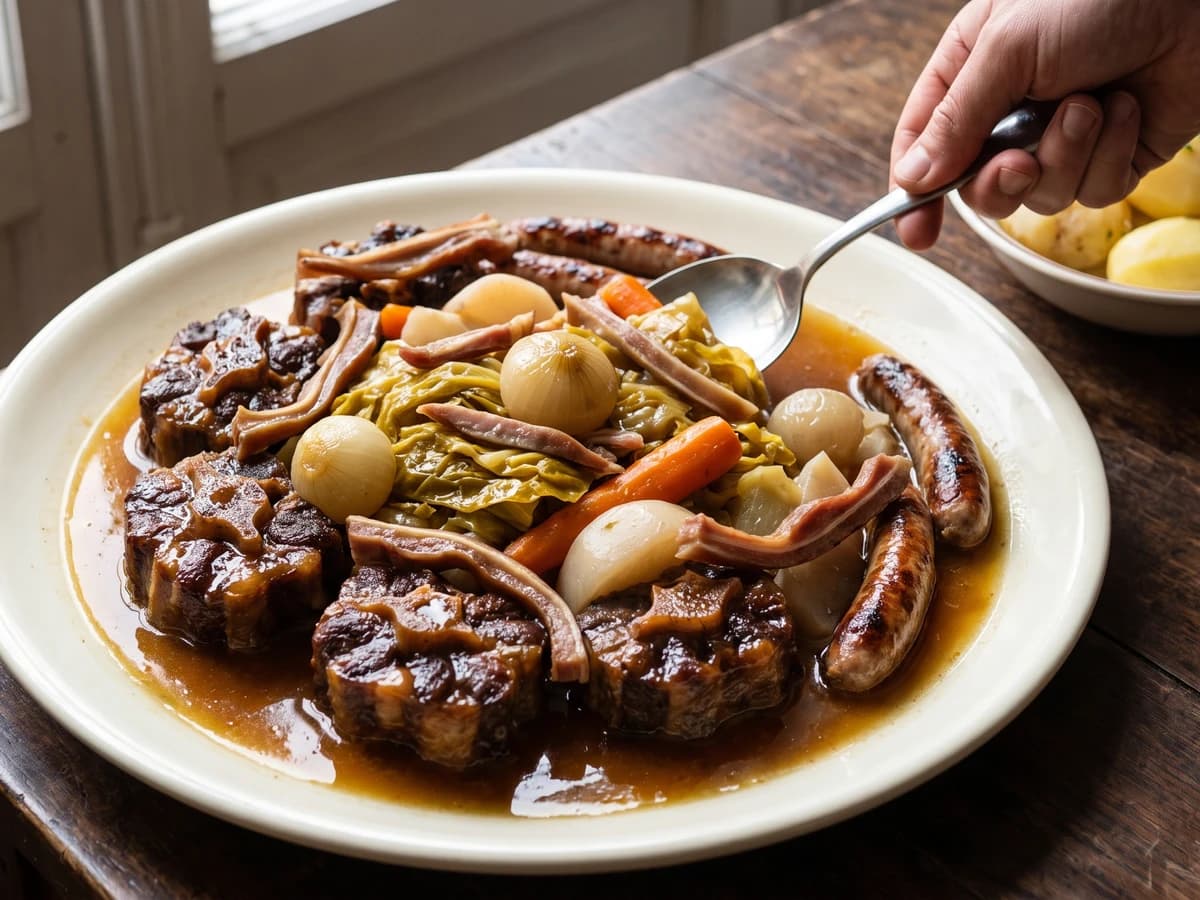
Queue de Bœuf en Hochepot gathers oxtail, pig's trotter and ear, cabbage, roots, and grilled chipolatas around a clear, gelatin-rich broth whose quiet simmer keeps every piece tender and distinct.
Chef Juliette
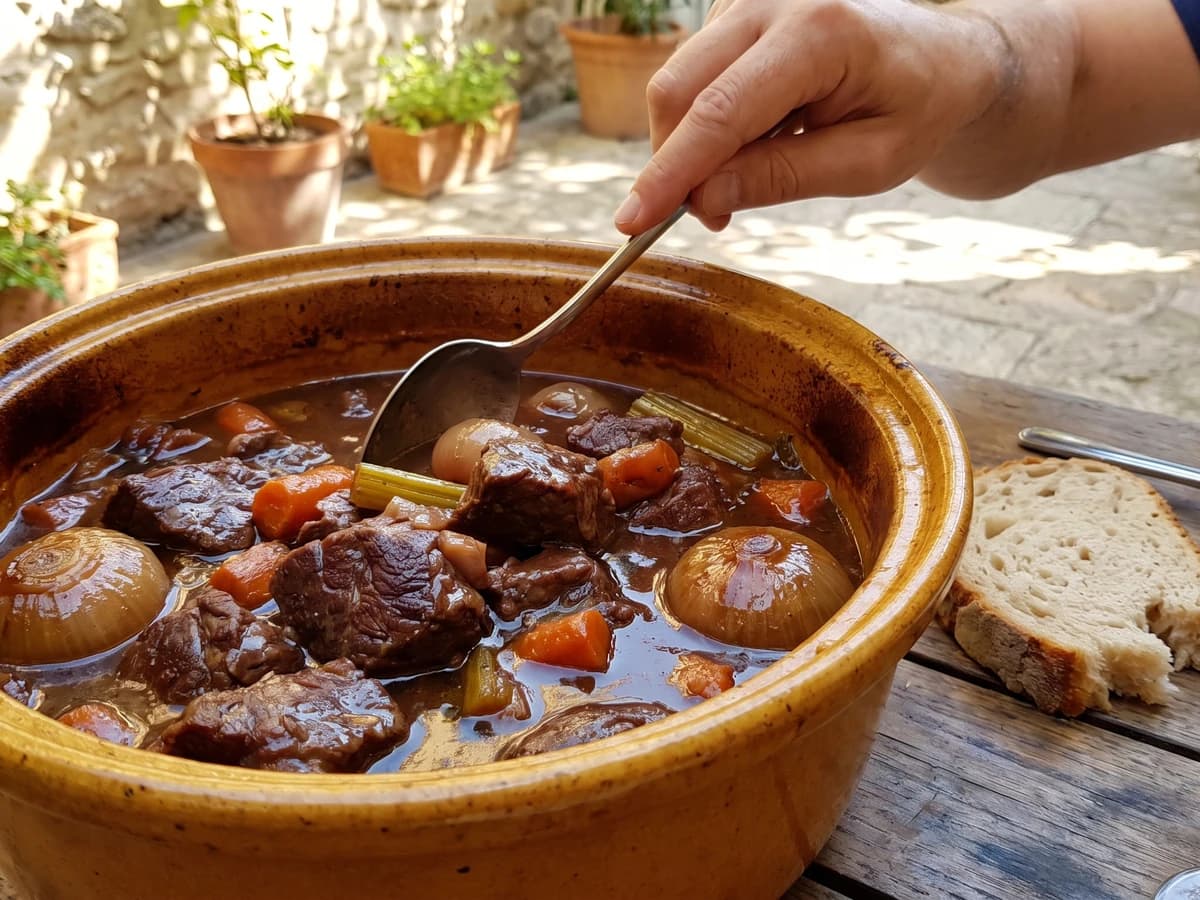
Beef shoulder larded with bacon, sharpened by red wine and vinegar, then sealed with garlic, vegetables, and dry lemon peel until the low oven turns it yielding and the gravy darkly glossy.