Chef Juliette
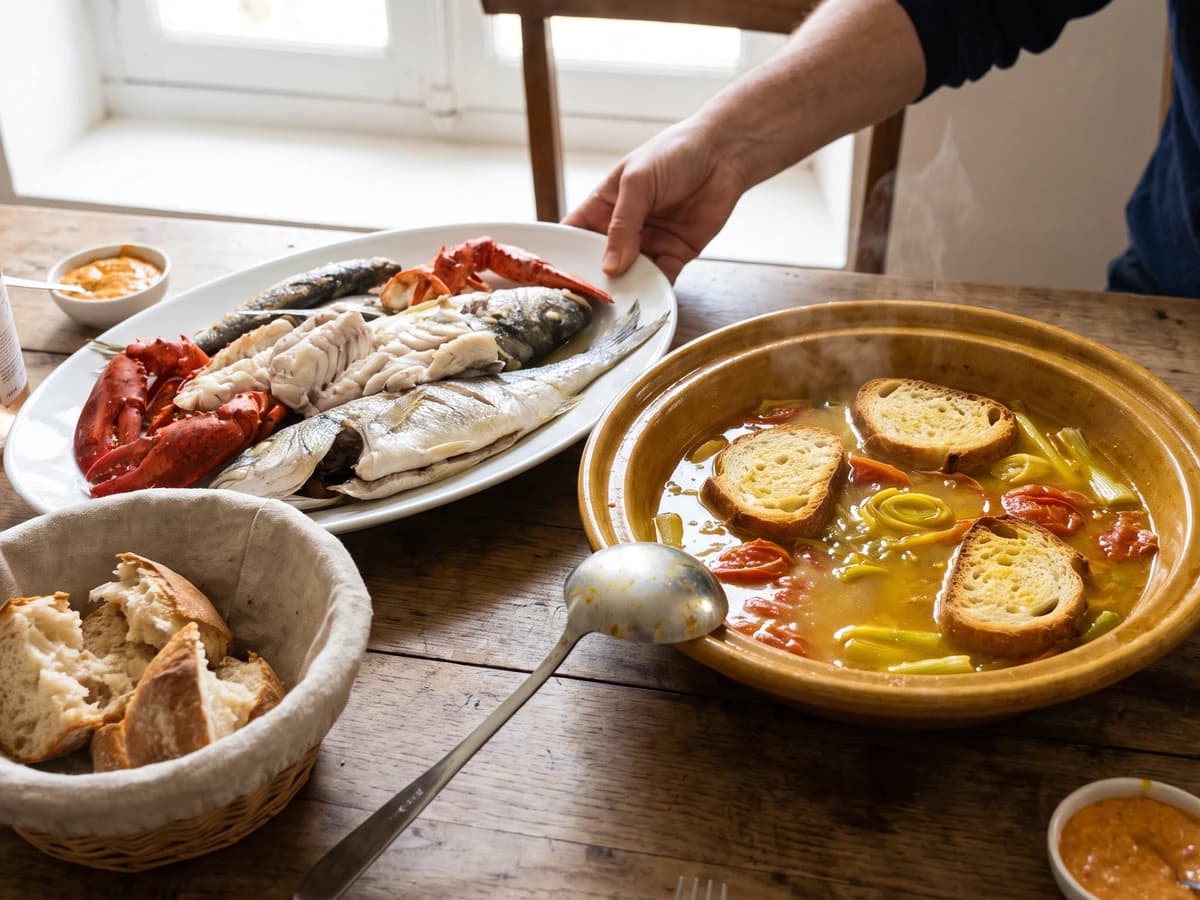
Bouillabaisse à la Marseillaise
Marseille's great fish stew, saffron-gold and garlic-scented, proves that a hard boil can be the careful choice: it binds olive oil into broth before the whole pot meets bread.
A cooking platform built around craft, culture, and the stories behind what we eat.

Created by Chef Juliette
Based on No. 717, Potage Bagration Maigre, from Le Guide Culinaire (1907) by Auguste Escoffier
Fish and mushroom veloutés meet beneath a silken liaison, then carry sole julienne, tender quenelles, and crayfish: a grand Lenten soup with real substance.
Potage Bagration Maigre (Bagration soup in its meatless form) teaches the discipline of the liaison, the yolk-and-cream binding that turns a pale velouté into silk. Velouté means a stock thickened gently with roux, and the one true thing to know before touching the pan is this: once the yolks enter, the soup must never boil.
The original assumed a saucier, fish stock never off the fire, and separate hands poaching sole, shaping quenelles, and passing soup through a tammy. A home kitchen needs none of that scaffolding. A fine-mesh sieve replaces the tammy, one shallow pan poaches both garnishes, and the prepared veloutés wait together for final service. The mushroom treatment comes through Velouté Agnès Sorel (No. 671); for this maigre form, fish velouté replaces its poultry foundation because meat would contradict the dish. The book's six-to-one proportion of fish velouté to mushroom velouté remains intact.
Separate stations may go. The two veloutés, the liaison, real butter, and the three-part garnish must stay, because they are the dish. Have the sole, quenelles, and crayfish ready before binding the soup, then finish the liaison during the final minutes and bring it straight to the table.
Potage Bagration belongs to the Parisian grand-kitchen repertory of named composed soups; its Georgian-Russian title reflects the French table's practice of honoring prominent European names, not a regional Russian soup tradition. The maigre form served meatless tables by replacing meat foundations with fish while retaining yolks, cream, butter, sole, quenelles, and crayfish. Here maigre means without meat, never spare: the layered veloutés and generous garnish are precisely the point.
Quantity
6 cups (1.42 L / 1.45 kg)
kept slightly thin
Quantity
1 cup (240 ml / 245 g) Velouté Agnès Sorel (No. 671)
made with fish velouté as the maigre base
Quantity
2 fillets (about 8 ounces / 225 g total)
Quantity
24 small quenelles (about 1 teaspoon / 8 g each; 190 g total)
finished with crayfish butter
Quantity
12 tails (about 1/2 cup / 115 g)
cut into small pieces
Quantity
3 cups (720 ml / 720 g)
for poaching
Quantity
5 yolks (about 6 tablespoons / 90 g)
Quantity
1/2 cup plus 1 tablespoon (135 ml / 135 g)
Quantity
1 tablespoon (15 ml / 15 g)
reserved for rescue if needed
Quantity
10 tablespoons (150 ml / 140 g)
cut into small cubes
Quantity
1 teaspoon (5 ml / 6 g), plus more as needed
divided
Quantity
1/4 teaspoon (1.25 ml / 0.5 g)
| Ingredient | Quantity |
|---|---|
| fresh fish veloutékept slightly thin | 6 cups (1.42 L / 1.45 kg) |
| mushroom velouté prepared by the mushroom method of Velouté Agnès Sorelmade with fish velouté as the maigre base | 1 cup (240 ml / 245 g) Velouté Agnès Sorel (No. 671) |
| skinless sole fillets | 2 fillets (about 8 ounces / 225 g total) |
| sole or whiting forcemeat quenellesfinished with crayfish butter | 24 small quenelles (about 1 teaspoon / 8 g each; 190 g total) |
| cooked and peeled crayfish tailscut into small pieces | 12 tails (about 1/2 cup / 115 g) |
| waterfor poaching | 3 cups (720 ml / 720 g) |
| large egg yolks | 5 yolks (about 6 tablespoons / 90 g) |
| heavy cream | 1/2 cup plus 1 tablespoon (135 ml / 135 g) |
| chilled heavy cream (optional)reserved for rescue if needed | 1 tablespoon (15 ml / 15 g) |
| cold unsalted buttercut into small cubes | 10 tablespoons (150 ml / 140 g) |
| fine sea saltdivided | 1 teaspoon (5 ml / 6 g), plus more as needed |
| finely ground white pepper | 1/4 teaspoon (1.25 ml / 0.5 g) |
Pour the water into a wide, shallow pan and season it with half the salt. Bring it just below a simmer, with an occasional tremble but no rolling bubbles. Lay in the sole, cover, and poach for 3 to 5 minutes, until opaque and very white. Lift it carefully onto a plate and let it cool for 10 minutes, then cut it into a short julienne, matchstick-like strips. If the warm fish threatens to flake under the knife, chill it briefly and try again; cold sole cuts more cleanly.
Return the liquid to the barest tremble and poach the quenelles in two batches so they have room to swell. Cook for 4 to 6 minutes, turning once, until gently firm and cooked through. Lift them out with a slotted spoon. If the first quenelle splits, stop and lower the heat before adding the rest; boiling water tears a delicate forcemeat apart.
Combine the fresh fish velouté with the mushroom velouté prepared by the mushroom method of Velouté Agnès Sorel (No. 671) in a heavy saucepan. Warm slowly, stirring along the bottom, until thoroughly hot but never boiling. Pass the mixture through a fine-mesh sieve into a clean saucepan. The brigade's tammy was useful when several hands were waiting; the sieve gives one cook the same smooth result without ceremony. Do not reduce the soup, because its proportion and consistency are already set.
Whisk the egg yolks with the measured cream until perfectly smooth. While whisking constantly, add about 2 cups of hot velouté in a thin stream, then pour this tempered liaison back into the saucepan. Set it over low heat and stir continuously with a flexible spatula, reaching into every corner, until the soup lightly coats the back of a spoon, about 4 to 6 minutes. Keep it below 170°F (77°C), and do not let it simmer. If the first fine grains appear, pull the pan from the heat, whisk in the reserved chilled cream, blend briefly, and strain again. Ça se rattrape. A liaison that has boiled into firm curds cannot be made pristine, so act at the first sign.
Take the saucepan completely off the heat. Monter au beurre means finishing by whisking in cold butter, and this is what gives the potage its final body and gleam. Add the cubes a few at a time, whisking until each addition disappears before adding the next. Taste and correct with the remaining salt and white pepper. Once mounted, keep the soup warm over the gentlest water bath if necessary, but never return it directly to the flame.
Warm the sole julienne, quenelles, and crayfish tails in the poaching liquid for no more than 1 minute, then drain them thoroughly. Arrange all three garnishes in a warmed soupière and pour the finished potage over them. Stir only once and very gently, because the quenelles and sole are delicate. Serve immediately while the surface is glossy and the garnish remains distinct. À table!
1 serving (about 250g)
Culinary guides, cultural storytelling, and the editorial depth that makes cooking meaningful.
Discover Culinary ExplorerChef Juliette
Marseille's great fish stew, saffron-gold and garlic-scented, proves that a hard boil can be the careful choice: it binds olive oil into broth before the whole pot meets bread.
Chef Juliette
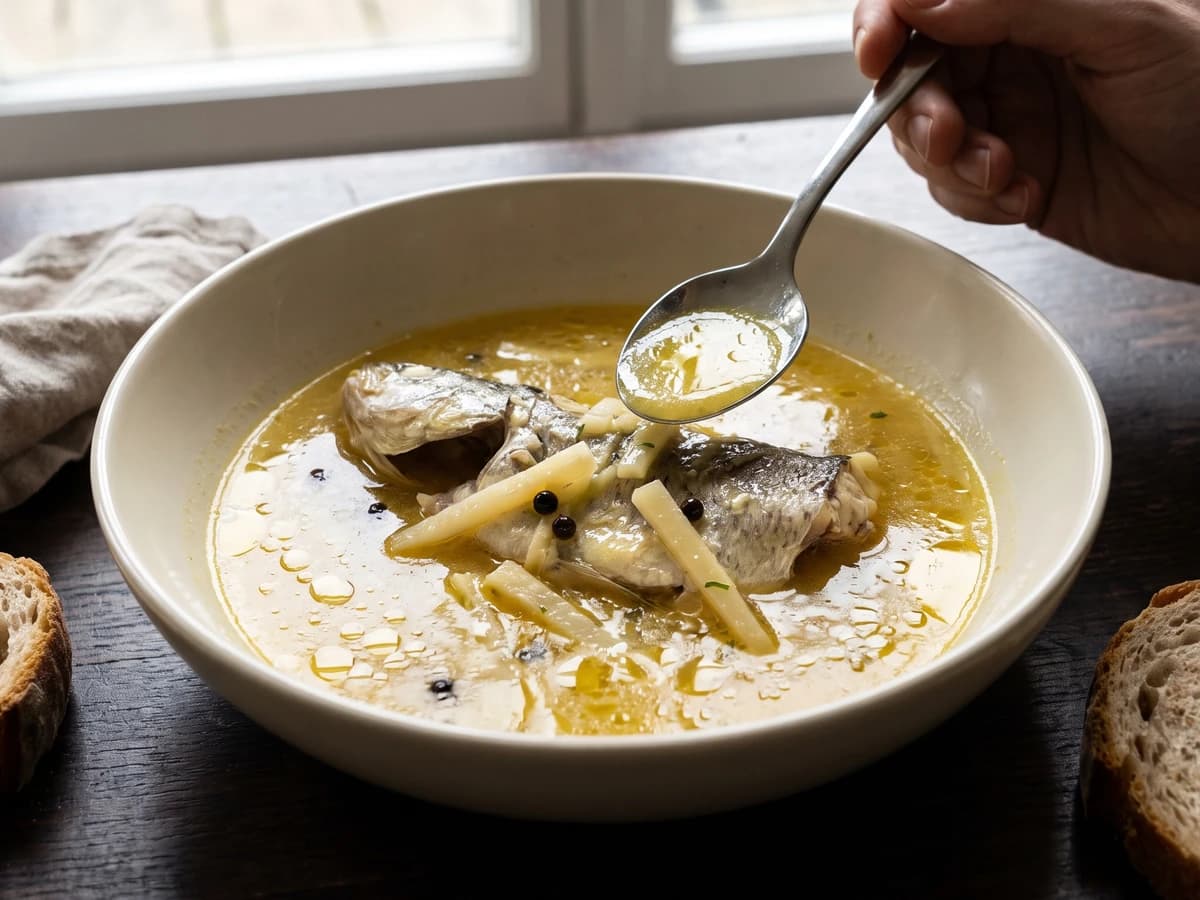
Waterzoi asks fresh, bone-in river fish to thicken its own buttery broth, with parsley root and pepper for company. No flour, no stockpot, just a brisk simmer watched closely.
Chef Juliette
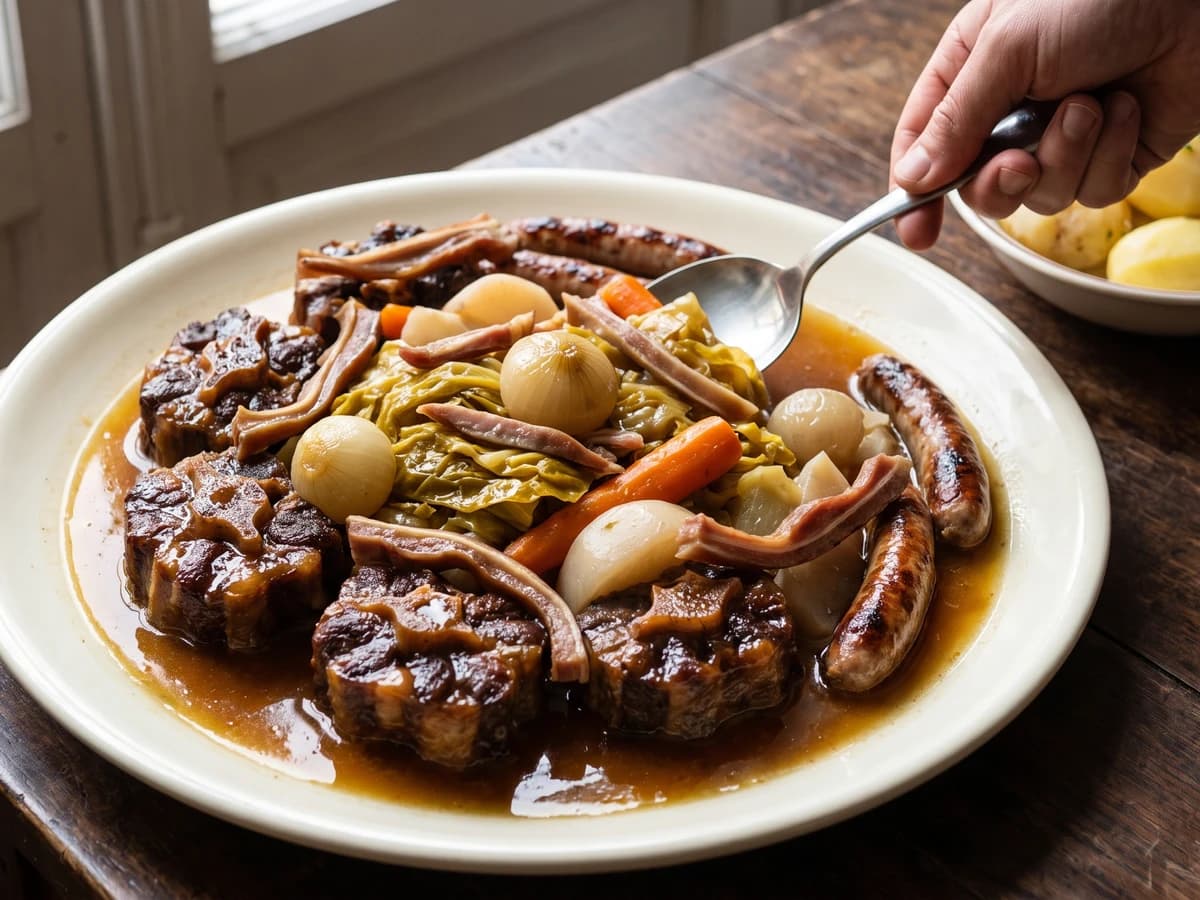
Queue de Bœuf en Hochepot gathers oxtail, pig's trotter and ear, cabbage, roots, and grilled chipolatas around a clear, gelatin-rich broth whose quiet simmer keeps every piece tender and distinct.
Chef Juliette
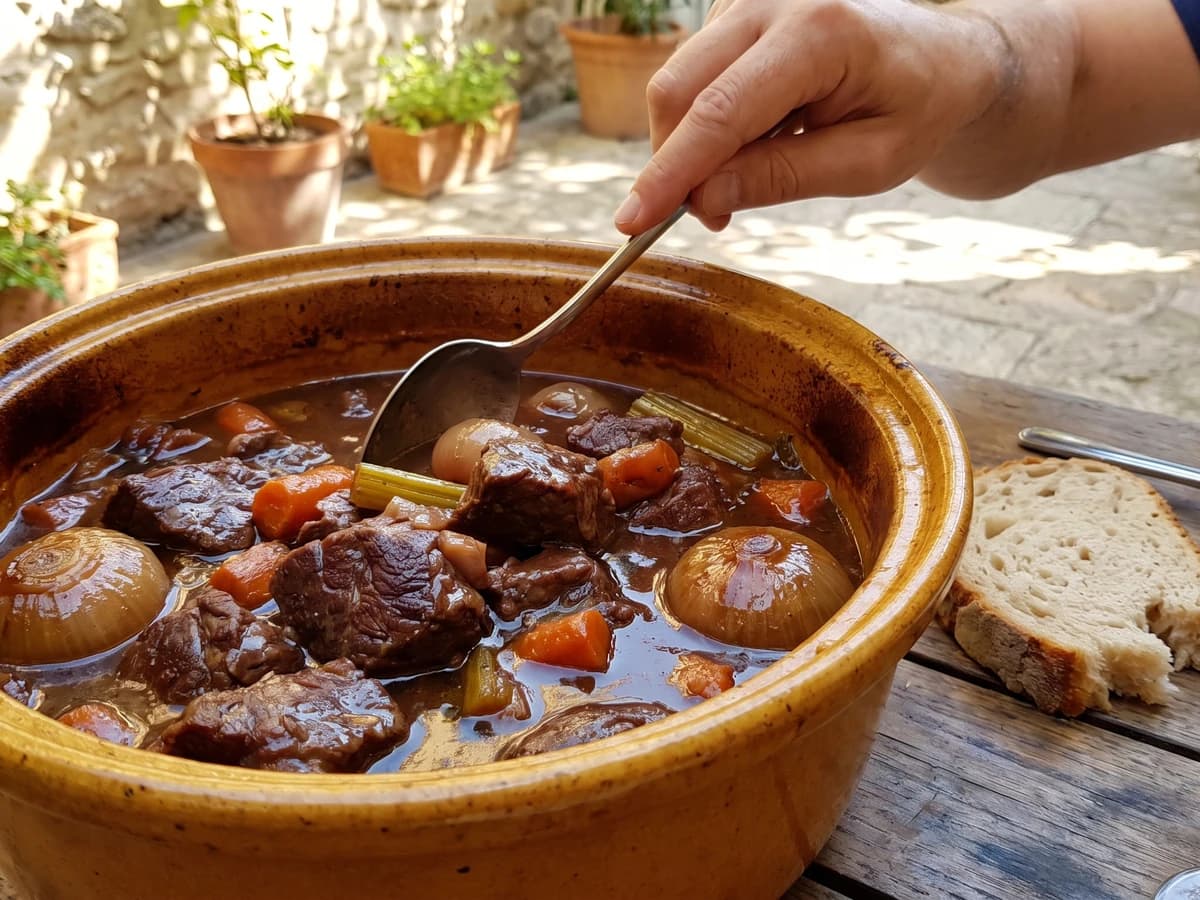
Beef shoulder larded with bacon, sharpened by red wine and vinegar, then sealed with garlic, vegetables, and dry lemon peel until the low oven turns it yielding and the gravy darkly glossy.