Chef Juliette
Bouillabaisse à la Marseillaise
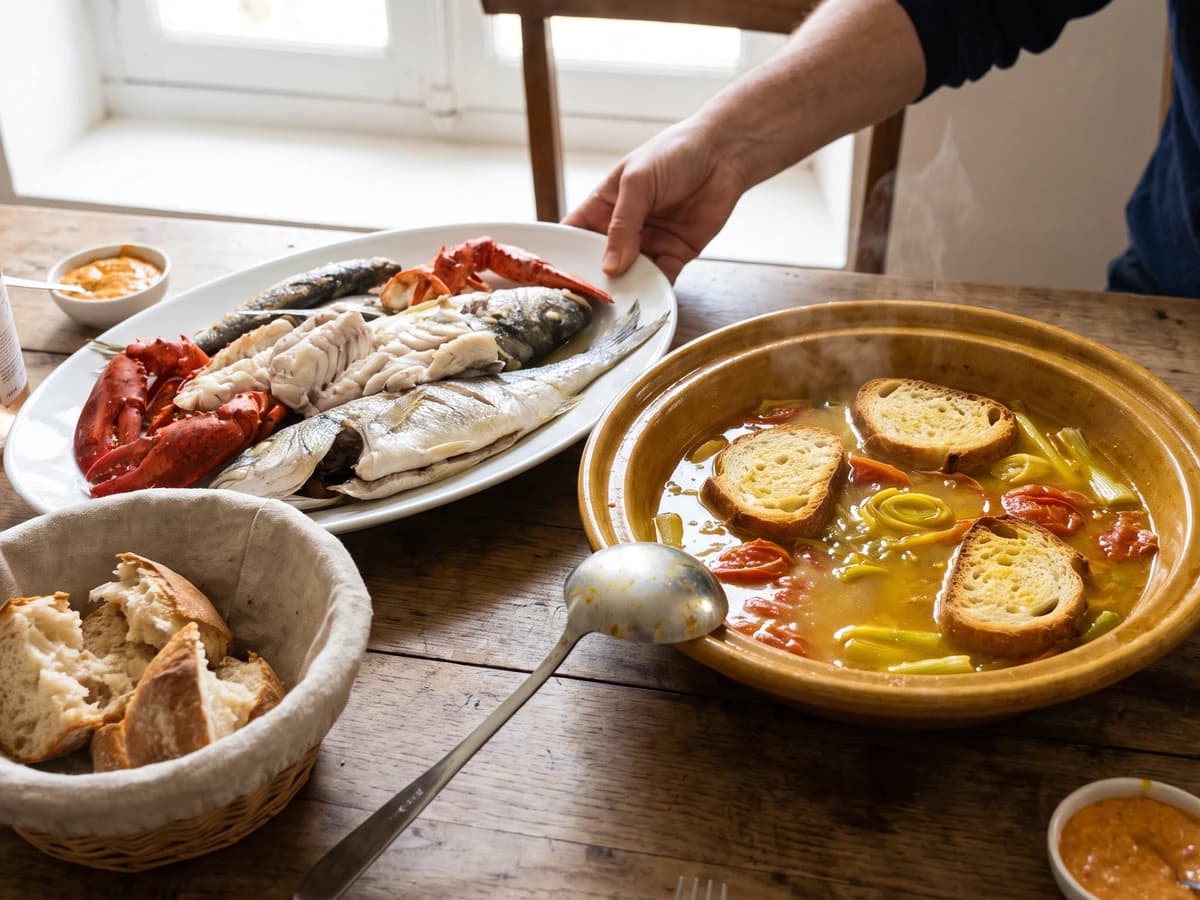
Marseille's great fish stew, saffron-gold and garlic-scented, proves that a hard boil can be the careful choice: it binds olive oil into broth before the whole pot meets bread.
A cooking platform built around craft, culture, and the stories behind what we eat.
Created by Chef Juliette
Based on No. 671, Velouté Agnès Sorel, from Le Guide Culinaire (1907) by Auguste Escoffier
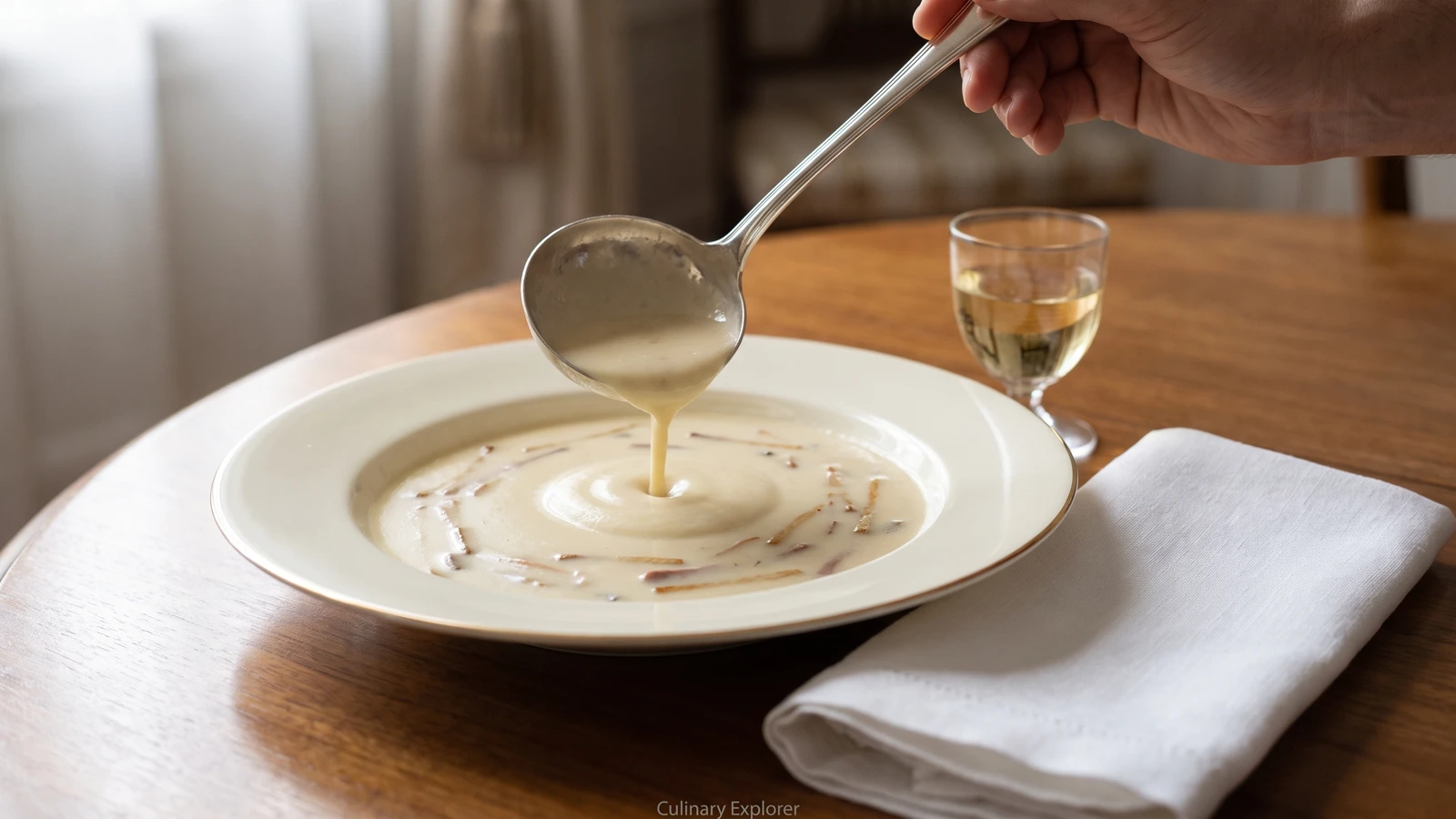
Velouté Agnès Sorel turns raw mushroom purée into a pale, silken poultry soup, enriched with yolks, cream, butter, and a precise julienne of chicken, tongue, and mushrooms.
Velouté Agnès Sorel (poultry velouté with mushroom purée and julienne garnish) teaches one essential thing: delicacy sometimes depends on speed. Raw mushrooms darken as soon as they are broken, so the purée must be sieved into the hot velouté, briefly boiled, and strained again without a pause. That quick passage preserves the soup's pale ivory color and its clean mushroom perfume.
The brigade formula assumed a saucier on staff, poultry stock never off the fire, mushrooms pounded by hand, and a tammy waiting beside the stove. Here, the finished poultry base comes from The Veloutés (No. 242), a food processor replaces the mortar, and a sturdy fine-mesh sieve does the tammy's work. I have doubled the entry's base to make about two quarts, enough for eight first courses. What changed is the labor and scale. What stays is the dish itself: raw mushroom purée, immediate sieving, two brief boils, a liaison of yolks and cream, and real butter at the last moment. One cook, one stove, one evening.
Set out the processor, sieve, and clean receiving saucepan before you cut a mushroom. Once the purée is made, there is no useful pause until the soup has passed through that sieve a second time.
Velouté Agnès Sorel belongs to the codified Parisian grand-kitchen repertoire, where a named garnish identified a preparation as clearly as its sauce. Agnès Sorel was a celebrated figure of the French court, and cooks attached her name to pale, luxurious combinations of poultry, mushrooms, and salted tongue. This is not a regional mushroom soup dressed for ceremony; its identity lies in the exact garnish and in the velouté system that carried such preparations from the grand kitchen to formal home tables.
Quantity
6 cups (1.4 L / about 1.45 kg)
finished and prepared somewhat thin
Quantity
1 pound (about 6 cups whole / 454 g)
cleaned, briefly rinsed, peeled, and kept whole until needed
Quantity
2 tablespoons (30 ml / 18 g)
cut julienne-fashion
Quantity
2 tablespoons (30 ml / 22 g)
cut julienne-fashion
Quantity
2 tablespoons (30 ml / 22 g)
cut julienne-fashion
Quantity
1 tablespoon (15 ml / 14 g)
Quantity
6 (about 110 g)
Quantity
⅔ cup (160 ml / 160 g)
divided
Quantity
10 tablespoons (150 ml / 142 g)
diced
Quantity
Up to 1 teaspoon (5 ml / 6 g)
only if needed
| Ingredient | Quantity |
|---|---|
| The Veloutés (No. 242), poultry versionfinished and prepared somewhat thin | 6 cups (1.4 L / about 1.45 kg) |
| very fresh white button mushroomscleaned, briefly rinsed, peeled, and kept whole until needed | 1 pound (about 6 cups whole / 454 g) |
| very fresh white button mushroomcut julienne-fashion | 2 tablespoons (30 ml / 18 g) |
| cooked chicken breast filletcut julienne-fashion | 2 tablespoons (30 ml / 22 g) |
| cooked salted beef tonguecut julienne-fashion | 2 tablespoons (30 ml / 22 g) |
| unsalted butter for the garnish | 1 tablespoon (15 ml / 14 g) |
| large egg yolks | 6 (about 110 g) |
| heavy creamdivided | ⅔ cup (160 ml / 160 g) |
| cold unsalted butterdiced | 10 tablespoons (150 ml / 142 g) |
| fine salt (optional)only if needed | Up to 1 teaspoon (5 ml / 6 g) |
Set a food processor, a sturdy fine-mesh sieve, a rubber spatula, and a clean receiving saucepan beside the stove. Put the finished poultry base from The Veloutés (No. 242) in a heavy saucepan and warm it gently until hot but not boiling. Keep it somewhat thin, as the source directs; the raw mushroom purée and liaison will give it its final body.
Cut the small garnish portions of mushroom, cooked chicken fillet, and salted tongue julienne-fashion, meaning fine matchstick rods about 3 cm long. Keep the three elements separate. The tongue carries salt, so wait until the finished soup is assembled before deciding whether it needs any more.
Put the peeled whole mushrooms in the food processor and pulse rapidly, scraping once or twice, until they form a very fine raw paste. Set the sieve directly over the hot poultry velouté and force the paste through at once with the spatula. Whisk each portion into the velouté as it falls. If the exposed purée begins to grey, scrape away the darkest surface and continue immediately; the color may be less ivory, but the flavor remains sound. Do not add lemon, herbs, or other flavorings, because the clean poultry and mushroom character is the point.
Raise the heat while stirring constantly. Let the soup reach one full boil, stir it down, then allow it to rise once more. Two brief boils are enough. Rinse the sieve quickly, set it over the clean saucepan, and pass the soup through immediately, pressing firmly but leaving the coarse mushroom fibers behind. This second sieving is the dish, not brigade scaffolding: it gives the velouté its fine, silken body.
Melt the tablespoon of butter in a small pan over medium-low heat. Add the mushroom julienne and toss for 60 to 90 seconds, just until supple and glossy without browning. Add the chicken and salted tongue juliennes, toss only until warm, then remove the pan from the heat. Keep the garnish covered nearby.
Whisk the yolks with all but 2 tablespoons of the cream to make the liaison, the yolk-and-cream binding. Whisk in a ladleful of hot soup, then a second, so the yolks warm gradually. Take the soup off direct heat and whisk in the tempered liaison. Return it to the lowest heat and stir until the velouté lightly coats a spoon and reaches 74 to 77°C (165 to 170°F). Never let it boil. If fine curds appear, pull the pan off the heat immediately, whisk in the reserved cold cream, and strain into a cool clean saucepan. Ça se rattrape.
Take the saucepan completely off the heat. Whisk in the cold diced butter a few pieces at a time, allowing each addition to disappear before adding the next. This mounting gives the velouté its final gloss and generosity. If melted butter begins to pool on top, set the bottom of the saucepan briefly in cold water and whisk steadily until the emulsion returns. Taste only now, then add salt if the tongue and poultry base have not already supplied enough.
Divide the warm julienne garnish among heated soup plates or place it in a warmed soupière. Ladle the velouté over it and serve immediately, while the surface remains glossy and the garnish still holds its shape. No herb sprig, truffle oil, or decorative flourish is needed. Cooking well is not cooking fancy. À table!
1 serving (about 240g)
Culinary guides, cultural storytelling, and the editorial depth that makes cooking meaningful.
Discover Culinary ExplorerChef Juliette
Marseille's great fish stew, saffron-gold and garlic-scented, proves that a hard boil can be the careful choice: it binds olive oil into broth before the whole pot meets bread.
Chef Juliette
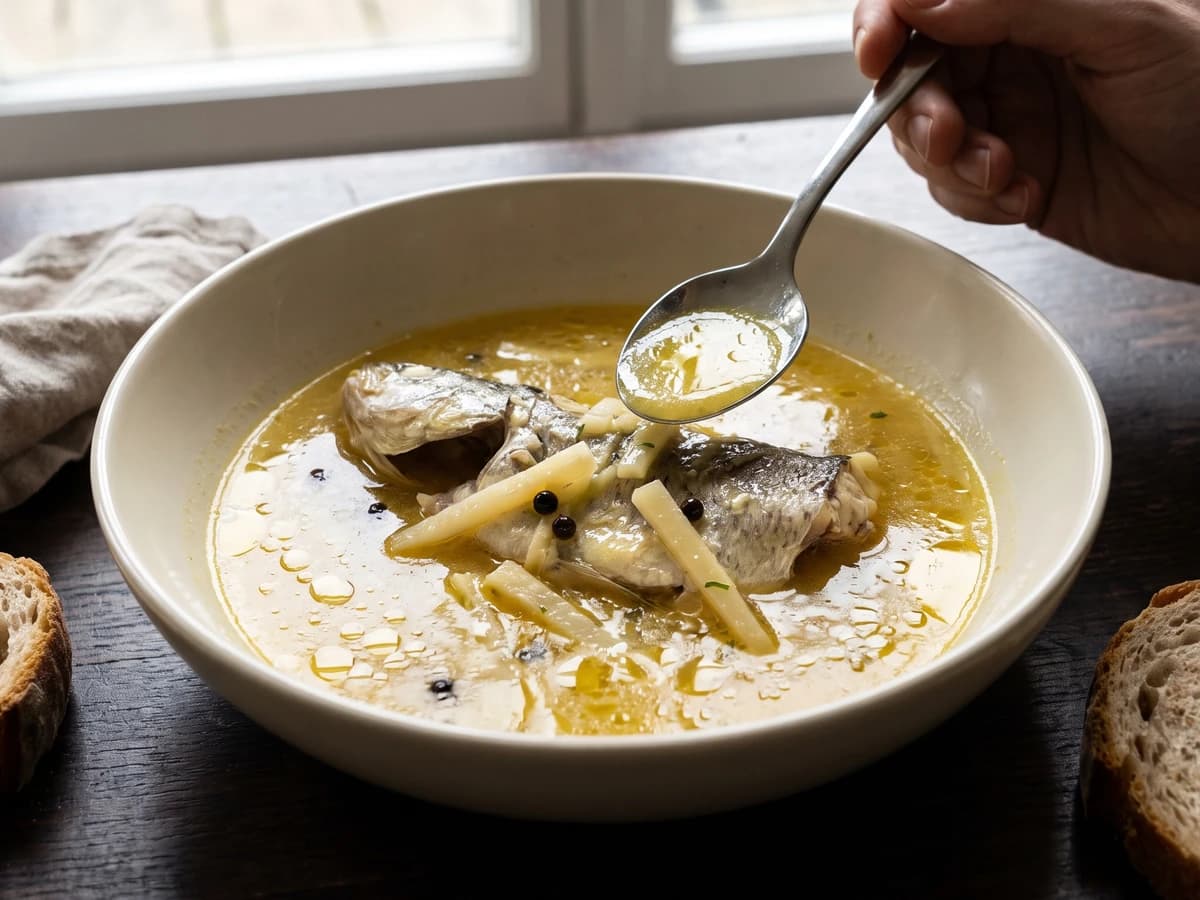
Waterzoi asks fresh, bone-in river fish to thicken its own buttery broth, with parsley root and pepper for company. No flour, no stockpot, just a brisk simmer watched closely.
Chef Juliette
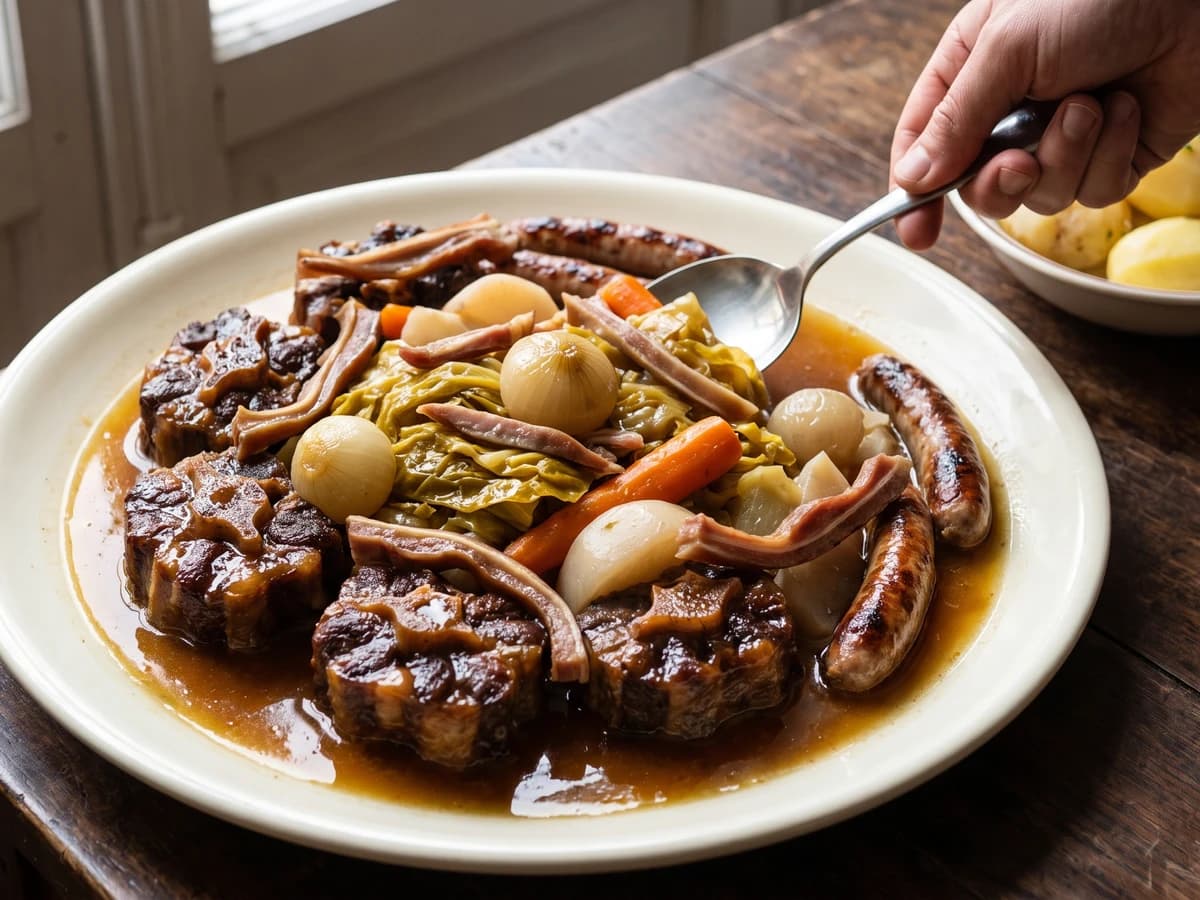
Queue de Bœuf en Hochepot gathers oxtail, pig's trotter and ear, cabbage, roots, and grilled chipolatas around a clear, gelatin-rich broth whose quiet simmer keeps every piece tender and distinct.
Chef Juliette
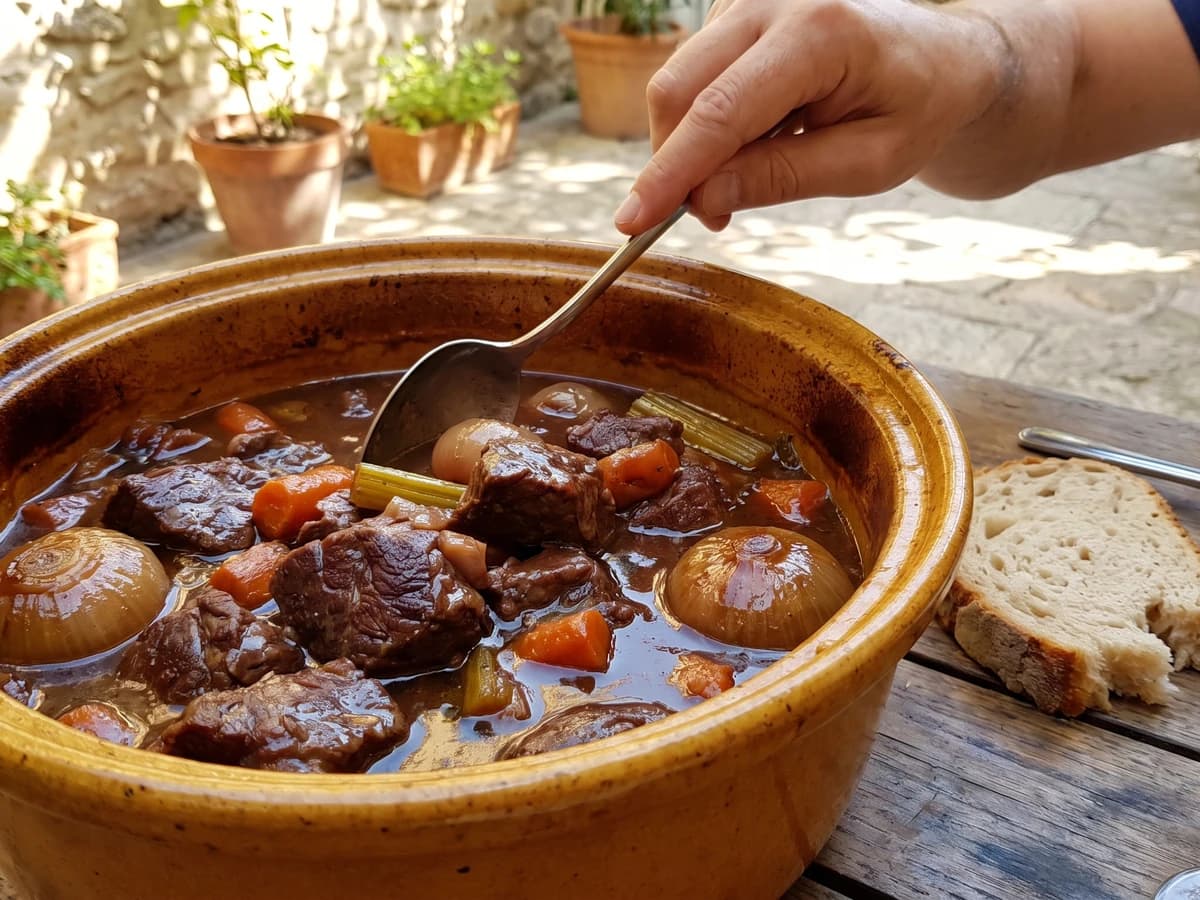
Beef shoulder larded with bacon, sharpened by red wine and vinegar, then sealed with garlic, vegetables, and dry lemon peel until the low oven turns it yielding and the gravy darkly glossy.