Chef Juliette
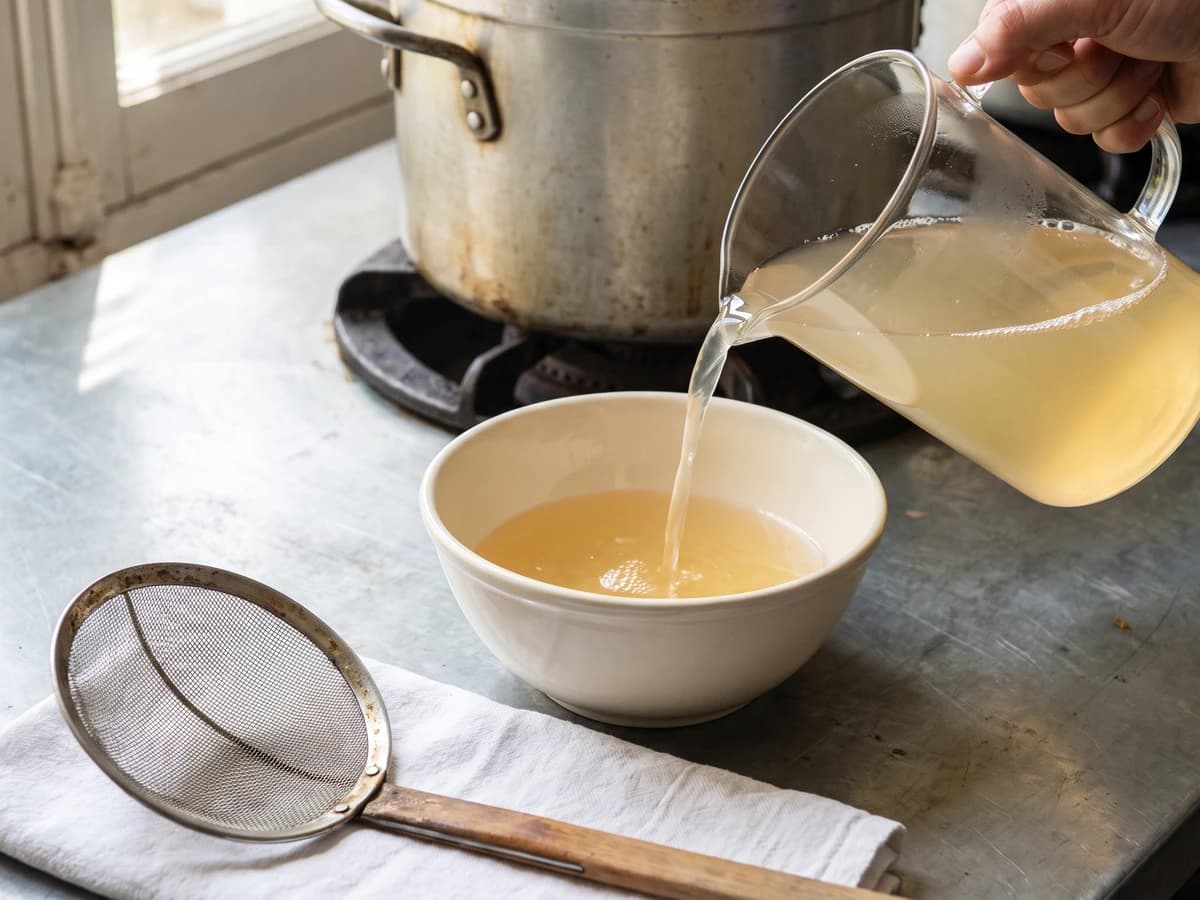
Ordinary or White Consommé
Beef shin, lean beef, and fowl begin in cold water and rise slowly toward a tremble. Skim before the boil, and you learn the quiet discipline that gives every clear French broth its backbone.
A cooking platform built around craft, culture, and the stories behind what we eat.
Created by Chef Juliette
Based on No. 71, Châteaubriand Sauce, from Le Guide Culinaire (1907) by Auguste Escoffier
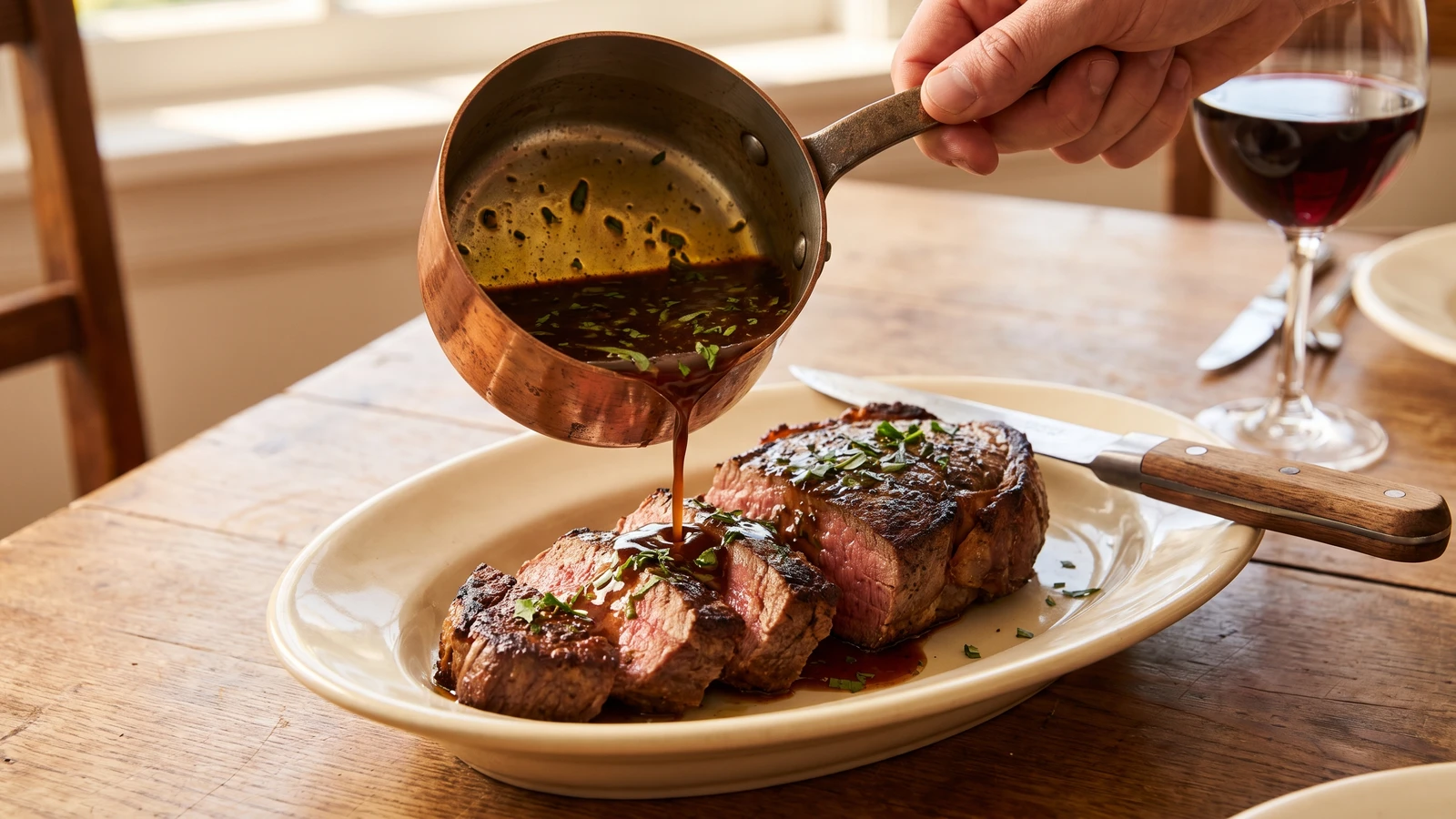
Sauce Châteaubriand teaches reduction: white wine and aromatics taken nearly dry, veal gravy concentrated to a gloss, then Butter à la Maître d’Hôtel (No. 150) whisked in away from the flame.
Sauce Châteaubriand, a white-wine and veal reduction finished with Butter à la Maître d’Hôtel (No. 150), teaches one uncompromising thing: the mounted sauce must never boil. Reduce bravely first, then finish gently. C’est la même grammaire throughout the canon: concentration gives a sauce its backbone, while butter gives it body, freshness, and that proud gloss across a grilled fillet.
The original formula assumed a saucier on staff, veal gravy drawn from stock never off the fire, and muslin waiting beside the stove. A salamander never enters this method; the grill cooks the beef, not the sauce. At home, a narrow one-quart pan encourages clean reduction, good prepared veal gravy supplies the foundation, and a fine sieve lined with damp cheesecloth replaces the muslin. The source quantity already suits four people, so it stays intact, with the pint measures converted precisely to practical metric volumes. The brigade’s constant sauce station is scaffolding. The two reductions and the off-fire mounting are the dish.
When it is right, Sauce Châteaubriand is glossy and deep brown, sharpened by white wine, fragrant with shallot and mushroom, and stippled green by the parsley already carried in the compound butter. Set every ingredient beside the stove before beginning. The mounting decides everything: no flame, no simmer, no hurry.
Sauce Châteaubriand belongs to the Parisian grand-kitchen repertoire, paired with the thick center-cut fillet of beef carrying the same name before traveling to bourgeois dining tables as a sauce for grilled meat. Its identity is sometimes blurred with other steak sauces, but this formula is precise: shallot, thyme, bay, mushroom parings, and white wine reduced with veal gravy, then mounted with Butter à la Maître d’Hôtel (No. 150), with tarragon permitted rather than required.
Quantity
¼ cup (60 ml / 28 g)
finely chopped
Quantity
1 sprig
Quantity
½ leaf
Quantity
½ cup, loosely packed (120 ml / 28 g)
thinly sliced
Quantity
½ cup plus 1 tablespoon (140 ml / 140 g)
Quantity
1 cup plus 3 tablespoons (285 ml / 285 g)
Quantity
½ cup (120 ml / 113 g) Butter à la Maître d’Hôtel (No. 150)
cool but pliable and divided into 8 pieces
Quantity
1 teaspoon (5 ml / 1 g)
finely chopped
| Ingredient | Quantity |
|---|---|
| shallotsfinely chopped | ¼ cup (60 ml / 28 g) |
| fresh thyme | 1 sprig |
| bay leaf | ½ leaf |
| clean mushroom paringsthinly sliced | ½ cup, loosely packed (120 ml / 28 g) |
| dry white wine | ½ cup plus 1 tablespoon (140 ml / 140 g) |
| prepared veal gravy | 1 cup plus 3 tablespoons (285 ml / 285 g) |
| Butter à la Maître d’Hôtelcool but pliable and divided into 8 pieces | ½ cup (120 ml / 113 g) Butter à la Maître d’Hôtel (No. 150) |
| fresh tarragon (optional)finely chopped | 1 teaspoon (5 ml / 1 g) |
Measure the wine and veal gravy separately. Set a heatproof measuring jug beside the stove, place a fine-mesh sieve lined with damp cheesecloth over a clean small saucepan, and divide the Butter à la Maître d’Hôtel (No. 150) into eight pieces. Keep the butter cool but pliable. Once the mounting begins, everything must be within reach.
Combine the shallots, thyme, bay, mushroom parings, and white wine in a one-quart heavy saucepan. Bring to a lively boil over medium-high heat and reduce until the wine has almost disappeared, about 8 to 10 minutes. The shallots should look glazed and only a spoonful of syrupy moisture should remain. Do not let the aromatics brown; if the pan goes dry before they soften, add one tablespoon of water and continue. If anything blackens, begin again, because burnt shallot follows a sauce all the way to the table.
Add the veal gravy and scrape the pan clean as it comes back to the boil. Reduce briskly until the liquid measures ½ cup plus 1 tablespoon (140 ml), about 12 to 18 minutes. The bubbles will grow wider and slower, and the sauce will leave a clear trail when a spoon crosses the pan. Check by pouring it into the measuring jug, then return it to the pan if it needs further reduction. If it has fallen below 140 ml, restore the measure with a spoonful of veal gravy, not water, so the foundation remains intact.
Pour the reduction through the prepared sieve into the clean saucepan. Let it drain, then press the aromatics only lightly; forcing the mushroom parings through will cloud the sauce. Scrape the concentrated liquid from the underside of the sieve into the pan. Warm it just until thoroughly hot, then remove the saucepan from the burner and set it on a folded towel so it cannot slide.
Monter au beurre, whisk in the butter off the heat, one piece at a time. Add each piece of Butter à la Maître d’Hôtel (No. 150) only when the last has nearly disappeared. The sauce should thicken, gleam, and fall from the whisk in a smooth ribbon without bubbling. If the pan cools before the butter melts, nest its base briefly in warm water, never over direct flame. If yellow fat begins to pool or the sauce turns greasy, stop adding butter. Put 1 teaspoon of cold water in a clean warm bowl, whisk in a spoonful of the broken sauce until smooth, then incorporate the remainder gradually. Ça se rattrape.
Fold in the chopped tarragon, if using, and taste without returning the sauce to the heat. The veal gravy and Butter à la Maître d’Hôtel (No. 150) should already carry the seasoning. Spoon the Sauce Châteaubriand over thick slices of grilled fillet of beef, or send it to the table in a warmed sauceboat. If it must wait, hold it for no more than 10 minutes over barely warm water and whisk occasionally. À table!
1 serving (about 60g)
Culinary guides, cultural storytelling, and the editorial depth that makes cooking meaningful.
Discover Culinary ExplorerChef Juliette
Beef shin, lean beef, and fowl begin in cold water and rise slowly toward a tremble. Skim before the boil, and you learn the quiet discipline that gives every clear French broth its backbone.
Chef Juliette
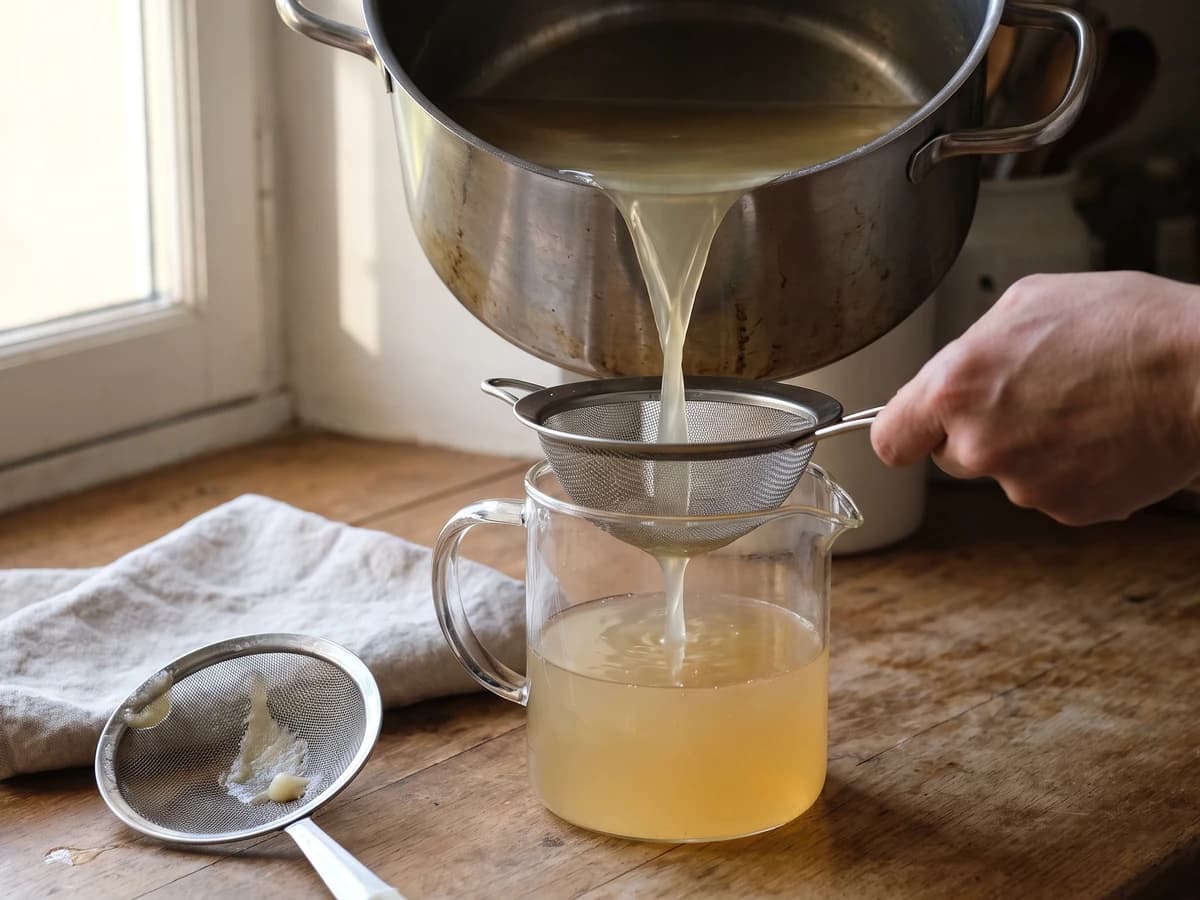
Break the veal bones small, then give them eight hours at a bare tremble. This pale, gelatinous fond becomes the quiet foundation beneath velouté, blanquette, and every sauce that must stay light.
Chef Juliette
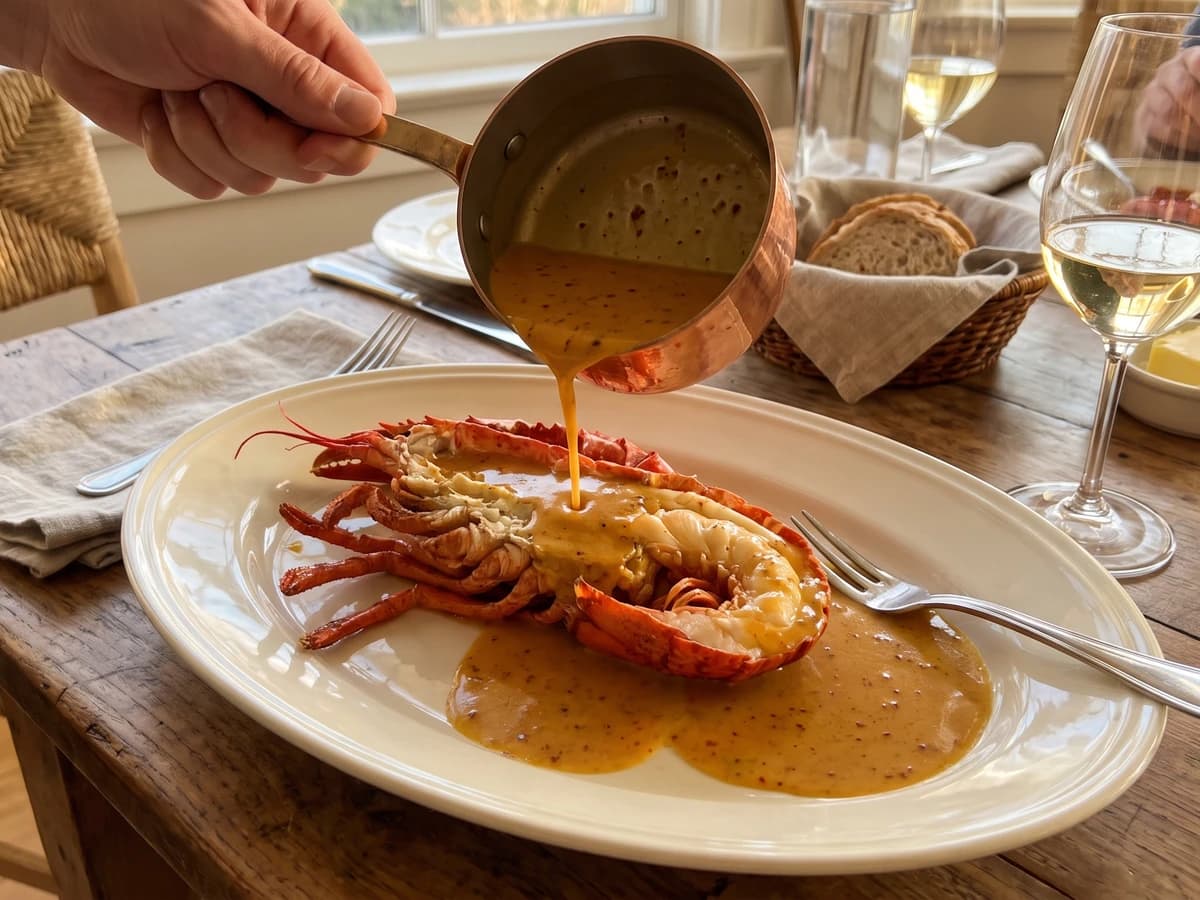
Sauce Orientale concentrates lobster-rich American Sauce with curry, then folds in cream away from the fire: a glossy, gently spiced derivative made for lobster, crayfish, and firm fish.
Chef Juliette
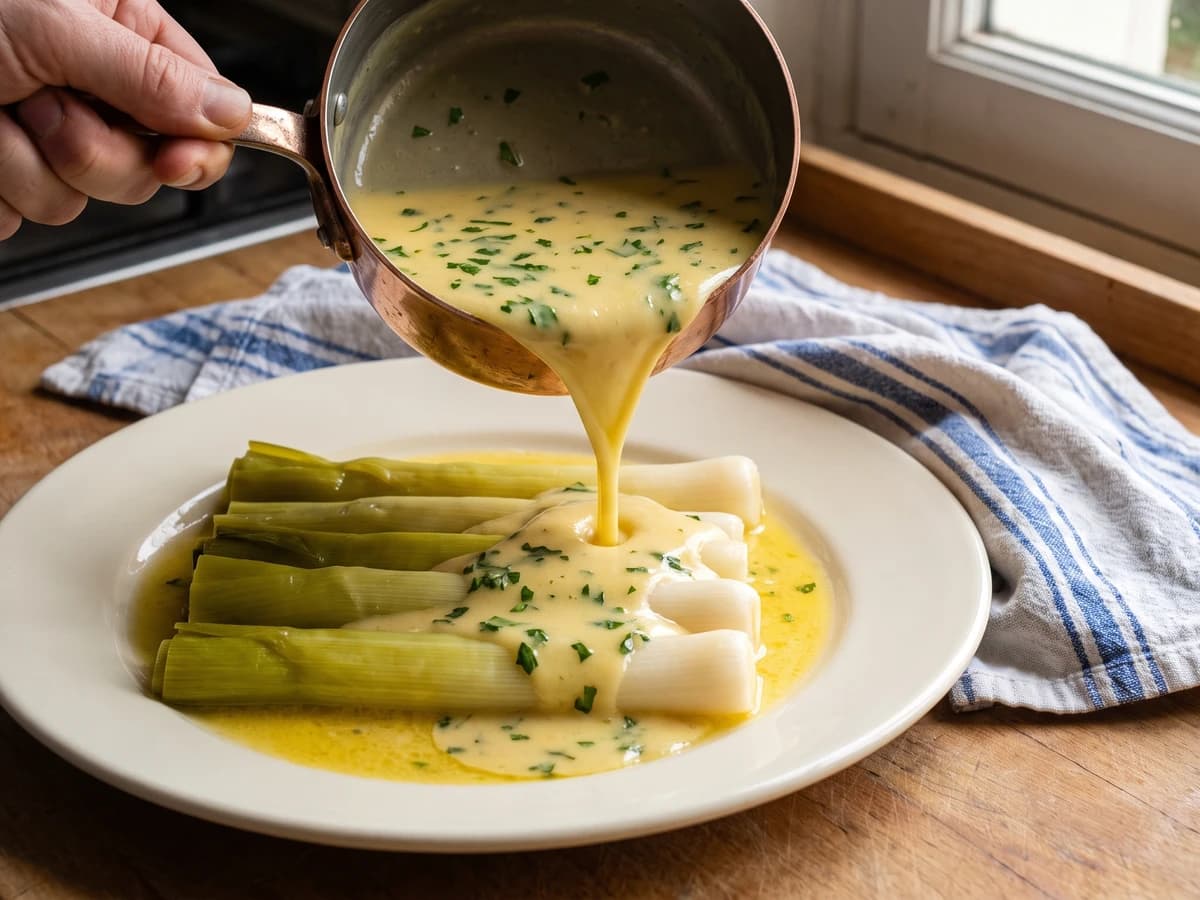
An old lesson in sauce families: Sauce Allemande takes mushroom liquor, then butter, lemon, and parsley, becoming a glossy Poulette for sheep's trotters, leeks, cauliflower, and anything needing gentle richness with a bright edge.