Chef Juliette
Bouillabaisse à la Marseillaise
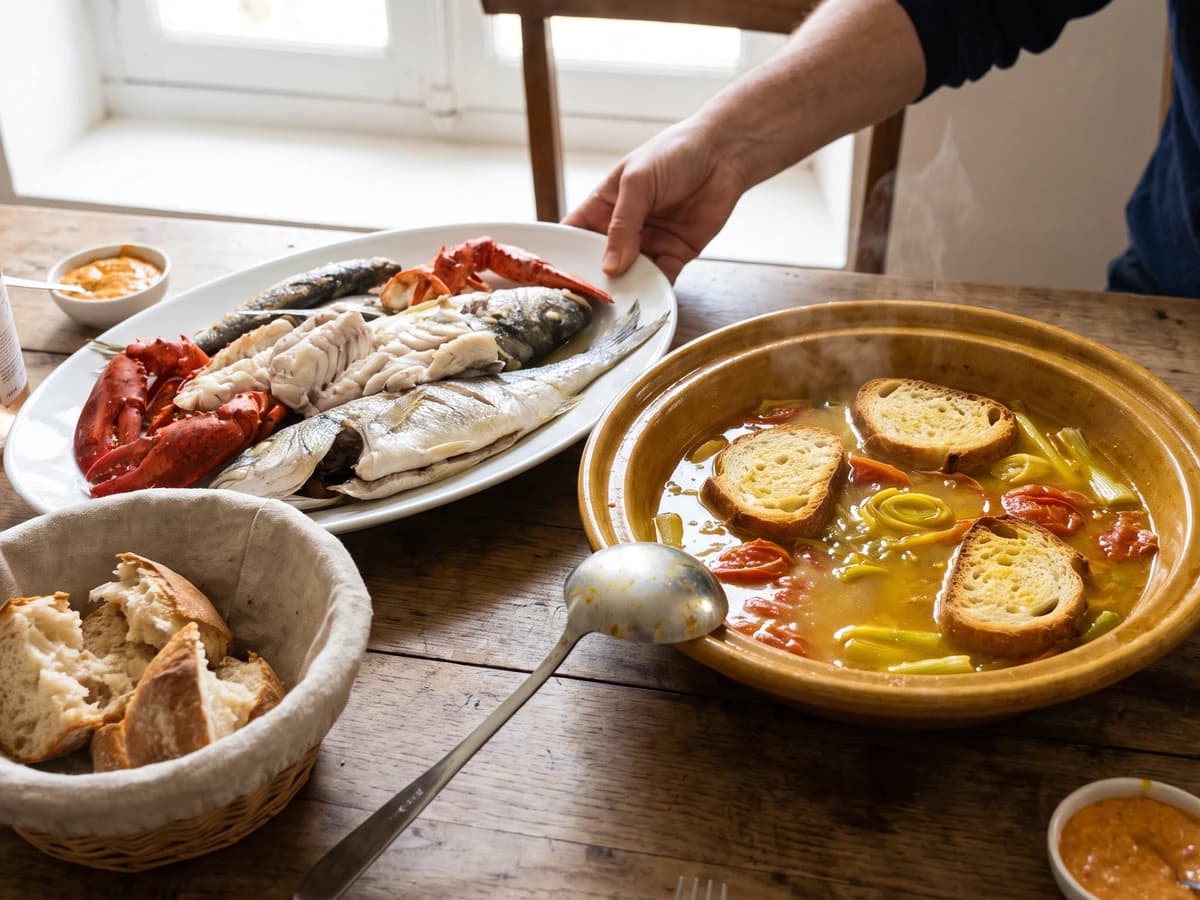
Marseille's great fish stew, saffron-gold and garlic-scented, proves that a hard boil can be the careful choice: it binds olive oil into broth before the whole pot meets bread.
A cooking platform built around craft, culture, and the stories behind what we eat.
Created by Chef Juliette
Based on No. 692, Velouté Marie Louise, from Le Guide Culinaire (1907) by Auguste Escoffier
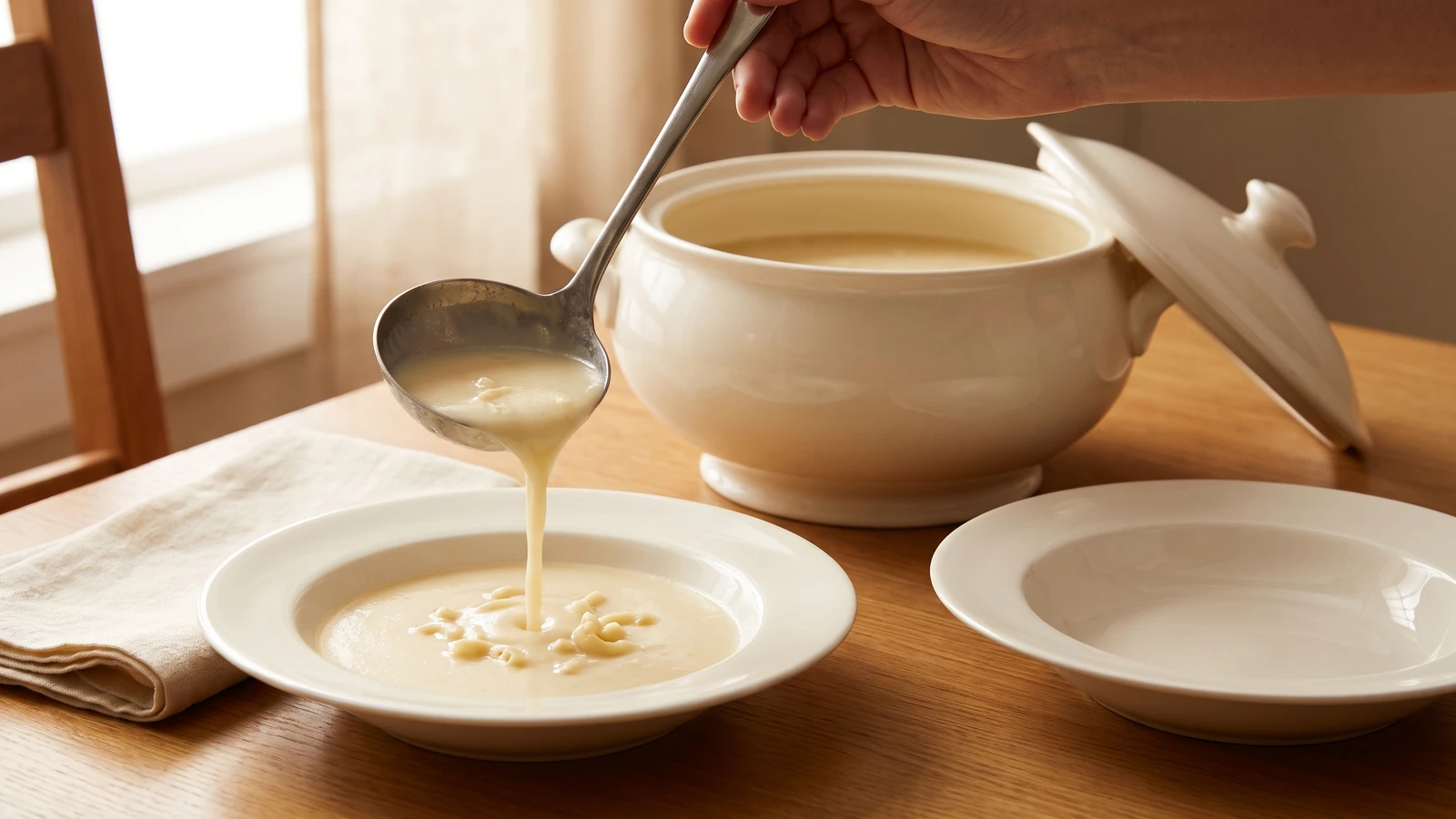
A pale, silken poultry velouté rounded with barley cream, loosened with white consommé, and finished with liaison and butter, with tender dice of macaroni waiting in every spoonful.
Velouté Marie Louise (poultry velouté enriched with barley cream) teaches the difference between body and binding. Crème d’Orge (No. 712) gives the soup its round, grain-softened body before the liaison enters; the liaison, a final binding of yolks and cream, supplies silk rather than weight. Know one thing before touching the pan: once the liaison is in, the soup must never boil.
The original formula assumed a saucier on staff, prepared poultry velouté and white consommé beside a stockpot never off the fire, and a tammy ready for sieving. There is no salamander work here; the luxury was the stock fire and the extra pair of hands. At home, three measured foundations, a fine-mesh sieve, and one heavy saucepan make a generous two quarts. The brigade's hot-holding and relay of cooks can go. The formula's two-to-one-to-one ratio, the sieving, the gentle heat, and the last-minute finish must stay. One cook, one stove, one evening.
Done properly, Marie Louise is pale ivory and perfectly smooth, with a quiet butter sheen and tiny tender dice of macaroni beneath the surface. The finish decides it: temper the liaison slowly, keep the heat below a simmer, and mount the butter only after the pan leaves the stove.
Velouté Marie Louise belongs to the named potages of the French classical dining room, where a familiar foundation took its identity from a precise enrichment and garnish rather than from a province. Its distinction is technical: barley cream gives poultry velouté a fuller body than roux alone, while a yolk-and-cream liaison supplies the final silk and diced macaroni identifies the garnish. It passed naturally to the bourgeois dinner table because its foundations could be prepared ahead, then joined and finished moments before the tureen was carried in.
Quantity
4 cups (960 ml / about 1 kg)
Quantity
2 cups (480 ml / about 480 g)
Quantity
1 cup (240 ml / about 240 g)
kept cold
Quantity
4
Quantity
4 tablespoons (60 ml / 57 g)
cut into small cubes
Quantity
3 tablespoons cooked (45 ml / about 40 g), from about 3/4 ounce (20 g) dried
cooked tender and cut into 1/8-inch (3 mm) dice
Quantity
2 teaspoons (10 ml / 12 g)
for the macaroni water
| Ingredient | Quantity |
|---|---|
| prepared poultry velouté | 4 cups (960 ml / about 1 kg) |
| Crème d’Orge (No. 712) | 2 cups (480 ml / about 500 g) Crème d’Orge (No. 712) |
| prepared white consommé | 2 cups (480 ml / about 480 g) |
| heavy creamkept cold | 1 cup (240 ml / about 240 g) |
| large egg yolks | 4 |
| cold unsalted buttercut into small cubes | 4 tablespoons (60 ml / 57 g) |
| straight macaronicooked tender and cut into 1/8-inch (3 mm) dice | 3 tablespoons cooked (45 ml / about 40 g), from about 3/4 ounce (20 g) dried |
| fine sea saltfor the macaroni water | 2 teaspoons (10 ml / 12 g) |
Bring a small saucepan of water to a boil and season it with the salt. Cook the macaroni until fully tender, one or two minutes beyond al dente; this garnish should yield softly in the spoon, not put up a fight. Drain well, cut it crosswise into fine 1/8-inch (3 mm) dice, and cover it so the edges do not dry while you finish the soup.
Whisk the poultry velouté and Crème d’Orge (No. 712) together in a heavy saucepan over low heat, warming them only until they loosen and combine. Set a fine-mesh sieve over a clean pot and rub the mixture through with a flexible spatula or the back of a ladle. The old tammy is brigade equipment; the fine sieve is its honest home equivalent. Do not omit the sieving. It removes the last barley grain and gives Marie Louise its defining smoothness.
Whisk the white consommé into the sieved base and set the pot over medium-low heat. Bring the soup gradually to just below a simmer, stirring along the bottom so the barley body cannot catch. No bubble should break the surface. If a skin begins to form, whisk it in gently rather than beating air through the velouté.
Reserve 2 tablespoons of the cold cream, then whisk the remaining cream with the egg yolks until completely smooth. While whisking constantly, add about 2 cups of the hot soup to the yolk mixture one ladle at a time. Lower the heat beneath the saucepan, then pour the tempered liaison back in a thin stream, stirring without pause. Keep it between 160 and 170°F (71 and 77°C), until it lightly nappes, or coats, the back of a spoon while remaining fluid. Never let it boil. If the first fine specks of yolk appear, pull the pan from the heat, whisk in the reserved cold cream, and pass the soup immediately through a clean sieve. Ça se rattrape if you catch it at once.
Take the saucepan completely off the heat. If the reserved cream was not needed for rescue, whisk it in now. Add the cold butter a few cubes at a time, whisking until each disappears before adding more; this is monter au beurre, mounting with butter, and it gives the surface its final sheen. Taste before adding any seasoning, because the velouté and consommé should already carry salt. Do not return the finished soup to direct heat.
Scatter the diced macaroni into a warmed soup tureen or divide it among warmed shallow soup plates. Ladle the Marie Louise over it immediately, letting a few tender dice remain visible beneath the ivory surface. Serve at once, before the liaison cools and tightens. À table!
1 serving (about 245g)
Culinary guides, cultural storytelling, and the editorial depth that makes cooking meaningful.
Discover Culinary ExplorerChef Juliette
Marseille's great fish stew, saffron-gold and garlic-scented, proves that a hard boil can be the careful choice: it binds olive oil into broth before the whole pot meets bread.
Chef Juliette
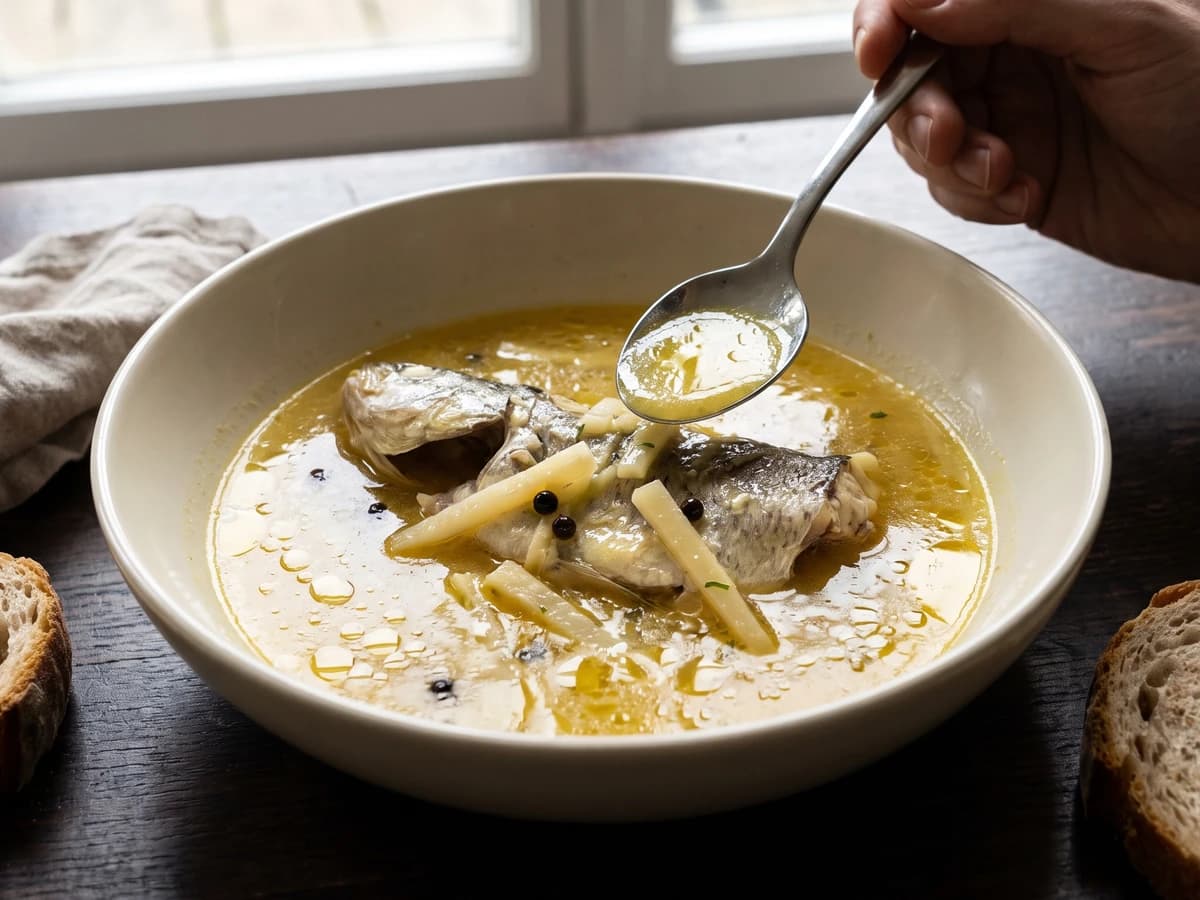
Waterzoi asks fresh, bone-in river fish to thicken its own buttery broth, with parsley root and pepper for company. No flour, no stockpot, just a brisk simmer watched closely.
Chef Juliette
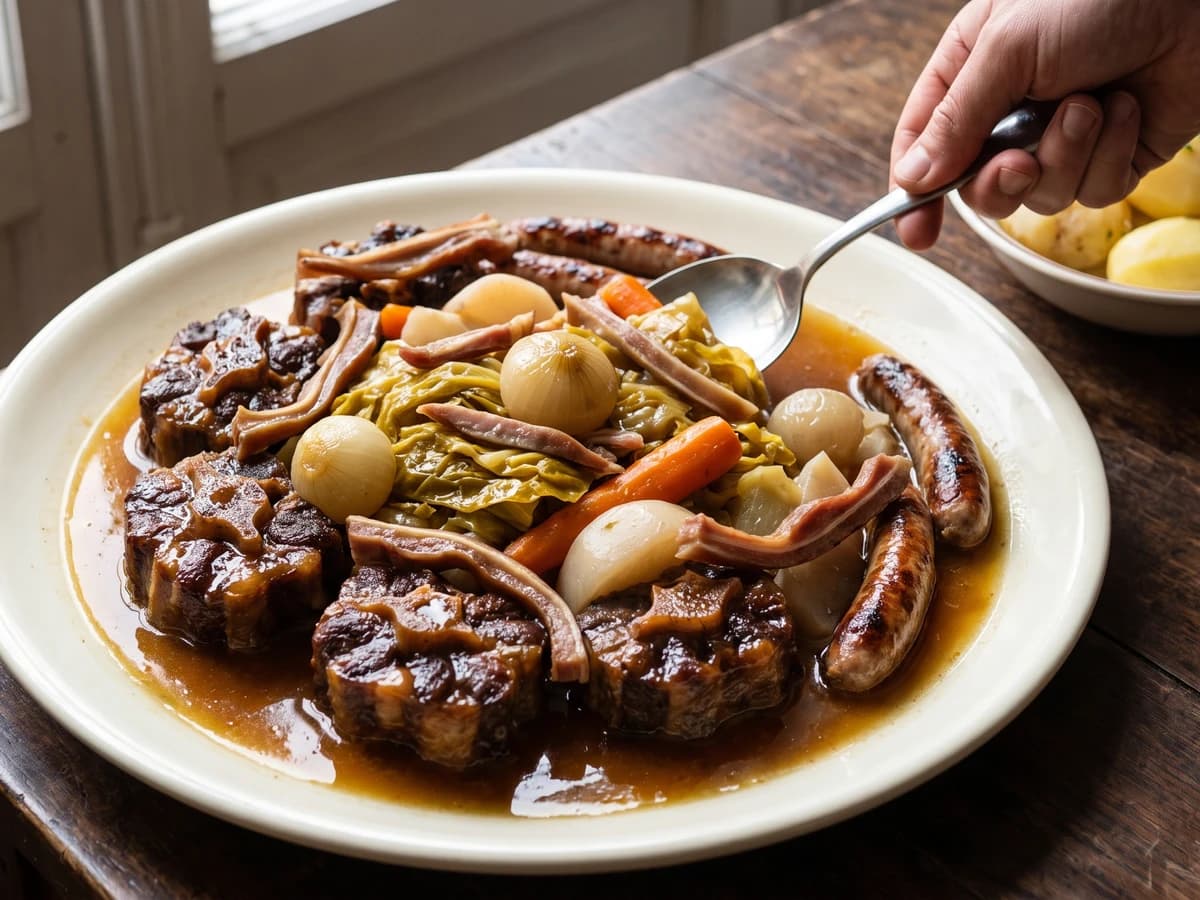
Queue de Bœuf en Hochepot gathers oxtail, pig's trotter and ear, cabbage, roots, and grilled chipolatas around a clear, gelatin-rich broth whose quiet simmer keeps every piece tender and distinct.
Chef Juliette
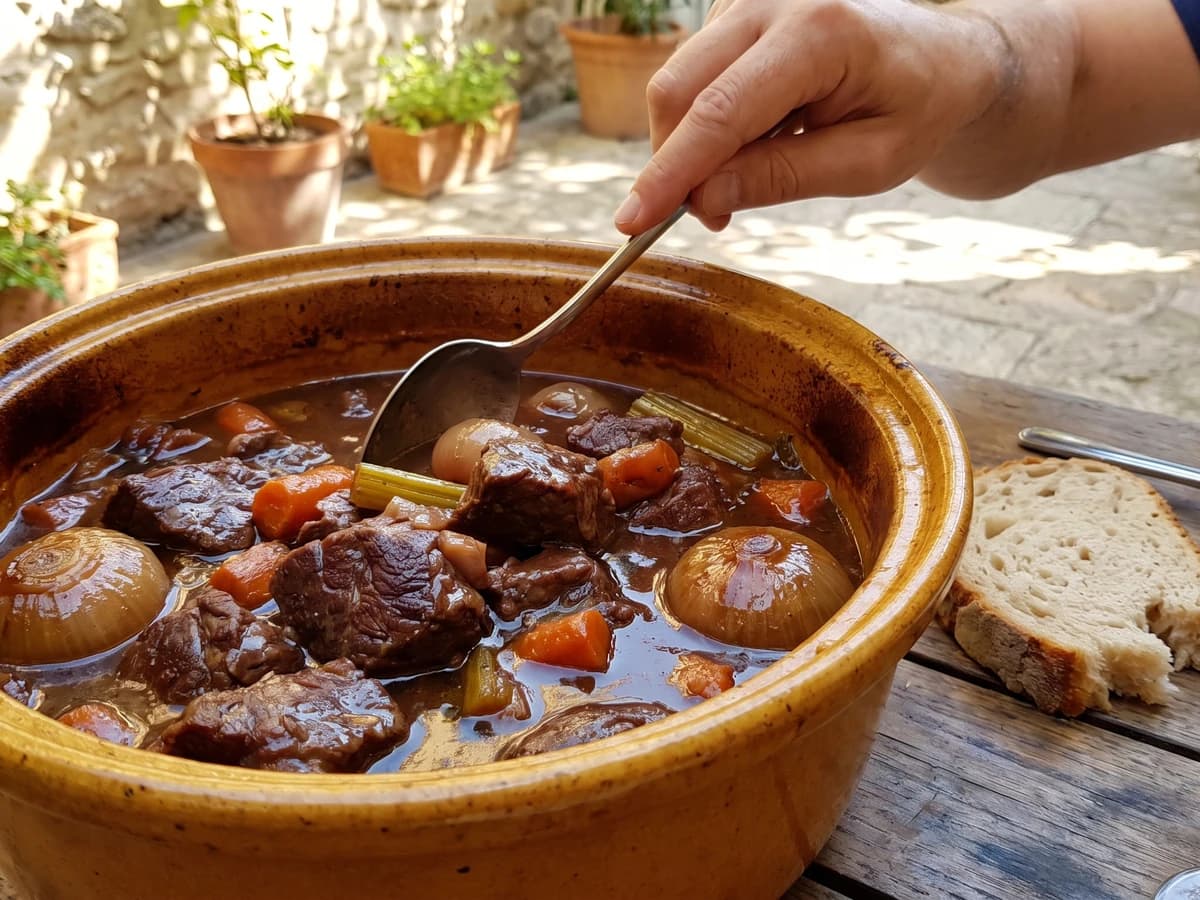
Beef shoulder larded with bacon, sharpened by red wine and vinegar, then sealed with garlic, vegetables, and dry lemon peel until the low oven turns it yielding and the gravy darkly glossy.