Chef Juliette
Ordinary or White Consommé
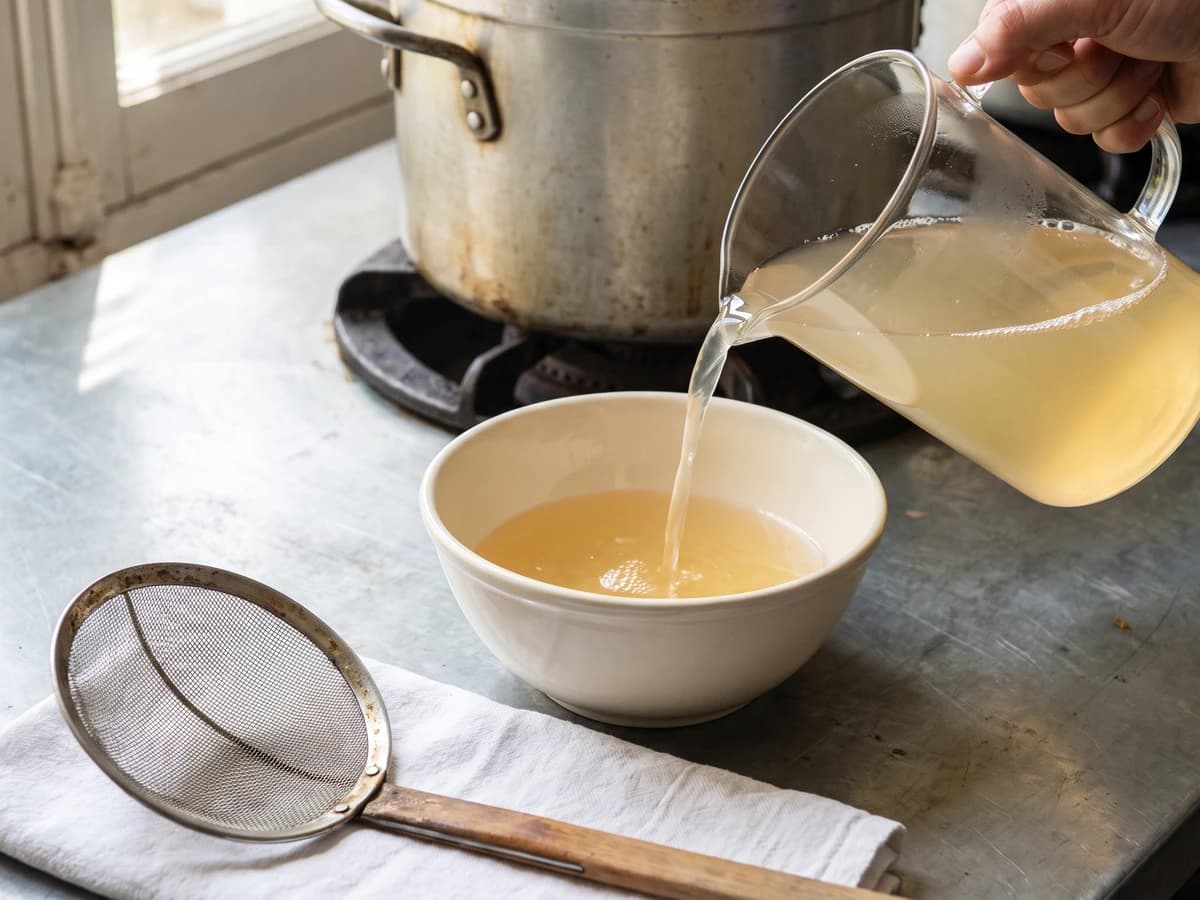
Beef shin, lean beef, and fowl begin in cold water and rise slowly toward a tremble. Skim before the boil, and you learn the quiet discipline that gives every clear French broth its backbone.
A cooking platform built around craft, culture, and the stories behind what we eat.
Created by Chef Juliette
Based on No. 69, Cardinal Sauce, from Le Guide Culinaire (1907) by Auguste Escoffier
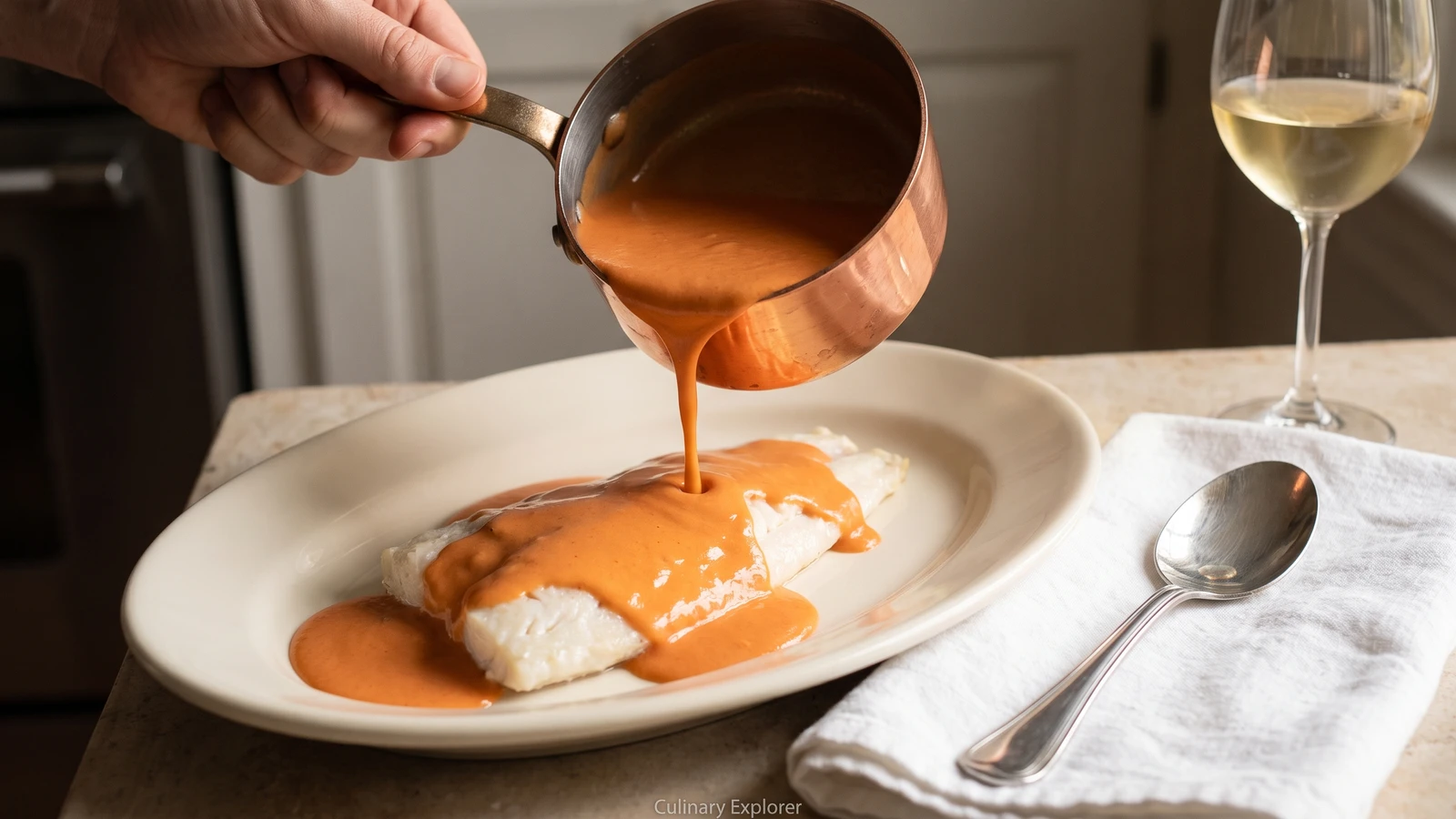
Cardinal Sauce teaches the final emulsion: Béchamel and fish fumet reduced to velvet, scented with truffle, then brightened off heat with cream and lobster butter until the sauce gleams cardinal red.
Sauce Cardinal (cardinal-red fish sauce) teaches the discipline of the last-minute finish. Béchamel and fish fumet can simmer and reduce, but the color, gloss, and delicate lobster flavor arrive only when cream and very red lobster butter enter at service. Know one thing before touching the pan: once the lobster butter is in, the sauce must not boil.
The original entry assumed a saucier on staff, a fumet pot never off the fire, Béchamel ready by the stove, and Lobster Butter (No. 149) already worked and passed through a tammy in its own preparation. A home kitchen needs a wide heavy saucepan, a whisk, and those finished components measured before the flame is lit. No salamander belongs here. The brigade's constant mise en place is scaffolding; the two-to-one base ratio, the quarter reduction, and the off-heat finish are the dish, and they stay.
The book's formula is repeated in three identical units here, yielding about two quarts while preserving every proportion and the original sequence. It remains manageable by one cook, one stove, one evening. When right, Sauce Cardinal coats a spoon in a smooth coral-red veil, with fish and truffle beneath the lobster rather than shouting over it. Your decisive step is simple: take the pan off the heat before the Lobster Butter (No. 149) goes in.
Sauce Cardinal belongs to the Parisian classical sauce repertoire and to formal fish service, where Béchamel was lightened with fish fumet, scented with truffle, and glossed at the last moment with lobster butter. Its name describes color, not ecclesiastical origin: the cardinal red comes from lobster coral and shell pigments carried in the butter, with no tomato required. Passed from the saucier's station to bourgeois dining tables, it was poured generously over poached or baked fish and shellfish.
Quantity
6 cups (1.42 L / 1.45 kg)
Quantity
3 cups (710 ml / 710 g)
Quantity
2 teaspoons (10 ml / 10 g)
preferably strained juice from preserved black truffles
Quantity
9 tablespoons (135 ml / 135 g)
cold, divided
Quantity
1⅛ cups (270 ml / 255 g) Lobster Butter (No. 149)
cold, cut into small pieces
| Ingredient | Quantity |
|---|---|
| finished Béchamel | 6 cups (1.42 L / 1.45 kg) |
| finished fish fumet | 3 cups (710 ml / 710 g) |
| truffle essencepreferably strained juice from preserved black truffles | 2 teaspoons (10 ml / 10 g) |
| heavy creamcold, divided | 9 tablespoons (135 ml / 135 g) |
| very red Lobster Buttercold, cut into small pieces | 1⅛ cups (270 ml / 255 g) Lobster Butter (No. 149) |
Mise en place, the measured setup, matters because the finish moves quickly. Keep the cream and Lobster Butter (No. 149) cold. Put the Béchamel in a wide, heavy saucepan, then whisk in the fish fumet gradually so the two foundations meet without lumps. Whisk in the truffle essence. You should have 9 cups of sauce before reduction.
Set the pan over medium heat and bring the sauce to a controlled boil, whisking across the entire pan floor. Once bubbles break steadily over the surface, lower the heat to maintain a brisk simmer. Scrape the bottom and corners frequently with a heatproof spatula; milk sauces catch where a whisk misses. If you smell scorching, do not scrape the dark layer into the sauce. Pour the unburned portion immediately into a clean saucepan and continue.
Simmer until the original 9 cups have reduced to 6¾ cups, about 25 to 35 minutes depending on the width of the pan. Measure the volume in a heatproof jug near the end rather than trusting the clock. The sauce should coat a spoon lightly but still flow freely, since the butter will give it further body. If small lumps remain, pass the sauce through a fine-mesh sieve now, before the cream and butter enter.
Reserve 1 tablespoon of the cold cream for insurance. Whisk the remaining cream into the reduced sauce over low heat and bring it only to a gentle quiver, then remove the pan completely from the heat. Monter au beurre, finishing by whisking in butter, is the step that decides the sauce: add the Lobster Butter (No. 149) two or three pieces at a time, whisking until each addition disappears before adding more. Never boil it now. If oily beads appear, stop. Ça se rattrape: put the reserved cold cream in a clean warm bowl and whisk in the broken sauce one spoonful at a time until smooth, then incorporate the rest and any remaining butter away from the heat. If the sauce stays smooth, whisk in the reserved cream at the end.
Taste before adding any seasoning, since the Béchamel, fumet, and lobster butter may already carry all the salt the reduced sauce needs. Ladle about ¼ cup over each portion of hot poached or baked fish and serve immediately. If the sauce must wait, hold it over warm water for no more than 20 minutes and whisk occasionally; never return it to a boil. The red gloss belongs on the fish, not hidden in a sauceboat. À table!
1 serving (about 65g)
Culinary guides, cultural storytelling, and the editorial depth that makes cooking meaningful.
Discover Culinary ExplorerChef Juliette
Beef shin, lean beef, and fowl begin in cold water and rise slowly toward a tremble. Skim before the boil, and you learn the quiet discipline that gives every clear French broth its backbone.
Chef Juliette
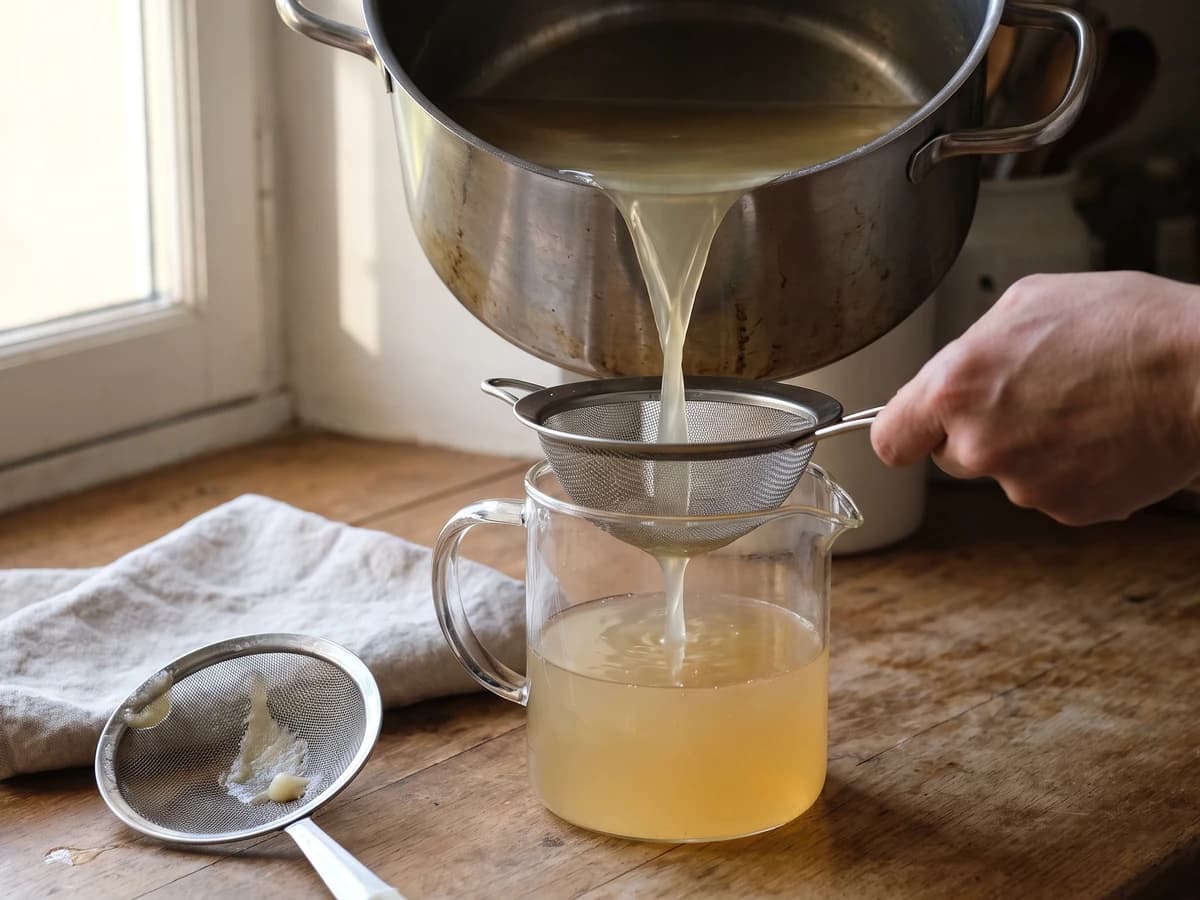
Break the veal bones small, then give them eight hours at a bare tremble. This pale, gelatinous fond becomes the quiet foundation beneath velouté, blanquette, and every sauce that must stay light.
Chef Juliette
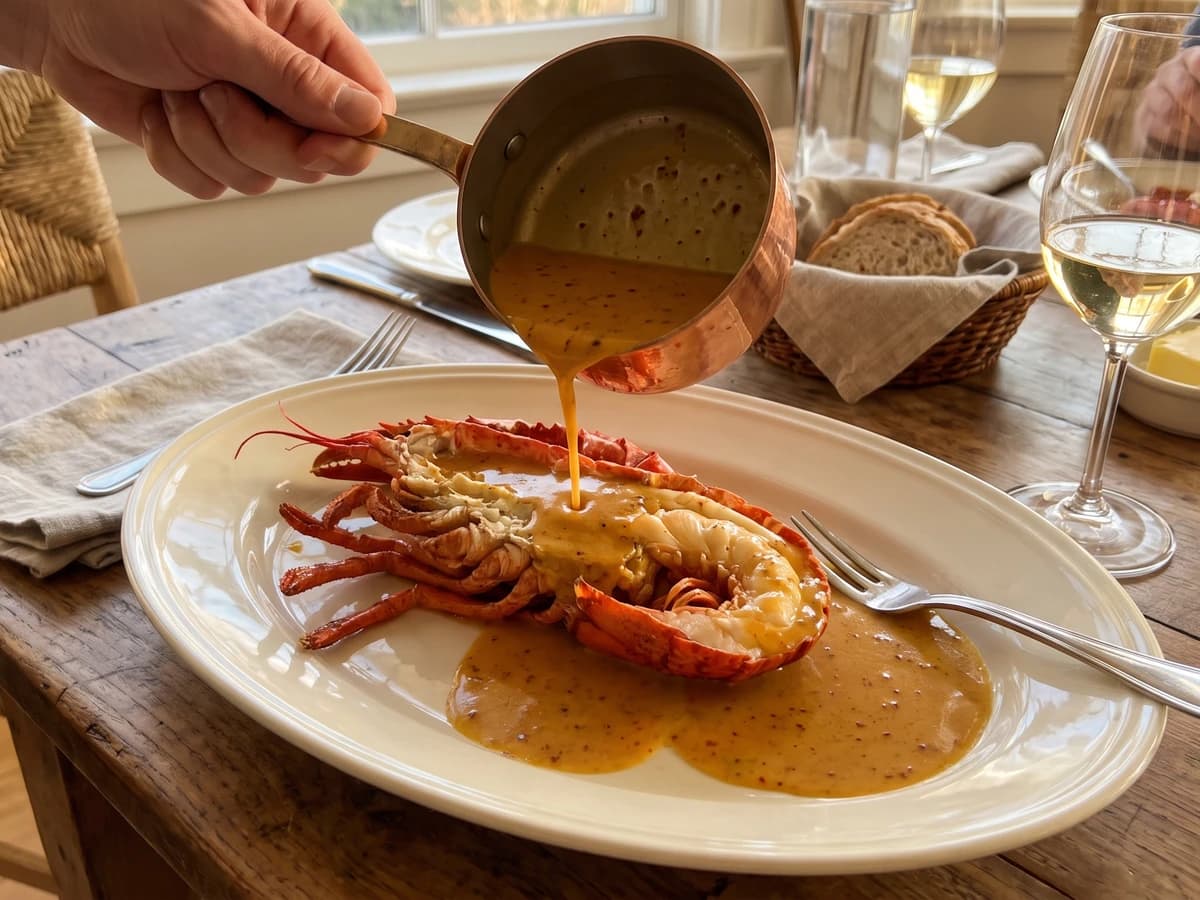
Sauce Orientale concentrates lobster-rich American Sauce with curry, then folds in cream away from the fire: a glossy, gently spiced derivative made for lobster, crayfish, and firm fish.
Chef Juliette
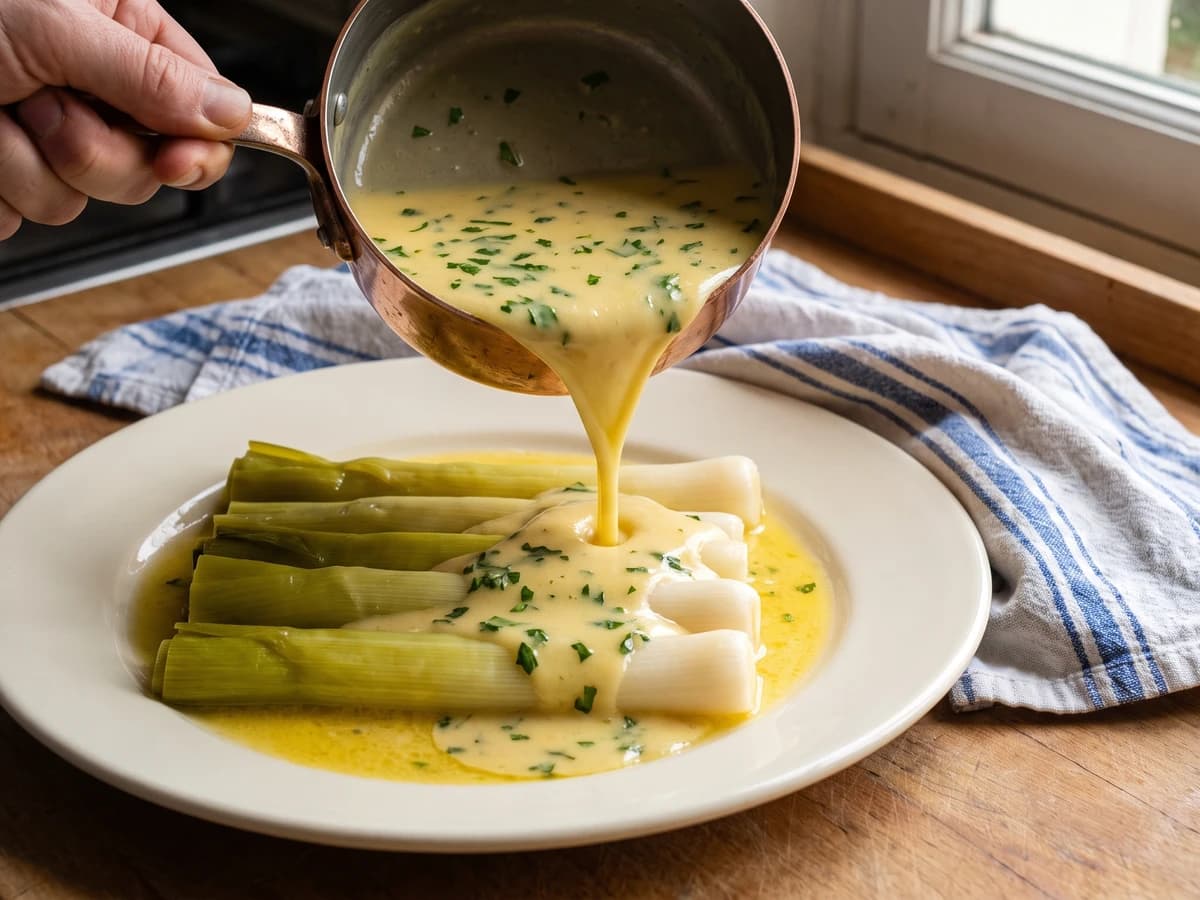
An old lesson in sauce families: Sauce Allemande takes mushroom liquor, then butter, lemon, and parsley, becoming a glossy Poulette for sheep's trotters, leeks, cauliflower, and anything needing gentle richness with a bright edge.