Chef Juliette
Ordinary or White Consommé
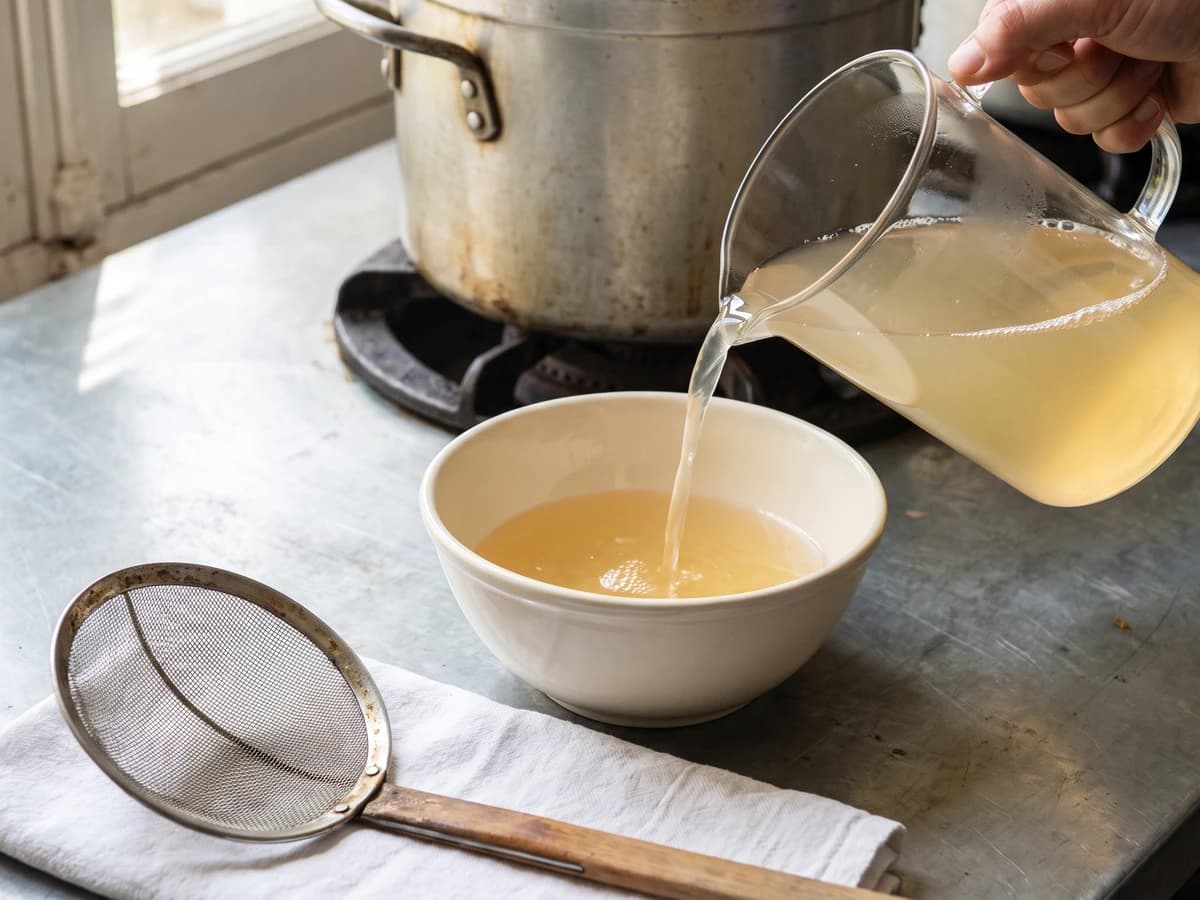
Beef shin, lean beef, and fowl begin in cold water and rise slowly toward a tremble. Skim before the boil, and you learn the quiet discipline that gives every clear French broth its backbone.
A cooking platform built around craft, culture, and the stories behind what we eat.
Created by Chef Juliette
Based on No. 68, Caper Sauce, from Le Guide Culinaire (1907) by Auguste Escoffier
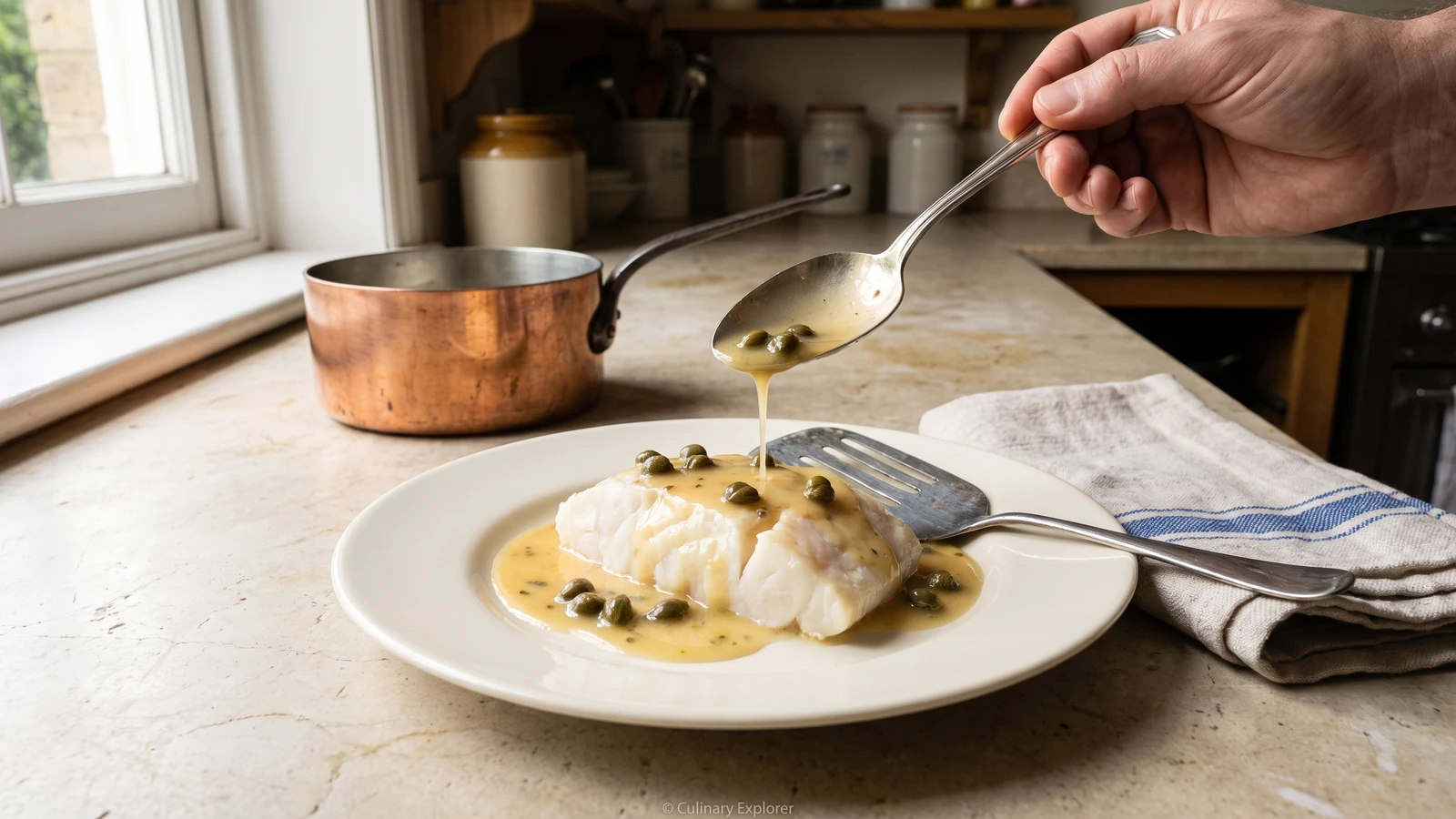
Sauce aux Câpres turns finished Butter Sauce (No. 66) into the classical companion for gently boiled fish, with whole capers for brightness and one inviolable rule: keep the bound sauce below a boil.
Sauce aux Câpres (caper sauce) teaches the discipline behind every sauce held by a liaison (an egg-and-butter binding): once it is smooth, gentle heat keeps it smooth. The capers bring sharp, briny points through the rich, lemon-touched base, but the one true thing to know before touching a pan is this: the capers are not the danger. Boiling is.
The book's kitchen assumed a saucier with Butter Sauce (No. 66) ready in quantity, then measured capers into each pint at service. It called for no stock and no salamander, so the home version invents neither; a heavy saucepan and a low burner handle about two quarts, with the exact ratio preserved as eight tablespoons of capers. The brigade's continuous holding and last-minute portioning are scaffolding and can go, while the caper ratio and no-boil discipline are the dish and must stay. One cook, one stove, one evening.
Any tammy work belongs to the preparation of Butter Sauce (No. 66), not this derivative; here a fine-mesh sieve waits only for rescue. Fold in the capers and the sauce stays ivory-gold, glossy with butter, and generous enough to pool around a piece of gently cooked fish. Holding it just below a boil after the capers enter is the step that decides the result.
Sauce aux Câpres belongs to the Parisian classical sauce repertoire, where derivatives allowed one finished base to serve several dishes without sending the saucier back to the beginning. It traveled from grand kitchens to bourgeois tables as a familiar companion to gently boiled fish, its capers cutting through the richness without changing the sauce's smooth body. It is often mistaken for melted butter sharpened with capers, but this formula is specifically Butter Sauce (No. 66) finished with two spoonfuls of capers to each pint.
Quantity
8 cups (1.9 L / approximately 1.9 kg) Butter Sauce (No. 66)
warm and freshly finished
Quantity
8 tablespoons (½ cup / 120 ml / 70 g)
drained
Quantity
1 tablespoon (15 ml / 15 g)
for rescuing the sauce if needed
| Ingredient | Quantity |
|---|---|
| Butter Saucewarm and freshly finished | 8 cups (1.9 L / approximately 1.9 kg) Butter Sauce (No. 66) |
| brined capersdrained | 8 tablespoons (½ cup / 120 ml / 70 g) |
| cold water (optional)for rescuing the sauce if needed | 1 tablespoon (15 ml / 15 g) |
Drain the capers well and taste one. If it is aggressively vinegared, rinse the capers briefly under cold water and dry them; otherwise leave their seasoning intact. Keep them whole so each spoonful of sauce carries distinct little bursts of acidity rather than a muddy, chopped saltiness.
Set the freshly finished Butter Sauce (No. 66) in a 3-quart heavy-bottomed saucepan over the lowest heat. Stir slowly with a flexible spatula until it flows smoothly and reaches roughly 65 to 70°C (150 to 160°F). It should gleam and loosen without bubbling; if bubbles appear at the edge, lift the pan from the burner at once.
Add all eight tablespoons of capers to the eight cups of sauce, preserving the book's exact proportion of two tablespoons per pint. Fold gently for one to two minutes, just until the capers are hot and evenly carried through the sauce. Do not reduce it. The finished base already has its proper body, and extra cooking only threatens the liaison.
If the fish needs a few more minutes, hold the sauce in a bain-marie (warm-water bath), never over direct heat. If the surface turns grainy or beads of butter gather around the rim, remove it from the heat immediately. Ça se rattrape: put the cold water in a clean bowl, whisk in one ladleful of sauce until smooth, then whisk in the remainder gradually. If visible yolk curds remain, pass the rescued sauce through a fine-mesh sieve and keep it over the warm-water bath.
Taste before serving, remembering that capers vary greatly in salt and acidity. Spoon the Sauce aux Câpres generously over gently boiled or poached fish just before it reaches the table, letting the sauce pool around the flesh rather than hiding it completely. Serve at once. À table!
1 serving (about 62g)
Culinary guides, cultural storytelling, and the editorial depth that makes cooking meaningful.
Discover Culinary ExplorerChef Juliette
Beef shin, lean beef, and fowl begin in cold water and rise slowly toward a tremble. Skim before the boil, and you learn the quiet discipline that gives every clear French broth its backbone.
Chef Juliette
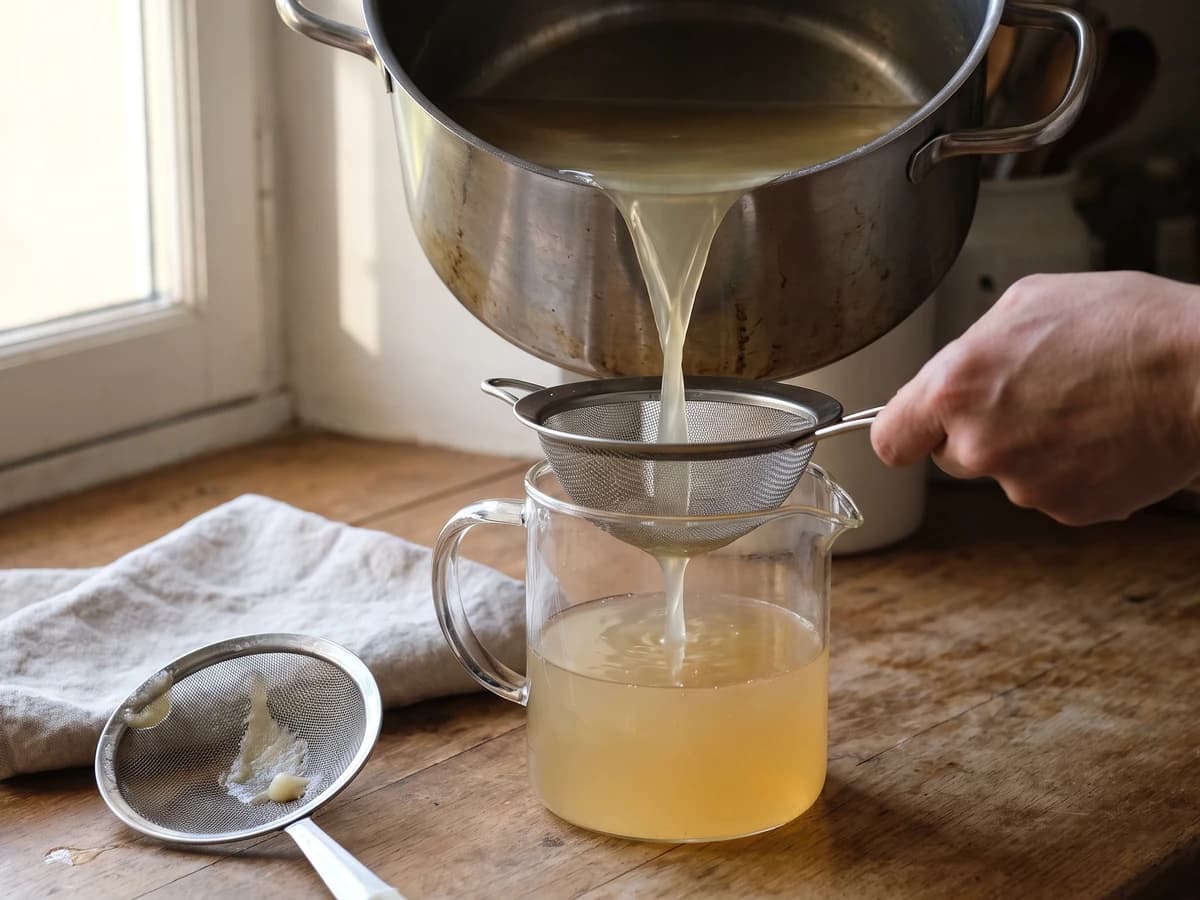
Break the veal bones small, then give them eight hours at a bare tremble. This pale, gelatinous fond becomes the quiet foundation beneath velouté, blanquette, and every sauce that must stay light.
Chef Juliette
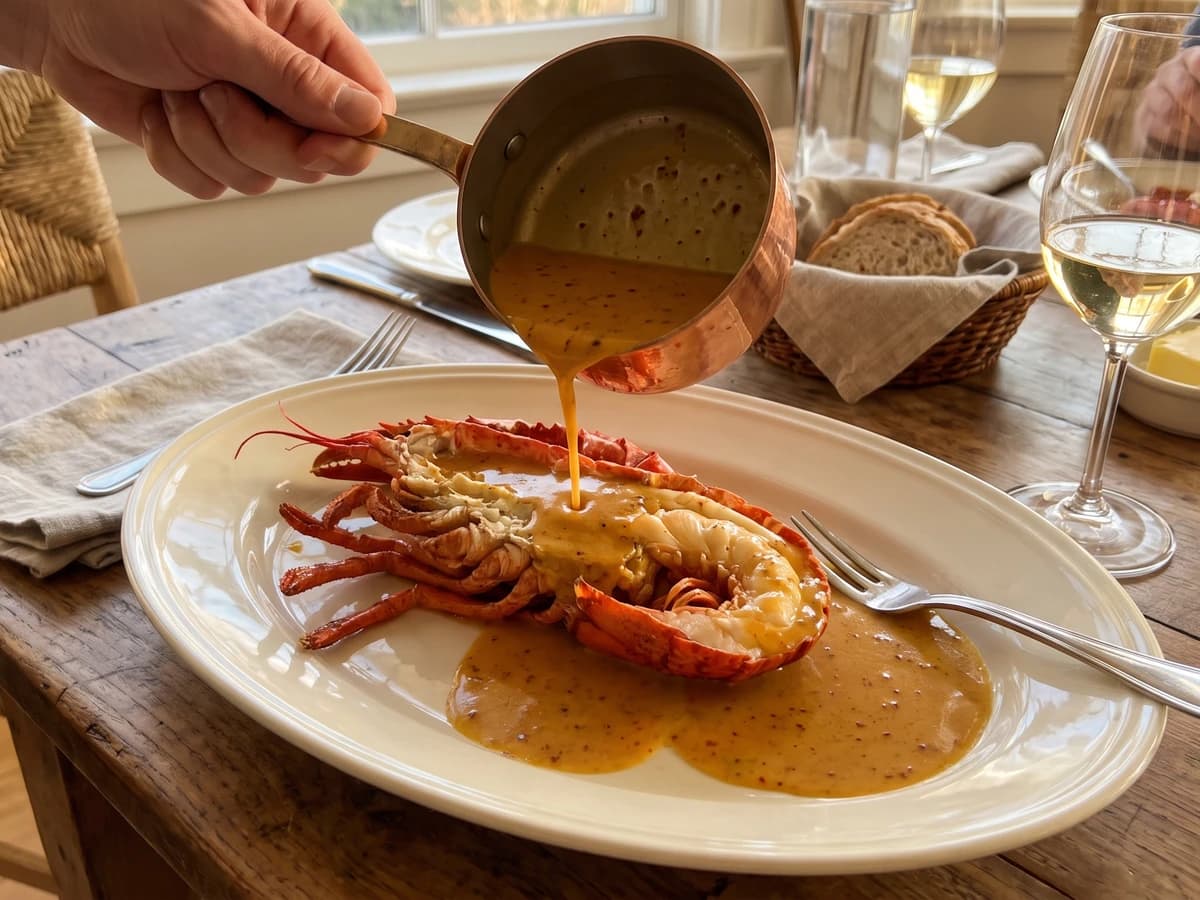
Sauce Orientale concentrates lobster-rich American Sauce with curry, then folds in cream away from the fire: a glossy, gently spiced derivative made for lobster, crayfish, and firm fish.
Chef Juliette
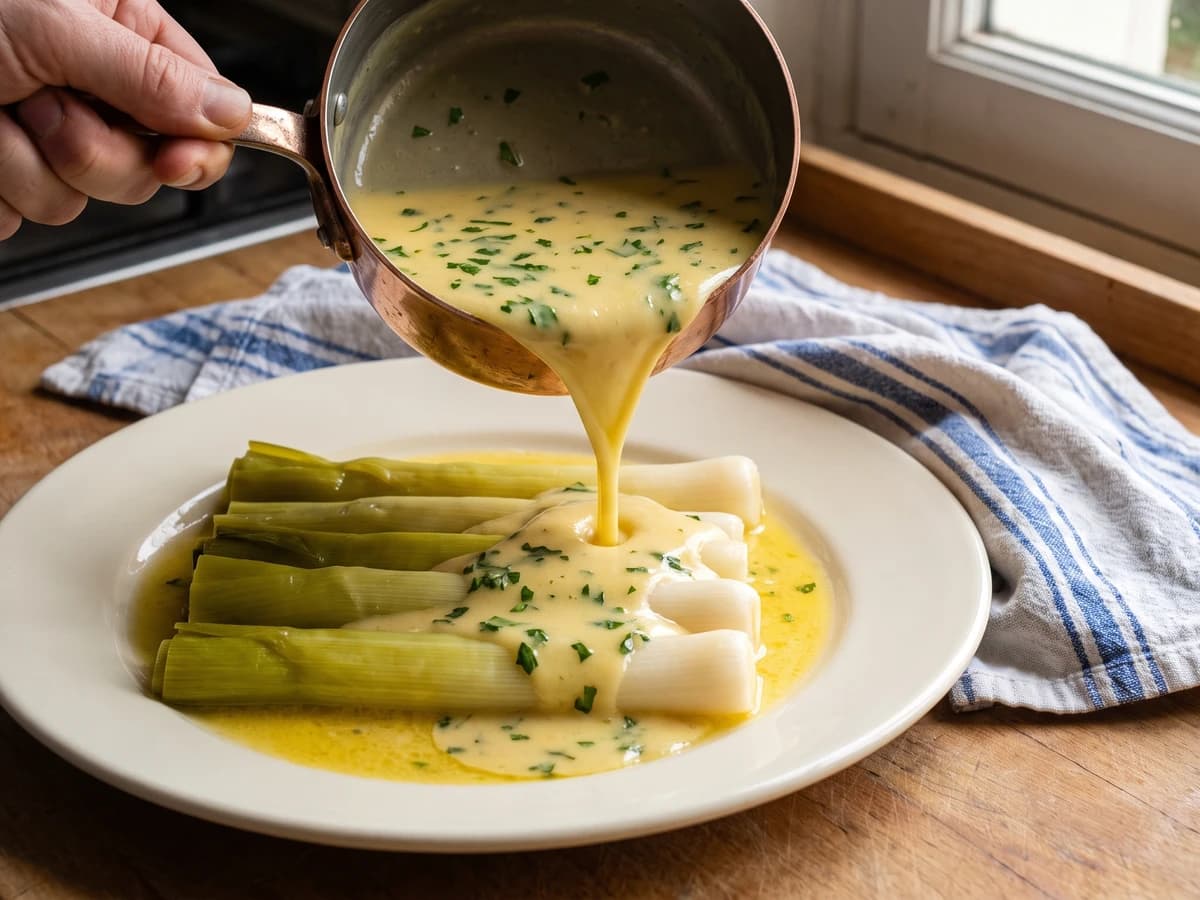
An old lesson in sauce families: Sauce Allemande takes mushroom liquor, then butter, lemon, and parsley, becoming a glossy Poulette for sheep's trotters, leeks, cauliflower, and anything needing gentle richness with a bright edge.