Chef Juliette
Bouillabaisse à la Marseillaise
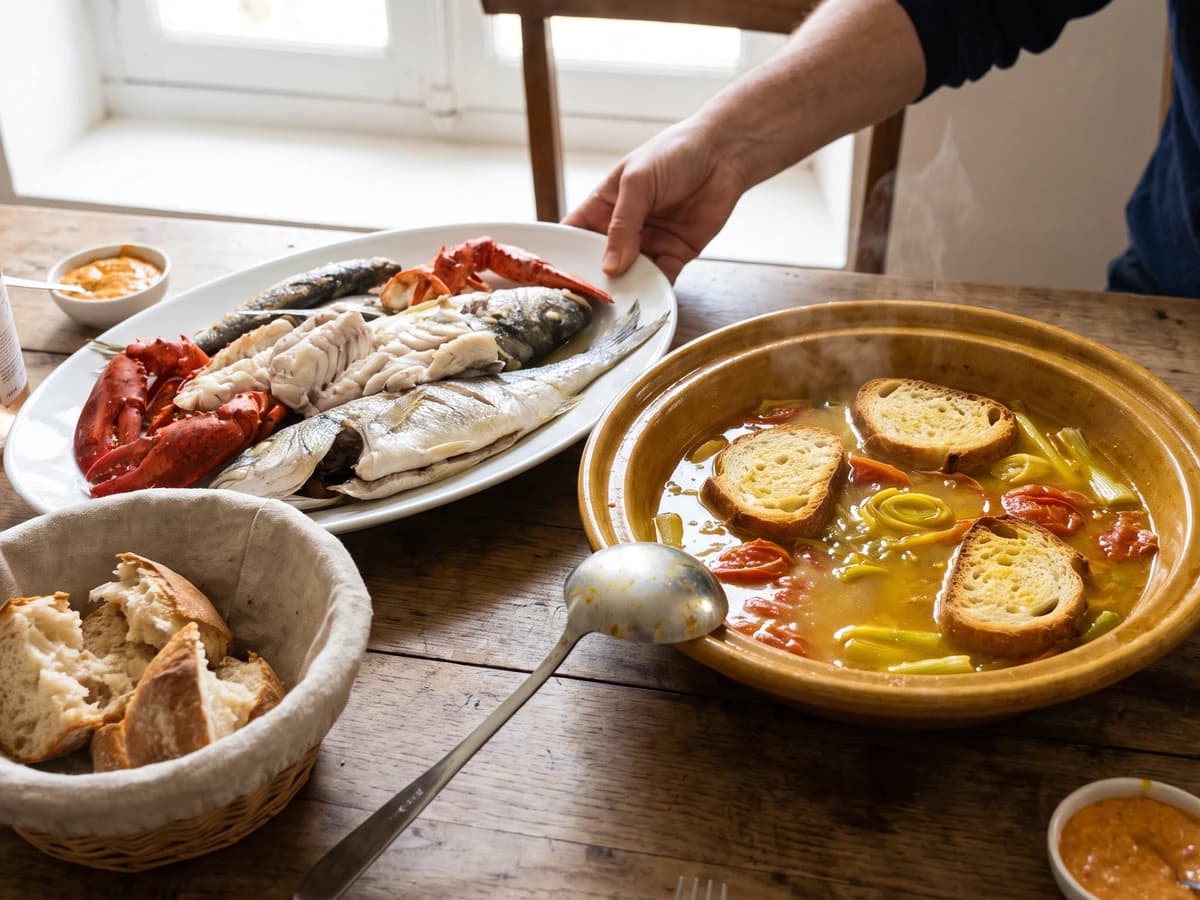
Marseille's great fish stew, saffron-gold and garlic-scented, proves that a hard boil can be the careful choice: it binds olive oil into broth before the whole pot meets bread.
A cooking platform built around craft, culture, and the stories behind what we eat.
Created by Chef Juliette
Based on No. 669, Coulis de Perdreau à la Purée de Marrons, otherwise à la Mancelle, from Le Guide Culinaire (1907) by Auguste Escoffier
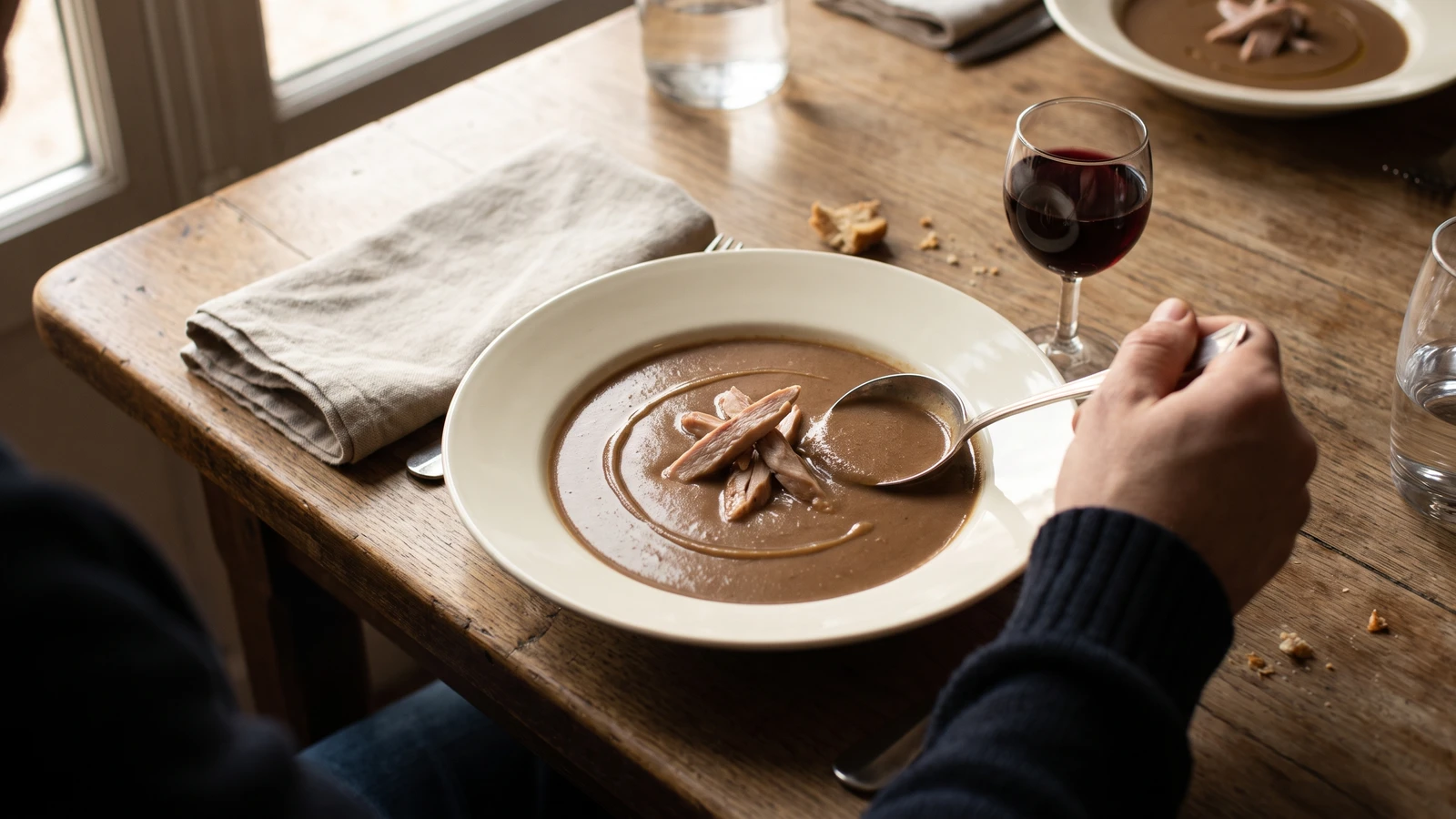
A silken Le Mans coulis where butter-poëled partridge and sweet chestnuts become one deep autumn broth, passed fine, brightened with cayenne, and finished with fillets cut julienne-fashion.
Coulis de Perdreau à la Purée de Marrons, dit à la Mancelle (partridge and chestnut coulis), teaches the difference between puréeing and refining. A machine can make chestnuts and game small, but only the sieve makes them one silken thing. That is the truth to know before touching the pan: the passing is not decoration after the cooking. It is the dish.
The original assumed a saucier on staff, clear stocks never off the fire, a great mortar in which bird, carcass, and chestnuts could be pounded together, and a tammy broad enough to receive the result. At home, the boned meat and chestnuts go through a food processor, the carcasses give up their flavor in a short extraction, and a fine-mesh sieve replaces the tammy. We do not put cooked bones into a household blender. That change protects the cook and the machine, not the flavor. One cook, one stove, one evening.
The separate poëling remains whole because cooking the partridge in butter and keeping its liquor are part of the dish, not brigade scaffolding. What can go is the hour of mortar work and the extra pair of hands at the sieve. Keep the chestnuts gentle, preserve every drop of the bird's liquor, and pass the coulis patiently. The sieve is the step that matters most.
The title à la Mancelle anchors this coulis to Le Mans and the old province of Maine, where chestnuts were paired with poultry and feathered game at prosperous autumn tables. In classical French soup-making, coulis meant meat or vegetables pounded and passed into a concentrated soup, not the uncooked fruit sauce the word often names elsewhere. The regional marriage of game and chestnuts traveled into the grand kitchen, where clear stock, repeated straining, and a final mounting with butter gave it ceremonial polish without changing its country logic.
Quantity
8 cups (1.9 L / 1.9 kg)
for blanching
Quantity
30 nuts (about 1¼ lb / 570 g in shell)
shells split
Quantity
6¾ cups (1.6 L / 1.6 kg)
divided
Quantity
⅔ medium stalk, about ⅓ cup (80 ml / 35 g)
very finely minced
Quantity
2 cubes, about 2 teaspoons (10 ml / 8 g)
Quantity
2 whole birds (about 2 lb / 900 g total), prepared as Poëlings (No. 250)
all poëling liquor reserved
Quantity
1¼ cups (300 ml / 300 g)
Quantity
Scant ⅛ teaspoon (0.6 ml / 0.25 g)
Quantity
6 tablespoons (90 ml / 85 g)
cubed
Quantity
As needed
| Ingredient | Quantity |
|---|---|
| waterfor blanching | 8 cups (1.9 L / 1.9 kg) |
| fresh chestnutsshells split | 30 nuts (about 1¼ lb / 570 g in shell) |
| hot white consommédivided | 6¾ cups (1.6 L / 1.6 kg) |
| celery stalkvery finely minced | ⅔ medium stalk, about ⅓ cup (80 ml / 35 g) |
| sugar cubes | 2 cubes, about 2 teaspoons (10 ml / 8 g) |
| whole oven-ready partridges with poëling liquorall poëling liquor reserved | 2 whole birds (about 2 lb / 900 g total), prepared as Poëlings (No. 250) |
| very clear game stock | 1¼ cups (300 ml / 300 g) |
| cayenne pepper | Scant ⅛ teaspoon (0.6 ml / 0.25 g) |
| cold unsalted buttercubed | 6 tablespoons (90 ml / 85 g) |
| fine sea salt (optional) | As needed |
Bring the water to a full boil. Split each chestnut shell deeply enough to pierce the shell and inner skin without cutting the nut in half, then boil the chestnuts for exactly 5 minutes. Keep them in the hot water and remove only three or four at a time, shelling and peeling them while they are still almost too hot to hold. If the inner skins cling, return those nuts to the hot water for another minute. Ça se rattrape. Cold chestnuts are stubborn chestnuts.
Put the peeled chestnuts into a heavy saucepan with 2½ cups (590 ml) of the white consommé, the minced celery, and the sugar cubes. Bring to the barest simmer, cover partly, and cook for 25 to 35 minutes, until a chestnut collapses under the back of a spoon. Keep the heat gentle because the sugar and chestnut starch catch easily. If the pan dries before the nuts soften, add reserved consommé by the ladleful; browned chestnut would muddy the finished coulis.
Begin with the partridges and their liquor already prepared according to Poëlings (No. 250). Lift off the breast fillets intact and keep them covered for the garnish. Strip every scrap of remaining meat from the legs and frame, checking carefully for shot if the birds are wild, then break each carcass into several pieces with poultry shears. Keep the meat, carcasses, and poëling liquor separate.
Put the broken carcasses into a small saucepan with all the reserved liquor from Poëlings (No. 250) and 1½ cups (355 ml) of the hot consommé. Hold it at a quiet simmer for 15 minutes, stirring once or twice so the liquor dissolves from the bones, but do not reduce it hard. Strain through a fine-mesh sieve and press the carcasses firmly with a ladle before discarding them. This short extraction is the safe home equivalent of pounding the carcasses into the purée.
Process the boned partridge meat with the cooked chestnuts, celery, their cooking liquor, and the strained carcass extract until no pieces remain. Transfer the mixture to a blender in batches, never filling the jar more than halfway with hot liquid, and add enough reserved consommé to make a thick but flowing purée. Vent the lid under a folded towel and blend until smooth. Press the purée through a clean fine-mesh sieve with the back of a ladle, scraping the smooth coulis from underneath. If it sits like paste and refuses to pass, loosen it with another ladleful of consommé. Ça se rattrape. Do not mistake a powerful blender for the sieve; the sieve removes fibers and any minute bone fragments.
Combine the sieved purée with the very clear game stock in a clean saucepan. Bring it just to the boil while stirring along the pan floor, then immediately lower the heat and pass it once more through the cleaned sieve. Add enough remaining consommé to bring the yield to about 2 quarts. The coulis should pour in a broad ribbon and lightly coat a spoon. If it is thin, simmer it gently before the butter goes in; if it is too thick, loosen it with consommé.
Return the coulis to low heat and add the cayenne. Taste before reaching for salt because both stocks may already carry enough. Take the pan completely off the heat, then whisk in the cold butter a few cubes at a time until the surface gleams and the soup feels round on the tongue. Do not boil it after the butter enters. If the butter separates into yellow beads, pour the coulis into a cooler bowl and whisk in a tablespoon of cool consommé until it gathers again. We don't apologize for butter, and we don't abandon it either.
Cut the reserved breast fillets julienne-fashion, into short match-shaped strips. If they have cooled, warm them for 1 minute in a ladleful of coulis off the heat; simmering would toughen the lean meat. Divide the fillets among warmed soup bowls, ladle the coulis around them, and serve at once while its butter gloss is intact. À table!
1 serving (about 240g)
Culinary guides, cultural storytelling, and the editorial depth that makes cooking meaningful.
Discover Culinary ExplorerChef Juliette
Marseille's great fish stew, saffron-gold and garlic-scented, proves that a hard boil can be the careful choice: it binds olive oil into broth before the whole pot meets bread.
Chef Juliette
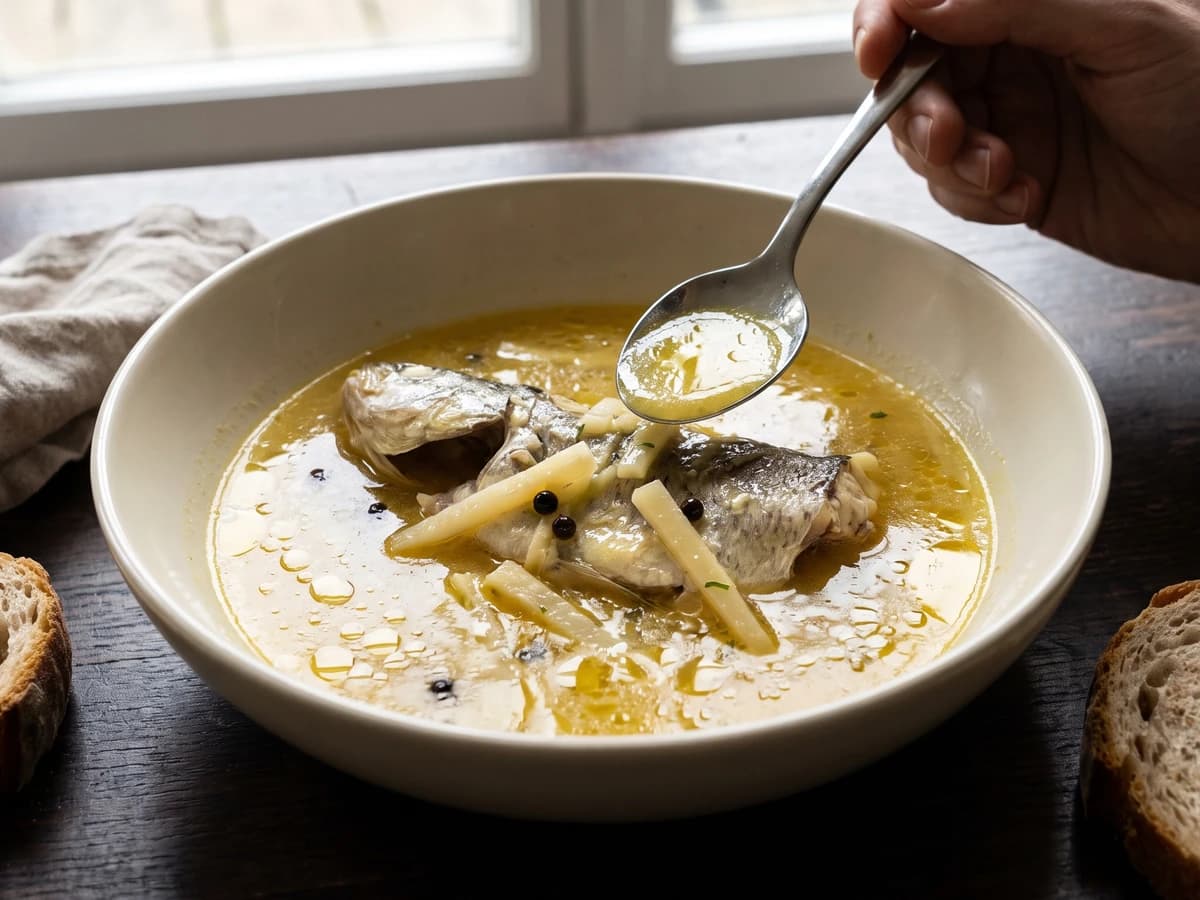
Waterzoi asks fresh, bone-in river fish to thicken its own buttery broth, with parsley root and pepper for company. No flour, no stockpot, just a brisk simmer watched closely.
Chef Juliette
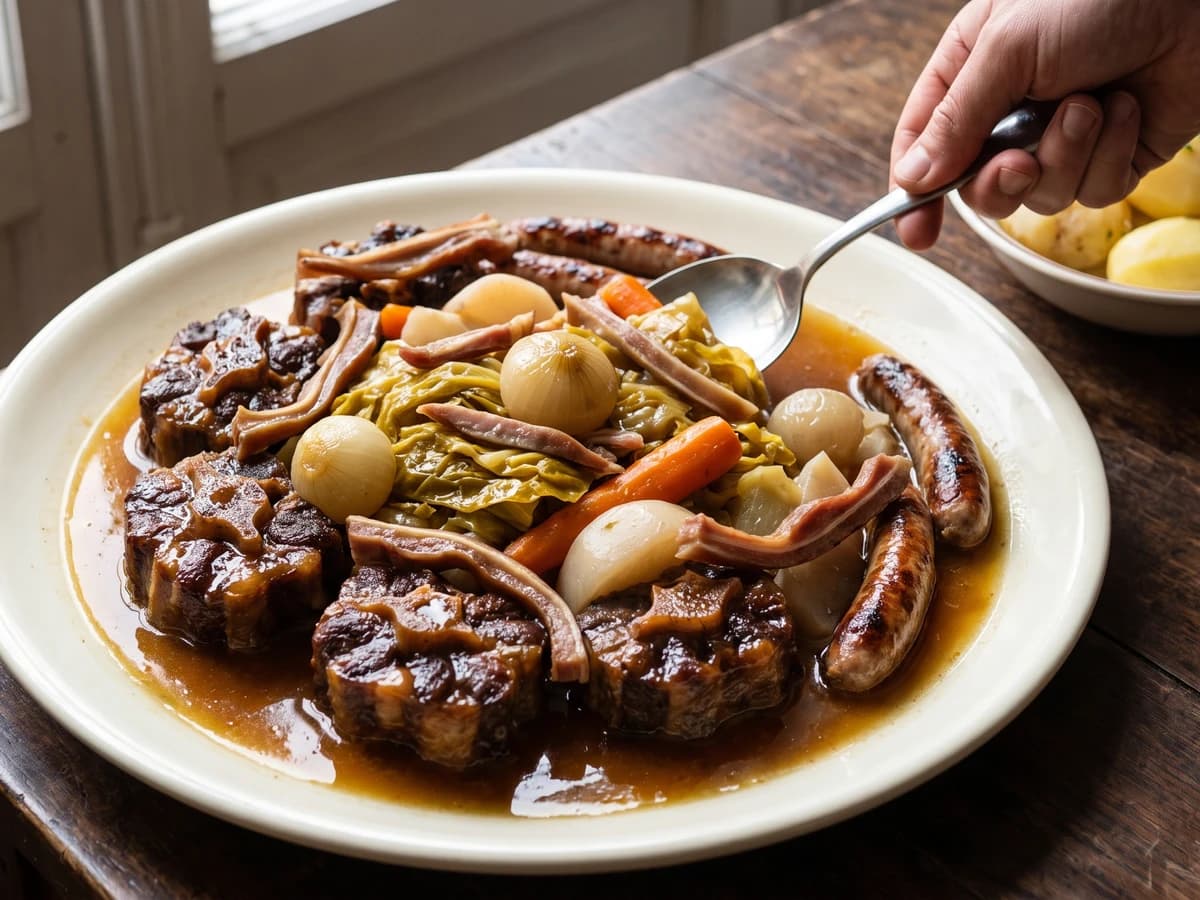
Queue de Bœuf en Hochepot gathers oxtail, pig's trotter and ear, cabbage, roots, and grilled chipolatas around a clear, gelatin-rich broth whose quiet simmer keeps every piece tender and distinct.
Chef Juliette
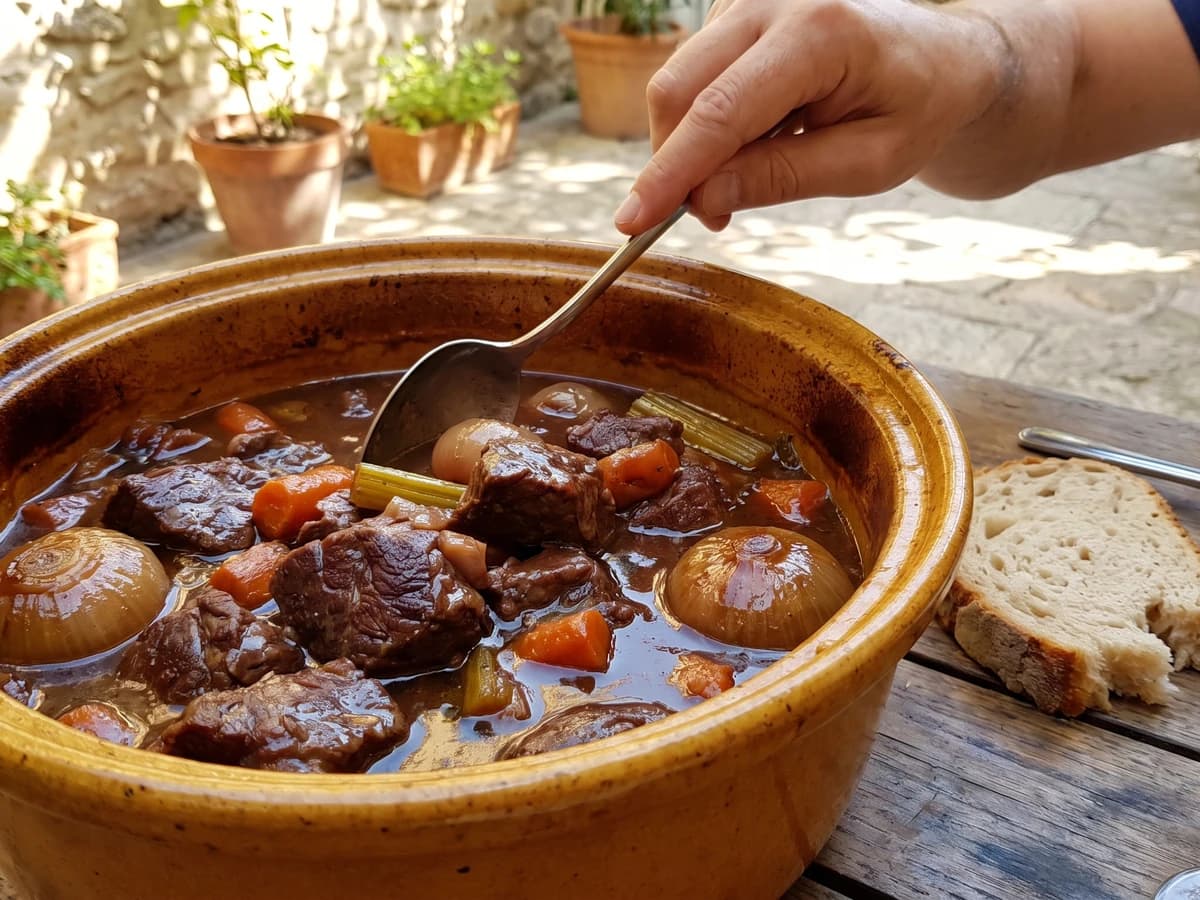
Beef shoulder larded with bacon, sharpened by red wine and vinegar, then sealed with garlic, vegetables, and dry lemon peel until the low oven turns it yielding and the gravy darkly glossy.