Chef Juliette
Bouillabaisse à la Marseillaise
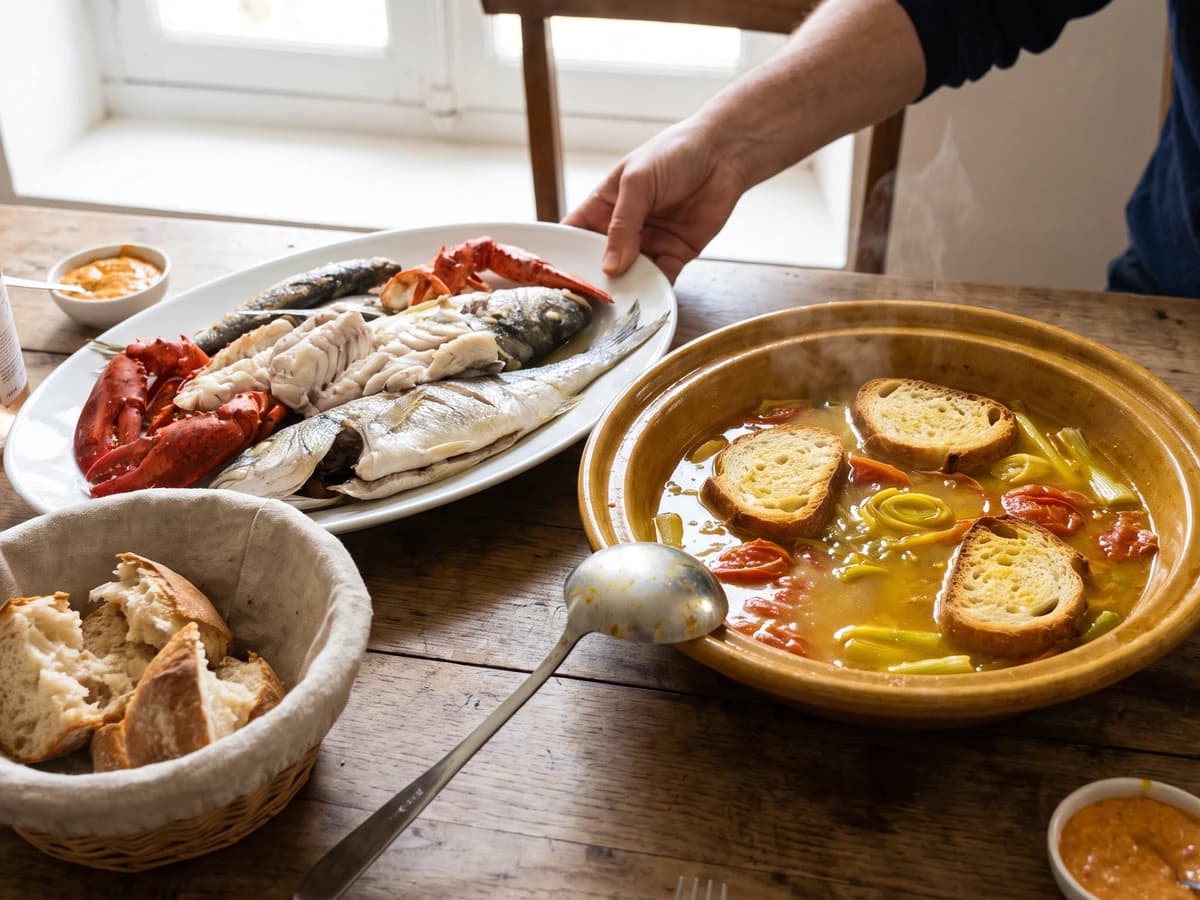
Marseille's great fish stew, saffron-gold and garlic-scented, proves that a hard boil can be the careful choice: it binds olive oil into broth before the whole pot meets bread.
A cooking platform built around craft, culture, and the stories behind what we eat.
Created by Chef Juliette
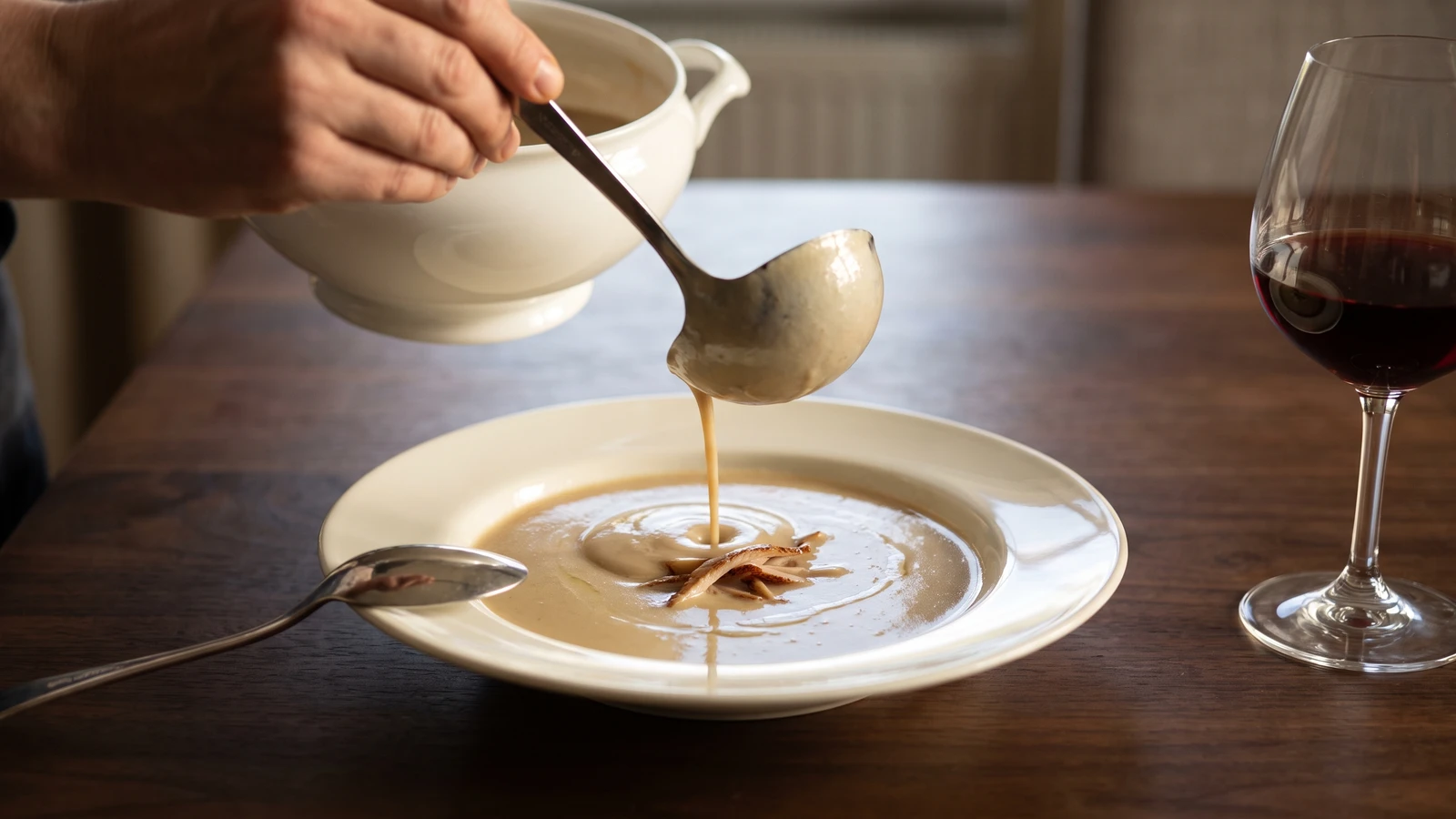
Based on No. 667, Coulis de Grouse ou de Gelinotte à l’Ancienne, from Le Guide Culinaire (1907) by Auguste Escoffier
Butter-browned grouse, white bread, juniper, and feathered-game consommé become a silken coulis through patient pounding and sieving, then cream and cold butter give the old formula its final gloss.
Coulis de Grouse ou de Gelinotte à l’Ancienne (old-style strained grouse or hazel-hen soup) teaches restraint in game cookery. Know this before you touch a pan: the legs and carcasses do not belong in the finished coulis. The source deliberately discards them, keeping the stronger, sometimes bitter parts of the bird from muddying a soup built on delicate breast meat, fried bread, and feathered-game consommé.
The original sends the cook to Coulis de Grives au Pain Noir, otherwise à l’Ardennaise (No. 666), assuming a saucier, consommé never off the fire, a mortar, and a tammy cloth. At home, a prepared game consommé, a strong blender, and a fine sieve do the same honest work. The mortar and the extra pair of hands are brigade scaffolding and can go. Browning the birds, frying ordinary white bread for the thickening, discarding the legs and carcasses, sieving twice, and finishing with real butter and cream are the dish, so every one stays.
The book’s two-bird quantity makes four concentrated first-course bowls, and I keep that scale rather than diluting it into a stockpot. Fry the bread evenly, then give the final sieve your patience. That sieve is the step that decides whether the coulis feels silken or merely thick.
This coulis belongs to the grand-kitchen game repertoire of Paris, supplied by grouse from northern game markets and gelinotte from the forested east, the Jura, and the Alpine country. Coulis once named a pounded and strained preparation before the word settled into its familiar place among sauces, and bread was a respected thickener for game soups long before flour-bound veloutés became the default. Unlike the related thrush preparation, this formula rejects the legs and carcasses, proof that classical thrift never meant extracting every bone regardless of taste.
Quantity
1 governing formula (No. 666)
applied with the grouse and white-bread substitutions below
Quantity
2 birds (about 1½ to 2 lb / 700 to 900 g total)
drawn, cleaned, and checked carefully for shot
Quantity
4 tablespoons (60 ml / 57 g)
divided
Quantity
3 cups (710 ml / 140 g)
cut into ½-inch / 1.25 cm dice
Quantity
2⅜ cups (570 ml / 570 g)
Quantity
2
Quantity
½ cup plus 2 teaspoons (140 ml / 140 g)
Quantity
5 tablespoons (75 ml / 71 g)
cut into small pieces
Quantity
¼ cup (60 ml / 60 g)
gently warmed
Quantity
½ teaspoon (2.5 ml / 3 g)
as needed
| Ingredient | Quantity |
|---|---|
| Coulis de Grives au Pain Noir, otherwise à l’Ardennaise, governing formulaapplied with the grouse and white-bread substitutions below | 1 governing formula (No. 666) |
| whole grouse or whole hazel-hensdrawn, cleaned, and checked carefully for shot | 2 birds (about 1½ to 2 lb / 700 to 900 g total) |
| unsalted butter for fryingdivided | 4 tablespoons (60 ml / 57 g) |
| stale plain white breadcut into ½-inch / 1.25 cm dice | 3 cups (710 ml / 140 g) |
| feathered-game consommé for cooking | 2⅜ cups (570 ml / 570 g) |
| juniper berries | 2 |
| feathered-game consommé for loosening | ½ cup plus 2 teaspoons (140 ml / 140 g) |
| cold unsalted butter for finishingcut into small pieces | 5 tablespoons (75 ml / 71 g) |
| heavy creamgently warmed | ¼ cup (60 ml / 60 g) |
| fine sea saltas needed | ½ teaspoon (2.5 ml / 3 g) |
Use Coulis de Grives au Pain Noir, otherwise à l’Ardennaise (No. 666) as the governing sequence: butter-fry the birds and bread, complete the birds’ cooking in feathered-game consommé, pound and sieve the bread liaison, add the second measure of consommé, boil and strain, then finish with butter and cream. For this variation, use two grouse or two hazel-hens, replace rye bread with ordinary white bread, and discard the legs and carcasses instead of pounding them.
Run clean fingers over every bird, paying close attention around the breast and wing joints, and remove any shot, feather stubs, or damaged flesh. Pat the birds thoroughly dry and season them lightly inside and out. Wet skin spits and stews in the butter; a dry bird takes the quiet bronze needed to flavor the consommé.
Melt half the frying butter in a heavy casserole over medium heat. Add the white-bread dice and turn them patiently until every face is butter-gold, about 5 minutes. The bread is the liaison, the thickening element, so even frying matters: pale bread makes a pasty coulis, while scorched crumbs make it bitter. If a few cubes darken too far, remove them now. Ça se rattrape.
Lift the fried bread onto a plate. Add the remaining frying butter to the casserole and brown the birds over medium-high heat, turning until the breasts and sides are a deep, even gold, about 7 minutes. Keep the heat lively enough for color but below the point where the butter solids blacken. If the butter begins to burn, move the birds to a plate, wipe out only the blackened fat, add a small fresh piece of butter, and continue.
Return the fried bread to the casserole, arranging it beneath and around the birds. Pour in the 2⅜ cups feathered-game consommé and bring it just to a simmer. Cover, lower the heat, and hold the liquid at a bare tremble until the thickest part of each breast reaches 165°F / 74°C, about 20 to 25 minutes. Turn the birds once and stir gently around them so the bread does not catch on the pot floor.
Lift the birds onto a board and let them stand until they can be handled. Remove the four breast fillets cleanly, cover them, and keep them warm. Discard the legs and carcasses exactly as the formula directs; do not scrape their dark meat or pound the bones into the soup. Cut the breast fillets across the grain into thin slices or a fine julienne and reserve them for the bowls.
Lightly crush the two juniper berries, add them to the cooked bread and broth, and transfer the mixture to a blender. Vent the lid, cover it with a folded towel, and blend in short batches until completely smooth. Press the purée through a fine-mesh sieve with a ladle or flexible scraper. If it sits stubbornly in the sieve, loosen it with a spoonful from the second measure of consommé and work in small batches. Do not abandon the sieve; this is where the coulis earns its texture.
Return the sieved purée to the clean casserole and whisk in the remaining consommé. Bring it to one full boil, stirring across the bottom so the bread cannot catch, then immediately pass it through the clean sieve once more. The coulis should pour in a broad ribbon and coat a spoon without sitting on it like paste. If it is too tight, add warm consommé a tablespoon at a time; if it is thin, simmer it briefly before the final straining.
Return the coulis to very gentle heat and stir in the warm cream. Remove the casserole from the heat, then whisk in the cold finishing butter a few pieces at a time until the surface turns satiny and the soup gains a soft gloss. Do not boil it again. If the butter separates into oily beads, whisk a tablespoon of warm consommé in a clean bowl and add the split coulis gradually. Ça se rattrape. Taste and add only as much salt as the consommé requires.
Divide the reserved grouse or hazel-hen fillets among four warmed soup plates. Ladle the coulis around and over them, leaving a little meat visible at the center. Serve immediately while the butter emulsion still gleams. Cooking well is not cooking fancy. À table!
1 serving (about 190g)
Culinary guides, cultural storytelling, and the editorial depth that makes cooking meaningful.
Discover Culinary ExplorerChef Juliette
Marseille's great fish stew, saffron-gold and garlic-scented, proves that a hard boil can be the careful choice: it binds olive oil into broth before the whole pot meets bread.
Chef Juliette
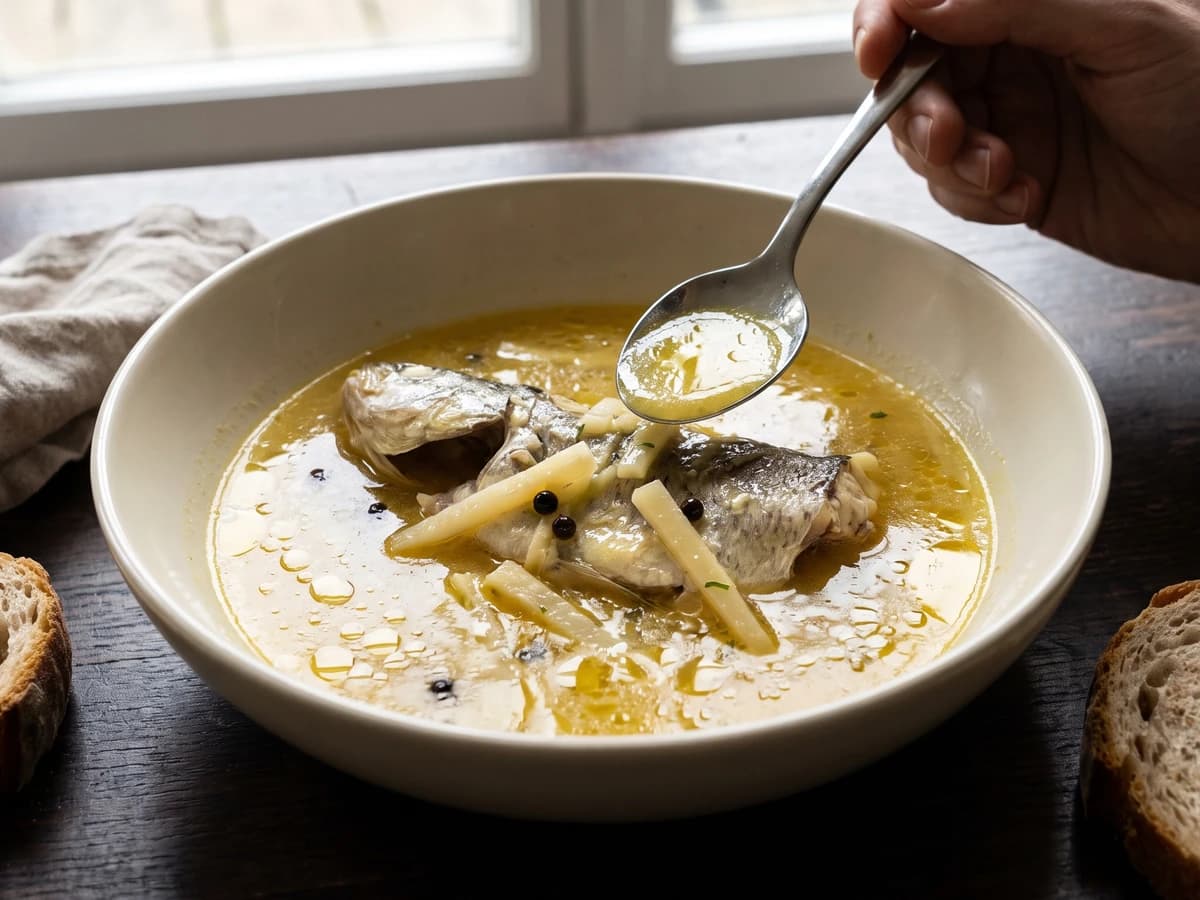
Waterzoi asks fresh, bone-in river fish to thicken its own buttery broth, with parsley root and pepper for company. No flour, no stockpot, just a brisk simmer watched closely.
Chef Juliette
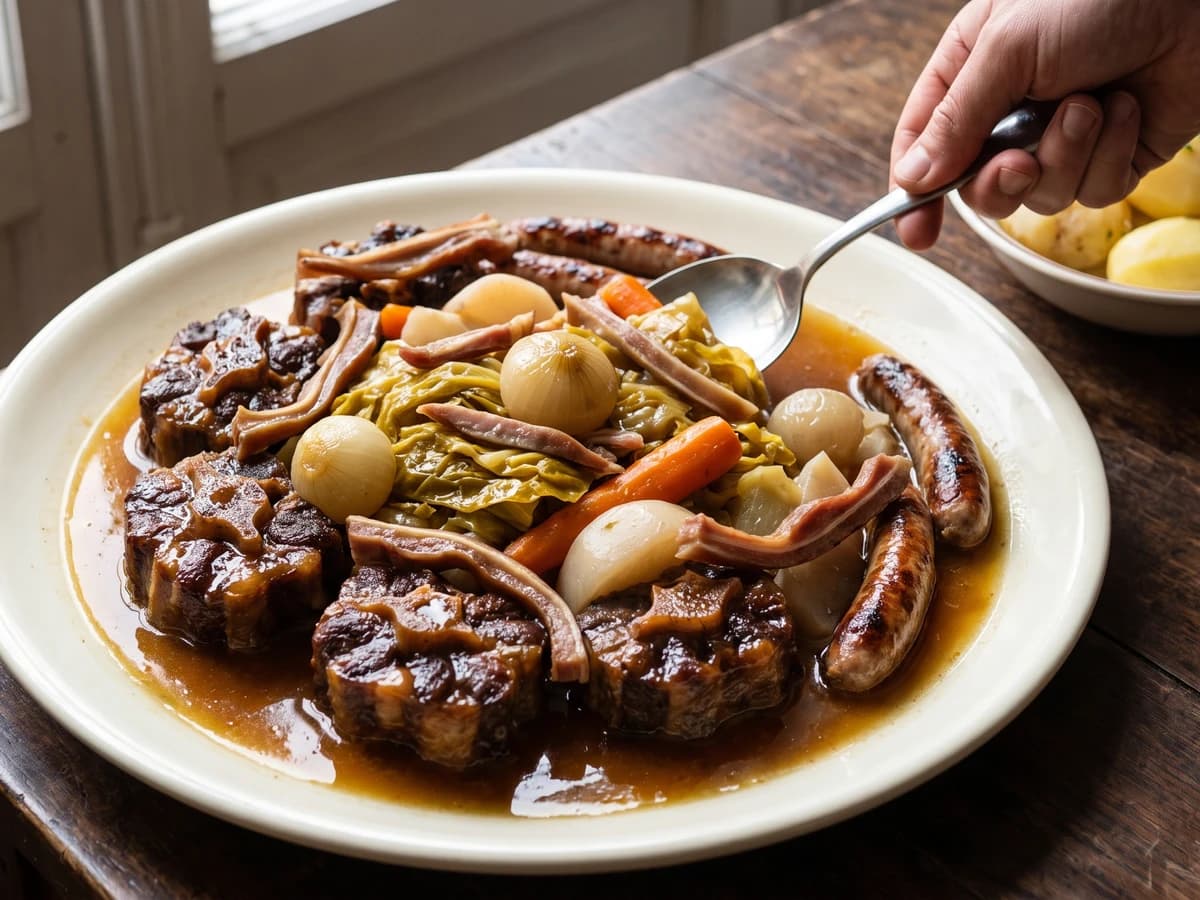
Queue de Bœuf en Hochepot gathers oxtail, pig's trotter and ear, cabbage, roots, and grilled chipolatas around a clear, gelatin-rich broth whose quiet simmer keeps every piece tender and distinct.
Chef Juliette
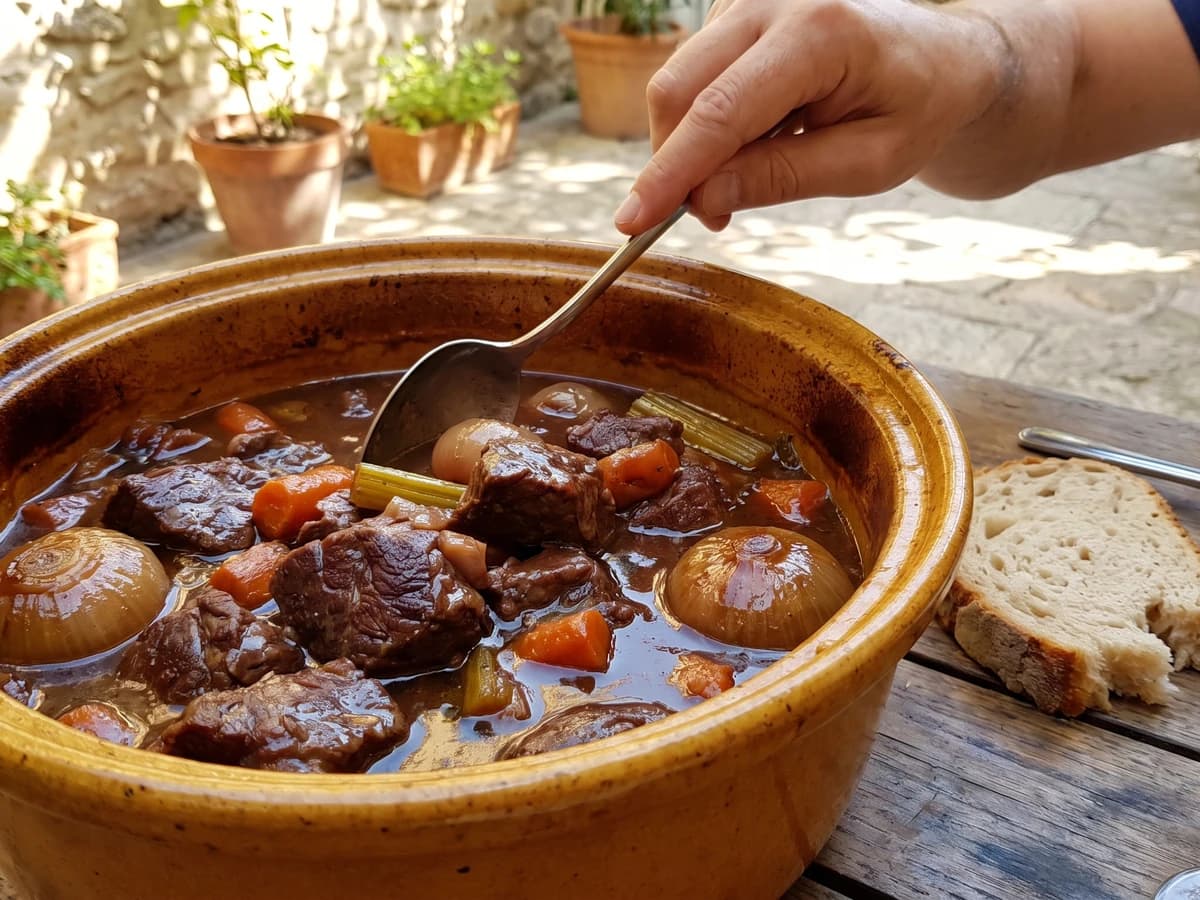
Beef shoulder larded with bacon, sharpened by red wine and vinegar, then sealed with garlic, vegetables, and dry lemon peel until the low oven turns it yielding and the gravy darkly glossy.