Chef Juliette
Bouillabaisse à la Marseillaise
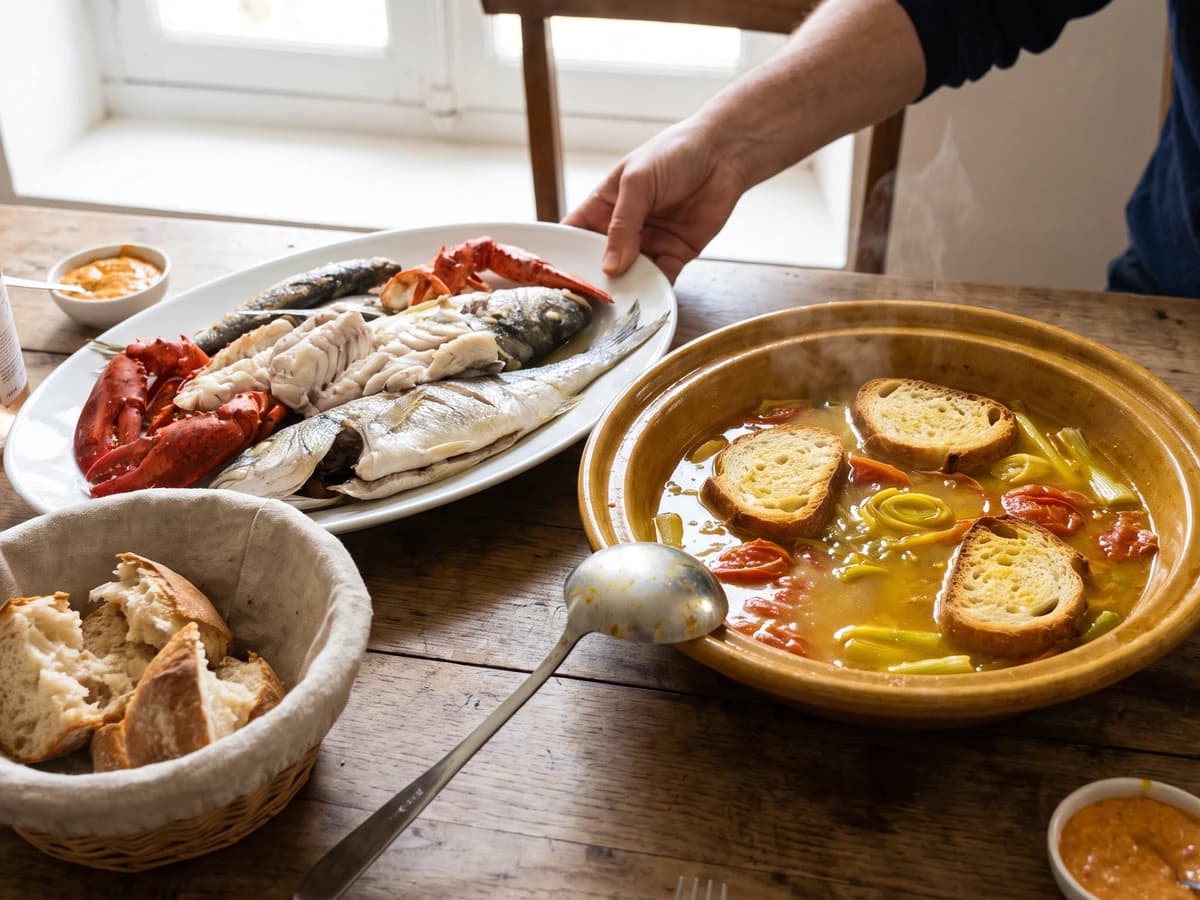
Marseille's great fish stew, saffron-gold and garlic-scented, proves that a hard boil can be the careful choice: it binds olive oil into broth before the whole pot meets bread.
A cooking platform built around craft, culture, and the stories behind what we eat.
Created by Chef Juliette
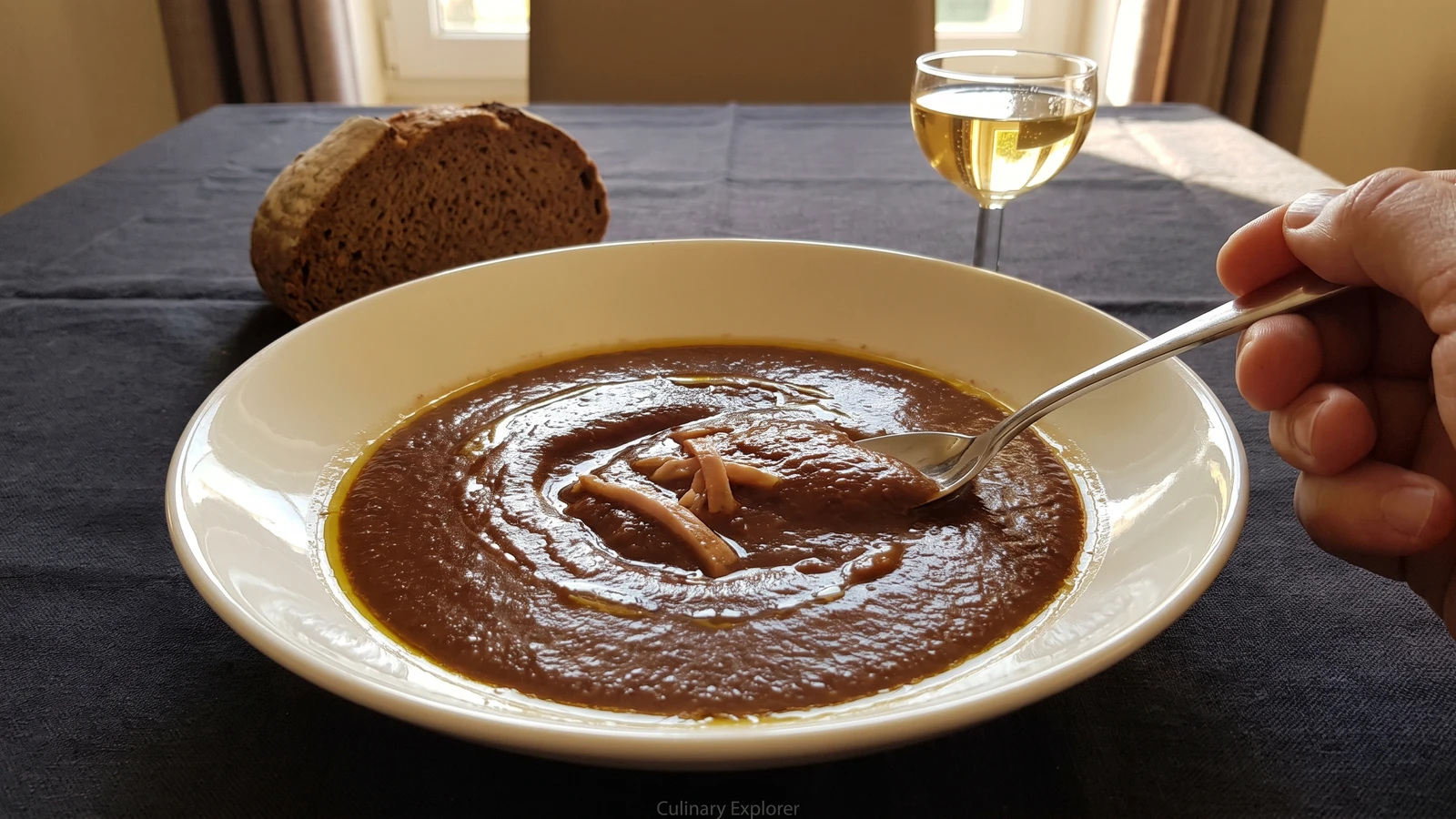
Based on No. 666, Coulis de Grives au Pain Noir, otherwise à l’Ardennaise, from Le Guide Culinaire (1907) by Auguste Escoffier
Rye bread does the work flour usually takes: it thickens a juniper-scented game coulis, while small-bird carcasses give up their depth and butter brings the strained soup to a dark, silken gloss.
Coulis de Grives au Pain Noir, à l’Ardennaise (thrush and dark rye game soup) teaches one exact lesson: bread can be the liaison, the thickening bond, without flour or roux. Here pain noir is not a crouton floating on top. It is fried in butter, swollen in feathered-game consommé, pressed with the bird’s savor, and turned into the body of the soup.
The classical formula assumed four fine thrushes, a saucier available to pound their carcasses, a stock never off the fire, and a broad tammy through which the purée could be passed quickly. A home kitchen has different virtues: lawfully sourced birds or farmed quail, prepared feathered-game consommé, a heavy mortar, a blender used only after every bone is removed, and a fine sieve lined with muslin. This two-quart batch doubles the listed consommé, rye, juniper, finishing butter, and cream because four dressed quail carry roughly twice the usable mass of four thrushes. The tammy and extra hands were brigade scaffolding; extracting the carcasses, frying the rye, passing the coulis, and finishing with real butter are the dish and stay.
The finished coulis pours in a dark, silken ribbon, with juniper behind the game rather than marching in front of it. Keep your attention on the rye before anything else: nut-brown brings depth, black brings bitterness, and no later spoonful of cream can hide it.
Coulis de Grives au Pain Noir, à l’Ardennaise belongs to the French Ardennes, where rye suited the cool upland table and juniper met small game from the forest edge. Its title is precise rather than decorative: bread supplies the liaison, while the pounded bird and consommé make a strained game soup whose depth comes from the carcass, not flour. Thrushes entered the pot through regulated seasonal hunting; where lawful inspected birds cannot be bought, farmed quail preserves the small-bird method without pretending the substitution is invisible.
Quantity
8 thrushes or 4 quail (about 1¼ pounds / 560 grams total)
fully dressed and patted dry
Quantity
4¾ cups (1.14 liters / 1.14 kilograms)
Quantity
1 cup plus 3 tablespoons (285 milliliters / 285 grams)
Quantity
Up to ½ cup (120 milliliters / 120 grams)
Quantity
About 6 cups (1.4 liters by volume / 285 grams)
cut into ½-inch (1.25-centimeter) dice
Quantity
¼ cup (60 milliliters / 57 grams)
Quantity
2 tablespoons (30 milliliters / 28 grams)
Quantity
4
Quantity
10 tablespoons (150 milliliters / 142 grams)
cut into small cubes
Quantity
½ cup (120 milliliters / 120 grams)
Quantity
1 teaspoon (5 milliliters / 6 grams), or as needed according to the consommé
| Ingredient | Quantity |
|---|---|
| legally harvested and inspected whole thrushes, or whole farmed quailfully dressed and patted dry | 8 thrushes or 4 quail (about 1¼ pounds / 560 grams total) |
| well-gelatinized, lightly seasoned feathered-game consommé | 4¾ cups (1.14 liters / 1.14 kilograms) |
| feathered-game consommé, reserved for finishing | 1 cup plus 3 tablespoons (285 milliliters / 285 grams) |
| additional feathered-game consommé (optional) | Up to ½ cup (120 milliliters / 120 grams) |
| dense, unsweetened dark rye breadcut into ½-inch (1.25-centimeter) dice | About 6 cups (1.4 liters by volume / 285 grams) |
| unsalted butter, for frying the rye bread | ¼ cup (60 milliliters / 57 grams) |
| unsalted butter, for frying the birds | 2 tablespoons (30 milliliters / 28 grams) |
| juniper berries | 4 |
| cold unsalted buttercut into small cubes | 10 tablespoons (150 milliliters / 142 grams) |
| heavy cream | ½ cup (120 milliliters / 120 grams) |
| fine sea salt (optional) | 1 teaspoon (5 milliliters / 6 grams), or as needed according to the consommé |
Warm the first measure of feathered-game consommé to a bare simmer. Taste it before adding salt; it must be full-flavored but not aggressively seasoned, because the bread and final boiling will concentrate it. Set out a covered bowl for the breast fillets, a second clean saucepan, and a fine sieve lined with damp muslin. Once the birds are cooked, the work moves quickly.
Melt the butter for the bread in a wide skillet over medium heat. Fry the pain noir in two batches, turning the dice until their cut faces are crisp, evenly bronzed, and fragrant with butter. Rye begins dark, so judge it by smell and edges rather than color alone. A scorched crumb will be puréed into every spoonful and cannot be hidden; brown deeply, never blacken. Transfer the bread and every buttery crumb to a plate.
Melt the frying butter in a heavy 5-quart saucepan or cocotte over medium-high heat. Season the birds lightly, then fry them in batches until every side is a deep hazelnut color. Pour in the warm feathered-game consommé, scraping the fond from the pot floor, and add the fried rye dice. Hold everything at the barest tremble until the birds are cooked through, about 12 to 15 minutes for thrushes or 18 to 22 minutes for quail. The thickest part of the thigh should reach 165°F (74°C); a hard boil toughens the breast and drives the consommé cloudy.
Lift the birds from the pot and let them stand only until they can be handled. Remove both breast fillets from each bird in the largest pieces possible, cover them, and keep them aside. Return any juices to the pot. Leave the legs, wings, skin, and adhering meat on the carcasses, because their flavor belongs in the coulis.
Cut the carcasses through their joints with poultry shears. Working in small batches, pound them in a heavy mortar with the juniper berries and a ladleful of the softened bread mixture. The cooked meat should become a rough paste and the small bones should be thoroughly cracked. Do not put bones into a countertop blender; the large mortar was not ceremony, it controlled the crushing and kept the blade work away from bone.
Stir the pounded carcasses into the bread and consommé. Ladle the mixture through a sturdy medium-fine sieve into a clean bowl, pressing firmly with a wooden spoon to recover the liquid, bread, and soft meat. Stop when dry bones remain, and never grind sharp fragments against the mesh. Once every hard piece has been removed, blend the strained mixture until smooth, then rub it through the damp-muslin-lined fine sieve. This double passage is the home equivalent of the tammy, and it stays because the silken texture is the dish.
Return the purée to the clean saucepan and whisk in the reserved 1 cup plus 3 tablespoons of feathered-game consommé. Bring it to a full boil for 30 seconds, stirring constantly across the entire pot floor, then pass it through a clean fine strainer once more. If the bread catches, do not scrape the scorched layer into the soup. Pour the unburned coulis into another pan and loosen it with some additional consommé. Ça se rattrape. The finished consistency should coat a spoon yet still pour freely.
Whisk the cream into the coulis over gentle heat and bring it only to the edge of a simmer. Remove the pan from the heat. Monter au beurre, mount with butter, by whisking in the cold cubes a few at a time until the surface is dark, silken, and visibly glossy. Do not boil it again. If beads of fat appear, stop adding butter, place 1 tablespoon of cool consommé in a clean warm bowl, and whisk in the broken coulis one spoonful at a time before incorporating the remaining butter. Taste and correct the salt. We don't apologize for butter.
Cut the reserved breast fillets into very thin slices or julienne-fashion, meaning matchstick strips. Warm them for 30 seconds in a ladleful of coulis off the heat, then divide them among heated soup bowls. Ladle the coulis over the fillets and serve immediately, while the butter still holds its gloss. À table!
1 serving (about 245g)
Culinary guides, cultural storytelling, and the editorial depth that makes cooking meaningful.
Discover Culinary ExplorerChef Juliette
Marseille's great fish stew, saffron-gold and garlic-scented, proves that a hard boil can be the careful choice: it binds olive oil into broth before the whole pot meets bread.
Chef Juliette
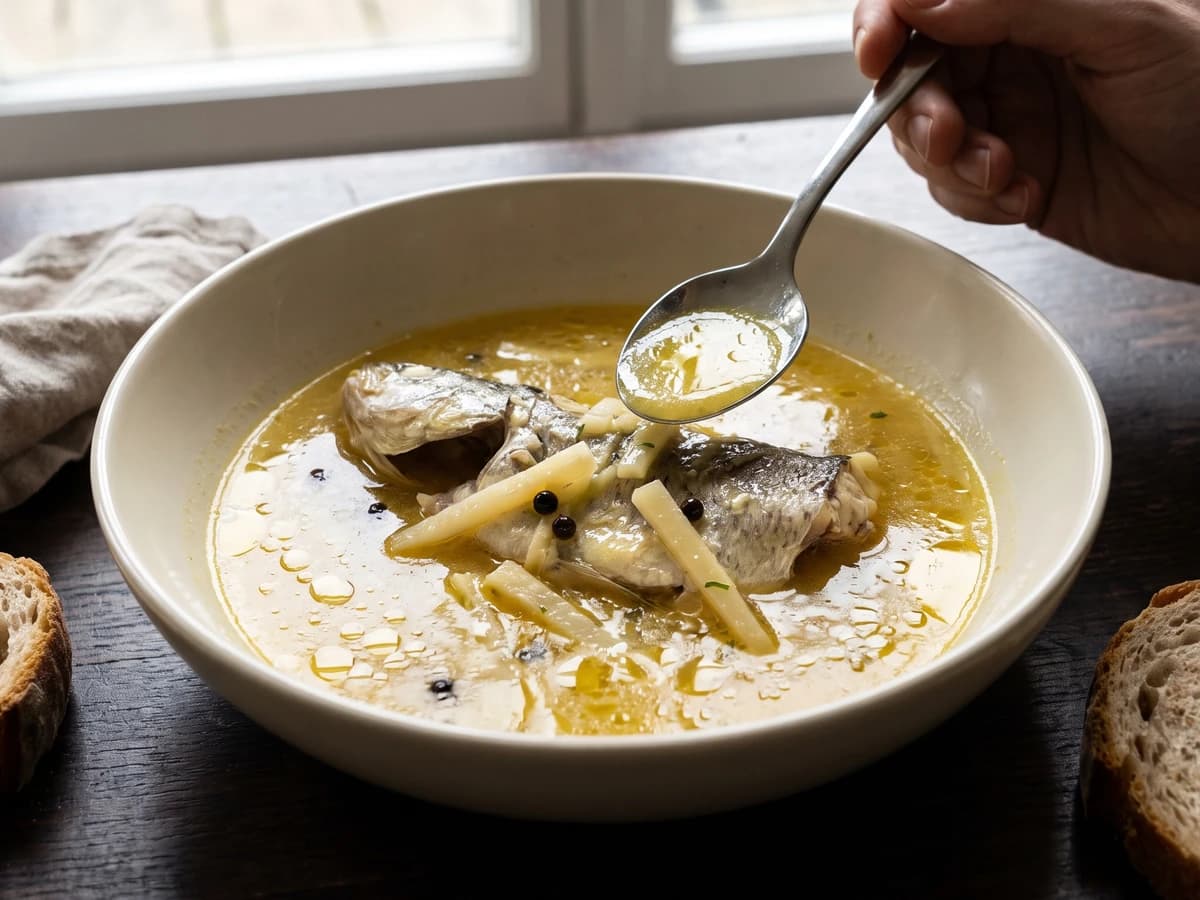
Waterzoi asks fresh, bone-in river fish to thicken its own buttery broth, with parsley root and pepper for company. No flour, no stockpot, just a brisk simmer watched closely.
Chef Juliette
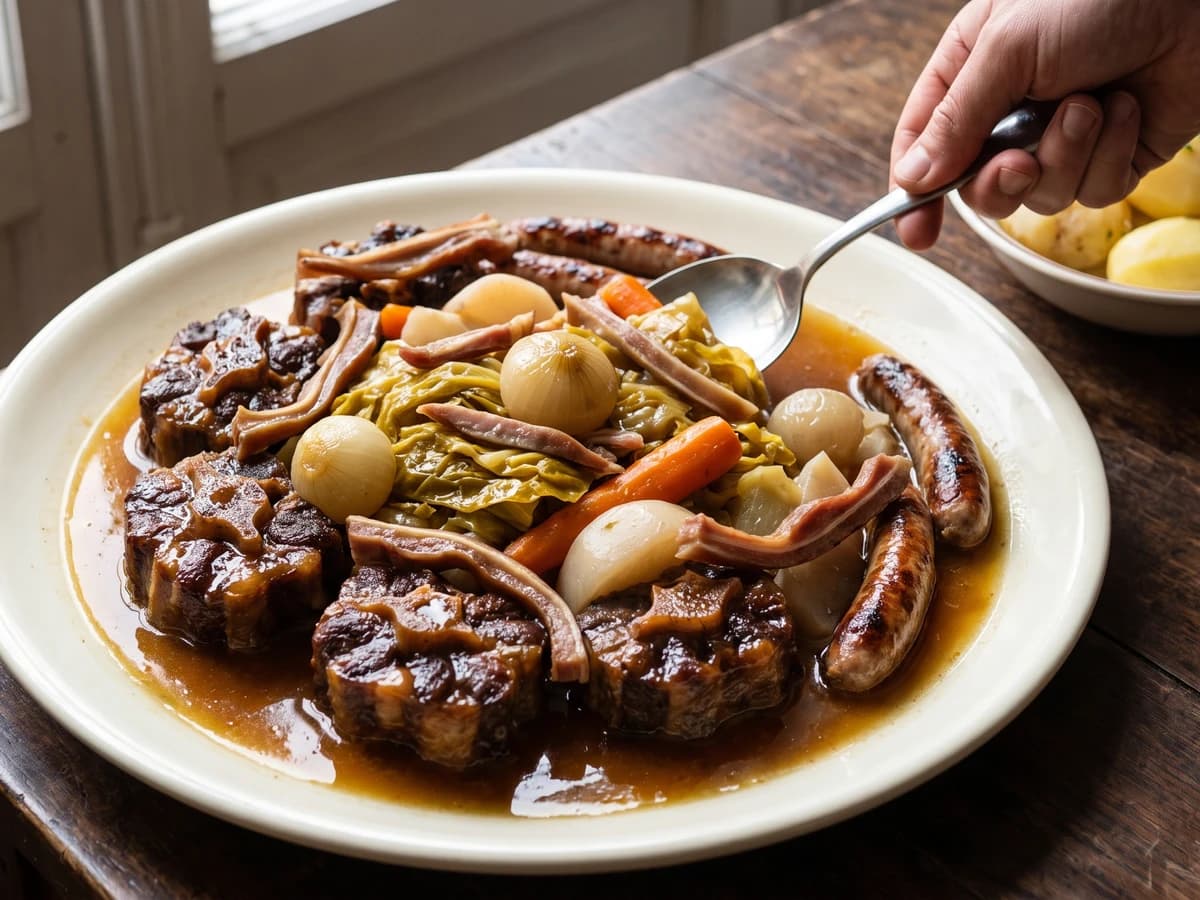
Queue de Bœuf en Hochepot gathers oxtail, pig's trotter and ear, cabbage, roots, and grilled chipolatas around a clear, gelatin-rich broth whose quiet simmer keeps every piece tender and distinct.
Chef Juliette
Beef shoulder larded with bacon, sharpened by red wine and vinegar, then sealed with garlic, vegetables, and dry lemon peel until the low oven turns it yielding and the gravy darkly glossy.