Chef Juliette
Bouillabaisse à la Marseillaise
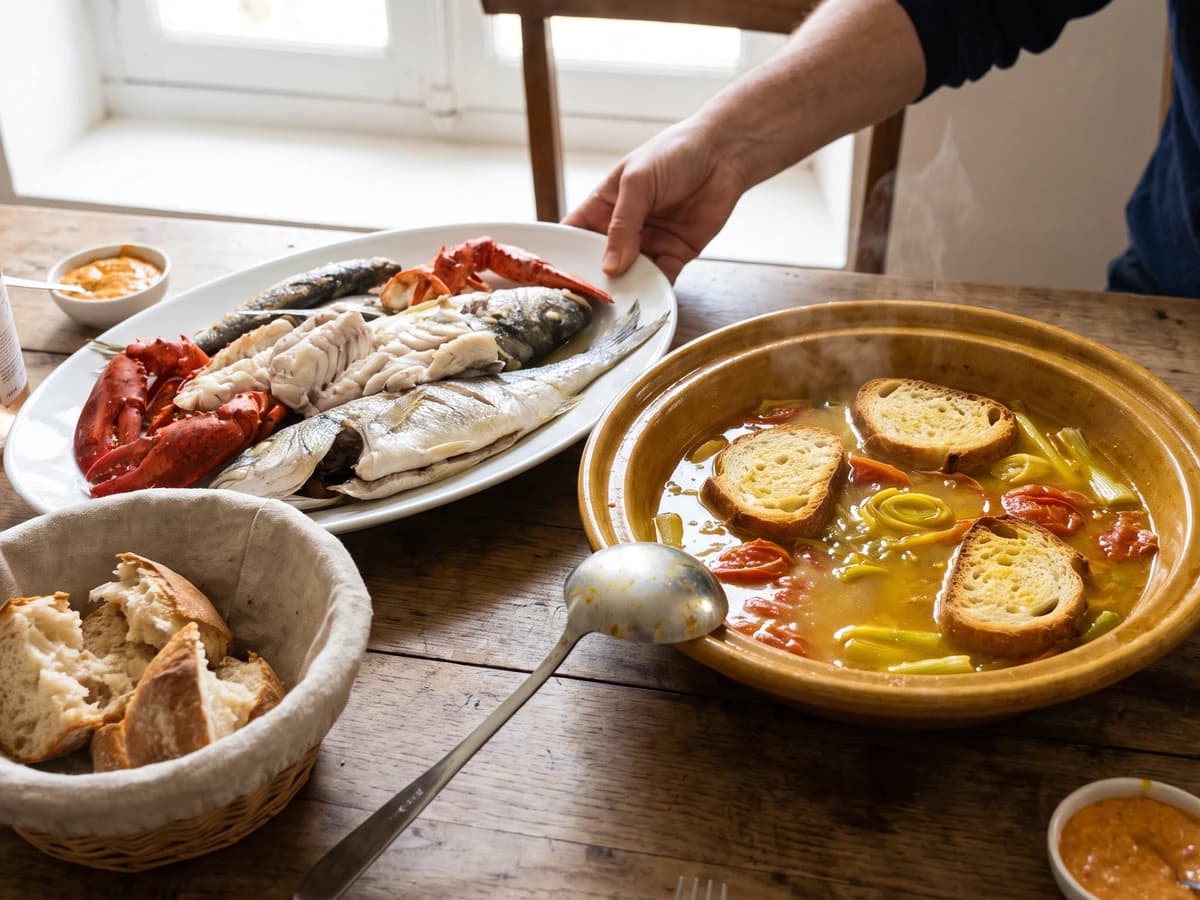
Marseille's great fish stew, saffron-gold and garlic-scented, proves that a hard boil can be the careful choice: it binds olive oil into broth before the whole pot meets bread.
A cooking platform built around craft, culture, and the stories behind what we eat.

Created by Chef Juliette
Based on No. 663, Bisque de Homard, from Le Guide Culinaire (1907) by Auguste Escoffier
Bisque de Homard teaches the deepest shellfish lesson: the meat is the garnish, but the shell builds the soup, seared red, flamed with brandy, pounded with rice, strained fine, and finished with cream.
Bisque de Homard (lobster bisque) teaches one uncompromising truth: the meat is the garnish, but the shell is the soup. Sear the cut lobster until its armor turns red and smells roasted, flame it with brandy, then pound shell, mirepoix, rice, and cooking liquor together. The velvet comes from what most cooks are tempted to throw away.
The original entry assumes Bisque d’Écrevisses (No. 662) already at the cook's elbow as its governing formula, a saucier to mind the reduction, white consommé never off the fire, a mortar and tammy for the shells, and a bain-marie for holding. At home, you follow that formula once with lobster in place of crayfish, use a sturdy food processor and two strainers in place of mortar and tammy, and finish only when the guests are near. The stuffed crayfish carapaces disappear because this lobster entry orders diced tail instead. That was brigade ornament; the searing, flambage, rice thickening, pounding, and fine straining are the dish. One cook, one stove, one evening.
The decisive step is the shell work. Pound it fine enough to surrender its sweetness and strain it twice until the coral soup is perfectly smooth. If grit remains, strain again before cream touches the pot. Ça se rattrape.
Bisque de homard belongs to the classical Parisian grand kitchen and bourgeois table, drawing Atlantic and Channel lobster into a soup technique shared with crayfish and other crustaceans. Its defining practice is not the addition of cream but the pounding of cooked shell with rice and aromatics, followed by increasingly fine straining, so flavor and body come from the animal whole. The familiar idea that any smooth, creamy shellfish soup is a bisque misses the point: here the shell carries the soup, while the tail meat is held back as garnish.
Quantity
1 batch Bisque d’Écrevisses (No. 662), about 2 quarts (8 cups / 1.9 L)
scaled proportionally and made with raw lobster in place of its 15 crayfish
Quantity
1 lobster, 3 lb (1.36 kg)
cut through the shell into small sections; tail meat reserved after cooking and diced
| Ingredient | Quantity |
|---|---|
| Bisque d’Écrevisses referenced preparationscaled proportionally and made with raw lobster in place of its 15 crayfish | 1 batch Bisque d’Écrevisses (No. 662), about 2 quarts (8 cups / 1.9 L) |
| live or very freshly dispatched raw lobstercut through the shell into small sections; tail meat reserved after cooking and diced | 1 lobster, 3 lb (1.36 kg) |
Ask the fishmonger to dispatch the lobster shortly before you collect it, or chill a live lobster for 20 minutes so it is quiet and manageable. Secure it on a heavy board with a folded towel, dispatch it swiftly through the head, then remove the claws and cut the tail and body through the shell into sections about 2 inches (5 cm) wide. Crack the thick claw shells once, but leave the meat inside. Save every drop of the raw liquor. This is not waste to clear away; shell, head, juices, and meat all belong to the bisque.
Prepare Bisque d’Écrevisses (No. 662), using the measure and sequence of every ingredient specified there, but substitute all the lobster sections and their liquor for the 15 crayfish. Keep its mirepoix, butter browning, brandy, white wine, seasoning, white consommé, and separately cooked rice exactly as written. Toss the lobster in the browned mirepoix until every shell is a strong lacquered red and the pan smells roasted rather than merely warm. Make the flambage (burn off the brandy) safely: measure the brandy into a cup, pull the pan away from the burner, turn off the extractor, add the brandy, then ignite it with a long match while keeping a lid beside you. Never pour from the bottle over the pan. If the brandy will not catch, reduce it briskly until its raw alcoholic edge disappears. Ça se rattrape.
At the point where Bisque d’Écrevisses (No. 662) directs you to shell the cooked tails, lift out the lobster sections and let them cool only until your hands can manage them. Remove the tail meat cleanly and cut it into small dice about 1/4 inch (6 mm); cover and keep it cold for the garnish. Return the head, body, claw shells, claw meat, soft matter, and any juices to the pan. Do not reserve or stuff carapaces. The lobster entry replaces that brigade garnish with diced tail, which is both more generous and more sensible at a home table.
Continue the pounding and straining prescribed in Bisque d’Écrevisses (No. 662). For the home equivalent, crack the cooked shells into small pieces inside a doubled heavy bag, then let the mixture cool for 10 minutes before pulsing the solids in a sturdy food processor with the cooked rice, mirepoix, and enough lobster cooking liquor to keep everything moving. Work in small batches and stop if the motor labors; crack the shell more finely, then continue. Force the purée first through a coarse strainer and then through a fine-mesh sieve, pressing firmly with a ladle until the residue is nearly dry. Complete the formula's final loosening, whisking, brief boil, and last straining. The second fine pass is not ceremony. It is the difference between velvet and grit. If you feel shell on the tongue, pass the bisque once more through a damp double layer of cheesecloth before adding the cream.
If service is within 20 minutes, press a piece of buttered parchment directly against the surface and keep the bisque over the lowest heat. The original bain-marie and the little lumps of butter floating on top were brigade holding equipment, useful when a dining room might call at any moment. One cook serving one table can finish at once, which protects the fresh lobster flavor and asks less of the sauce.
Finish Bisque d’Écrevisses (No. 662) with its prescribed butter, thick cream, and very little cayenne, whisking off the heat until the bisque gleams and coats the spoon in a light, even film. Return the diced tail only long enough to warm it through, reserving a few pieces for the center of each bowl. Do not boil after the butter and cream go in, or the fat can separate and the tail will toughen. If the surface turns oily, put a spoonful of warm white consommé into a clean saucepan and whisk in the bisque gradually until it comes together again. Ça se rattrape. Taste for salt, ladle generously, and serve at once. À table!
1 serving (about 240g)
Culinary guides, cultural storytelling, and the editorial depth that makes cooking meaningful.
Discover Culinary ExplorerChef Juliette
Marseille's great fish stew, saffron-gold and garlic-scented, proves that a hard boil can be the careful choice: it binds olive oil into broth before the whole pot meets bread.
Chef Juliette
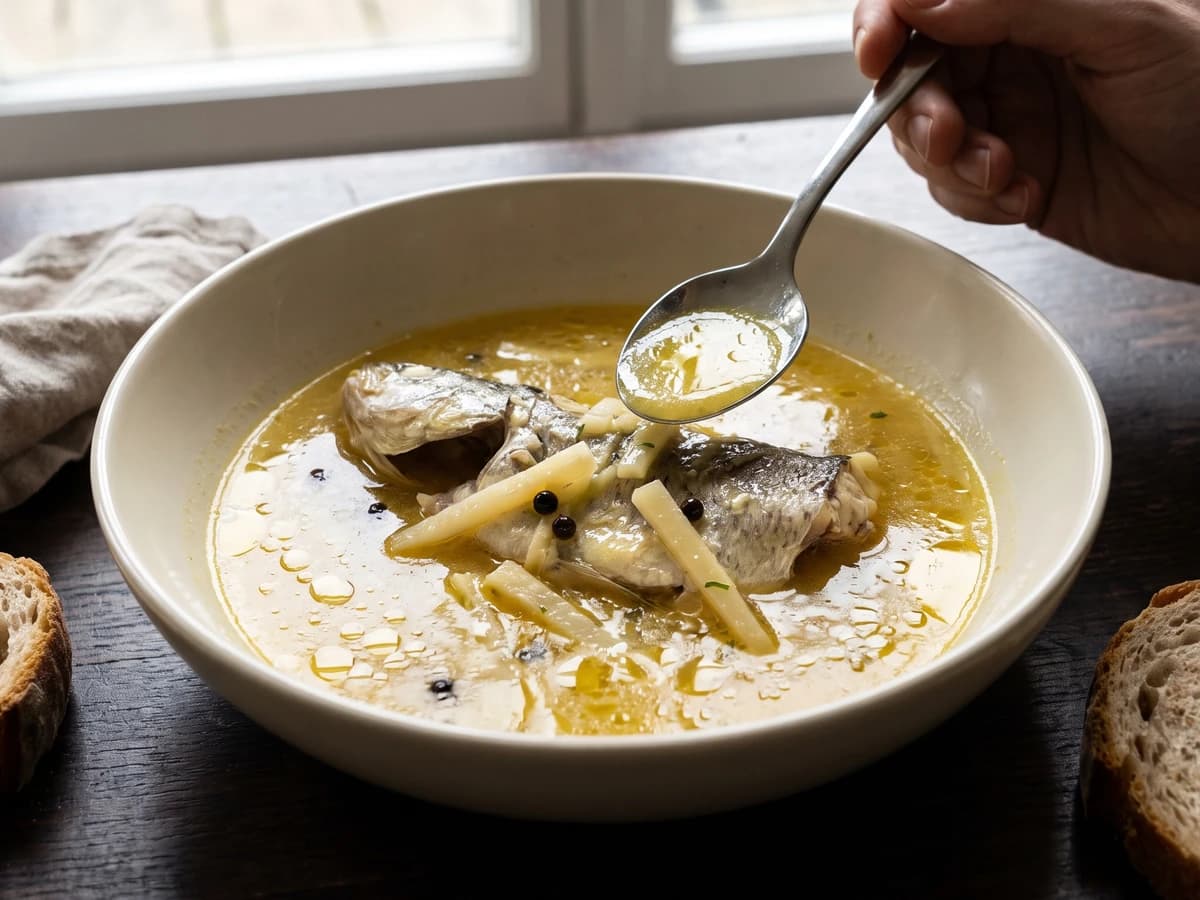
Waterzoi asks fresh, bone-in river fish to thicken its own buttery broth, with parsley root and pepper for company. No flour, no stockpot, just a brisk simmer watched closely.
Chef Juliette
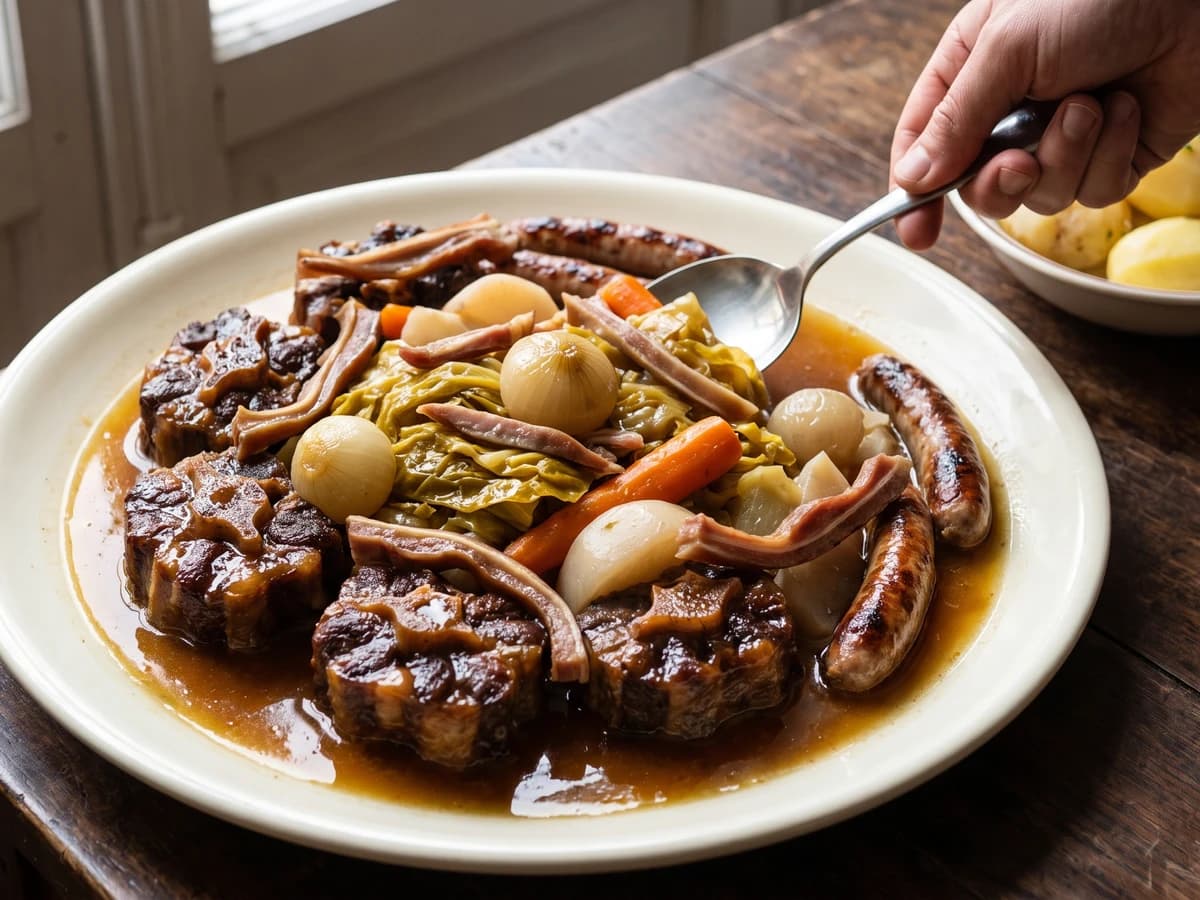
Queue de Bœuf en Hochepot gathers oxtail, pig's trotter and ear, cabbage, roots, and grilled chipolatas around a clear, gelatin-rich broth whose quiet simmer keeps every piece tender and distinct.
Chef Juliette
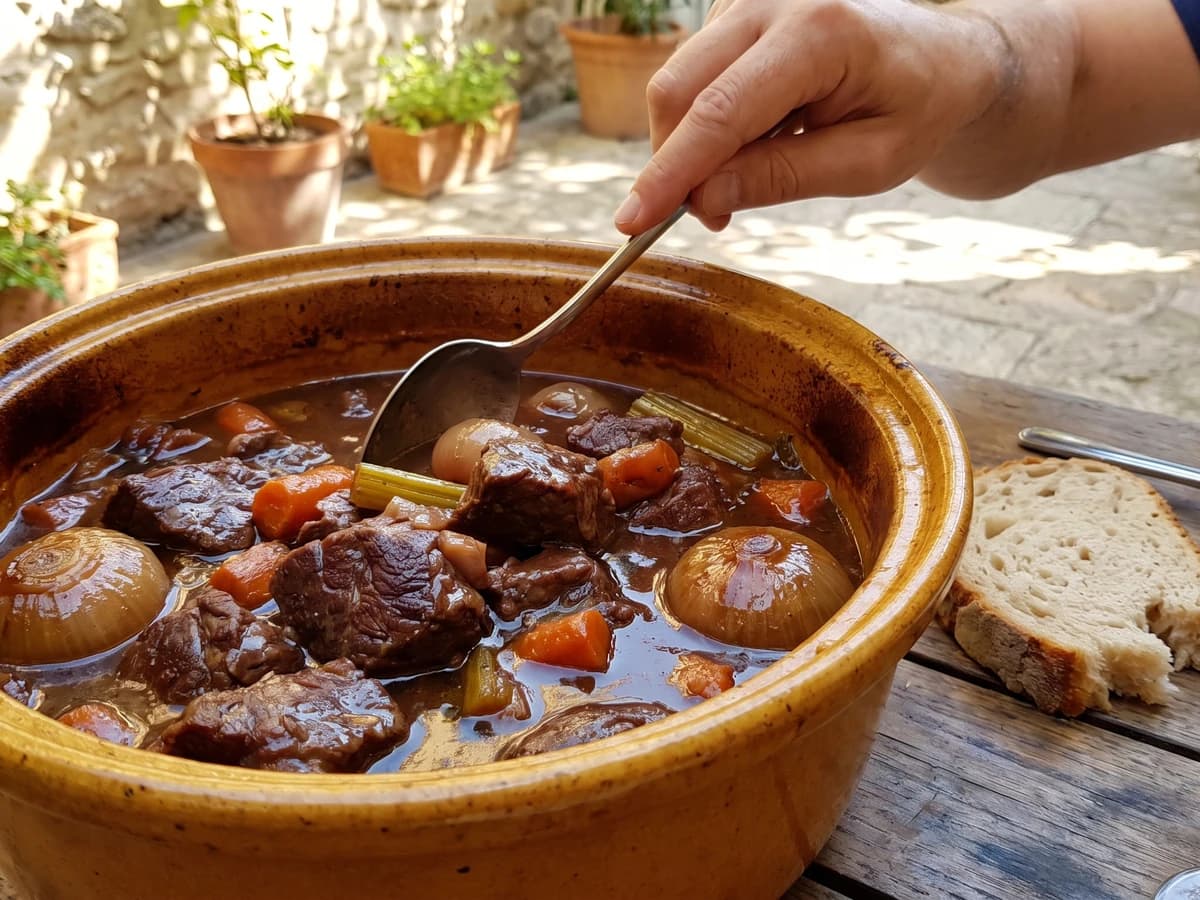
Beef shoulder larded with bacon, sharpened by red wine and vinegar, then sealed with garlic, vegetables, and dry lemon peel until the low oven turns it yielding and the gravy darkly glossy.