Chef Juliette
Bouillabaisse à la Marseillaise
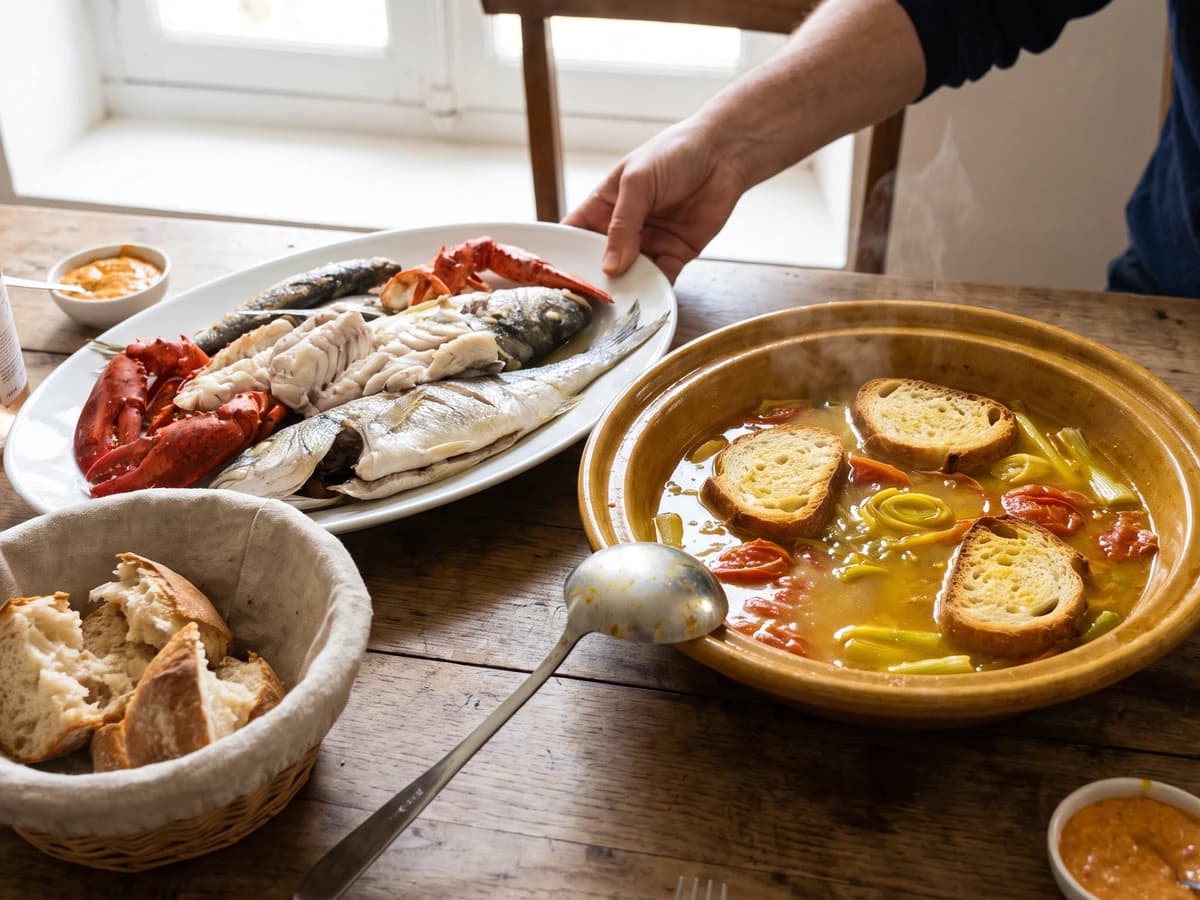
Marseille's great fish stew, saffron-gold and garlic-scented, proves that a hard boil can be the careful choice: it binds olive oil into broth before the whole pot meets bread.
A cooking platform built around craft, culture, and the stories behind what we eat.

Created by Chef Juliette
Based on No. 659, Purée de Tomates, otherwise Portugaise, from Le Guide Culinaire (1907) by Auguste Escoffier
Purée de Tomates Portugaise teaches the quiet art of liaison au riz: tomatoes and bacon-scented aromatics cooked tender, sieved fine, then mounted with butter off heat until the soup gleams.
Purée de Tomates, otherwise Portugaise (a silken tomato purée soup), teaches liaison au riz, thickening with rice rather than flour. The rice cooks until it disappears into the tomato, then the sieve turns that humble body into velvet. Know one thing before you touch the pan: the finishing butter belongs away from the fire, where it can emulsify into gloss instead of melting into grease.
The original set a saucier beside a stockpot of white consommé and sent the finished soup through a tammy. At home, a sturdy fine-mesh sieve takes the tammy's place, and clean, unsalted light chicken stock may stand in for clarified consommé because its clarity disappears inside tomato and rice. Clarifying stock and holding several pans through service were brigade scaffolding, so they go. The rice liaison, the sieve, the separate rice-and-tomato garnish, and the off-heat butter are the dish, so they stay. The batch comes to about two quarts: one cook, one stove, one evening.
The finished Portugaise should pour in a broad coral-red ribbon, glossy but not heavy, with separate grains of rice and bright butter-tossed tomato interrupting the smoothness. The single step that decides it is the last one: take the pan fully from the heat before the butter goes in.
Purée de Tomates dite Portugaise belongs to the French classical potage repertoire codified in the grand kitchens of Paris, where soups were organized by their base, liaison, and garnish. Within that vocabulary, Portugaise signaled a tomato-led preparation supported here by rice; the name does not make this a Portuguese household soup. Rice performs two duties, disappearing into the purée for body and returning as separate grains for contrast.
Quantity
2 tablespoons (30 ml / 28 g)
Quantity
8 medium (about 8 cups / 1.2 kg)
gently pressed and cut into garlic-clove-sized pieces
Quantity
1 generous pinch (about 1/16 teaspoon / 0.3 g)
Quantity
6 tablespoons (90 ml / 70 g)
uncooked and unrinsed
Quantity
4½ cups (1.06 liters / 1.06 kg)
divided
Quantity
4 tablespoons (60 ml / 57 g)
cubed for finishing
Quantity
1 tablespoon (15 ml / 12 g)
uncooked, to yield 2 tablespoons poached rice
Quantity
2 tablespoons (30 ml / 30 g)
cut into small dice
Quantity
1 teaspoon (5 ml / 5 g)
Quantity
Up to ½ teaspoon (2.5 ml / 3 g)
| Ingredient | Quantity |
|---|---|
| unsalted butter | 2 tablespoons (30 ml / 28 g) |
| prepared mirepoixsomewhat finely diced | ⅔ cup (160 ml / 100 g) Mirepoix (No. 228) |
| ripe tomatoesgently pressed and cut into garlic-clove-sized pieces | 8 medium (about 8 cups / 1.2 kg) |
| granulated sugar | 1 generous pinch (about 1/16 teaspoon / 0.3 g) |
| long-grain white riceuncooked and unrinsed | 6 tablespoons (90 ml / 70 g) |
| white consommé or clear unsalted light chicken stockdivided | 4½ cups (1.06 liters / 1.06 kg) |
| cold unsalted buttercubed for finishing | 4 tablespoons (60 ml / 57 g) |
| long-grain white rice for garnishuncooked, to yield 2 tablespoons poached rice | 1 tablespoon (15 ml / 12 g) |
| peeled tomatocut into small dice | 2 tablespoons (30 ml / 30 g) |
| unsalted butter for the tomato garnish | 1 teaspoon (5 ml / 5 g) |
| fine salt (optional) | Up to ½ teaspoon (2.5 ml / 3 g) |
Halve the eight tomatoes across their equators and squeeze them gently to expel the loose, watery seed pockets without wringing the flesh dry. Cut them into pieces about the size of a garlic clove. Have the peeled tomato dice ready for the garnish, but keep it separate from the soup tomatoes.
Melt the 2 tablespoons of butter in a heavy saucepan over medium heat. Add the Mirepoix (No. 228) and fry it for 7 to 9 minutes, stirring often, until the bacon has rendered, the vegetables are tender, and their edges show a little gold. Do not take it to a dark brown fond; the finished soup should remain clear coral-red, not muddy.
Add the pressed tomatoes, sugar, and 6 tablespoons of unrinsed rice. Pour in 2⅓ cups (560 ml / 560 g) of the consommé and bring it just to a simmer, scraping the pan floor clean. Cover slightly ajar and cook gently for 30 to 35 minutes, stirring across the bottom every few minutes, until the tomatoes have collapsed and the rice crushes without resistance. The rice must become completely tender because it is the liaison. If it catches, do not scrape the scorched floor. Ça se rattrape: pour the unburned soup into a clean saucepan, add ½ cup of reserved consommé, and continue at lower heat.
While the soup simmers, poach the garnish rice in a small pan of gently boiling salted water until tender but still intact, about 12 minutes. Drain it thoroughly and spread it on a plate so the grains remain separate. Melt the teaspoon of butter in the empty pan, add the peeled tomato dice, and toss briskly for 20 to 30 seconds, just until glossy and warmed without losing its shape. Keep the rice and tomato separate.
Rub the soup through a sturdy fine-mesh sieve into a clean saucepan, pressing the soft rice and tomato pulp through with a ladle or flexible scraper. Stop when only dry skin, seeds, and coarse aromatic fibers remain. If the purée is too thick to pass, loosen it with a ladle of reserved consommé rather than forcing the debris through. Return the smooth purée to gentle heat and add enough remaining consommé to make just under 2 quarts, or until it pours from the ladle in a broad ribbon and lightly coats a spoon. Taste and add salt only if the bacon and consommé have not supplied enough.
Bring the adjusted purée to one lazy bubble, then take the pan completely off the heat and wait until all bubbling stops. Whisk in the 4 tablespoons of cold butter one cube at a time, allowing each addition to disappear before adding the next. This off-heat mounting is the step that gives Portugaise its gloss, and the soup must not boil afterward. If oily beads appear, stop. Ça se rattrape: whisk 2 tablespoons of cold consommé with one ladle of soup in a clean bowl until smooth, then whisk that emulsion back into the pot away from the heat.
Divide the separate-grain poached rice and butter-tossed tomato dice among warm soup plates. Ladle the Portugaise around the garnish and serve at once, while the surface remains smooth and butter-bright. À table!
1 serving (about 240g)
Culinary guides, cultural storytelling, and the editorial depth that makes cooking meaningful.
Discover Culinary ExplorerChef Juliette
Marseille's great fish stew, saffron-gold and garlic-scented, proves that a hard boil can be the careful choice: it binds olive oil into broth before the whole pot meets bread.
Chef Juliette
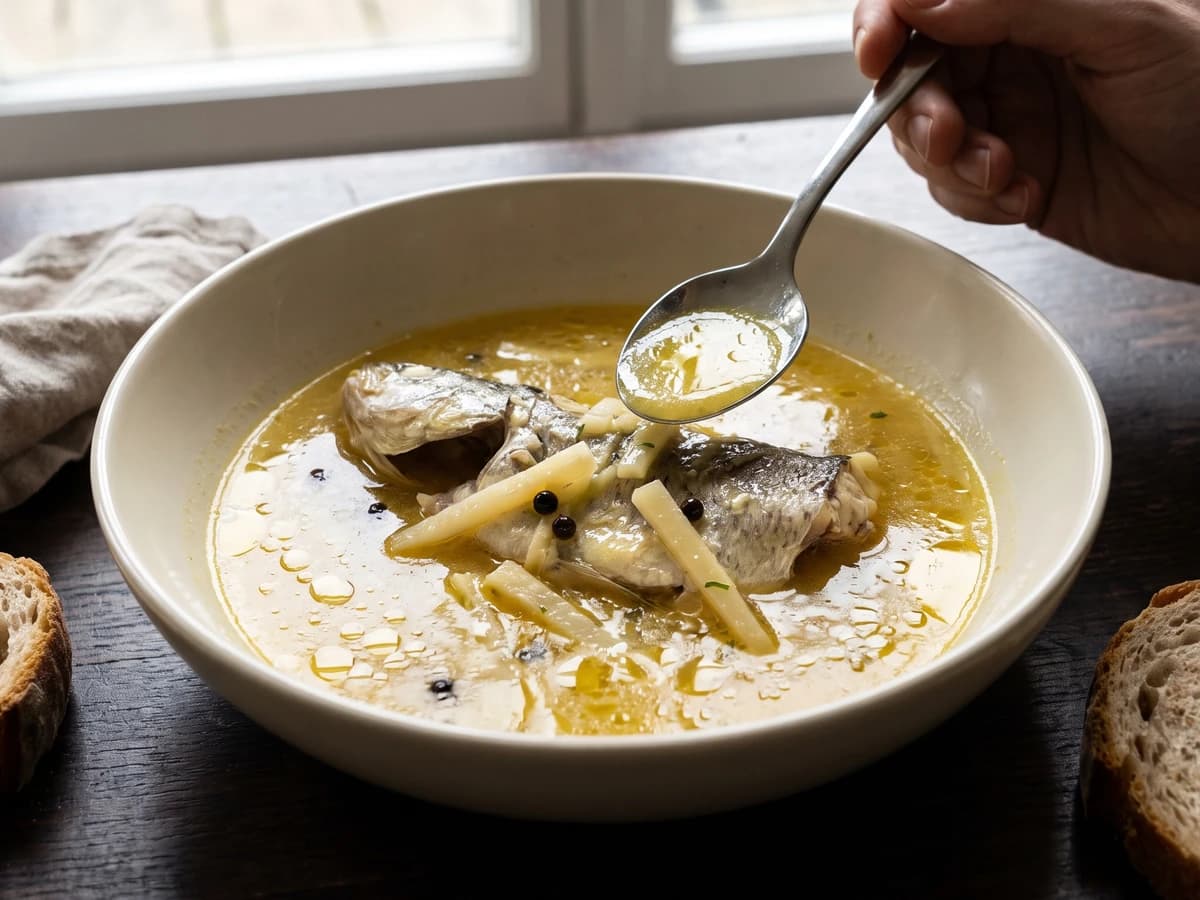
Waterzoi asks fresh, bone-in river fish to thicken its own buttery broth, with parsley root and pepper for company. No flour, no stockpot, just a brisk simmer watched closely.
Chef Juliette
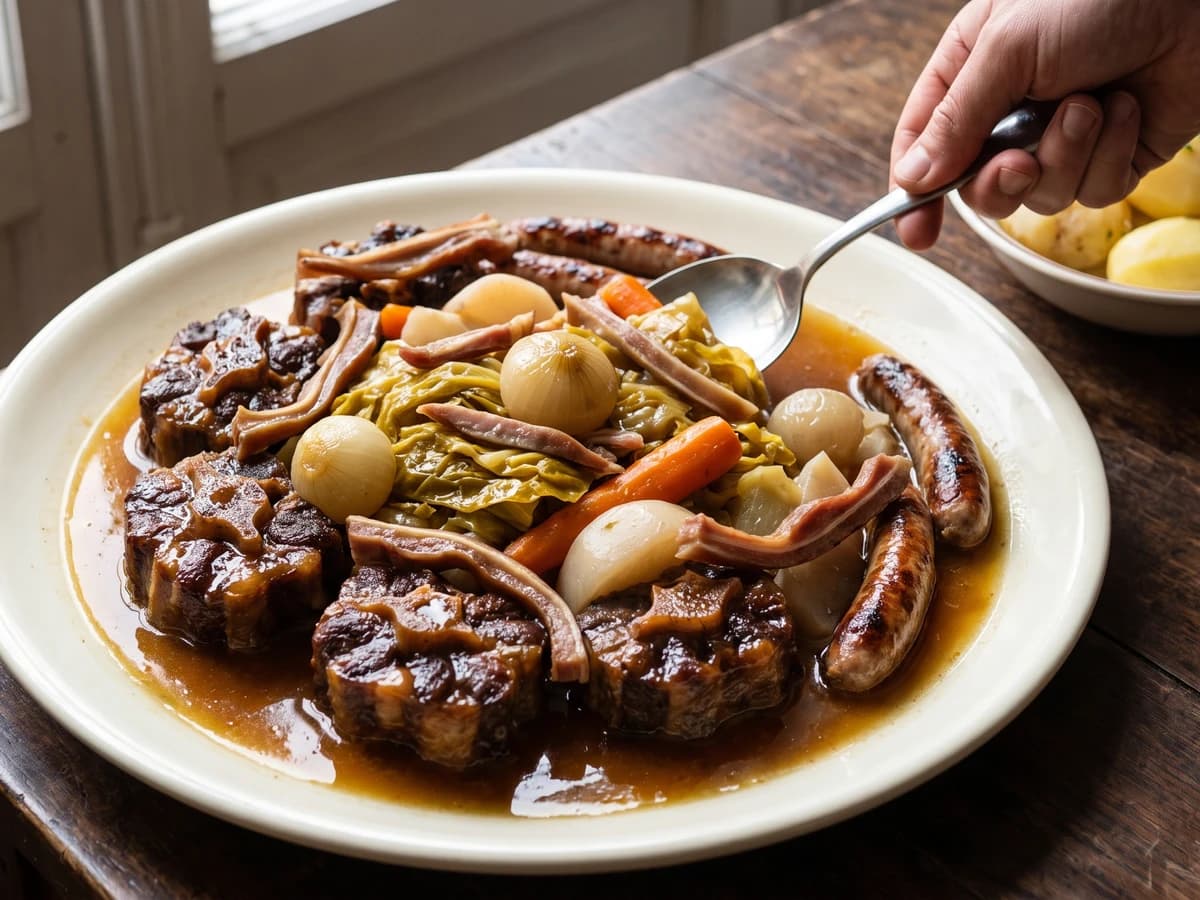
Queue de Bœuf en Hochepot gathers oxtail, pig's trotter and ear, cabbage, roots, and grilled chipolatas around a clear, gelatin-rich broth whose quiet simmer keeps every piece tender and distinct.
Chef Juliette
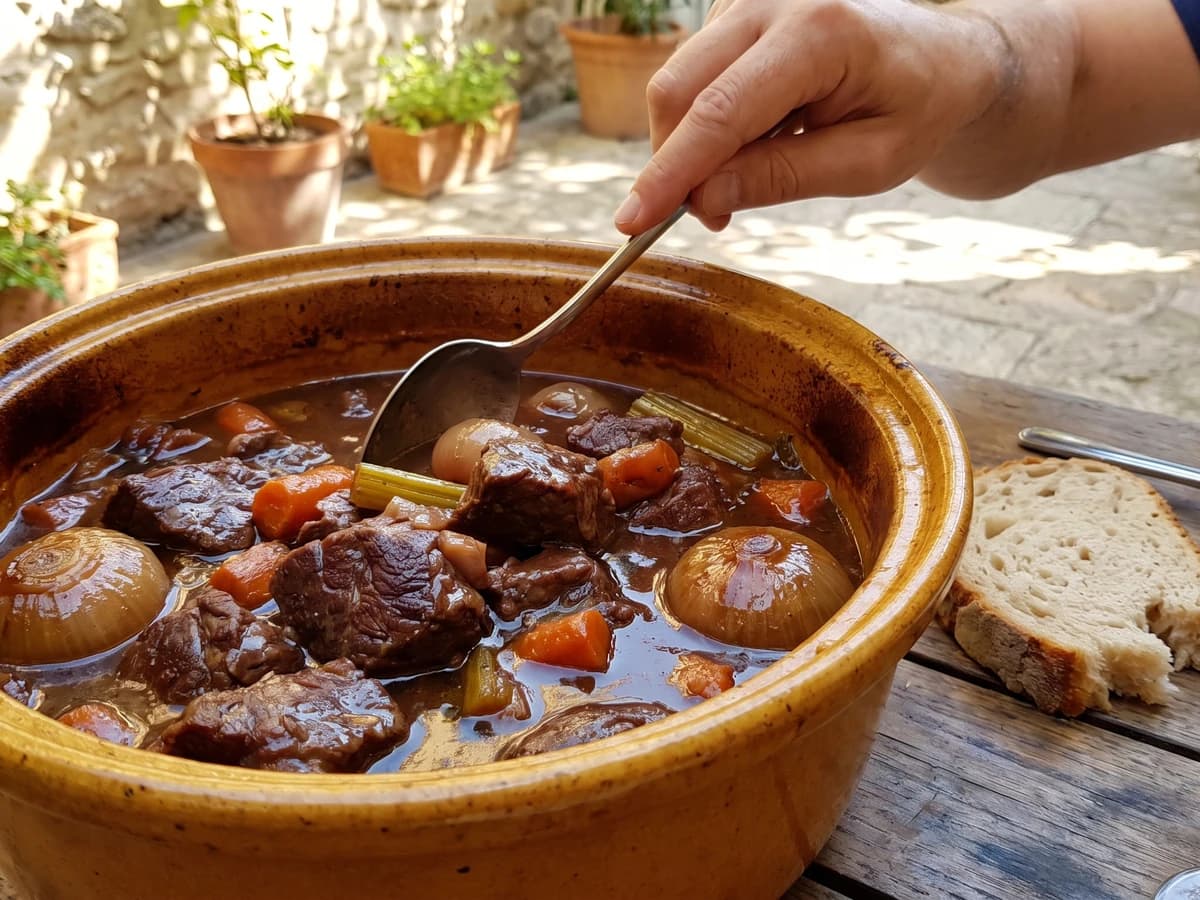
Beef shoulder larded with bacon, sharpened by red wine and vinegar, then sealed with garlic, vegetables, and dry lemon peel until the low oven turns it yielding and the gravy darkly glossy.