Chef Juliette
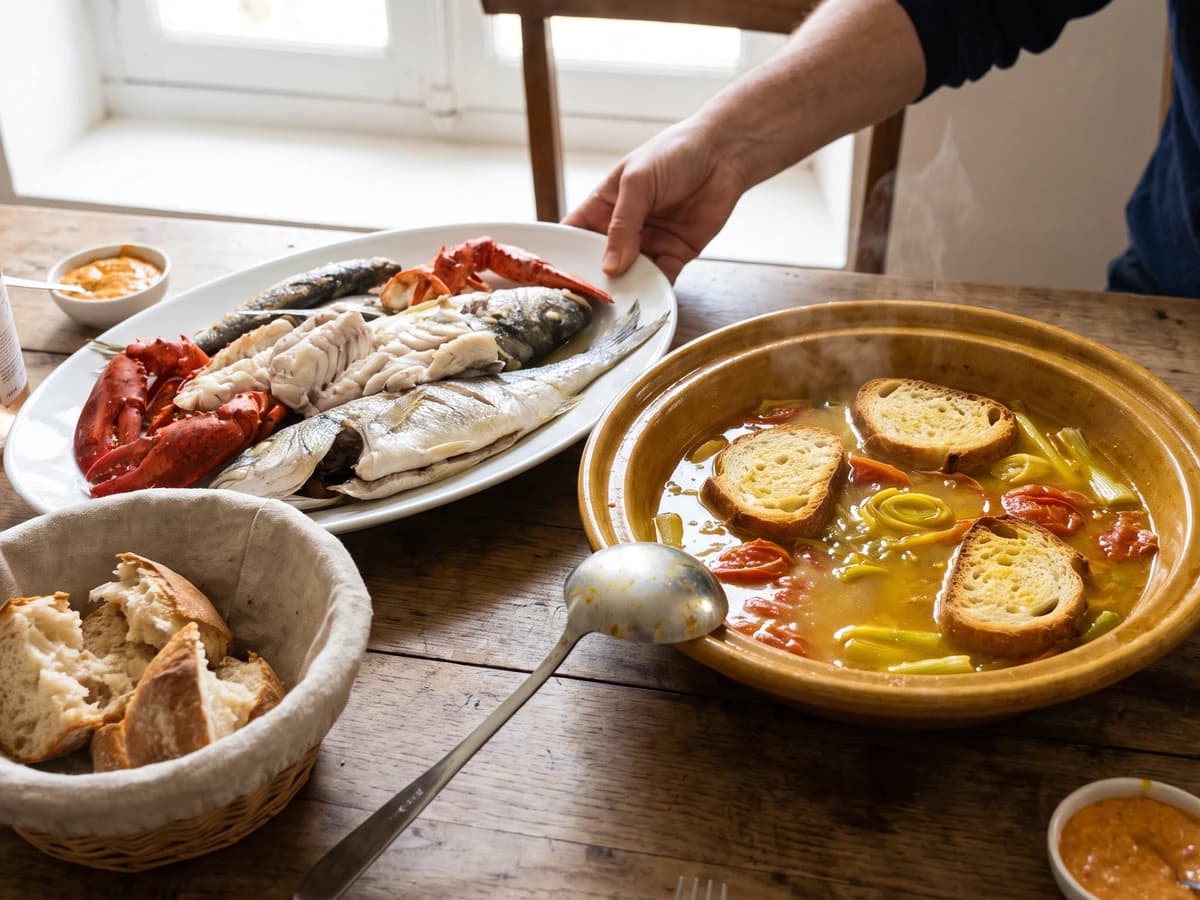
Bouillabaisse à la Marseillaise
Marseille's great fish stew, saffron-gold and garlic-scented, proves that a hard boil can be the careful choice: it binds olive oil into broth before the whole pot meets bread.
A cooking platform built around craft, culture, and the stories behind what we eat.
Created by Chef Juliette
Based on No. 652, Potage Fontanges, from Le Guide Culinaire (1907) by Auguste Escoffier
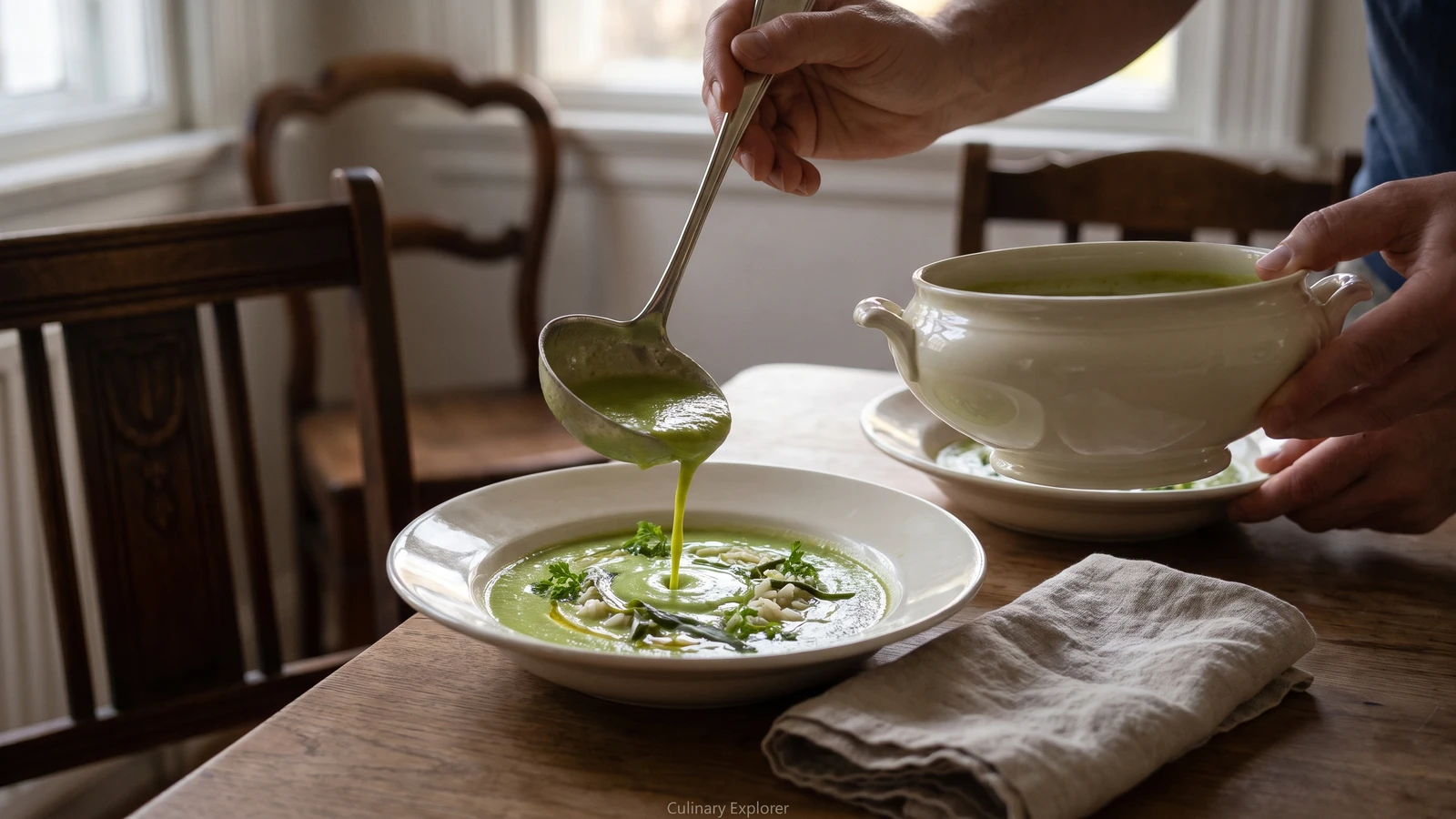
A silken green pea purée sharpened by sorrel Chiffonade and steadied with tender rice, Potage Fontanges proves that a classical garnish is not decoration, it is the dish’s balance.
Potage Fontanges (fresh-pea purée with sorrel and poached rice) teaches balance before richness. The one true thing to know before you touch a pan is that the sorrel must remain clearly tart against the peas’ sweetness. Mute it with cream or a long boil and Fontanges loses its character, however smooth the bowl.
The formula assumes a saucier on staff, a fresh-pea purée already ready for soup, and a stockpot never off the fire. A salamander has no work here. At home, one pale roux, one saucepan, an immersion blender, and a fine sieve give the same intent. The ready-made purée is brigade scaffolding, so we build it ourselves; the measured Chiffonade (No. 215), chervil pluches, and poached rice are the dish, so they stay. For a two-quart home pot, the book’s ratio gives us exactly ¼ cup each of prepared Chiffonade and poached rice. One cook, one stove, one evening.
The soup should arrive satin-green and loose enough to pour, with fine sorrel ribbons and small grains of rice interrupting the silk. The decisive moment comes after the purée is smooth: warm in the Chiffonade and rice without letting the pot boil, then mount the butter off the heat.
Potage Fontanges belongs to the Parisian grand-kitchen repertory of named potages, where a familiar purée gained its identity from a precisely measured garnish. Its grand title can mislead: Fontanges is neither a special pea variety nor a regional style, but the union of fresh-pea purée with sorrel Chiffonade, chervil pluches, and poached rice. Passed from formal service into bourgeois home cookery, it preserves the classical habit of making one base speak differently through garnish and balance.
Quantity
2 cups (480 ml / 480 g)
for poaching the rice
Quantity
1½ tablespoons (22 ml / 18 g), to yield ¼ cup (60 ml / 45 g) poached rice
Quantity
6 tablespoons (90 ml / 85 g)
divided; 4 tablespoons chilled and cubed
Quantity
1 cup (240 ml / 100 g)
thinly sliced
Quantity
2 tablespoons (30 ml / 16 g)
Quantity
6 cups (1.4 L / 1.4 kg)
divided and kept warm
Quantity
5 cups (1.2 L / 725 g)
Quantity
¼ cup (60 ml / 55 g) Chiffonade (No. 215)
Quantity
2 teaspoons (10 ml / 12 g), plus more as needed
divided
Quantity
¼ teaspoon (1.25 ml / 0.6 g)
Quantity
2 generous pinches (about 0.5 g)
| Ingredient | Quantity |
|---|---|
| waterfor poaching the rice | 2 cups (480 ml / 480 g) |
| long-grain white rice | 1½ tablespoons (22 ml / 18 g), to yield ¼ cup (60 ml / 45 g) poached rice |
| unsalted butterdivided; 4 tablespoons chilled and cubed | 6 tablespoons (90 ml / 85 g) |
| pale leekthinly sliced | 1 cup (240 ml / 100 g) |
| all-purpose flour | 2 tablespoons (30 ml / 16 g) |
| light unsalted chicken stockdivided and kept warm | 6 cups (1.4 L / 1.4 kg) |
| shelled fresh peas | 5 cups (1.2 L / 725 g) |
| prepared tender-sorrel Chiffonade | ¼ cup (60 ml / 55 g) Chiffonade (No. 215) |
| fine sea saltdivided | 2 teaspoons (10 ml / 12 g), plus more as needed |
| ground white pepper | ¼ teaspoon (1.25 ml / 0.6 g) |
| chervil pluches | 2 generous pinches (about 0.5 g) |
Bring the water to a lively simmer with ½ teaspoon of the salt. Sprinkle in the rice and poach it uncovered for 12 to 15 minutes, stirring once or twice, until the grains are completely tender but still distinct. Drain well and measure ¼ cup (60 ml / 45 g) for the soup. If the rice has burst and turned pasty, rinse it gently under warm water and drain; if it still clumps, begin again with the small quantity. The grains should punctuate the purée, not thicken it.
Melt 2 tablespoons of the butter in a heavy saucepan over low heat. Add the leek with a pinch of salt and sweat it for 5 to 6 minutes, stirring often, until soft and translucent without a trace of browning. Stir in the flour and cook for 2 minutes. This is a roux blanc, a white roux, and its purpose is quiet body rather than toasted flavor.
Whisk 4 cups of the warm stock into the roux a little at a time, smoothing each addition before adding the next. Bring it to a gentle simmer and cook for 5 minutes so the flour loses its raw taste. Add the peas, return the liquid just to a simmer, and cook for 5 to 8 minutes, until a pea crushes easily between two fingers but remains bright green. Mature peas may need several minutes more; tenderness matters more than the clock.
Take the pan off the heat and blend with an immersion blender until completely smooth. Pass the purée through a fine-mesh sieve into a clean saucepan, pressing firmly with a ladle, then discard the dry skins left behind. Add enough reserved stock to bring the soup to 8 cups, about 2 quarts, with a consistency that pours in a broad ribbon. If it is too thick, add stock by the spoonful; if it is thin, reduce it briefly before the final butter goes in. Ça se rattrape.
Return the purée to the gentlest heat. Fold in exactly ¼ cup of the prepared Chiffonade (No. 215) and the ¼ cup of poached rice, then warm them through for 3 minutes at a bare tremble. Do not let the soup boil. The book’s proportion may look modest, but the tart sorrel should cut through the pea without taking possession of the bowl; that balance is the dish.
Take the pan off the heat. Monter au beurre, emulsify with butter, by whisking in the remaining 4 tablespoons of cold butter a few cubes at a time until the surface turns glossy and the soup feels satin-soft on the spoon. Stir in the chervil pluches, white pepper, and enough remaining salt to wake the peas. If the butter separates into greasy specks, stop and whisk in a tablespoon of cold stock away from the heat. Ça se rattrape. Ladle into warmed bowls or a soupière and serve at once. À table!
1 serving (about 250g)
Culinary guides, cultural storytelling, and the editorial depth that makes cooking meaningful.
Discover Culinary ExplorerChef Juliette
Marseille's great fish stew, saffron-gold and garlic-scented, proves that a hard boil can be the careful choice: it binds olive oil into broth before the whole pot meets bread.
Chef Juliette
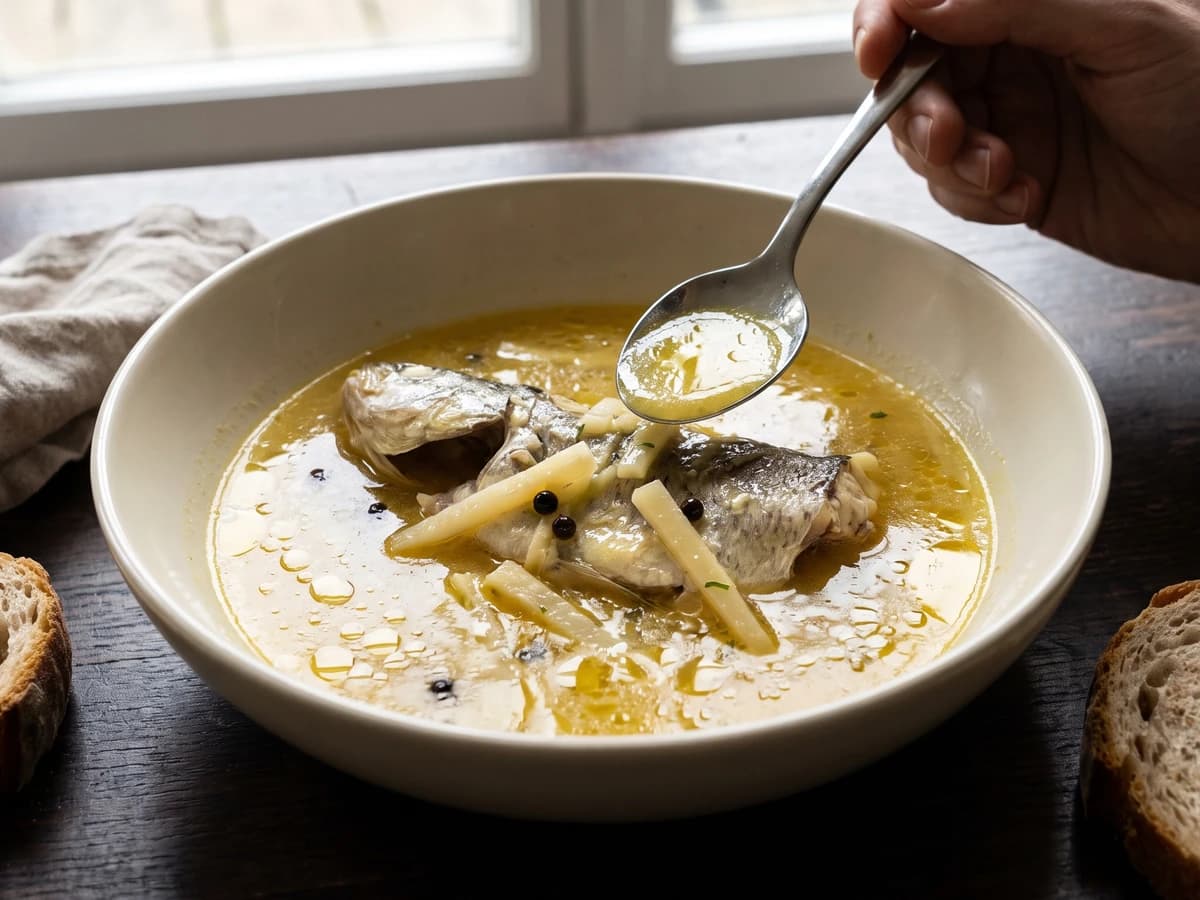
Waterzoi asks fresh, bone-in river fish to thicken its own buttery broth, with parsley root and pepper for company. No flour, no stockpot, just a brisk simmer watched closely.
Chef Juliette
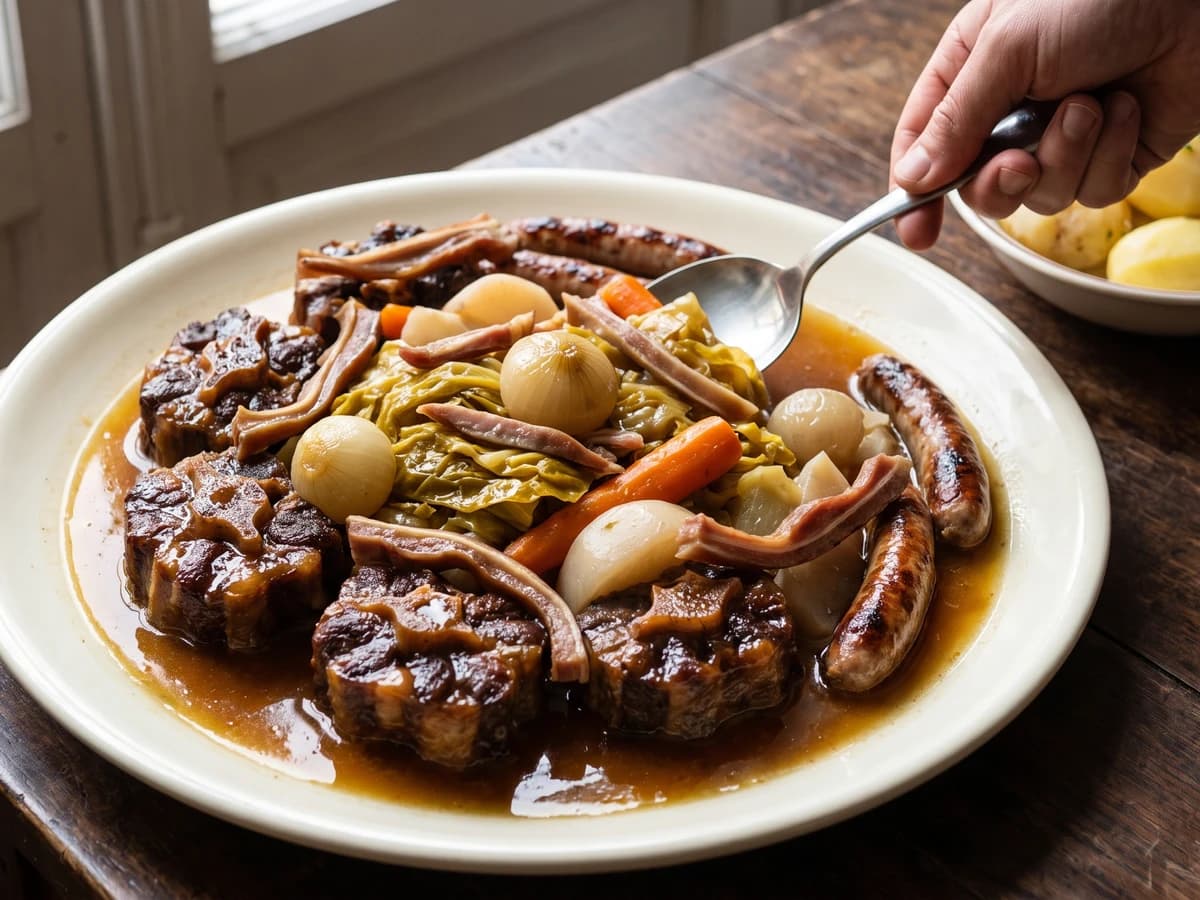
Queue de Bœuf en Hochepot gathers oxtail, pig's trotter and ear, cabbage, roots, and grilled chipolatas around a clear, gelatin-rich broth whose quiet simmer keeps every piece tender and distinct.
Chef Juliette
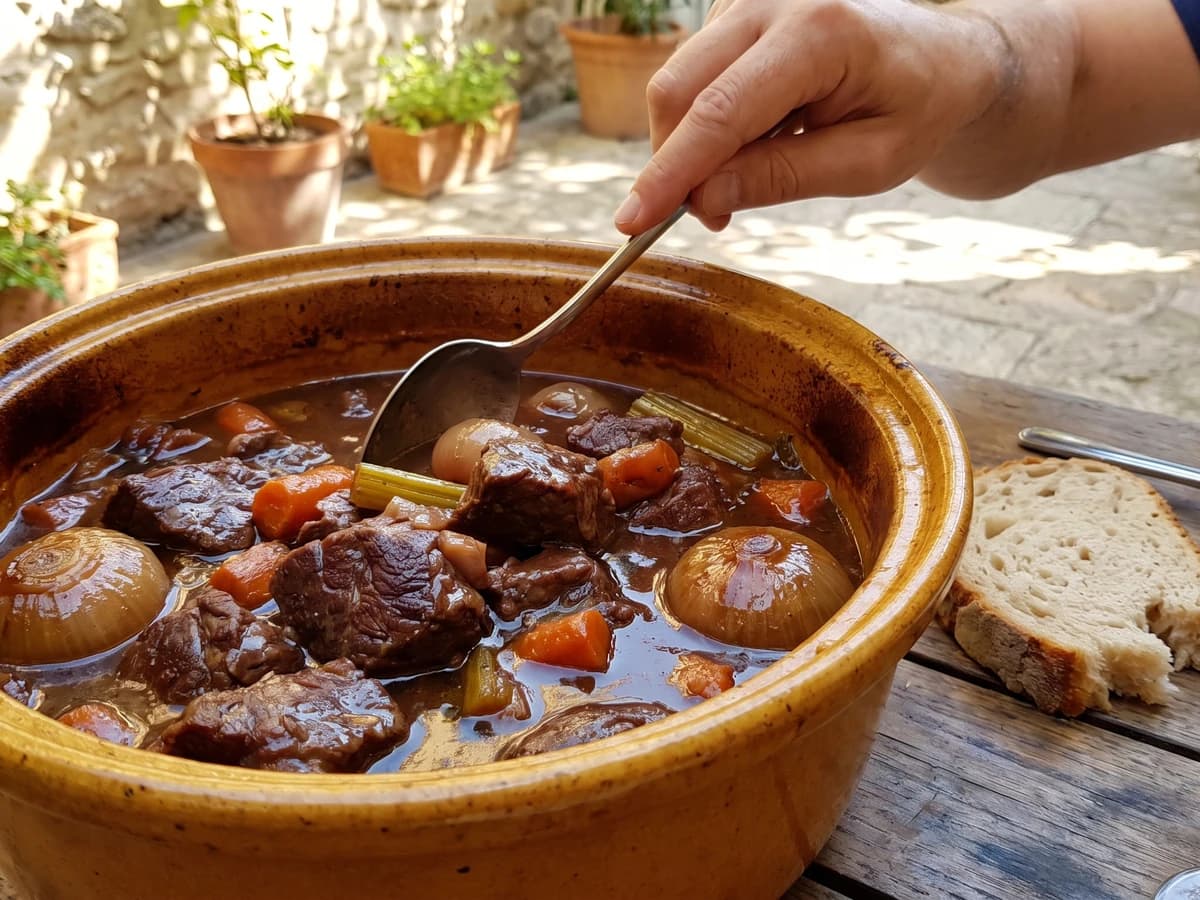
Beef shoulder larded with bacon, sharpened by red wine and vinegar, then sealed with garlic, vegetables, and dry lemon peel until the low oven turns it yielding and the gravy darkly glossy.