Chef Juliette
Bouillabaisse à la Marseillaise
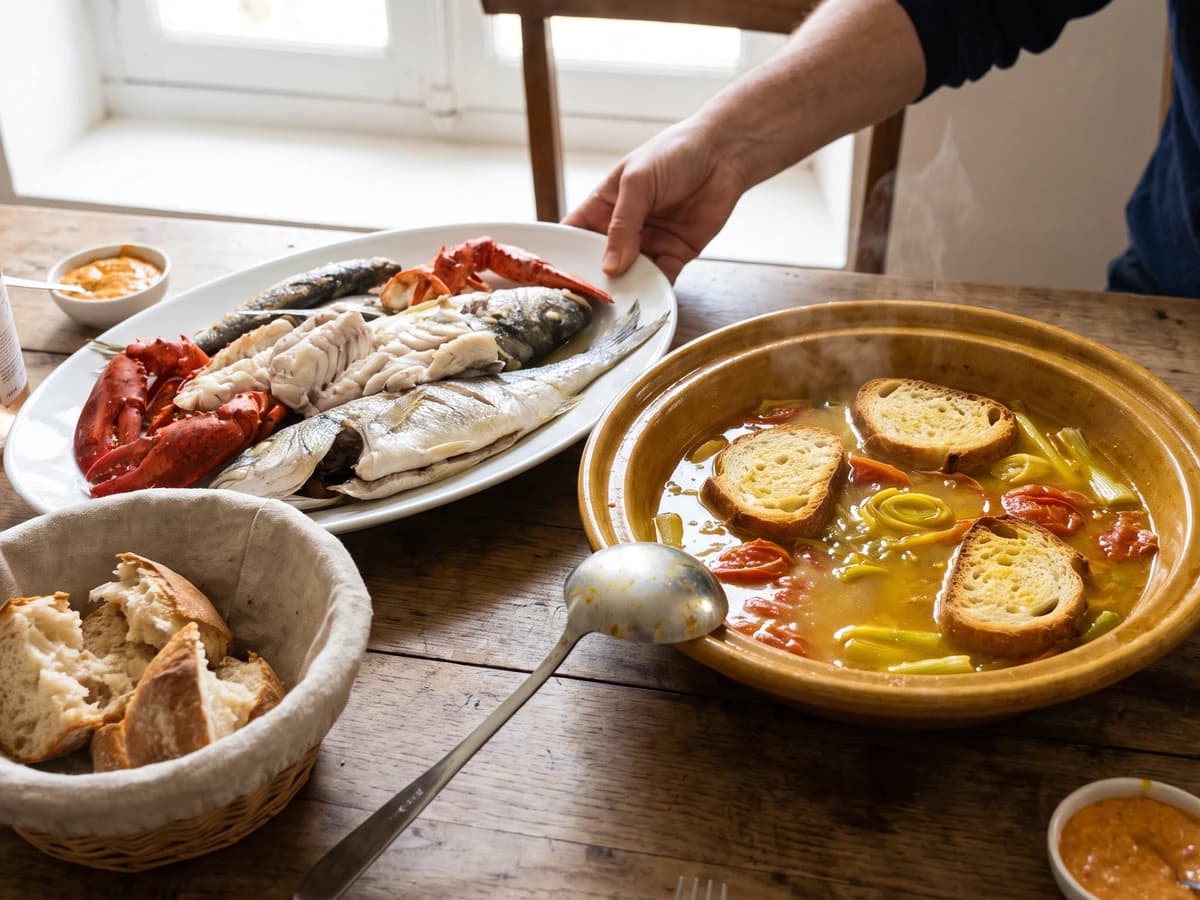
Marseille's great fish stew, saffron-gold and garlic-scented, proves that a hard boil can be the careful choice: it binds olive oil into broth before the whole pot meets bread.
A cooking platform built around craft, culture, and the stories behind what we eat.
Created by Chef Juliette
Based on No. 648, Purée de Pois Frais, Otherwise Saint-Germain, from Le Guide Culinaire (1907) by Auguste Escoffier
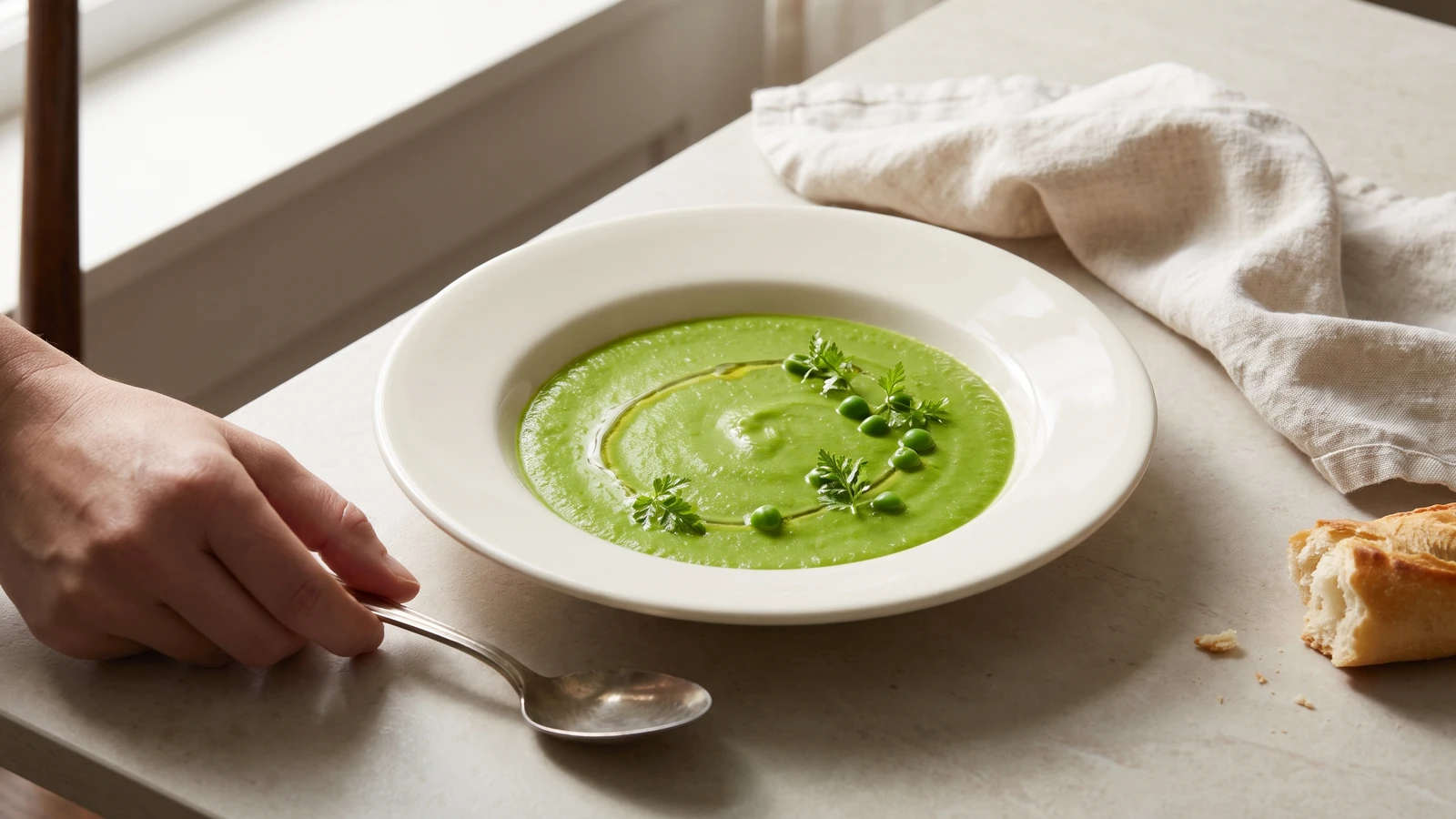
Fresh peas stewed quickly with lettuce, leek, and chervil, then sieved with white consommé and mounted with butter: Saint-Germain at its most delicate, green, glossy, and entirely possible on a home stove.
Purée de Pois Frais, dite Saint-Germain (fresh-pea purée known as Saint-Germain), teaches one uncompromising principle: speed preserves the soul of a fresh pea. Cook the peas only until tender, purée them immediately, and never let the finished soup boil. Delay turns that living green toward khaki, and no amount of cream can argue it back.
The source gives two methods. This recipe follows the second, an étuvée, a gentle covered stewing, with butter, Chiffonade (No. 215), leek green, and chervil. Its colour is a shade softer than peas boiled in salted water, but its flavour is more delicate and complete. This is the purée version, not the optional velouté or cream variation; its body comes from sieved peas, and its gloss from butter added at the last moment.
The professional formula assumed a saucier at the stove, a mortar, a tammy, and white consommé never far from the fire. For one cook, one stove, one evening, an immersion blender replaces the pounding, a fine-mesh sieve replaces the tammy, and a good pale chicken stock may stand for the consommé. The mortar was brigade labor and can go. The sieving and final butter are the dish, so they stay.
This two-quart home batch keeps the source proportions and sequence intact. Watch the peas, not the clock: the instant one crushes easily between your fingers, moisten, blend, and sieve. That quick turn from pot to purée is the step that matters most.
On the Parisian classical table, Saint-Germain became shorthand for preparations centered on green peas, a name commonly connected with the pea-growing market gardens around Saint-Germain-en-Laye, west of Paris. Classical books differ over whether a potage Saint-Germain begins with fresh peas or dried split peas; this entry settles the matter plainly with peas just shelled and cooked at speed. Its second method folds in lettuce, leek, and chervil, sacrificing a fraction of brilliance for a more delicate vegetable flavour.
Quantity
5 cups (1.2 L / 725 g)
Quantity
3 tablespoons (45 ml / 27 g)
reserved for garnish
Quantity
6 tablespoons (90 ml / 85 g)
Quantity
1½ cups (360 ml / 85 g)
thinly sliced
Quantity
1 tablespoon (15 ml / 3 g)
roughly chopped
Quantity
2 teaspoons (10 ml / 12 g), plus more for the blanching water
divided
Quantity
1 teaspoon (5 ml / 4 g)
Quantity
Generous ½ cup (135 ml / 135 g)
Quantity
4 cups (960 ml / 960 g)
Quantity
4 tablespoons (60 ml / 57 g)
diced for finishing
Quantity
¼ cup loosely packed (60 ml / 5 g)
for garnish
| Ingredient | Quantity |
|---|---|
| shelled fresh peas | 5 cups (1.2 L / 725 g) |
| very small fresh peasreserved for garnish | 3 tablespoons (45 ml / 27 g) |
| unsalted butter | 6 tablespoons (90 ml / 85 g) |
| Chiffonademade with very tender lettuce | 1 cup (240 ml / 35 g) Chiffonade (No. 215) |
| green part of leeksthinly sliced | 1½ cups (360 ml / 85 g) |
| chervil leavesroughly chopped | 1 tablespoon (15 ml / 3 g) |
| fine saltdivided | 2 teaspoons (10 ml / 12 g), plus more for the blanching water |
| granulated sugar | 1 teaspoon (5 ml / 4 g) |
| water | Generous ½ cup (135 ml / 135 g) |
| white consommé or clear pale unsalted chicken stock | 4 cups (960 ml / 960 g) |
| cold unsalted butterdiced for finishing | 4 tablespoons (60 ml / 57 g) |
| chervil pluchesfor garnish | ¼ cup loosely packed (60 ml / 5 g) |
Bring a small saucepan of well-salted water to a full boil. Add the reserved fine peas and cook for 30 to 60 seconds, just until tender and vividly green. Drain and cool them at once in cold water, then drain again. Hold them covered while you make the soup; this separate blanching keeps the garnish distinct and very green.
Melt the 6 tablespoons butter in a heavy 4-quart saucepan over medium-low heat without letting it colour. Add the main quantity of peas, the Chiffonade (No. 215), leek green, chopped chervil, 1½ teaspoons salt, sugar, and water. Stir once, cover tightly, and cook briskly but gently for 6 to 9 minutes, stirring twice, until a pea crushes easily between two fingers. Nothing should brown. If the pan dries before the peas are tender, add 2 tablespoons of the measured consommé; that small correction protects both flavour and colour.
As soon as the peas are tender, pour in the white consommé or pale chicken stock. Raise the heat only until the liquid reaches its first quiet simmer, then remove the pan from the heat. A hard boil drives off the peas' fresh aroma and begins dulling their colour, so move directly to blending.
Blend the soup immediately with an immersion blender until no whole peas remain. Pass it through a fine-mesh sieve into a clean bowl, pressing firmly with the back of a ladle until only dry skins and coarse fibres remain. The blender replaces the mortar, but it does not replace the sieve: that final passing gives Saint-Germain its light, even texture. If the purée still feels grainy, pass it through once more. Cooking well is not cooking fancy, but this bit of discipline matters.
Return the sieved purée to the clean saucepan and warm it gently until fully hot, stirring often and stopping short of a boil. Taste and add the remaining salt if needed. Remove the pan from the heat and monter au beurre, finish by whisking in the cold diced butter a few pieces at a time, until the surface gleams and the soup coats a spoon in a thin green veil. If oily beads appear, the pan was too hot. Ça se rattrape: whisk in 1 tablespoon cold water until the emulsion smooths, then add the remaining butter away from the heat.
Ladle the Saint-Germain into warmed soup plates. Divide the blanched peas among them and finish with chervil pluches, scattered lightly enough that the green surface remains visible. Serve at once, while the butter still shines and the pea flavour is at its brightest. À table!
1 serving (about 245g)
Culinary guides, cultural storytelling, and the editorial depth that makes cooking meaningful.
Discover Culinary ExplorerChef Juliette
Marseille's great fish stew, saffron-gold and garlic-scented, proves that a hard boil can be the careful choice: it binds olive oil into broth before the whole pot meets bread.
Chef Juliette
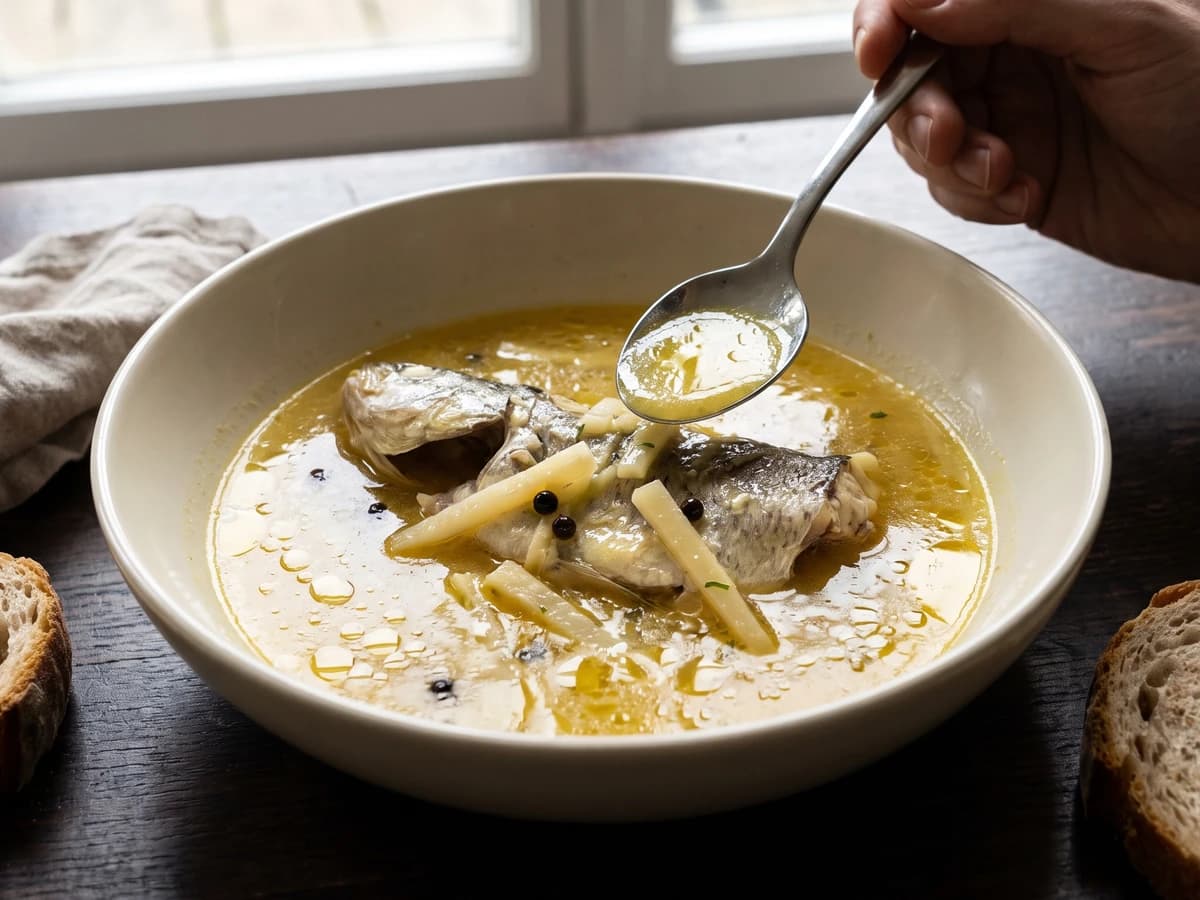
Waterzoi asks fresh, bone-in river fish to thicken its own buttery broth, with parsley root and pepper for company. No flour, no stockpot, just a brisk simmer watched closely.
Chef Juliette
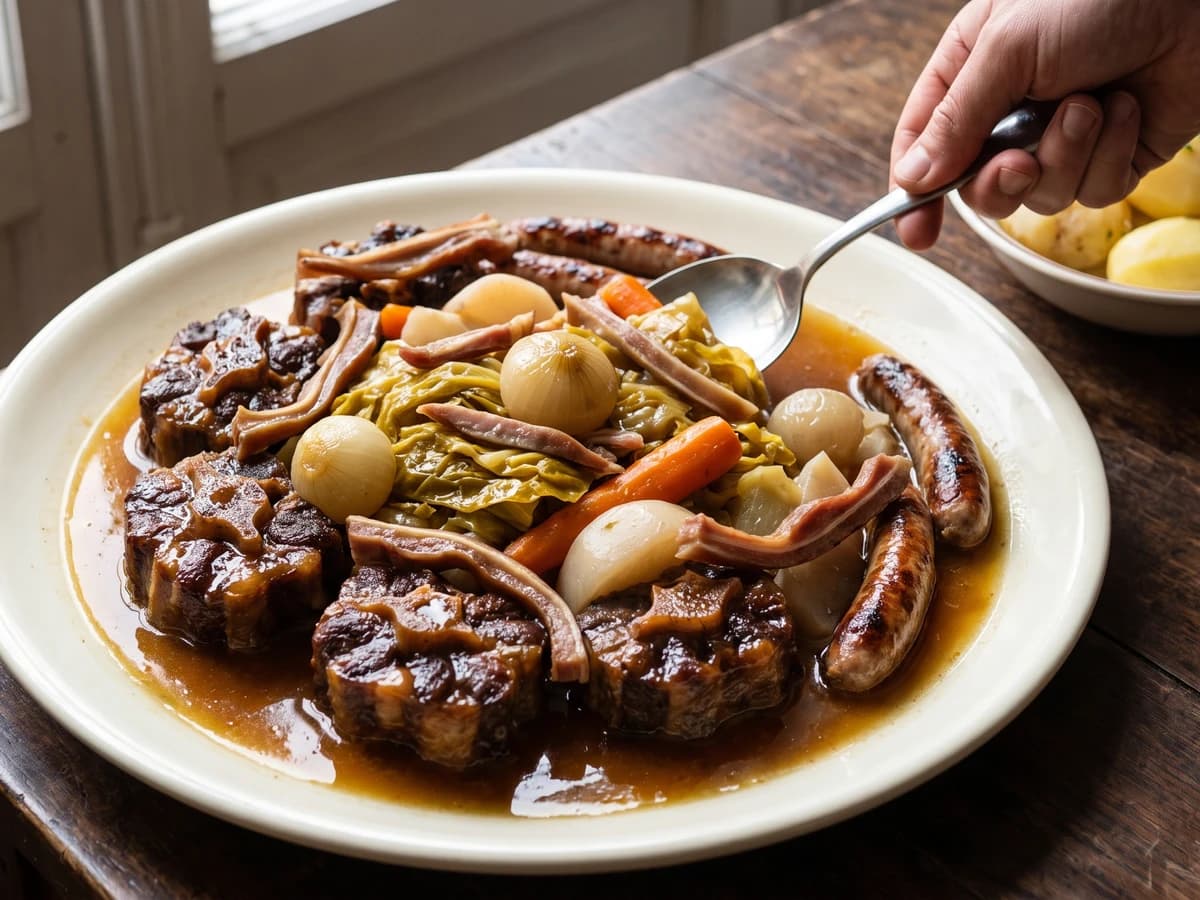
Queue de Bœuf en Hochepot gathers oxtail, pig's trotter and ear, cabbage, roots, and grilled chipolatas around a clear, gelatin-rich broth whose quiet simmer keeps every piece tender and distinct.
Chef Juliette
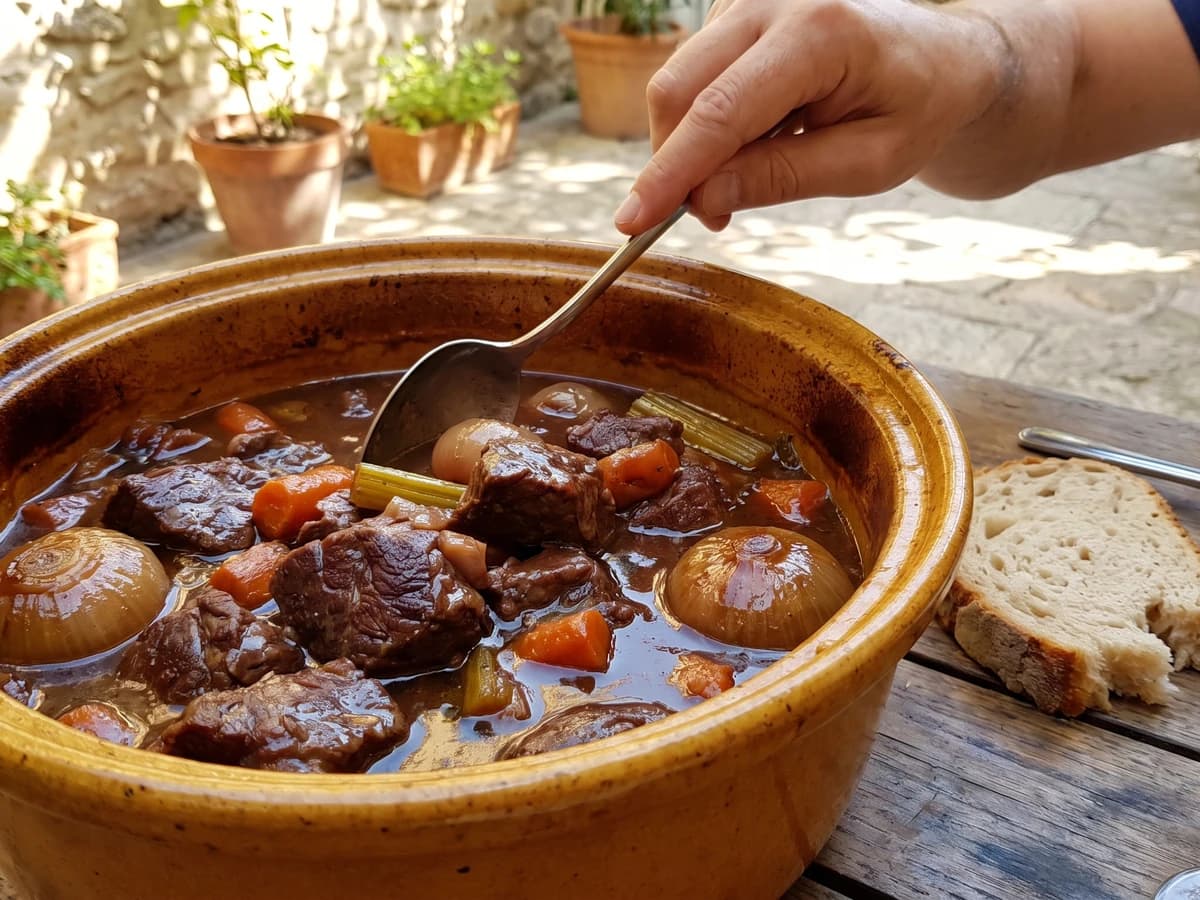
Beef shoulder larded with bacon, sharpened by red wine and vinegar, then sealed with garlic, vegetables, and dry lemon peel until the low oven turns it yielding and the gravy darkly glossy.