Chef Juliette
Bouillabaisse à la Marseillaise
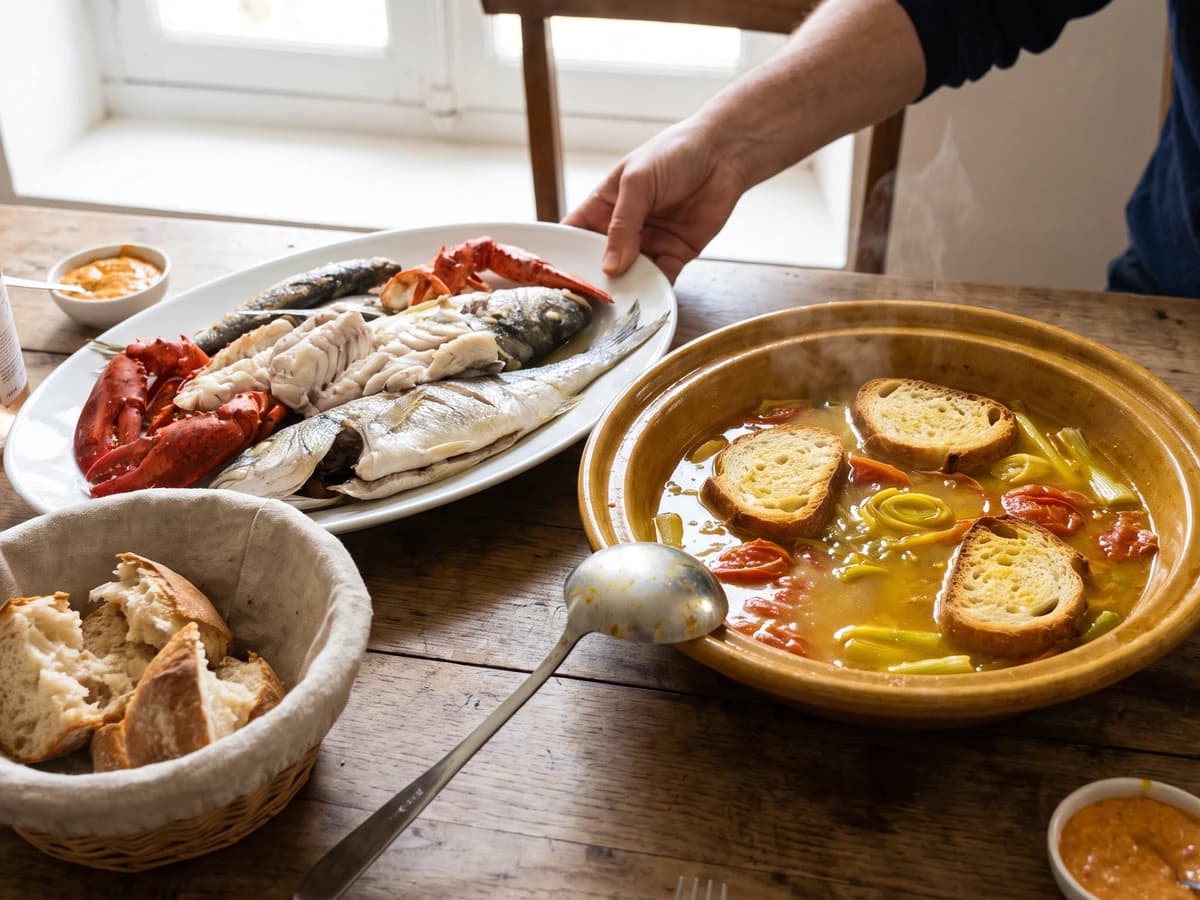
Marseille's great fish stew, saffron-gold and garlic-scented, proves that a hard boil can be the careful choice: it binds olive oil into broth before the whole pot meets bread.
A cooking platform built around craft, culture, and the stories behind what we eat.
Created by Chef Juliette
Based on No. 647, Purée de Pois aux Croûtons, from Le Guide Culinaire (1907) by Auguste Escoffier
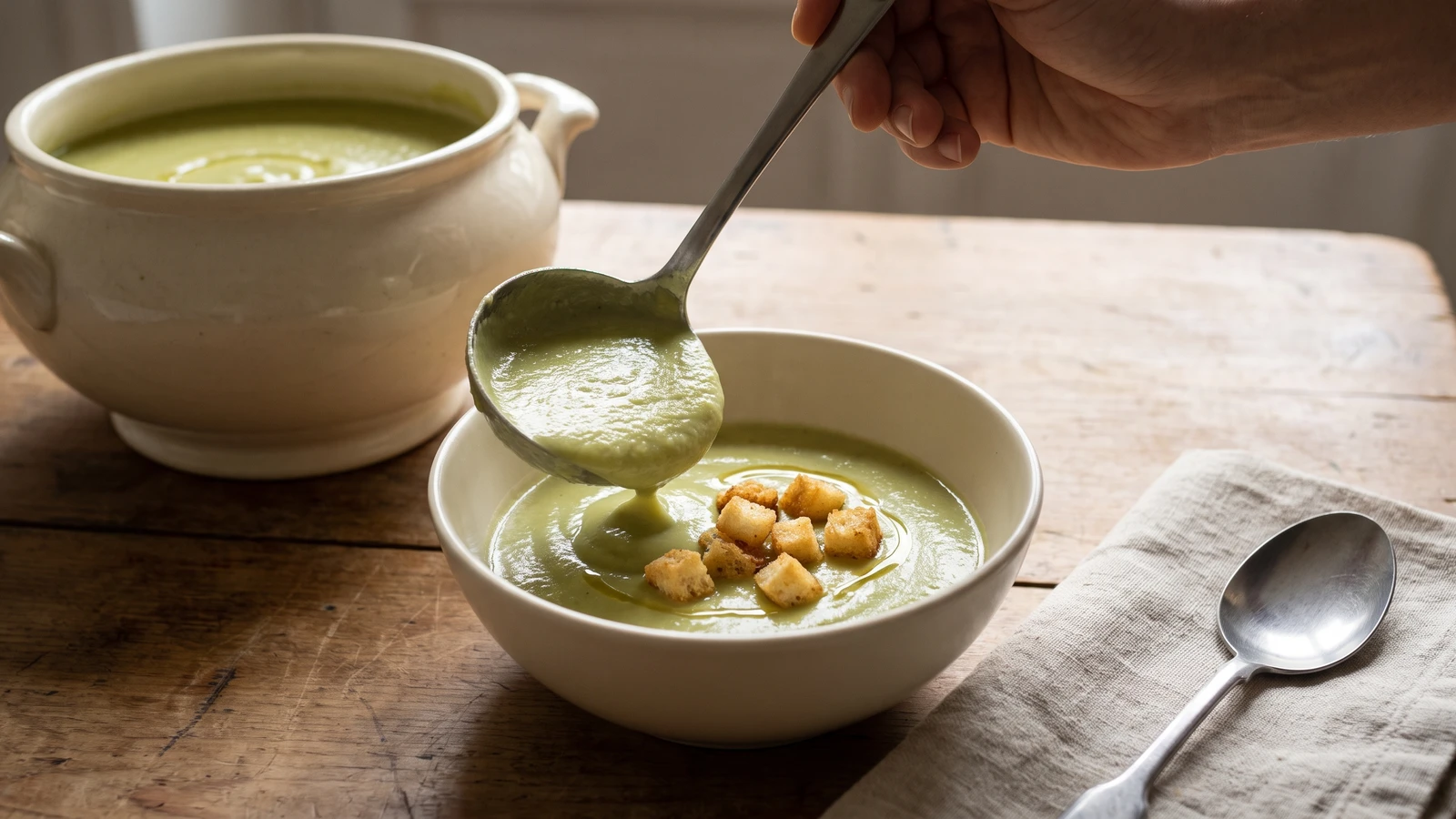
Purée de Pois aux Croûtons brings split peas, raw ham, leek greens, and patient skimming into a pale, flowing potage, finished with white consommé, real butter, and crisp bread dice.
Purée de Pois aux Croûtons (split-pea purée with butter-fried bread dice) teaches that smoothness is not the same as refinement. A blender can make peas smooth; only patient skimming and a final pass through a sieve make the purée taste clean, pour in a soft ribbon, and leave no coarse husk behind. Know that before you touch the pan: the first rise of foam is the moment to stay close.
The original pot assumed a saucier to watch its surface, a wide tammy for sieving, a prepared Mirepoix (No. 228), and white consommé never off the fire. At home, one heavy saucepan, a blender, a fine-mesh sieve, and good prepared consommé do the same honest work. The source formula is already close to a family pot, so this version keeps its proportions and finishes at about two quarts for one cook, one stove, one evening. Constant brigade attendance is scaffolding and can go. The first skim, gentle cooking, sieving, and final butter are the dish, so they stay.
When it is right, the purée is pale green, glossy without looking greasy, and fluid enough to settle around the golden croûtons. Add those only as the bowls leave the kitchen so they remain crisp. Keep your skimmer beside the pan during that first rise; the clean first skim decides the whole soup.
Purée de pois belongs to the cuisine bourgeoise of Paris and northern France, where dried peas and ham made a sustaining household pot before the preparation entered the formal soup course. Grand kitchens refined it by passing the peas through a tammy, extending the purée with white consommé, and skimming until its flavor and surface read clean. Despite its pale green color, this is not a fresh petits pois soup: dried split peas provide its body, while butter-fried croûtons supply the essential crisp contrast.
Quantity
1¾ cups (420 ml / 350 g)
Quantity
4 cups (960 ml / 960 g)
Quantity
½ teaspoon (2.5 ml / 3 g), plus more to taste
Quantity
8 ounces (227 g)
left in one piece
Quantity
½ cup (120 ml / 57 g) Mirepoix (No. 228)
Quantity
3 leeks (about 2 packed cups / 180 g)
thoroughly washed and minced
Quantity
1 small sprig
Quantity
½ leaf
Quantity
1 tablespoon (15 ml / 14 g)
Quantity
2 to 3 cups (480 to 720 ml / 480 to 720 g)
Quantity
2 tablespoons plus 2 teaspoons (40 ml / 37 g)
divided
Quantity
2 tablespoons (30 ml / 8 g)
cut into ¼-inch (6 mm) dice
| Ingredient | Quantity |
|---|---|
| dried green split peas | 1¾ cups (420 ml / 350 g) |
| cold water | 4 cups (960 ml / 960 g) |
| fine salt | ½ teaspoon (2.5 ml / 3 g), plus more to taste |
| raw unsmoked hamleft in one piece | 8 ounces (227 g) |
| prepared Mirepoix | ½ cup (120 ml / 57 g) Mirepoix (No. 228) |
| green leaves from medium leeksthoroughly washed and minced | 3 leeks (about 2 packed cups / 180 g) |
| thyme | 1 small sprig |
| bay leaf | ½ leaf |
| granulated sugar | 1 tablespoon (15 ml / 14 g) |
| hot white consommé | 2 to 3 cups (480 to 720 ml / 480 to 720 g) |
| unsalted butterdivided | 2 tablespoons plus 2 teaspoons (40 ml / 37 g) |
| day-old white breadcut into ¼-inch (6 mm) dice | 2 tablespoons (30 ml / 8 g) |
Rinse the split peas thoroughly in cold water, agitating them with your fingers and draining until the water is nearly clear. Put them in the saucepan with the 4 cups of cold water, the ham, and half the salt. Bring slowly just to the boil without stirring. As the grey foam gathers, skim it off with a shallow spoon or fine skimmer. If a hard boil breaks the foam back into the liquid, pull the pan off the heat for two minutes, return it over gentle heat, and skim what reforms. Ça se rattrape.
Add the prepared Mirepoix (No. 228), minced leek greens, sugar, thyme, and bay leaf. Lower the heat, cover the pan partially, and cook at the gentlest simmer for 75 to 90 minutes, stirring across the bottom occasionally once the initial foam is gone. The peas are ready when they collapse completely under a spoon and the leek greens are tender. If the purée catches, do not scrape the scorched layer into it. Pour the untouched contents into a clean saucepan and leave the darkened bottom behind; caught early, it can still be rescued.
Lift out the ham, thyme, and bay leaf. Reserve the fully cooked ham for another meal. Let the peas settle for five minutes, then blend until very smooth, working in batches and filling a countertop blender no more than halfway. Vent the lid beneath a folded towel so pressure cannot build. Press the blended purée through a fine-mesh sieve with the back of a sturdy ladle. This replaces the old tammy without surrendering its purpose. If the purée is too thick to pass, loosen it with a ladleful of the hot consommé and continue.
Return the sieved purée to the clean saucepan and whisk in 2 cups of the hot white consommé. Add more gradually until the soup measures about 8 cups and falls from the ladle in a broad ribbon rather than a heavy heap. Bring it to the barest simmer and skim away the pale foam and any beads of fat for 8 to 10 minutes. This final skimming is what makes a good pea purée read clean. If it is thin, reduce it gently before adding the butter; if it is thick, add another splash of consommé.
Melt the 2 teaspoons of butter in a small skillet over medium heat. Add the bread dice and toss them steadily until every side is crisp and evenly golden, about 3 to 4 minutes. Transfer them to a small plate and keep them uncovered. Covering warm croûtons traps moisture and softens the very contrast the dish needs.
Take the purée off the heat and use the monter au beurre finish, whisking in the remaining 2 tablespoons of butter a few pieces at a time until the surface gleams. Do not boil it afterward. If the butter beads on top, whisk in a spoonful of reserved consommé off the heat until the purée comes together again. Taste for salt, ladle into warm bowls, and scatter the croûtons over the surface at the last possible moment. À table!
1 serving (about 240g)
Culinary guides, cultural storytelling, and the editorial depth that makes cooking meaningful.
Discover Culinary ExplorerChef Juliette
Marseille's great fish stew, saffron-gold and garlic-scented, proves that a hard boil can be the careful choice: it binds olive oil into broth before the whole pot meets bread.
Chef Juliette
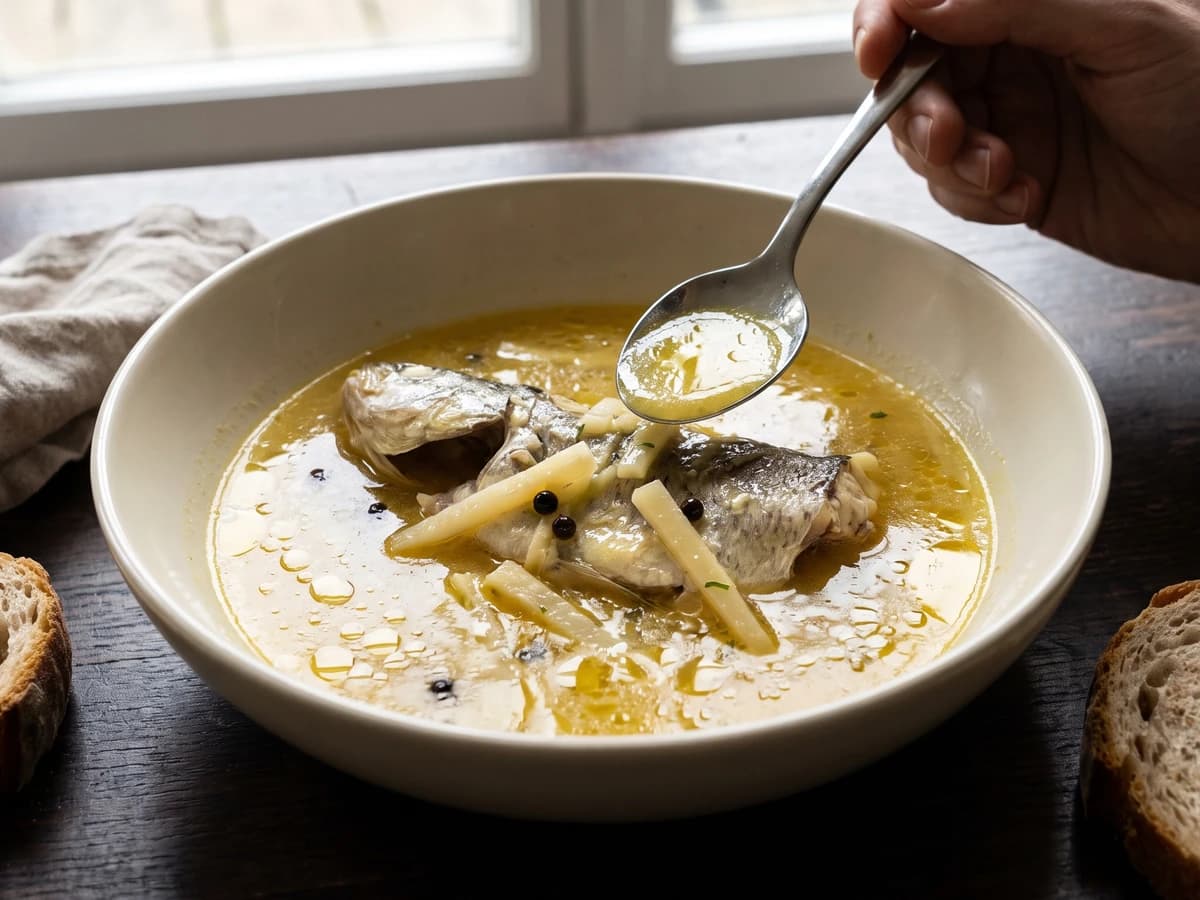
Waterzoi asks fresh, bone-in river fish to thicken its own buttery broth, with parsley root and pepper for company. No flour, no stockpot, just a brisk simmer watched closely.
Chef Juliette
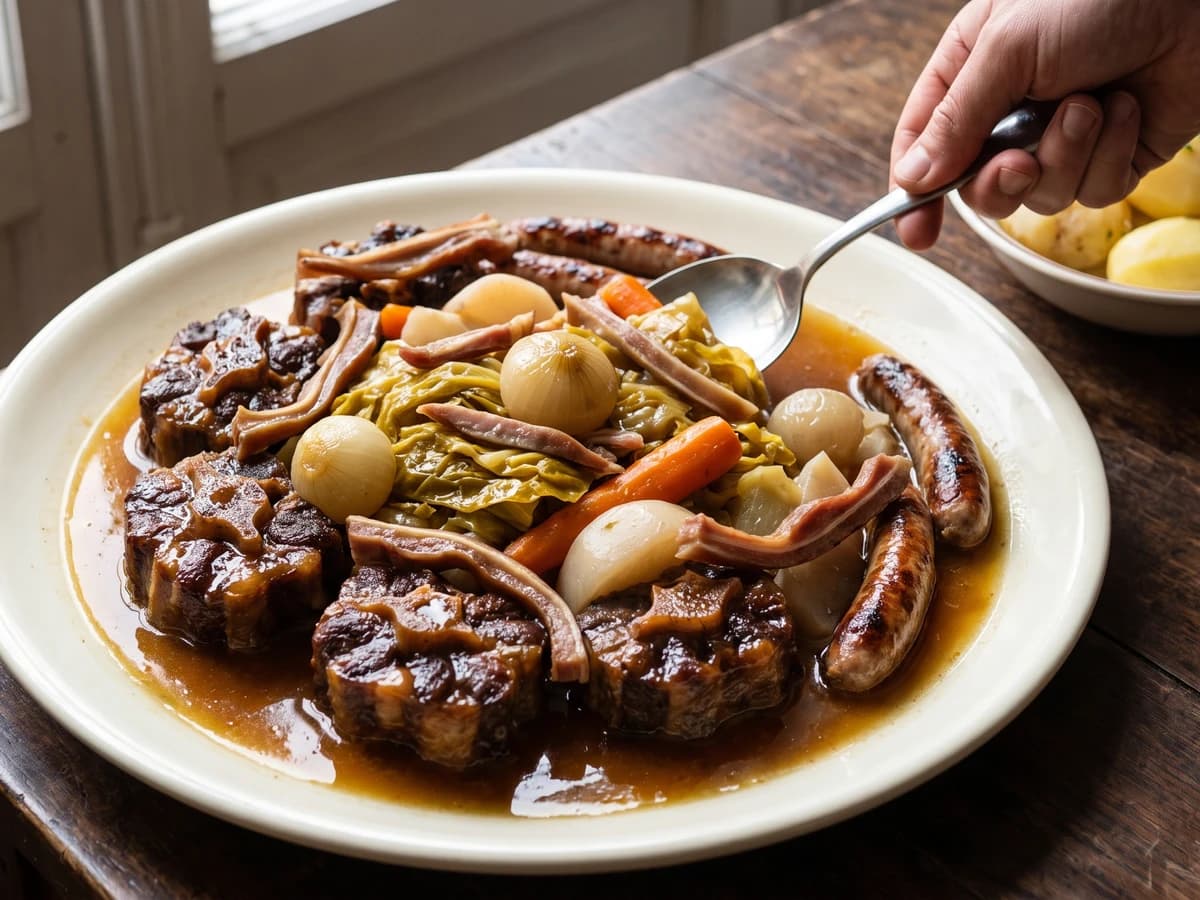
Queue de Bœuf en Hochepot gathers oxtail, pig's trotter and ear, cabbage, roots, and grilled chipolatas around a clear, gelatin-rich broth whose quiet simmer keeps every piece tender and distinct.
Chef Juliette
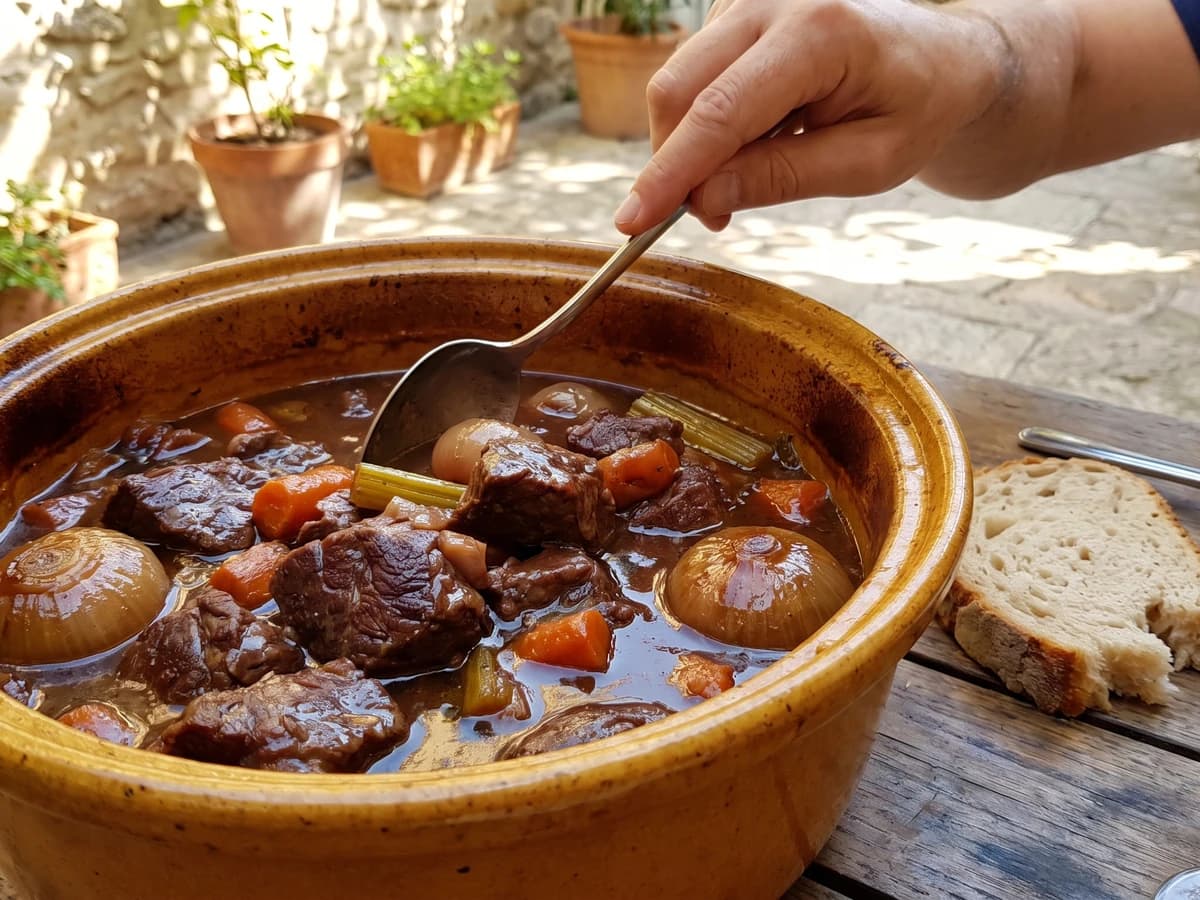
Beef shoulder larded with bacon, sharpened by red wine and vinegar, then sealed with garlic, vegetables, and dry lemon peel until the low oven turns it yielding and the gravy darkly glossy.