Chef Juliette
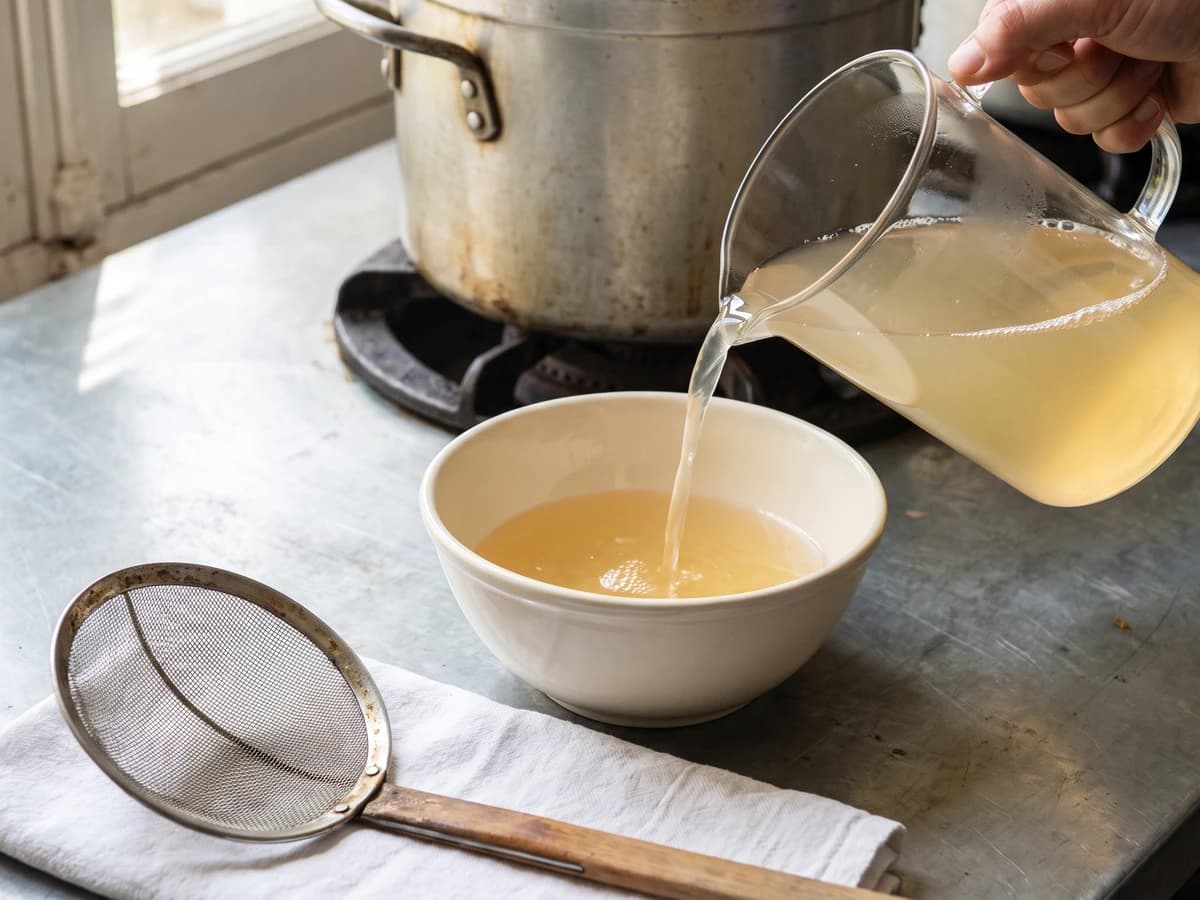
Ordinary or White Consommé
Beef shin, lean beef, and fowl begin in cold water and rise slowly toward a tremble. Skim before the boil, and you learn the quiet discipline that gives every clear French broth its backbone.
A cooking platform built around craft, culture, and the stories behind what we eat.
Created by Chef Juliette
Based on No. 64, Béarnaise Tomatée Sauce or Choron Sauce, from Le Guide Culinaire (1907) by Auguste Escoffier
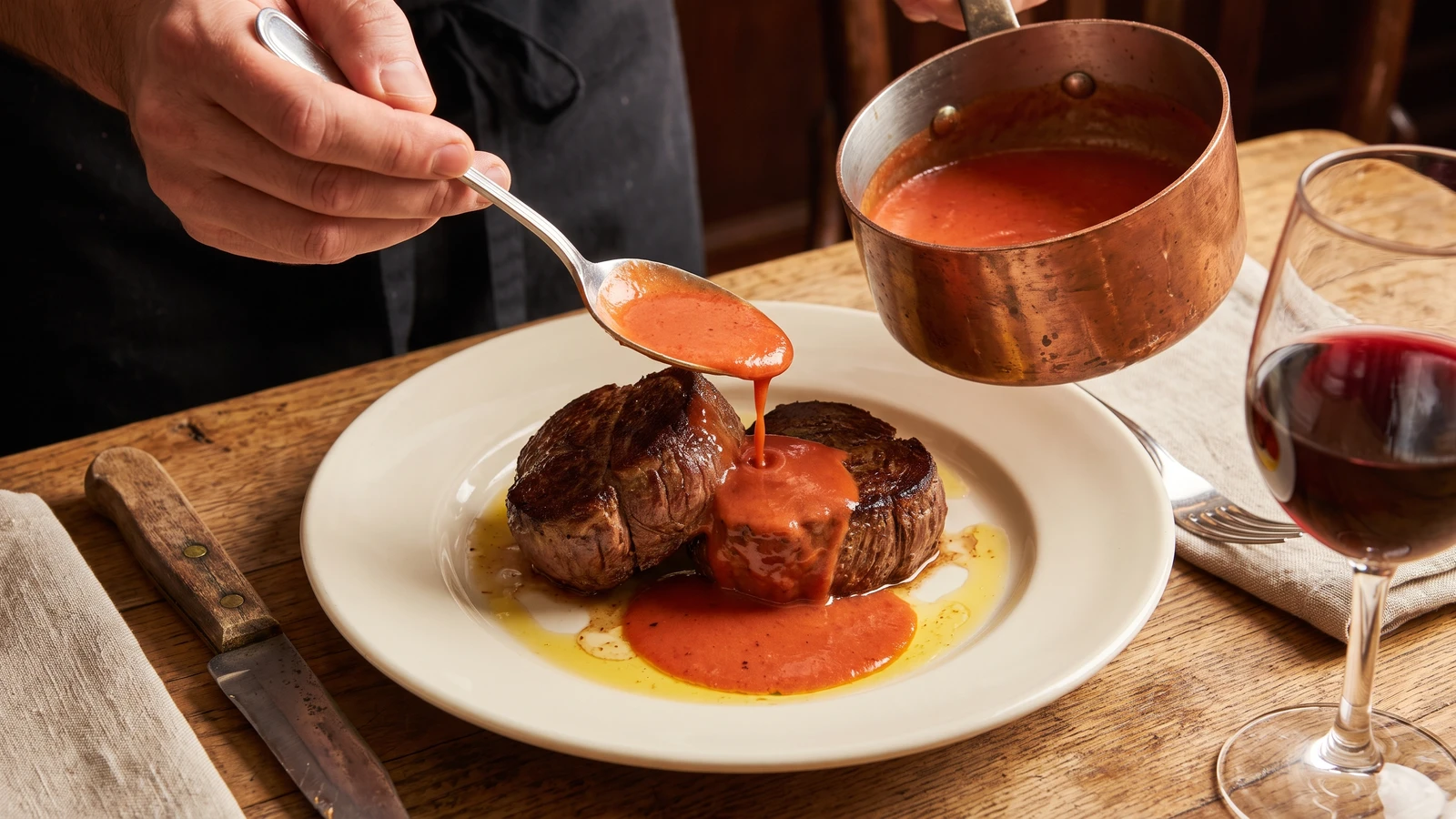
Sauce Choron is Béarnaise in its tomato-red register: glossy, sharp with vinegar and shallot, rich with butter, and kept only tepid so the emulsion reaches tournedos intact.
Sauce béarnaise tomatée, dite Sauce Choron (tomato-finished Béarnaise), teaches the rule governing every warm butter emulsion: temperature is an ingredient. The tomato must be smooth, concentrated, and as tepid as the sauce before they meet. Add a cold, watery purée or put the finished sauce over direct heat, and the gloss loosens into grease.
The source assumed a saucier watching the emulsion, a horsehair tammy ready for straining, and a reliably tepid corner of the stove. The book keeps Béarnaise Sauce (No. 62) as its own preparation, and so do we. For one cook, one stove, one evening, a fine-mesh sieve replaces the tammy and the quantity becomes about 400 ml, enough for six generous plates rather than a service pan. The separate saucier and old equipment were brigade scaffolding; the vinegar-and-herb reduction, yolk-thickened butter emulsion, concentrated tomato, and gentle temperature are the dish and must stay.
When it is right, Sauce Choron falls from the spoon in a coral-red ribbon, rich but sharpened by the Béarnaise reduction. The final chopped chervil and tarragon are deliberately omitted, exactly as the source directs. Before combining anything, bring the sauce and tomato to the same tepid temperature. That is the step that decides it.
Sauce Choron belongs to the Parisian grand-kitchen repertoire, where Béarnaise was extended with intensely red tomato purée for Tournedos Choron and later accompanied grilled poultry and pale butcher's meats. It is sometimes mistaken for hollandaise merely colored with tomato, but its grammar is Béarnaise: a shallot, chervil, tarragon-stalk, and vinegar reduction beneath the egg-and-butter emulsion, with the source version deliberately omitting the final chopped herbs.
Quantity
1 cup (240 ml / about 240 g) Béarnaise Sauce (No. 62)
prepared through straining with its final chopped chervil and tarragon omitted
Quantity
⅔ cup (160 ml / 170 g)
sieved and reduced until thick
Quantity
1 tablespoon (15 ml / 15 g)
Quantity
1
reserved for a severe rescue
Quantity
to taste
| Ingredient | Quantity |
|---|---|
| Béarnaise Sauceprepared through straining with its final chopped chervil and tarragon omitted | 1 cup (240 ml / about 240 g) Béarnaise Sauce (No. 62) |
| very red tomato puréesieved and reduced until thick | ⅔ cup (160 ml / 170 g) |
| tepid water (optional) | 1 tablespoon (15 ml / 15 g) |
| large egg yolk (optional)reserved for a severe rescue | 1 |
| fine salt (optional) | to taste |
Prepare the Béarnaise Sauce (No. 62) according to its own entry through the tammy step, using a fine-mesh sieve as the honest home equivalent. Stop before adding the final chopped chervil and tarragon; Choron keeps the herbs in the founding reduction but leaves out that fresh finish. Hold the strained sauce in a warm bowl, off direct heat.
Put the sieved tomato purée in a small heavy saucepan. If it is already dense enough for a spoon drawn across the pan to leave a clean path, warm it gently and stop. If loose liquid closes that path at once, stir over medium-low heat until the excess water has cooked away. The source assumed a prepared, intensely red purée; reducing an honest canned purée supplies that home equivalent without changing the sauce's intent.
Let the tomato settle to roughly 43 to 49°C (110 to 120°F), pleasantly warm against a fingertip but never hot. Bring the Béarnaise to the same range by resting its bowl briefly over a bain-marie, a warm-water bath, then remove it. Cold tomato can seize the butter, while excessive heat cooks the yolks and splits the emulsion.
Whisk the tomato purée into the Béarnaise in three additions, combining each completely before adding the next. The finished Sauce Choron should hold a glossy ribbon and nappe, meaning coat, the back of a spoon without running like broth. If it turns oily, stop. Ça se rattrape: whisk 1 teaspoon of the tepid water in a clean bowl, then add the broken sauce a spoonful at a time until the emulsion catches. If it still refuses, whisk the reserved yolk with another teaspoon of tepid water over the gentlest bain-marie until creamy, remove it from the heat, and rebuild the sauce into that base.
Taste and add salt only if the tomato has muted the seasoning. Do not add chopped chervil or tarragon, and do not put the finished sauce back over direct heat. Keep it tepid in its bowl for no longer than 30 minutes, whisking once before serving. Spoon it generously over tournedos, grilled poultry, or veal, allowing it to pool rather than painting the plate with it. À table!
1 serving (about 68g)
Culinary guides, cultural storytelling, and the editorial depth that makes cooking meaningful.
Discover Culinary ExplorerChef Juliette
Beef shin, lean beef, and fowl begin in cold water and rise slowly toward a tremble. Skim before the boil, and you learn the quiet discipline that gives every clear French broth its backbone.
Chef Juliette
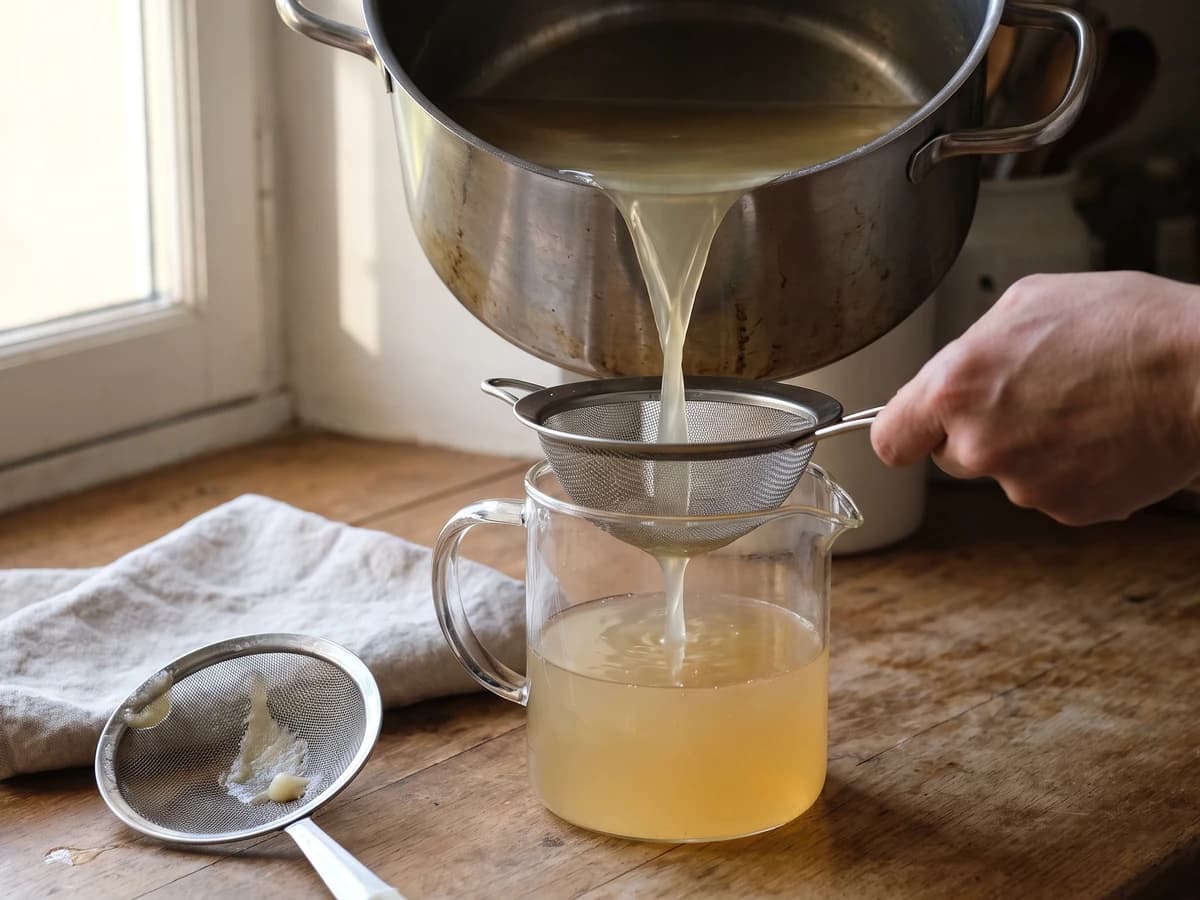
Break the veal bones small, then give them eight hours at a bare tremble. This pale, gelatinous fond becomes the quiet foundation beneath velouté, blanquette, and every sauce that must stay light.
Chef Juliette
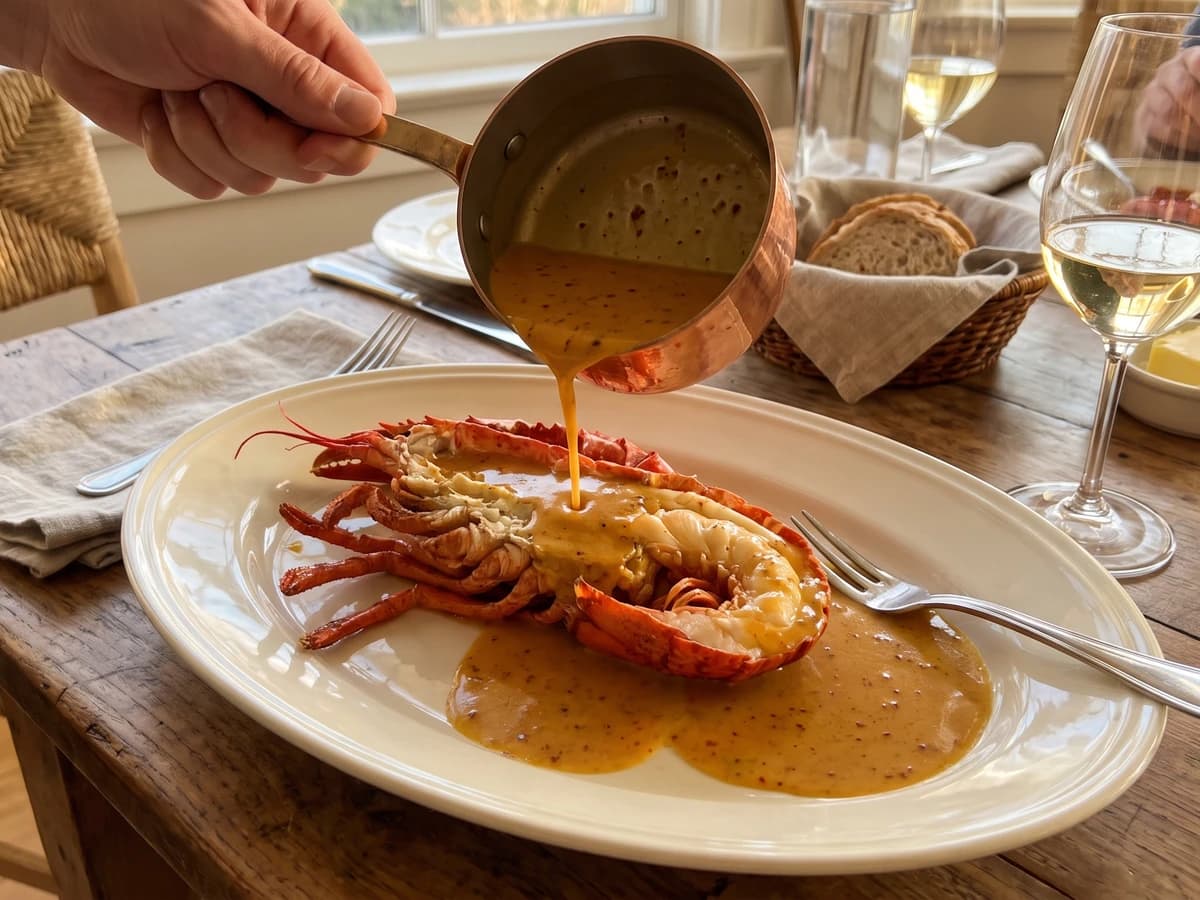
Sauce Orientale concentrates lobster-rich American Sauce with curry, then folds in cream away from the fire: a glossy, gently spiced derivative made for lobster, crayfish, and firm fish.
Chef Juliette
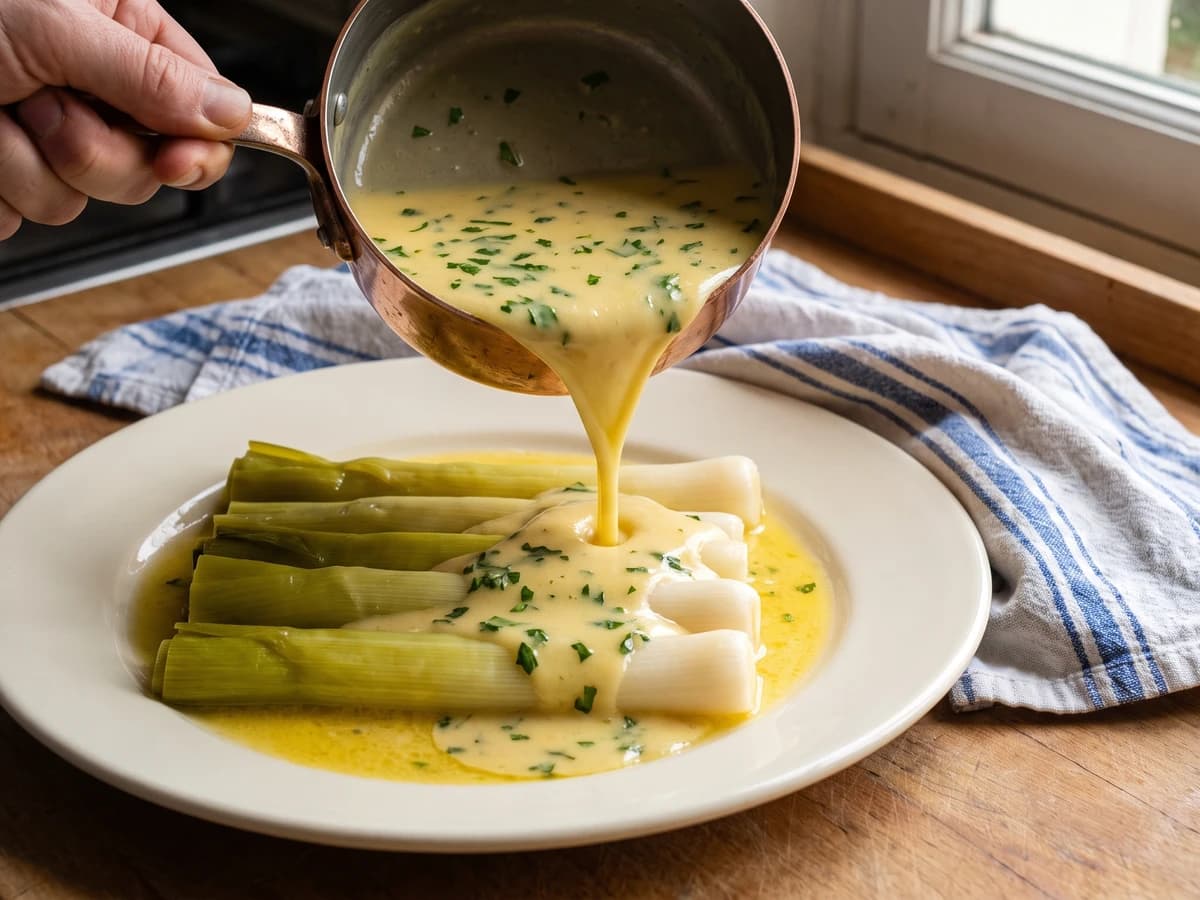
An old lesson in sauce families: Sauce Allemande takes mushroom liquor, then butter, lemon, and parsley, becoming a glossy Poulette for sheep's trotters, leeks, cauliflower, and anything needing gentle richness with a bright edge.