Chef Juliette
Ordinary or White Consommé
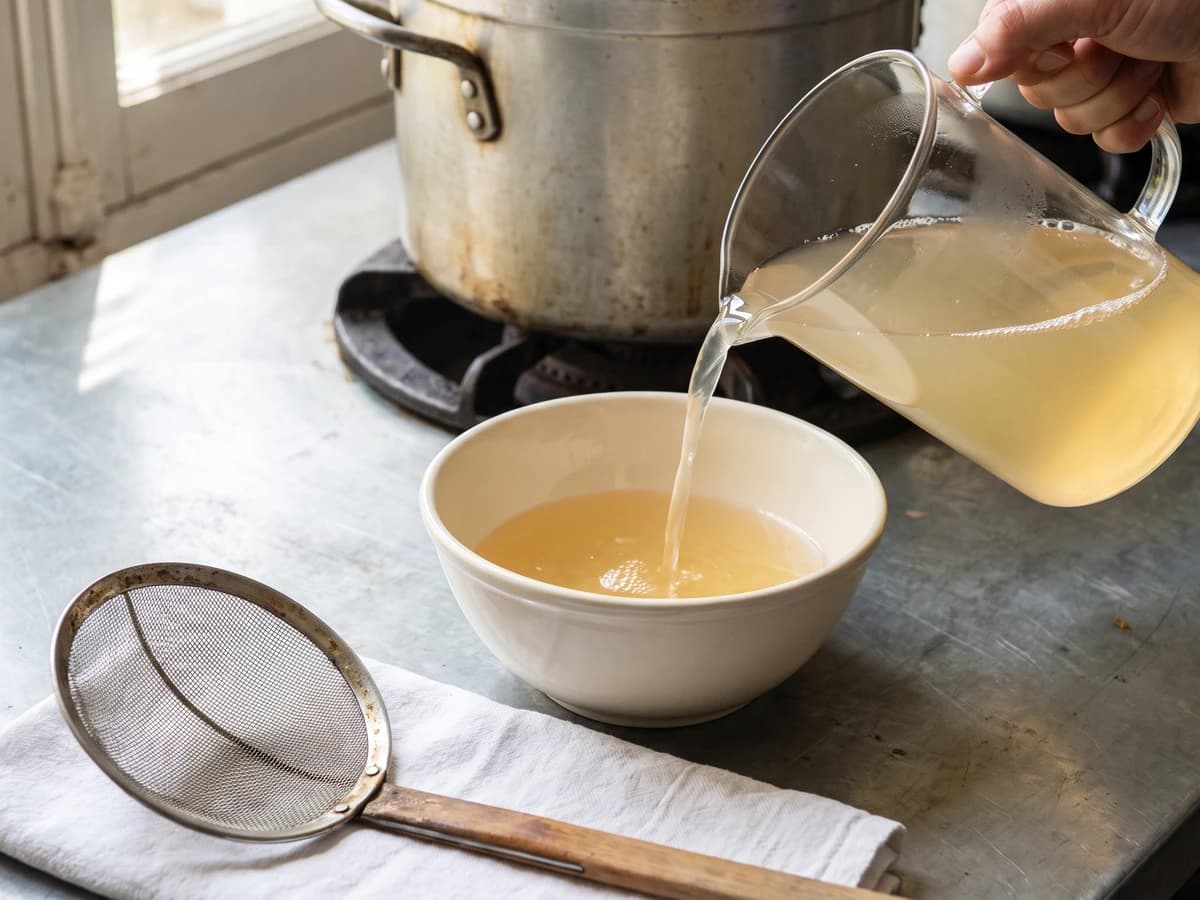
Beef shin, lean beef, and fowl begin in cold water and rise slowly toward a tremble. Skim before the boil, and you learn the quiet discipline that gives every clear French broth its backbone.
A cooking platform built around craft, culture, and the stories behind what we eat.
Created by Chef Juliette
Based on No. 62, Béarnaise Sauce, from Le Guide Culinaire (1907) by Auguste Escoffier
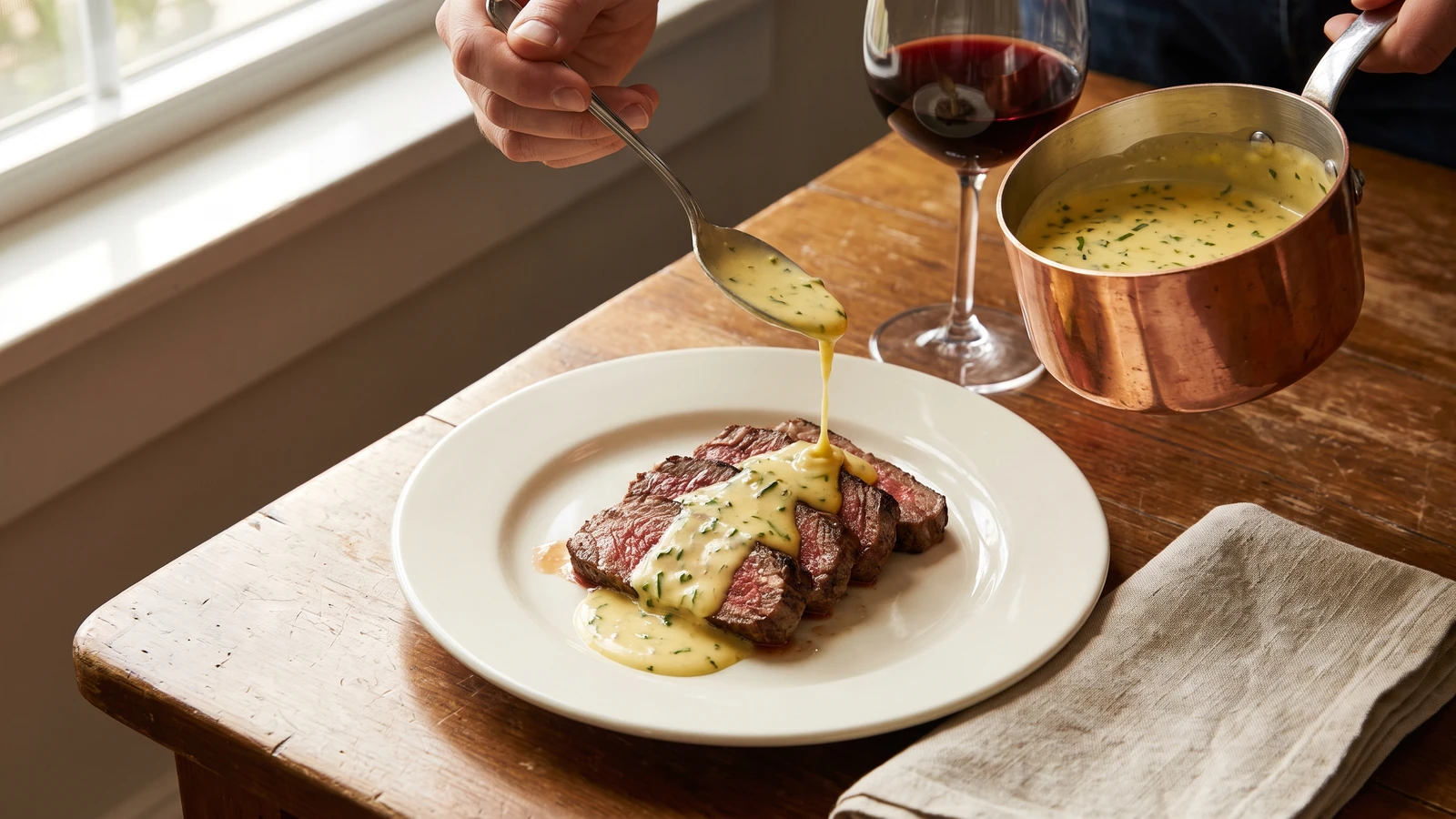
Vinegar, shallot, tarragon, and chervil sharpen warm butter into Sauce Béarnaise, a glossy emulsion for grilled meat that lives or turns by the gentleness of your heat.
Sauce Béarnaise (warm tarragon-butter emulsion) teaches the essential truth of every warm emulsion: the heat must be steady enough to thicken the yolks, yet gentle enough to keep them supple. Béarnaise should arrive glossy, herb-flecked, and tepid. Make it truly hot and the butter escapes from the yolks.
The book's small stewpan assumed a saucier free to whisk without interruption over a low flame, with a tammy ready and service waiting nearby. This entry asks for neither a stockpot nor a salamander, only that saucier's attention. At home, a bain-marie gives gradual heat and a fine-mesh sieve replaces the tammy. The five-yolk formula becomes three yolks, with every weight carried at three-fifths and only tiny spoon measures rounded to what a home spoon can honestly measure. Quantity, direct flame, and brigade holding are scaffolding. The vinegar reduction, gradual liaison, and tepid service are the dish. One cook, one stove, one evening.
The reduction smells almost too sharp before the butter enters, which is exactly right. It must carry enough vinegar, tarragon, and chervil to remain vivid beneath the richness. The step that decides everything is adding the melted butter gradually while keeping the yolks warm enough to bind and cool enough not to scramble.
Despite its name, Sauce Béarnaise belongs to Saint-Germain-en-Laye, west of Paris, rather than to the everyday cooking of Béarn. Its name honors Henri IV and his Béarnais origins, while its method belongs to the classical warm butter-emulsion family, sharpened here with shallot, tarragon, chervil, and vinegar. From grand dining rooms it traveled naturally to grills and bistro tables, where its acidity answers the richness of butcher's meat and poultry.
Quantity
Scant 2/3 teaspoon (3 ml / 2 g)
finely chopped
Quantity
About 1 packed cup (240 ml / 34 g, or 1.2 oz)
finely chopped
Quantity
About 2 packed cups (475 ml / 51 g, or 1.8 oz)
stems and leaves coarsely chopped
Quantity
1/4 teaspoon (1.25 ml / 0.6 g)
coarsely crushed to mignonette
Quantity
1/8 teaspoon (0.6 ml / 0.8 g)
Quantity
2 tablespoons plus 1 1/4 teaspoons (36 ml / 36 g)
Quantity
3
Quantity
7 tablespoons plus 1/2 teaspoon (108 ml / 102 g)
gently melted
Quantity
Scant 2/3 teaspoon (3 ml / 0.6 g)
finely chopped
Quantity
1 small pinch (about 0.15 ml / 0.05 g)
Quantity
2 teaspoons (10 ml / 10 g)
for consistency or rescue
Quantity
1
for rescuing a fully broken sauce
| Ingredient | Quantity |
|---|---|
| shallotfinely chopped | Scant 2/3 teaspoon (3 ml / 2 g) |
| fresh tarragon stalksfinely chopped | About 1 packed cup (240 ml / 34 g, or 1.2 oz) |
| fresh chervilstems and leaves coarsely chopped | About 2 packed cups (475 ml / 51 g, or 1.8 oz) |
| black peppercornscoarsely crushed to mignonette | 1/4 teaspoon (1.25 ml / 0.6 g) |
| fine salt | 1/8 teaspoon (0.6 ml / 0.8 g) |
| white wine vinegar | 2 tablespoons plus 1 1/4 teaspoons (36 ml / 36 g) |
| large egg yolks | 3 |
| unsalted buttergently melted | 7 tablespoons plus 1/2 teaspoon (108 ml / 102 g) |
| mixed fresh chervil and tarragon leavesfinely chopped | Scant 2/3 teaspoon (3 ml / 0.6 g) |
| cayenne pepper | 1 small pinch (about 0.15 ml / 0.05 g) |
| water (optional)for consistency or rescue | 2 teaspoons (10 ml / 10 g) |
| additional large egg yolk (optional)for rescuing a fully broken sauce | 1 |
Put an inch of water into a saucepan wide enough to hold the small saucier without its base touching the water. Bring it to the barest simmer. Melt the butter separately over low heat until just liquid, without coloring it, then hold it at about 45 to 50°C (113 to 122°F). Hot butter can shock the yolks; cold butter tightens the emulsion before it has formed.
Combine the shallot, tarragon stalks, chervil, mignonette, salt, and vinegar in a 1-quart saucier or small stainless-steel saucepan. Bring the vinegar to a lively simmer over medium-low heat and reduce it by two-thirds. When the herbs are pressed aside, about 2 1/2 teaspoons of sharp, concentrated liquid should collect at the bottom. Don't let the shallot or herbs brown. The quantity of greenery will look alarming. It is exactly right, and nearly all of it will be strained away.
Take the pan off the heat and let it cool for 2 to 3 minutes, until it feels warm rather than fiercely hot. Whisk the three yolks directly into the unstrained reduction. Set the pan over the bain-marie (gentle water bath) and whisk briskly, lifting it away from the water whenever the sides grow hot, until the yolks become pale and creamy and hold the trace of the whisk. The yolks alone create the liaison, the binding and thickening of the sauce, so give them gradual heat rather than a boil.
Begin adding the warm melted butter a few drops at a time, whisking each addition fully into the yolks. Once roughly one-third of the butter is incorporated and the sauce looks glossy, pour the rest in a very thin stream while whisking without pause. Move the pan on and off the bain-marie to control the heat. The finished emulsion should fall from the whisk in a thick ribbon, not sit like paste. If it becomes oily or curdled, stop adding butter and remove it from the heat. Ça se rattrape: whisk in 1 teaspoon of cool water. If it remains broken, whisk the optional fresh yolk with another teaspoon of water in a clean, warm bowl, then incorporate the broken sauce one teaspoon at a time until it is whole again.
Immediately press the sauce through a fine-mesh sieve into a clean, warm bowl. This is the home equivalent of rubbing it through a tammy, and it removes the fibrous stalks while leaving their flavor behind. Stir in the finely chopped chervil and tarragon leaves, then add the suspicion of cayenne. Taste and correct the salt. If the sauce no longer flows softly from a spoon, whisk in warm water a few drops at a time.
Serve the Béarnaise at once, or hold its bowl over warm water for no more than 30 minutes, whisking occasionally. It should remain tepid, around 45 to 50°C (113 to 122°F), because direct reheating or very hot water will turn it. Spoon it generously over grilled beef, lamb, or poultry. À table!
1 serving (about 40g)
Culinary guides, cultural storytelling, and the editorial depth that makes cooking meaningful.
Discover Culinary ExplorerChef Juliette
Beef shin, lean beef, and fowl begin in cold water and rise slowly toward a tremble. Skim before the boil, and you learn the quiet discipline that gives every clear French broth its backbone.
Chef Juliette
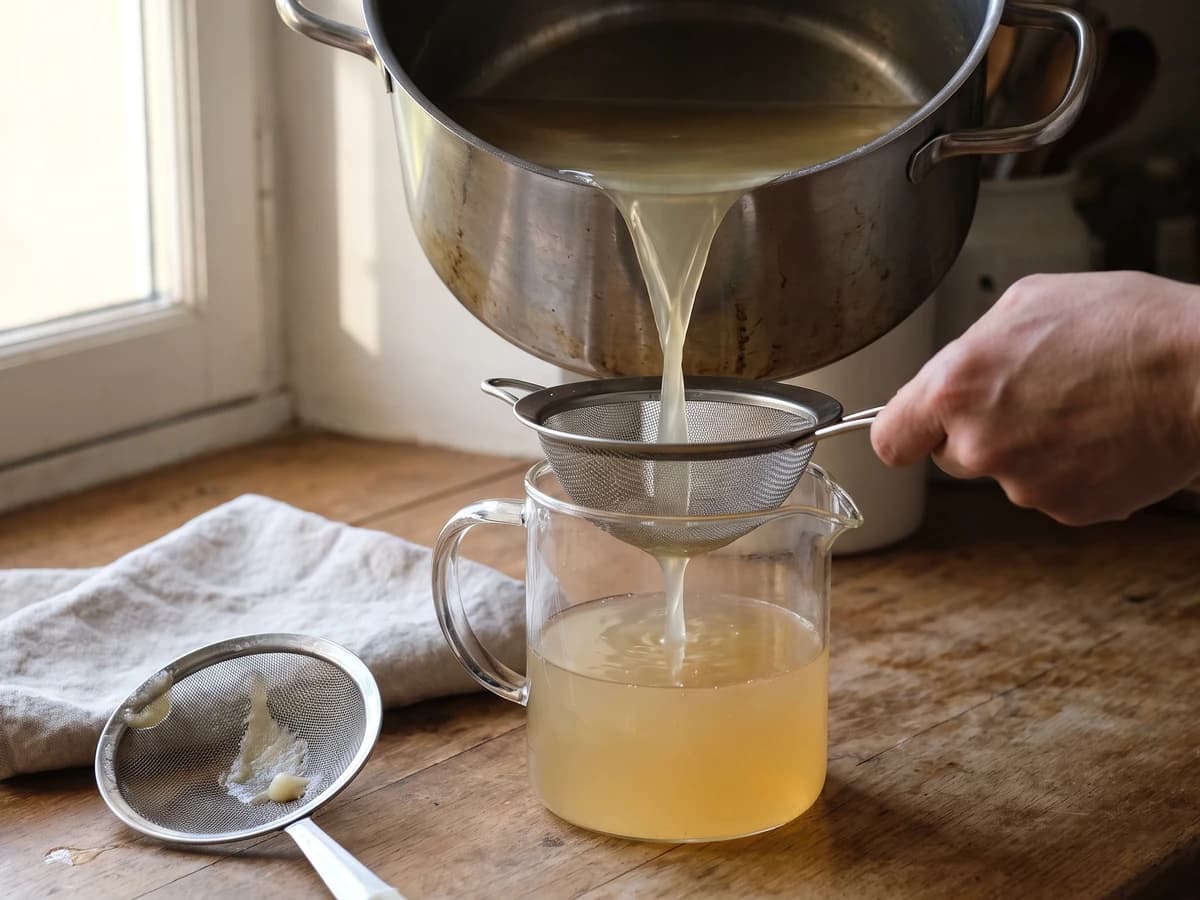
Break the veal bones small, then give them eight hours at a bare tremble. This pale, gelatinous fond becomes the quiet foundation beneath velouté, blanquette, and every sauce that must stay light.
Chef Juliette
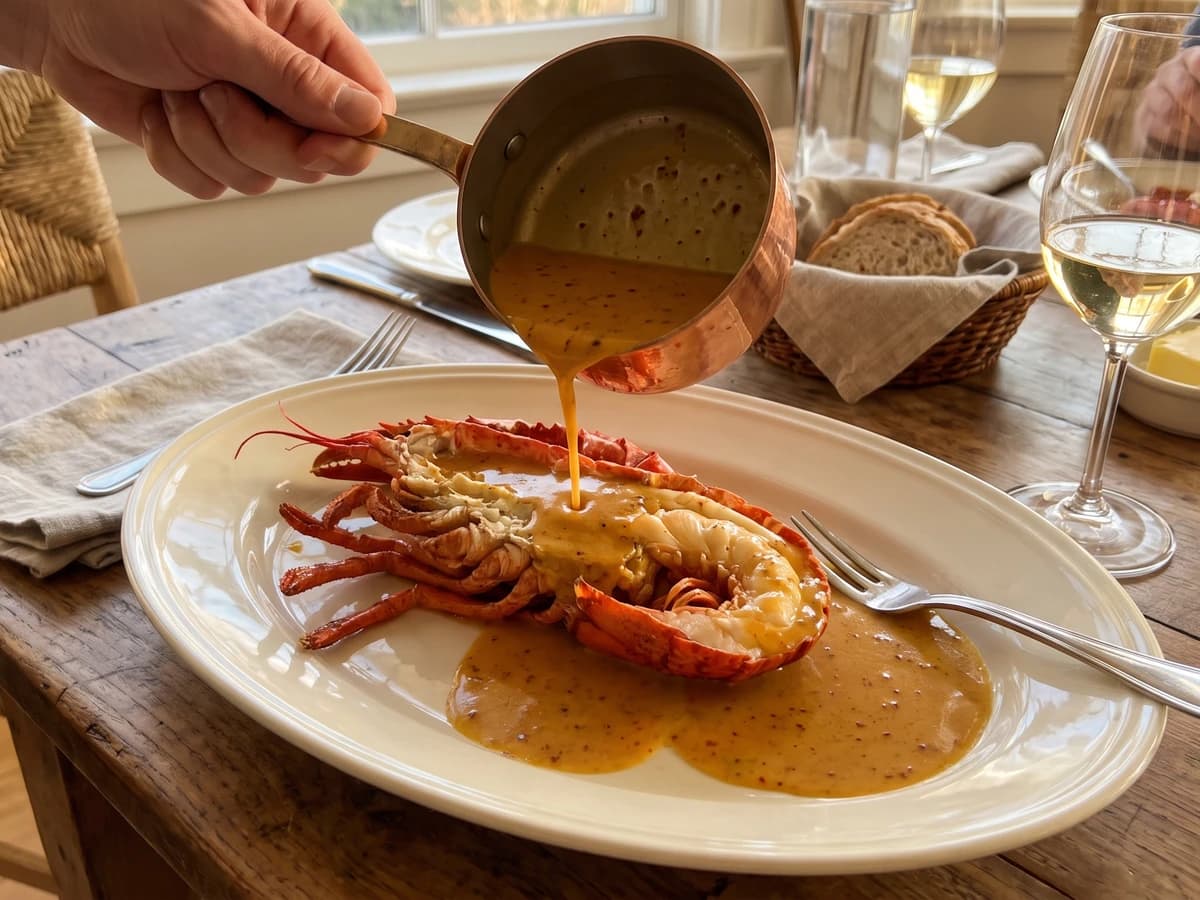
Sauce Orientale concentrates lobster-rich American Sauce with curry, then folds in cream away from the fire: a glossy, gently spiced derivative made for lobster, crayfish, and firm fish.
Chef Juliette
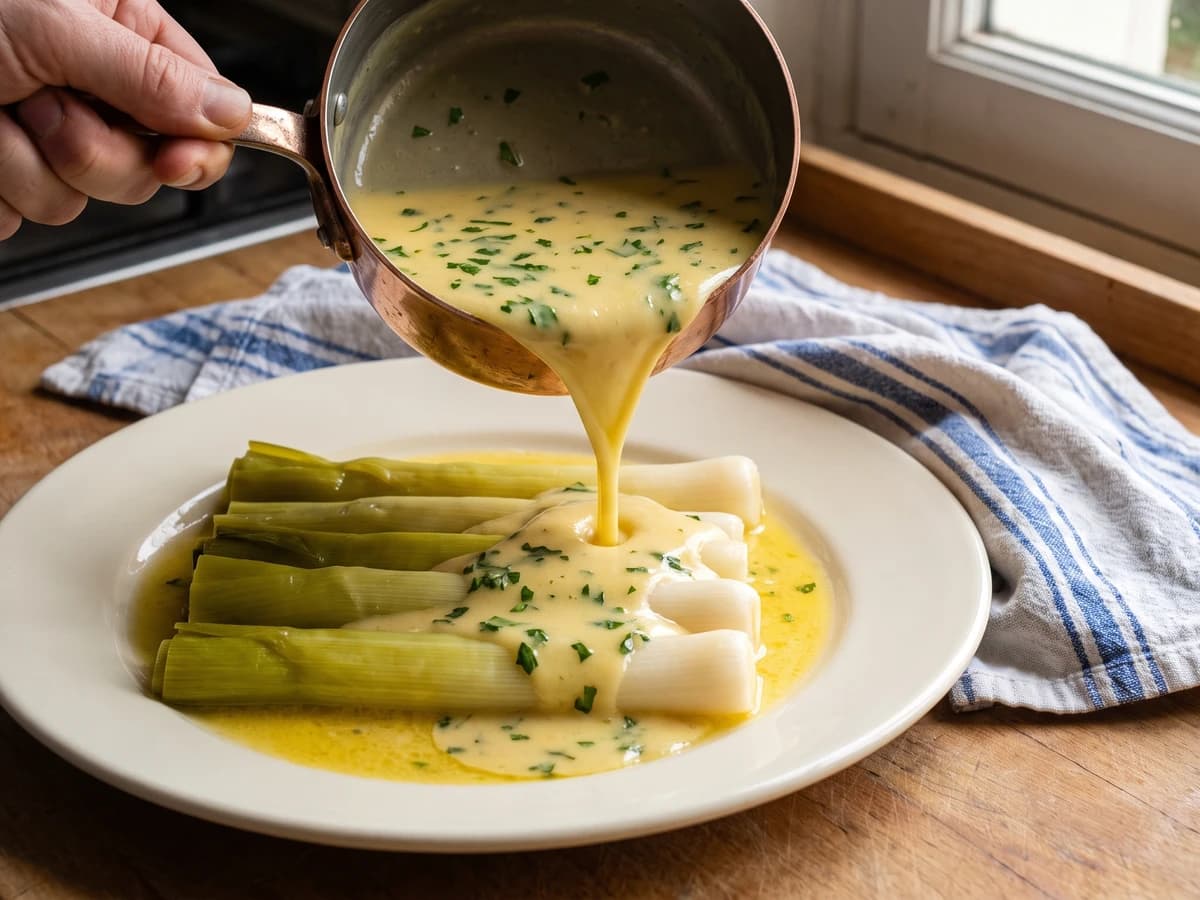
An old lesson in sauce families: Sauce Allemande takes mushroom liquor, then butter, lemon, and parsley, becoming a glossy Poulette for sheep's trotters, leeks, cauliflower, and anything needing gentle richness with a bright edge.