Chef Juliette
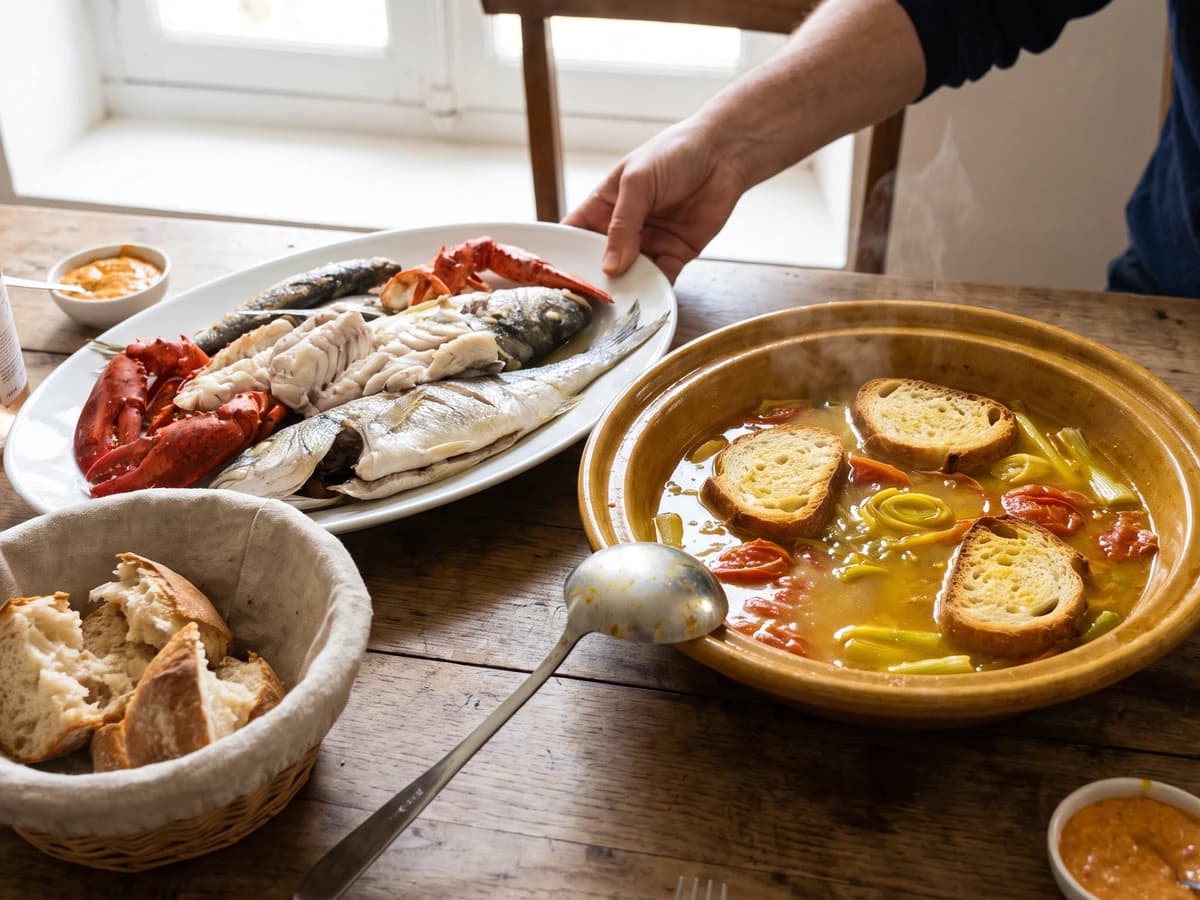
Bouillabaisse à la Marseillaise
Marseille's great fish stew, saffron-gold and garlic-scented, proves that a hard boil can be the careful choice: it binds olive oil into broth before the whole pot meets bread.
A cooking platform built around craft, culture, and the stories behind what we eat.

Created by Chef Juliette
Based on No. 632, Purée de Céleri-rave, from Le Guide Culinaire (1907) by Auguste Escoffier
Purée de Céleri-rave turns knobby celeriac into an ivory, butter-glossed soup, its bitterness blanched away, its body supplied by potato, and its sweetness clarified by a patient half-hour of skimming.
Purée de Céleri-rave (celeriac purée soup) teaches the quiet discipline of dépouiller, purifying a soup by slow simmering and skimming until its flavour turns clean. It reaches creaminess without cream: celeriac supplies its earthy sweetness, potato gives body, and butter rounds the edges. The one true thing to know before touching the pan is that the full half-hour of skimming is not a flourish. It is the dish.
The original recipe assumed a saucier watching the pot, white consommé never off the fire, and a tammy ready for passing the purée. Your honest equivalents are a good prepared white consommé, a heavy saucepan, a food mill, and a sturdy fine-mesh sieve. Brigade watchfulness and multiplied service quantities are scaffolding; the blanching, gentle butter stew, potato binding, sieving, and thirty-minute dépouiller must stay. This compact one-pound batch already suits a home pot and makes close to two quarts, so its proportions remain intact. One cook, one stove, one evening.
Keep the celeriac pale in the butter, then hold the finished purée at the barest tremble while you skim. Colour makes it muddy, and haste leaves its flavour blunt. Give it the promised half-hour and it arrives ivory-smooth, clean, sweet, and ready for its crisp bread dice.
Celeriac flourishes in the cooler soils of northern and eastern France, but Purée de Céleri-rave belongs chiefly to the Paris-centered classical potage repertoire, where vegetables were classified by method rather than claimed as provincial specialties. It traveled between bourgeois dining rooms and grand kitchens, gaining its characteristic refinement from white consommé, passage through a tammy, and patient dépouillement. The name is sometimes mistaken for a vegetable side dish, but in this classical vocabulary purée means a strained, broth-moistened soup.
Quantity
2 tablespoons (30 ml / 28 g)
Quantity
4 cups (950 ml / 950 g)
Quantity
2 medium, about 2 cups (475 ml / 350 g)
peeled and finely minced
Quantity
2 tablespoons (30 ml / 28 g)
diced
Quantity
1½ cups (360 ml / 85 g)
crusts removed and cut into small dice
Quantity
2 tablespoons (30 ml / 28 g)
| Ingredient | Quantity |
|---|---|
| celeriacpeeled and finely minced | 4 cups (950 ml / 455 g), for Blanchings (No. 273) |
| unsalted butter for stewing | 2 tablespoons (30 ml / 28 g) |
| white consommé | 4 cups (950 ml / 950 g) |
| floury potatoespeeled and finely minced | 2 medium, about 2 cups (475 ml / 350 g) |
| cold unsalted butter for finishingdiced | 2 tablespoons (30 ml / 28 g) |
| day-old white breadcrusts removed and cut into small dice | 1½ cups (360 ml / 85 g) |
| unsalted butter for frying the bread dice | 2 tablespoons (30 ml / 28 g) |
Prepare the minced celeriac according to Blanchings (No. 273), then drain it thoroughly. Spread it briefly on a clean towel and press away the water clinging to the pieces. Proper draining matters because wet celeriac boils in the butter instead of stewing gently, leaving its raw pungency intact.
Melt the stewing butter in a heavy saucepan over low heat. Add the drained celeriac, cover loosely, and cook for 8 to 10 minutes, stirring often, until every piece is glossy and beginning to soften without taking any colour. If the butter starts to brown, pull the pan from the heat and add a tablespoon of the measured consommé to stop it, then return the pan to a lower flame.
Pour in the remaining white consommé and add the minced potatoes. Bring the liquid slowly to a bare simmer, then cook gently for 25 to 30 minutes, stirring along the bottom now and then, until both vegetables crush without resistance against the side of the pan. A hard boil roughens the flavour and drives liquid away before the potato can bind the soup.
Pass the entire soup through a food mill fitted with its medium disc, then press it through a sturdy fine-mesh sieve with a flexible spatula. This two-stage passage is the home equivalent of rubbing the purée through a tammy. Do not work it with a high-speed blender after the potato is cooked; overworked potato starch turns elastic rather than silky. The strained purée may look thick and slightly dull at this point. That is exactly right.
Return the strained purée to a clean heavy saucepan and bring it to the faintest tremble. Dépouiller means to purify through slow simmering and skimming: for a full 30 minutes, lift away each veil of foam or dull scum as it gathers, stirring gently along the bottom every few minutes. Do not let the purée boil. If it catches, stop stirring and pour the clean upper portion into another saucepan without scraping the scorched base. Ça se rattrape, provided the burnt layer stays behind.
While the purée finishes, melt the garnish butter in a wide frying pan over medium heat. Add the bread dice in one layer and turn them frequently for 6 to 8 minutes, until crisp and evenly butter-gold on every face. Move them to a plate as soon as they are ready so the residual heat of the pan does not darken them.
Take the purée off the heat. Monter au beurre means finishing by emulsifying with butter: whisk in the cold diced butter a little at a time until the surface becomes satin-smooth and glossy. Do not boil it afterward. If yellow beads of butter appear, let the pan stand for one minute, then whisk firmly until the emulsion closes. Ladle into warm bowls and add the fried bread dice only as the bowls go to the table, while they are still crisp. À table!
1 serving (about 275g)
Culinary guides, cultural storytelling, and the editorial depth that makes cooking meaningful.
Discover Culinary ExplorerChef Juliette
Marseille's great fish stew, saffron-gold and garlic-scented, proves that a hard boil can be the careful choice: it binds olive oil into broth before the whole pot meets bread.
Chef Juliette
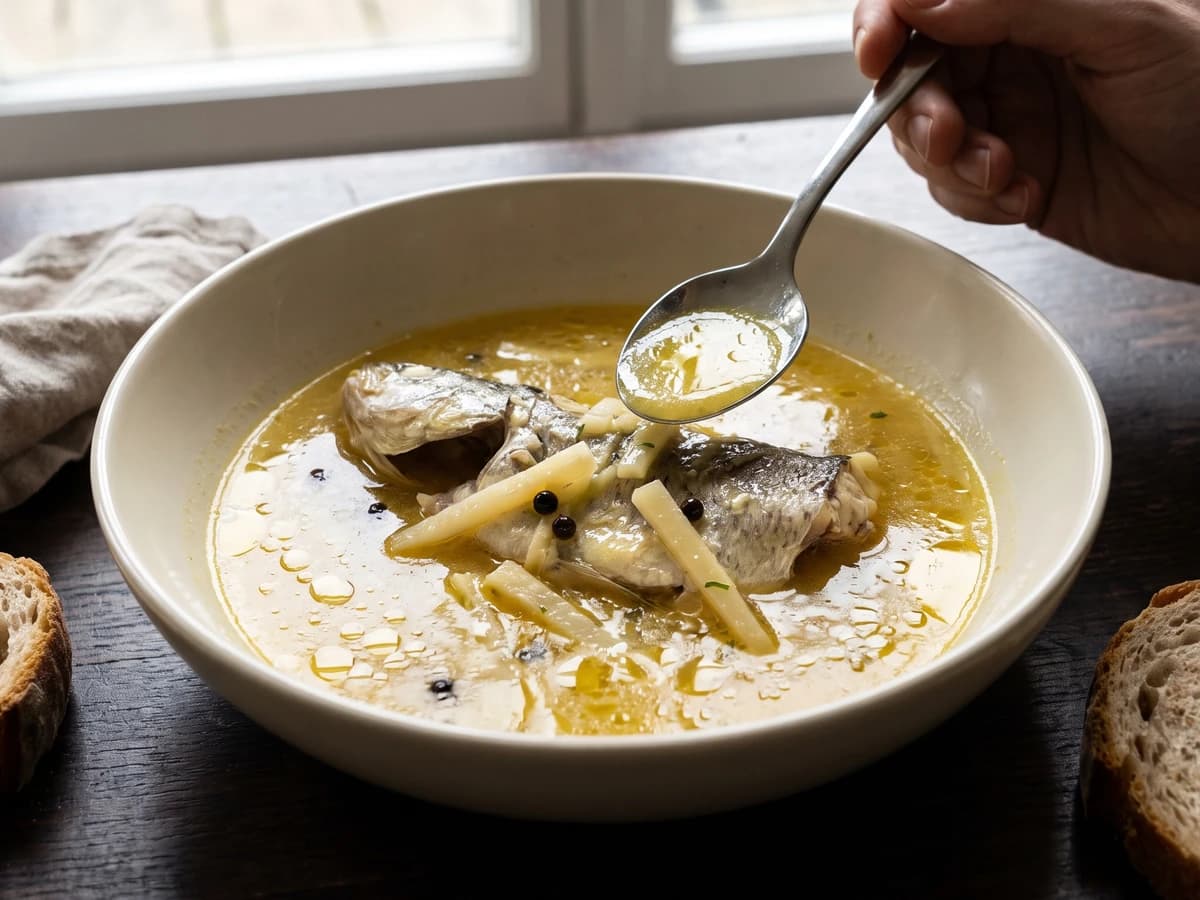
Waterzoi asks fresh, bone-in river fish to thicken its own buttery broth, with parsley root and pepper for company. No flour, no stockpot, just a brisk simmer watched closely.
Chef Juliette
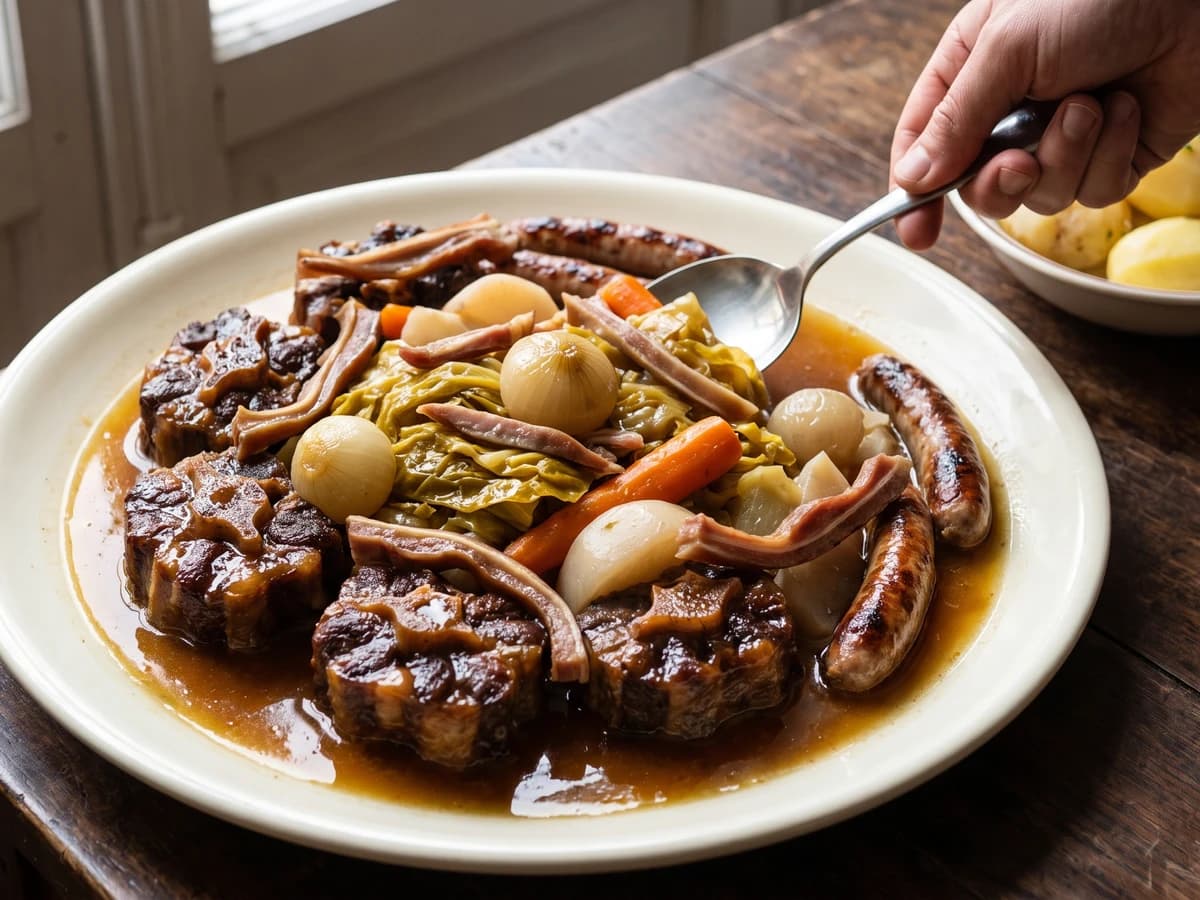
Queue de Bœuf en Hochepot gathers oxtail, pig's trotter and ear, cabbage, roots, and grilled chipolatas around a clear, gelatin-rich broth whose quiet simmer keeps every piece tender and distinct.
Chef Juliette
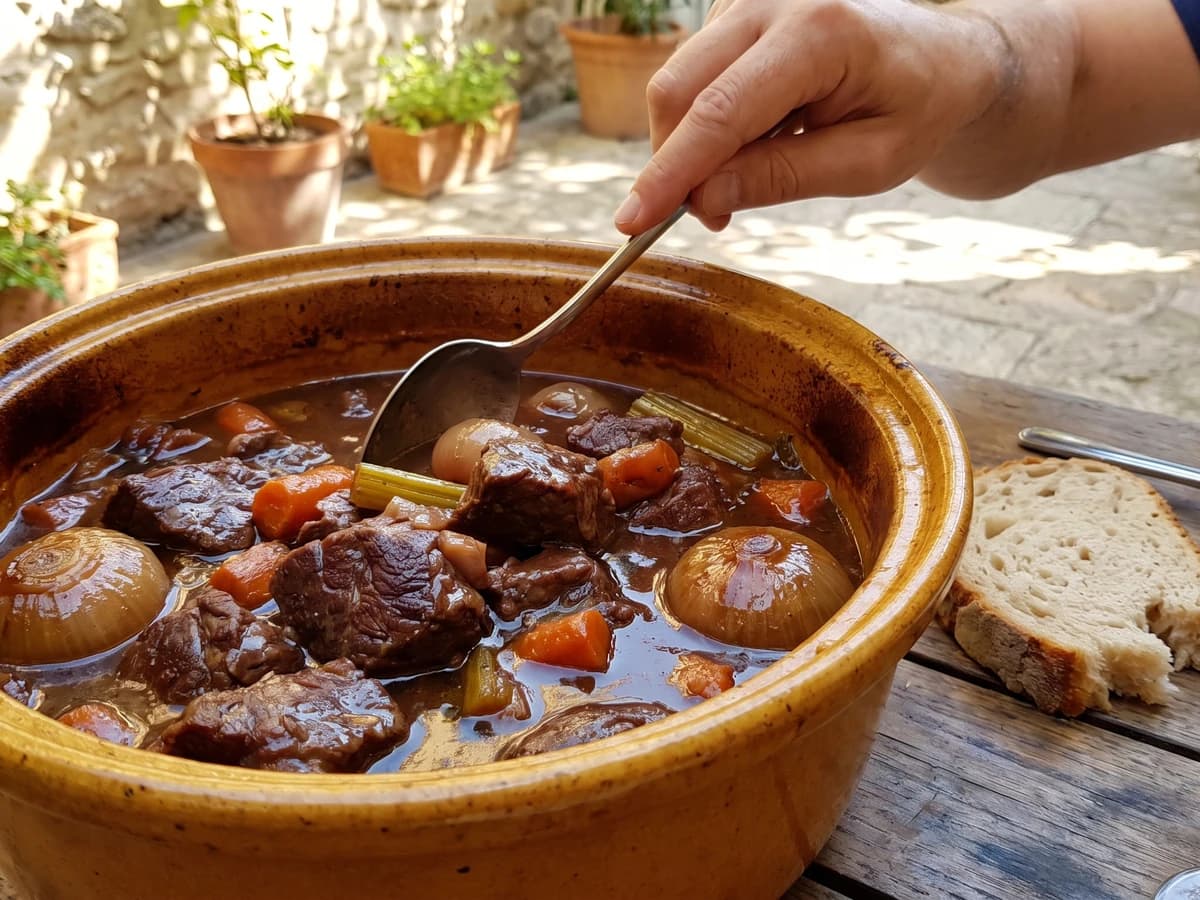
Beef shoulder larded with bacon, sharpened by red wine and vinegar, then sealed with garlic, vegetables, and dry lemon peel until the low oven turns it yielding and the gravy darkly glossy.