Chef Juliette
Bouillabaisse à la Marseillaise
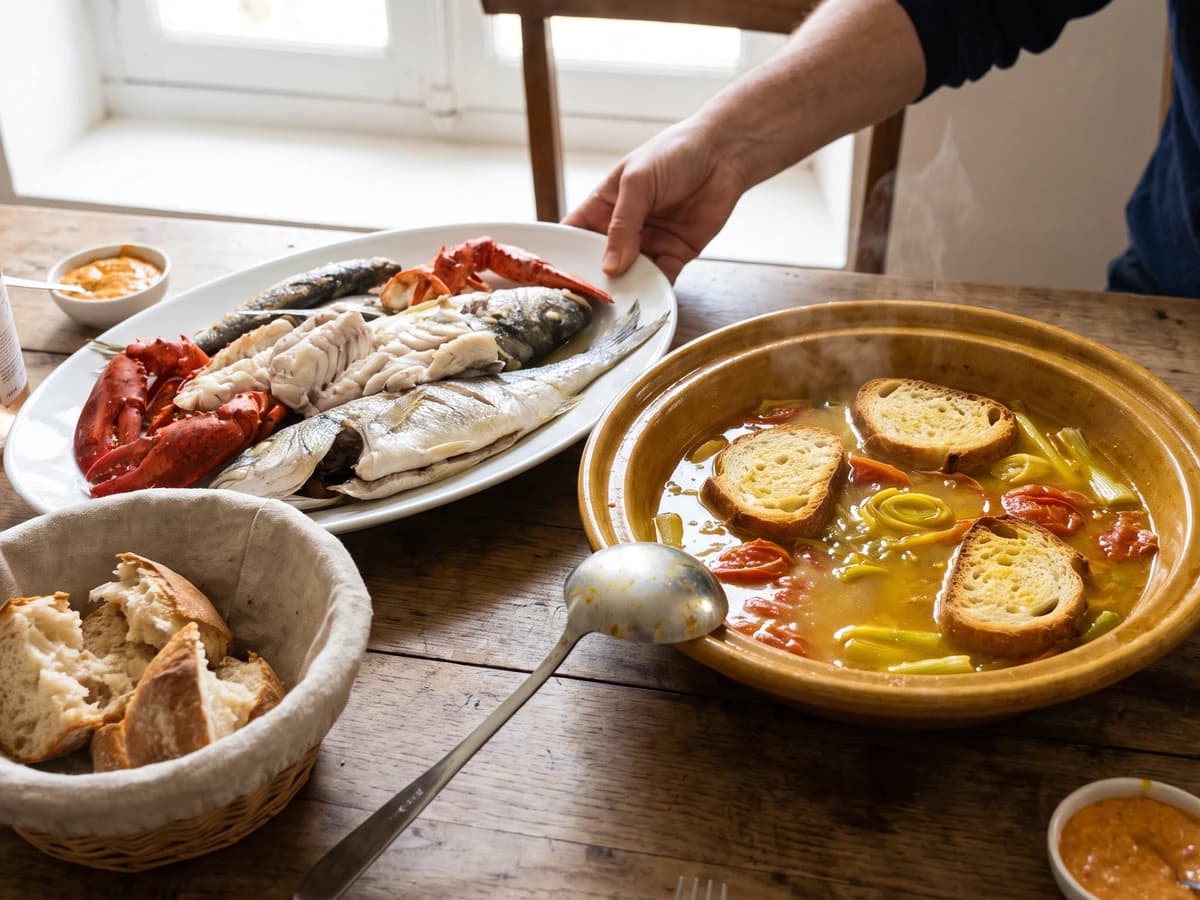
Marseille's great fish stew, saffron-gold and garlic-scented, proves that a hard boil can be the careful choice: it binds olive oil into broth before the whole pot meets bread.
A cooking platform built around craft, culture, and the stories behind what we eat.

Created by Chef Juliette
Based on No. 630, Purée de Carottes, otherwise Crécy, from Le Guide Culinaire (1907) by Auguste Escoffier
Purée de Carottes, otherwise Crécy, turns carrots, butter, rice, and white consommé into a silken soup. The lesson is simple and absolute: blend for smoothness, then sieve for finesse.
Purée de Carottes, otherwise Crécy (silken carrot soup), teaches the difference between something merely blended and something truly refined. The one true thing to know before touching the pan is this: the blender breaks down the carrots, but the sieve makes the Crécy. Skip that pass and the fibers remain, however powerful the machine.
The original kitchen assumed a saucier to tend the gentle stew, white consommé never off the fire, and a tammy with another pair of hands to work the purée through it. At home, a heavy saucepan, a blender, a fine-mesh sieve, and a measured reserve of hot consommé do the same work. The source quantity is doubled to make about two quarts, but its proportions and sequence remain intact. The extra stock for adjusting consistency replaces the stockpot the brigade could reach without thinking. That staff was scaffolding. The slow butter stew and the fine pass are the dish.
Keep the carrots pale and sweet as they soften, with no browning. Then blend thoroughly and press patiently through the sieve. If the purée still feels grainy, don't serve it and hope nobody notices. Ça se rattrape: blend it once more with a ladleful of hot consommé and pass it again.
Crécy belongs to the carrot country of northern France and is most often linked to Crécy-en-Ponthieu in Picardy, where deeply colored carrots made the place name shorthand in classical kitchens for carrot preparations. Other towns called Crécy have claims attached to them, but the kitchen meaning is settled: à la Crécy announces that carrots lead the dish. The regional purée entered the formal soup repertoire with rice for body, a tammy for silk, and butter added at the last moment for gloss.
Quantity
8 cups (1.9 L / 910 g)
peeled and thinly sliced, with any pale woody cores removed
Quantity
2 medium, about 2 cups (480 ml / 300 g)
finely chopped
Quantity
1/2 cup (120 ml / 113 g)
Quantity
2 sprigs
Quantity
1 teaspoon (5 ml / 6 g), plus more to finish
Quantity
1 teaspoon (5 ml / 4 g)
Quantity
1/2 cup (120 ml / 113 g)
Quantity
7 1/4 cups, plus up to 1 cup for consistency (1.7 to 1.94 L / 1.7 to 1.94 kg)
Quantity
1/4 teaspoon (1.25 ml / 0.6 g)
Quantity
1/4 cup (60 ml / 57 g)
diced
Quantity
1 1/2 cups (360 ml / 90 g)
cut into small dice
Quantity
1/4 cup (60 ml / 57 g)
Quantity
about 5 cups (1.2 L / 312 g)
Quantity
1/2 cup (120 ml / 113 g)
Quantity
1/4 cup (60 ml / 40 g)
Quantity
1 batch Velouté aux Carottes, otherwise Nivernaise (No. 674)
prepared separately and served in place of Crécy, not added to it
| Ingredient | Quantity |
|---|---|
| prepared carrot outer fleshpeeled and thinly sliced, with any pale woody cores removed | 8 cups (1.9 L / 910 g) |
| yellow onionsfinely chopped | 2 medium, about 2 cups (480 ml / 300 g) |
| unsalted butter for stewing | 1/2 cup (120 ml / 113 g) |
| thyme | 2 sprigs |
| fine salt | 1 teaspoon (5 ml / 6 g), plus more to finish |
| granulated sugar | 1 teaspoon (5 ml / 4 g) |
| white rice | 1/2 cup (120 ml / 113 g) |
| hot white chicken consommé or very clear low-sodium chicken stock | 7 1/4 cups, plus up to 1 cup for consistency (1.7 to 1.94 L / 1.7 to 1.94 kg) |
| ground white pepper | 1/4 teaspoon (1.25 ml / 0.6 g) |
| cold unsalted butter for finishingdiced | 1/4 cup (60 ml / 57 g) |
| firm white bread for the ordinary garnishcut into small dice | 1 1/2 cups (360 ml / 90 g) |
| unsalted butter for frying the garnish | 1/4 cup (60 ml / 57 g) |
| firm white bread dice, alternative thickener instead of rice (optional) | about 5 cups (1.2 L / 312 g) |
| unsalted butter for the alternative bread thickener (optional) | 1/2 cup (120 ml / 113 g) |
| cooked small pearl tapioca, traditionally called Japanese pearls (optional) | 1/4 cup (60 ml / 40 g) |
| Velouté aux Carottes, otherwise Nivernaise (optional)prepared separately and served in place of Crécy, not added to it | 1 batch Velouté aux Carottes, otherwise Nivernaise (No. 674) |
Peel the carrots and split the largest lengthwise. The source calls for the red outer flesh only because large storage carrots can carry a pale, woody core; cut that core away when you find it, but keep the whole carrot when its color and texture are even. Weigh the prepared flesh, then slice it about 1/8 inch thick so every piece softens at the same pace.
Étuver, meaning to stew gently in butter without browning: melt the stewing butter in a heavy saucepan over low heat, then add the carrots, onions, thyme, salt, and sugar. Cover with a lid slightly ajar and cook for 20 minutes, stirring every few minutes, until the onions are translucent and the carrots bend at their edges. Keep them pale. If the sugars catch, add a spoonful of the measured consommé and scrape gently; if the pot floor has gone dark, move the vegetables to a clean saucepan and leave the bitter marks behind. Ça se rattrape.
Stir in the rice, then add the 7 1/4 cups of white consommé. Bring it just to a simmer, cover partially, and cook very gently for 35 to 45 minutes, stirring along the bottom occasionally, until both carrot and rice collapse under the back of a spoon. A hard boil drives off liquid and dulls the delicate foundation. If using the source's bread-thickened branch, omit the rice, fry the alternative bread dice in their butter until pale gold, and add them before the consommé. Use one thickener, never both.
Remove the thyme. Blend the soup thoroughly, working in batches if using a jug blender. Fill the jug no more than halfway, loosen the center cap, and cover the opening with a folded towel so pressure can escape safely. Blend longer than seems necessary, until no separate rice grains or carrot fibers remain visible.
Set a fine-mesh sieve over a clean saucepan and work the purée through with a ladle or flexible scraper, pressing patiently and scraping the silken purée from the underside. Discard the small mat of fiber left behind. This pass replaces the brigade's tammy and it must stay. If the soup tastes smooth but feels faintly sandy, blend it again with a ladleful of hot reserved consommé and pass it once more. Ça se rattrape.
Return the soup to the gentlest simmer and dépouiller, meaning skim away any pale foam or butter froth that gathers on the surface. Test the consistency: Crécy should coat a spoon in a smooth veil yet pour without falling in clumps. If it is thick, whisk in hot reserved consommé a little at a time; if thin, let it simmer uncovered until it gathers. Season with white pepper and additional salt, then remove the pan from the heat and monter au beurre, whisking in the cold diced butter piece by piece. Do not boil afterward. If the butter forms oily beads, whisk hard away from the heat or blend for a few seconds until the surface returns to a single gloss.
For the source's separate velouté variation, reach for a finished batch of Velouté aux Carottes, otherwise Nivernaise (No. 674) and serve it in place of Crécy. Do not stir the two finished soups together; the referenced preparation keeps its own method and identity.
Melt the garnish butter in a skillet and fry the small bread dice over medium heat, tossing often, until crisp and evenly golden. Drain briefly and salt while warm. Ladle the Crécy generously, scatter the croutons over each serving at the last moment, and bring it straight to the table. For the occasional garnish in the source, use the separately cooked Japanese pearls instead of the croutons, two tablespoons per quart of soup. À table!
1 serving (about 260g)
Culinary guides, cultural storytelling, and the editorial depth that makes cooking meaningful.
Discover Culinary ExplorerChef Juliette
Marseille's great fish stew, saffron-gold and garlic-scented, proves that a hard boil can be the careful choice: it binds olive oil into broth before the whole pot meets bread.
Chef Juliette
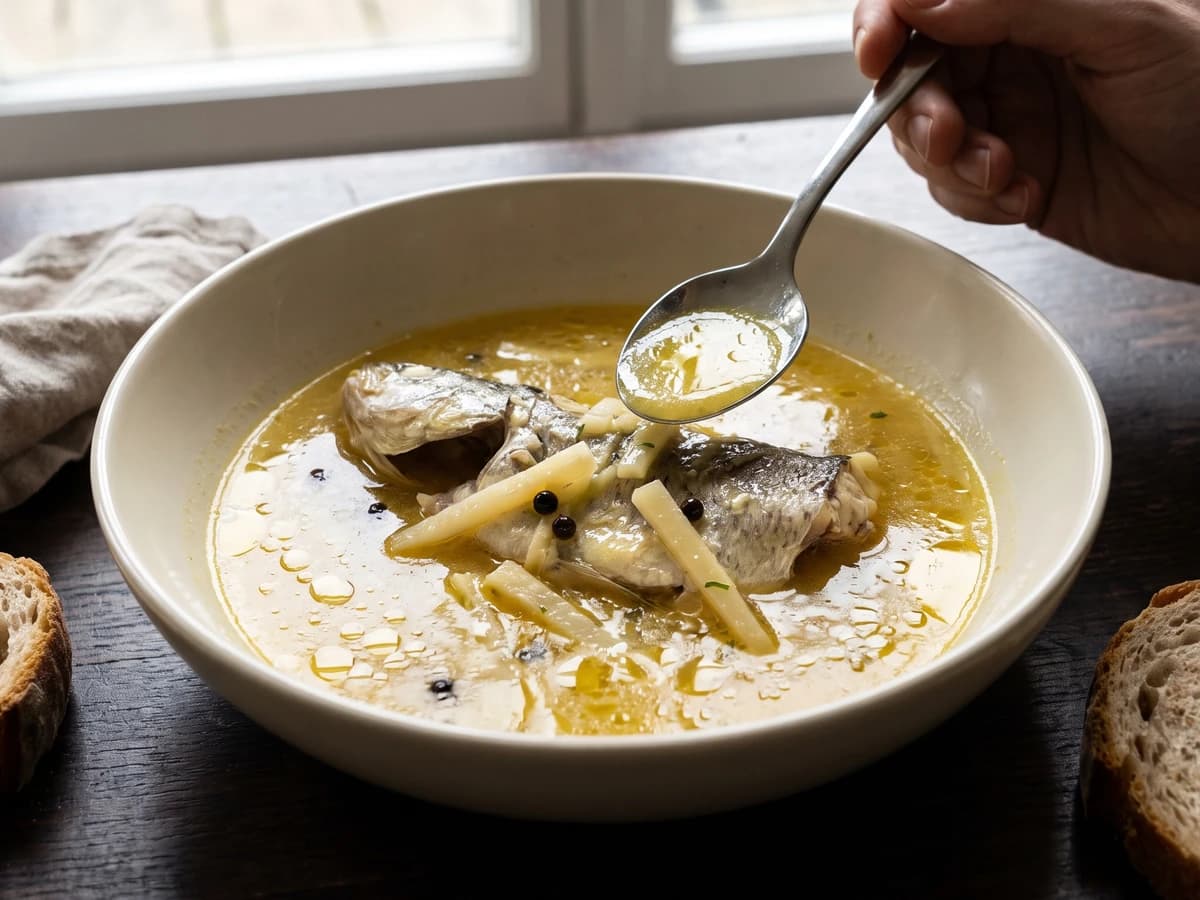
Waterzoi asks fresh, bone-in river fish to thicken its own buttery broth, with parsley root and pepper for company. No flour, no stockpot, just a brisk simmer watched closely.
Chef Juliette
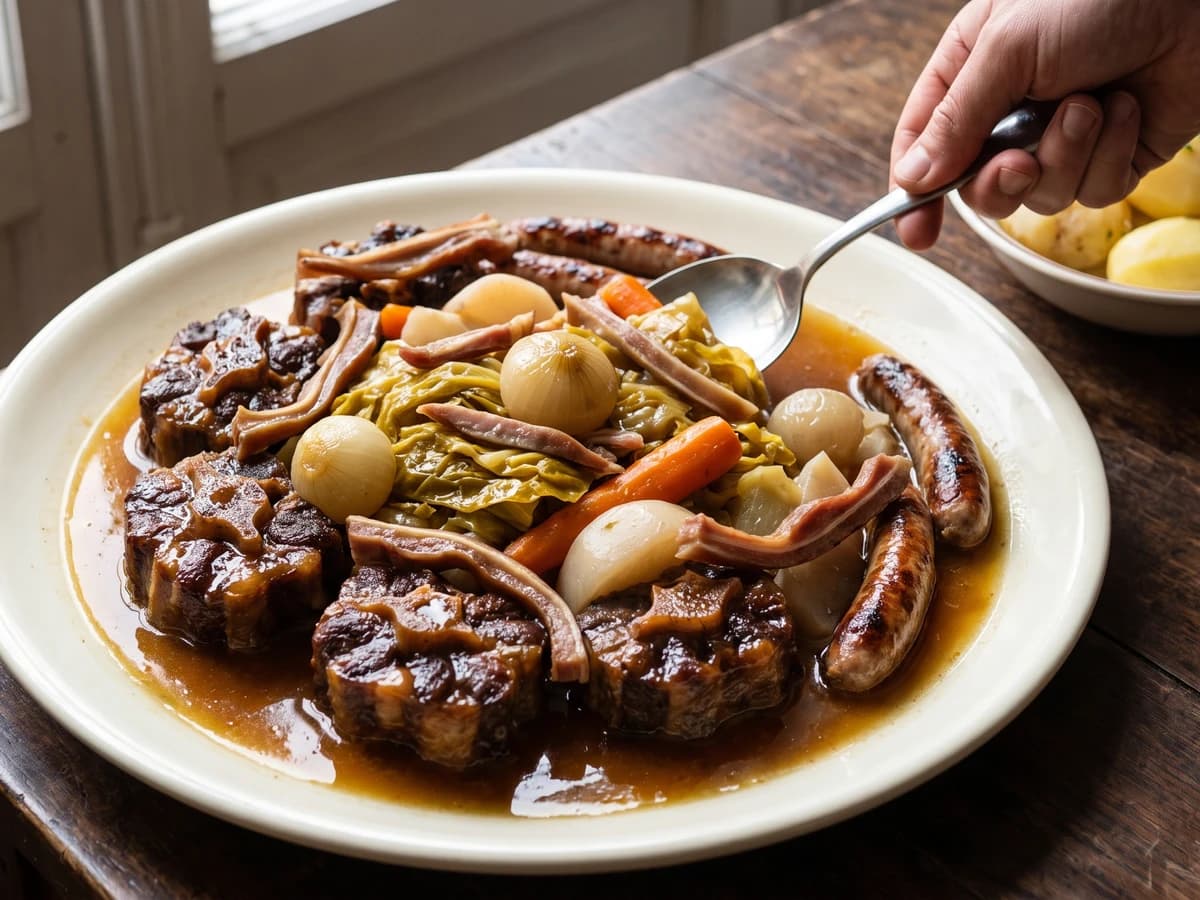
Queue de Bœuf en Hochepot gathers oxtail, pig's trotter and ear, cabbage, roots, and grilled chipolatas around a clear, gelatin-rich broth whose quiet simmer keeps every piece tender and distinct.
Chef Juliette
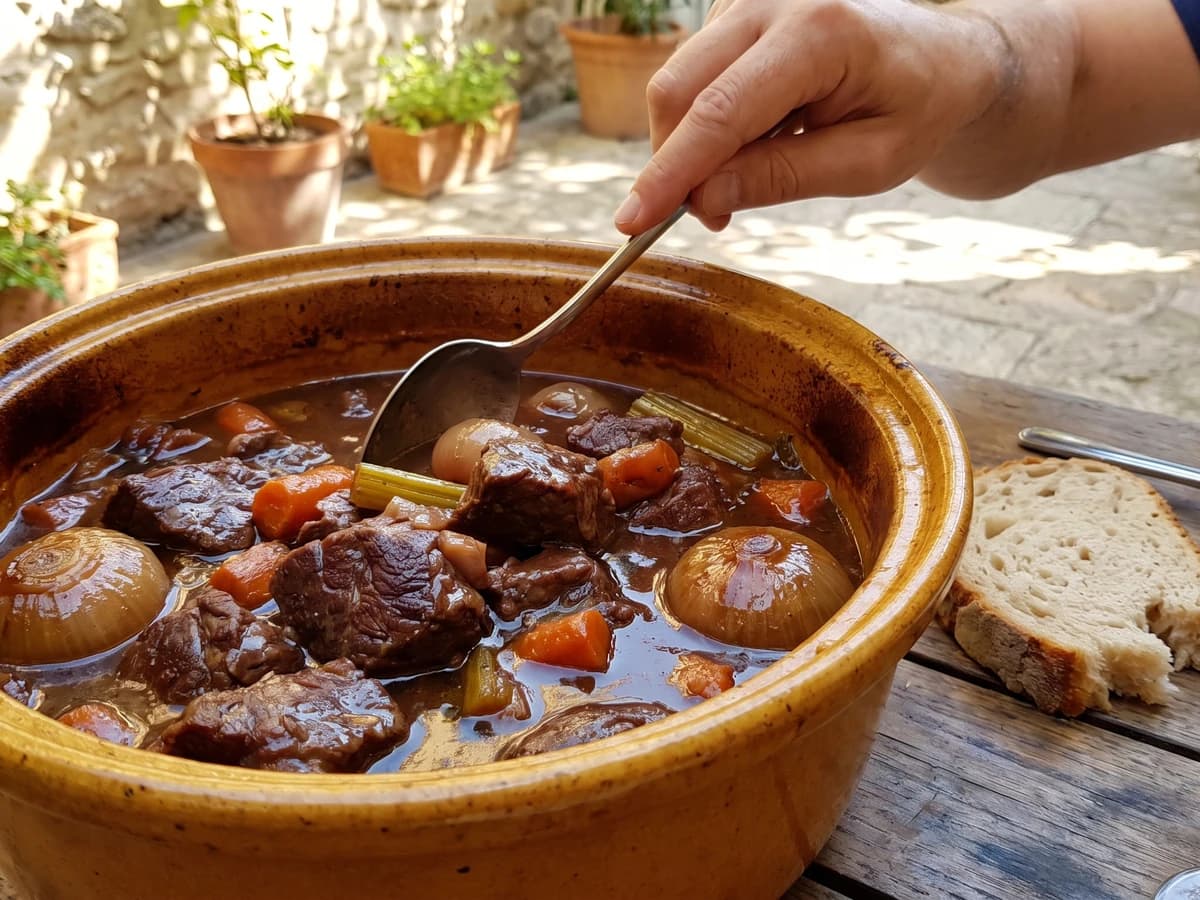
Beef shoulder larded with bacon, sharpened by red wine and vinegar, then sealed with garlic, vegetables, and dry lemon peel until the low oven turns it yielding and the gravy darkly glossy.