Chef Juliette
Ordinary or White Consommé
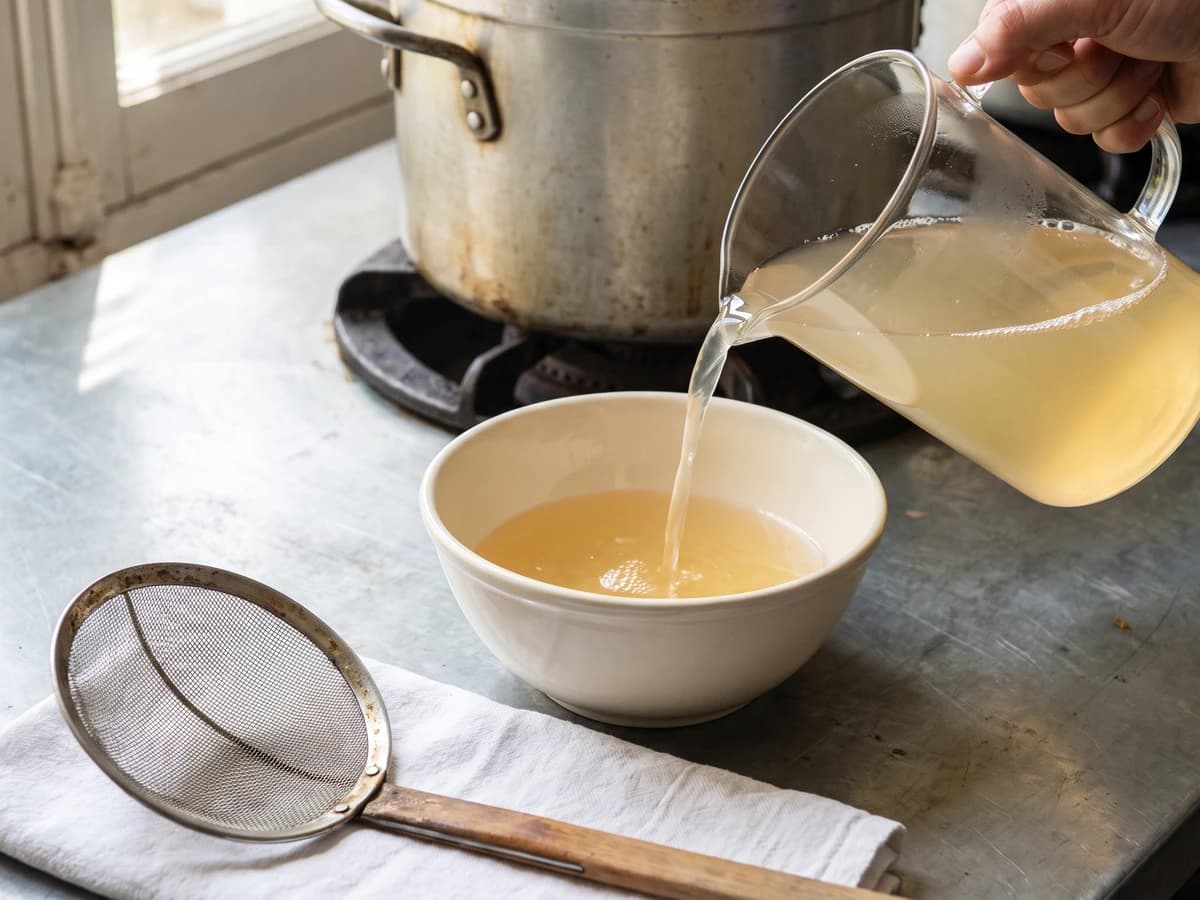
Beef shin, lean beef, and fowl begin in cold water and rise slowly toward a tremble. Skim before the boil, and you learn the quiet discipline that gives every clear French broth its backbone.
A cooking platform built around craft, culture, and the stories behind what we eat.
Created by Chef Juliette
Based on No. 63, Béarnaise Sauce with Meat Glaze, otherwise Valois Sauce or Foyot Sauce, from Le Guide Culinaire (1907) by Auguste Escoffier
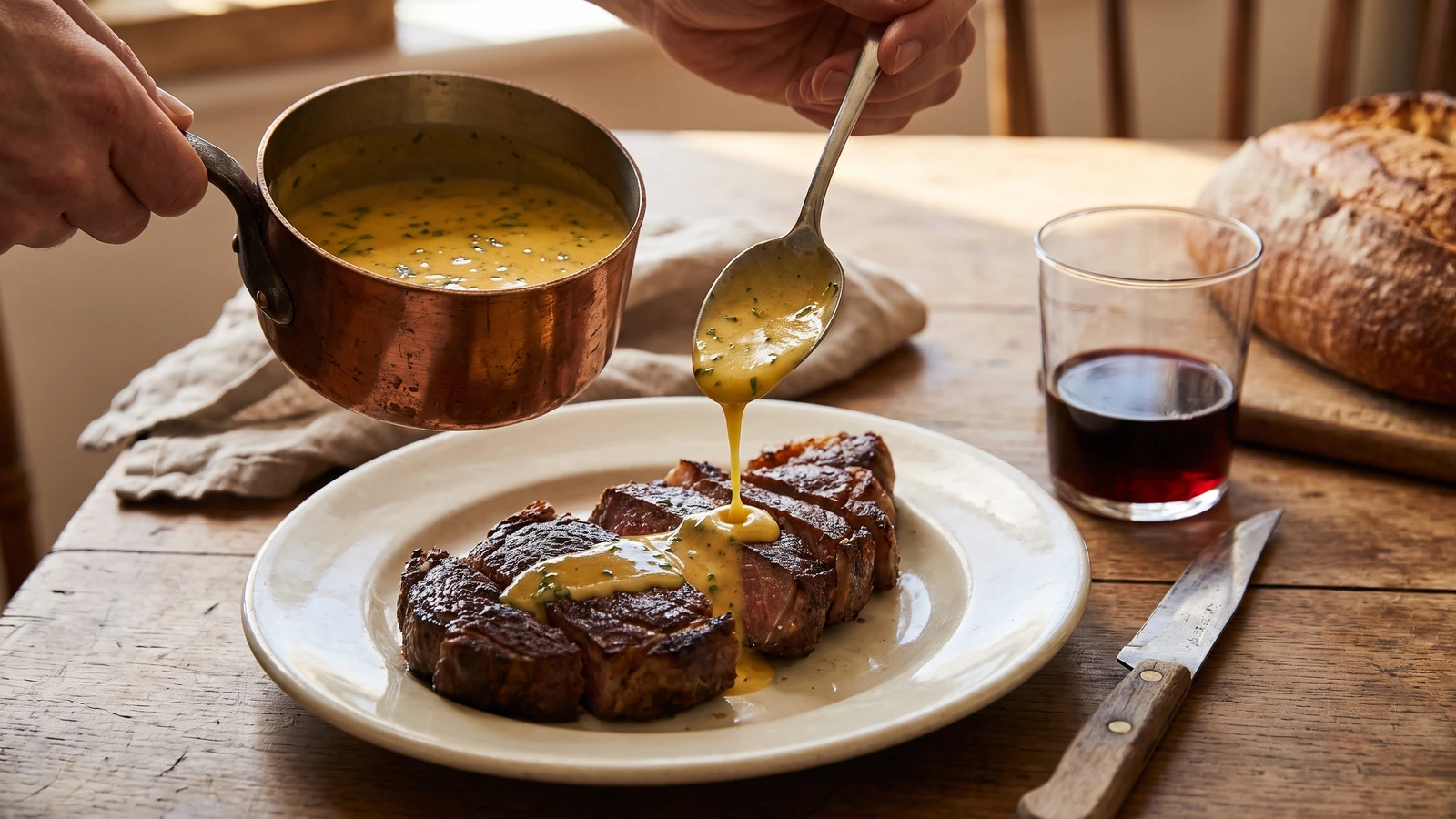
Sauce Foyot takes a stable, tepid Béarnaise and deepens it with pale meat glaze, spoonful by spoonful. The result is glossy, savory, and strong enough for properly grilled butcher’s meat.
Sauce Foyot, dite aussi sauce Valois (Béarnaise enriched with meat glaze), teaches the discipline of finishing an emulsion without bullying it. The one true thing to know before touching a pan is that the pale meat glaze must meet a stable Béarnaise Sauce (No. 62) at the same tepid temperature. Too hot, it shocks the yolks; too cold, it firms the butter.
The book assumed a saucier on staff and a stockpot never off the fire, so dissolved pale meat glaze was simply waiting. A home kitchen needs neither brigade nor gallon measure: use half a finished home batch of Béarnaise Sauce (No. 62) and half the book’s glaze, preserving its ratio exactly. The separate service setup is scaffolding and can go; the gradual addition is the dish and stays. One cook, one stove, one evening.
When it lands, butter-yellow turns warm ochre, tarragon stays bright, and the sauce falls in a glossy ribbon that can meet a grilled steak without disappearing beneath it. Add the glaze a teaspoon at a time, whisk each addition smooth, and never put the finished sauce over direct heat. That slow meeting is the one step that decides Foyot.
Sauce Foyot and sauce Valois belong to the Parisian grand-kitchen family of Béarnaise derivatives, devised for grilled butcher’s meat when cooks wanted the herb-and-vinegar lift of Béarnaise with greater depth. The two names are generally treated as synonyms rather than regional variations; both mean a finished Béarnaise enriched with pale meat glaze, not a dark gravy or wine reduction. From the grand kitchen the sauce passed naturally to bistro grills and home dining rooms, where a spoonful gives beef, lamb, or veal all the richness it needs.
Quantity
1½ tablespoons (22.5 ml / 23 g)
tepid and fluid
Quantity
2 teaspoons (10 ml / 10 g)
for rescuing or loosening the emulsion
| Ingredient | Quantity |
|---|---|
| Béarnaise Sauce (No. 62)freshly made and tepid | ½ batch, about ⅔ cup (160 ml / 160 g) |
| dissolved pale meat glazetepid and fluid | 1½ tablespoons (22.5 ml / 23 g) |
| warm water (optional)for rescuing or loosening the emulsion | 2 teaspoons (10 ml / 10 g) |
Place the freshly made Béarnaise Sauce (No. 62) in a medium bowl and set aside 1 tablespoon as insurance. Warm the dissolved pale meat glaze only until it flows easily, then let it settle until both components are tepid, about 38 to 45°C (100 to 113°F). The glaze should run like warm honey, never arrive hot enough to cook the yolks. Keep the Béarnaise away from direct heat.
Whisk 1 teaspoon of pale meat glaze into the Béarnaise Sauce (No. 62) until completely smooth, then continue teaspoon by teaspoon. Wait for each addition to disappear before adding the next; the sauce will deepen from butter-gold to warm ochre while keeping its soft gloss. If it suddenly loosens, dulls, or shows beads of butter, stop. Ça se rattrape: in a clean tepid bowl, whisk the reserved tablespoon of Béarnaise Sauce (No. 62) with 1 teaspoon of warm water, then rebuild the broken sauce into it a teaspoon at a time. Resume adding any remaining glaze only when the emulsion is smooth and tepid again.
If the sauce remained stable, whisk the reserved Béarnaise Sauce (No. 62) back in now. Foyot should nappe, coating the back of a spoon in an even layer while still falling in a generous ribbon. If it stands too stiffly, whisk in warm water a few drops at a time. Taste only after all the glaze is incorporated, since the reduction brings concentrated seasoning of its own.
Transfer the Foyot to a warmed, thoroughly dried sauceboat, or hold its bowl over warm water with the heat off for no more than 20 minutes. Never reheat it directly. Spoon about 2 tablespoons over grilled entrecôte, tournedos, lamb cutlets, or a veal chop just as the meat reaches the table. À table!
1 serving (about 31g)
Culinary guides, cultural storytelling, and the editorial depth that makes cooking meaningful.
Discover Culinary ExplorerChef Juliette
Beef shin, lean beef, and fowl begin in cold water and rise slowly toward a tremble. Skim before the boil, and you learn the quiet discipline that gives every clear French broth its backbone.
Chef Juliette
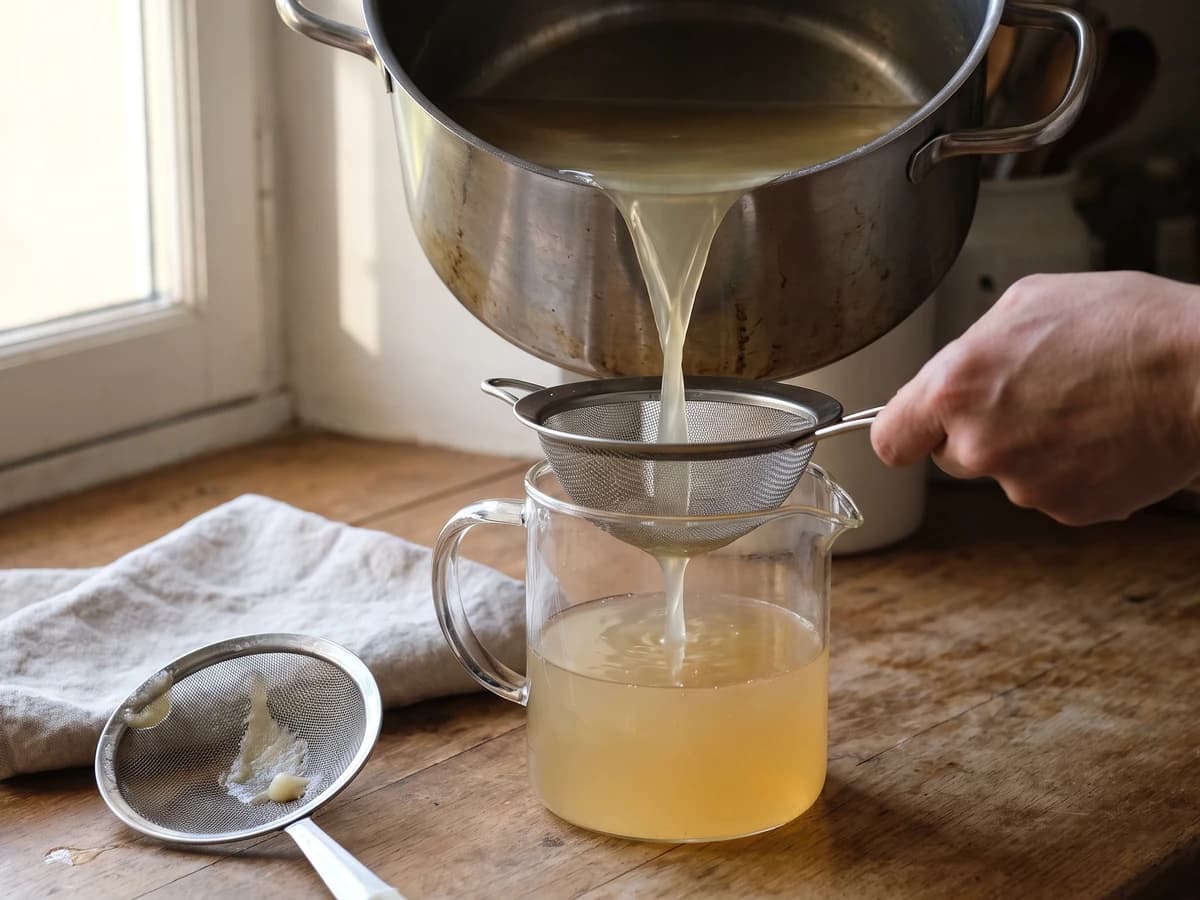
Break the veal bones small, then give them eight hours at a bare tremble. This pale, gelatinous fond becomes the quiet foundation beneath velouté, blanquette, and every sauce that must stay light.
Chef Juliette
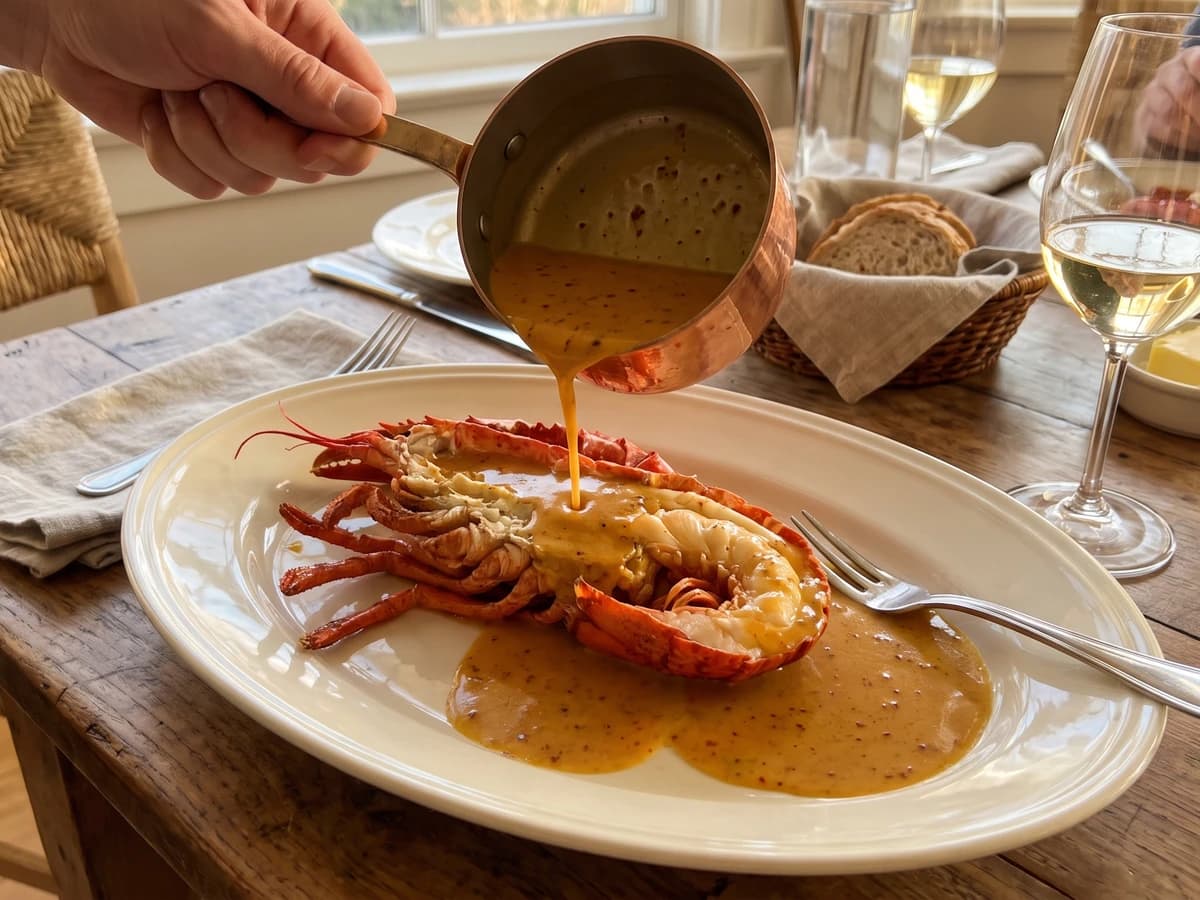
Sauce Orientale concentrates lobster-rich American Sauce with curry, then folds in cream away from the fire: a glossy, gently spiced derivative made for lobster, crayfish, and firm fish.
Chef Juliette
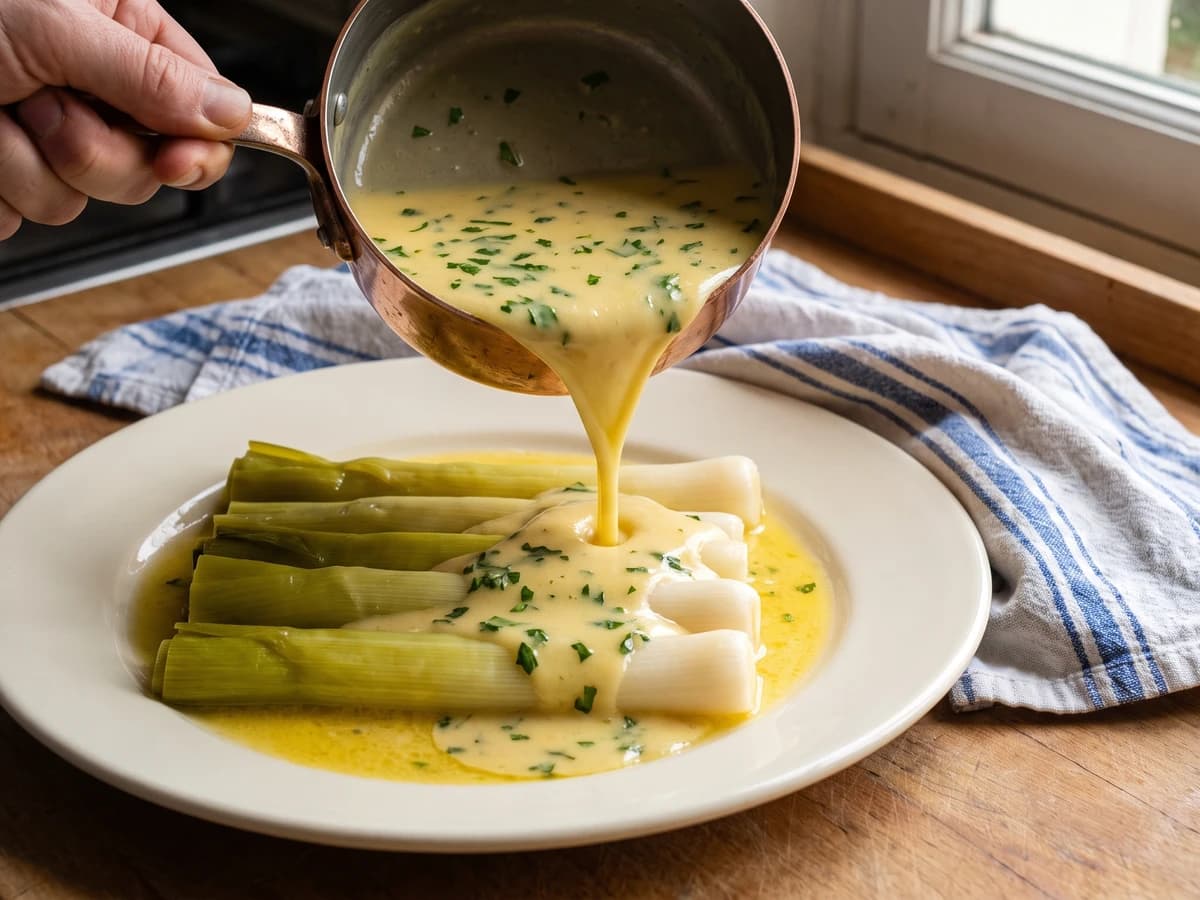
An old lesson in sauce families: Sauce Allemande takes mushroom liquor, then butter, lemon, and parsley, becoming a glossy Poulette for sheep's trotters, leeks, cauliflower, and anything needing gentle richness with a bright edge.