Chef Juliette
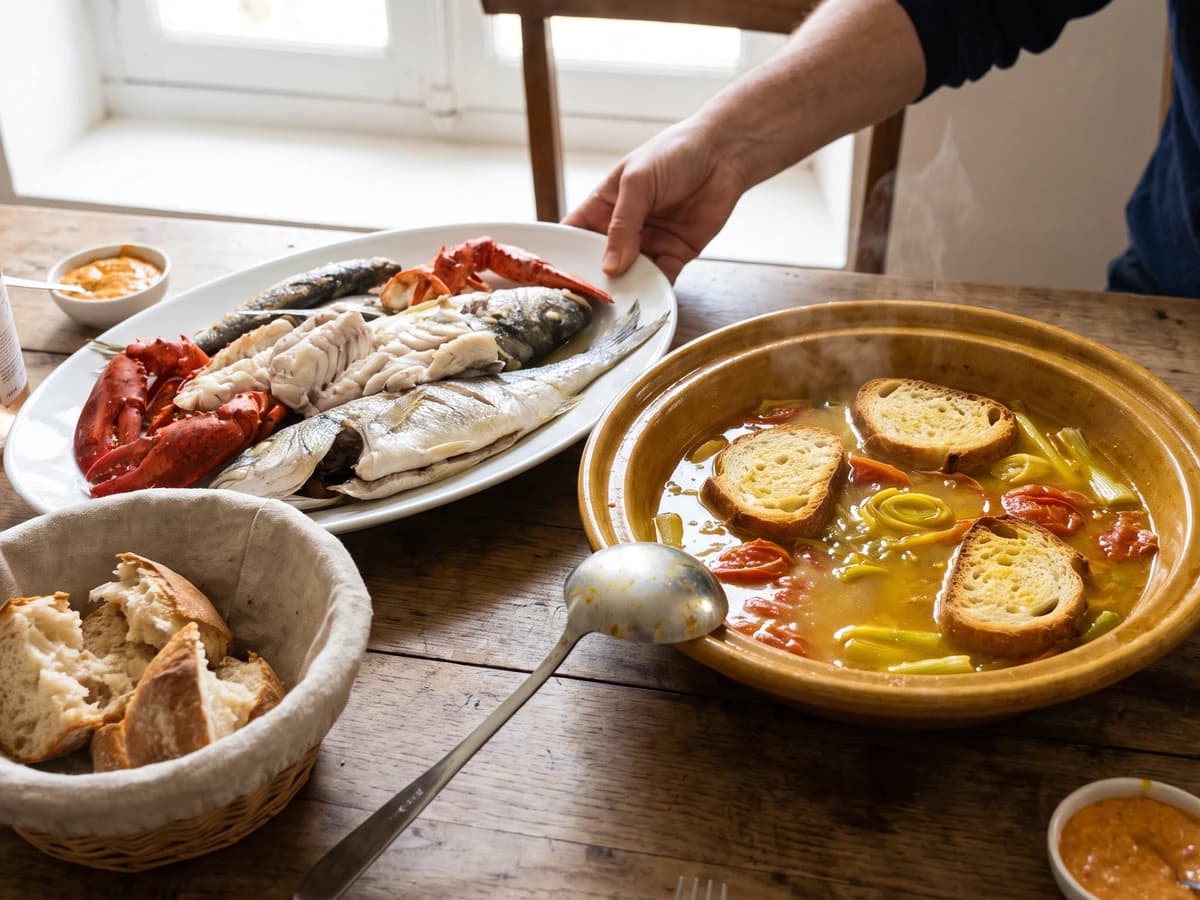
Bouillabaisse à la Marseillaise
Marseille's great fish stew, saffron-gold and garlic-scented, proves that a hard boil can be the careful choice: it binds olive oil into broth before the whole pot meets bread.
A cooking platform built around craft, culture, and the stories behind what we eat.

Created by Chef Juliette
Based on No. 624, Consommé aux Piments Doux, from Le Guide Culinaire (1907) by Auguste Escoffier
Sweet capsicum enters the clarification, not the finished bowl, leaving this consommé brilliantly clear, copper-amber, and quietly fragrant. The lesson is restraint: perfume the broth without letting the pepper cloud it.
Consommé aux Piments Doux (clear consommé perfumed with sweet capsicum) teaches the central paradox of clarification: the pepper enters the pot, gives up its fragrance and warm color, then leaves with the raft. Add it after clarification and you have pepper floating in broth. Pound it into the clarification and the consommé remains limpid. The one true thing before you touch the pan is this: everything begins cold.
The original entry assumed a saucier on staff, a stock never off the fire, and enough clarification ready for a dining room. Your home equivalent is one saucepan, cold gelatin-rich beef stock, a fine sieve, and damp cheesecloth. I have changed only the scale and allowed for what the raft retains: 10 cups of stock yield about 8 cups, while 1 ounce of capsicum preserves the book's exact proportion of one-half ounce per finished quart. One cook, one stove, one evening.
The finished consommé should be clear enough to show the bottom of a white cup, with a copper-amber cast and a fragrance that suggests ripe pepper without tasting like pepper soup. Raise the clarification slowly and never let the raft boil apart. That quiet ascent is the dish; the brigade-sized stockpots were merely scaffolding.
Consommé aux Piments Doux belongs to the French grand-kitchen repertoire and the formal Parisian table rather than to a particular regional larder. In that system, one brilliantly clear consommé became a family of soups through precisely measured flavorings, and preserved capsicum was considered as legitimate as fresh when the market offered none worth using. Piments doux means sweet capsicum, not hot chile, and the pepper traditionally entered the clarification rather than appearing as a garnish in the bowl.
Quantity
10 cups (2.4 L / 2.4 kg)
completely defatted and lightly seasoned
Quantity
2 cups loosely packed (475 ml / 450 g)
Quantity
5 (about ⅔ cup / 160 ml / 150 g)
Quantity
2 tablespoons packed (30 ml / 28 g)
finely grated and pounded; preserved pepper rinsed and dried
Quantity
1 teaspoon (5 ml / 6 g), or as needed
Quantity
2 (about ¼ cup / 60 ml / 60 g)
reserved for reclarifying if necessary
| Ingredient | Quantity |
|---|---|
| cold, gelatin-rich beef stockcompletely defatted and lightly seasoned | 10 cups (2.4 L / 2.4 kg) |
| very lean ground beef | 2 cups loosely packed (475 ml / 450 g) |
| large egg whites | 5 (about ⅔ cup / 160 ml / 150 g) |
| ripe red sweet bell pepper flesh, or plain preserved roasted red pepper in brinefinely grated and pounded; preserved pepper rinsed and dried | 2 tablespoons packed (30 ml / 28 g) |
| fine sea salt | 1 teaspoon (5 ml / 6 g), or as needed |
| additional large egg whites (optional)reserved for reclarifying if necessary | 2 (about ¼ cup / 60 ml / 60 g) |
Begin with stock that is refrigerator-cold and free of every visible patch of fat. Lift away the firm fat with a spoon, then draw a piece of paper towel lightly across the surface to catch any remaining beads. If the stock is merely cool, stop and chill it properly. Warm stock sets the egg whites before they can spread through the liquid and gather its impurities.
Remove the stem, seeds, and white ribs from fresh sweet pepper, then finely grate the flesh and pound it with a mortar or the flat of a knife until it becomes a wet paste. If using preserved pepper, choose one packed in water or brine, never oil; rinse it, dry it thoroughly, and pound it the same way. Weigh the prepared paste after trimming. The 28 grams preserve the source proportion exactly.
Put the lean beef, 5 egg whites, and pounded capsicum into a heavy 6-quart saucepan. Work them together until the pepper is evenly dispersed, then mix in 1 cup of the cold stock to make a loose slurry. Gradually stir in the remaining stock. The pepper belongs inside this clarification, not in the finished broth; the raft will carry away its pulp while leaving its perfume behind.
Set the pan over medium-low heat and stir slowly with a wooden spoon, reaching across the entire bottom so the proteins cannot catch. During the next 15 to 20 minutes, the mixture will darken, thicken, and rise into a pale-brown raft. When the liquid begins to tremble around its edges, stop stirring. Open a 2-inch chimney in the center of the raft with the spoon handle so the broth can circulate without tearing it.
Lower the heat and hold the consommé at the barest simmer, about 185 to 195°F (85 to 90°C), for 40 to 45 minutes. Small bubbles should pass through the chimney, never break across the whole surface. Ladle a little broth through the opening and over the raft two or three times to wash its flavor back through. If the pot boils and the raft fractures, pull it from the heat immediately and leave it untouched for 10 minutes. Ladle off what remains clear and strain it. If it is still cloudy, ça se rattrape: cool it completely, whisk the 2 optional egg whites just until loosened, mix them into the cold broth, and repeat the slow clarification without adding more meat or pepper.
Line a fine-mesh sieve with four layers of damp cheesecloth and set it over a clean saucepan. Ladle the consommé gently through the chimney and from around the raft, disturbing the solids as little as possible. Stop when sediment begins to follow the liquid. Do not tip the raft into the sieve and do not press it; pressure forces the captured particles back into the broth. Pass the consommé through fresh damp cloth once more if a faint haze remains.
Skim away any remaining pinpoints of fat, then taste the consommé and add only as much salt as brings the pepper fragrance forward. Reheat it just below a simmer and pour it into warmed consommé cups. Serve it unadorned. The source gives no garnish, and none is wanted: the clear copper-amber broth is the entire argument. À table!
1 serving (about 240g)
Culinary guides, cultural storytelling, and the editorial depth that makes cooking meaningful.
Discover Culinary ExplorerChef Juliette
Marseille's great fish stew, saffron-gold and garlic-scented, proves that a hard boil can be the careful choice: it binds olive oil into broth before the whole pot meets bread.
Chef Juliette
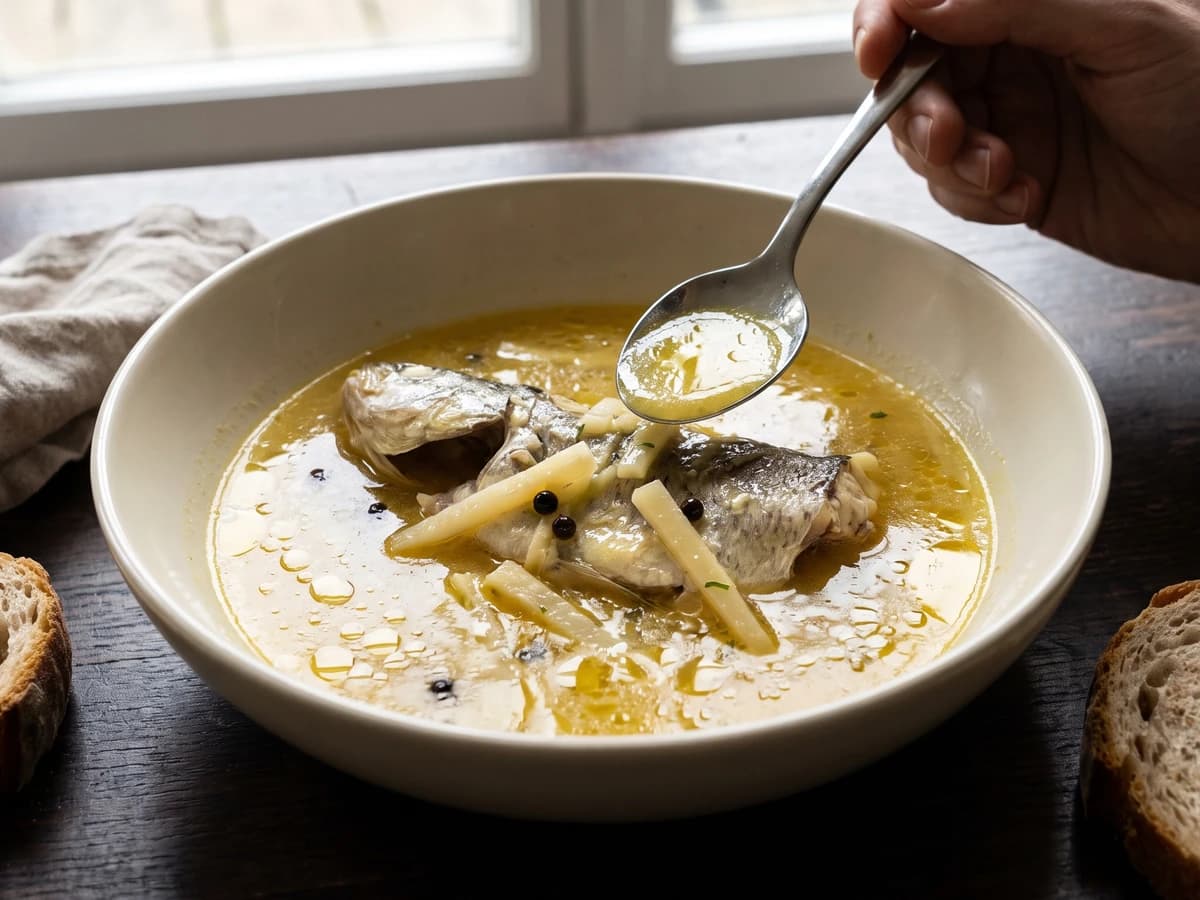
Waterzoi asks fresh, bone-in river fish to thicken its own buttery broth, with parsley root and pepper for company. No flour, no stockpot, just a brisk simmer watched closely.
Chef Juliette
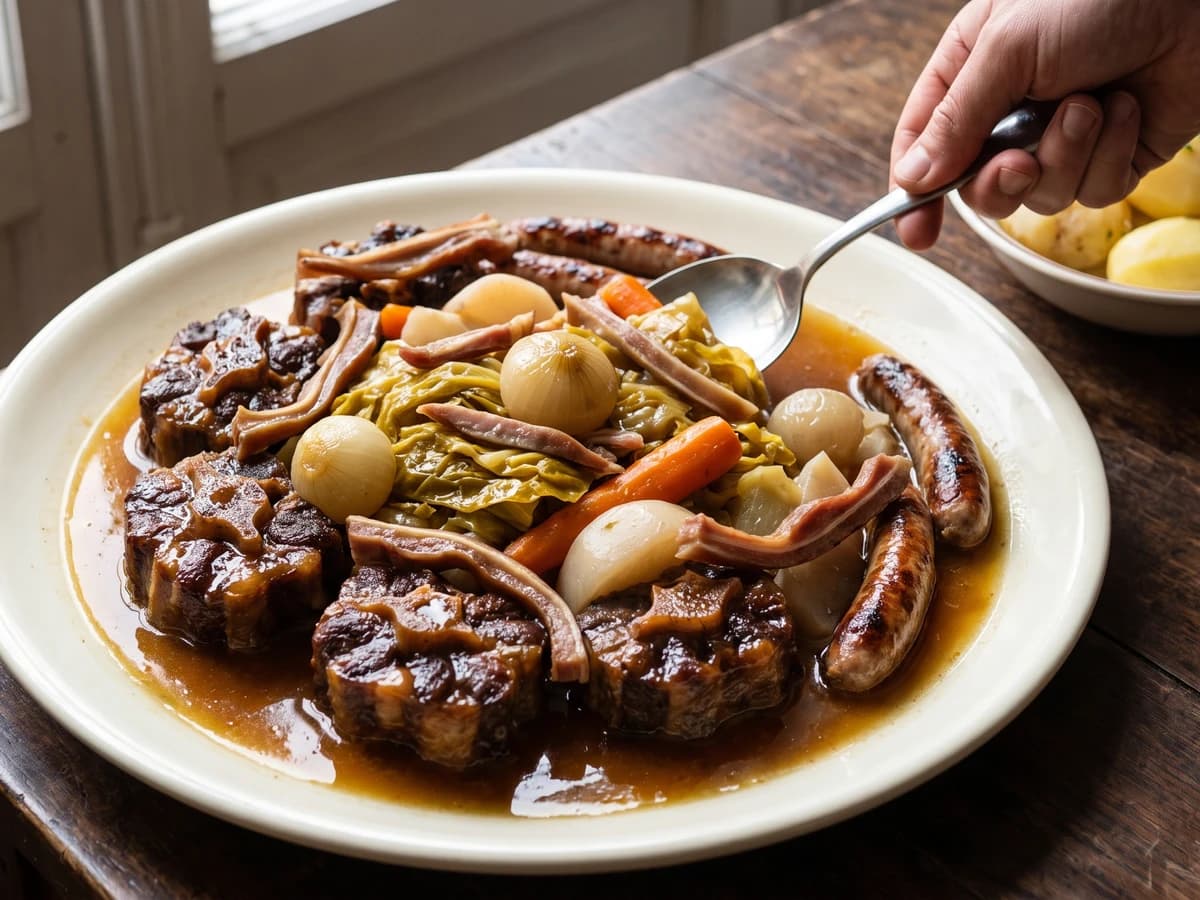
Queue de Bœuf en Hochepot gathers oxtail, pig's trotter and ear, cabbage, roots, and grilled chipolatas around a clear, gelatin-rich broth whose quiet simmer keeps every piece tender and distinct.
Chef Juliette
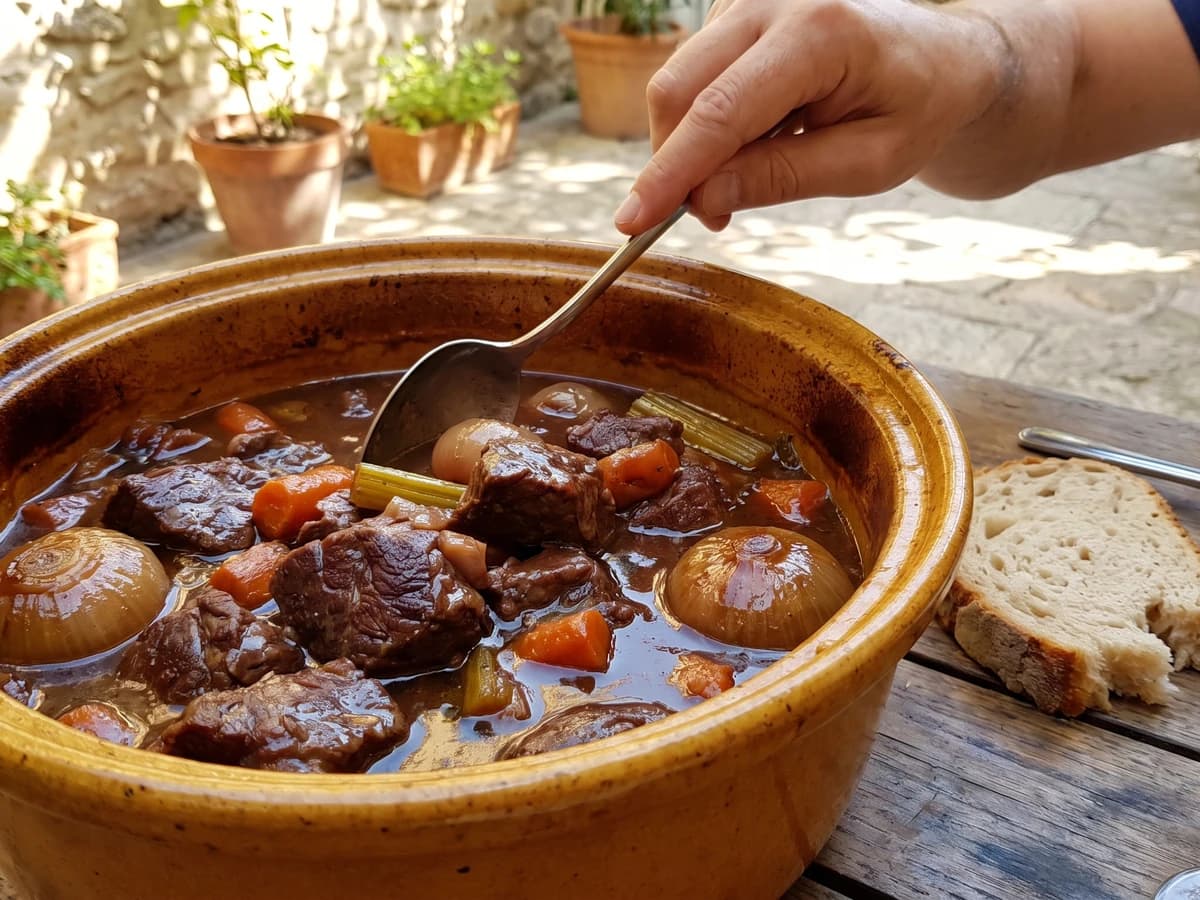
Beef shoulder larded with bacon, sharpened by red wine and vinegar, then sealed with garlic, vegetables, and dry lemon peel until the low oven turns it yielding and the gravy darkly glossy.