Chef Juliette
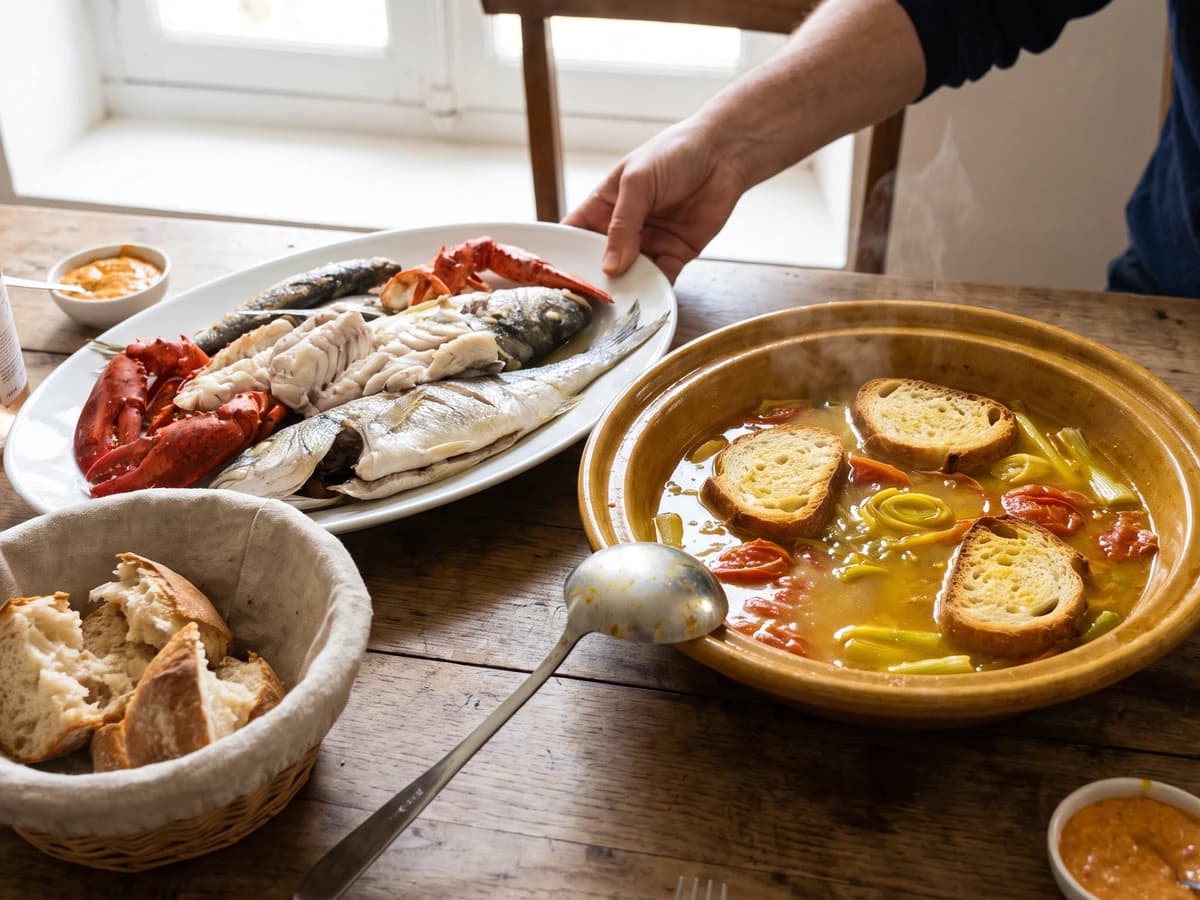
Bouillabaisse à la Marseillaise
Marseille's great fish stew, saffron-gold and garlic-scented, proves that a hard boil can be the careful choice: it binds olive oil into broth before the whole pot meets bread.
A cooking platform built around craft, culture, and the stories behind what we eat.
Created by Chef Juliette
Based on No. 614, Turtle Soup, from Le Guide Culinaire (1907) by Auguste Escoffier
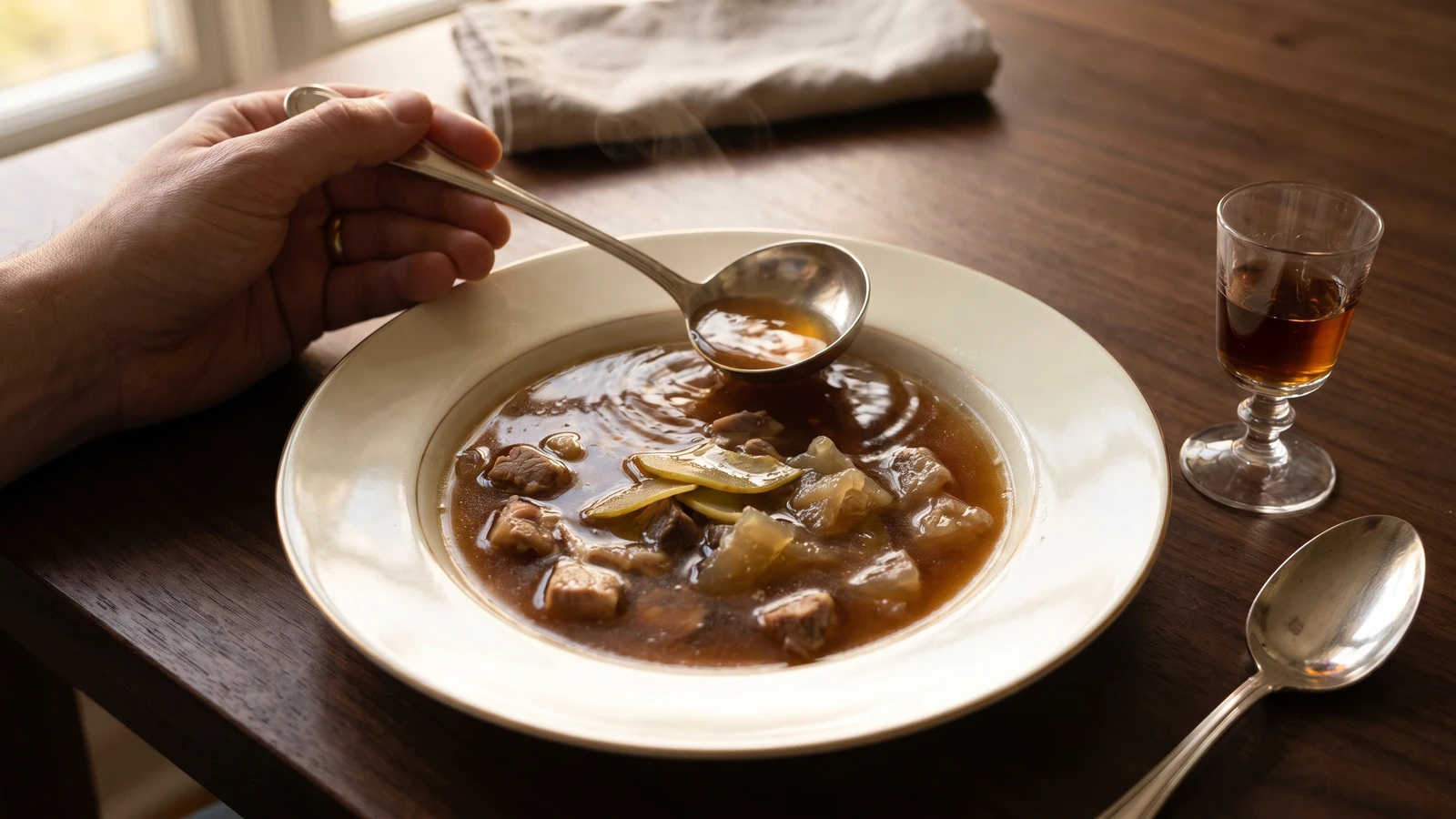
Potage de tortue draws depth from a barely trembling broth, then lifts it with turtle herbs and Madeira: a grand London soup translated honestly for one French home kitchen.
Potage de tortue (turtle soup) teaches the discipline of extraction. Its richness must come from turtle, connective tissue, a gelatinous consommé, and time, while the finished broth remains clear enough to catch the light. The one true thing to know before touching the pan is this: the liquid must tremble, never boil. A rolling pot muddies the broth and bullies the meat.
The original preparation assumed a whole turtle weighing as much as a person, several hands for slaughtering and dismembering it, a saucier tending an enormous stockpot, and stock never off the fire. No live-animal butchery belongs in this home translation, and the protected green sea turtle of the classical service is not an ingredient to pursue. Legally sold, inspected farmed freshwater turtle arrives dressed; gelatin-rich beef consommé replaces the collagenous shell liquor that a home supplier cannot provide. This changes the species and source plainly, but preserves the soup's structure.
The shell sawing, long clarification, and storage jars were brigade scaffolding, so they go. The slow extraction, turtle-herb bouquet, gelatinous garnish, gently poached fat, and Madeira finish are the dish, so they stay. This makes about two quarts for one cook, one stove, one evening. Guard that bare simmer, and the rest follows.
Turtle soup's celebrated public home is London, not a French province: club, hotel, and specialist kitchens prepared it in quantities rarely attempted elsewhere, while the French classical canon recorded its method and service. The prized green fat came from the green sea turtle, now a protected animal outside the lawful home kitchen, so farmed freshwater turtle and its reserved natural fat provide an honest but visibly different equivalent. The soup crossed into French practice with its distinctive bouquet of basil, marjoram, sage, rosemary, savory, and thyme intact, followed by Madeira at the moment of service.
Quantity
3¼ pounds (1.5 kg), prepared as needed by Blanchings (No. 273)
Quantity
4 ounces (115 g)
trimmed of membrane
Quantity
2 quarts (1.9 L / 1.9 kg)
Quantity
1 quart (950 ml / 950 g)
Quantity
1 (about 3 ounces / 85 g)
thickly sliced
Quantity
1 (about 4 ounces / 115 g)
split and thoroughly rinsed
Quantity
1 (about 1½ ounces / 45 g)
roughly cut
Quantity
½ (about 3 ounces / 85 g)
peeled
Quantity
2 (about 2 ounces / 55 g)
peeled
Quantity
½ packed cup (120 ml / 30 g)
Quantity
1
lightly crushed
Quantity
1
Quantity
1 tablespoon (15 ml / 18 g)
Quantity
1 bouquet: 8 sweet basil leaves, 4 sweet marjoram sprigs, 2 sage leaves, 1 small rosemary sprig, 4 savory sprigs, and 6 thyme sprigs
Quantity
1 narrow strip, about 2 inches by ¼ inch (0.5 g)
Quantity
1½ tablespoons (22 ml / 8 g)
Quantity
1½ teaspoons (7.5 ml / 4 g)
Quantity
2 cups (475 ml / 475 g)
Quantity
2 teaspoons (10 ml / 12 g)
Quantity
½ cup (120 ml / 120 g)
| Ingredient | Quantity |
|---|---|
| legally sourced, inspected dressed farmed freshwater turtle pieces, bone-in with skin and cartilage | 3¼ pounds (1.5 kg), prepared as needed by Blanchings (No. 273) |
| reserved natural fat from the same legally farmed turtletrimmed of membrane | 4 ounces (115 g) |
| unsalted, gelatin-rich beef consommé | 2 quarts (1.9 L / 1.9 kg) |
| cold water | 1 quart (950 ml / 950 g) |
| small carrotthickly sliced | 1 (about 3 ounces / 85 g) |
| small leek, white and pale green partssplit and thoroughly rinsed | 1 (about 4 ounces / 115 g) |
| celery ribroughly cut | 1 (about 1½ ounces / 45 g) |
| medium yellow onionpeeled | ½ (about 3 ounces / 85 g) |
| small shallotspeeled | 2 (about 2 ounces / 55 g) |
| parsley stalks | ½ packed cup (120 ml / 30 g) |
| garlic clovelightly crushed | 1 |
| whole clove | 1 |
| fine sea salt | 1 tablespoon (15 ml / 18 g) |
| turtle-herb bouquet | 1 bouquet: 8 sweet basil leaves, 4 sweet marjoram sprigs, 2 sage leaves, 1 small rosemary sprig, 4 savory sprigs, and 6 thyme sprigs |
| lemon zest with no white pith | 1 narrow strip, about 2 inches by ¼ inch (0.5 g) |
| coriander seeds | 1½ tablespoons (22 ml / 8 g) |
| black peppercorns | 1½ teaspoons (7.5 ml / 4 g) |
| water for poaching the reserved turtle fat | 2 cups (475 ml / 475 g) |
| fine sea salt for the poaching water | 2 teaspoons (10 ml / 12 g) |
| dry or medium-dry Madeira | ½ cup (120 ml / 120 g) |
Thaw the turtle completely in the refrigerator. Set aside the reserved fat, then inspect the pieces and retain every clean bone, strip of skin, and piece of cartilage because they give the broth its body. The source applies Blanchings (No. 273) to the shell and flippers: with commercially dressed turtle, use that operation only on bloodied skin-on or cartilaginous pieces. Lower those pieces into boiling water for 5 minutes, drain, rinse under cold water, and scrape away any loose membrane. Clean flesh needs no soaking, which would send its flavor down the drain.
Put the turtle flesh, bones, blanched connective pieces, consommé, cold water, and 1 tablespoon salt into a heavy stockpot. Bring the liquid slowly toward the first lazy bubbles, skimming the grey foam as it rises. Add the carrot, leek, celery, onion, shallots, parsley stalks, garlic, and whole clove. Lower the heat until the surface merely trembles, then cook partially covered for 2½ hours. If the pot boils hard and the broth clouds, stop the heat, add a cup of cold water, and let it settle for 10 minutes before skimming again. Continue more gently and strain twice later. Ça se rattrape.
Begin checking the turtle after 2 hours. Lift out each piece as soon as its meat pulls cleanly from the bone, since different muscles soften at different moments. Reserve about 12 ounces (340 g) of the best tender meat, skin, and gelatinous connective tissue. Trim it carefully and cut it into ½-inch (1.25 cm) squares, the practical home-spoon equivalent of the original large service garnish. Cover and hold it in a little strained broth. Return the stripped bones and any still-firm cartilage to the stockpot.
Tie the basil, marjoram, sage, rosemary, savory, thyme, and lemon zest in a small square of muslin. Put the coriander seeds and peppercorns into a second spice bag so no stray seed reaches the bowl. Add both bags for the final hour of cooking, keeping the broth at the same bare tremble. This last infusion is the soup's unmistakable accent; longer cooking would make the sage and rosemary coarse and medicinal.
While the herbs infuse, bring the 2 cups water and 2 teaspoons salt to a gentle simmer in a small saucepan. Add the reserved turtle fat and poach without boiling until cooked through and tender, about 15 minutes; its center must reach at least 165°F (74°C). Let it cool in the liquid for 5 minutes, then slice it thinly. If it becomes too soft to cut, chill it briefly in its poaching liquid until firm. Do not color butter with herbs and call it green fat. The lawful freshwater garnish is different, and honesty tastes better.
Remove both herb bags. Pour the broth through a fine sieve lined with damp muslin into a clean pot, allowing it to drain without pressing the solids; pressure forces sediment through and muddies what you spent the evening clarifying by patience. Skim away heavy surface fat but leave a slight amber sheen. Measure the broth. If you have more than 2 quarts, reduce it gently to that volume; if you have less, add enough boiling water or hot consommé to restore 2 quarts. It should lightly coat the lips when tasted, not sit thick like sauce.
Return the diced turtle garnish and sliced reserved fat to the strained broth. Heat gently until everything is thoroughly hot, then taste and correct the salt. Take the pot off the heat and stir in the Madeira, preserving the source proportion of one small port glass for every quart. Do not boil after the wine goes in or its lifted, nutty perfume disappears. Ladle generously into warmed soup plates, giving each guest both tender turtle and gelatinous garnish. À table!
1 serving (about 240g)
Culinary guides, cultural storytelling, and the editorial depth that makes cooking meaningful.
Discover Culinary ExplorerChef Juliette
Marseille's great fish stew, saffron-gold and garlic-scented, proves that a hard boil can be the careful choice: it binds olive oil into broth before the whole pot meets bread.
Chef Juliette
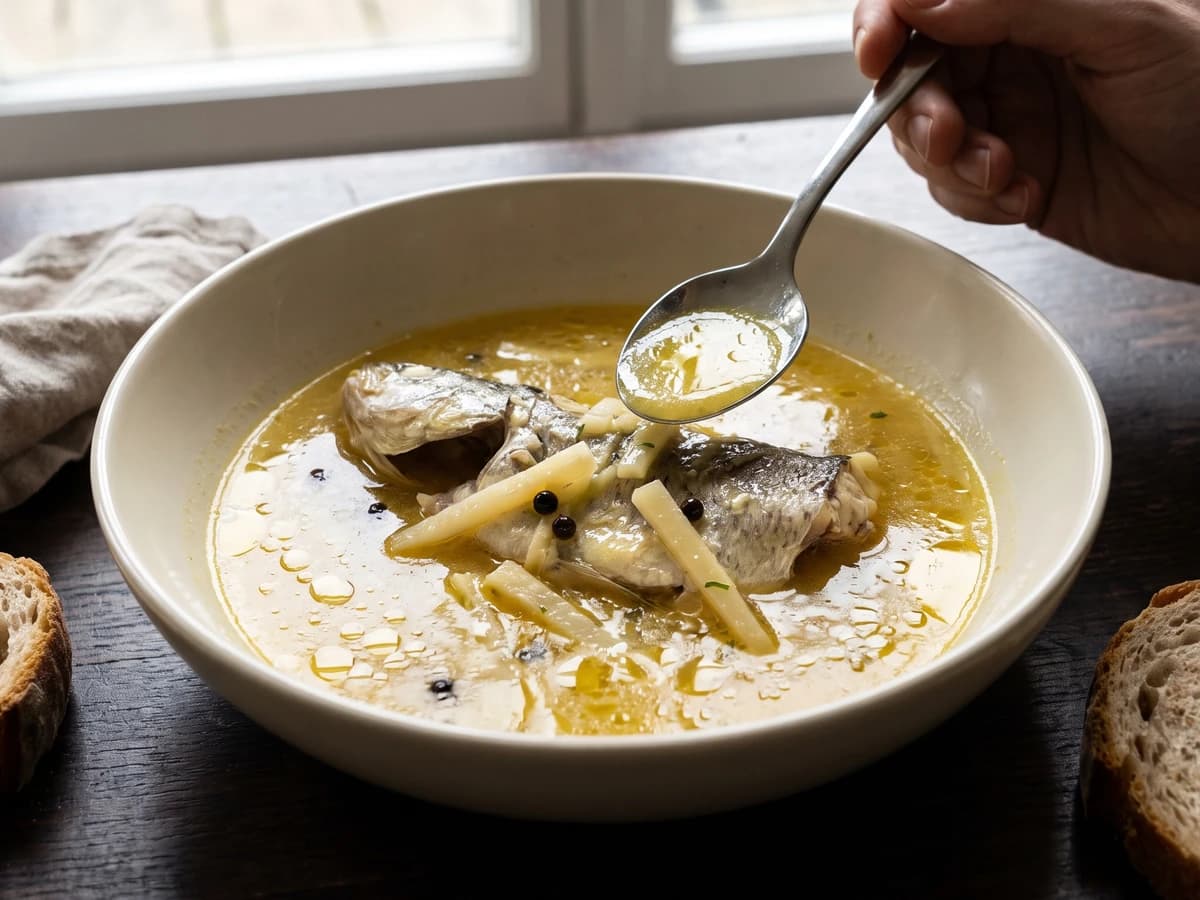
Waterzoi asks fresh, bone-in river fish to thicken its own buttery broth, with parsley root and pepper for company. No flour, no stockpot, just a brisk simmer watched closely.
Chef Juliette
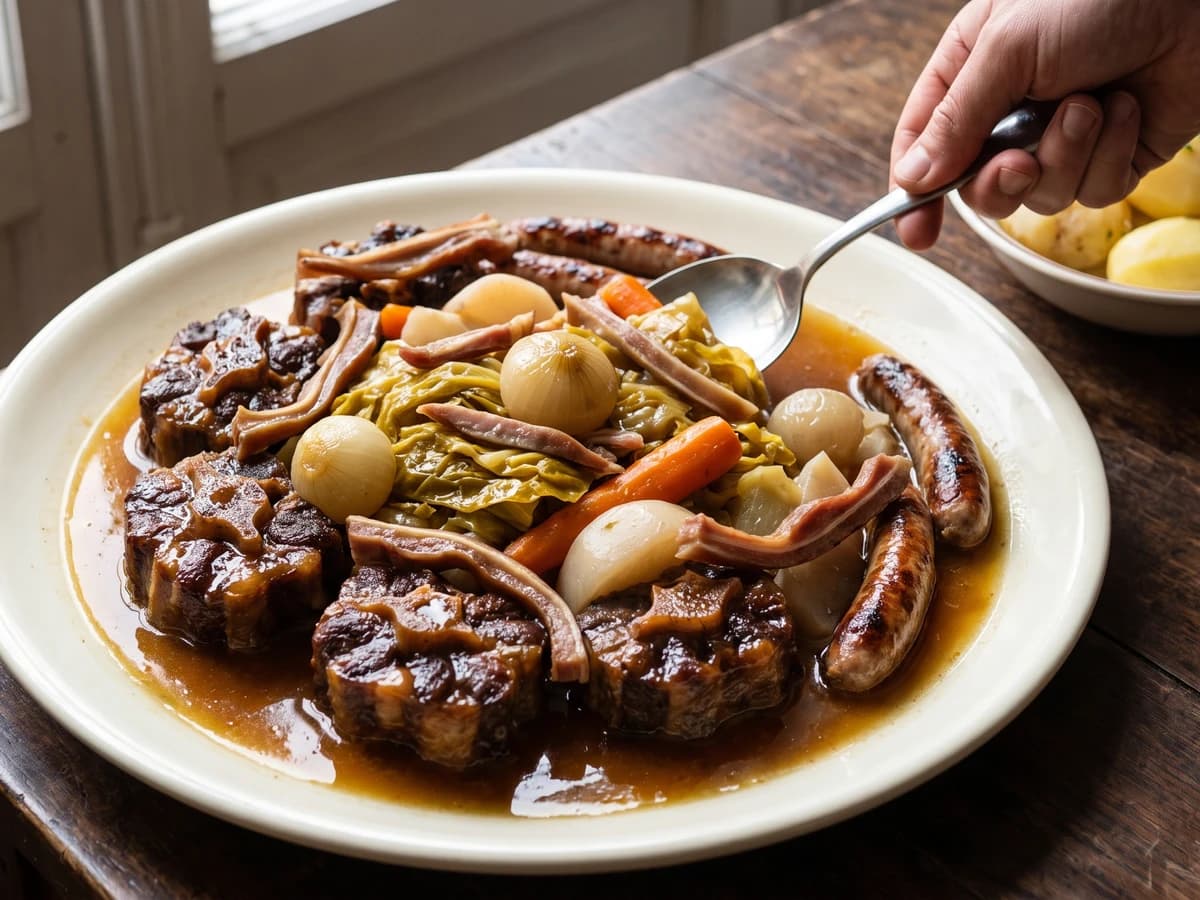
Queue de Bœuf en Hochepot gathers oxtail, pig's trotter and ear, cabbage, roots, and grilled chipolatas around a clear, gelatin-rich broth whose quiet simmer keeps every piece tender and distinct.
Chef Juliette
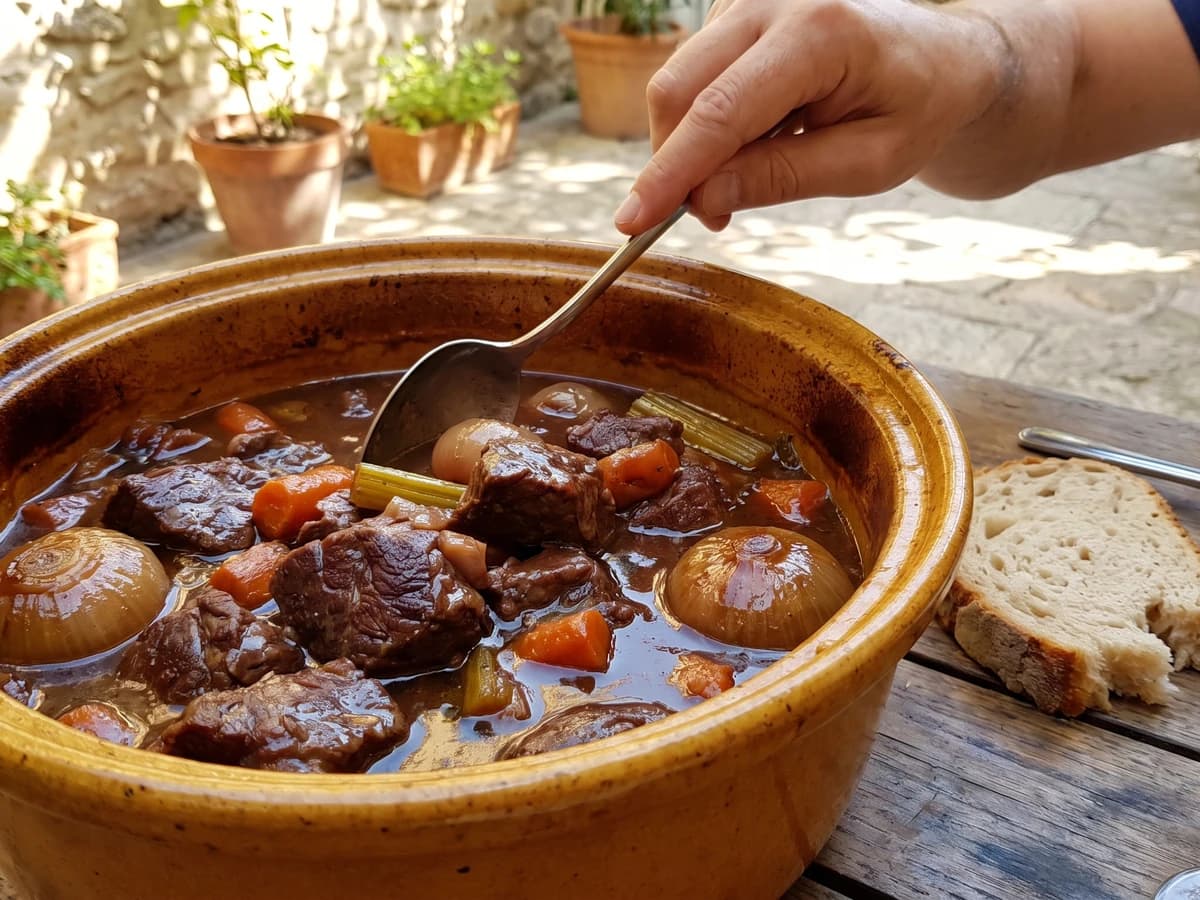
Beef shoulder larded with bacon, sharpened by red wine and vinegar, then sealed with garlic, vegetables, and dry lemon peel until the low oven turns it yielding and the gravy darkly glossy.