Chef Juliette
Bouillabaisse à la Marseillaise
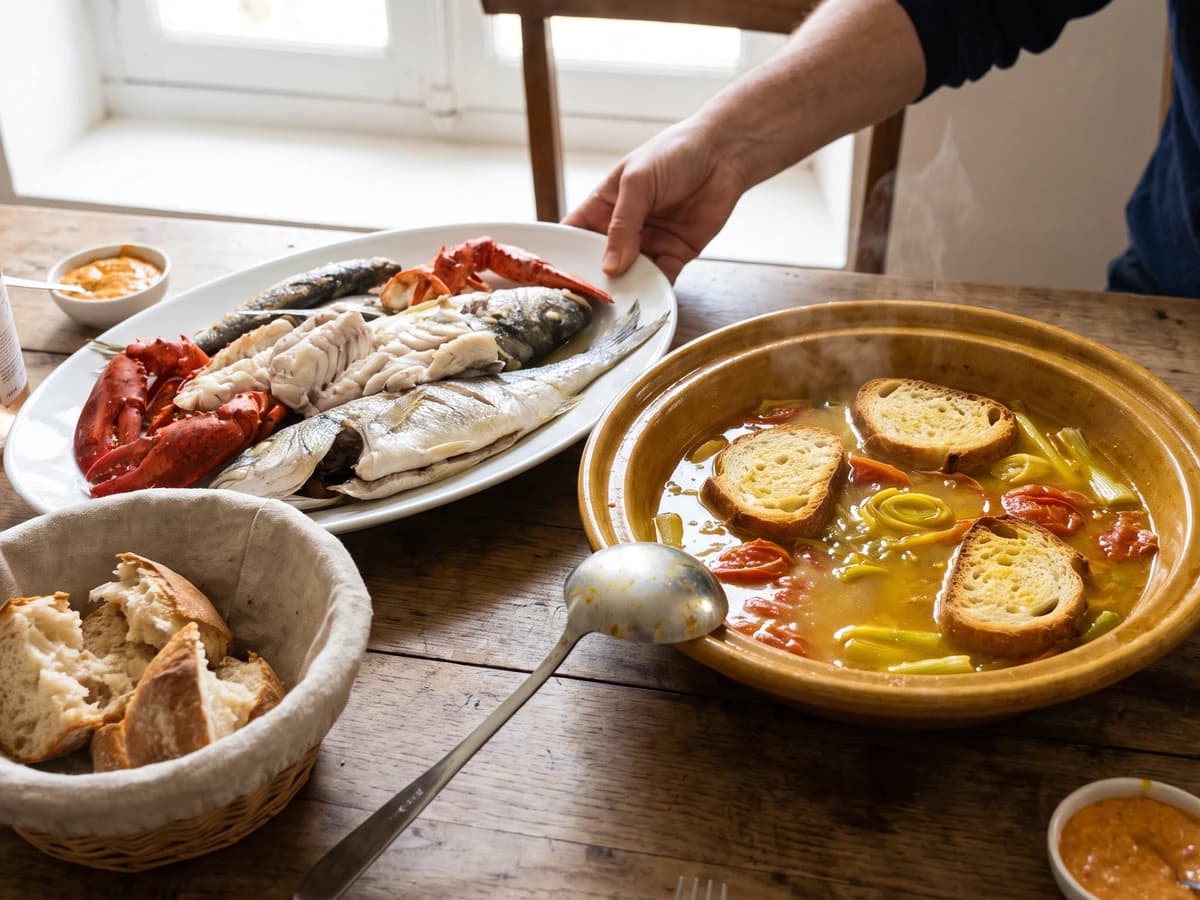
Marseille's great fish stew, saffron-gold and garlic-scented, proves that a hard boil can be the careful choice: it binds olive oil into broth before the whole pot meets bread.
A cooking platform built around craft, culture, and the stories behind what we eat.
Created by Chef Juliette
Based on No. 596, Ox-tail Soup, from Le Guide Culinaire (1907) by Auguste Escoffier
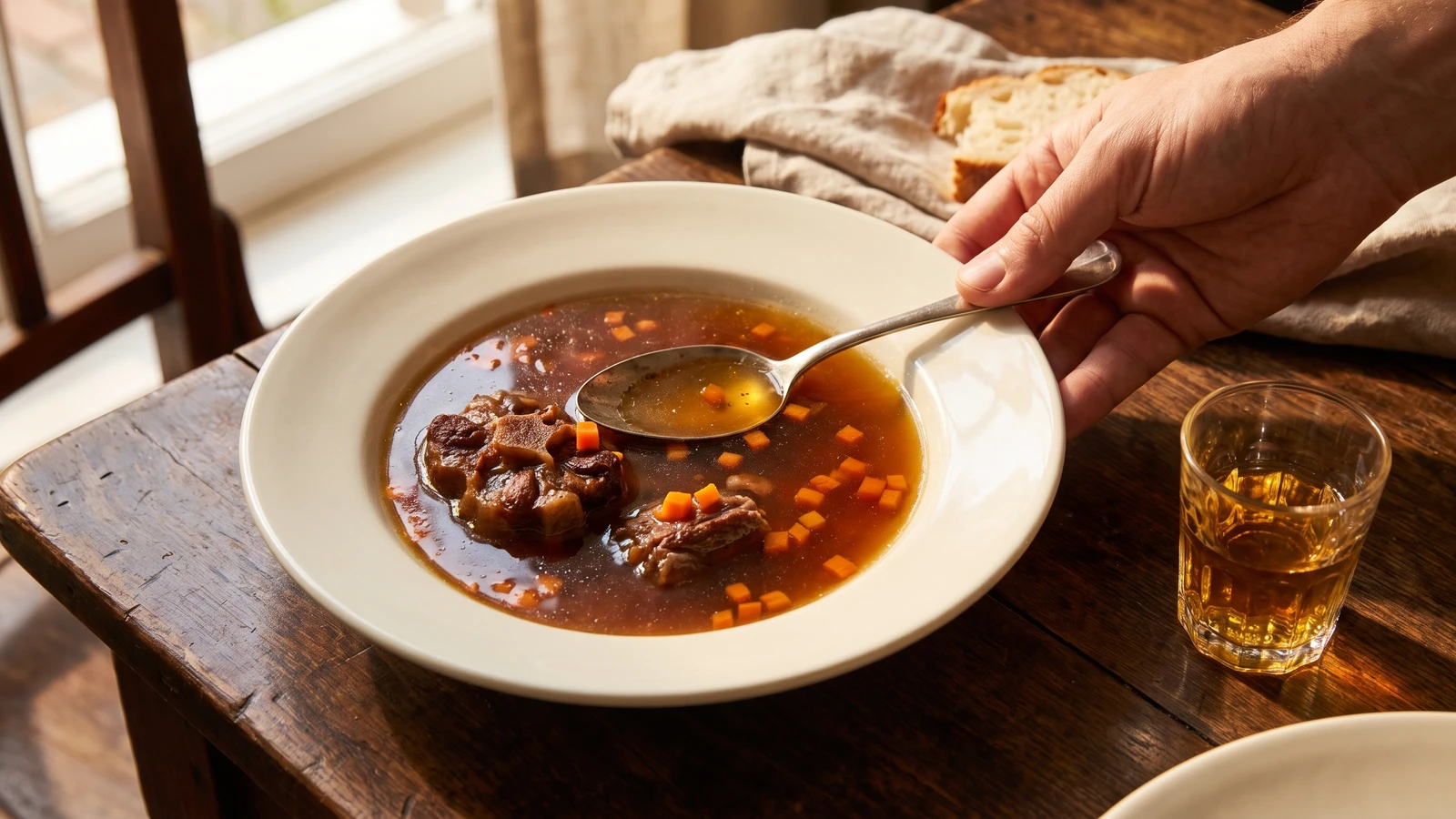
Potage de queue de bœuf turns browned tail and bone into a broth of mahogany depth and consommé clarity, with tender sections returned to the tureen and carrot brunoise brightening every spoonful.
Potage de queue de bœuf (ox-tail soup) teaches the central lesson of a clear brown soup: clarity is built before it is clarified. Brown the tails and gelatinous bones to deep mahogany without letting one edge turn black, then hold the pot at the barest tremble. The beef-and-egg raft can gather fine particles, but it cannot erase scorched bitterness. That is the one true thing to know before heating a pan.
The book's kitchen assumed a saucier watching the pot, Brown Veal Stock (No. 9) never off the fire, room for ten portions, a braiding needle for moving the joints, and a napkin reserved for straining. At home, the ten-person tureen becomes about two quarts, a 6- to 8-quart pot replaces the stockpot, a slotted spoon replaces the needle, and rinsed muslin replaces the napkin. The five-hour extraction and hour-long clarification remain because they are the dish; the brigade handling is scaffolding and goes.
The reward is a broth both powerful and remarkably clear, with tender ox-tail sections beneath its amber surface and little sparks of carrot brunoise in every spoonful. One cook, one stove, one long evening, though the work is calmer still when divided over two days. Before the raft goes in, remove every visible trace of fat; once the raft forms, stop stirring and let it do its work.
Ox-tail soup belongs first to the English inn and household table, where butcher's tails became a dark, gelatinous broth often sharpened with port or sherry. French classical kitchens admitted it as potage de queue de bœuf à l'anglaise, bringing brown-stock practice and consommé clarification to the English model while keeping the meaty tail sections in the tureen. It is therefore an English soup naturalized in the French canon, not a specialty of Lyon, Burgundy, or another French region.
Quantity
3¼ pounds (1.5 kg)
cut through the joints into vertebra-sized sections
Quantity
1 pound 9½ ounces (725 g)
chopped into small pieces
Quantity
2 tablespoons (30 ml / 28 g)
Quantity
1 (about 1¼ cups / 180 g)
peeled and cut into roundels
Quantity
2 (about 2½ cups / 300 g)
peeled and cut into roundels
Quantity
1
Quantity
2 quarts (8 cups / 1.9 L / 1.9 kg) Brown Veal Stock (No. 9)
Quantity
3¼ cups (770 ml / 770 g)
Quantity
13 ounces (370 g)
finely minced
Quantity
¾ cup (180 ml / 75 g)
diced
Quantity
1 tablespoon (15 ml / 15 g)
Quantity
1 (about ½ cup / 70 g)
peeled and cut in brunoise
Quantity
½ cup (120 ml / 120 g)
Quantity
1 teaspoon (5 ml / 5 g)
Quantity
½ teaspoon (2.5 ml / 2 g)
Quantity
2 teaspoons (10 ml / 12 g), divided, plus more as needed
Quantity
¼ cup (60 ml / 60 g)
Quantity
2 tablespoons plus 1 teaspoon (35 ml / 19 g)
| Ingredient | Quantity |
|---|---|
| ox-tailcut through the joints into vertebra-sized sections | 3¼ pounds (1.5 kg) |
| gelatinous veal knuckle or beef joint boneschopped into small pieces | 1 pound 9½ ounces (725 g) |
| unsalted butter | 2 tablespoons (30 ml / 28 g) |
| large carrotpeeled and cut into roundels | 1 (about 1¼ cups / 180 g) |
| medium onionspeeled and cut into roundels | 2 (about 2½ cups / 300 g) |
| bouquet garni of parsley stems, thyme, and bay | 1 |
| Brown Veal Stock | 2 quarts (8 cups / 1.9 L / 1.9 kg) Brown Veal Stock (No. 9) |
| water | 3¼ cups (770 ml / 770 g) |
| very lean beeffinely minced | 13 ounces (370 g) |
| leek whitediced | ¾ cup (180 ml / 75 g) |
| egg white | 1 tablespoon (15 ml / 15 g) |
| small carrotpeeled and cut in brunoise | 1 (about ½ cup / 70 g) |
| water for the carrot garnish | ½ cup (120 ml / 120 g) |
| unsalted butter for the carrot garnish | 1 teaspoon (5 ml / 5 g) |
| granulated sugar | ½ teaspoon (2.5 ml / 2 g) |
| fine sea salt | 2 teaspoons (10 ml / 12 g), divided, plus more as needed |
| port or sherry (optional) | ¼ cup (60 ml / 60 g) |
| arrowroot for the thickened variation (optional) | 2 tablespoons plus 1 teaspoon (35 ml / 19 g) |
Heat the oven to 450°F (230°C). Pat the ox-tail and bones dry, spread them in a single layer in a heavy roasting pan, and roast for 35 to 45 minutes, turning once, until every broad surface is deep mahogany. Brown means brown, not black. If one edge catches, move the sound pieces to a clean part of the pan and leave the burnt deposit behind; no clarification can remove scorched bitterness.
Melt the 2 tablespoons of butter in a 6- to 8-quart stockpot over medium heat. Add the carrot and onion roundels and cook for 10 to 15 minutes, turning occasionally, until their edges are richly browned. Add the bouquet garni, roasted ox-tail, and bones. Pour about 1 cup of the measured water into the hot roasting pan, scrape up every sound brown deposit, and add that fond to the pot. Pour in the remaining water and the Brown Veal Stock (No. 9). The prescribed liquid should fit closely around the solids; do not drown them with extra water.
Bring the pot slowly toward a boil, skimming away the grey foam as it gathers. The moment the surface begins to roll, lower the heat and hold it at the barest tremble for 4½ to 5 hours, uncovered or with the lid slightly ajar. Skim occasionally but do not stir the bones through the broth. The ox-tail is ready when a fork enters the meat easily but the large sections remain intact. If the pot boils hard and clouds, lower the heat at once; the clarification can repair that cloudiness later. Ça se rattrape. What it cannot repair is a scorched pot floor.
Strain the contents through a fine sieve into a heatproof bowl. Retrieve 8 to 10 of the largest, best-shaped tail sections with a slotted spoon and discard the exhausted bones, vegetables, bouquet garni, and small tail tips. Let the broth settle for 10 minutes, then pass it through a fat separator and skim until no beads of grease remain. Measure it and reduce gently, if necessary, until it reaches 2 quarts. If it has slipped slightly below that mark, restore only to 2 quarts with hot water. Reserve about 1 cup of the defatted broth over the tail sections in a small covered saucepan and keep them barely warm, never simmering. Cool the remaining broth in an ice bath until lukewarm.
In a clean stockpot, work the minced lean beef, diced leek white, and egg white together until evenly mixed. Add the cooled, completely defatted broth and set the pot over medium heat. Stir constantly from the bottom as it warms so the egg does not catch. When the first slow boil arrives and the beef rises into a raft, stop stirring immediately, lower the heat, and open a small chimney through the raft with the handle of a spoon. Simmer at the faintest movement for 1 hour. If the raft cracks, lower the heat and leave it undisturbed for 5 minutes so it can settle again; a second careful straining will rescue any escaped particles.
While the broth clarifies, cut the small carrot in brunoise, a fine, even dice. Put it in a small saucepan with the ½ cup water, 1 teaspoon butter, sugar, and a small pinch of the measured salt. Cover and cook gently for 8 to 12 minutes, until tender but still neatly shaped. Uncover for the final minute so the remaining liquid reduces to a light buttery glaze. If the pan dries before the carrot is tender, add one spoonful of water and continue gently.
Rinse a square of muslin or a plain linen cloth thoroughly, dampen it with hot water, and wring it well. Line a fine sieve over a clean saucepan. Ladle the broth slowly through the chimney in the raft, then lift the remaining liquid away without pressing or squeezing the solids. Discard the clarification mixture. The broth should be clear, deep amber, and free of grease. If a few particles escaped, pass it once more through fresh double-layered damp cloth; patience, not pressure, restores the brilliance.
Drain the warm tail sections well and arrange them in a heated soup tureen with the glazed carrot brunoise. Bring the clarified broth just below a simmer, season with the remaining salt as needed, and add the port or sherry off the heat if using. For the optional thickened version, first mix the arrowroot with ¼ cup of cooled clarified broth, whisk the smooth slurry into the remaining broth, and simmer for 1 to 2 minutes, just until it lightly coats a spoon. Pour the finished broth over the tail sections and carrot. Serve at once. À table!
1 serving (about 240g)
Culinary guides, cultural storytelling, and the editorial depth that makes cooking meaningful.
Discover Culinary ExplorerChef Juliette
Marseille's great fish stew, saffron-gold and garlic-scented, proves that a hard boil can be the careful choice: it binds olive oil into broth before the whole pot meets bread.
Chef Juliette
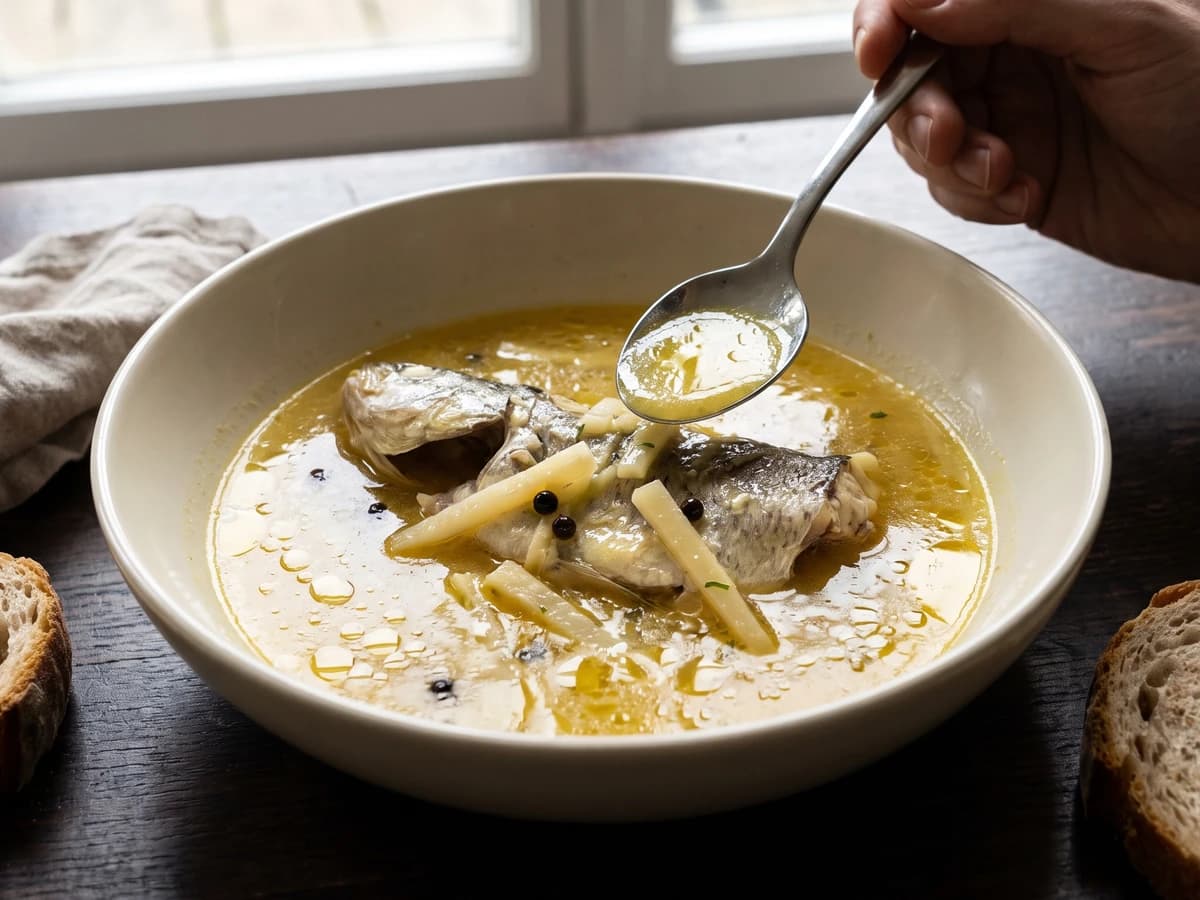
Waterzoi asks fresh, bone-in river fish to thicken its own buttery broth, with parsley root and pepper for company. No flour, no stockpot, just a brisk simmer watched closely.
Chef Juliette
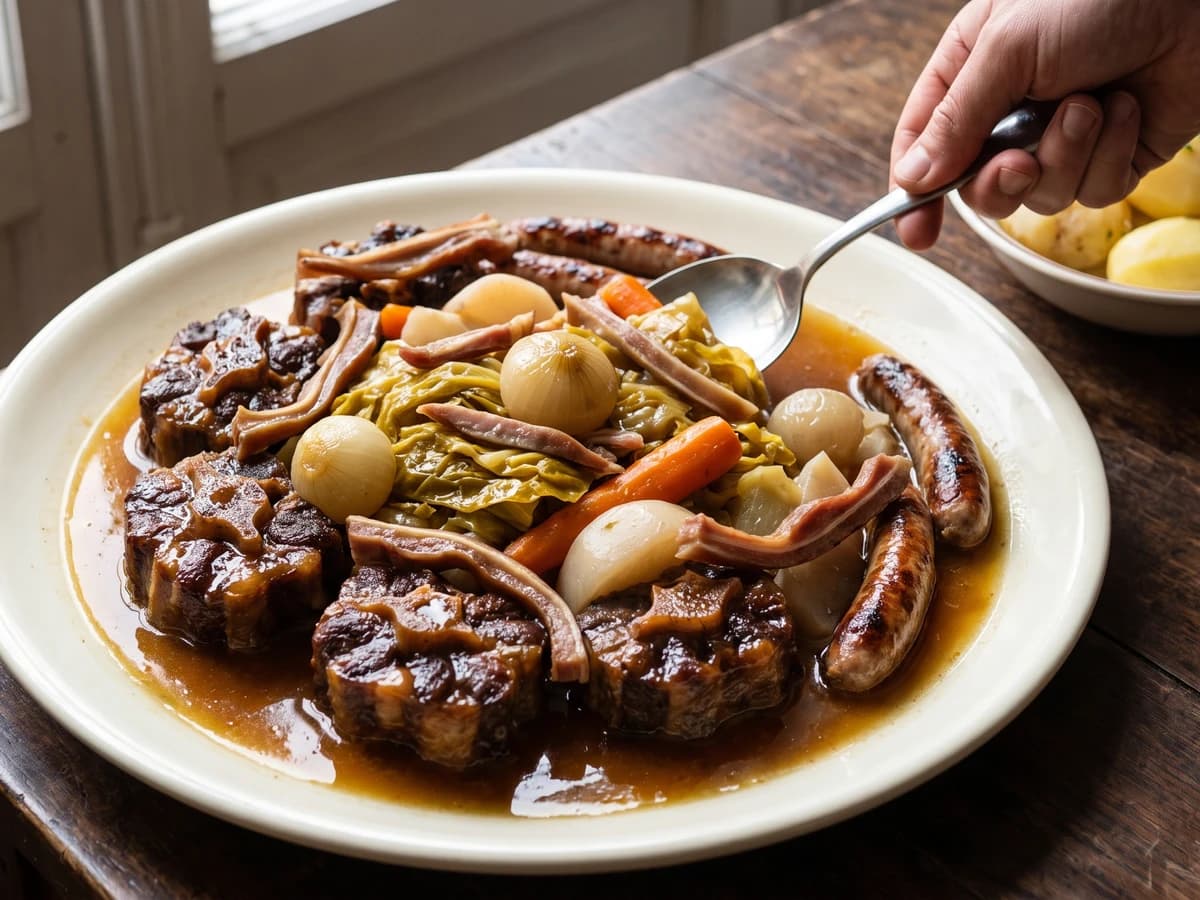
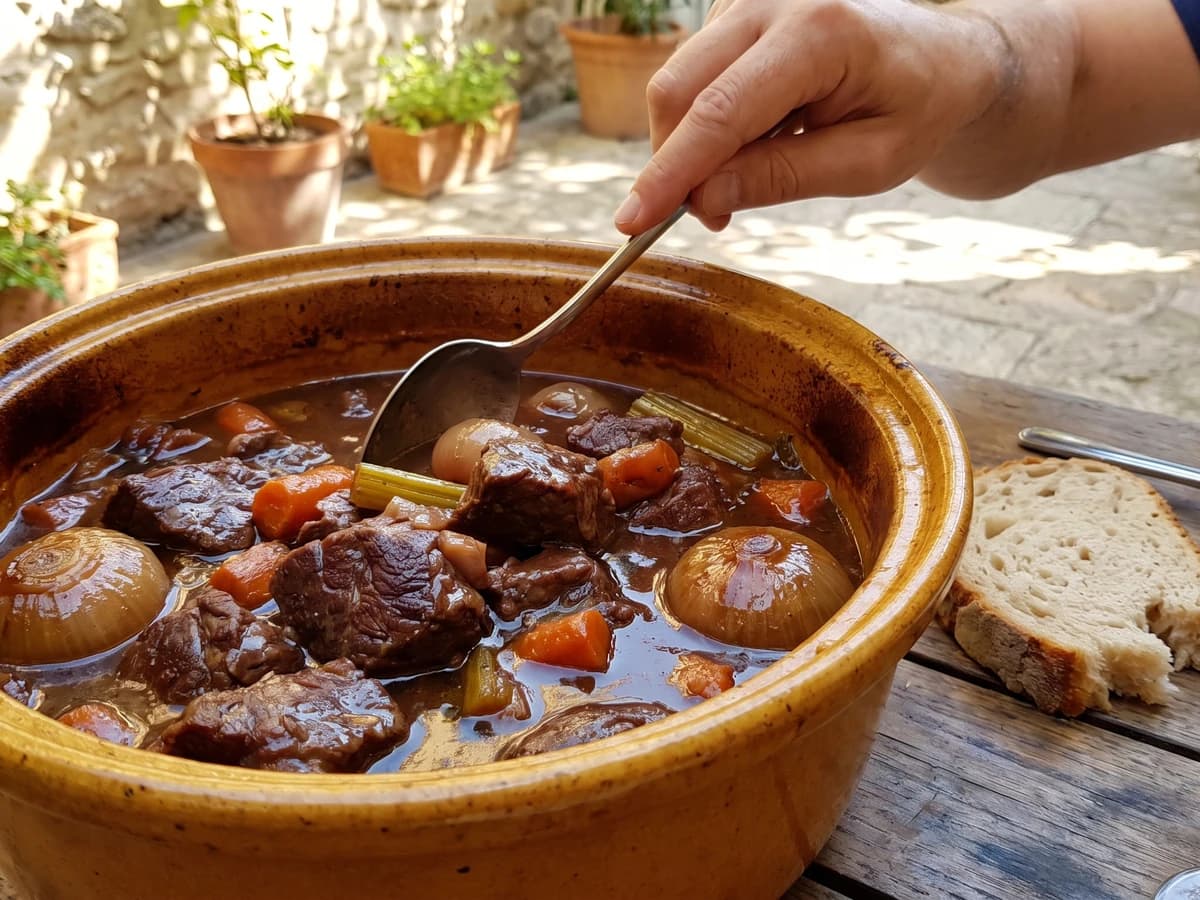
Queue de Bœuf en Hochepot gathers oxtail, pig's trotter and ear, cabbage, roots, and grilled chipolatas around a clear, gelatin-rich broth whose quiet simmer keeps every piece tender and distinct.
Chef Juliette
Beef shoulder larded with bacon, sharpened by red wine and vinegar, then sealed with garlic, vegetables, and dry lemon peel until the low oven turns it yielding and the gravy darkly glossy.