Chef Juliette
Ordinary or White Consommé
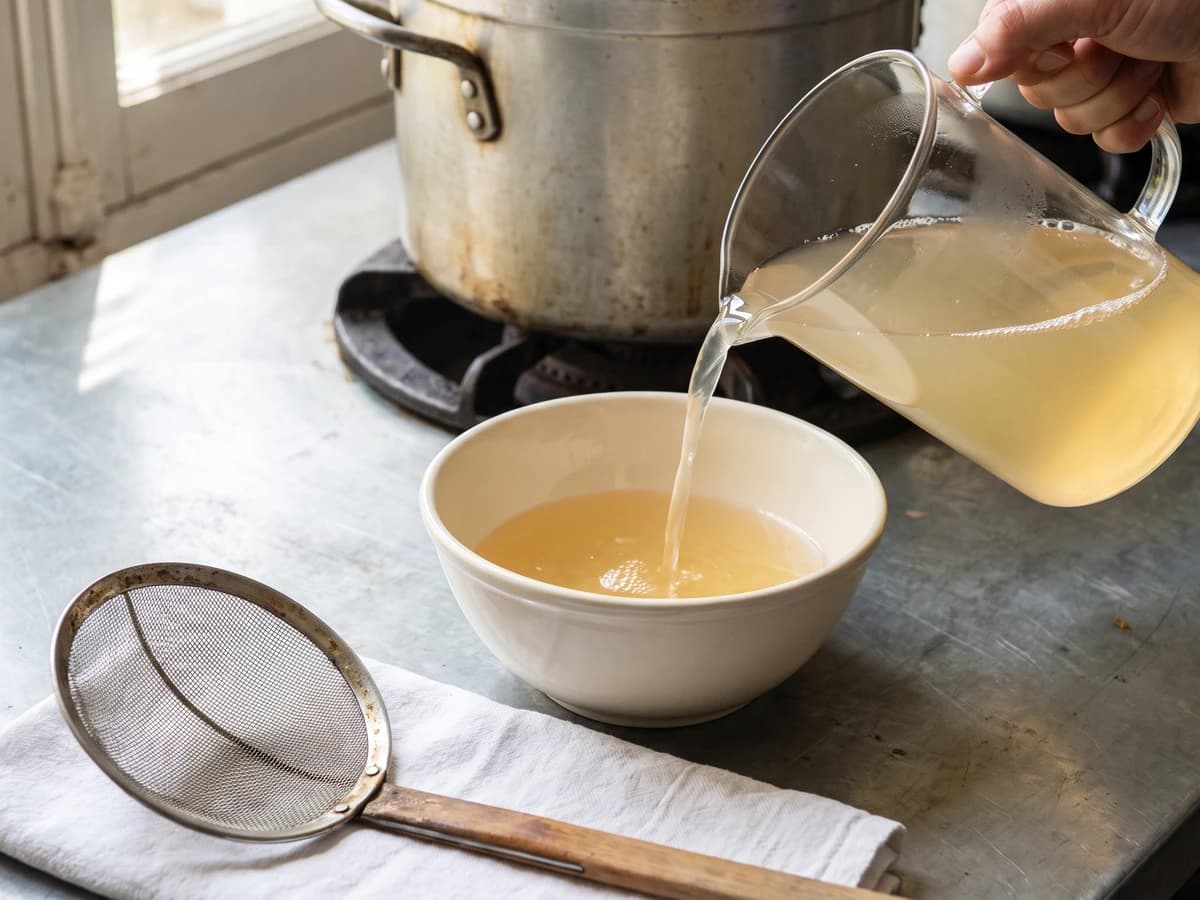
Beef shin, lean beef, and fowl begin in cold water and rise slowly toward a tremble. Skim before the boil, and you learn the quiet discipline that gives every clear French broth its backbone.
A cooking platform built around craft, culture, and the stories behind what we eat.
Created by Chef Juliette
Based on No. 59, Anchovy Sauce, from Le Guide Culinaire (1907) by Auguste Escoffier
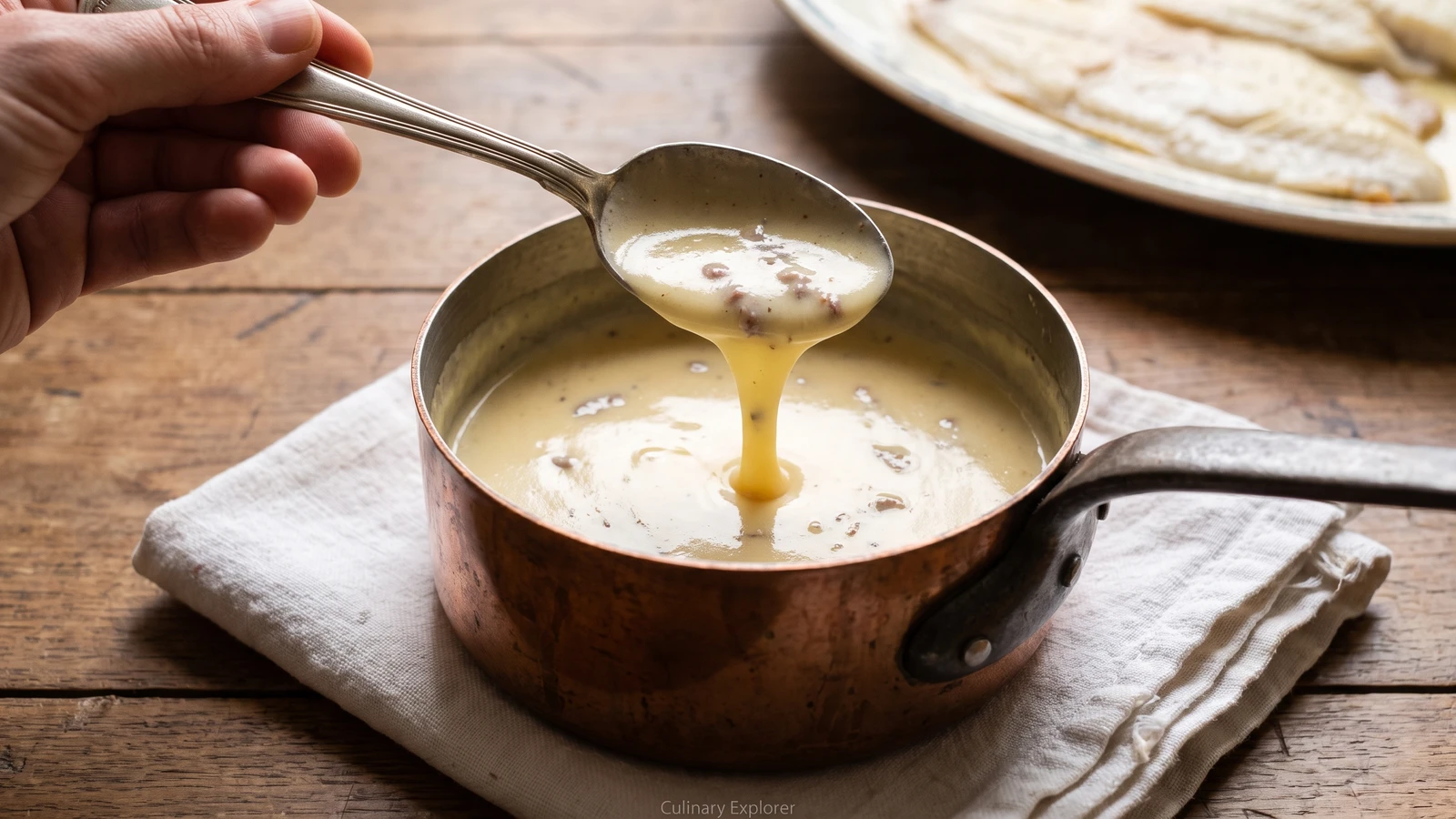
Sauce aux Anchois teaches the quiet discipline of finishing off heat: ivory Normande sauce, anchovy butter, and tender pieces of washed fillet held in a glossy emulsion that flatters poached or baked fish.
Sauce aux Anchois (anchovy sauce) teaches one quiet law of finishing: once the anchovy butter enters, the fire is over. The Normande foundation should remain ivory and glossy, with its anchovy salinity carried through the cream rather than beaten into an oily slick. Keep the pan off heat, and the sauce holds.
The original formula assumed a saucier on staff, a fish stock never off the fire, and unbuttered Normande Sauce (No. 99) held ready for finishing throughout service. Your home equivalent is a measured batch prepared ahead, warmed gently once, and finished in one pan. The rolling stockpot and repeated service are brigade scaffolding and can go; the off-fire emulsion, the washed fillets, and the original ratio are the dish, so they stay. One cook, one stove, one evening.
The anchovy pieces give small, tender flashes of salt against the smooth sauce, not a coarse paste and not a fishy blow. Have the butter cool and pliable, reserve two spoonfuls of the base, then lift the pan completely from the burner before you whisk. That off-fire mounting is the step that matters most.
Sauce aux Anchois belongs to the classical small-sauce repertoire: it is a derivative of Normande Sauce (No. 99), whose cream-rich fish foundation carries the larder of maritime Normandy. Its Norman identity comes from the base, not from the anchovies, a preserved seasoning used far beyond the Mediterranean coast. It should not be confused with Provençal anchoïade, where anchovy leads a garlic-and-olive-oil condiment rather than finishing a northern cream sauce.
Quantity
6 cups (1.42 L / 1.45 kg) Normande Sauce (No. 99)
Quantity
1 cup plus 2 tablespoons (270 ml / 255 g)
cool and pliable
Quantity
½ cup (120 ml / 85 g)
washed, thoroughly blotted, and cut into small pieces
| Ingredient | Quantity |
|---|---|
| unbuttered Normande Sauce | 6 cups (1.42 L / 1.45 kg) Normande Sauce (No. 99) |
| prepared anchovy buttercool and pliable | 1 cup plus 2 tablespoons (270 ml / 255 g) |
| anchovy filletswashed, thoroughly blotted, and cut into small pieces | ½ cup (120 ml / 85 g) |
Let the anchovy butter soften only until it yields beneath a finger while remaining cool. Rinse the anchovy fillets briefly under cold water, press them thoroughly between clean towels, and cut them into pieces about 5 mm across. Blotting matters: the sauce should receive the anchovy, not its packing oil or surface brine.
Reserve 2 tablespoons (30 ml / 30 g) of the measured Normande Sauce (No. 99) in a cool bowl. Put the remainder in a heavy saucepan and warm it slowly over low heat, stirring across the base and corners, until fluid and glossy, about 60 to 65°C. Do not let it bubble or reduce. This prepared foundation needs warming, not another cooking.
Remove the saucepan completely from the burner and set it on a folded towel. Whisk in the anchovy butter a few pieces at a time, letting each addition disappear before adding more. The sauce should grow silkier while keeping a clean gloss. If an oily ring appears, stop adding butter. Ça se rattrape: whisk the reserved cool Normande Sauce (No. 99) in a clean bowl, then add the broken sauce to it one ladleful at a time until the emulsion reforms. Resume with the remaining butter only after the gloss returns. If the pan cools too much, rest it over a bowl of warm water for ten seconds, then lift it away again.
Fold in the washed anchovy pieces with a flexible spatula, keeping the pan off the heat. Do not strain the sauce after this point; those small pieces belong in the finished texture. Taste before reaching for salt, since the anchovy butter and fillets usually provide all the seasoning required. The finished sauce should coat a spoon generously while still pouring in a broad ribbon.
Transfer the sauce to a warmed sauceboat or spoon it directly over poached sole, turbot, or baked white fish. If it must wait, hold it for no more than twenty minutes in a bain-marie, a warm-water bath, stirring occasionally and never returning it to direct heat. The surface should remain ivory, glossy, and free of pooled butter. À table!
1 serving (about 55g)
Culinary guides, cultural storytelling, and the editorial depth that makes cooking meaningful.
Discover Culinary ExplorerChef Juliette
Beef shin, lean beef, and fowl begin in cold water and rise slowly toward a tremble. Skim before the boil, and you learn the quiet discipline that gives every clear French broth its backbone.
Chef Juliette
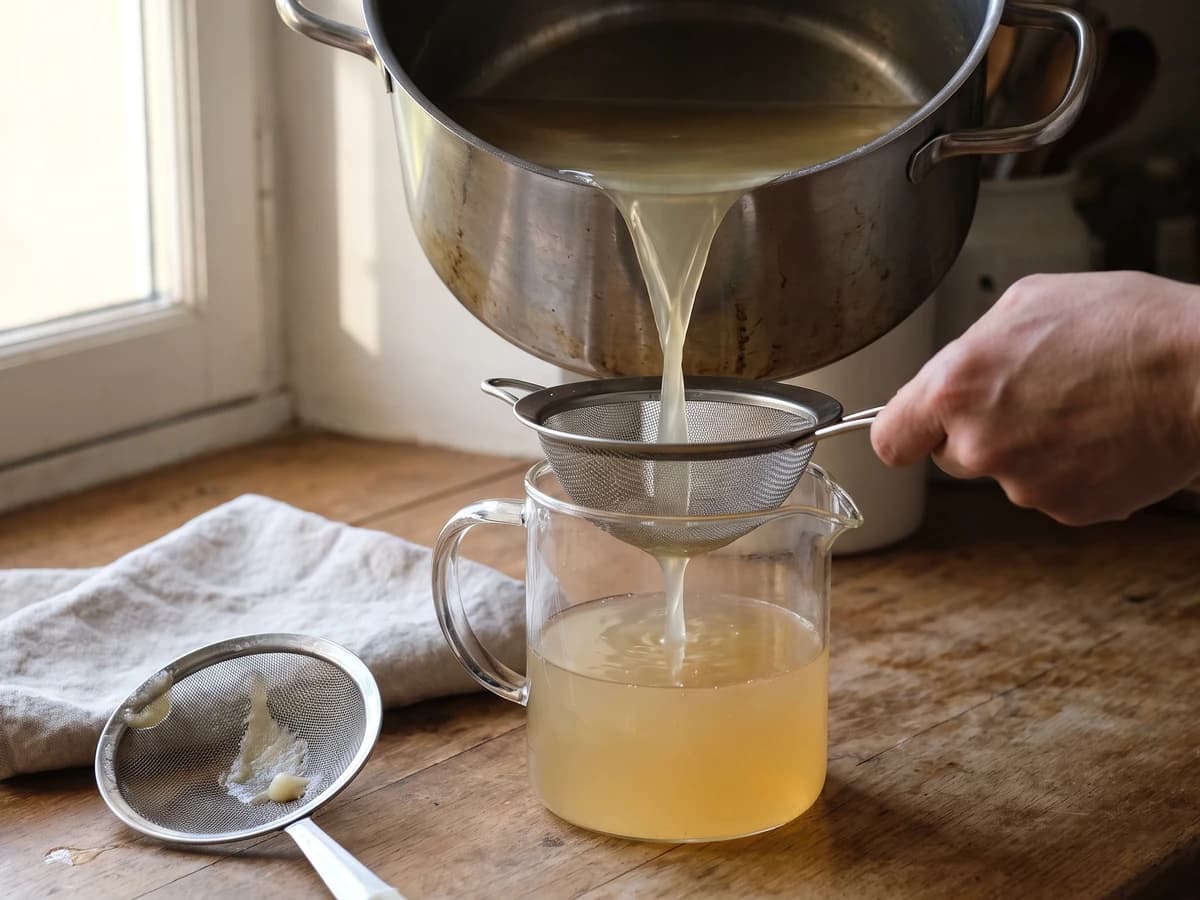
Break the veal bones small, then give them eight hours at a bare tremble. This pale, gelatinous fond becomes the quiet foundation beneath velouté, blanquette, and every sauce that must stay light.
Chef Juliette
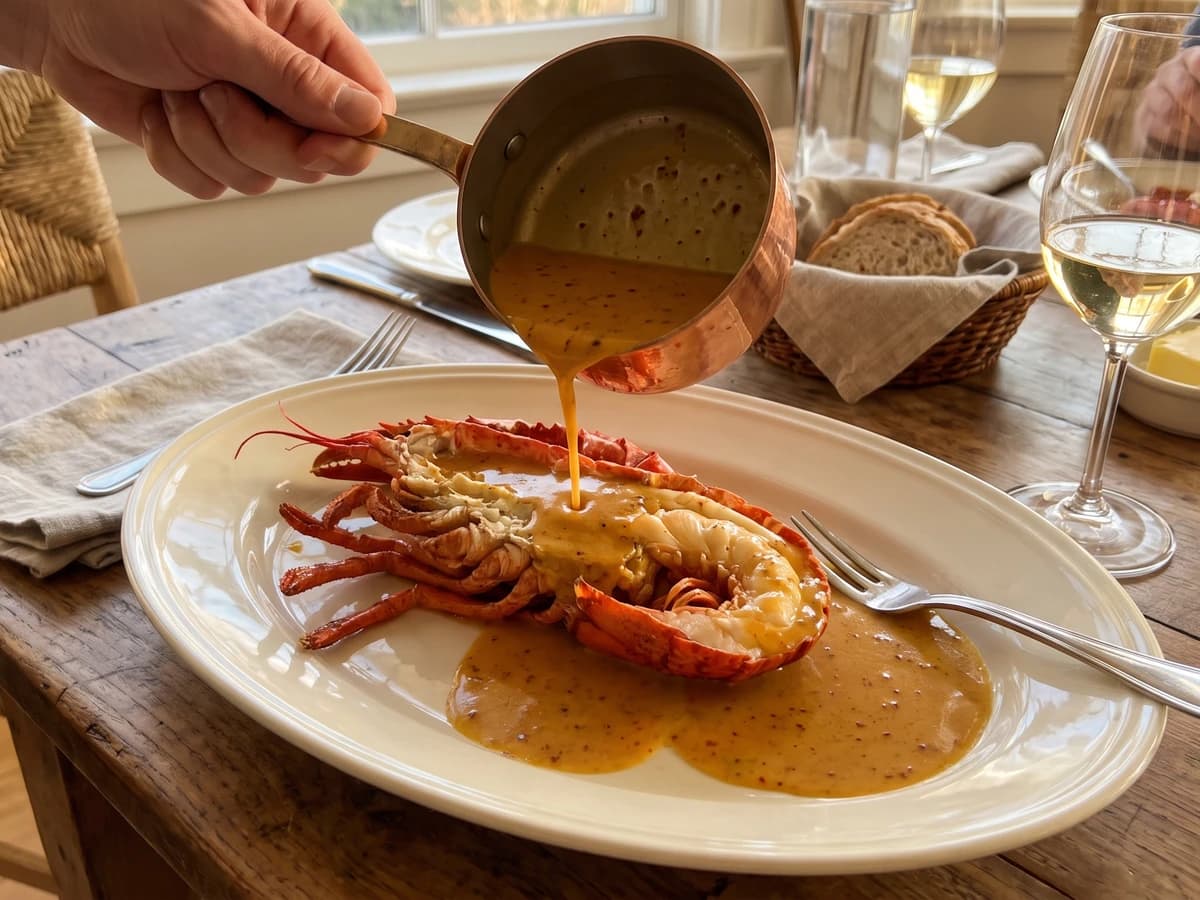
Sauce Orientale concentrates lobster-rich American Sauce with curry, then folds in cream away from the fire: a glossy, gently spiced derivative made for lobster, crayfish, and firm fish.
Chef Juliette
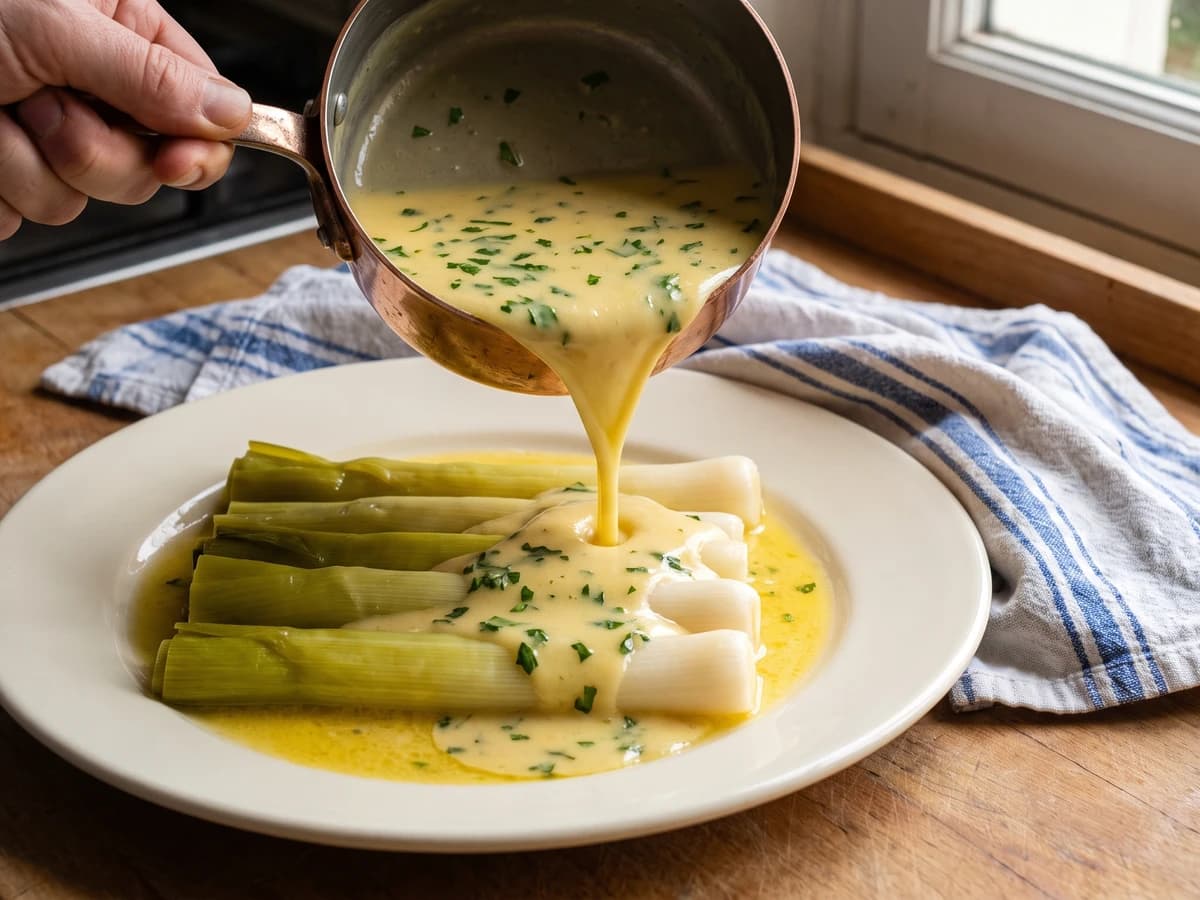
An old lesson in sauce families: Sauce Allemande takes mushroom liquor, then butter, lemon, and parsley, becoming a glossy Poulette for sheep's trotters, leeks, cauliflower, and anything needing gentle richness with a bright edge.