Chef Juliette
Bouillabaisse à la Marseillaise
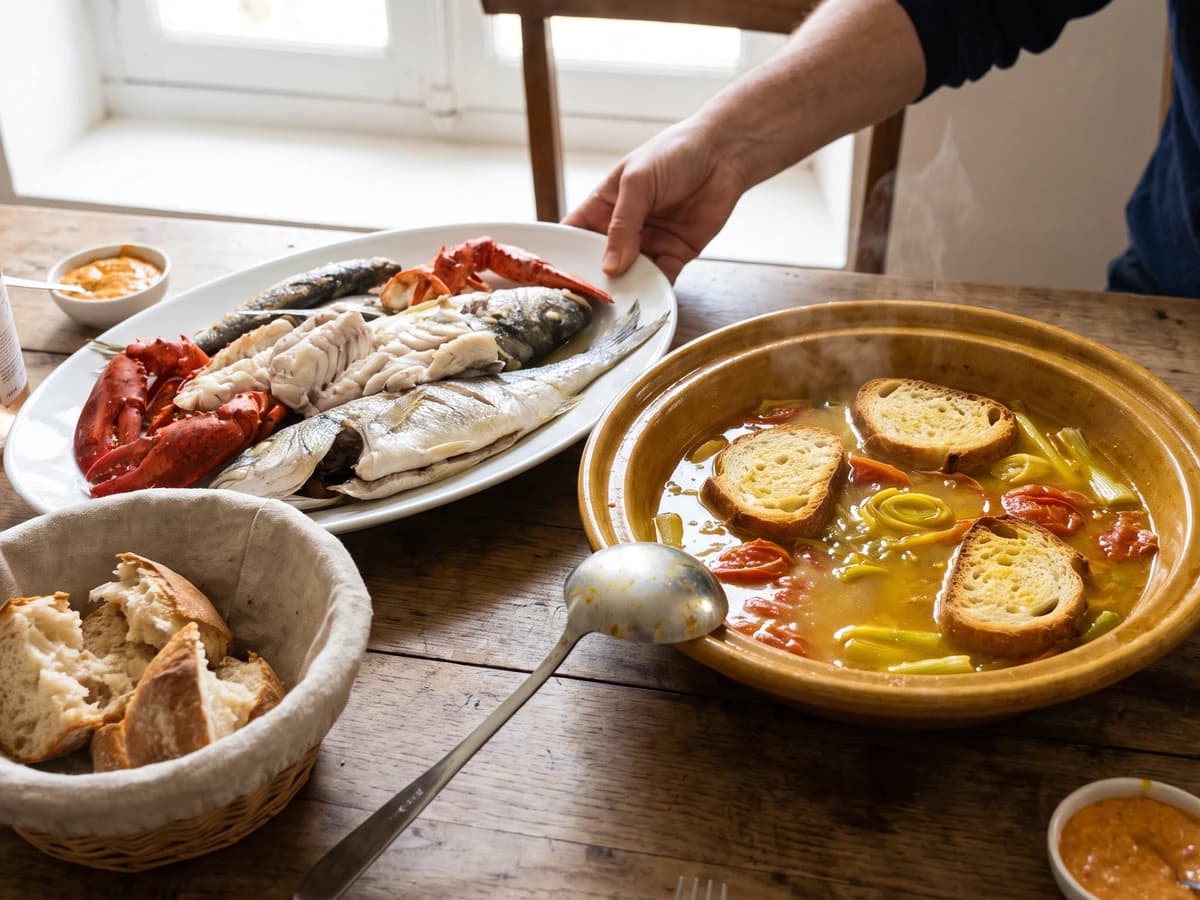
Marseille's great fish stew, saffron-gold and garlic-scented, proves that a hard boil can be the careful choice: it binds olive oil into broth before the whole pot meets bread.
A cooking platform built around craft, culture, and the stories behind what we eat.
Created by Chef Juliette
Based on No. 576a, Consommé Julienne, from Le Guide Culinaire (1907) by Auguste Escoffier
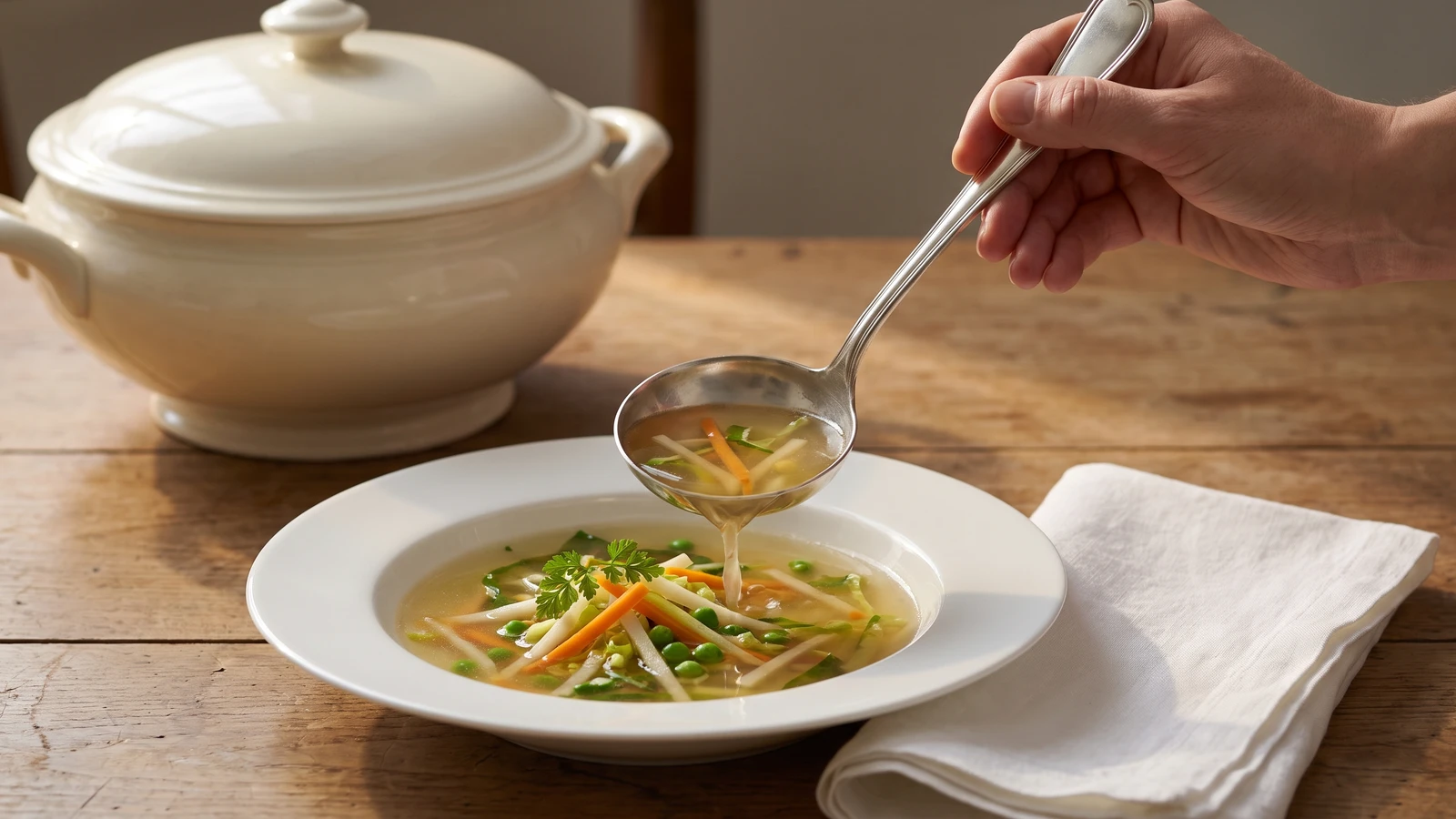
A clear bowl that teaches precision: six vegetables cut into matching julienne, softened in butter without color, then suspended with peas, sorrel, lettuce, and chervil in a white consommé of spotless clarity.
Consommé Julienne (clear consommé with fine-cut vegetables) teaches precision through restraint. The one true thing to know before touching a pan is this: every vegetable must be cut evenly and cooked without browning, because clear broth exposes every careless edge. Julienne means fine, uniform matchsticks, and the word carries the technique.
The source assumes a saucier at service and white consommé from a stockpot never off the fire. A salamander, useful to many old service recipes, has no job here because nothing should brown. At home, one prepared pot of consommé, a wide saucepan, and a skimmer replace the brigade. I have scaled the little service formula to about two quarts, enough for six to eight first-course bowls, while preserving its proportions and sequence. Separate holding pots and a dedicated cook are scaffolding and can go; the knife work, the étuver, meaning to stew gently in butter without browning, and the patient skimming are the dish and must stay. One cook, one stove, one evening.
When it is right, the pale-gold consommé remains clear enough to see every carrot thread, green pea, and chervil leaf, while the vegetables are tender but still distinct. Make the entire julienne before the butter reaches the pan. The cut decides the bowl.
Consommé Julienne belongs to the Parisian classical dining room, where clear soup opened a formal meal and a precisely cut vegetable garnish displayed knife discipline without concealing the broth. It traveled readily into bourgeois home cookery because the garnish could be prepared ahead; stories tying julienne to a particular woman remain unproved, while in kitchen practice the name belongs to the fine, even cut itself.
Quantity
2 cups (475 ml / 250 g)
from about 4 medium carrots; cut into 2-inch fine julienne
Quantity
1½ cups (350 ml / 225 g)
peeled and cut into 2-inch fine julienne
Quantity
1½ cups (350 ml / 150 g)
thoroughly washed and cut into 2-inch fine julienne
Quantity
½ cup (120 ml / 50 g)
strings removed and cut into 2-inch fine julienne
Quantity
1 cup (240 ml / 70 g)
thick ribs removed and cut into 2-inch fine julienne
Quantity
1 cup (240 ml / 150 g)
cut into 2-inch fine julienne
Quantity
4½ tablespoons (67 ml / 64 g)
Quantity
¼ teaspoon (1.25 ml / 1.5 g), plus only what the finished broth needs
Quantity
¼ teaspoon (1.25 ml / 1 g)
Quantity
8 cups (1.9 liters / 1.9 kg)
chilled and completely defatted
Quantity
1 cup (240 ml / 125 g)
trimmed
Quantity
2 tablespoons (30 ml / 30 g)
Quantity
2 tablespoons (30 ml / 10 g) Chiffonade (No. 215)
Quantity
1 tablespoon (15 ml / 2 g)
small picked leaves
| Ingredient | Quantity |
|---|---|
| outer orange carrot fleshfrom about 4 medium carrots; cut into 2-inch fine julienne | 2 cups (475 ml / 250 g) |
| turnippeeled and cut into 2-inch fine julienne | 1½ cups (350 ml / 225 g) |
| leek, white and pale-green partsthoroughly washed and cut into 2-inch fine julienne | 1½ cups (350 ml / 150 g) |
| celerystrings removed and cut into 2-inch fine julienne | ½ cup (120 ml / 50 g) |
| tender cabbage leavesthick ribs removed and cut into 2-inch fine julienne | 1 cup (240 ml / 70 g) |
| onioncut into 2-inch fine julienne | 1 cup (240 ml / 150 g) |
| unsalted butter | 4½ tablespoons (67 ml / 64 g) |
| fine sea salt | ¼ teaspoon (1.25 ml / 1.5 g), plus only what the finished broth needs |
| caster sugar | ¼ teaspoon (1.25 ml / 1 g) |
| prepared white consomméchilled and completely defatted | 8 cups (1.9 liters / 1.9 kg) |
| Brussels sproutstrimmed | 1 cup (240 ml / 125 g) |
| very green cooked peas | 2 tablespoons (30 ml / 30 g) |
| prepared sorrel-and-lettuce Chiffonade | 2 tablespoons (30 ml / 10 g) Chiffonade (No. 215) |
| chervil pluchessmall picked leaves | 1 tablespoon (15 ml / 2 g) |
Pare the carrots so you use only the tender, deep-orange outer flesh specified by the source, leaving the paler core for another pot. Cut the carrot, turnip, leek, celery, cabbage leaves, and onion into fine matchsticks about 2 inches long and 1/16 inch thick. Keep the pieces as alike as your hand permits, because thick strips remain hard while thin ones collapse. Spread them on a tray as you work and correct the uneven pieces now; once they enter the butter, their size cannot be repaired.
Lower the Brussels sprouts, the source's small cabbages, into gently boiling water and parboil them for 3 minutes, just until the leaves become pliable while keeping their green color. Drain and cool them promptly, then slice them lengthwise into fine strips matching the rest of the julienne. Hold them separately; their first cooking removes raw brassica sharpness without burdening the consommé.
Melt the butter in a wide, heavy saucepan over medium-low heat without letting it color. Add the carrot, turnip, leek, celery, cabbage leaves, onion, salt, and caster sugar, turning gently until every strand glistens. Cover and étuver for 12 to 15 minutes, stirring carefully every few minutes, until the vegetables soften and smell sweet but show no brown edges. If the butter begins to color, add 2 tablespoons of the chilled consommé and lower the heat at once. Ça se rattrape. If you see black specks, move the vegetables to a clean pan and leave the scorched butter behind.
Pour in the remaining white consommé and add the parboiled Brussels sprouts. Bring the liquid slowly to the barest simmer, with only an occasional movement at the surface, then skim away foam and free butter with a shallow spoon. If the consommé reaches a rolling boil and turns hazy, remove it from the heat, lift out the vegetable garnish, and let the broth stand undisturbed for 5 minutes. Pass the clear upper broth through damp muslin into a clean pot, stopping before the sediment follows, return the garnish, and continue over very low heat. Once the simmer is calm, fold in the prepared Chiffonade (No. 215) and cook gently for 25 minutes, skimming whenever beads of fat gather.
Add the cooked peas for the final 2 minutes, just long enough to heat them without dulling their color. Remove the pan from the heat and scatter in the chervil pluches. Taste the broth before adding any more salt, since a finished consommé should already carry its seasoning. Ladle into warmed bowls or bring it to the table in a soupière, distributing the julienne evenly so every serving receives the full garnish. À table!
1 serving (about 250g)
Culinary guides, cultural storytelling, and the editorial depth that makes cooking meaningful.
Discover Culinary ExplorerChef Juliette
Marseille's great fish stew, saffron-gold and garlic-scented, proves that a hard boil can be the careful choice: it binds olive oil into broth before the whole pot meets bread.
Chef Juliette
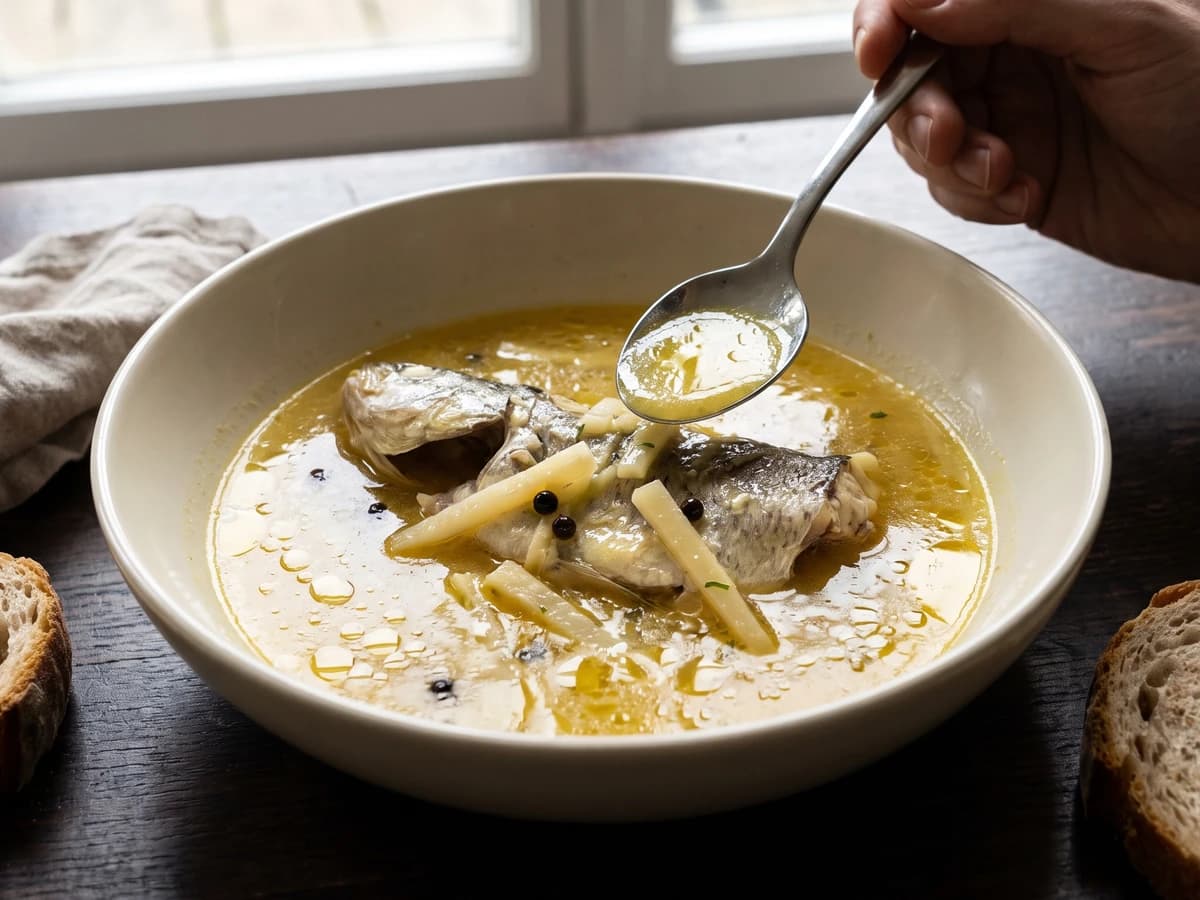
Waterzoi asks fresh, bone-in river fish to thicken its own buttery broth, with parsley root and pepper for company. No flour, no stockpot, just a brisk simmer watched closely.
Chef Juliette
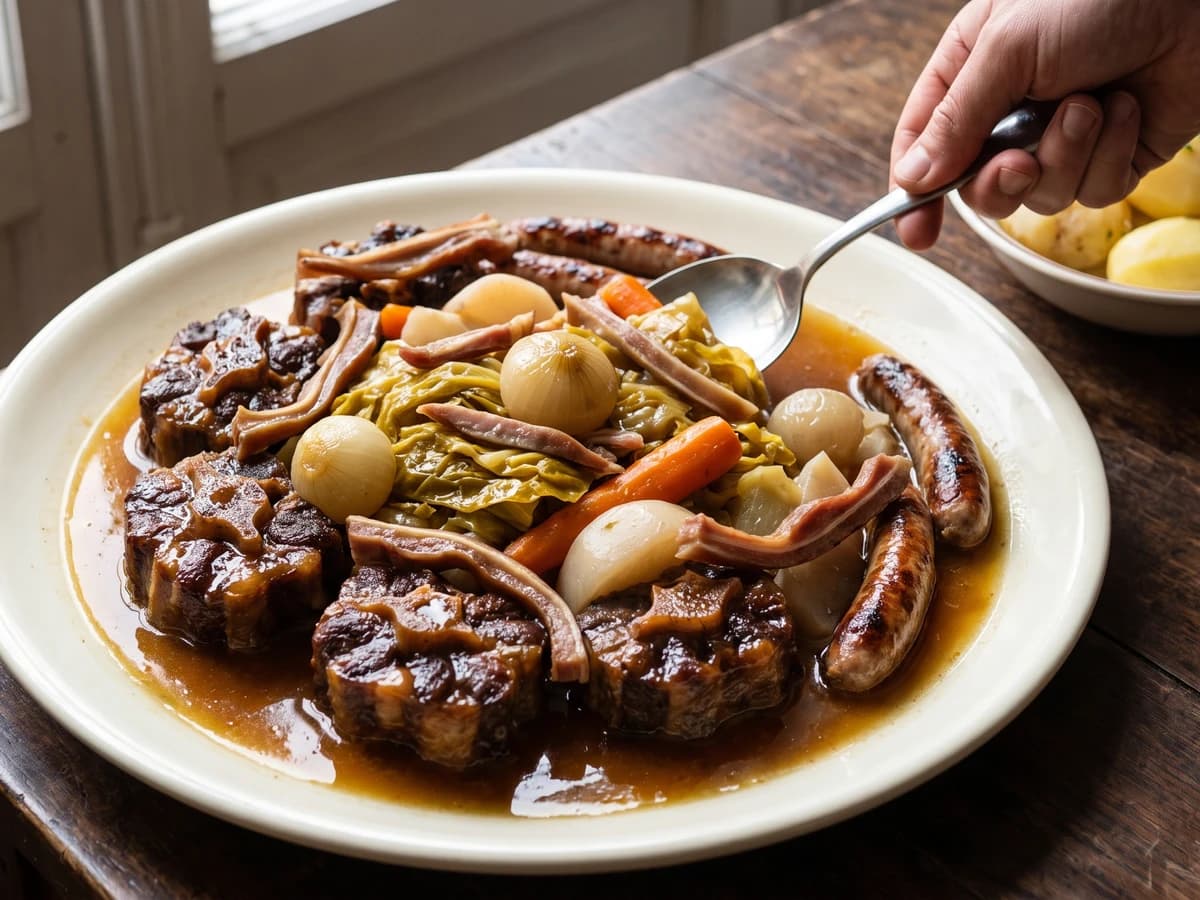
Queue de Bœuf en Hochepot gathers oxtail, pig's trotter and ear, cabbage, roots, and grilled chipolatas around a clear, gelatin-rich broth whose quiet simmer keeps every piece tender and distinct.
Chef Juliette
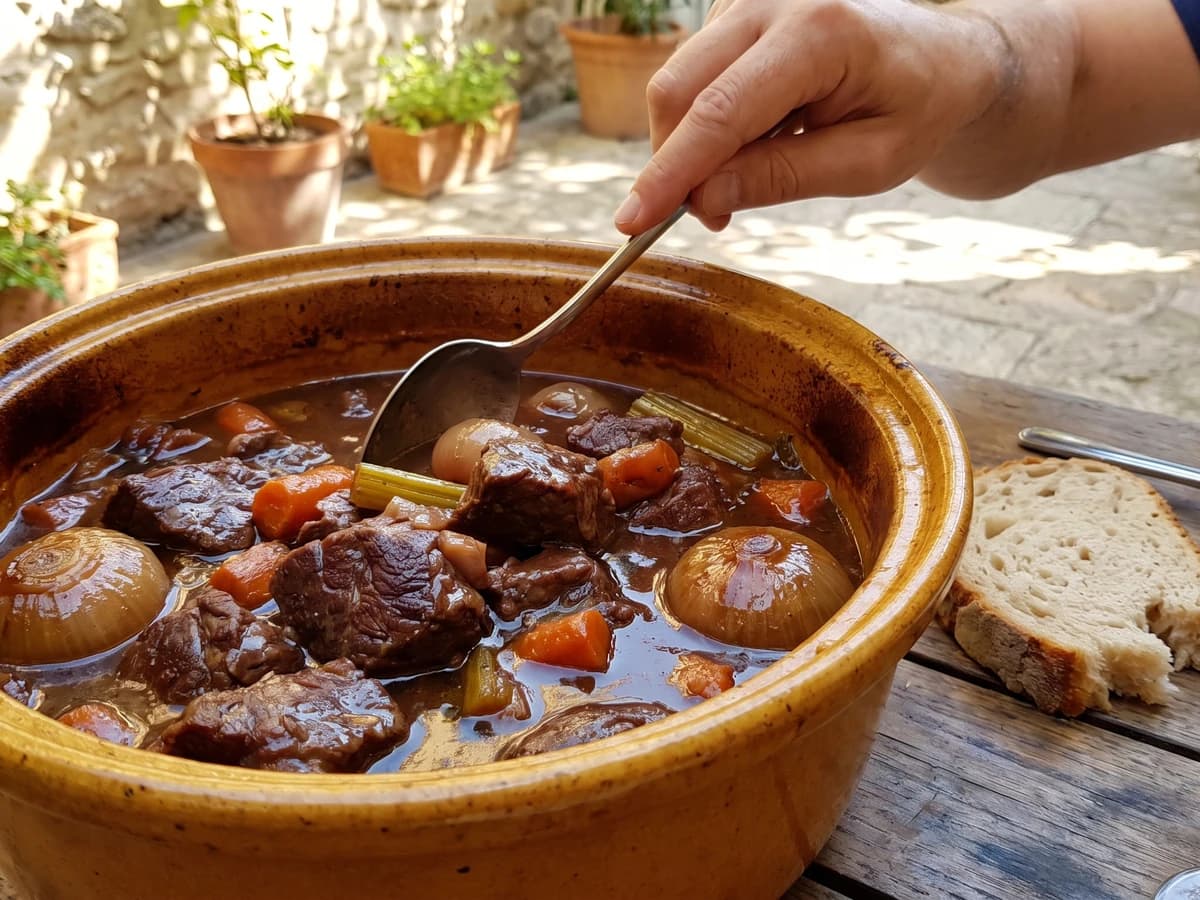
Beef shoulder larded with bacon, sharpened by red wine and vinegar, then sealed with garlic, vegetables, and dry lemon peel until the low oven turns it yielding and the gravy darkly glossy.