Chef Juliette
Bouillabaisse à la Marseillaise
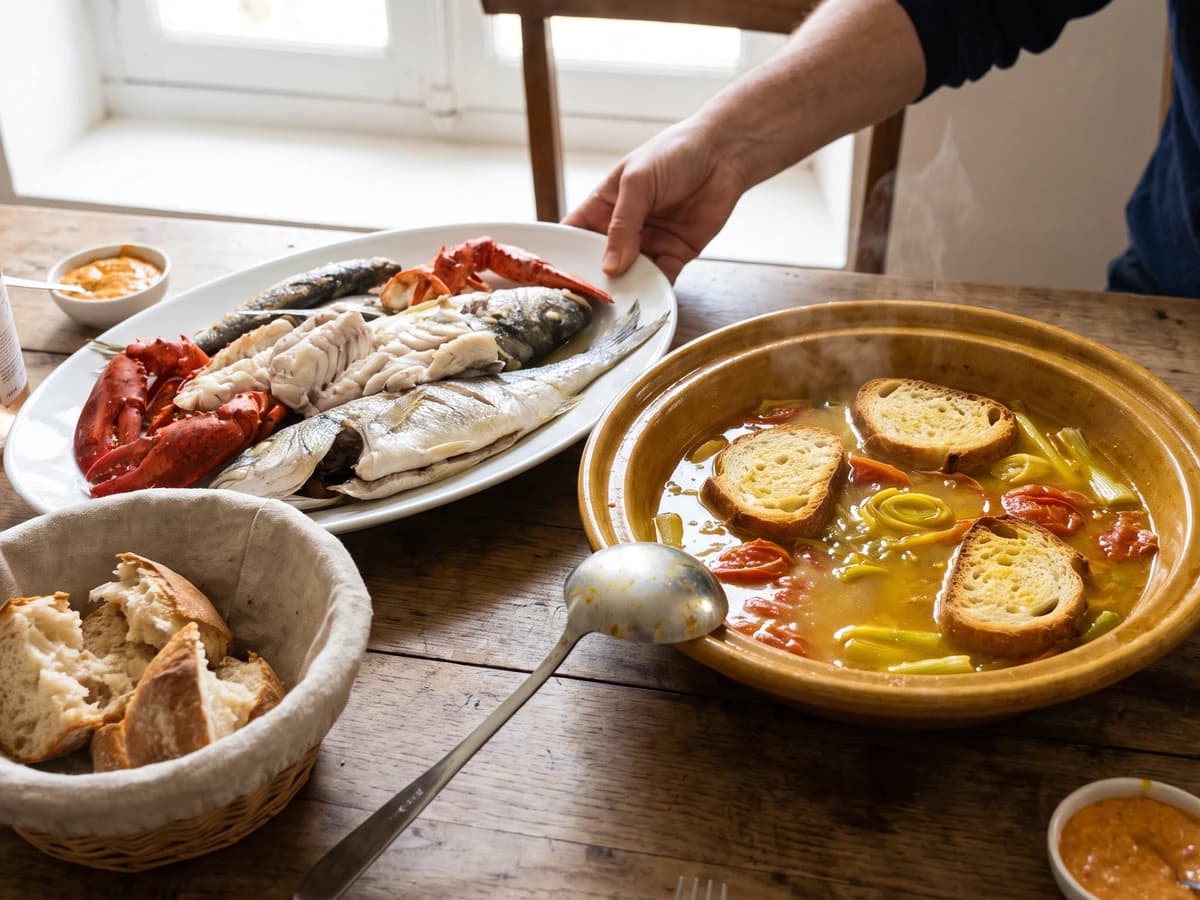
Marseille's great fish stew, saffron-gold and garlic-scented, proves that a hard boil can be the careful choice: it binds olive oil into broth before the whole pot meets bread.
A cooking platform built around craft, culture, and the stories behind what we eat.

Created by Chef Juliette
Based on No. 575, Consommé à l’Infante, from Le Guide Culinaire (1907) by Auguste Escoffier
A limpid chicken consommé with the faint silk of tapioca, bright capsicum threads in the tureen, and crisp foie-gras profiterolles passed apart so every shell stays crisp.
Consommé à l’Infante (clear chicken consommé with foie-gras profiterolles) teaches restraint: the broth must gain a faint, silken body from tapioca without surrendering its clarity. That is the one true thing to know before touching the pan. You are not making a thick soup; you are giving a limpid consommé just enough substance to carry the capsicum and meet the rich little choux.
The book assumed a saucier with clarified chicken consommé always ready, a pastry station turning out hazelnut-size choux, and a gentle front-of-oven holding zone. At home, the honest equivalents are prepared chicken consommé, Common Pâte à Choux (for Souffléd Fritters, Gnochi, Potatoes à la Dauphine) (No. 2374) and Profiterolles for Soups (No. 218) treated as the separate preparations the book intended, plus the lowest steady heat of a domestic oven. Producing those components by the tray was brigade scaffolding; the tapioca binding, fine capsicum julienne, foie-gras filling, and separate service are the dish, so each remains.
The original one-quart service becomes about two quarts for eight first courses, and every garnish is doubled so the book’s proportions remain intact. One cook, one stove, one evening. The step that decides it is the linen straining: let the bound consommé pass by gravity, and never press the tapioca.
Consommé à l’Infante belongs to the named consommés of the Parisian grand-kitchen repertoire, where one perfectly clarified base took on a new identity through a precise garnish. Its courtly title and mild capsicum supply an Iberian note, but the method is wholly French: tapioca gives body without turning the broth into a cream soup, and foie-gras profiterolles bring richness. As the dish moved from grand kitchens to formal hotel and private-house tables, the puffs continued to travel apart from the tureen, not as ceremony for its own sake, but to preserve their crisp shells.
Quantity
2 quarts (1.9 L / 1.9 kg)
divided
Quantity
1/4 cup (60 ml / 40 g)
Quantity
1/4 cup (60 ml / 45 g)
peeled, ribs removed, and cut into a very fine julienne
Quantity
36, prepared with 1/2 cup (120 ml / 125 g) Common Pâte à Choux (for Souffléd Fritters, Gnochi, Potatoes à la Dauphine) (No. 2374) as Profiterolles for Soups (No. 218)
hazelnut-size, fully baked, and dry
Quantity
1/3 cup (80 ml / 85 g)
chilled
Quantity
1 1/2 tablespoons (22 ml / 22 g)
cooked and cooled
| Ingredient | Quantity |
|---|---|
| clarified chicken consommédivided | 2 quarts (1.9 L / 1.9 kg) |
| fine pearl tapioca | 1/4 cup (60 ml / 40 g) |
| mild red capsicumpeeled, ribs removed, and cut into a very fine julienne | 1/4 cup (60 ml / 45 g) |
| unfilled profiterolleshazelnut-size, fully baked, and dry | 36, prepared with 1/2 cup (120 ml / 125 g) Common Pâte à Choux (for Souffléd Fritters, Gnochi, Potatoes à la Dauphine) (No. 2374) as Profiterolles for Soups (No. 218) |
| smooth purée de foie graschilled | 1/3 cup (80 ml / 85 g) |
| chicken veloutécooked and cooled | 1 1/2 tablespoons (22 ml / 22 g) |
Have the Common Pâte à Choux (for Souffléd Fritters, Gnochi, Potatoes à la Dauphine) (No. 2374) and 36 unfilled Profiterolles for Soups (No. 218) ready according to their own entries. Their methods stay in those preparations, as the book intended. Cool the profiterolles completely and check that their shells are crisp and dry; if they have softened, ça se rattrape: return the unfilled puffs to a 300°F (150°C) oven for 5 to 8 minutes, then cool them again before filling.
Pour 4 cups (950 ml) of the chicken consommé into a 3-quart saucepan and bring it to a bare simmer. Rain in the tapioca while stirring, then cook gently for 20 to 25 minutes, stirring often so nothing catches, until the pearls are translucent and the liquid has a faintly syrupy pull from the spoon. Keep it below a hard boil. Broken tapioca and rough agitation make the next straining needlessly difficult.
Rinse a piece of lint-free linen or four layers of cheesecloth under cold water, wring it well, and use it to line a fine sieve set over a clean saucepan. Ladle in the tapioca consommé and let the bound liquid pass by gravity. Do not squeeze, scrape, or press the pearls through the cloth. Combine the strained liquid with the remaining 4 cups (950 ml) of consommé. If the broth looks cloudy, stop and let it settle for 5 minutes, then filter it once more through fresh damp linen. Ça se rattrape. The finished consommé should remain visibly clear while coating the mouth with the lightest silk.
Peel the capsicum, remove every seed and white rib, and cut the flesh into a julienne, match-shaped rods about 1 inch (2.5 cm) long and as fine as you can make them evenly. The boiling consommé will soften these threads in the tureen, so keep them delicate; thick strips remain raw and dominate a broth built on restraint.
Work the chilled purée de foie gras smooth with 1 tablespoon (15 ml / 15 g) of the cooled velouté, then add the rest a little at a time until the filling holds a soft peak and will pass through a small piping tip. Pierce the base of each cold profiterolle and pipe in enough filling to make it feel just heavy, without forcing the shell apart. If the mixture turns loose or oily, chill it for 10 minutes and stir again; if it is too stiff, add the final drops of measured velouté. Keep the filled profiterolles cool until the soup is ready.
Heat the oven to 275°F (135°C). Warm the soup tureen with hot water, then empty and dry it. Arrange the filled profiterolles on a tray and warm them for 4 to 6 minutes, only until the shells recover their crisp edge and the filling loses its chill. This low oven is the home equivalent of the old front-of-oven holding zone; higher heat renders the foie gras and softens the choux. Meanwhile, bring the consommé to one clean boil and remove it from the heat immediately.
Put the fine capsicum julienne into the warmed tureen and pour the boiling consommé directly over it. Carry the tureen to the table at once. Pass the warm foie-gras profiterolles separately, allowing four per person with a few extra, so each guest adds them only at the moment of eating. That separate plate is practical, not pomp: the shells remain crisp until they meet the broth. À table!
1 serving (about 270g)
Culinary guides, cultural storytelling, and the editorial depth that makes cooking meaningful.
Discover Culinary ExplorerChef Juliette
Marseille's great fish stew, saffron-gold and garlic-scented, proves that a hard boil can be the careful choice: it binds olive oil into broth before the whole pot meets bread.
Chef Juliette
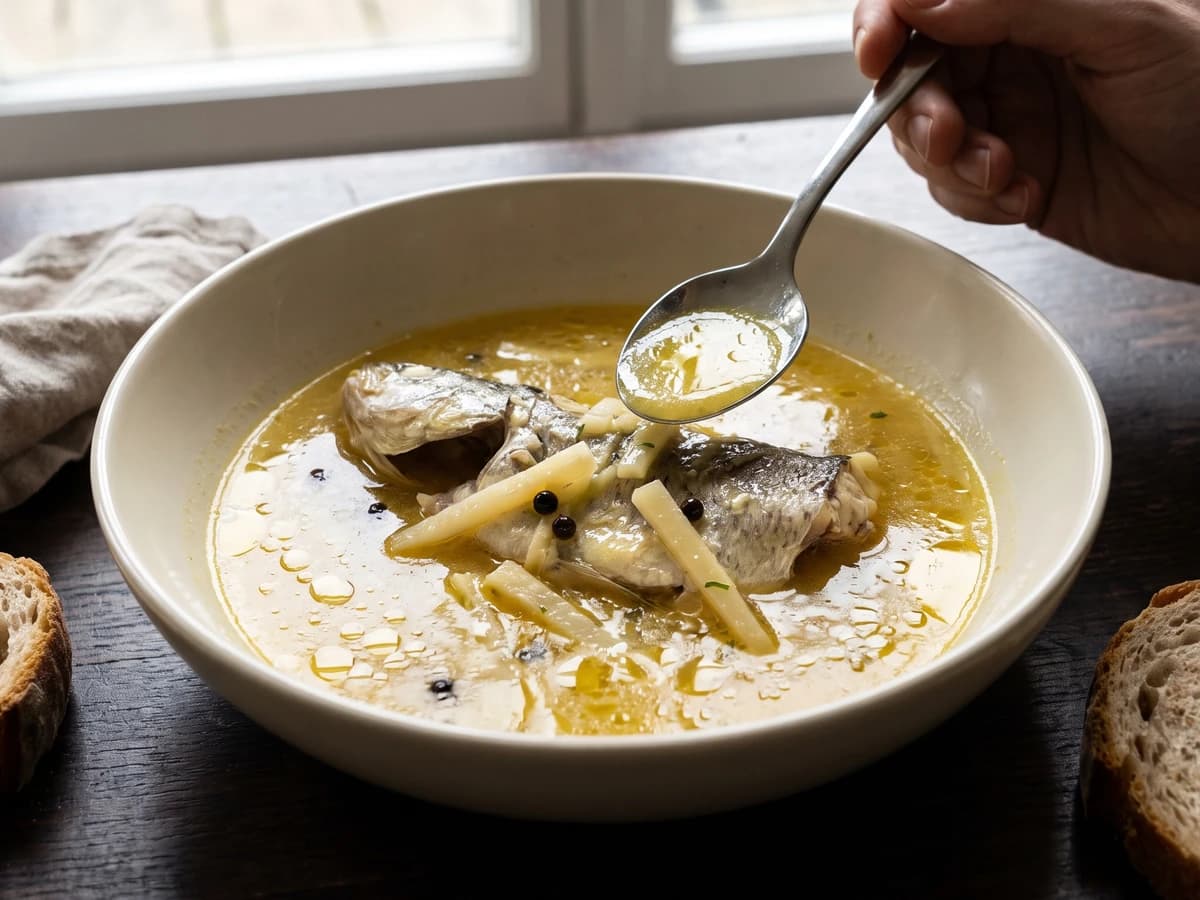
Waterzoi asks fresh, bone-in river fish to thicken its own buttery broth, with parsley root and pepper for company. No flour, no stockpot, just a brisk simmer watched closely.
Chef Juliette
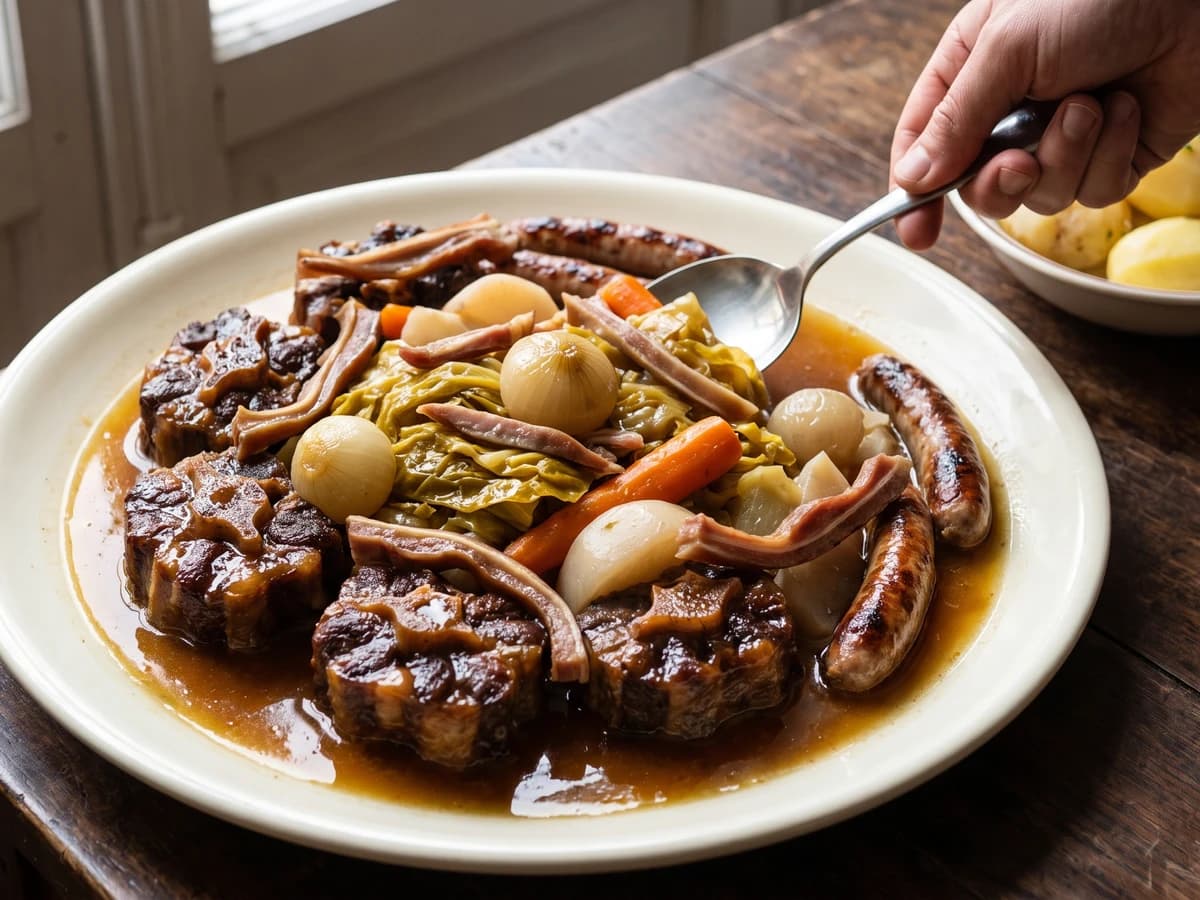
Queue de Bœuf en Hochepot gathers oxtail, pig's trotter and ear, cabbage, roots, and grilled chipolatas around a clear, gelatin-rich broth whose quiet simmer keeps every piece tender and distinct.
Chef Juliette
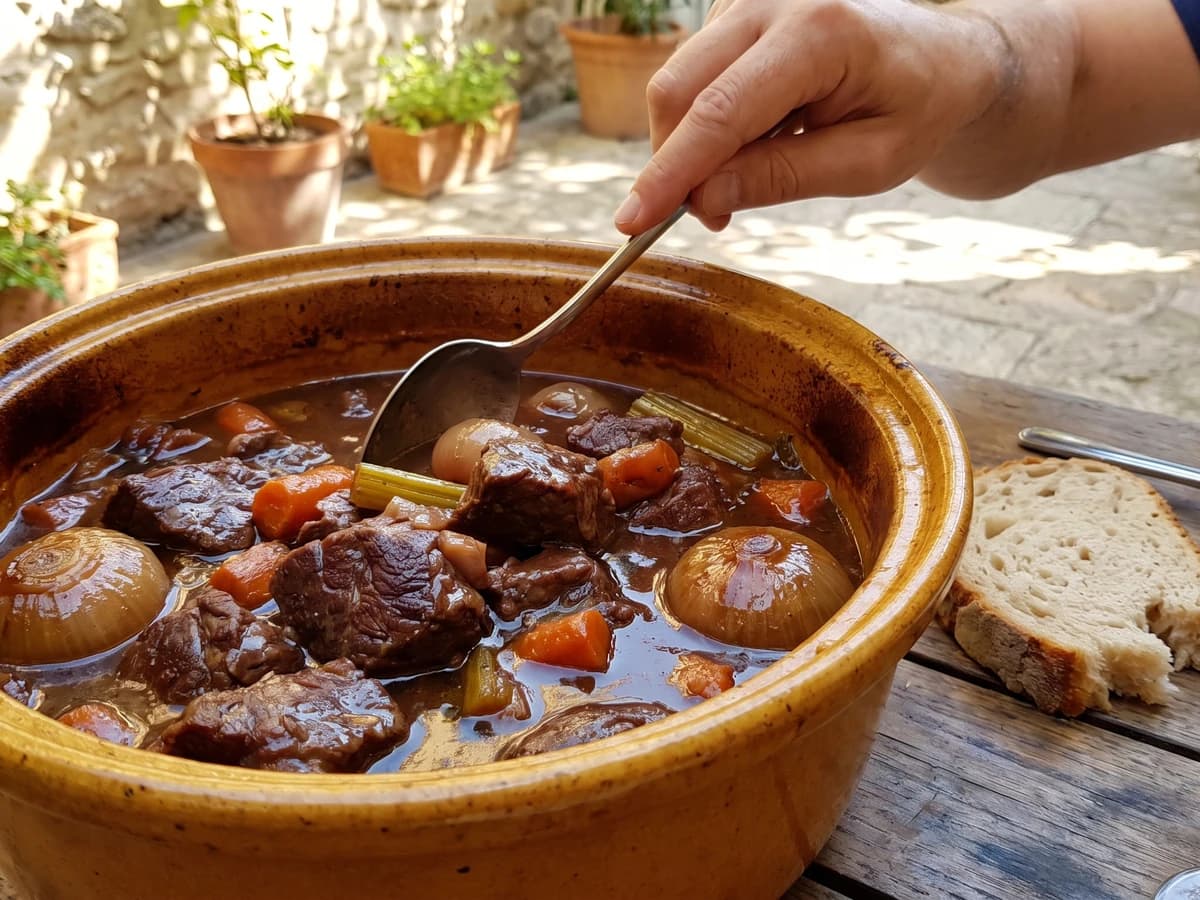
Beef shoulder larded with bacon, sharpened by red wine and vinegar, then sealed with garlic, vegetables, and dry lemon peel until the low oven turns it yielding and the gravy darkly glossy.