Chef Juliette
Ordinary or White Consommé
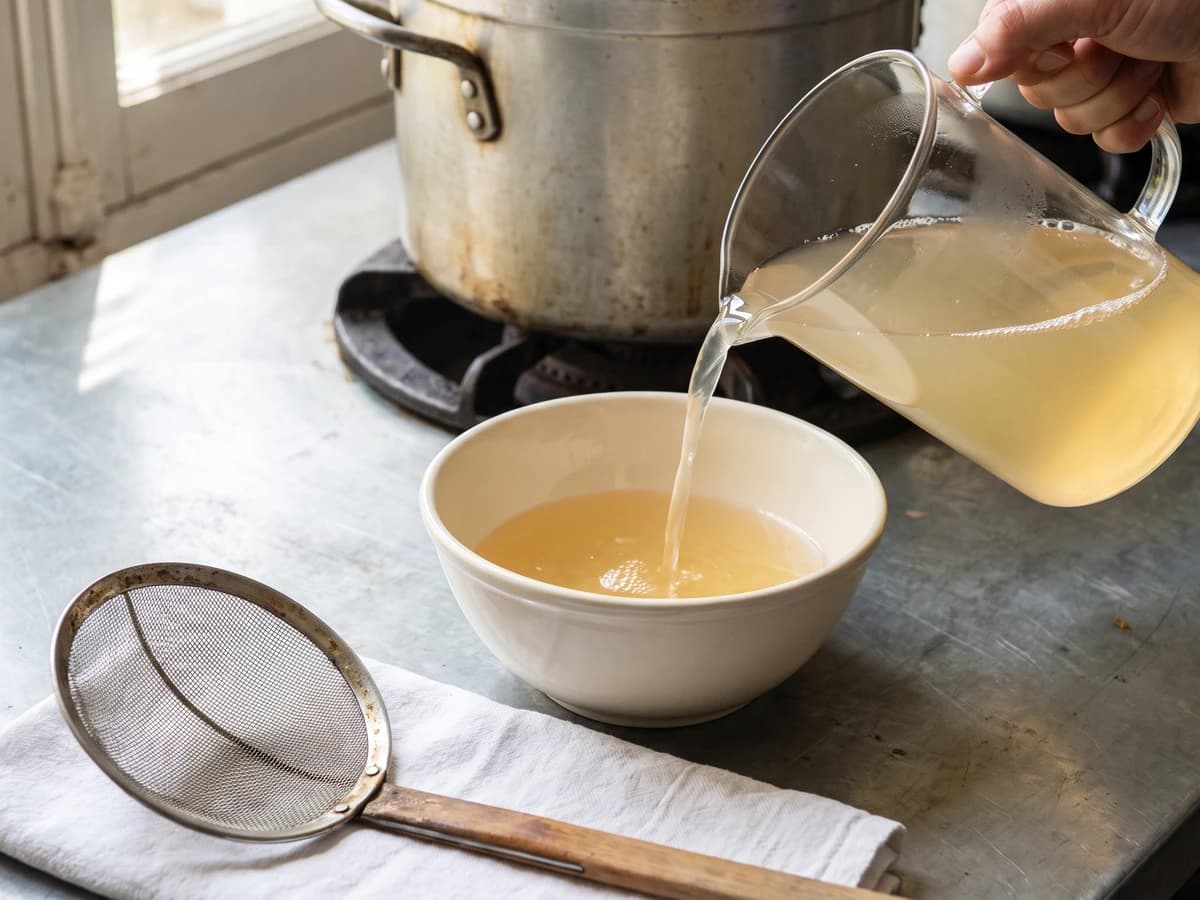
Beef shin, lean beef, and fowl begin in cold water and rise slowly toward a tremble. Skim before the boil, and you learn the quiet discipline that gives every clear French broth its backbone.
A cooking platform built around craft, culture, and the stories behind what we eat.
Created by Chef Juliette
Based on No. 57, Venison Sauce, from Le Guide Culinaire (1907) by Auguste Escoffier
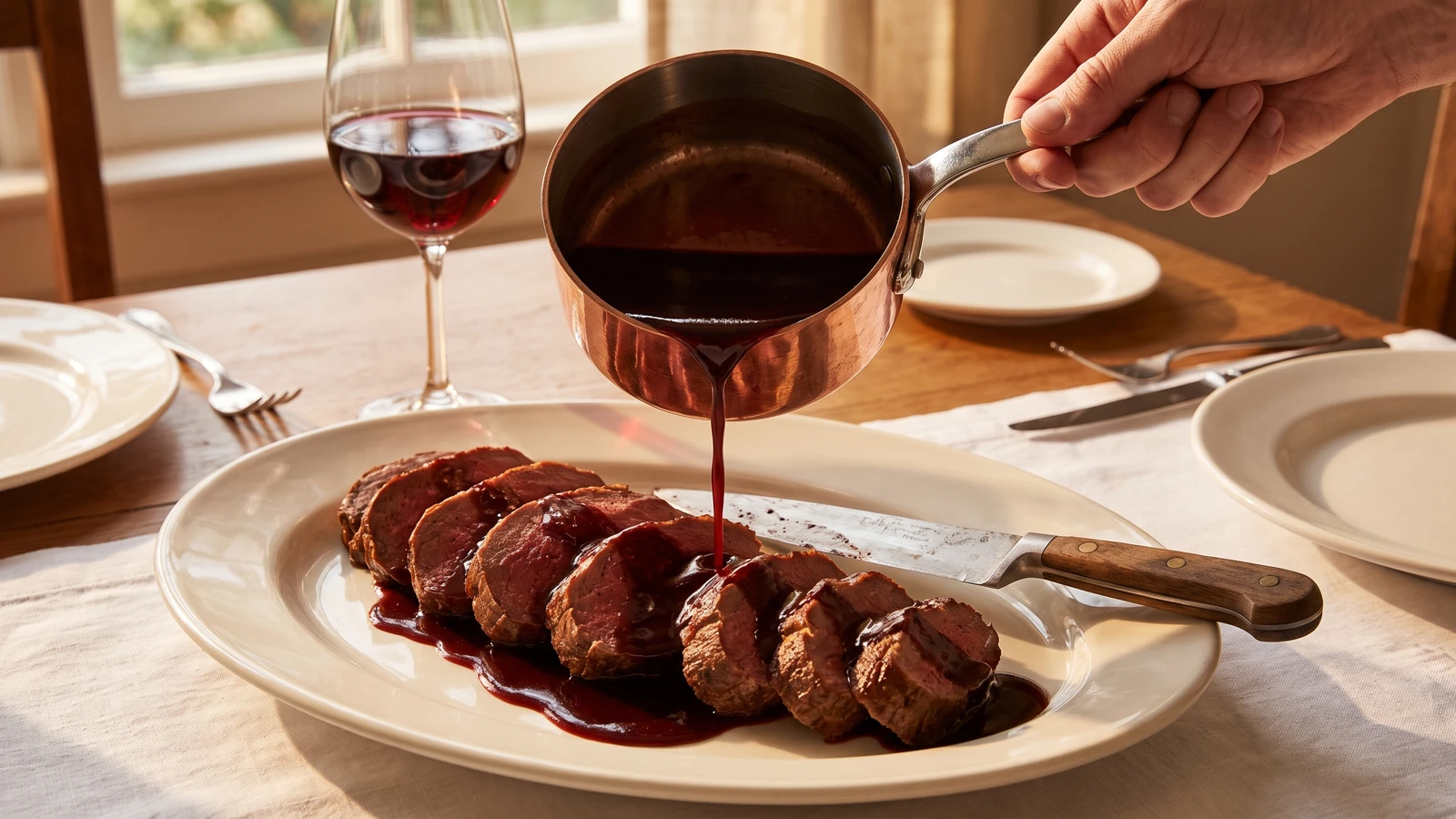
A classical game sauce in which sharp Poivrade meets red-currant jelly and fresh cream off the fire, becoming glossy and mellow without losing the dark backbone venison needs.
Sauce Venaison (venison sauce) teaches one of the canon's quietest disciplines: a sauce can be fully built and still be ruined at the finish. Its Poivrade foundation is sharp, peppery, and dark with game. Red-currant jelly and fresh cream soften that force, but only if they meet it away from the fire. That is the one true thing to know before touching the pan.
The old formula assumed a saucier on staff, game stock never off the fire, and enough Poivrade moving through service to measure by the pint. This finish never needed a salamander; its heat is residual, not overhead. For one cook, one stove, one evening, six cups of finished Poivrade Sauce For Venison (No. 50), a heatproof bowl over hot water, and a whisk do the work. Brigade-scale holding is scaffolding and goes. The Poivrade foundation and the exact ratio, two tablespoons of jelly to five tablespoons of cream for each pint, are the dish and remain untouched.
The finished sauce should be mahogany, glossy, and rounded, neither sugary nor pale. Loosen the jelly separately, temper the cream mixture, and take the saucepan completely off the burner before combining them. That final movement decides everything.
Sauce Venaison belongs to the formal French table of the chasse, where sauces for gros gibier, large furred game such as deer and wild boar, were expected to answer powerful meat with both force and polish. It entered the classical sauce repertory as a derivative of Poivrade, retaining the sharp vinegar-and-wine backbone while cream and red-currant jelly rounded the finish. The jelly is not a fruit sauce poured over meat; it is a measured seasoning inside a game sauce, and the distinction matters.
Quantity
6 cups (1.44 L / about 1.45 kg) Poivrade Sauce For Venison (No. 50)
fully prepared
Quantity
6 tablespoons (90 ml / 120 g)
Quantity
15 tablespoons, scant 1 cup (225 ml / 225 g)
at least 35% fat
| Ingredient | Quantity |
|---|---|
| Poivrade Sauce For Venisonfully prepared | 6 cups (1.44 L / about 1.45 kg) Poivrade Sauce For Venison (No. 50) |
| red-currant jelly | 6 tablespoons (90 ml / 120 g) |
| fresh heavy creamat least 35% fat | 15 tablespoons, scant 1 cup (225 ml / 225 g) |
Let the cream lose its deepest refrigerator chill for 10 minutes. Reserve 2 tablespoons (30 ml / 30 g) in a clean bowl for the final adjustment or rescue, then measure the remaining 13 tablespoons (195 ml / 195 g) separately. Set a heatproof bowl over a small saucepan of hot water, making certain the bowl does not touch the water.
Put the red-currant jelly in the heatproof bowl and stir over the hot water just until fluid and smooth. Remove the bowl from the water and let it stand for a minute, then whisk in the larger portion of cream gradually. If the jelly seizes into little beads, set the bowl back over the hot water and whisk gently until smooth. Ça se rattrape. Keep this mixture away from direct heat.
Pour the Poivrade Sauce For Venison (No. 50) into a heavy 3-quart saucepan and warm it slowly over medium-low heat, stirring across the bottom. Bring it only to a bare simmer. It should be nappant, coating the back of a spoon in a thin, even film; if it runs like broth, reduce it gently now, because no reduction happens after the cream enters. Remove the saucepan completely from the burner and wait until all bubbling stops.
Whisk one ladleful of the hot Poivrade into the jelly-and-cream mixture in three small additions. This tempering brings the cream up to warmth without shocking it. Pour the tempered mixture slowly into the saucepan while whisking steadily. If the sauce stays smooth, whisk in the reserved cream. If it turns grainy or shows beads of fat, stop immediately: put the reserved cool cream in a clean bowl and whisk the troubled sauce into it one ladleful at a time until it reunites. Never return the finished Sauce Venaison to direct heat.
Taste the Sauce Venaison. The first impression should be the peppery acidity of Poivrade, followed by the restrained fruit of red currant and the mellow finish of cream. Pour it into a warmed sauceboat and serve at once with roasted or braised venison, wild boar, or other large furred game. Let it pool generously beside the meat. À table!
1 serving (about 60g)
Culinary guides, cultural storytelling, and the editorial depth that makes cooking meaningful.
Discover Culinary ExplorerChef Juliette
Beef shin, lean beef, and fowl begin in cold water and rise slowly toward a tremble. Skim before the boil, and you learn the quiet discipline that gives every clear French broth its backbone.
Chef Juliette
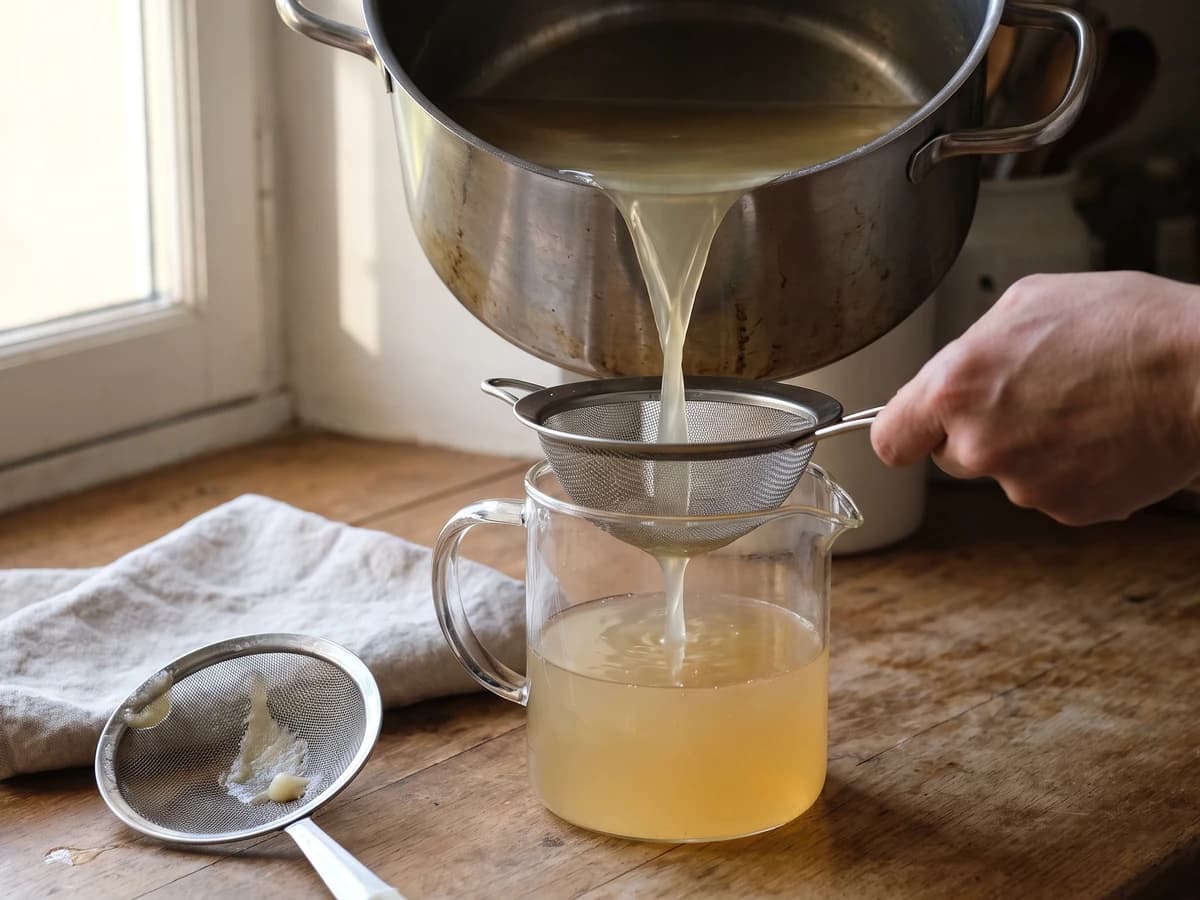
Break the veal bones small, then give them eight hours at a bare tremble. This pale, gelatinous fond becomes the quiet foundation beneath velouté, blanquette, and every sauce that must stay light.
Chef Juliette
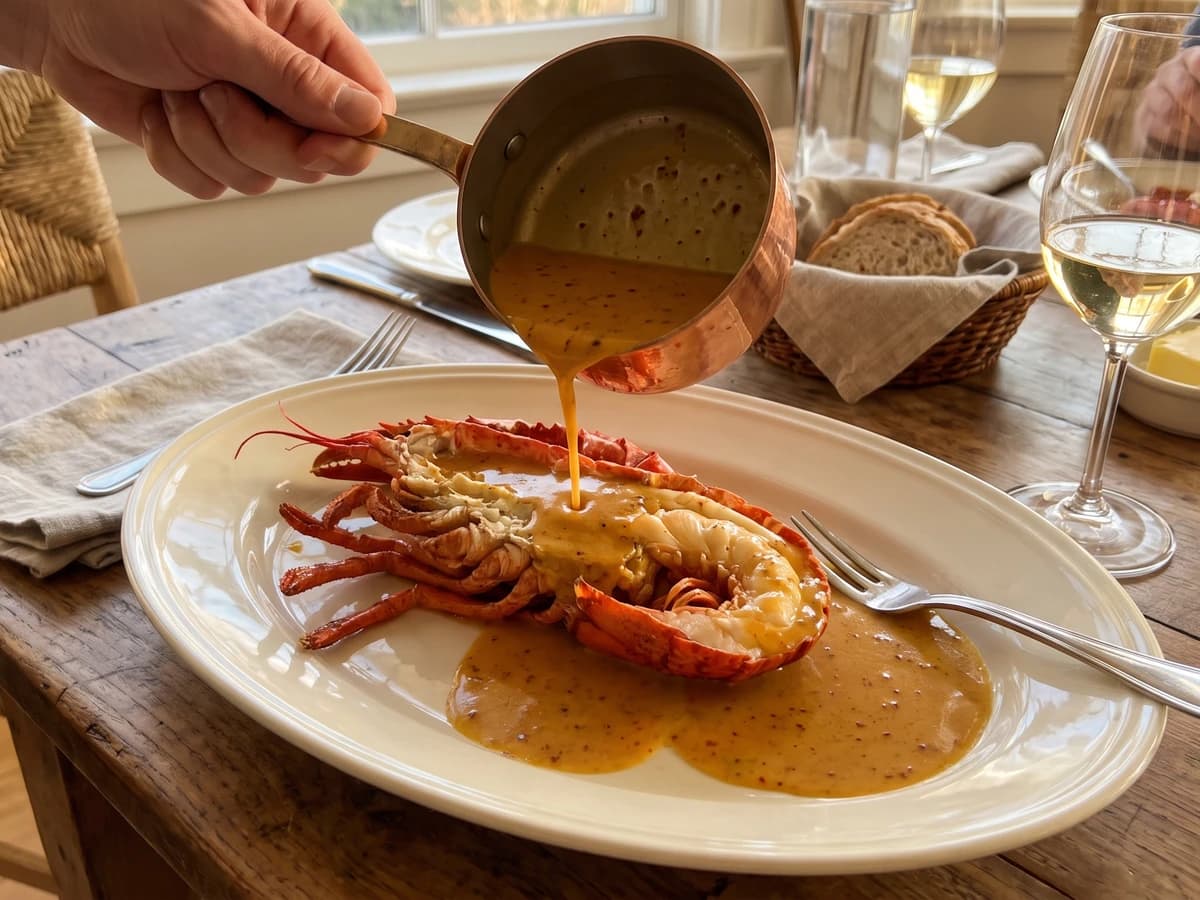
Sauce Orientale concentrates lobster-rich American Sauce with curry, then folds in cream away from the fire: a glossy, gently spiced derivative made for lobster, crayfish, and firm fish.
Chef Juliette
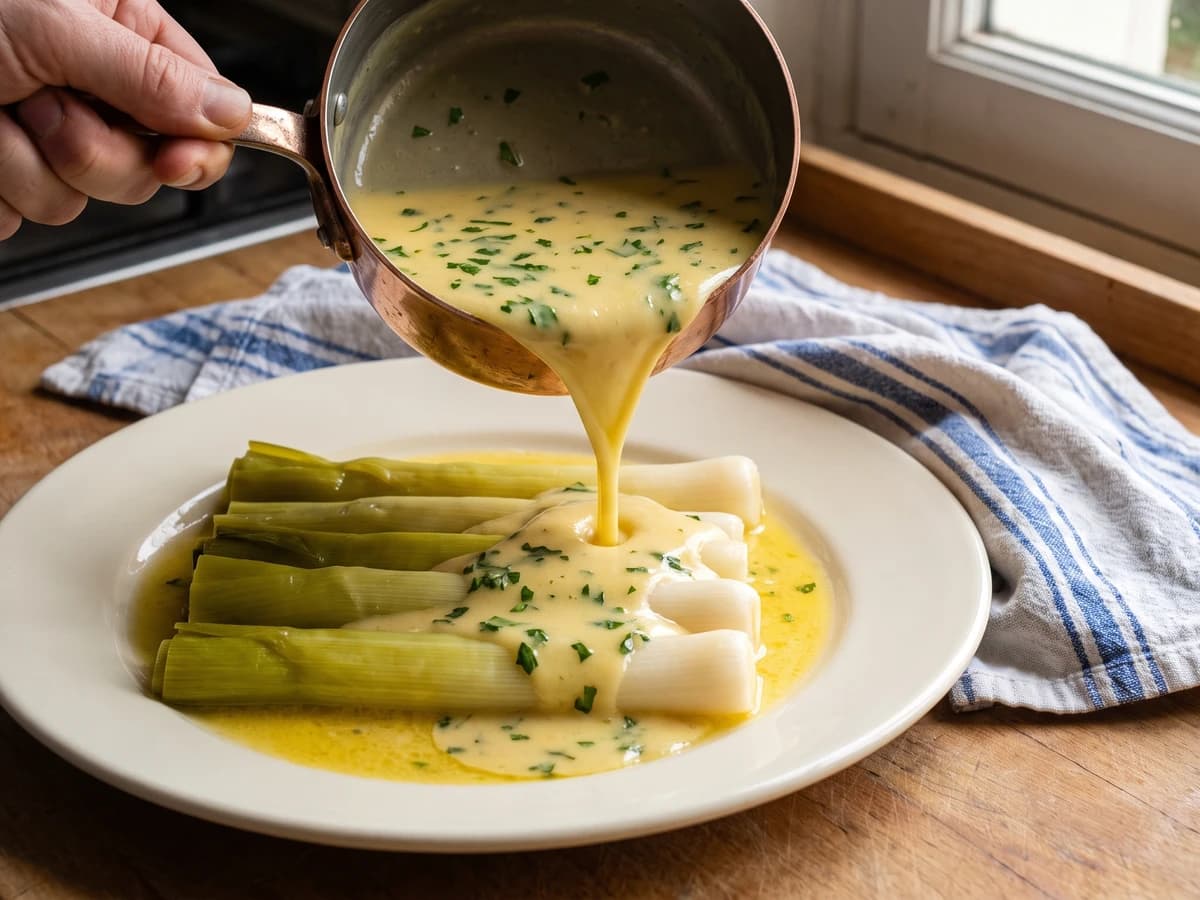
An old lesson in sauce families: Sauce Allemande takes mushroom liquor, then butter, lemon, and parsley, becoming a glossy Poulette for sheep's trotters, leeks, cauliflower, and anything needing gentle richness with a bright edge.