Chef Juliette
Bouillabaisse à la Marseillaise
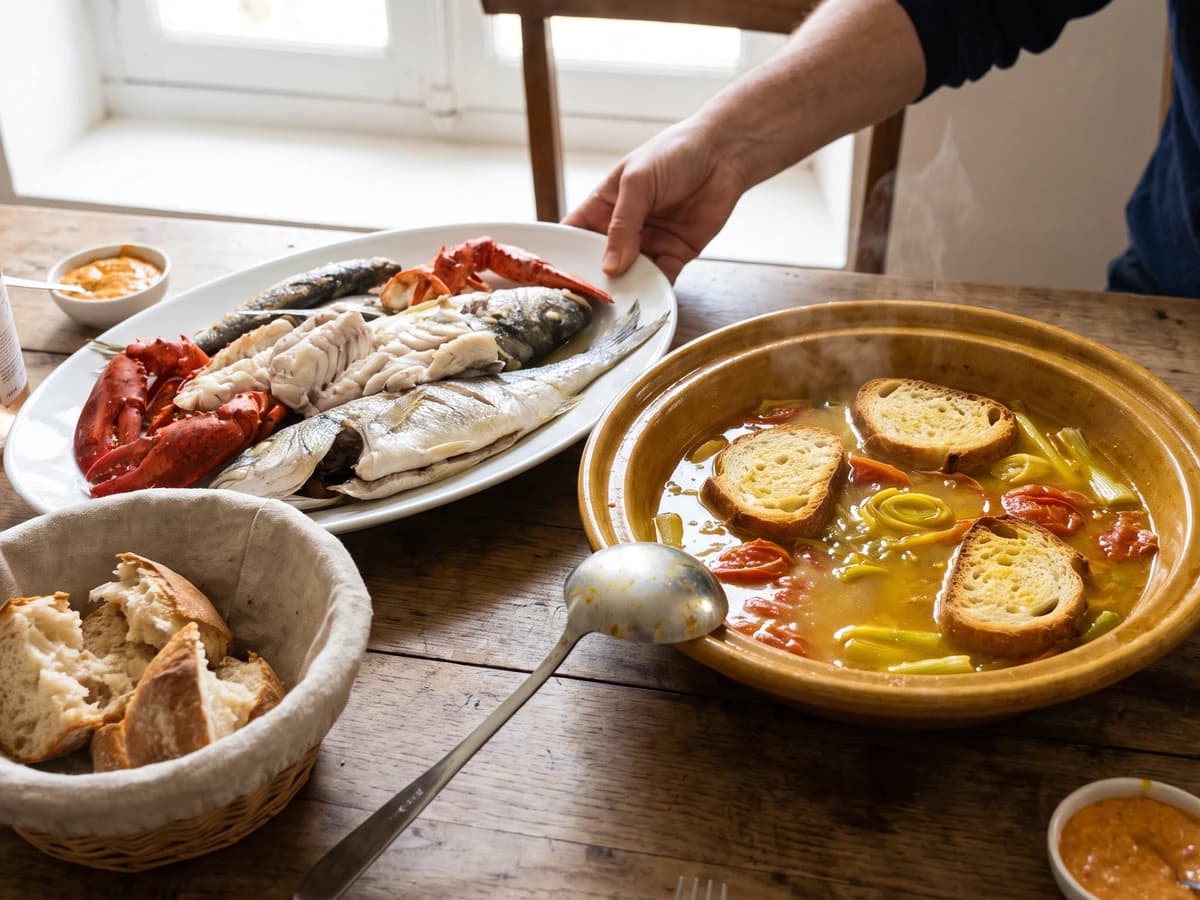
Marseille's great fish stew, saffron-gold and garlic-scented, proves that a hard boil can be the careful choice: it binds olive oil into broth before the whole pot meets bread.
A cooking platform built around craft, culture, and the stories behind what we eat.

Created by Chef Juliette
Based on No. 556, Croûte au Pot, from Le Guide Culinaire (1907) by Auguste Escoffier
Clear La Petite Marmite broth, neat garden vegetables, and oven-dried flûte crusts meet only at the table, preserving the crisp-soft contrast that turns the family stockpot into a generous first course.
Croûte au Pot (the family pot's crust soup) teaches a quiet but essential discipline: keep each element at its best until the moment of service. The broth must remain clear and lightly fat, the vegetables tender but recognizable, the flûte crusts dry to their centers. The one true thing is this: bread and broth meet at the last moment, never in the saucepan.
The original assumed La Petite Marmite (No. 598) ready beside a stockpot never off the fire, saved stock grease, and a brigade to trim the garnish. At home, make that referenced consommé ahead, save its fat when it chills, and use one saucepan for both the vegetable cooking and the final ten-minute simmer. No salamander is needed here: the book dried its crusts in an oven, and your ordinary oven does the same work splendidly. One cook, one stove, one evening.
The brigade's extra hands and pans were scaffolding. The precise garnish, the fat-enriched broth, the thorough oven-drying, and the last-minute tureen assembly are the dish itself, so they stay. Dry the flûte crusts until their centers are crisp and rigid before you turn to the soup; that is the step that decides whether Croûte au Pot arrives with contrast or collapses into soaked bread.
Croûte au Pot belongs to the French cuisine bourgeoise table built around pot-au-feu and Petite Marmite rather than to one province: the family stockpot supplied broth, vegetables, fat, and the makings of a first course. Grand kitchens refined that household practice by clarifying the broth, trimming the garnish precisely, and drying flûte crusts for the soupière while leaving the home-pot logic intact. Here croûte means the dried bread added to the soup, not a pastry covering, despite what the name sometimes suggests.
Quantity
8 cups (1.9 L / approximately 1.9 kg) La Petite Marmite (No. 598)
fully prepared and strained clear
Quantity
2 tablespoons (30 ml / 28 g) reserved stock fat from La Petite Marmite (No. 598), or unsalted butter
softened just enough to brush
Quantity
1 cup (240 ml / 130 g)
cut into small even sticks and neatly trimmed
Quantity
1 cup (240 ml / 140 g)
cut into small even sticks and neatly trimmed
Quantity
1½ cups (360 ml / 150 g)
washed well
Quantity
2 cups (480 ml / 140 g), tightly packed
tough ribs removed
Quantity
2 flûtes (approximately 6 oz / 170 g total), or 1 slender baguette
cut into 16 oblique crust-heavy pieces
Quantity
1 tablespoon (15 ml / 18 g)
for the blanching water
| Ingredient | Quantity |
|---|---|
| La Petite Marmite consomméfully prepared and strained clear | 8 cups (1.9 L / approximately 1.9 kg) La Petite Marmite (No. 598) |
| reserved stock fat or unsalted buttersoftened just enough to brush | 2 tablespoons (30 ml / 28 g) reserved stock fat from La Petite Marmite (No. 598), or unsalted butter |
| carrotscut into small even sticks and neatly trimmed | 1 cup (240 ml / 130 g) |
| turnipscut into small even sticks and neatly trimmed | 1 cup (240 ml / 140 g) |
| white and pale-green leekwashed well | 1½ cups (360 ml / 150 g) |
| white or green cabbage leavestough ribs removed | 2 cups (480 ml / 140 g), tightly packed |
| French soup flûtes or slender day-old baguettecut into 16 oblique crust-heavy pieces | 2 flûtes (approximately 6 oz / 170 g total), or 1 slender baguette |
| fine saltfor the blanching water | 1 tablespoon (15 ml / 18 g) |
Heat the oven to 300°F (150°C). Arrange the flûte crusts on a sheet pan and brush or besprinkle them with 1 tablespoon (15 ml / 14 g) of the reserved stock fat from La Petite Marmite (No. 598). Dry them for 20 to 25 minutes, turning once, until golden, rigid, and crisp at the center rather than merely browned outside. If they color before the centers dry, lower the oven to 275°F (135°C). If they soften while waiting, ça se rattrape: return them to the oven for 5 to 8 minutes, then keep them uncovered until service.
Bring a medium saucepan of water to a boil and season it with the fine salt. Lower in the cabbage and blanch it for 2 minutes, then add the leek and cook for 1 minute more. Drain at once, cool just enough to handle, and press out excess water without crushing the leaves. Mince the cabbage and leek into short, tidy pieces. This blanching removes the cabbage's raw edge and protects the clarity of the finished broth.
Pour 2 cups (480 ml / approximately 480 g) La Petite Marmite (No. 598) into a 4-quart saucepan and add the remaining 1 tablespoon (15 ml / 14 g) stock fat or butter. Bring it only to a bare simmer, then add the carrot and turnip sticks. Cook gently for 7 minutes before folding in the minced leek and cabbage. Continue for 3 to 5 minutes, until the roots are almost tender but still hold their precise shape. Hard boiling knocks the garnish about and clouds the consommé, so keep the surface at a quiet tremble.
Add the remaining 6 cups (1.4 L / approximately 1.4 kg) La Petite Marmite (No. 598) to the vegetables and bring everything back to a bare simmer. Cook for exactly 10 minutes, the sequence the original recipe protects, so the freshly cooked garnish gives its flavor to the somewhat fatty broth without losing itself. The surface should carry fine golden beads, not a heavy slick. If the fat gathers into broad pools, ça se rattrape: draw one folded paper towel lightly across the surface to lift the excess, leaving enough sheen to carry the flavor.
Warm a 3-quart soup tureen with hot water, then empty and dry it. Lift the vegetable garnish from the saucepan with a slotted spoon and arrange it in the tureen. Taste the broth before adding salt, since La Petite Marmite is already seasoned, then pour it over the vegetables. Add the dried flûte crusts at the last possible moment, keeping a few on a side plate if the soup will wait for second helpings. Serve immediately, while the broth gleams and the crusts still resist the spoon. À table!
1 serving (about 305g)
Culinary guides, cultural storytelling, and the editorial depth that makes cooking meaningful.
Discover Culinary ExplorerChef Juliette
Marseille's great fish stew, saffron-gold and garlic-scented, proves that a hard boil can be the careful choice: it binds olive oil into broth before the whole pot meets bread.
Chef Juliette
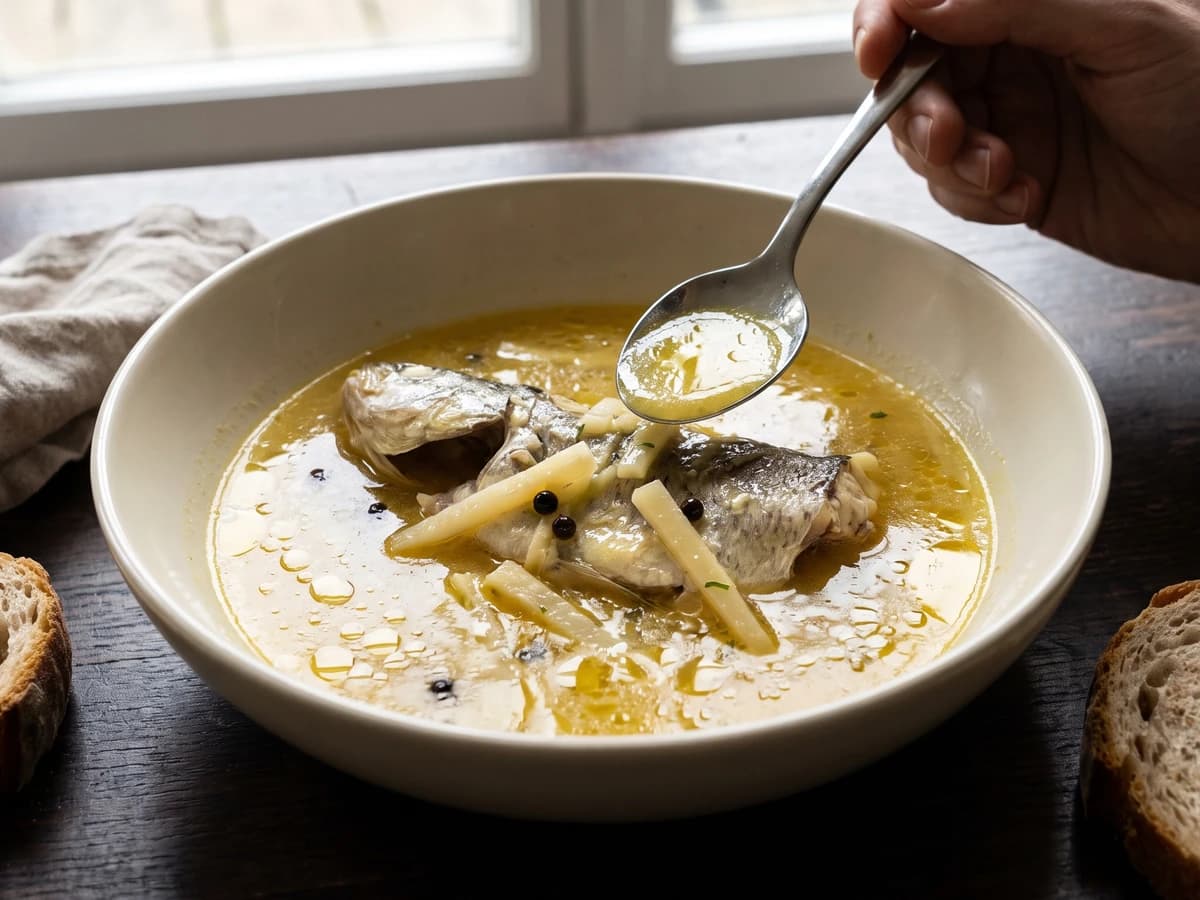
Waterzoi asks fresh, bone-in river fish to thicken its own buttery broth, with parsley root and pepper for company. No flour, no stockpot, just a brisk simmer watched closely.
Chef Juliette
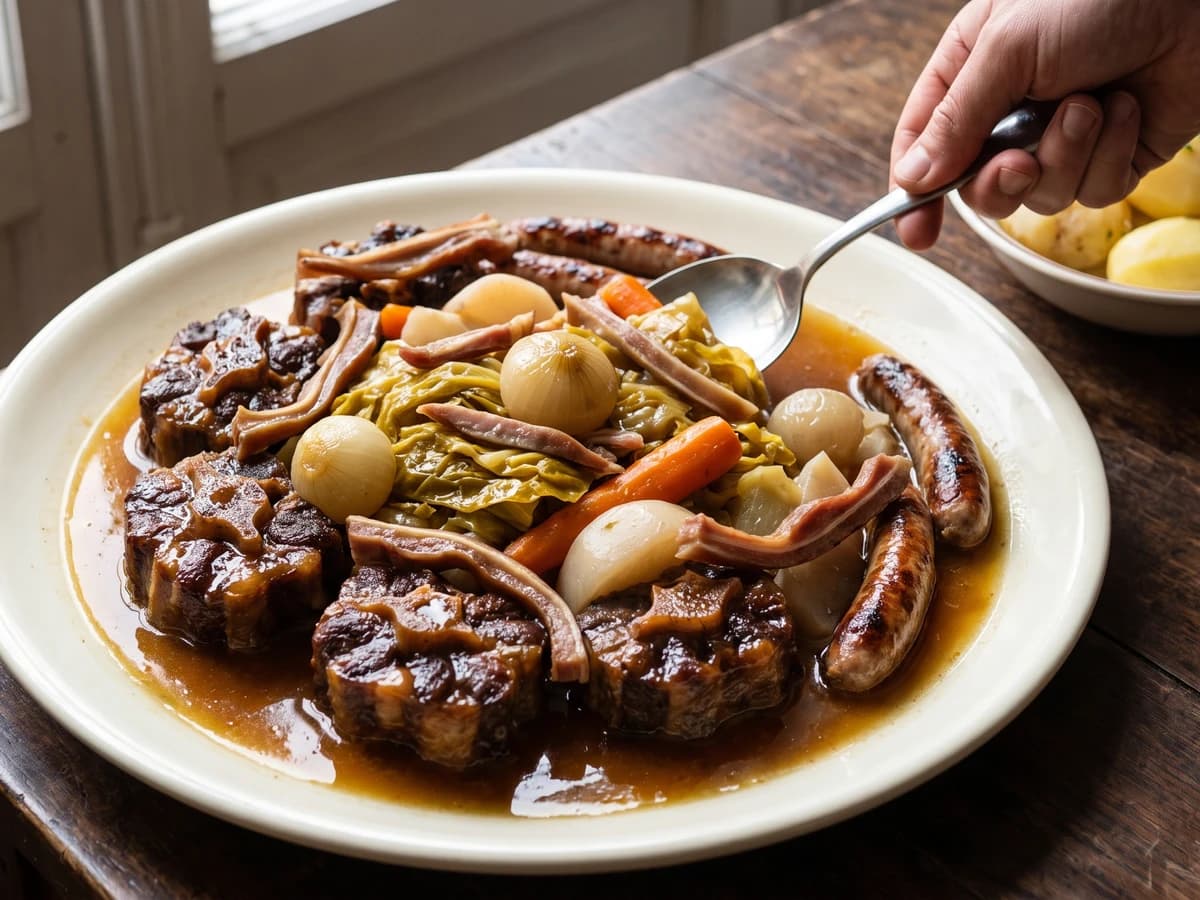
Queue de Bœuf en Hochepot gathers oxtail, pig's trotter and ear, cabbage, roots, and grilled chipolatas around a clear, gelatin-rich broth whose quiet simmer keeps every piece tender and distinct.
Chef Juliette
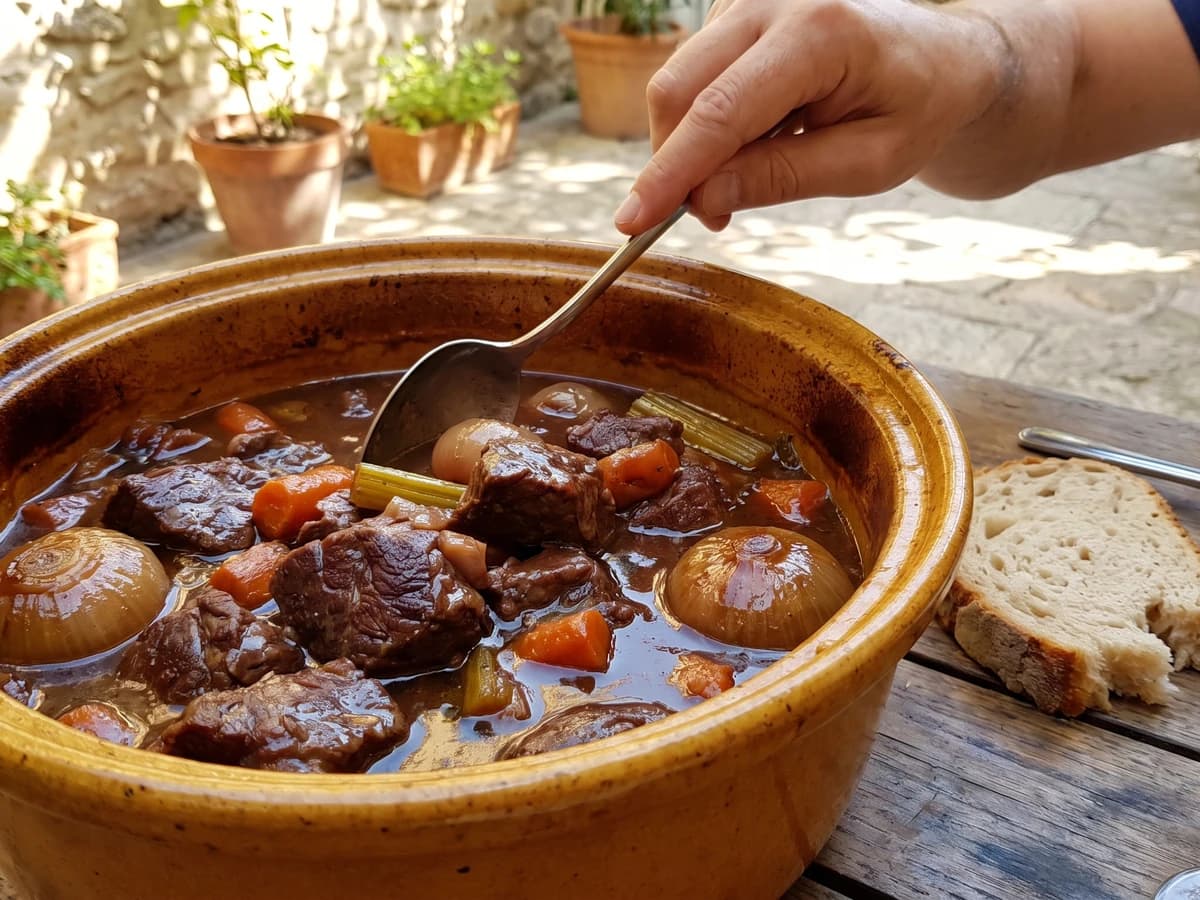
Beef shoulder larded with bacon, sharpened by red wine and vinegar, then sealed with garlic, vegetables, and dry lemon peel until the low oven turns it yielding and the gravy darkly glossy.