Chef Juliette
Bouillabaisse à la Marseillaise
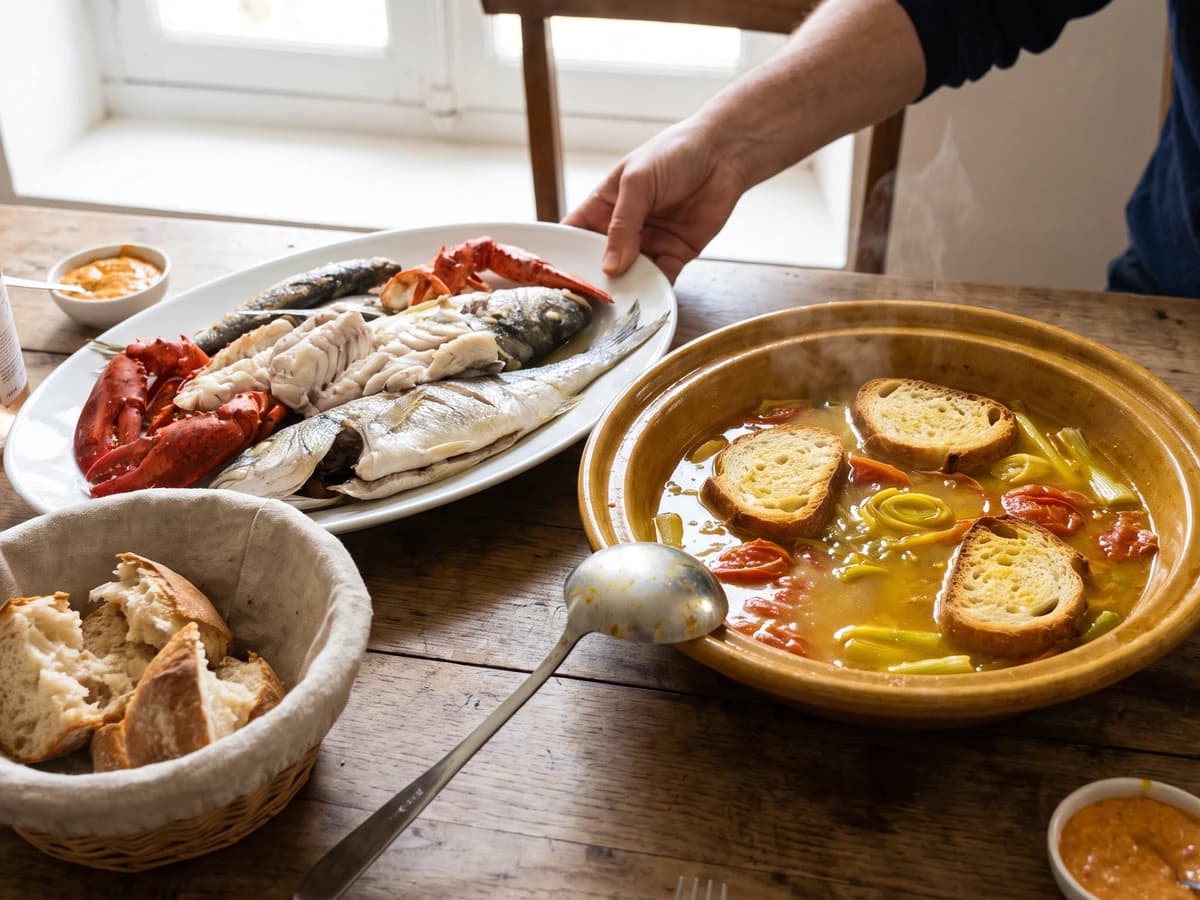
Marseille's great fish stew, saffron-gold and garlic-scented, proves that a hard boil can be the careful choice: it binds olive oil into broth before the whole pot meets bread.
A cooking platform built around craft, culture, and the stories behind what we eat.
Created by Chef Juliette
Based on No. 553, Consommé aux Cheveux D’Ange, from Le Guide Culinaire (1907) by Auguste Escoffier
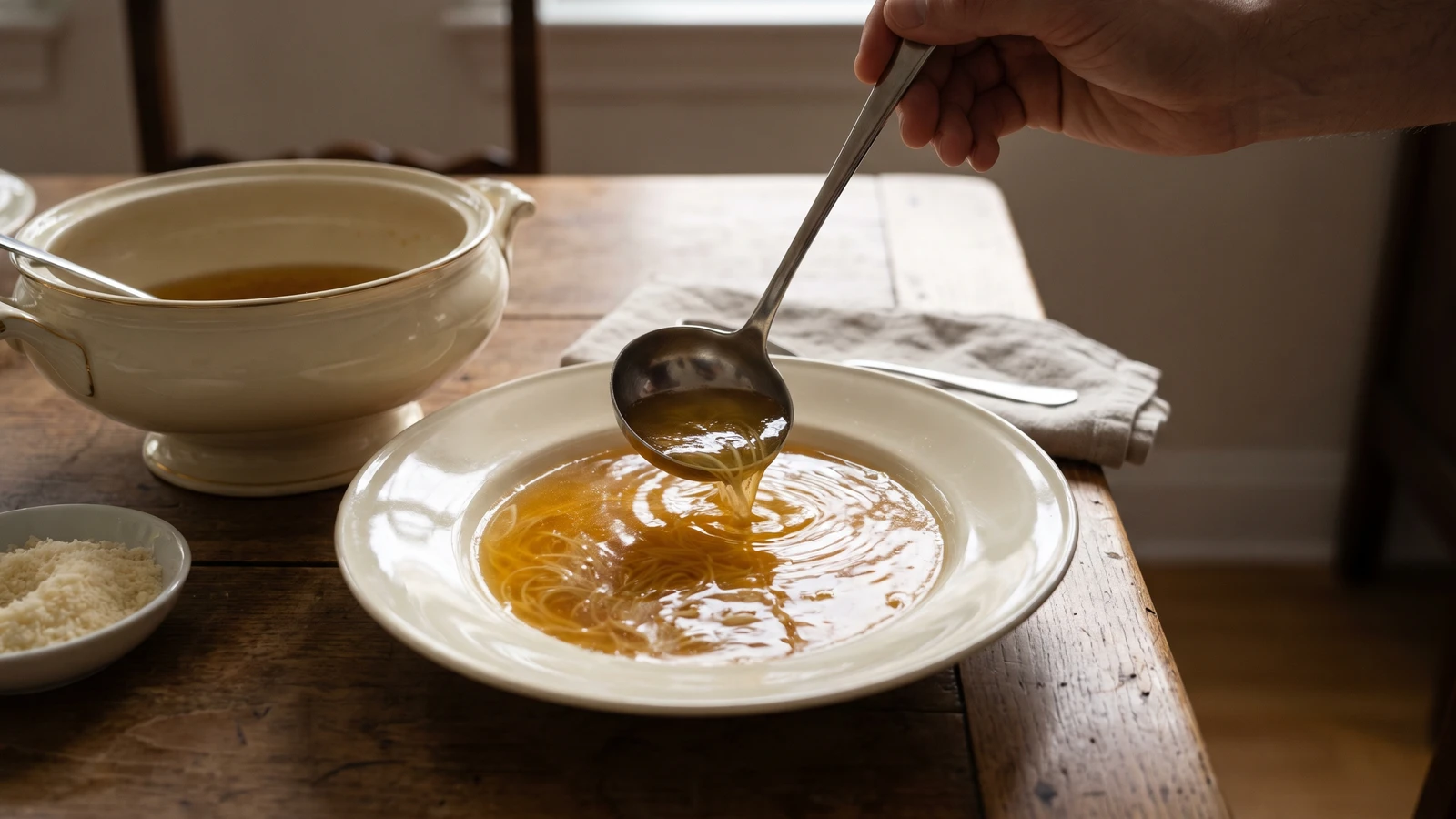
Consommé aux Cheveux d’Ange is clarity and timing in one bowl: fine vermicelli poached at the last instant in brilliant consommé, with freshly grated Parmesan passed at the table.
Consommé aux Cheveux d’Ange (clear consommé with angel-hair vermicelli) teaches a severe and useful lesson: once a broth is perfect, the garnish must not disturb it. The consommé is already the dish. The fine noodles enter only long enough to soften, then the bowls move. Let them linger and the threads swell, drink the broth, and dull its clarity.
The original entry assumed a saucier on staff and a stockpot never off the fire, so a quart of excellent boiling consommé could appear at command. For one cook, one stove, one evening, the honest equivalent is two quarts of finished consommé made ahead and reheated just before the guests sit. I have doubled the book’s three ounces of vermicelli per quart to six ounces, preserving its ratio while giving a home table eight first-course bowls. The separate service station is brigade scaffolding and can go. The brilliant consommé and last-instant poach are the dish and must stay.
Cheveux d’ange are so fine that Blanchings (No. 273) would only invite tangles and needless handling; the book expressly sends them straight into the boil. Scatter them instead of dropping a bundle, separate them once, and serve within two minutes. That is the step that matters.
Consommé aux Cheveux d’Ange belongs to the formal Parisian dinner table, where perfectly clarified consommé opened the meal with a precisely named garnish. Its fine vermicelli and accompanying Parmesan show the French canon’s easy exchange with Italian pasta traditions; contrary to the treatment given sturdier pastes, these threads were dropped in raw and poached only at service, never blanched first.
Quantity
8 cups (1.9 L / about 1.9 kg)
Quantity
6 ounces (170 g / about 4 loose cups), used directly without Blanchings (No. 273)
Quantity
1 cup (100 g / 3.5 oz)
freshly and finely grated
| Ingredient | Quantity |
|---|---|
| excellent clear consommé | 8 cups (1.9 L / about 1.9 kg) |
| very fine dried vermicelli, cheveux d’ange | 6 ounces (170 g / about 4 loose cups), used directly without Blanchings (No. 273) |
| Parmesan cheesefreshly and finely grated | 1 cup (100 g / 3.5 oz) |
Grate the Parmesan finely and place it in a small serving bowl. Measure the cheveux d’ange, warm the soup bowls, and set the ladle beside the stove. Once the vermicelli enters the consommé, there is no useful holding time, so the table must be ready before the saucepan boils.
Pour the finished consommé into a 4-quart saucepan and bring it to a clear, decisive boil over medium-high heat. Taste it hot. Its seasoning should already be complete, because the vermicelli softens the broth’s impression without adding flavor of its own. If a little surface fat or protein appears, skim it gently rather than stirring it back into the liquid.
Scatter the cheveux d’ange over the whole surface in a thin rain, then pass a fork gently through the consommé once to separate the threads. Do not perform Blanchings (No. 273); these fine vermicelli go directly into the boiling consommé and need only 30 to 60 seconds to poach. If they gather into a knot, don’t beat the broth. Ça se rattrape: lift the knot with two forks, tease the strands apart above the saucepan, and lower them back into the liquid.
The instant the strands are poached, take the saucepan off the heat and ladle the consommé into the warm bowls, dividing the vermicelli evenly. Carry it straight to the table with the freshly grated Parmesan passed separately, so each guest adds a little without clouding the serving pot. À table!
1 serving (about 260g)
Culinary guides, cultural storytelling, and the editorial depth that makes cooking meaningful.
Discover Culinary ExplorerChef Juliette
Marseille's great fish stew, saffron-gold and garlic-scented, proves that a hard boil can be the careful choice: it binds olive oil into broth before the whole pot meets bread.
Chef Juliette
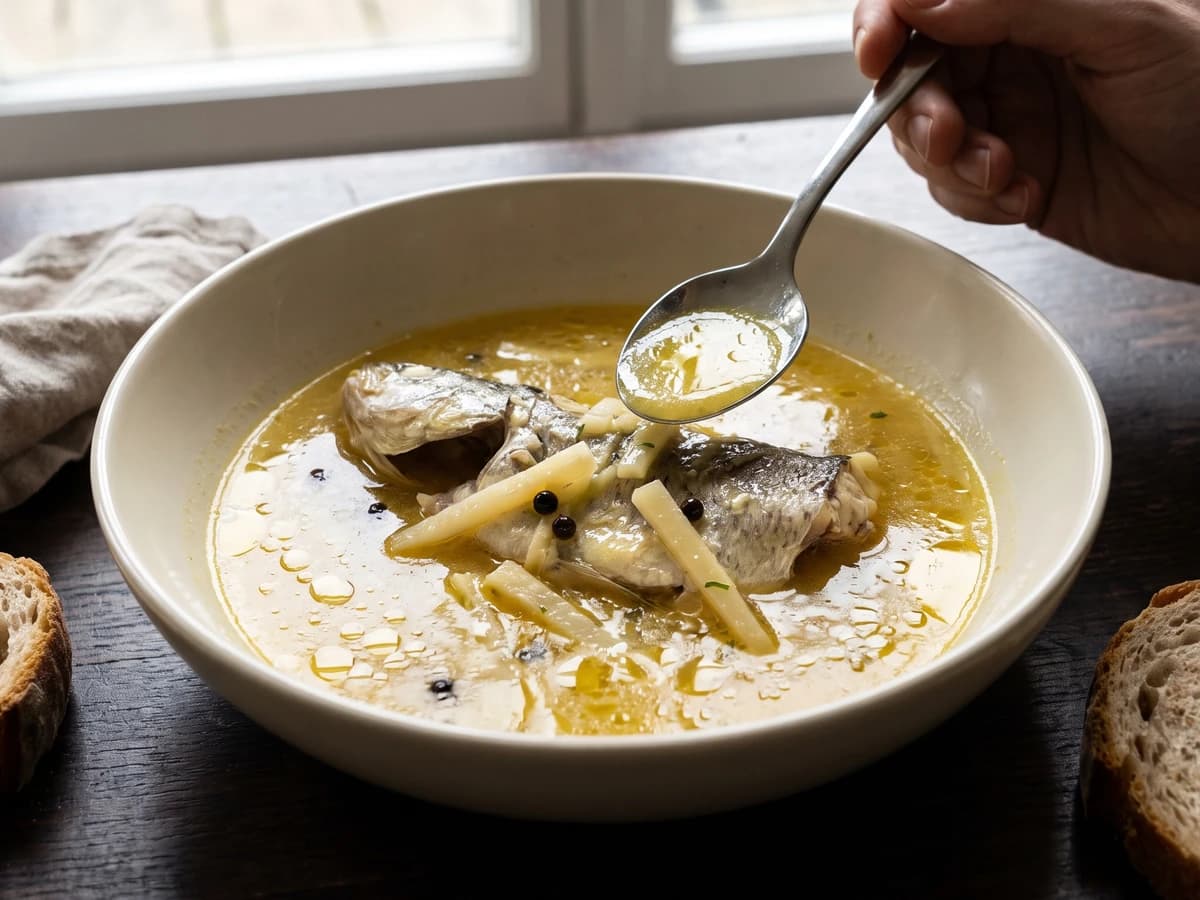
Waterzoi asks fresh, bone-in river fish to thicken its own buttery broth, with parsley root and pepper for company. No flour, no stockpot, just a brisk simmer watched closely.
Chef Juliette
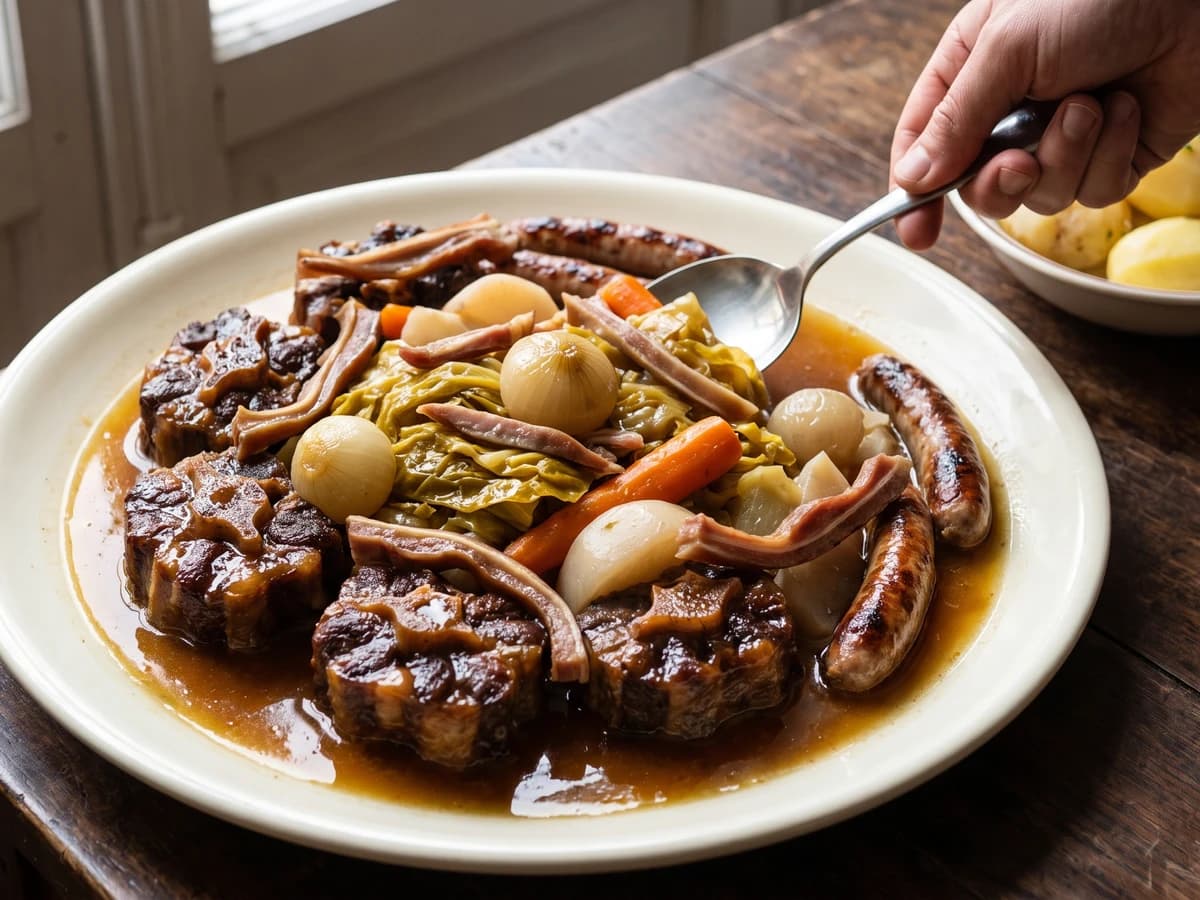
Queue de Bœuf en Hochepot gathers oxtail, pig's trotter and ear, cabbage, roots, and grilled chipolatas around a clear, gelatin-rich broth whose quiet simmer keeps every piece tender and distinct.
Chef Juliette
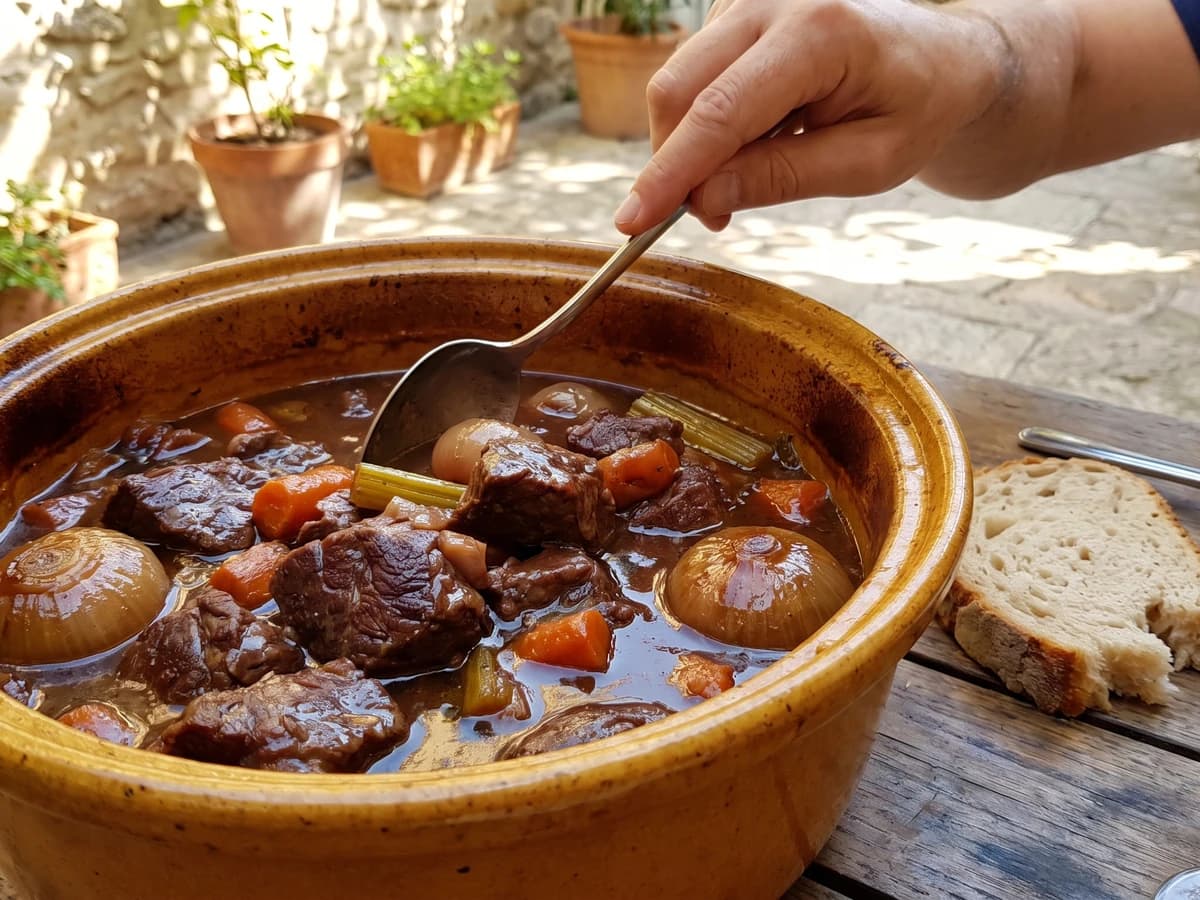
Beef shoulder larded with bacon, sharpened by red wine and vinegar, then sealed with garlic, vegetables, and dry lemon peel until the low oven turns it yielding and the gravy darkly glossy.