Chef Juliette
Ordinary or White Consommé
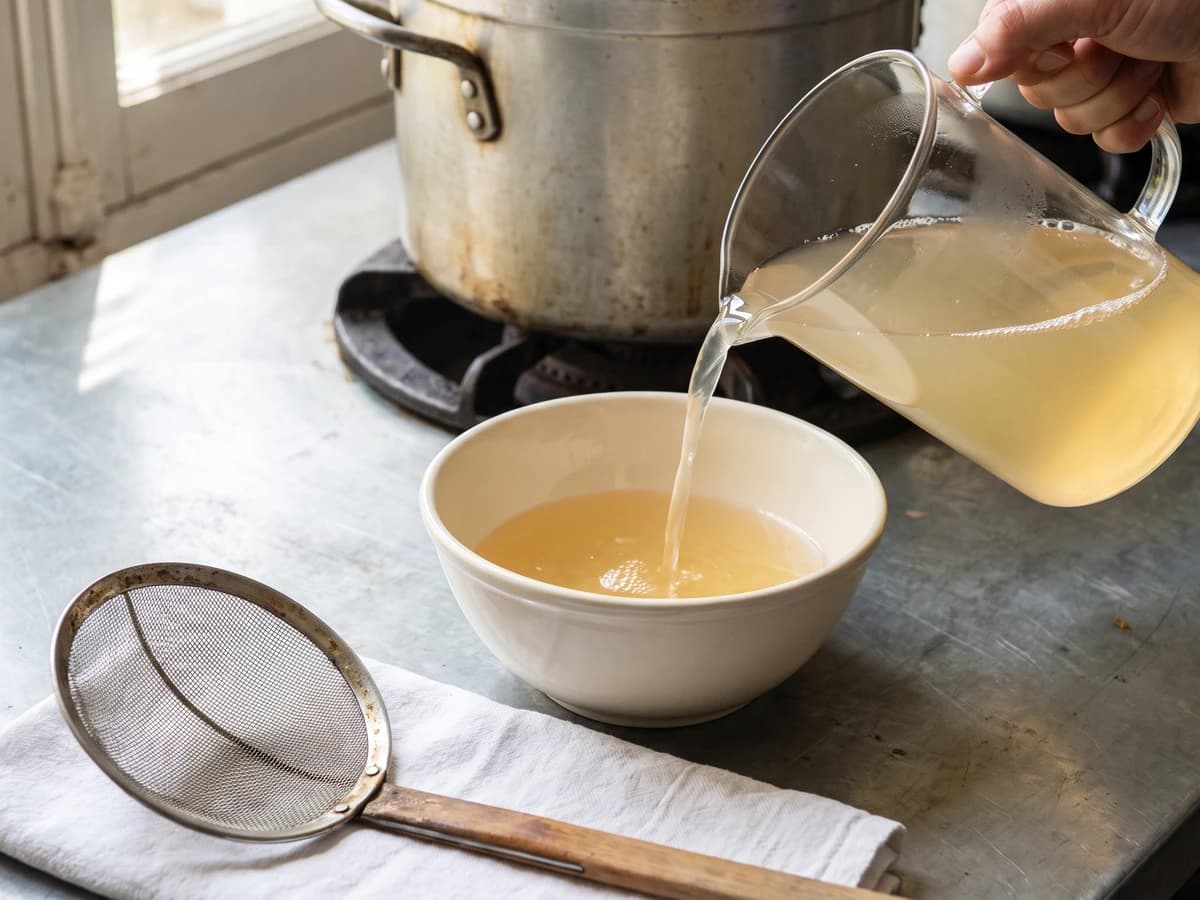
Beef shin, lean beef, and fowl begin in cold water and rise slowly toward a tremble. Skim before the boil, and you learn the quiet discipline that gives every clear French broth its backbone.
A cooking platform built around craft, culture, and the stories behind what we eat.
Created by Chef Juliette
Based on No. 55, Salmis Sauce, from Le Guide Culinaire (1907) by Auguste Escoffier
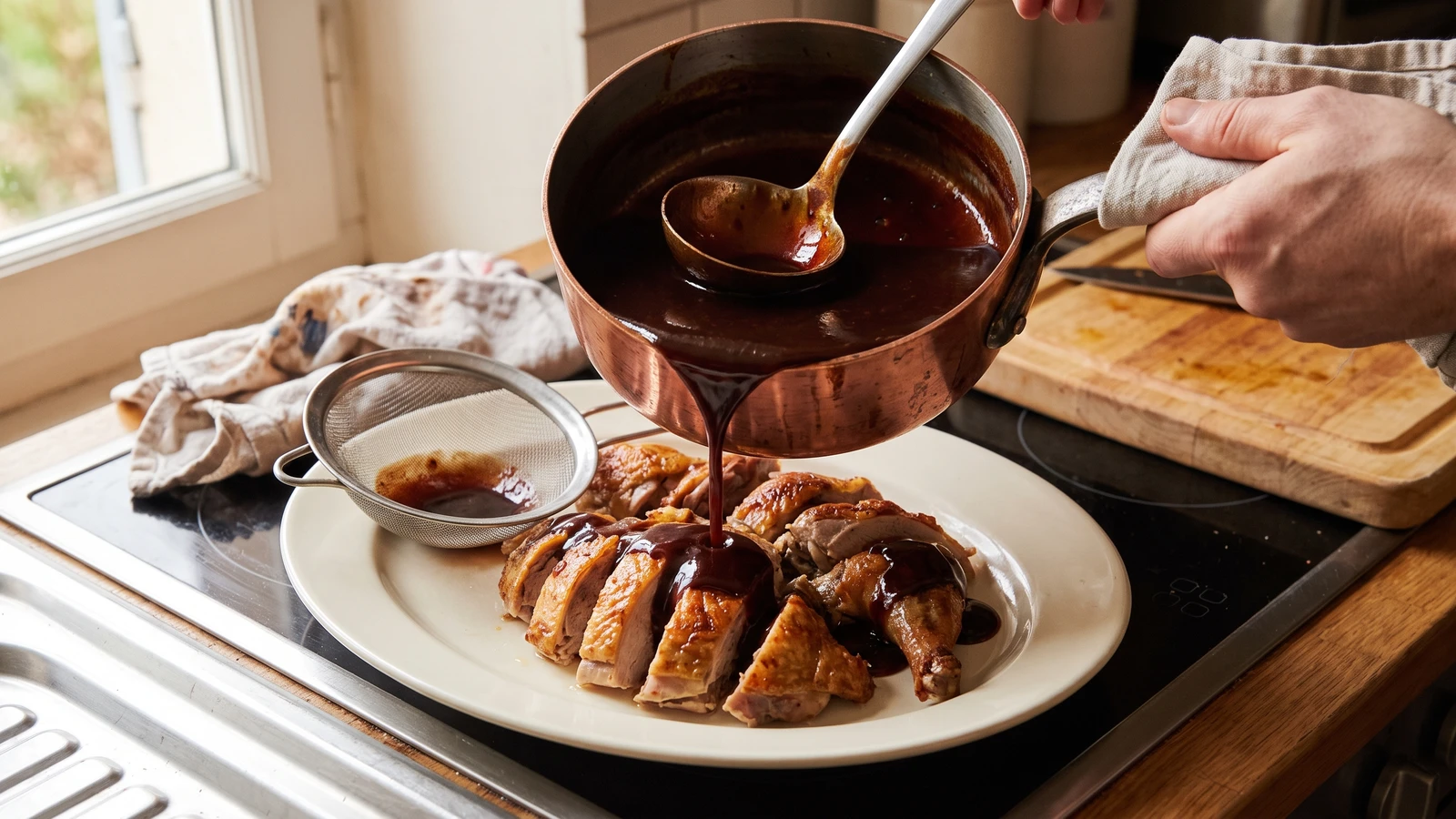
Dark, glossy Sauce Salmis pulls the deepest flavor from game bird carcasses through browned Mirepoix (No. 228), white wine, demi-glace, hard pressing, patient skimming, and a final gloss of butter.
Sauce Salmis teaches extraction: the carcass is not a leftover here, it is the principal seasoning. Before you touch a pan, know the one thing that decides the sauce: brown without scorching, then press the cooked bones and aromatics hard enough to take their quintessence. A timid strain gives ordinary gravy. A proper pressing gives salmis.
The original kitchen assumed a saucier on staff, roasted birds moving steadily through service, a stockpot never off the fire, and a tammy ready for the final pass. Your equivalents are three saved carcasses, a heavy saucepan, and a fine sieve lined with cheesecloth. This batch makes about two quarts, enough for a generous dinner with some left to freeze. One cook, one stove, one evening.
Only the scale and tools have changed. The source ratio remains intact: two parts white wine to one part demi-glace and one part game stock. The dedicated saucier and cloth tammy are brigade scaffolding and can go; the gentle browning, wine reduction, forty-five-minute extraction, forceful pressing, slow despumation, and last whisk of butter are the dish. Press while everything is hot and yielding. That is the step that matters most.
Sauce salmis belongs to the French classical game table, from hunting households to the dining rooms of Paris, where roasted pheasant, partridge, grouse, and duck were carved before their carcasses returned to the saucepan. Practical second-service cookery became part of the codified sauce canon through a fixed grammar of aromatics, wine, half-glaze, pressing, and patient skimming. Salmis is often mistaken for game gravy, but its defining character comes from pressing the carcass itself to produce a concentrated cullis.
Quantity
3 cups (720 ml / 425 g) Mirepoix (No. 228)
Quantity
5 tablespoons (75 ml / 71 g)
divided
Quantity
3
skin removed from the limbs and reserved; carcasses chopped into pieces
Quantity
6 cups (1.44 L / 1.42 kg)
Quantity
3 cups (720 ml / 720 g)
Quantity
3 cups (720 ml / 720 g)
Quantity
Up to 1 cup (240 ml / 240 g)
divided
Quantity
2 tablespoons (30 ml / 30 g)
Quantity
only if needed
| Ingredient | Quantity |
|---|---|
| Mirepoix | 3 cups (720 ml / 425 g) Mirepoix (No. 228) |
| unsalted butterdivided | 5 tablespoons (75 ml / 71 g) |
| roasted game bird carcassesskin removed from the limbs and reserved; carcasses chopped into pieces | 3 |
| dry white wine | 6 cups (1.44 L / 1.42 kg) |
| prepared demi-glace (half-glaze) | 3 cups (720 ml / 720 g) |
| unsalted game stock | 3 cups (720 ml / 720 g) |
| clear mushroom liquordivided | Up to 1 cup (240 ml / 240 g) |
| truffle essence or liquid from preserved truffles | 2 tablespoons (30 ml / 30 g) |
| fine sea salt (optional) | only if needed |
Remove every useful piece of meat from the roasted birds and reserve it for the salmis or another dish. Pull the skin from the limbs and keep it with the frames. Using heavy poultry shears or a cleaver on a stable board, cut each carcass into pieces about 2 inches (5 cm) across, cracking the breast and back bones enough to expose their interiors without reducing them to splinters.
Melt 3 tablespoons (45 ml / 43 g) of the butter in a heavy saucepan over medium heat. Add the Mirepoix (No. 228) and brown it gently, stirring often, until its edges color and the saucepan floor develops a chestnut fond. Add the reserved skin and chopped carcasses, then continue turning them until their exposed edges are bronzed. Gentle does not mean pale, but nothing should blacken. If black specks appear, transfer the solids to a clean pan and leave the burned fond behind; bitterness only grows during reduction.
Pour in the white wine and scrape the saucepan floor thoroughly so every sound brown trace joins the liquid. Bring it to a lively simmer and reduce the wine by one-third, from 6 cups to about 4 cups (1.44 L to 960 ml). Add the demi-glace and return the mixture to a bare simmer. Cook uncovered for 45 minutes, with only an occasional bubble breaking the surface. A hard boil emulsifies fat and bone impurities into the sauce, making the later skimming needlessly difficult.
Set a sturdy fine-mesh sieve over a heatproof bowl and pour in the saucepan contents while they are still very hot. Press the carcasses and aromatics firmly with the back of a ladle, turning them several times and bearing down until only a reluctant trickle remains. This pressure is the technique, not a flourish. Do not discard the solids after the first easy flow, because the last dark spoonfuls carry the concentrated character of the sauce.
Rinse the saucepan, return the strained cullis to it, and add the game stock. Bring the sauce just to a simmer and despumate it, skimming away foam, grey impurities, and excess fat every few minutes, for about 1 hour. Keep the surface at a quiet tremble and avoid stirring the impurities back through. If the sauce boils hard and turns greasy, lower the heat and add 2 tablespoons (30 ml / 30 g) of cold mushroom liquor around the edge. Wait for the fat to gather, then skim again. Ça se rattrape.
Once the surface remains clean, simmer the sauce until it is slightly tighter than nappant, thick enough to coat the back of a spoon before the final liquids are added. Stir in the truffle essence, then add the remaining mushroom liquor a tablespoon at a time until the sauce flows in a glossy ribbon and measures about 8 cups (1.9 L). If it becomes too loose, stop adding liquor and reduce it again before proceeding. Taste before salting, because demi-glace and preserved truffle liquid can carry plenty of seasoning.
Line the clean sieve with damp cheesecloth and rub the sauce through with a flexible spatula, the honest home equivalent of a tammy. Warm it once more without boiling, remove it from the heat, and monter au beurre, finish by whisking in the remaining 2 tablespoons (30 ml / 28 g) of cold butter a little at a time. If the butter separates into greasy beads, put 1 tablespoon (15 ml / 15 g) of cold mushroom liquor in a clean warm bowl and whisk the sauce into it gradually. Serve at once over warmed pieces of roast pheasant, partridge, grouse, or duck. À table!
1 serving (about 60g)
Culinary guides, cultural storytelling, and the editorial depth that makes cooking meaningful.
Discover Culinary ExplorerChef Juliette
Beef shin, lean beef, and fowl begin in cold water and rise slowly toward a tremble. Skim before the boil, and you learn the quiet discipline that gives every clear French broth its backbone.
Chef Juliette
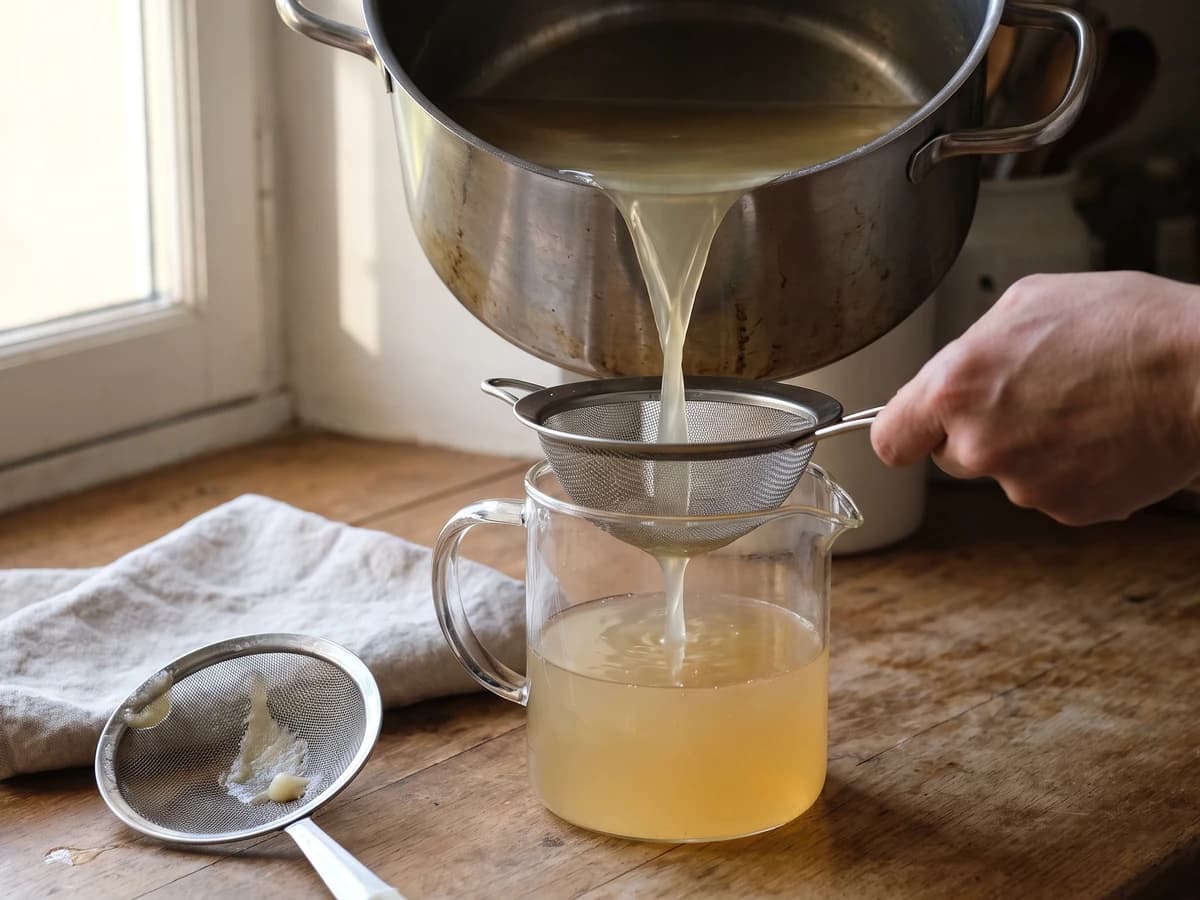
Break the veal bones small, then give them eight hours at a bare tremble. This pale, gelatinous fond becomes the quiet foundation beneath velouté, blanquette, and every sauce that must stay light.
Chef Juliette
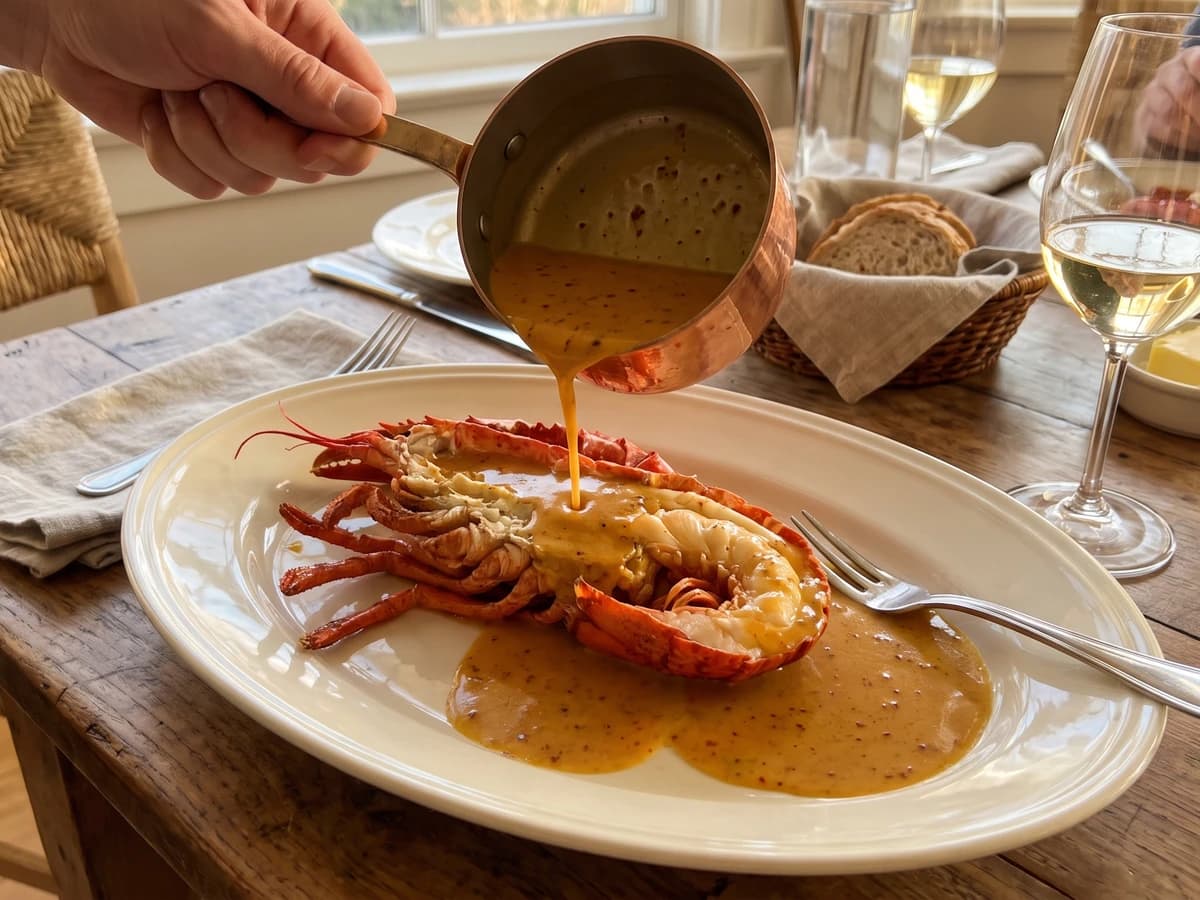
Sauce Orientale concentrates lobster-rich American Sauce with curry, then folds in cream away from the fire: a glossy, gently spiced derivative made for lobster, crayfish, and firm fish.
Chef Juliette
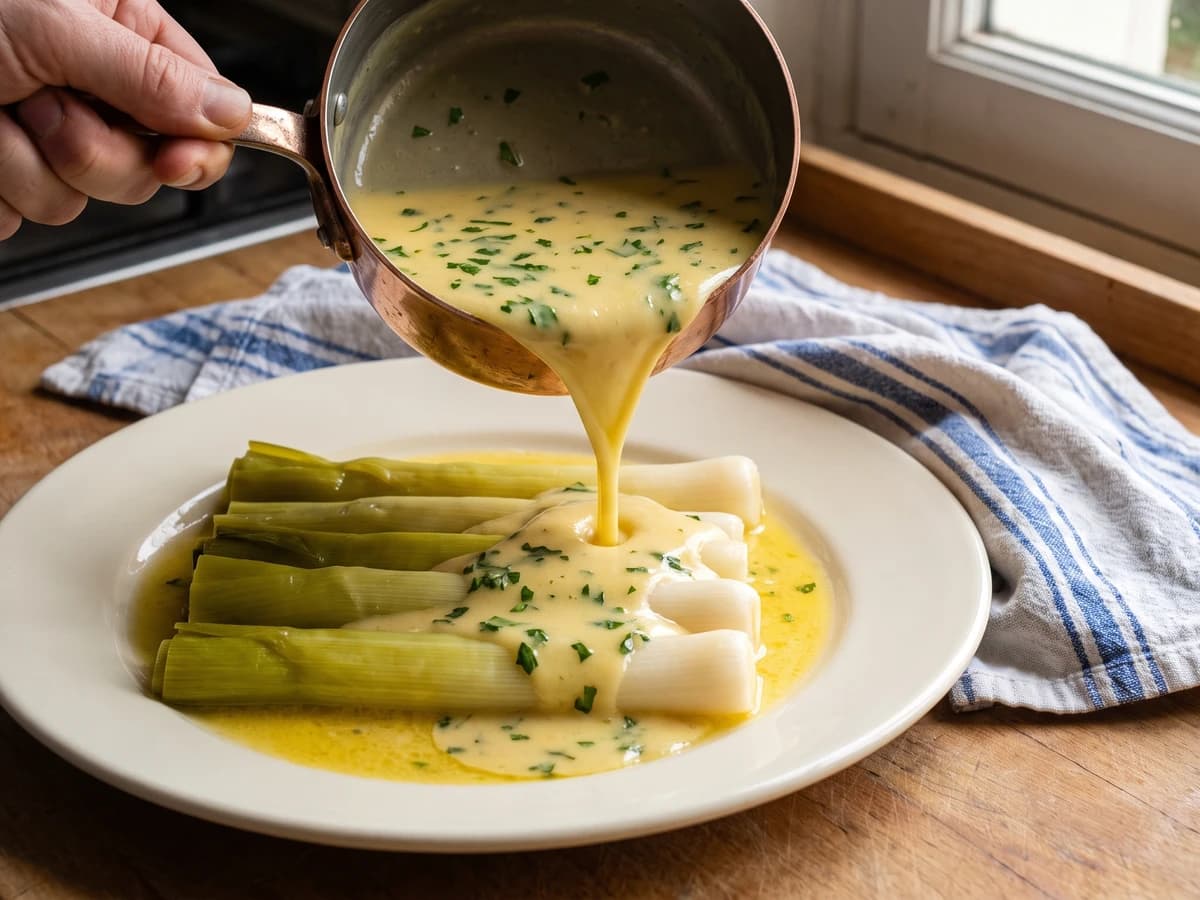
An old lesson in sauce families: Sauce Allemande takes mushroom liquor, then butter, lemon, and parsley, becoming a glossy Poulette for sheep's trotters, leeks, cauliflower, and anything needing gentle richness with a bright edge.