Chef Juliette
Bouillabaisse à la Marseillaise
Marseille's great fish stew, saffron-gold and garlic-scented, proves that a hard boil can be the careful choice: it binds olive oil into broth before the whole pot meets bread.
A cooking platform built around craft, culture, and the stories behind what we eat.

Created by Chef Juliette
Based on No. 547, Potage Bortsch, from Le Guide Culinaire (1907) by Auguste Escoffier
A garnet potage of beef, semi-roasted duck, cabbage, and chipolatas, simmered gently until generous, then finished off heat with raw beet juice. The last stir is the dish.
Potage Bortsch (French borscht) teaches one true thing: a finishing touch can be structural. The raw beetroot juice stirred in at the very end isn't decoration. It restores the deep garnet color that four hours of cooking would otherwise dull, while giving the rich broth a fresh, earthy edge.
The classical formula assumed a saucier watching the pot, a stock never off the fire, a half duck already semi-roasted, and a salamander, the fierce overhead grill, waiting for twelve chipolatas. At home, a heavy cocotte, good prepared white consommé, an ordinary oven, and the broiler take those jobs. The quantity is brought to one generous tureen, about two quarts, manageable by one cook, one stove, one evening.
Those conveniences are brigade scaffolding and may go. The four-hour simmer, the beef and duck together, and the final raw beetroot juice are the dish, so they stay. Keep the finished soup away from the boil once that last juice enters. That is the step that matters most.
Potage Bortsch entered the French canon through the Russian table of Parisian grand kitchens, where Eastern European borshch was expressed through clear consommé, abundant meats, formal garnishes, and sour cream served separately. Borshch itself is deeply rooted in Ukrainian cooking and neighboring cuisines, with countless meat, vegetable, and meatless forms; this French branch is distinguished by beef, semi-roasted duck, chipolatas, and raw beetroot juice added at service.
Quantity
2 medium, about 2 cups (475 ml / 240 g)
cut julienne-fashion into matchsticks
Quantity
1 medium, about 1 cup (240 ml / 120 g)
peeled and cut julienne-fashion into matchsticks
Quantity
1/2 medium, about 1/2 cup (120 ml / 85 g)
cut julienne-fashion into matchsticks
Quantity
4 ounces, about 2 cups loosely packed (475 ml / 115 g)
cut julienne-fashion into matchsticks
Quantity
1/2 root, about 1/3 cup (80 ml / 55 g)
peeled and cut julienne-fashion into matchsticks
Quantity
1 stalk, about 1/2 cup (120 ml / 55 g)
cut julienne-fashion into matchsticks
Quantity
4 ounces, about 3/4 cup (180 ml / 115 g)
peeled and cut julienne-fashion into matchsticks
Quantity
3 tablespoons (45 ml / 42 g)
Quantity
1 quart (950 ml / 950 g)
Quantity
about 1 pound (450 g), yielding about 3/4 cup juice (180 ml / 180 g)
peel, grate, and press in two batches
Quantity
1 small bunch, about 1/2 cup loosely packed (120 ml / 12 g)
tied
Quantity
6 sprigs (about 4 g)
tied with the fennel
Quantity
2 pounds (910 g)
left in one piece
Quantity
1 half, about 2 1/2 pounds (1.1 kg)
skin pricked and patted dry
Quantity
12, about 12 ounces (340 g)
Quantity
2 tablespoons (30 ml / 8 g), prepared according to Blanchings (No. 273)
blanched and finely chopped
Quantity
1 cup (240 ml / 240 g)
served separately
Quantity
as needed
| Ingredient | Quantity |
|---|---|
| leeks, white and pale green parts onlycut julienne-fashion into matchsticks | 2 medium, about 2 cups (475 ml / 240 g) |
| carrotpeeled and cut julienne-fashion into matchsticks | 1 medium, about 1 cup (240 ml / 120 g) |
| yellow onioncut julienne-fashion into matchsticks | 1/2 medium, about 1/2 cup (120 ml / 85 g) |
| white cabbage leavescut julienne-fashion into matchsticks | 4 ounces, about 2 cups loosely packed (475 ml / 115 g) |
| parsley rootpeeled and cut julienne-fashion into matchsticks | 1/2 root, about 1/3 cup (80 ml / 55 g) |
| pale inner celery stalkcut julienne-fashion into matchsticks | 1 stalk, about 1/2 cup (120 ml / 55 g) |
| raw red beetroot for the juliennepeeled and cut julienne-fashion into matchsticks | 4 ounces, about 3/4 cup (180 ml / 115 g) |
| unsalted butter | 3 tablespoons (45 ml / 42 g) |
| prepared white consommé | 1 quart (950 ml / 950 g) |
| raw red beetroot for the juicepeel, grate, and press in two batches | about 1 pound (450 g), yielding about 3/4 cup juice (180 ml / 180 g) |
| fresh fennel frondstied | 1 small bunch, about 1/2 cup loosely packed (120 ml / 12 g) |
| sweet marjoramtied with the fennel | 6 sprigs (about 4 g) |
| moderately fat beef brisketleft in one piece | 2 pounds (910 g) |
| half duckskin pricked and patted dry | 1 half, about 2 1/2 pounds (1.1 kg) |
| small pork chipolatas | 12, about 12 ounces (340 g) |
| fresh fennel fronds and flat-leaf parsleyblanched and finely chopped | 2 tablespoons (30 ml / 8 g), prepared according to Blanchings (No. 273) |
| sour creamserved separately | 1 cup (240 ml / 240 g) |
| fine salt | as needed |
Cut the leeks, carrot, onion, cabbage, parsley root, celery, and the 4 ounces of beetroot julienne-fashion, meaning slender matchsticks of roughly equal thickness. Even cuts matter because the vegetables remain in the finished potage and must soften together. Grate about one quarter of the beetroot reserved for juice, then press it firmly through clean linen or a tightly woven dish towel. Measure 2 to 3 tablespoons (30 to 45 ml / 30 to 45 g) of juice for the simmer and keep it cold. Leave the remaining juicing beets whole and chilled until the final minutes so their color stays alive.
Heat the oven to 425°F (220°C). Set the half duck skin-side up on a rack over a roasting pan and roast for 25 to 30 minutes, until the skin is bronzed at the high points and the fat has begun to run, though the flesh remains undercooked. Semi-roasting builds the flavor expected by the formula without drying the duck before its long simmer. Save the rendered fat for another pan.
Melt the butter in a narrow 5 to 6 quart heavy cocotte over medium-low heat. Add every julienned vegetable and a small pinch of salt, then étuver them, gently stewing them in butter, for 15 to 20 minutes. Stir often and keep the pot partly covered. They should soften, glisten, and smell sweet without taking brown color. If the butter begins to catch, pull the pot from the heat and stir in a spoonful of consommé before lowering the flame. Ça se rattrape.
Pour in the white consommé and the measured 2 to 3 tablespoons of beetroot juice. Add the tied fennel and sweet marjoram, the brisket, and the semi-roasted duck. Bring the liquid up slowly, skim away the first foam and excess fat, then cover the pot with the lid slightly ajar. Hold it at the barest tremble for 4 hours, turning the meats occasionally. A rolling boil clouds the consommé and tightens the beef. If the liquid falls much below halfway up the meats, add a little hot water, not more seasoned consommé. The brisket is ready when a thin knife enters without resistance.
During the final 20 minutes, arrange the chipolatas on a broiler pan and cook them under a hot broiler, turning often, until evenly browned and cooked through to 160°F (71°C), about 8 to 12 minutes. While they are still warm, despumate them by slipping off their skins with the help of a clean towel. The home broiler is the honest equivalent of the salamander, and the chipolatas remain whole.
Lift the brisket and duck onto a board and discard the fennel and marjoram bundle. Skim the broth carefully but leave the butter-soft julienne in place. Cut the brisket into large dice, about 3/4 inch (2 cm), and remove the duck bones before cutting the meat into small slices. If the brisket still resists the knife, return it whole and simmer for another 20 minutes. Patience, not force.
Return the beef, duck, and despumated chipolatas to the pot and bring everything back to one bare simmer. Meanwhile, grate and press the remaining cold beetroot through clean linen, measuring 1/2 cup (120 ml / 120 g) of fresh raw juice and keeping any extra in reserve. Remove the pot completely from the heat, stir in the 1/2 cup of juice, then fold in the chopped fennel and parsley prepared according to Blanchings (No. 273). Taste and add salt only if the consommé requires it. Do not boil the potage again. If it does boil and the garnet color turns brown-red, take it off the heat and stir in the reserved raw juice one spoonful at a time. Ça se rattrape.
Ladle the potage into warmed deep bowls, dividing the beef, duck, vegetables, and chipolatas generously. Send the sour cream to the table in a sauceboat so each guest may add a cool spoonful without clouding the whole tureen. À table!
1 serving (about 570g)
Culinary guides, cultural storytelling, and the editorial depth that makes cooking meaningful.
Discover Culinary ExplorerChef Juliette
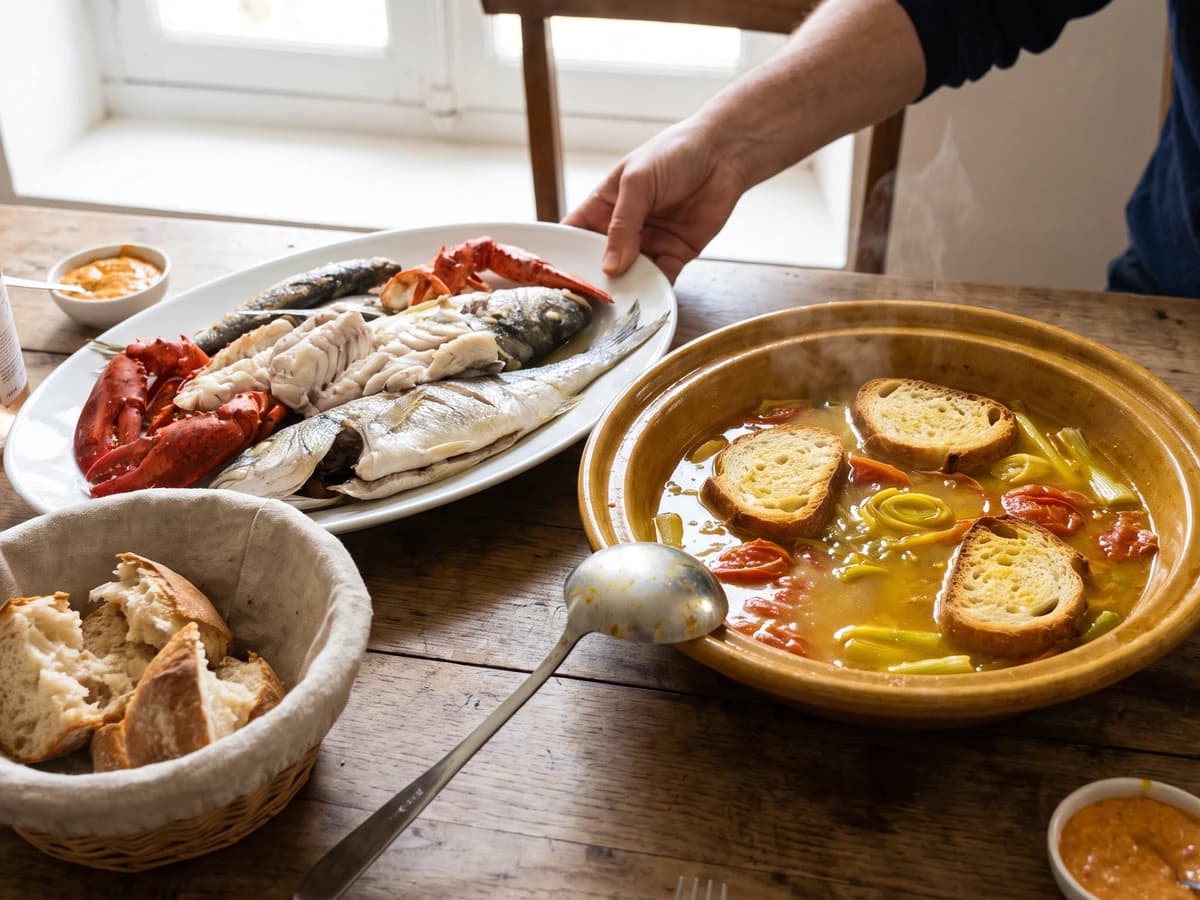
Marseille's great fish stew, saffron-gold and garlic-scented, proves that a hard boil can be the careful choice: it binds olive oil into broth before the whole pot meets bread.
Chef Juliette
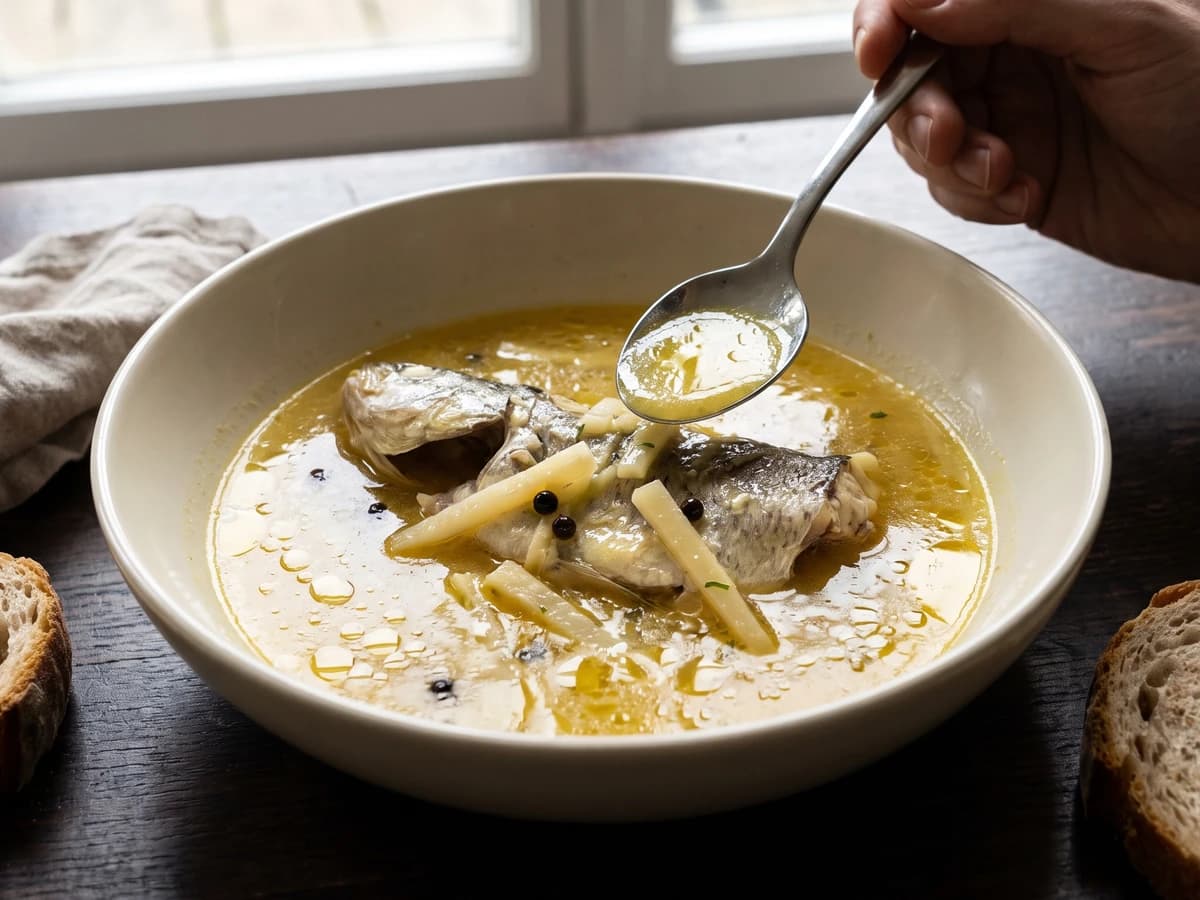
Waterzoi asks fresh, bone-in river fish to thicken its own buttery broth, with parsley root and pepper for company. No flour, no stockpot, just a brisk simmer watched closely.
Chef Juliette
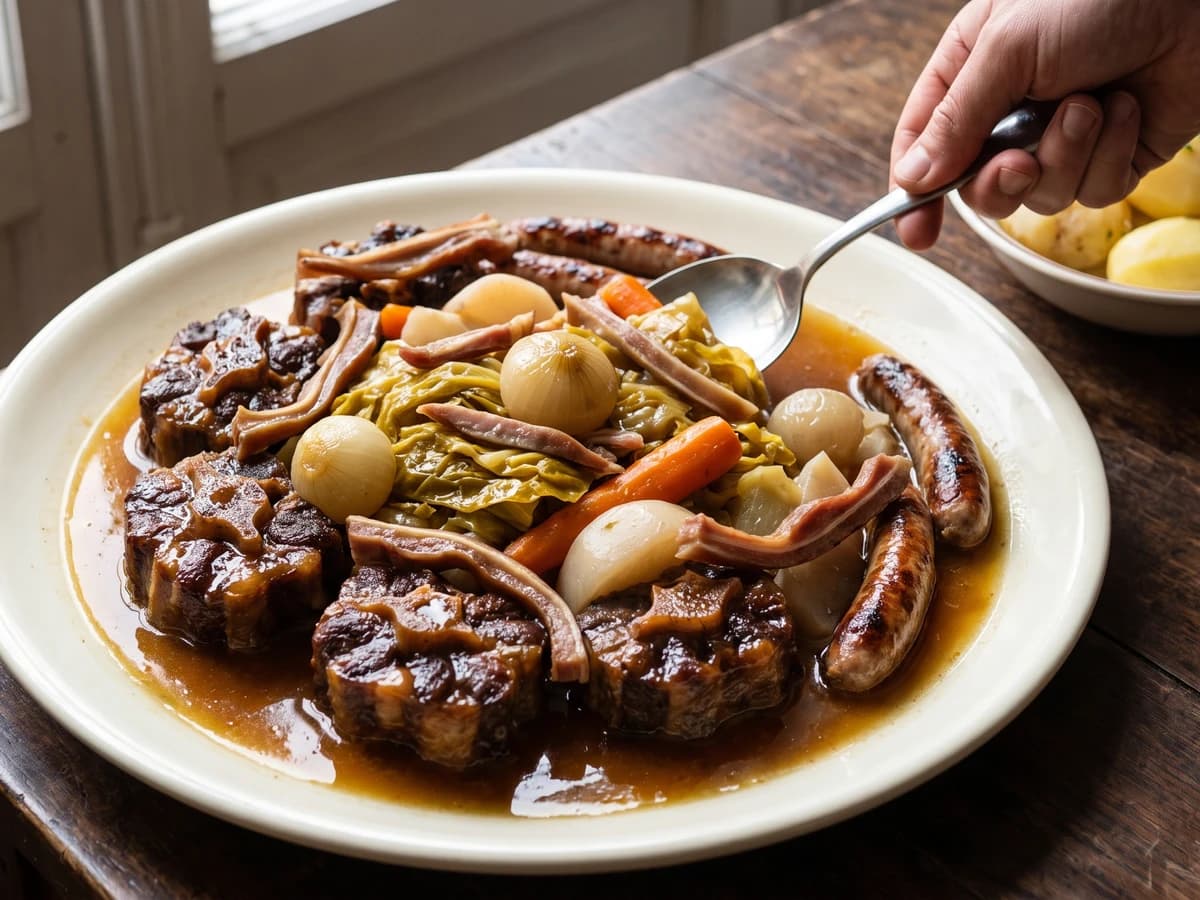
Queue de Bœuf en Hochepot gathers oxtail, pig's trotter and ear, cabbage, roots, and grilled chipolatas around a clear, gelatin-rich broth whose quiet simmer keeps every piece tender and distinct.
Chef Juliette
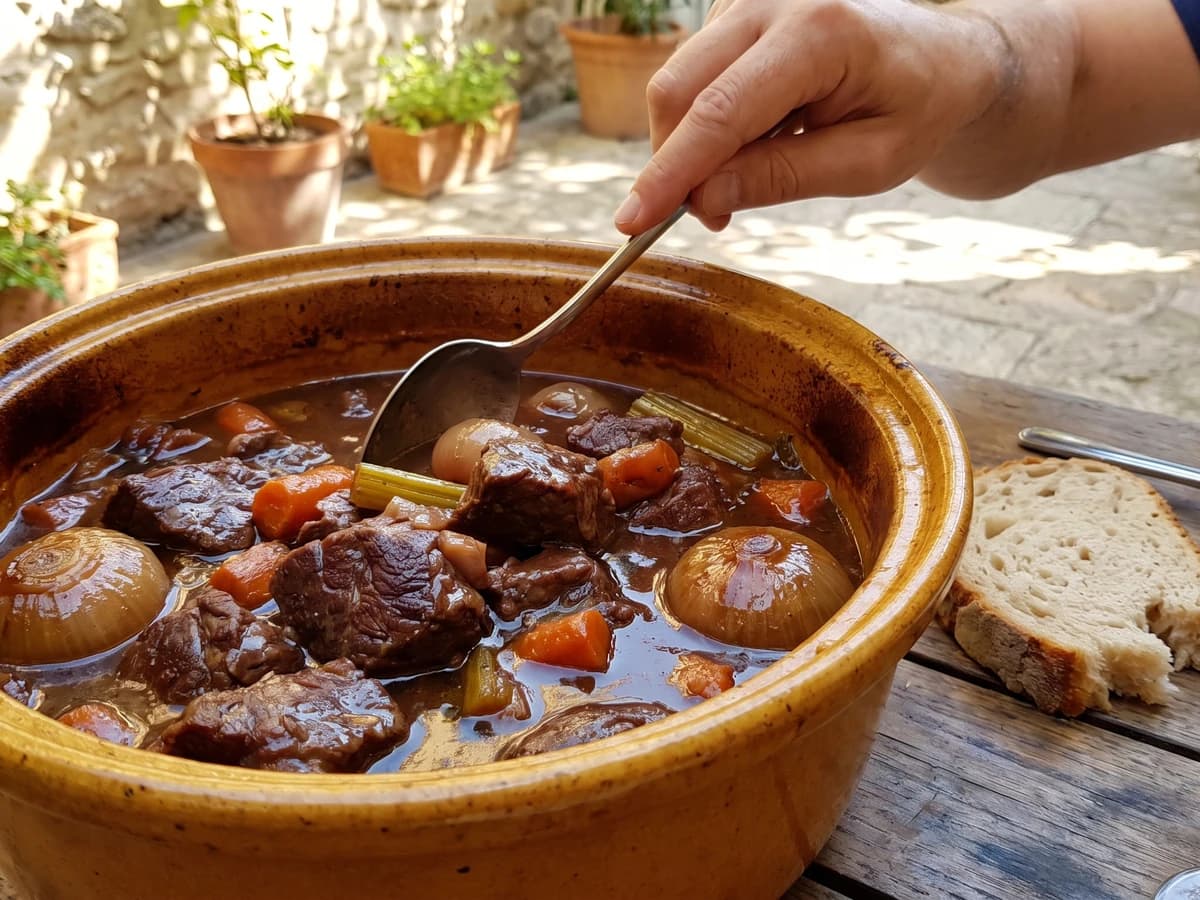
Beef shoulder larded with bacon, sharpened by red wine and vinegar, then sealed with garlic, vegetables, and dry lemon peel until the low oven turns it yielding and the gravy darkly glossy.